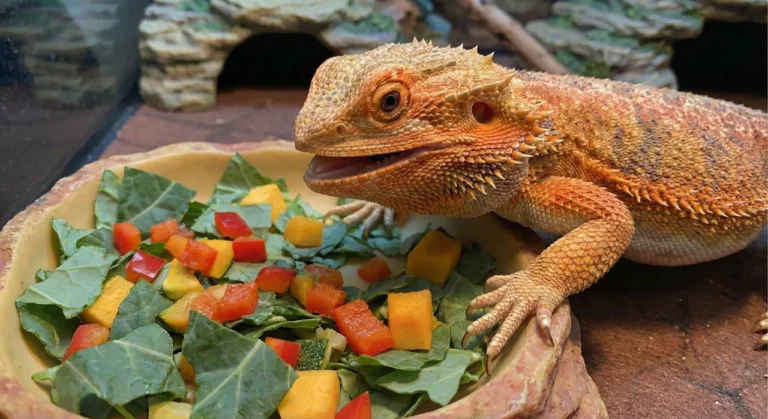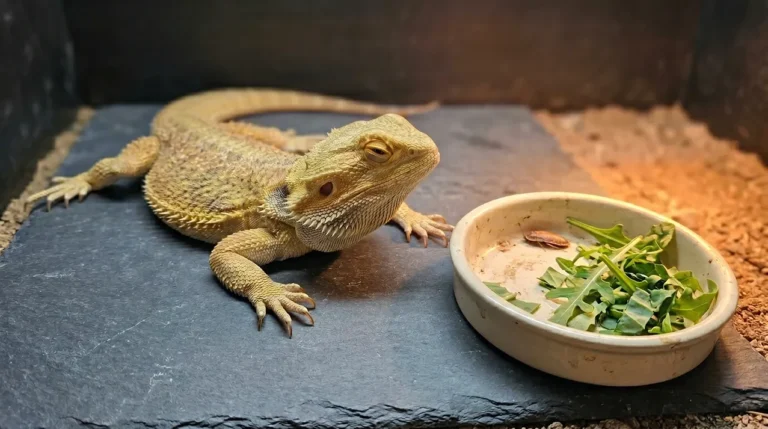
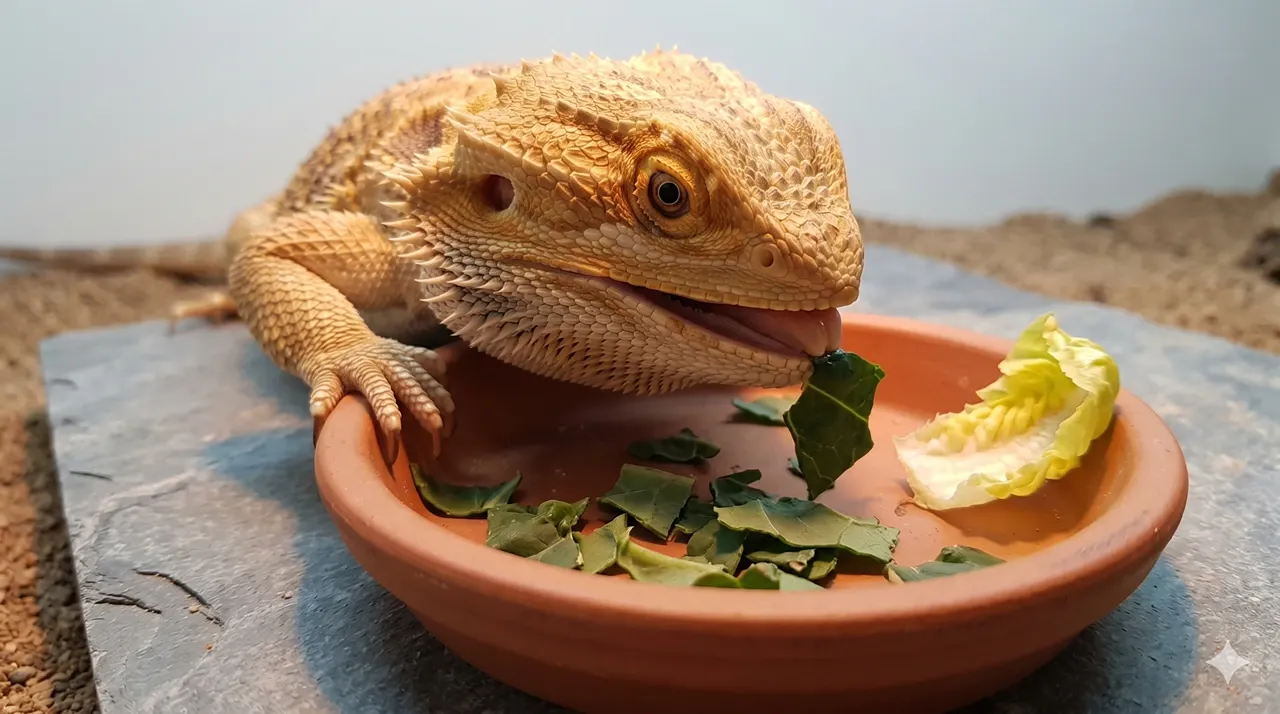
Can Bearded Dragons Eat Lettuce? Safe Types & What to Skip
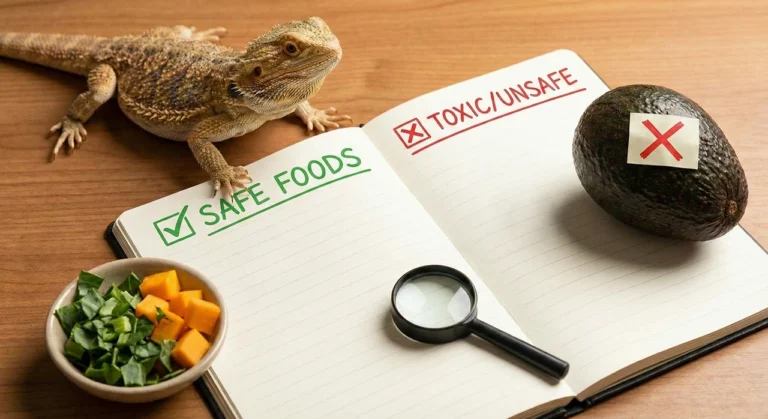
Lettuce is usually the first green a new owner offers, because the pet shop said “feed salad” and it was already in the fridge. So can bearded dragons eat lettuce? Yes. No common type will poison your dragon, and a stolen leaf is nothing to panic over.
The real problem is what lettuce fails to deliver. Most varieties are 94–96% water with barely any calcium or fibre, so every bite of lettuce displaces a bite of something that actually feeds your dragon.
One type is worth dropping entirely, a few are fine as occasional salad filler, and there is exactly one situation where a watery green earns its place in the bowl.
Can Bearded Dragons Eat Lettuce Safely
Bearded dragons can eat romaine, butter, red leaf, and green leaf lettuce in small amounts without harm. Iceberg is the exception worth refusing on principle. It runs about 96% water, carries almost nothing useful, and is the variety most likely to produce a runny mess in the tank.
Safe is not the same as worthwhile, though. Lettuce sits in the grey zone of any honest safe food list: technically fine, nutritionally close to pointless.
Wild bearded dragons browse tough, fibrous vegetation in country where standing water barely exists, and their gut is built to wring moisture out of dry food. A pile of wet lettuce is the opposite of what that system evolved to handle.
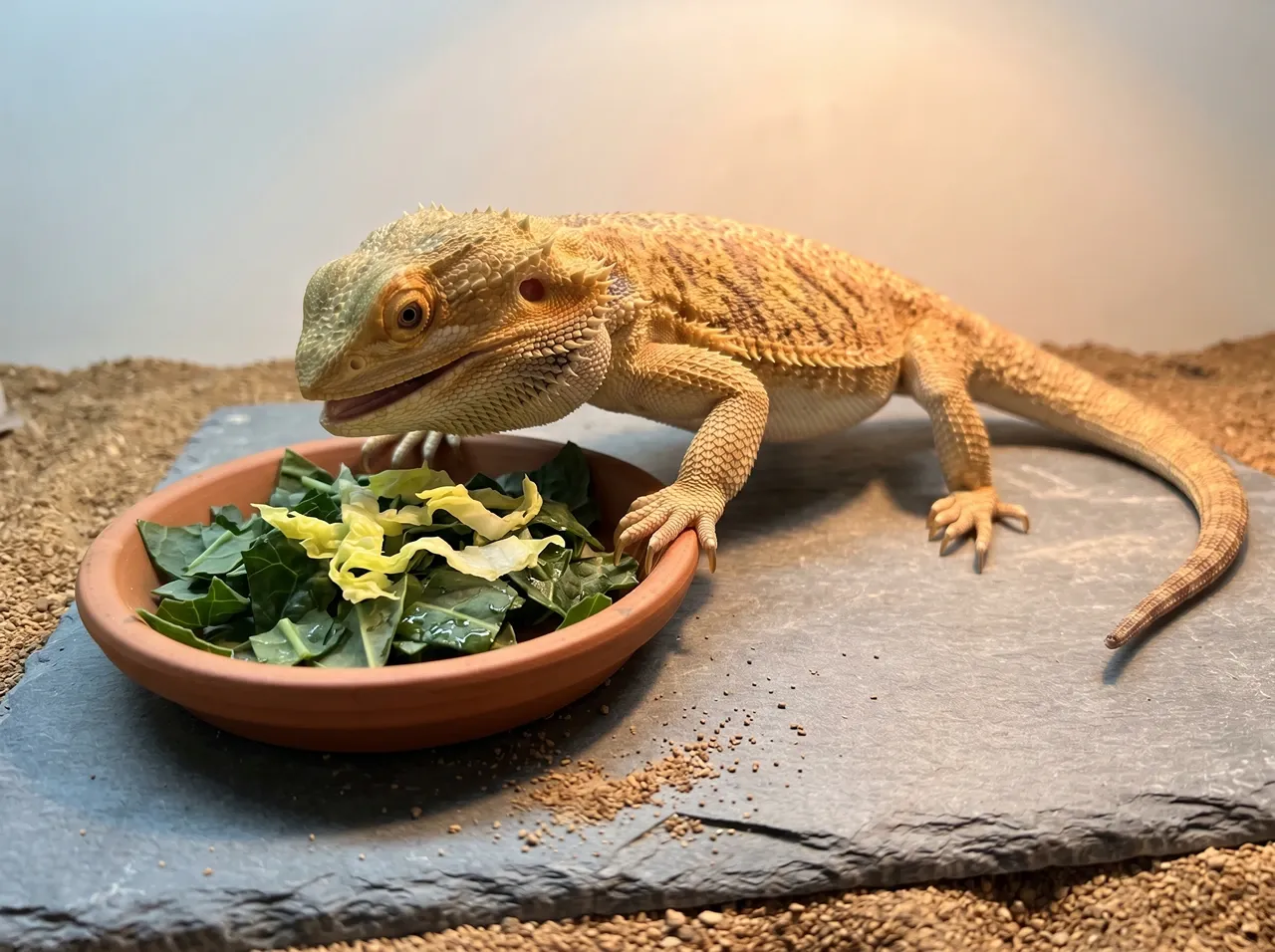
Why Most Lettuce Is Just Crunchy Water
Romaine, the most nutritious of the salad lettuces, holds around 33mg of calcium per 100g. Collard greens carry roughly seven times that, gram for gram. Feed the same sized salad and one dragon banks calcium while the other mostly drinks.
That gap matters more than it looks. Salads built on calcium-poor greens are one of the quiet roads to metabolic bone disease, especially in dragons already running on an ageing UVB tube.
The water causes its own trouble. A gut flushed with low-fibre, high-water food pushes stools through fast and loose, and a dragon with prolonged diarrhoea loses more fluid than the lettuce gave it. The hydration logic eats itself.
How Each Lettuce Type Stacks Up
Lettuce varieties are not interchangeable. The differences are small but real, and they decide which ones can pass as filler and which should never leave your own salad bowl.
Romaine Is the Best of a Bad Bunch
Romaine brings a beardie-safe calcium to phosphorus ratio of about 1.1:1, decent folate, and plenty of beta-carotene. By lettuce standards that is impressive. By staple green standards it is still weak.
One shredded leaf a week, chopped small and mixed through proper greens, is a sensible ceiling for an adult. Treat it as crunch and moisture, not nutrition.
Butter Lettuce Just About Earns a Place
Butter lettuce holds slightly more calcium than phosphorus and has soft, pliable leaves that tear into easy bites. That texture makes it handy for older dragons or recovering ones that struggle with tougher greens.
Every week or two as a small mixed-in portion is plenty. It shares the same high water content as the rest of the family.
Leaf Lettuces Sit in the Middle
Between romaine and iceberg sit green leaf and red leaf, with respectable beta-carotene and not much else. A few torn strips in a salad now and then do no harm.
You may read warnings that green leaf lettuce risks vitamin A toxicity. In practice that fear is misplaced. Dragons convert plant beta-carotene to vitamin A on demand, so the genuine overdose risk comes from synthetic vitamin A in supplements, not from salad leaves.
Iceberg Is the One to Skip
Iceberg is roughly 96% water with a slightly inverted calcium to phosphorus ratio, meaning phosphorus edges ahead. It offers a fraction of the vitamin A found in romaine and the highest odds of watery stools. There is no portion size that makes iceberg worth feeding. Skip it completely.
What About Bagged Spring Mix
Spring mix is a lottery. Some bags lean on baby leaf lettuces, which are merely useless, while others are heavy on spinach, which brings an oxalate problem of its own by binding calcium before your dragon can absorb it.
Read the contents, pick mixes built on chicory, endive, or radicchio, and rinse the leaves even when the bag claims they are pre-washed. Salad kits with dressing sachets, croutons, cheese, or onion never go in the tank under any circumstances.
| Lettuce type | Verdict | How often |
|---|---|---|
| Romaine | Fine as filler, best of the bunch | One shredded leaf a week, mixed into staple greens |
| Butter | Fine as filler, useful soft texture | Small portion every 1–2 weeks |
| Green leaf or red leaf | Harmless in small amounts | A few torn strips a week at most |
| Iceberg | Skip entirely | Never worth feeding |
| Plain spring mix | Check the label first | Occasional, avoid spinach-heavy blends |
| Salad kits with dressing | Unsafe | Never |
Once you know where each type sits, the only thing left to watch is how your dragon’s gut reacts the first few times you offer something new.
When loose stools stop being normal: one watery poop within a day of feeding lettuce is expected. Stools still loose past 48 hours, or showing blood or excess mucus, point to something beyond lettuce. Compare against normal poop and book a reptile vet if it persists.
The One Time Lettuce Actually Helps
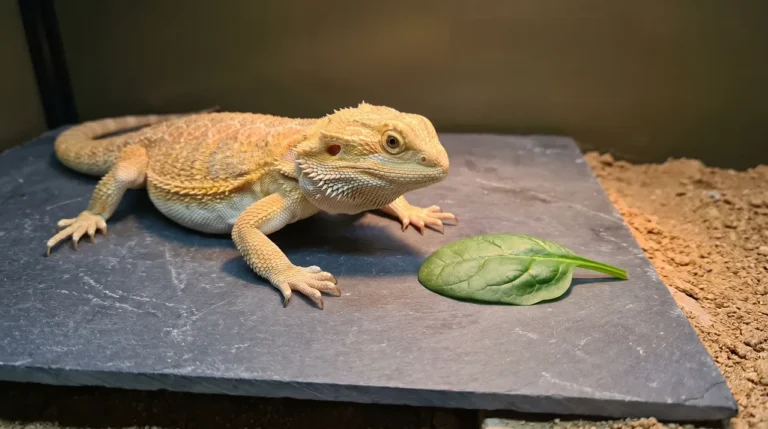
There is a single scenario where romaine earns honest praise: getting water into a dragon that refuses to drink. Plenty of beardies ignore a water bowl entirely and take nearly all their fluid from food, so a watery green becomes a delivery vehicle.
A few strips of romaine through the salad during a heavy shed, after brumation, or through a hot week can quietly top up fluids.
Keep an eye out for dehydration signs like wrinkled skin, sunken eyes, and thick saliva. Food alone will not fix a dragon that is already behind on water.
Keeper tip: misting the regular salad with water achieves the same hydration boost without the empty leaf. A quick spray over collard greens delivers the moisture with none of the trade-off.
Should Baby Bearded Dragons Eat Lettuce
No. Babies barely touch their salad as it is, often managing a few token bites between insect meals, so every shred in that bowl has to count. Lettuce wastes the only vegetable appetite they have.
A growing dragon is laying down bone at speed and needs calcium-dense greens on offer from day one, in line with a proper feeding schedule for its age. Save the lettuce conversation for adulthood, and even then keep it occasional.
When Your Beardie Will Only Eat Lettuce
This one comes up constantly with rehomed dragons and pet shop purchases. Somewhere along the line the dragon learned that salad means cold, wet, crunchy lettuce, and now it stares straight through a bowl of collards.
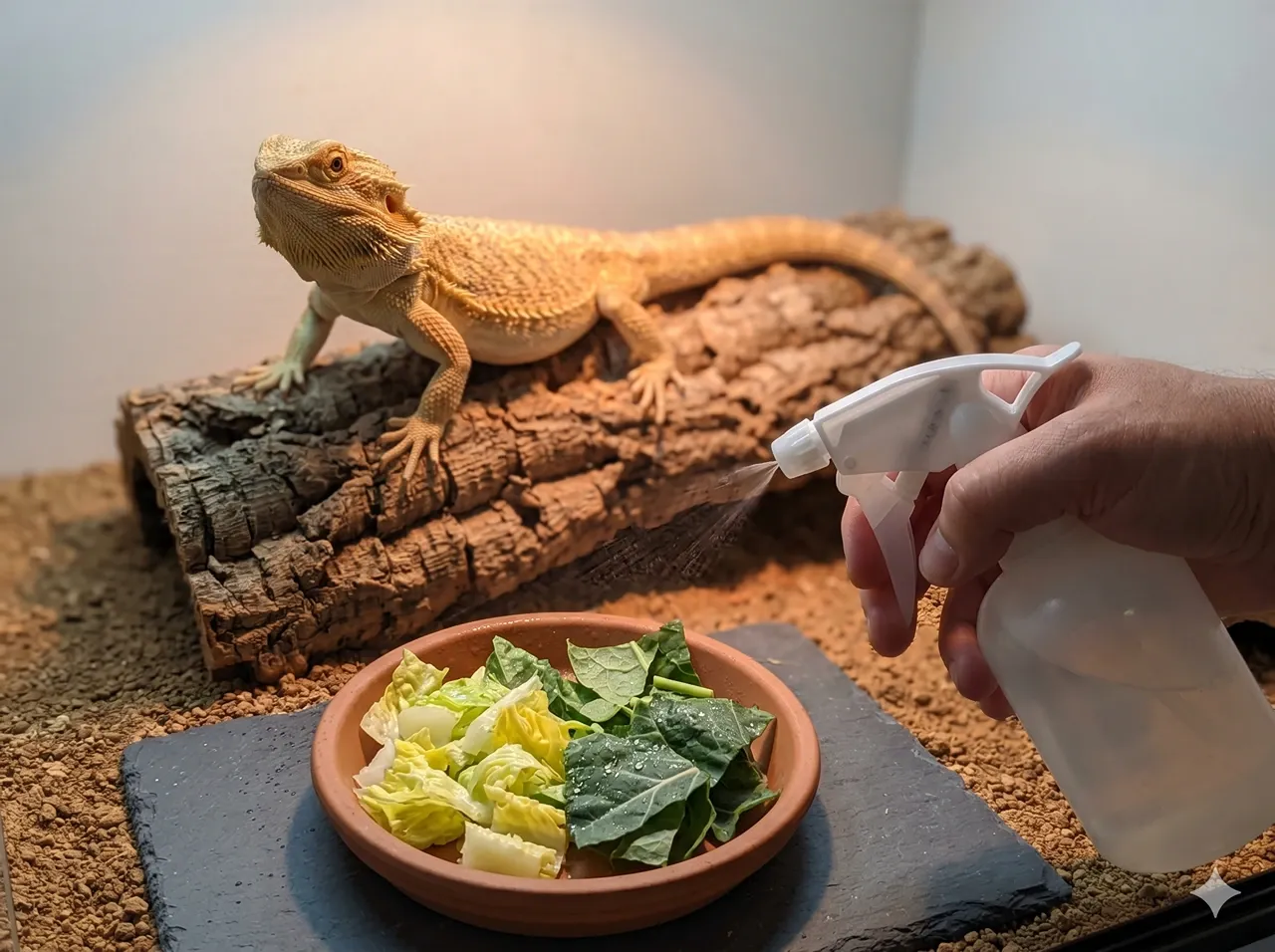
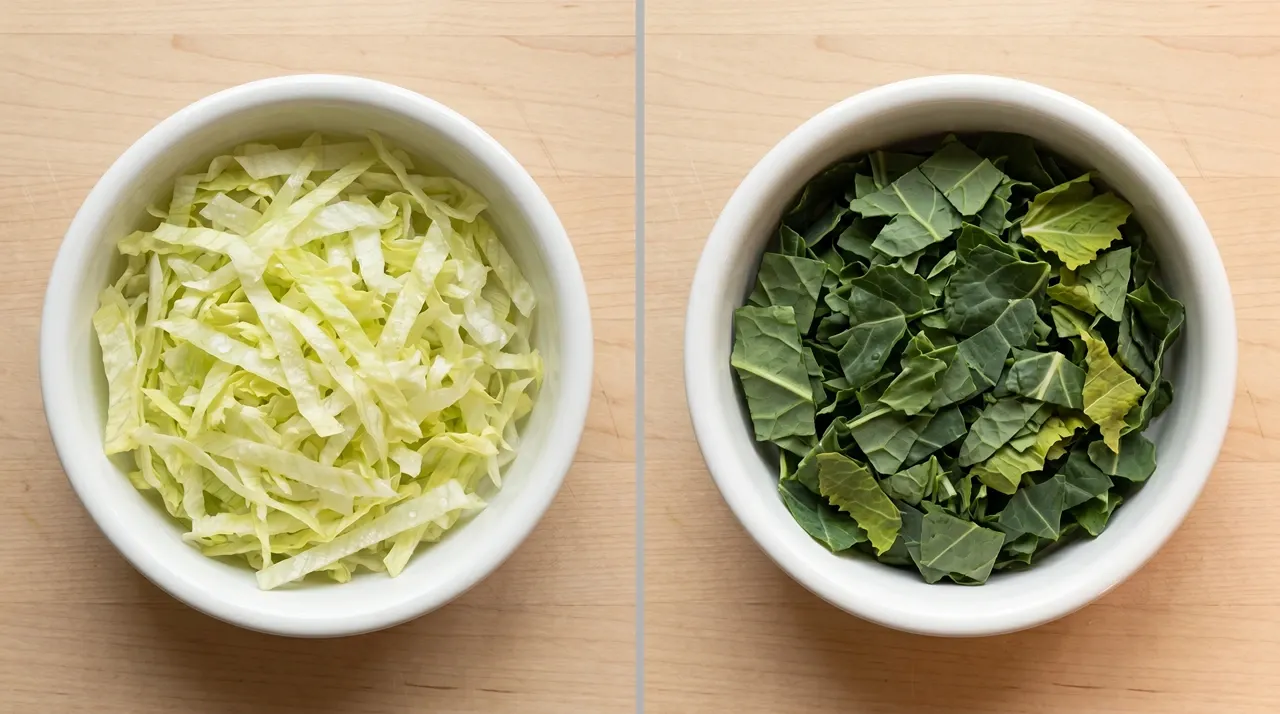
The fix is a slow ratio swap. Chop everything fine enough that picking favourites becomes impossible, start at roughly 70% lettuce to 30% staple greens, and shift the balance 10–15% every few days over 2–3 weeks.
Serve the salad in the morning before any insects appear, when hunger is doing the persuading for you. A healthy adult can sulk past a salad for a few days without harm.
The same tricks that crack dragons who refuse greens entirely apply here: warmth, movement, and hiding new greens under accepted ones.
What to Feed Instead
The greens that should anchor the bowl are the dark, slightly bitter ones:
- Collard greens, the workhorse staple with excellent calcium
- Mustard and turnip greens for variety with the same strengths
- Dandelion greens, as close to wild forage as supermarkets get
- Rocket, sold as arugula in the US, for a peppery leaf most dragons accept fast
- Endive and escarole, the swap lettuce lovers need
That last pair deserves more attention than it gets. Endive and escarole look and crunch like lettuce but belong to the chicory family and carry real calcium. For a dragon hooked on lettuce texture, they are the painless upgrade.
How these rotate through the week, and what sits alongside them, is the backbone of a sound diet plan rather than a one-food decision. The veterinary chain VCA also keeps a thorough feeding overview worth bookmarking for the full vegetable list.
Frequently Asked Questions
Can Bearded Dragons Eat Lettuce Every Day
No. Daily lettuce fills the stomach with water while crowding out calcium-rich greens, and over months that imbalance works against bone health. Keep it to a small weekly portion at most, always mixed into staples.
Is Romaine Lettuce Safe for Bearded Dragons
Yes, romaine is safe and the most nutritious of the common salad lettuces. It still offers far less than collard or dandelion greens, so treat it as occasional filler rather than a foundation.
My Dragon Ate Iceberg, Should I Worry
No, a one-off portion of iceberg causes no lasting harm. Expect a looser stool than usual within a day or so. Only persistent diarrhoea beyond 48 hours needs a vet’s attention.
Why Does My Beardie Love Lettuce So Much
Crunch, moisture, and zero effort. Lettuce tears easily, tastes mild, and delivers instant water, which makes it the junk food of the greens world. Preference says nothing about nutritional value.
Does Lettuce Hydrate a Bearded Dragon
In the short term, yes, and a little romaine is a fair tool for a dragon ignoring its water bowl. Misted staple greens and the occasional bath do the same job without the empty leaf.
Build the Salad Around Better Greens
So, can bearded dragons eat lettuce? Yes, occasionally and reluctantly. The single change worth making is a mental one: stop thinking of lettuce as salad and start treating it as garnish.
The base of every bowl should be collard, mustard, or dandelion greens, with lettuce appearing the way croutons appear in yours, occasionally and in small amounts.
If your dragon already worships lettuce, swap in endive this week and start shrinking the ratio. Most dragons make the switch inside a month, and their salad finally starts earning its place in the tank.

Written by
Sarah ArdleySarah has kept bearded dragons for over ten years. She founded Beardie Husbandry after discovering that most mainstream care advice — including what she followed with her first dragon — was doing more harm than good. Every article on this site is grounded in veterinary research and real keeper experience.