Coil vs. Tube UVB: 5 Rules for Bearded Dragon Lighting
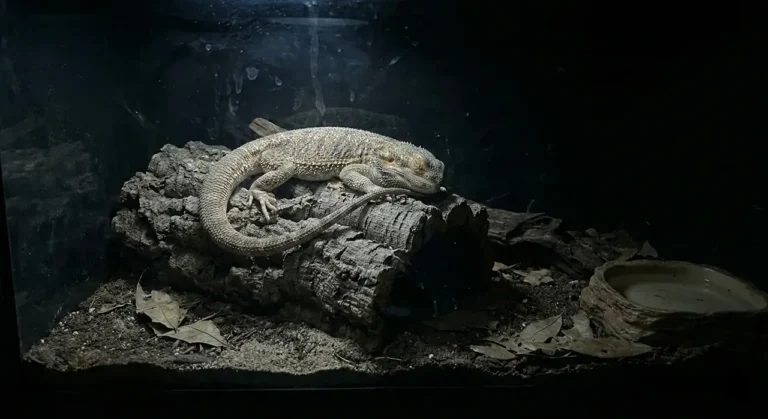
Is your bearded dragon spending all day hiding in the shade, eyes half-closed, completely ignoring the bugs you just offered? Before you start panicking about parasites or an expensive vet bill, look up at the screen lid of your tank.
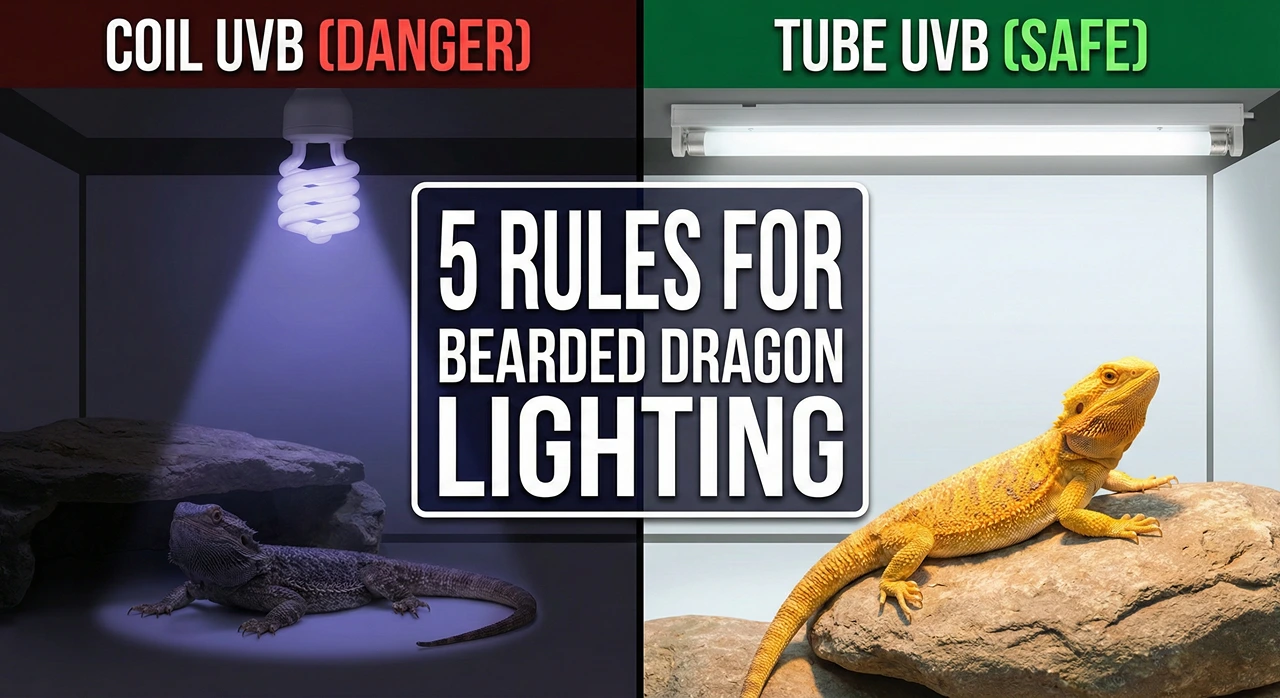
If you see a swirly, compact bulb screwed into a dome fixture pointing down at them—you almost certainly just found the problem.
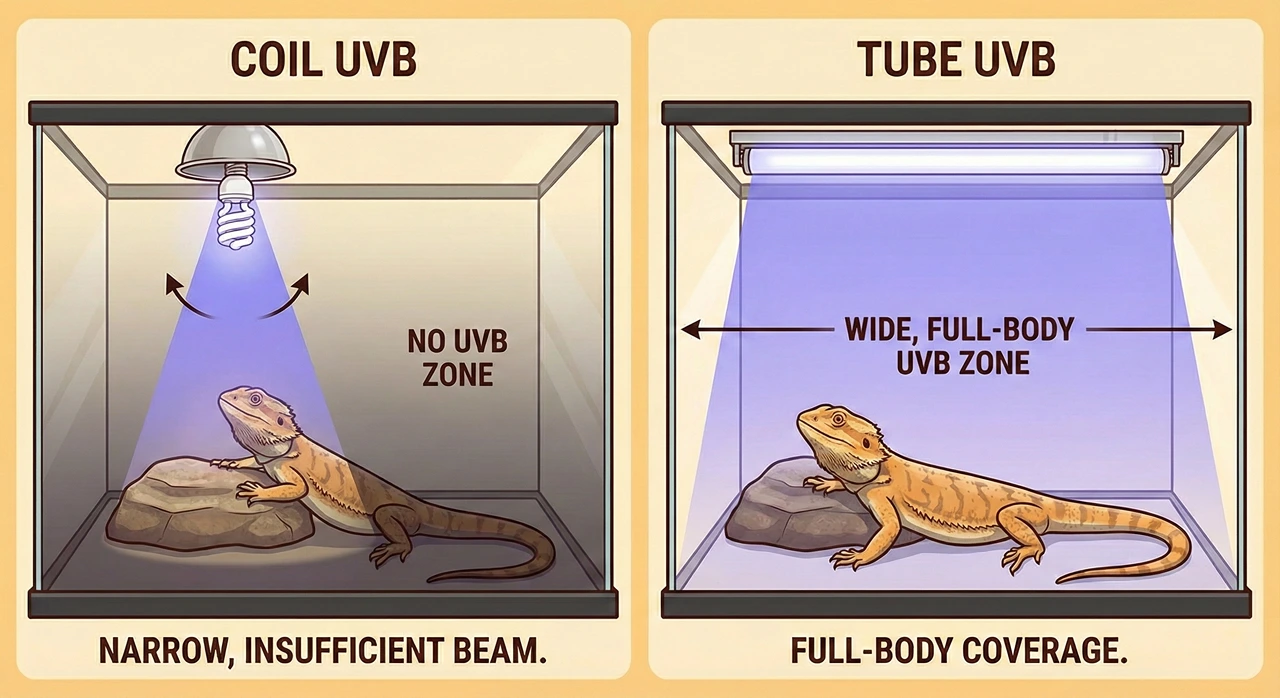
Those coil UVB bulbs are the absolute bane of the reptile hobby. Pet stores throw them into every basic starter kit because they fit in standard domes and cost pennies to make. But your dragon is built to soak up intense, full-body radiation from the Australian sun. A coil bulb acts like a weak flashlight. It shoots a narrow, pathetic beam of UVB that degrades to almost nothing by the time it actually hits your dragon’s basking rock.
Without proper UVB covering their entire body, their metabolism crashes. They lose their appetite, become lethargic, and eventually develop soft, brittle bones.
I have seen sluggish, miserable dragons completely turn around in 48 hours just by throwing that coil bulb in the trash and installing a proper linear tube. Let’s fix your lighting setup right now.
Rule 1: Ditch the Coil, Get a Tube
In the wild, bearded dragons flatten out on hot rocks for hours to soak up the intense sun. Their bodies use UVB rays to synthesize Vitamin D3, which allows them to pull calcium from their daily salads and bugs.
Coil bulbs fail because the beam is practically useless. It shoots a tiny, intense beam straight downward. If your dragon is sitting perfectly still directly underneath it, they might get a little exposure. The second they take two steps to the left, they are in the dark.
You need a long, fluorescent tube bulb—a linear UVB. These bulbs stretch across the enclosure, creating a wide “zone” of radiation. When my dragons stretch out to bask and “pancake” their bodies, a tube bulb ensures their head, back, and tail all receive equal, safe levels of UVB.
Rule 2: Choose T5 Over T8 (And the Right Brand)
When you start shopping for tube lighting to fix your tank setup, you will see two sizes: T8 and T5.
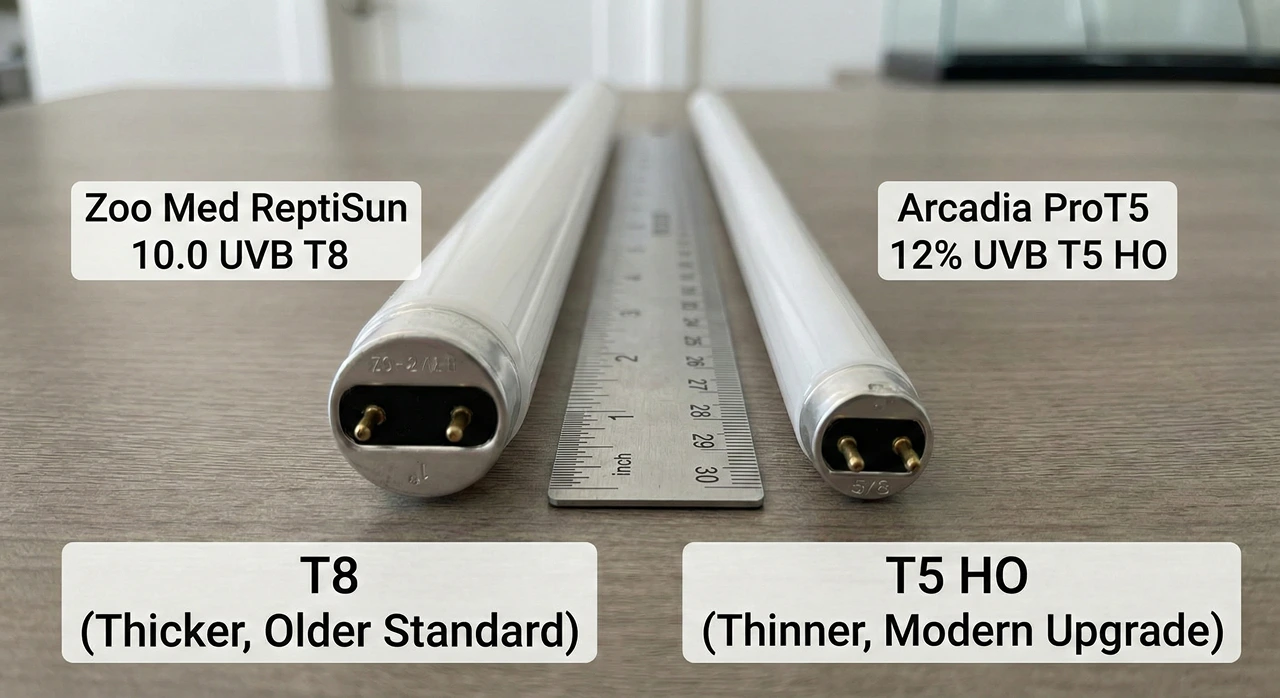
- The Older Standard (T8): T8 bulbs are thick and their output is relatively weak. If you use a T8, you have to mount the fixture inside the enclosure, completely unobstructed. A standard wire mesh screen blocks roughly 30% to 50% of all UVB rays, which makes a T8 useless if you rest it on top of a screen lid.
- The Modern Upgrade (T5): I exclusively use T5 bulbs now. They are thinner but pack a massive punch. They are labeled as “High Output” (HO). Because they are so strong, you can safely rest a T5 fixture directly on top of your screen lid and still get great penetration.
The Only Two Brands to Buy: Do not gamble with cheap off-brand lights on Amazon. Their outputs fluctuate wildly and can burn your dragon. Stick to the proven industry standards: the Arcadia ProT5 (12% or 14%) or the Zoo Med ReptiSun T5 HO (10.0).
Rule 3: Use the Distance Cheat Sheet
UVB is radiation. Too little, and their bones get soft. Too much, and they get sunburned eyes. You have to mount the bulb at the correct distance from the highest point of their basking rock.
| Bulb Type | Mounting Location | Distance to Dragon’s Back |
|---|---|---|
| T8 (10.0) | Inside Tank (Under Mesh) | 6 to 8 inches |
| T5 HO (10.0 or 12%) | Inside Tank (Under Mesh) | 12 to 14 inches |
| T5 HO (10.0 or 12%) | Resting ON Top of Mesh Lid | 9 to 11 inches |
Rule 4: Overlap UVB with Your Heat Lamp
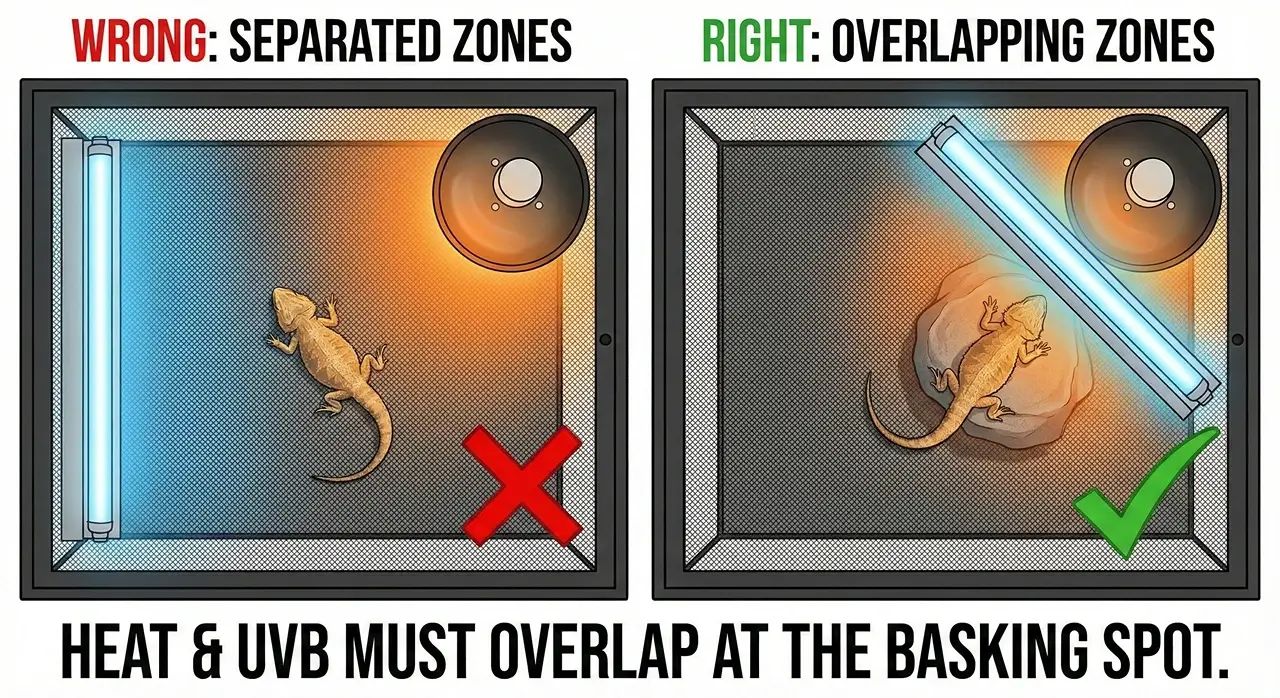
I constantly see setups where the heat lamp is on the far right side of the tank, and the UVB fixture is in the middle or on the far left.
A dragon’s brain is wired to associate bright light and heat with UVB. When they wake up and walk over to get warm, they need to be soaking up UVB at the exact same time.
Position your linear tube so it overlaps directly with your basking spot. When your dragon sits on their hot rock, they should be directly under the heat dome and directly under the UVB tube. The tube should stretch across about 1/2 to 2/3 of the total enclosure length. Leave the cool side of the tank shady so they can escape the light.
Rule 5: Remove All Glass and Plastic
Glass and solid plastic filter out 100% of UVB rays. I have seen owners mount a fixture inside a tank, but leave the clear plastic shipping cover over the bulb to “protect” it. That plastic blocks everything.
Similarly, putting your tank next to a closed sunny window gives them heat, but zero UVB. The bulb must have a completely bare, unobstructed path through the air, or through a wire mesh screen.
Make sure your fixture has a shiny, polished metal reflector behind the bulb. A good reflector catches all the UVB shooting upward and bounces it back down into the tank. If you snap a T5 into a cheap, bare plastic fixture, you are losing half of your output to your living room ceiling.
Has the Coil Bulb Already Caused Damage?
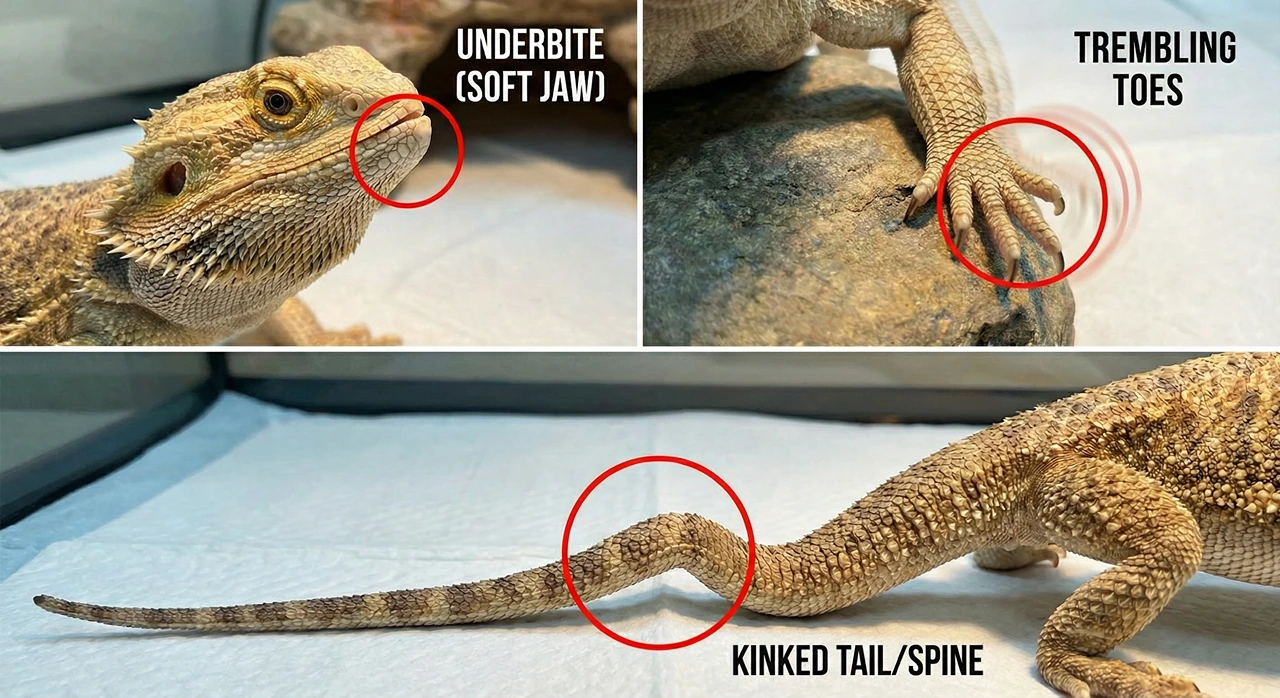
If your dragon was under a coil bulb for months before you realized the mistake, they might already have a calcium deficiency. Upgrading the light stops the progression, but you need to check your dragon for these early warning signs of MBD:
- Trembling Toes: When they walk or lift a leg, the toes shake or twitch.
- Soft Jaw / Underbite: The bottom jaw protrudes further than the top, or the jaw feels rubbery instead of solid bone.
- Kinks in the Tail or Spine: Visible zig-zags in their bone structure.
- Leg Dragging: Struggling to lift their back legs. (Note: This is also a primary symptom of impaction).
If you see any of these signs, book an appointment with an exotic vet immediately for a liquid calcium intervention.
Frequently Asked Questions
1. Can I use a Mercury Vapor Bulb (MVB) instead of a tube?
Mercury Vapor Bulbs are large dome bulbs that produce both heat and UVB. While they are a massive step up from coil bulbs, I still prefer a linear tube. MVBs project a cone of light, meaning your dragon only gets UVB when sitting perfectly centered under the heat. A linear tube gives them a much wider area to roam while still absorbing rays.
2. How often do I need to replace the bulb?
UVB bulbs stop producing radiation long before they stop producing visible light. Your bulb might look bright white, but it could be completely dead. The only way to truly know is to buy a SolarMeter 6.5, but since those cost around $250, the safest budget option is to stick to a strict schedule: replace T8 bulbs every 6 months, and T5 bulbs every 12 months.
3. How long should the UVB light be left on each day?
Plug your UVB light into the same timer as your heat lamp. It should run for 12 hours a day and be turned off completely for 12 hours at night. I set my timers for 8:00 AM to 8:00 PM.
4. My dragon closes their eyes when basking. Is the light too strong?
If your dragon slightly squints or closes their eyes while pancaked out, they are just relaxing. However, if they constantly keep one eye squeezed shut, rub their face against rocks, or hide all day, the UVB is likely mounted too close to their face. Double-check the distance chart above.
5. Do I leave the UVB or a red heat light on at night?
No. Bearded dragons need pitch-black darkness to sleep. Never leave a UVB bulb on at night. Ditch the “nighttime red bulbs” pet stores sell; dragons can see the red light and it ruins their sleep cycle. If your house gets colder than 65°F at night, use a Ceramic Heat Emitter (CHE), which produces heat but zero light.
6. Can poor lighting cause dehydration?
Indirectly, yes. Poor lighting leads to a lethargic dragon that refuses to move or drink. Correcting your lighting gives them the energy to act like a normal reptile again. If your dragon is currently struggling, try some active methods to keep them hydrated while you fix their tank setup.
Summary Checklist
- ✅ Throw away small, spiral coil UVB bulbs.
- ✅ Buy a T5 High-Output linear tube (Arcadia 12% or ReptiSun 10.0).
- ✅ Ensure the tube covers 1/2 to 2/3 of the tank’s length.
- ✅ Overlap the UVB tube directly with the basking heat lamp.
- ✅ Check the distance chart to prevent burns or under-exposure.
- ✅ Set a calendar reminder to replace T5 bulbs every 12 months.
Medical Disclaimer: I am an experienced keeper, not a veterinarian. This guide is designed to help you perfect your husbandry to prevent metabolic bone disease. If your dragon is already suffering from severe lethargy, soft jaws, or trembling legs, please seek emergency care from an exotic vet immediately.
Written by
Sarah ArdleySarah has kept bearded dragons for over ten years. She founded Beardie Husbandry after discovering that most mainstream care advice — including what she followed with her first dragon — was doing more harm than good. Every article on this site is grounded in veterinary research and real keeper experience.