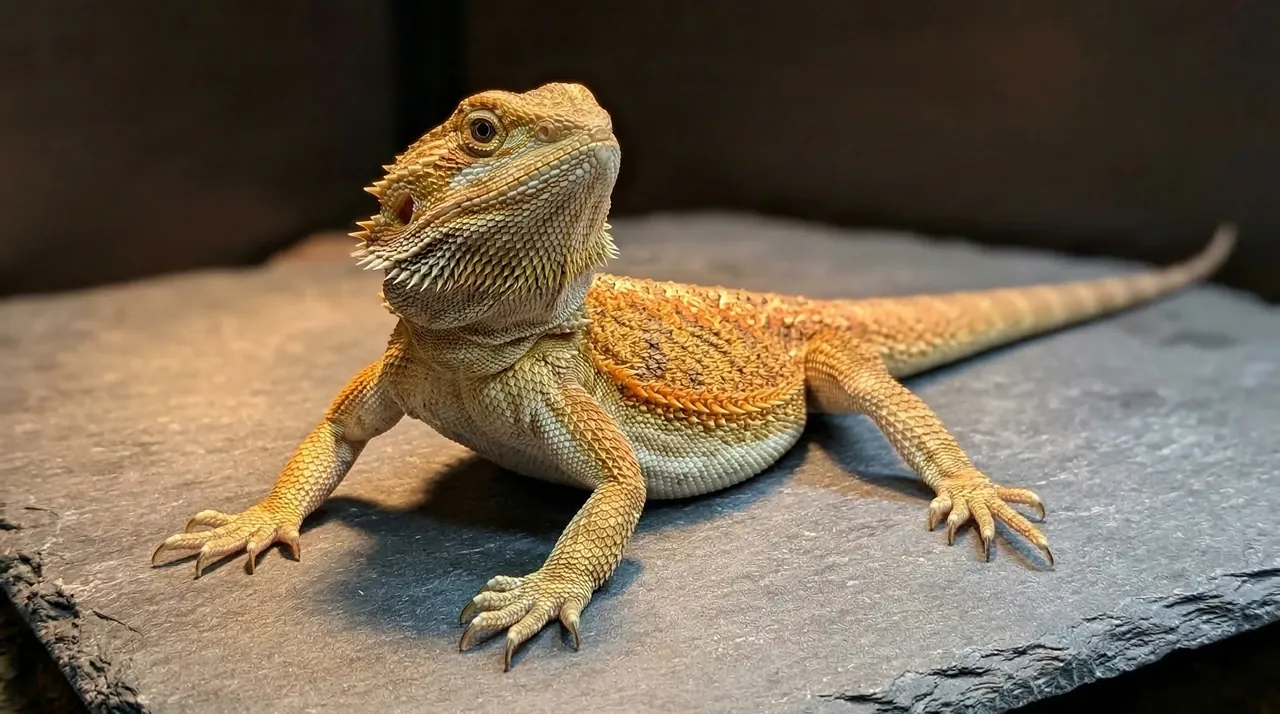
Juvenile Bearded Dragon Care From 6 to 18 Months
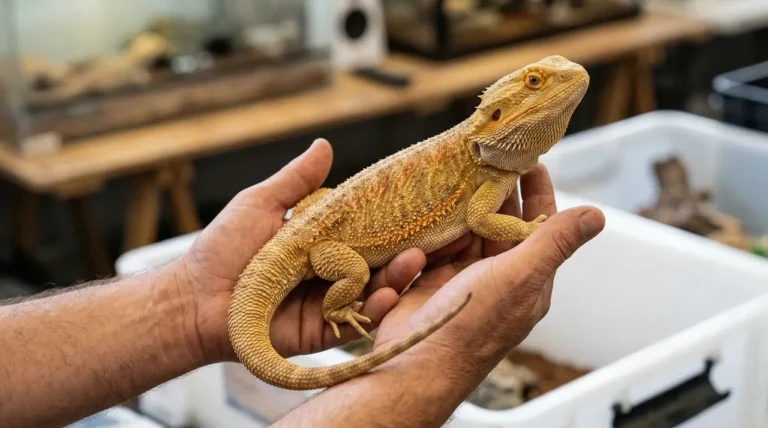
Most owners who do a solid job in the baby phase ease off around the six-month mark. The dragon is eating, growing, and the setup seems to be working. That is exactly when juvenile bearded dragon care tends to slip.
Diet ratios need to shift, UVB demands increase with body size, and behavioural changes triggered by sexual maturity get misread as illness or aggression. None of this is complicated once you understand what is changing and when.
If your dragon is still under six months, the baby dragon care guide covers that phase in detail. Once your dragon hits 18 months, the husbandry stabilises and the major transition work is behind you.
What This Phase Actually Looks Like
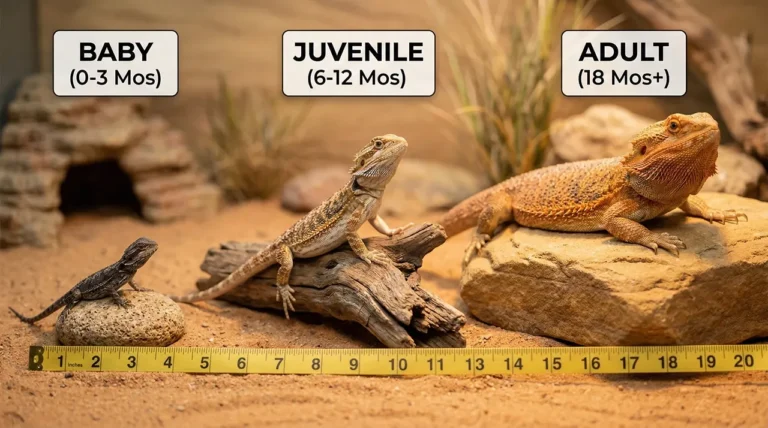
At six months, a healthy dragon sits somewhere between 11 and 16 inches from snout to tail tip and weighs around 200–280 grams. At 18 months, growth has largely finished and most dragons land between 400 and 500 grams at 18–22 inches. That span involves more husbandry change than almost any other phase of a beardie’s life, and the setup needs to keep pace.
The six-to-twelve-month range is the late juvenile phase, and the twelve-to-eighteen-month range is technically sub-adult. For practical juvenile bearded dragon care, the adjustments are gradual across the whole range rather than switching at a single birthday. The terms get used interchangeably across care guides, and that inconsistency causes confusion.
The Diet Ratio Reverses Completely by 18 Months
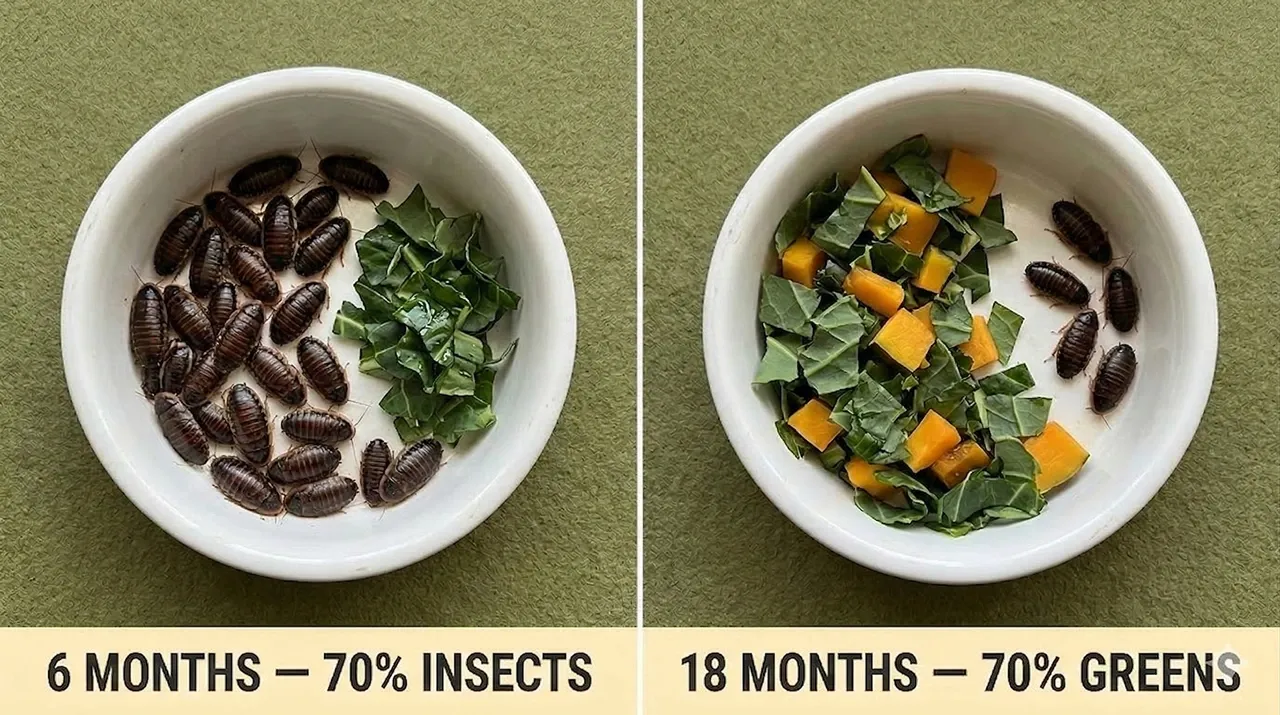
At six months, a juvenile is eating roughly 70% insects and 30% vegetation. By 18 months, that ratio should be close to reversed: 70% vegetation and 30% insects. That is a massive shift, and the number one mistake in this phase is getting the pace wrong.
Owners who keep feeding the six-month insect ratio at 14 months end up with an overweight dragon. Owners who flip the ratio too early end up with a dragon that stops eating. Neither direction corrects easily once the habit is set.
How to Shift the Ratio Gradually
Every four to six weeks, offer slightly more greens and slightly fewer insects. There is no precise formula here. Use your dragon’s appetite as the actual guide rather than a calendar date. If greens are being eaten readily, reduce insect frequency one step further. If greens are being pushed aside consistently, hold steady and revisit the adjustment in another four weeks.
A practical approach is to watch insect consumption time. At six months, a healthy juvenile hunts continuously for the full 10-minute feeding window. By twelve months, a dragon approaching the natural shift will slow down after five or six minutes even if insects are still moving. That is the signal to start leaning the diet toward more vegetation.
Why Juveniles Refuse Greens at First
A dragon that spent its baby phase eating 80–100 insects a day has no real motivation to eat a bowl of collard greens. The greens are not as stimulating, and the hunger drive from rapid growth has been satisfied by protein.
The fix is consistency, not variety. Put the salad in every morning before insects are offered. A hungry dragon presented with greens first will eventually eat them, and if the refusal is persistent, there are a handful of specific causes worth ruling out. A dragon that gets insects first will hold out for more.
How Often to Feed a Juvenile Dragon
At six months, once-daily insect feedings are correct. Between nine and twelve months, shift to every other day for insects while keeping greens daily. From twelve to eighteen months, most dragons do well on insects two to three times a week alongside a daily salad. The exact timing of each shift depends on appetite, growth rate, and how well greens are being eaten.
Portion size matters more than most guides acknowledge. Offer as many insects as the dragon actively hunts in 10 minutes, then remove the rest. A twelve-month-old that is still hunting 30 Dubias in 10 minutes is telling you it still needs that protein.
Reducing mechanically by calendar age without watching the individual animal is one of the most common juvenile bearded dragon care mistakes in this phase. A complete feeding schedule by age gives the full reference points, but always let the dragon’s actual behaviour drive the adjustments.
All insects offered should be properly gut loaded before they go in. A juvenile in the middle of a growth phase pulls far more nutritional value from a well-fed Dubia than from one that has been sitting in an empty container. The feeder insect gut loading process takes under a day and makes a measurable difference in growth rate and overall condition at this age.
Why Calcium Matters Most Right Now
Calcium requirements are highest during the juvenile phase because bone density is being laid down rapidly. For a six-to-twelve-month dragon, dust insects with calcium (without D3) at every other feeding and use a multivitamin three times per week. From twelve to eighteen months, step calcium down to three times per week and multivitamin to once or twice per week.
Most guides treat D3 as a simple yes-or-no question. If your UVB setup is correct, a dragon with adequate light exposure synthesises its own D3 and does not need it in food. If your setup has gaps (old bulbs, wrong distance, mesh blocking output), the dragon cannot make D3 regardless of light hours.
In that case, using a calcium supplement that includes D3 is a reasonable safeguard. Your supplement dusting schedule should reflect whichever situation applies to your enclosure.
When to Upgrade the Enclosure
The enclosure upgrade is the most predictable milestone in the first year of juvenile bearded dragon care. A six-month dragon that came home in a 40-gallon will outgrow it by nine or ten months. The minimum from nine months onward is a 4x2x2 enclosure, which is also the adult size. Upgrading once at around nine months is more practical than an intermediate step that becomes obsolete in a few months.
The enclosure size issue is about more than space. In a tank that is too small, the temperature gradient collapses and a growing juvenile cannot thermoregulate properly through the day. Chronic overheating or inability to cool down stresses the immune system at exactly the age when MBD and respiratory infections are elevated risks. Your enclosure sizing guide has the full reasoning behind minimum dimensions.
UVB Gets More Important as They Grow
A common assumption is that UVB matters most for hatchlings and becomes less critical as the dragon ages. The opposite is true during the juvenile phase. Bone density is being built fast, D3 synthesis is in constant demand, and any gap in UVB output during this period compounds over months.
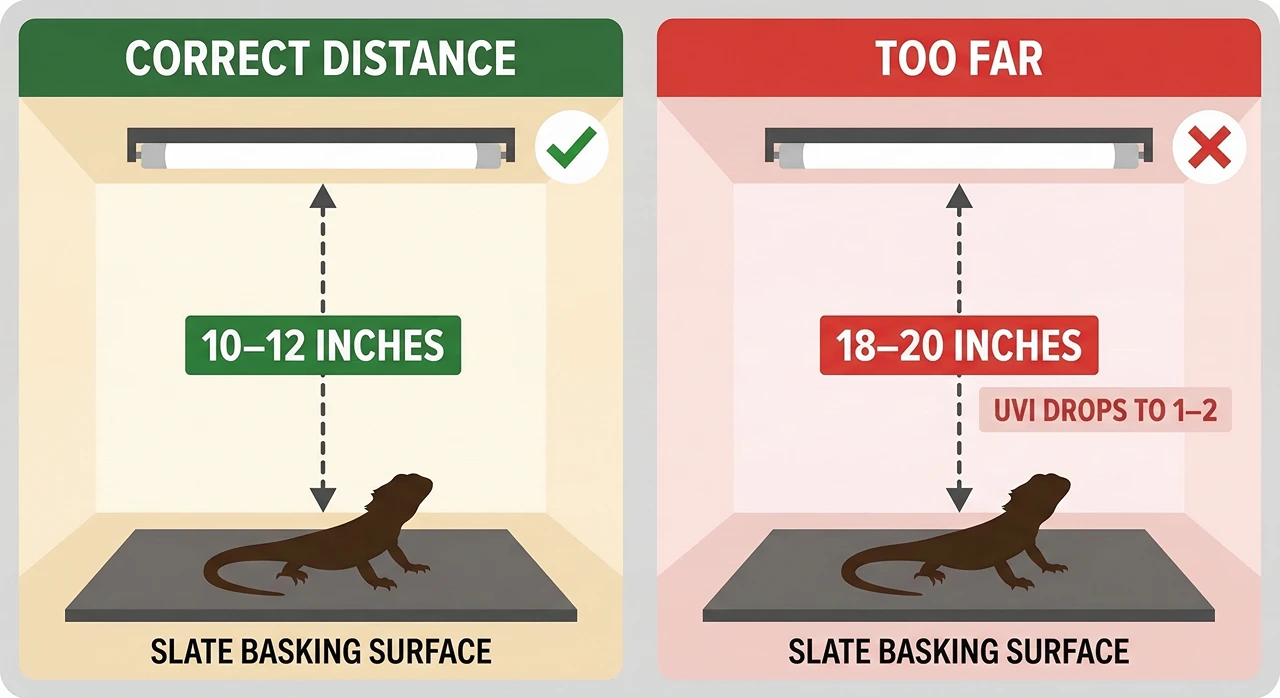
As the dragon grows and spends time across more of the enclosure, the UV index at its actual basking position can drop. The bulb that delivered UVI 5.0 when your six-month dragon basked four inches below the tube may be delivering UVI 2.5 to a twelve-month dragon basking eight inches below it.
Target UVI of 4.0–6.0 at the basking surface — the range confirmed by Frances Baines’ UV Guide research as optimal for desert species. A T5 HO tube running at least two-thirds of the enclosure length, mounted no more than 12 inches above the basking surface without mesh obstruction, is the practical standard. Replace UVB tubes every 12 months because output drops long before the light goes dark.
What Basking Temperature a Juvenile Needs
The basking surface should sit between 100 and 105°F for a dragon from six to eighteen months. The cool end should stay between 80 and 85°F during the day. These numbers are not dramatically different from baby care, but the tolerance for error shrinks as the enclosure gets larger and the temperature gradient becomes harder to maintain without proper setup.
The more common error in this phase is a basking spot running at 92–95°F because the owner read that lower temperatures are safer. Chronic under-temperature in a juvenile slows digestion, reduces immune function, and suppresses appetite in ways that compound over weeks. Measure the actual basking surface with a temperature gun. The basking spot setup guide covers exact placement and how to verify the gradient across the enclosure length.
Why Many Juveniles Slow Down at 8 Months
Between 8 and 14 months, many juveniles go through a period of noticeably reduced appetite. It is one of the most misunderstood moments in juvenile bearded dragon care. A dragon eating 40 Dubias a day may suddenly lose interest after 10. Some stop eating greens entirely for a week or two. This is normal. The body is regulating appetite downward as growth slows and nutritional priorities shift from rapid protein gain to mineral consolidation.
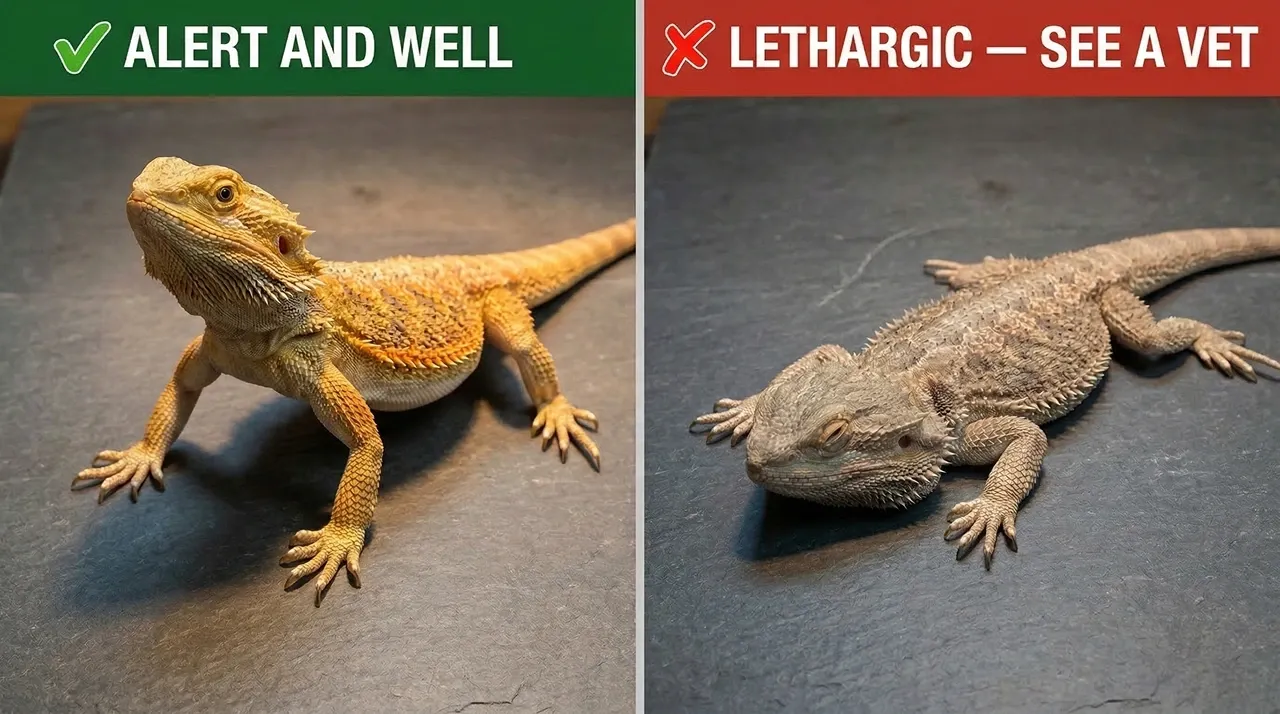
The behaviour that distinguishes normal appetite reduction from a real problem is everything else. A dragon that is eating less but still alert when warm, still basking on schedule, and maintaining weight is almost always fine. One that combines appetite drop with any of the following needs a vet visit sooner rather than later.
| What You See | Likely Explanation | Action |
|---|---|---|
| Eating less insects, still eating greens, alert and basking | Normal appetite transition, diet shift underway | Continue offering both daily. Reduce insect frequency gradually. |
| Refusing all food for under 10 days, still alert and active | Normal temporary refusal, possibly approaching shed | Keep offering. Check for shed signs. Do not force feed. |
| Refusing all food for over 14 days | Could be illness, internal parasites, or incorrect temperatures | Verify temps with a temperature gun. Vet visit if no improvement. |
| Appetite drop plus lethargy outside basking time | Possible illness, MBD, parasites, or dehydration | Vet visit. Do not wait. |
| Appetite drop plus soft jaw or rubbery limbs | MBD presentation | Vet immediately. This is a calcium and UVB emergency. |
| Eating less in autumn, longer sleep periods | Brumation signals. See the brumation section below before acting. | Do not allow brumation under 18 months. Keep lights and temps normal. |
Shedding Is Frequent at This Age
Juveniles in the six-to-twelve-month range can shed every four to six weeks. Some dragons at peak growth shed even more frequently. Each shed cycle looks alarming to owners who are not expecting it: dull grey skin, reduced appetite for a few days, cloudier eyes, and more time hiding. These are all part of the normal process and resolve within a few days of the shed completing.
The three high-risk spots during a shed are toes, tail tip, and eyelids. Retained shed in these areas constricts circulation as it dries and tightens. A 10-minute warm soak followed by gentle handling is usually enough to release stuck shed before it causes damage. The full shedding guide covers each area in detail, including what to do when soaking alone is not enough.
Behaviour Changes as Sexual Maturity Hits
Male dragons reach sexual maturity between 10 and 14 months. Females typically follow between 12 and 18 months. The calm, easy-to-handle dragon from the baby phase can suddenly start blacking out its beard, head-bobbing, and glass surfing in ways that read as illness or aggression to most owners.
In males, none of it is aggression toward you. The beard blackening and head bobbing are driven by the testosterone surge, and most males cycle through this phase over a couple of months and settle back down. The full body language guide explains each behaviour and what it is actually communicating.
In females approaching maturity: restlessness, persistent digging, and sometimes a noticeable appetite change. A female that starts digging persistently at 12 months or older may be developing unfertilized follicles. This is normal but worth monitoring. If digging is relentless and the dragon appears distressed rather than exploratory, consult a reptile vet who can confirm via palpation or ultrasound that the follicles are developing normally.
Do Not Let a Sub-Adult Brumate
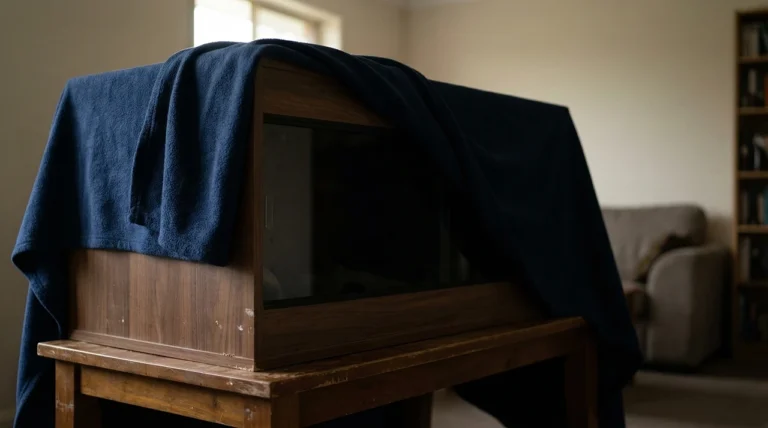
Almost no care guide addresses this directly, and it catches owners off guard every autumn. Any dragon under 18 months should not be allowed to go into brumation. They do not have the fat reserves to sustain a prolonged sleep, and they are still growing fast enough that extended food deprivation during this phase causes real developmental harm.
Some dragons, particularly in their first or second autumn, show brumation signals at 9–14 months: reduced appetite, longer sleep periods, more time hiding. Do not interpret this as the dragon choosing to brumate. Keep lights on the normal 13–14 hour schedule, maintain temperatures, and offer food daily even if appetite is reduced.
If the dragon is still alert when warm, passing normal stools, and showing no physical changes, hold the normal husbandry routine. Most come back to normal appetite within a few weeks once the environmental cues stabilise. The full brumation guide explains exactly how to distinguish real brumation from seasonal appetite reduction in a young dragon.
Juvenile Growth and Care Reference Table
| Age | Expected Size | Weight Range | Diet Ratio (insects:veg) | Insect Frequency | Watch For |
|---|---|---|---|---|---|
| 6 months | 11–16 inches | 200–280g | 70:30 | Daily | Enclosure outgrown, greens refusal |
| 9 months | 14–18 inches | 250–350g | 60:40 | Daily or every other day | Upgrade to adult enclosure |
| 12 months | 16–20 inches | 300–400g | 50:50 | Every other day | Appetite drop, brumation signals |
| 15 months | 17–21 inches | 350–450g | 35:65 | 3x per week | Sexual maturity behaviour in males |
| 18 months | 18–22 inches | 400–500g | 30:70 | 2–3x per week | Growth plateauing, adult diet begins |
Frequently Asked Questions
How Much Should a Juvenile Bearded Dragon Weigh
At six months expect 200–280 grams, reaching 400–500 grams by 18 months. These are ranges, not targets. Individual variation is wide and genetics play a large role. A dragon consistently below the lower end of the range while eating well warrants a vet check for parasites or malabsorption.
When Should You Switch to Juvenile Feeding
Around six months is when the transition from baby to juvenile feeding begins, but the shift is gradual rather than a single change. The practical trigger is when your dragon starts showing less urgency at insect feedings and begins eating greens more consistently. Age is a guide; appetite and behaviour are the actual signals.
Why Is My Juvenile Dragon Refusing Greens
Almost every juvenile goes through periods of green refusal, particularly if insects have always been offered first. Offer the salad every morning before insects, every single day without exception. It takes consistency rather than variety. Rotating greens too frequently before the habit is established usually makes the refusal worse.
Can a Juvenile Dragon Brumate
No. Dragons under 18 months should not be allowed to brumate because they lack the fat reserves for a safe prolonged sleep and their growth rate is still high enough that extended food deprivation causes developmental harm. If your sub-adult is showing reduced appetite and longer sleep periods in autumn, maintain normal lighting and temperatures and keep offering food daily.
When Does a Juvenile Become an Adult
Physical growth largely finishes between 18 and 24 months, with most dragons close to adult size by 18 months. Sexual maturity arrives earlier, between 10 and 18 months depending on sex and individual variation. Adult care protocols apply from around 18 months onward. The intensive juvenile bearded dragon care work is largely behind you at that point: diet transitions, UVB monitoring, and brumation prevention all settle down.
Your Juvenile Care Action Checklist
- ✅ Shift the diet ratio every four to six weeks, not all at once. At six months you are at roughly 70% insects. By eighteen months you should be close to 70% vegetation. Move gradually and let appetite guide the pace.
- ✅ Offer greens before insects at every feeding. This single habit does more to establish green acceptance than any food rotation or flavour trick.
- ✅ Upgrade to a 4x2x2 enclosure by nine months. The temperature gradient in a smaller enclosure cannot support a growing juvenile’s thermoregulation needs, and you will only have to upgrade again in a few months anyway.
- ✅ Check your UVB distance as the dragon grows. A bulb positioned correctly for a six-month dragon may be marginal at twelve months if the basking position has shifted. Measure the actual UV index at the basking surface or verify tube-to-surface distance is within 12 inches.
- ✅ Replace UVB tubes every 12 months regardless of visible output. UVB degrades long before the light appears to dim.
- ✅ Do not let a dragon under 18 months brumate. Seasonal appetite drops in autumn are normal. Maintain lighting, temperatures, and daily food offerings even if appetite is reduced.
- ✅ Do not panic over the appetite drop at 8–14 months. A dragon eating less but still alert, basking, and maintaining weight is almost certainly fine. Lethargy or physical changes alongside reduced appetite is the signal to see a vet.
- ✅ Check toes, tail tip, and eyelids after every shed. Retained shed in these three spots is the main shedding risk in a fast-growing juvenile. A warm soak addressed early prevents circulation problems later.
- ✅ Expect and understand the sexual maturity behaviour changes. Beard blackening, head bobbing, and increased restlessness in males at 10–14 months is normal hormonal behaviour, not illness or aggression requiring intervention.
- ✅ Keep calcium supplementation consistent through the full juvenile phase. This is the window where bone density is established. Gaps in calcium or D3 during this phase are the root cause of most MBD cases diagnosed in adult dragons.
Written by
Sarah ArdleySarah has kept bearded dragons for over ten years. She founded Beardie Husbandry after discovering that most mainstream care advice — including what she followed with her first dragon — was doing more harm than good. Every article on this site is grounded in veterinary research and real keeper experience.