The Complete Senior Bearded Dragon Care Guide (7+ Years)
A dragon that reached seven years in good condition is one that was kept well. That is worth saying plainly, because a lot of owners arrive at senior territory feeling anxious rather than satisfied. They watch their dragon slow down, eat less, shed differently, and wonder which changes are normal aging and which ones need a vet call this week.
Most of what you will observe is normal. A handful of changes are not, and knowing the difference is what good senior bearded dragon care actually comes down to.
The husbandry that carried your dragon through adulthood does not need to be rebuilt from scratch at age seven. It needs specific, targeted adjustments in three areas: diet composition, enclosure accessibility, and vet monitoring frequency. Everything else is paying closer attention to what already works.
What Senior Actually Means for a Bearded Dragon
Most bearded dragons kept under good conditions live between 8 and 12 years in captivity. Wild individuals rarely exceed 5 or 6 years. The 7-year threshold most keepers use for “senior” reflects the point at which age-related physiological changes become observable and start influencing husbandry decisions, not a cliff edge where everything suddenly changes at once.
Some dragons hit this stage at 6. Others show no meaningful change until 9 or 10. Genetics play a significant role, and a dragon bred from long-lived lines under consistent husbandry often ages more gracefully than one that had nutritional gaps or lighting inconsistencies earlier in life. The age is a prompt to look more carefully, not a verdict on what you will find.
The Diet Shift Most Owners Get Wrong
The most common senior feeding mistake is treating the change as simply “more greens, fewer bugs” and leaving it at that. The actual shift is more specific: it is about caloric density, prey digestibility, and green variety, and getting any one of them wrong compounds the others.
A senior dragon’s metabolism has slowed, their activity level is lower, and their digestive efficiency is reduced. High-fat feeder insects that were fine in a five-year-old now sit heavier and digest less completely. Superworms, waxworms, and mealworms belong off the menu as regular feeders entirely.
Silkworms, dubia roaches, and small crickets remain appropriate because they carry less fat and less chitin per gram of protein. Two to three small feeding sessions per week is the right frequency for most seniors, rather than daily offerings.
Greens should now make up 75 to 80 percent of what goes into the enclosure. Collard greens, mustard greens, turnip greens, and dandelion greens remain the staples. Chop everything smaller than you would for an adult dragon.
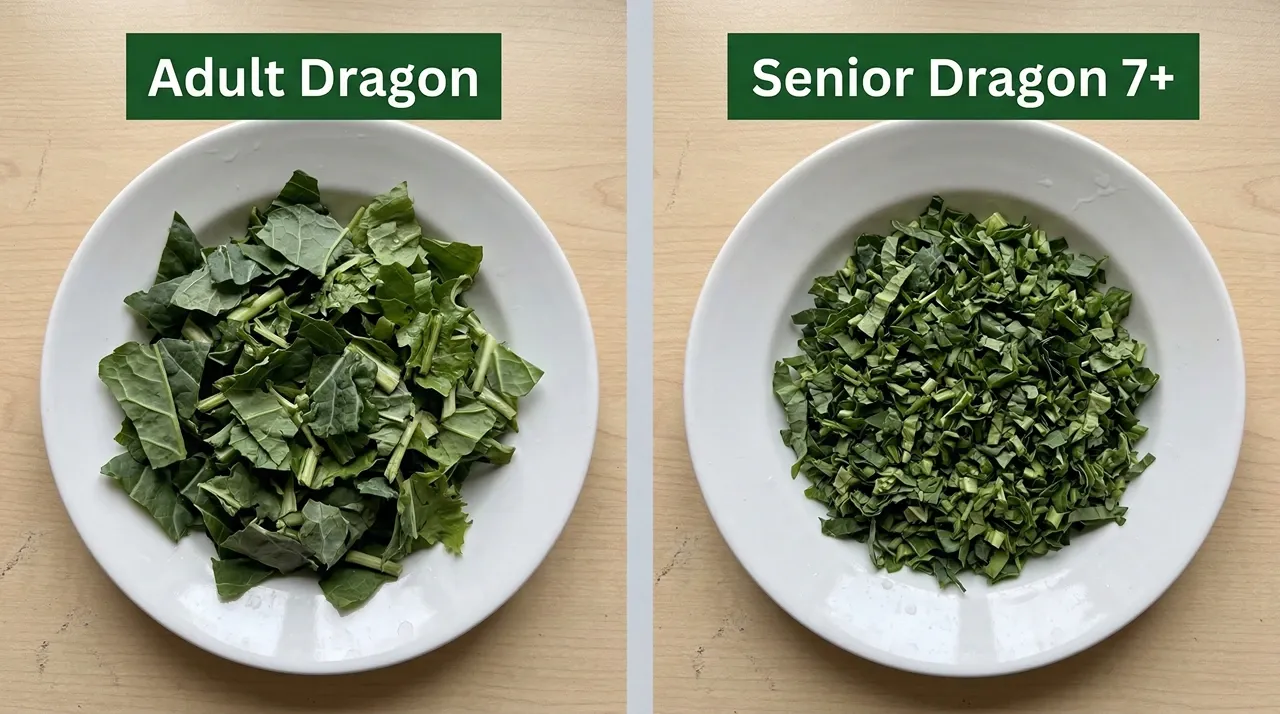
A senior with any degree of dental wear or reduced jaw strength will eat more reliably when vegetation is cut finer. This sounds like a minor detail. In practice it makes a measurable difference to how consistently a senior dragon eats, which matters more as reserves become thinner. Chopped greens are also easier on a digestive tract running at lower efficiency.
Calcium supplementation stays consistent at every feeding for a senior, not reduced. Bone density loss is an age-related risk, and the correct supplement schedule matters more at this stage than any previous point in the dragon’s life. D3 from a quality UVB source remains the safest delivery route, with supplemental D3 powder used sparingly to avoid toxicity.
What Prey Size Rules Change After 7
A senior dragon’s head has not grown since adulthood, so the old rule of feeding insects no wider than the gap between the eyes still applies in terms of anatomy. But the practical rule for seniors is stricter: if you would not describe the insect as small, do not feed it.
The energy cost of subduing and processing large prey is not trivial for a dragon whose metabolic reserves are thinner than at three years old. Small prey is also far easier on the jaw, which matters if dental disease has begun developing silently.
What Normal Aging Actually Looks Like
A senior dragon aging normally will move less across the enclosure during the day and spend longer in single basking positions. Reduced interest in food during late summer and autumn is normal as brumation instincts strengthen. Activity windows shorten. A dragon that basked for six hours at age four may bask for three at age eight. None of this is cause for alarm on its own.
Colouration often becomes slightly more muted. The vivid golden or red tones of an adult in peak condition may shift toward a flatter, less saturated version of itself. Scales can appear drier between sheds. Shed cycles may space out with longer intervals than the dragon showed in earlier years.
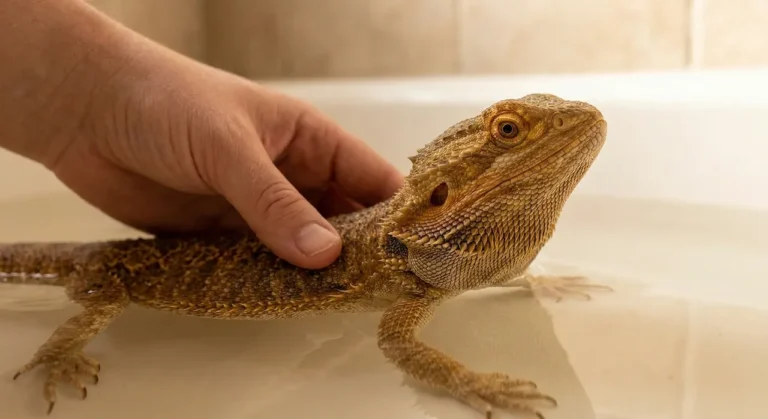
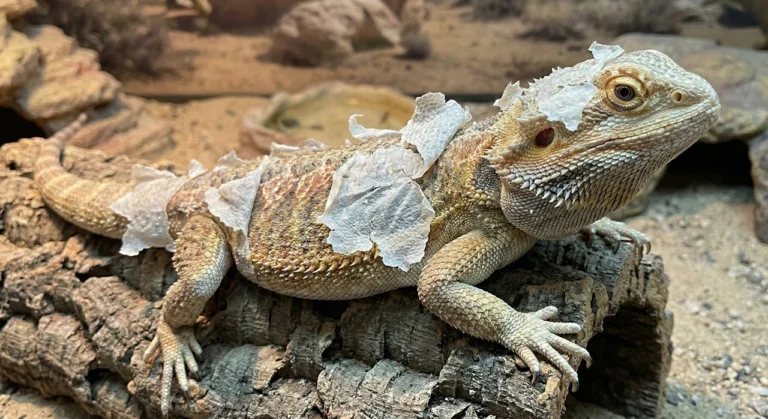
The shed itself may come away in smaller, less cohesive pieces than before. Regular warm soaks two to three times weekly help both hydration and shed quality at this stage and become important rather than optional.
Tail and hip fat reserves naturally reduce with age. Some thinning at the tail base is expected. What you are watching for is the rate of change rather than the presence of change.
Fat Pads Tell You More Than Anything Else
The fat pads behind the eyes are the single most useful at-home health indicator for a senior dragon, and almost no care guide for this age group explains how to actually use them. In a healthy, well-nourished dragon at any age, these pads are plump and slightly convex when viewed from above. In a well-fed senior, they remain full, though perhaps marginally less pronounced than in a peak-condition adult.
When the fat pads begin to flatten, become visibly concave, or develop a sunken appearance, it signals that the dragon is drawing on fat reserves faster than it is replacing them. This can happen during extended brumation, through illness, or through a dietary shortfall.
A dragon whose fat pads are visibly deflating over a period of weeks, particularly outside of brumation, needs a vet assessment. It is one of the earliest visible signs of systemic disease in older dragons and consistently gets missed because owners do not know what they are looking at.
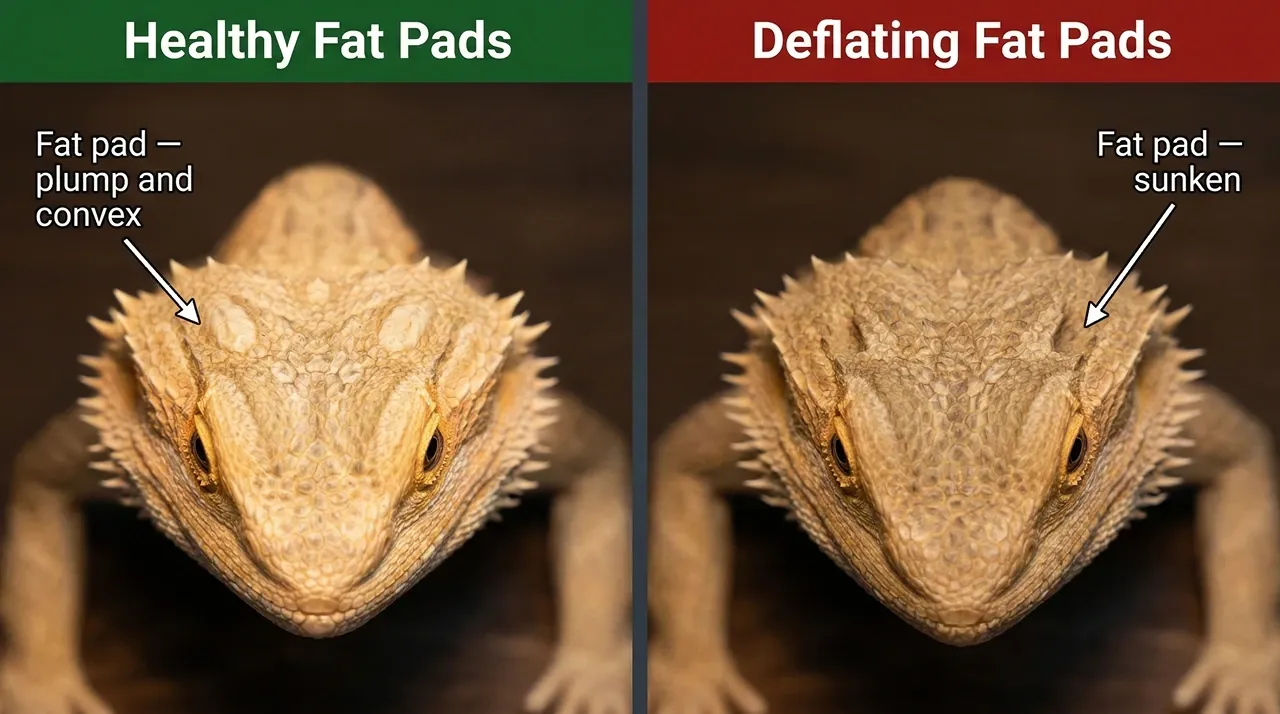
Check the fat pads every two weeks from above in good light. Photograph them regularly from the same angle. Documented change over time is far more useful to a vet than a verbal description of “they look different.”
Brumation Gets Harder to Read After 7
Senior dragons brumate longer, more deeply, and with less predictable timing than younger adults. A dragon that brumated for six weeks at age four may stay down for three or four months at age nine, and may not follow the same seasonal pattern year to year. Both of these shifts are normal.
What makes senior brumation harder to read is that the physical signs of brumation and the physical signs of serious illness become harder to distinguish at this age. A young adult that goes off food in October and slows down is almost certainly brumating. A nine-year-old doing the same thing in March needs a vet check.
The seasonal context matters. Timing, fat pad condition, and responsiveness together determine whether you are watching normal dormancy or something that requires intervention. A dragon that entered brumation at normal weight and is now visibly thin warrants a call. One that has not moved in two weeks and will not respond to gentle handling warrants a same-day visit.
When in doubt, a reptile vet can assess brumation readiness with a physical exam and basic bloodwork before you commit to leaving the dragon undisturbed. The threshold for calling the vet first is lower after age seven than at any earlier stage.
Kidney Health Is the Biggest Senior Risk
Chronic kidney disease is the leading age-related health condition in captive bearded dragons and is almost entirely absent from consumer care guides on this topic. Kidney function declines gradually with age in all reptiles, and the process is accelerated by chronic dehydration, which is extremely common in bearded dragons kept on the drier end of acceptable humidity ranges throughout their lives.
The signs owners can observe at home are subtle in the early stages: slightly reduced appetite, occasional soft or unusual faeces, and a dragon that drinks more readily from a dropper or during soaks than it previously did.
A dragon that suddenly seems more interested in water, or that defecates during soaks more frequently than before, may be compensating for reduced kidney efficiency. These signs do not confirm kidney disease, but they are the prompt for a vet assessment that includes bloodwork.
The practical prevention is consistent hydration. Warm soaks two to three times weekly become more important after age seven specifically because declining kidney function is less forgiving of the mild dehydration that younger adults tolerate without issue.
Hydrating greens should make up a meaningful portion of the diet. Cucumber offered sparingly as a hydration supplement is appropriate even though its nutritional value is low, precisely because the water content is the point. A dragon showing early dehydration signs between soaks needs its soak frequency increased before anything else.
Yes, Senior Dragons Get Dental Disease
Dental disease in captive bearded dragons is well-documented in veterinary literature and almost never mentioned in husbandry articles. A 2021 study published in the Journal of Exotic Pet Medicine found meaningful rates of dental pathology in captive Pogona vitticeps, with periodontal disease and tooth loss among the most common findings in older individuals.
Most owners discover it incidentally during a vet visit, or notice that their dragon has stopped eating hard prey items without understanding why.
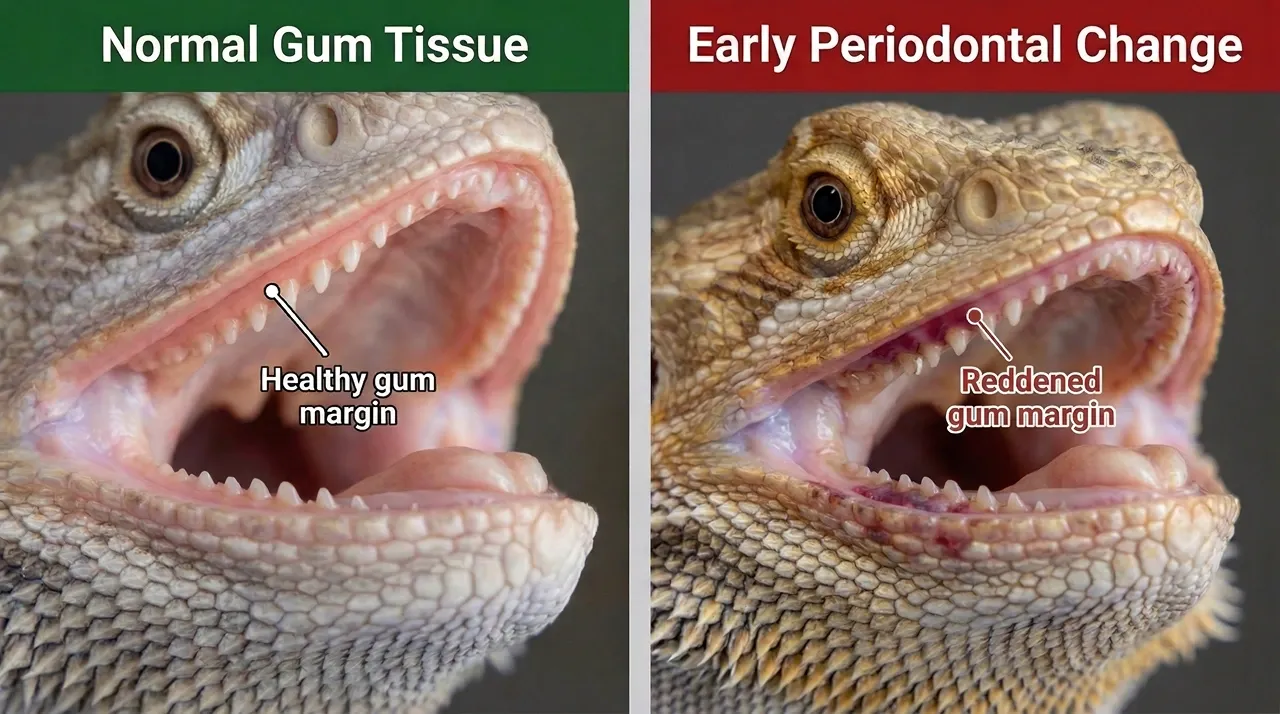
Signs to check at home: gum tissue that looks redder than normal at the tooth margins, any swelling or discolouration around the jaw, a dragon chewing differently on one side. A senior that consistently refuses prey items it previously ate without hesitation belongs in this list too. Reduced appetite paired with normal behaviour in a senior dragon should prompt a look in the mouth before assuming seasonal appetite reduction is the explanation.
Prevention involves consistent oral hygiene during weekly handling. Gentle brushing of the tooth margins with a soft cotton swab is something most dragons tolerate without stress. Catching periodontal disease early matters because untreated oral infection in reptiles can spread to jaw bone rapidly.
Stomatitis that progresses to osteomyelitis in a senior dragon is far harder to manage than early-stage gum inflammation, and the difference is almost always caught at a routine vet check rather than at home.
What the Enclosure Needs to Change
A senior dragon does not need a larger enclosure. It needs a more accessible one. Most owners assume this means a full rebuild. The actual changes take an afternoon.
Basking platforms that required any meaningful climb at age three become a barrier at age nine for a dragon with reduced muscle mass and potentially stiff joints. Ramps or graduated steps made from flat slate pieces allow access to the basking zone without requiring the dragon to haul itself up a vertical surface.
The platform itself should have a textured surface for grip. Smooth flat rock is harder to navigate for a dragon with reduced coordination or weaker claws.
The basking temperature does not need to change. Keeping it at the correct 100 to 110°F for adults remains appropriate. Where senior enclosures often fall short is the cool end. Older dragons spend more time there as their activity windows shorten, and a cool end running below 75°F pushes a senior toward thermal stress faster than it would a younger animal.
Check the cool end temperature as routinely as the basking spot. Verifying the full heat gradient across both ends takes two minutes and matters more as the dragon ages.
UVB output from ageing bulbs is an overlooked senior care point. A T5 HO tube that has been running for ten months produces meaningfully less UV than a new one, even though the visible light looks identical. Senior dragons with reduced immune function and slower metabolism need consistent D3 synthesis more than younger animals do, not less.
Replace your UVB tube every 12 months regardless of whether it appears to be working. T5 HO output degradation is invisible to the naked eye and significant well before the tube visibly fails.
Reduce Stress Before Anything Else
Chronic stress has a greater physiological impact on a senior dragon than on a younger one. Their immune response is less efficient, their recovery from stress events takes longer, and sustained cortisol elevation has measurable effects on appetite and digestion at this age.
If another animal in the household can see into the enclosure, that animal needs to be screened out of the sightline. If your senior dragon can see another reptile’s enclosure from its basking spot, rearrange the room. These sound like small quality-of-life adjustments. At age eight or nine, they are genuine health interventions.
Senior Vet Care Schedule
Annual vet visits that were appropriate throughout adulthood are not sufficient for senior bearded dragon care. The standard recommendation for dragons over 7 is a twice-yearly wellness check that includes physical examination and bloodwork. What the bloodwork is checking specifically: kidney and liver function markers, calcium and phosphorus ratios, uric acid levels for gout screening, and a complete blood count to assess immune function.
A fecal float for parasites should accompany every check, because parasite loads that a younger dragon managed asymptomatically can become clinically significant in an older animal with reduced immune capacity.
The cost of twice-yearly bloodwork is not trivial, but a senior dragon caught early with declining kidney markers, elevated uric acid, or early anaemia has treatment options that a dragon presenting with advanced disease does not.
Most reptile vets who work regularly with older dragons would describe this schedule as the point at which preventative monitoring pays for itself most clearly. If you do not already have a reptile-experienced vet, the ARAV vet directory lists qualified exotic specialists by location.
What Each Symptom Actually Means
| What You Observe | Normal Aging | Worth Monitoring | Vet Call |
|---|---|---|---|
| Reduced activity, shorter basking windows | Yes, from age 7+ | If sudden onset | If combined with no appetite |
| Fat pads flattening slowly over months | Minor reduction normal | Document with photos | If visibly concave or rapid change |
| Longer, deeper brumation | Yes, common after 7 | Monitor weight before entry | If outside season or rapid weight loss |
| Reduced appetite outside brumation | Modest reduction normal | Check mouth, fat pads, stool | If over 2 weeks with no improvement |
| Drier scales, slower shedding | Yes, very common | Increase soak frequency | If shed is stuck repeatedly |
| Gum redness or jaw swelling | No | No | Same week, not next month |
| Increased water-seeking during soaks | Mild increase possible | Check hydration and stool | If paired with appetite loss |
| Difficulty reaching basking platform | No | Lower the platform immediately | If coordination issue is new and worsening |
Frequently Asked Questions
How Long Do Bearded Dragons Live Past 7
Most well-cared-for dragons that reach 7 live to between 10 and 12 years, with some reaching 14. Genetics, lifetime husbandry quality, and how consistently health issues are caught and treated early are the main variables. Dragons with a history of good nutrition, correct UVB, and regular vet care from a young age consistently outlive those with gaps in their history.
My Senior Dragon Stopped Eating. Is That Normal
Reduced appetite in a senior dragon is common and not always alarming, but the context matters. A dragon going off food in late summer or autumn with normal fat pads and normal behaviour is probably entering brumation. A dragon that stops eating in spring, is losing visible weight, and is less responsive than usual needs a vet check within the week rather than a wait-and-see period.
Do Senior Dragons Need Different Lighting
The lighting requirements do not change, but the reliability of your equipment matters more. An ageing UVB bulb that is past its replacement date produces inadequate UV output even when it still appears to glow, and a senior dragon with slower metabolism is less able to compensate for D3 shortfalls. Replace the T5 tube annually regardless of visible condition.
Is It Normal for an Old Bearded Dragon to Sleep More
Yes. Longer rest periods, extended time in hides, and shorter active windows across the day are all normal in dragons over 7. The distinction that matters is responsiveness: a sleeping senior dragon wakes when gently handled and responds normally to its environment. One that does not respond to touch, or that remains motionless in an abnormal position for extended periods, warrants a vet call.
How Often Should a Senior Bearded Dragon See a Vet
Twice yearly from age 7, with bloodwork at each visit. Annual checks that were appropriate during adulthood are not sufficient to catch the kidney, liver, and metabolic changes that develop gradually in older dragons. Early bloodwork findings change treatment outcomes in ways that late-stage findings rarely allow.
What to Check This Week
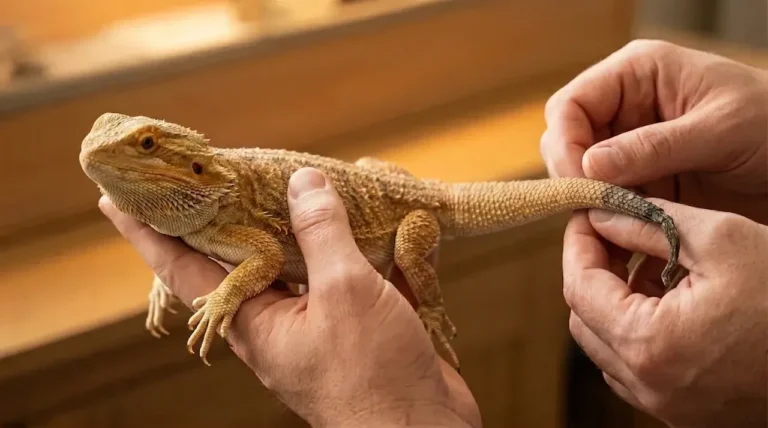
Start with the fat pads. Get your dragon out in natural light, hold it at eye level, and look at the pads behind the eyes from directly above. Photograph them. Do the same again in two weeks and compare. If you have never done this before, now is the baseline.
Then check whether your dragon can reach the basking platform without straining. Any hesitation or slipping means it needs lowering or a ramp added today. Check when your UVB tube was last replaced and replace it now if you are unsure. These two physical changes take less than an hour and have a direct effect on your dragon’s daily quality of life.
If your dragon is 7 or older and has not had bloodwork in the past twelve months, book a senior wellness check. Request kidney function markers, uric acid, and a calcium-phosphorus panel specifically. A vet who works regularly with reptiles will know exactly what to run.
If you are on a twice-yearly schedule already and the last results were clean, keep the schedule and keep monitoring weight monthly. A dragon that reached seven years got there because someone was paying attention. Keep paying it.
Written by
Sarah ArdleySarah has kept bearded dragons for over ten years. She founded Beardie Husbandry after discovering that most mainstream care advice — including what she followed with her first dragon — was doing more harm than good. Every article on this site is grounded in veterinary research and real keeper experience.