Bearded Dragon Cloacal Prolapse: Everything Owners Need to Know
Bearded dragon cloacal prolapse is when internal tissue slips out through the vent opening and cannot return on its own. The cloaca is the single exit point shared by the digestive, urinary, and reproductive systems, so the tissue type you are looking at depends on what is happening inside the body. What it looks like, how long it has been out, and what caused it all affect what comes next.
Most owners who get to a vet within a few hours leave with a treatment plan and a decent prognosis. The ones who wait until morning because the dragon seems fine are the difficult cases.
What You Are Actually Looking At
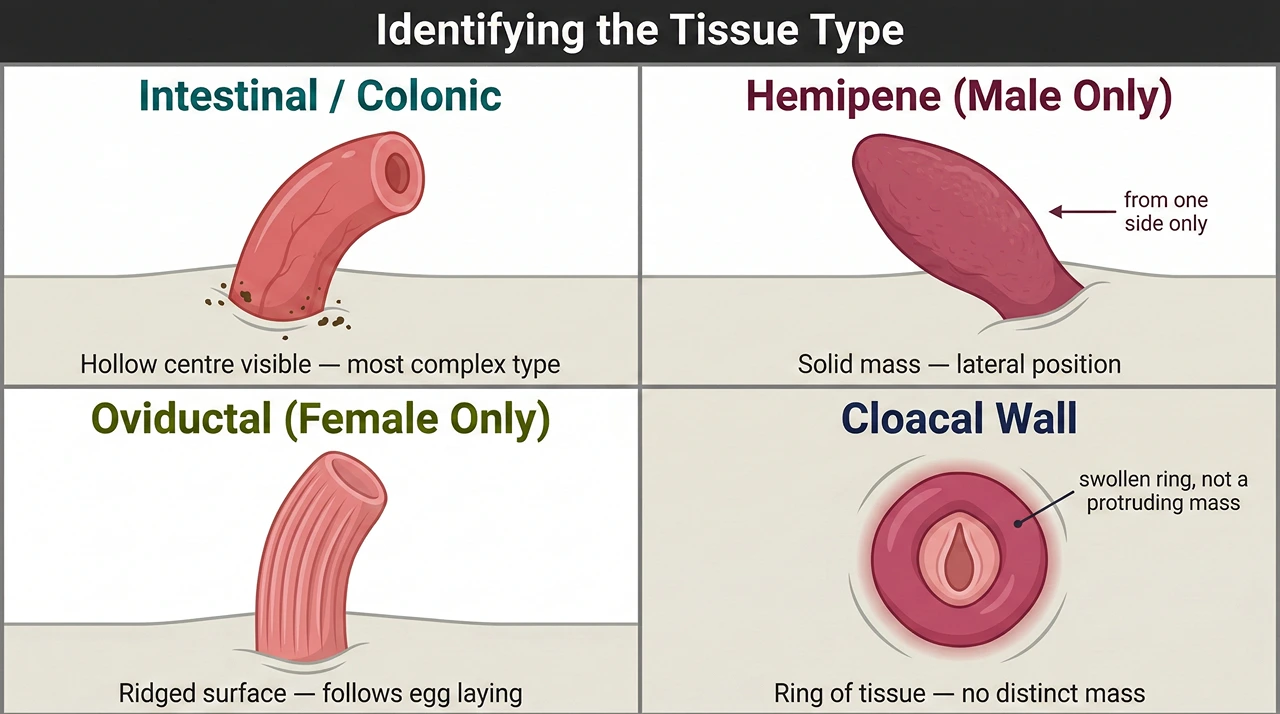
Try to identify the tissue type before you do anything else. This is harder than it sounds at 11pm under a tank light, and tissue is often swollen and discoloured by the time you find it. The descriptions below are what you are working with in real conditions.
Pink or Red, Tubular, With a Hole Through the Middle
This is most likely intestinal or colonic tissue. You may see fecal matter inside or around it. Intestinal prolapse is the most surgically complex type because the vet may need to open the body cavity to correct it. Every hour of delay here narrows the options.
Tissue Coming From One Side of the Vent
In a male, a solid tissue mass emerging from the left or right lateral edge of the vent is almost certainly a prolapsed hemipene. Bearded dragons have two, so it will present from one side only. If it cannot be manually reduced under sedation, the vet can amputate it without affecting the dragon’s day-to-day life. Males who have had a hemipene removed eat the same, move the same, and behave the same.
Tubular Tissue With Ridges Running Along It
In a female, this is most likely oviductal tissue, and it almost always follows egg laying or a failed attempt to pass eggs. If your female has been laying a clutch in the last 24 hours and now has tissue protruding from the vent, that is almost certainly what you are looking at.
A Reddened Ring Around the Vent Rather Than a Mass
This is the cloacal wall itself. It presents as a thickened, reddened ring rather than a defined protruding mass and is easier to miss at first glance. Surgical correction is usually required, and urgency is identical to intestinal prolapse.
Is It a Prolapse or Just Swelling Around the Vent
A bearded dragon cloacal prolapse always involves tissue visibly emerging from the vent opening itself. Normal vent swelling sits flush with the surrounding skin and does not protrude. If you can see a distinct mass of pink, red, or purple tissue coming out of the cloaca, that is a prolapse. If you are genuinely uncertain, treat it as one until a vet says otherwise.
How Long Has the Tissue Been Exposed
Owners usually do not know when the prolapse happened, only when they noticed it. Tissue appearance gives you a rough read on exposure time, and that read matters for how urgently you move.
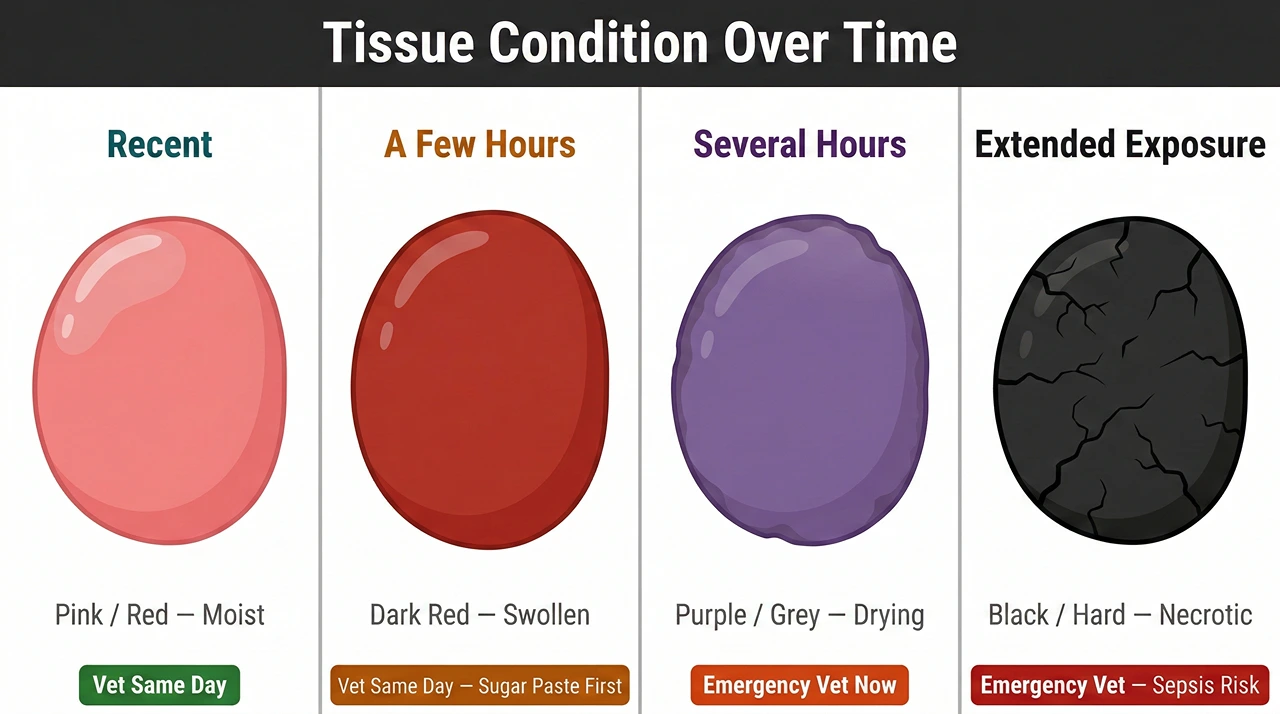
The descriptions below match the progression in the chart above. Compare what you are seeing side by side before deciding how quickly to leave.
| Tissue Appearance | What It Suggests | Action |
|---|---|---|
| Pink or red, moist, surface intact | Recent. Tissue is still in good shape. | Vet same day. Keep tissue moist en route. |
| Swollen, engorged, darker red, surface still intact | A few hours. Tissue is under pressure but usable. | Vet same day. Sugar paste may reduce swelling before you go. |
| Purple, grey, or beginning to dry at the surface | Several hours minimum. Blood supply is compromised. | Emergency vet now. Do not wait for a regular clinic to open. |
| Black, dry, hardening, or clearly necrotic | Extended exposure. Tissue is dying or dead. | Emergency vet now. Sepsis risk is real. Surgical removal is the only option. |
Tissue that looks borderline at first can deteriorate within an hour. Do not recheck it at home and talk yourself into waiting.
What to Do While You Get to the Vet
Move the dragon onto clean paper towels immediately and separate any tank mates. Prolapsed tissue will be investigated and bitten. Rough surfaces and loose substrate will catch on exposed tissue as the dragon moves.
Rinse the exposed tissue once with lukewarm water at around 85 to 90°F to remove debris. Do not scrub. Apply plain KY Jelly to keep the surface moist and wrap the hind end loosely in slightly damp gauze to hold it in place during transport.
💡 Sugar Paste for Swollen Tissue. If the tissue is visibly engorged, mix plain granulated sugar with just enough water to form a thick paste and apply it gently to the surface. Sugar draws fluid out through osmosis and can reduce swelling enough to improve the vet’s options on arrival.
Step 1: Apply paste. Leave for no more than 20 minutes.
Step 2: Rinse thoroughly with lukewarm water.
Step 3: Re-lubricate with KY Jelly.
Step 4: If swelling has not visibly reduced after one application, stop. Lubricate, wrap, and leave. Repeating it on tissue that is not responding wastes time you do not have.
Plain honey works the same way if sugar paste is not practical.
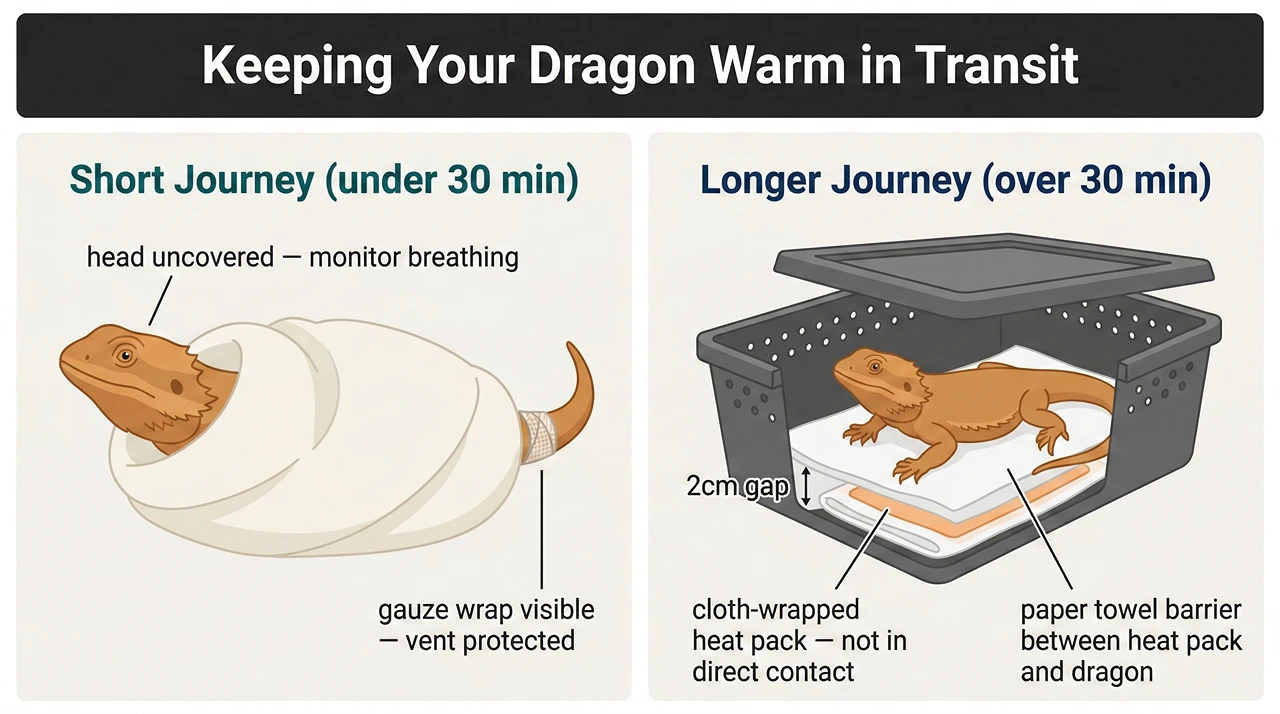
Keep the dragon warm during transport. A cold-blooded animal arriving significantly chilled is harder to sedate safely. A fleece wrap around the body is enough for a short journey. For trips over 30 minutes, place a cloth-wrapped heat pack under the carrier floor, not in direct contact with the dragon or the vent area.
What Causes Cloacal Prolapse in Bearded Dragons
Something drives the straining that forces internal tissue out through the vent. Your vet will be looking for that cause, and treating the prolapse without finding it makes recurrence likely. The most commonly missed cause in captive bearded dragons is low calcium. Owners who are confident their supplementation is correct are regularly surprised when bloodwork says otherwise.
- Intestinal parasites causing painful or persistent diarrhoea. Internal parasites are underdiagnosed because many dragons carry a load without obvious symptoms until something like this happens.
- Constipation or impaction from loose particle substrate, dehydration, or inappropriate feeders.
- Dystocia in females carrying eggs they cannot pass. Sustained straining to expel stuck eggs creates exactly the pressure that causes prolapse.
- Low calcium and metabolic bone disease. Hypocalcaemia weakens the muscular walls that hold internal structures in position. A dragon with MBD has compromised muscle tone throughout the body, including the cloaca.
- Chronic dehydration producing hard, dry faecal matter that requires prolonged straining to pass. Consistently orange urate colour is the earliest sign that hydration is insufficient.
- Bacterial infections, trauma, or internal masses creating pressure from within the body cavity.
Will My Dragon Need Surgery
Not always. A vet seeing pink, viable tissue in a stable dragon will attempt manual reduction under sedation first. The tissue is cleaned with saline, lubricated, and gently eased back through the vent. If that works, stay sutures are placed around the cloacal opening for three to five days while swelling resolves. The opening is left just wide enough for urine to pass, and feeding is withheld for the entire suture period. A dragon straining to pass food during this window can undo the reduction.
If the tissue is a hemipene that cannot be reduced, amputation is the standard approach. If prolapsed intestinal or cloacal tissue is non-viable, surgical resection under general anaesthesia is required. That involves opening the body cavity and carries a more cautious prognosis.
Expect X-rays regardless of tissue type. Mineralised eggs, bladder stones, and impactions all show clearly on radiographs and are the fastest route to identifying the underlying cause.
What to Tell Your Vet When You Call Ahead
Call the clinic before you arrive. Tell them you have a bearded dragon with cloacal prolapse, the colour and approximate size of the tissue, whether it appears moist or beginning to dry, how long you estimate it has been exposed, and the sex of the dragon. If your female has been laying eggs recently, say so immediately. A vet with that information can have drugs drawn, instruments ready, and a surgical team on standby before you walk in.
Recovery at Home After Treatment
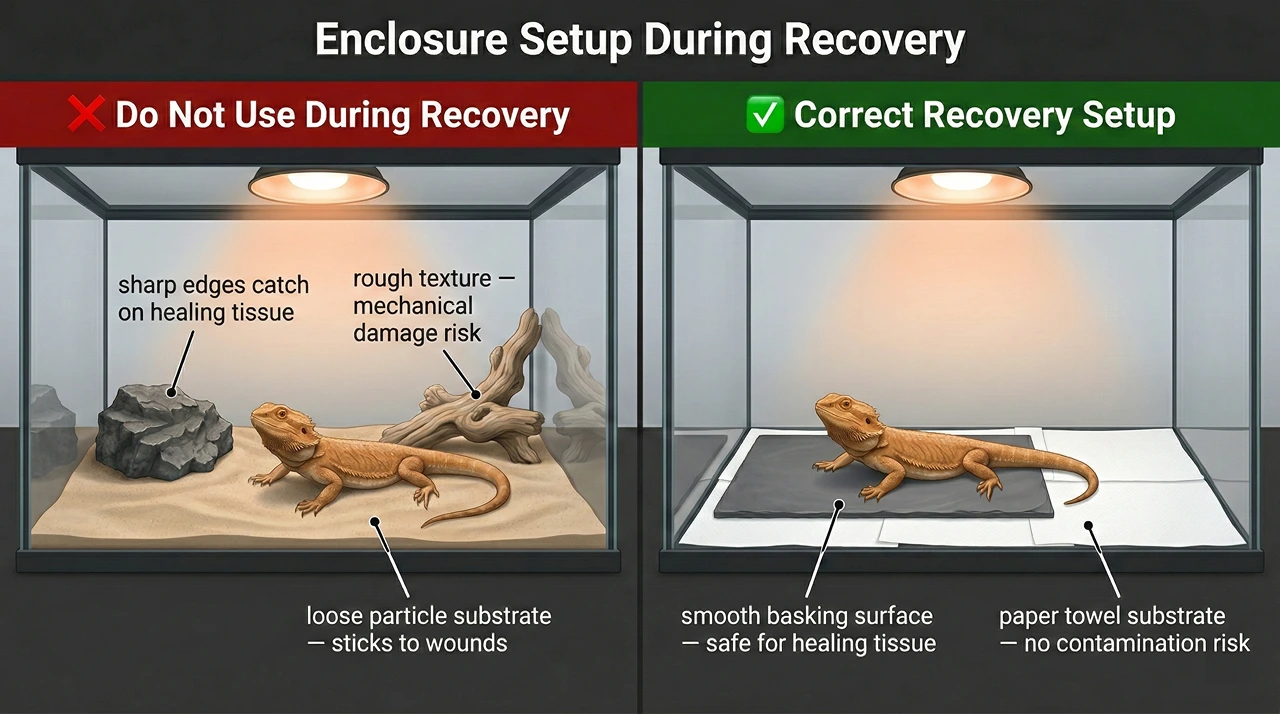
Strip the enclosure to basics for the entire recovery period. Paper towels as substrate, smooth flat basking surfaces, no rough wood or abrasive edges that can catch on healing tissue. If the enclosure was running loose particle substrate before this happened, switch it permanently before the dragon goes back in.
If stay sutures were placed, keep the vent area above the waterline during soaks. Daily warm soaks at 85 to 90°F for 10 to 15 minutes still matter for hydration, but submerging sutured tissue risks introducing bacteria to the wound. Full soaking resumes after sutures are removed.
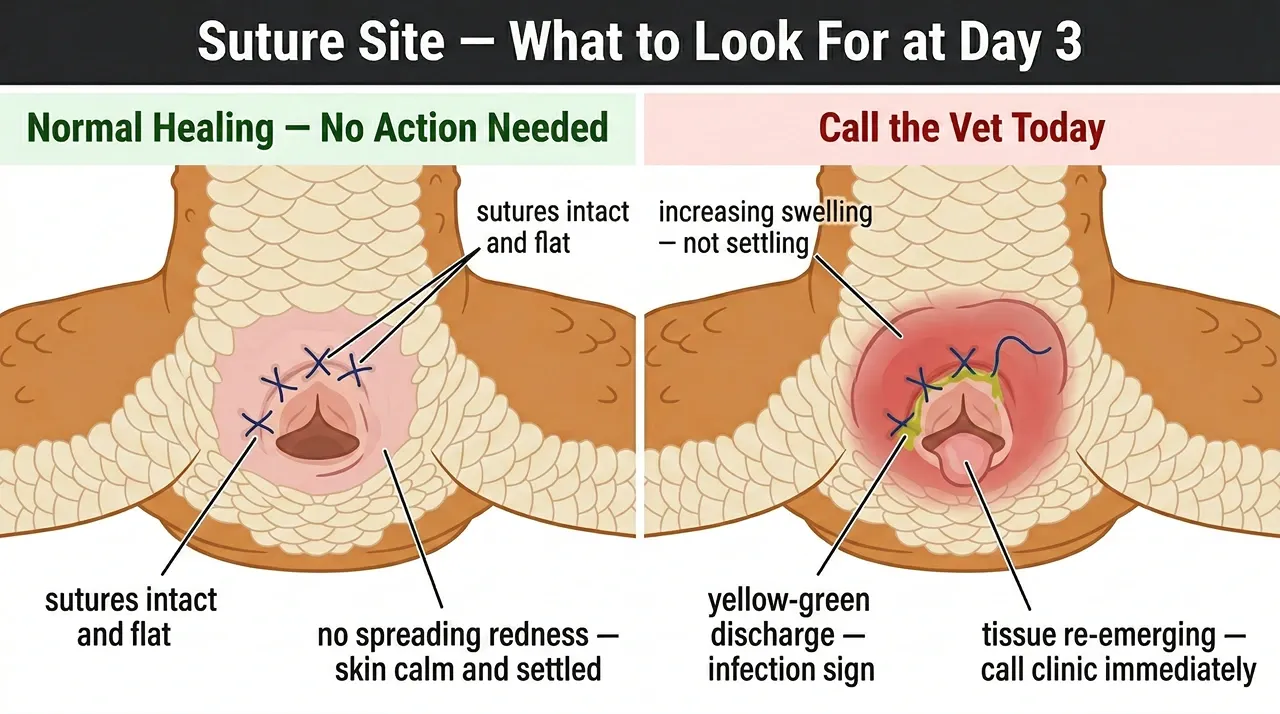
At the removal appointment, the vent area should look settled. No spreading redness, no discharge, no swelling that is increasing rather than resolving. If you see yellow or green discharge, growing swelling, or tissue beginning to protrude again before the scheduled date, call the clinic that day.
Appetite is usually reduced for one to two weeks. Ten consecutive days of complete refusal, or lethargy developing during recovery, warrants a vet call.
Reducing the Risk of Recurrence
- ✅ Annual faecal testing. Most captive dragons carry a parasite burden without obvious symptoms. Testing catches it before it reaches the severity that causes straining.
- ✅ Calcium bloodwork. Low calcium is the most commonly missed driver and the one owners are most confident they have covered. A calcium panel at the next vet visit is worth doing regardless of how consistent your supplementation routine appears.
- ✅ Consistent hydration monitoring. Check urate colour at every bowel movement throughout recovery and beyond. Orange urates mean the hydration routine needs to increase.
- ✅ Know your female’s laying history. If she lays regularly, identify your reptile vet contact before dystocia becomes an emergency.
- ✅ Remove loose particle substrate permanently if impaction contributed to this episode.
Frequently Asked Questions
Can a Prolapse Fix Itself Without a Vet
No. Tissue that has prolapsed and cannot return on its own will not resolve without intervention. Every hour it remains exposed it dries out, swells further, and loses blood supply. There is no home treatment that replaces reduction or surgical correction.
How Do I Know If It Is a Prolapse or Just Vent Swelling
A prolapse always involves tissue visibly protruding from the vent opening itself. Normal vent swelling sits flush with the surrounding skin and does not protrude outward. If you can see a distinct mass of pink, red, or purple tissue emerging from the cloaca, that is a prolapse.
Is a Hemipene Prolapse as Serious as a Cloacal Prolapse
Both need same-day vet care, but the prognosis for hemipene prolapse is better. A hemipene that cannot be manually reduced can be amputated without significantly affecting the dragon’s life. Intestinal or cloacal prolapse is more surgically complex and carries more risk.
Will My Dragon Prolapse Again After Treatment
There is an elevated recurrence risk because the sphincter muscles are weakened by the episode. Identifying and correcting the underlying cause is what reduces that risk most directly.
What Questions Should I Ask the Vet After Treatment
Ask specifically what caused the straining and what testing they recommend to confirm it. The answer to “what caused this” is the most important thing you will leave the clinic with.
Before You Leave the House
- ✅ Move the dragon onto paper towels and separate any tank mates.
- ✅ Rinse exposed tissue once with lukewarm water at 85 to 90°F. Do not scrub.
- ✅ Apply KY Jelly and wrap loosely in damp gauze.
- ✅ If tissue is severely swollen, apply sugar paste for 20 minutes, then rinse and re-lubricate. One application only.
- ✅ Keep the dragon warm during transport. Fleece wrap for short trips. Cloth-wrapped heat pack under the carrier floor for journeys over 30 minutes.
- ✅ Take photos before you leave. Colour, size, and position from behind and each side.
- ✅ Call the clinic before you arrive. Tissue colour, size, estimated exposure time, sex of the dragon.
- ✅ Get the underlying cause identified after treatment. Faecal testing, calcium bloodwork, and a husbandry review before you consider the case closed.
Disclaimer: This article is for general husbandry guidance only and does not constitute veterinary advice. Cloacal prolapse in bearded dragons requires same-day veterinary assessment regardless of apparent severity. Tissue condition deteriorates rapidly once exposed, and prognosis is directly tied to how quickly professional care is received.
Written by
Sarah ArdleySarah has kept bearded dragons for over ten years. She founded Beardie Husbandry after discovering that most mainstream care advice — including what she followed with her first dragon — was doing more harm than good. Every article on this site is grounded in veterinary research and real keeper experience.