Where to Buy a Bearded Dragon (Breeder vs. Pet Store vs. Rescue)
Deciding where to buy a bearded dragon sounds like a five-minute search, and I’ve watched that assumption cost new keepers hundreds in avoidable vet bills within the first three months. The pet store is nearby. A website looks professional. Someone in a Facebook group is selling hatchlings for next to nothing. None of those are impossible starting points, but none of them tell you what you need to know before committing to an animal that could live a decade or more.
The source you choose shapes the dragon’s genetic background, its exposure to disease, and how much vet time you spend in year one. Understanding the full cost of ownership across different sources usually shows that the cheapest animal upfront is rarely the cheapest option overall.
Where to Buy a Bearded Dragon
You have five real options: a chain pet store, an independent reptile store, a private breeder, a reptile expo, or a rescue organisation. Each carries a different risk profile and suits a different type of keeper. None is universally wrong, but they are not equal, and understanding the differences before you hand over money protects both you and the animal.
Why Pet Stores Produce So Many Sick Dragons
Most bearded dragons sold in chain pet stores come from large-scale commercial suppliers, not individual keepers. Those operations prioritise volume, which means hatchlings are often housed in overcrowded enclosures, fed inconsistently, and exposed to animals from multiple sources before they reach the shop floor.
The result is often a dragon that looks alert behind the glass but is already carrying a parasite load, low body weight, or early metabolic damage. These problems usually won’t surface for several weeks, by which point you have bonded with the animal and face a vet bill that easily outweighs what you paid.
Staff knowledge compounds the problem. Even well-meaning employees rarely have the specialist husbandry knowledge that hatchling care demands. General pet stores are not built around the daily feeding routines, precise temperatures, and UVB requirements that young bearded dragons need to develop properly.
Can a Pet Store Ever Be Worth It
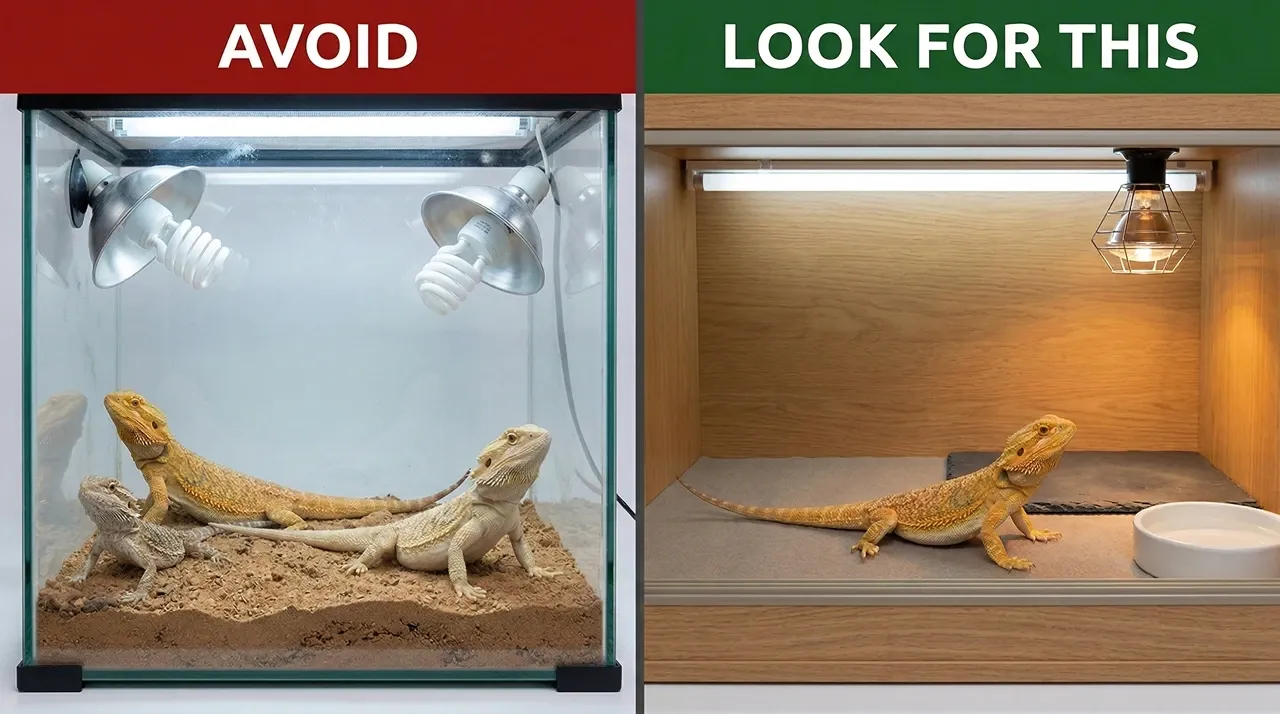
Occasionally. Small independent reptile stores, not chain outlets, sometimes source from reputable local breeders and maintain genuinely good conditions. The markers are clean enclosures, dragons grouped by age and size, a T5 tube UVB light rather than a compact coil, no visible skin tenting or sunken eyes, and staff who can name their supplier without hesitation.
If animals are housed at mixed ages in the same tank, the substrate is loose sand, or nobody can tell you where the dragons came from, leave without buying. Young bearded dragons kept in those conditions frequently show signs of substrate ingestion damage or internal parasites within weeks of arriving home.
What a Reputable Breeder Actually Looks Like
A genuine breeder keeps fewer animals than a farm operation and can tell you the parentage, hatch date, feeding history, and morph genetics of every individual they sell. That level of detail is not incidental. It means the animal has had consistent, documented care from the day it hatched, rather than moving through a supply chain with no individual record.
Expect to pay more than pet store prices. In the US, $80 to $250 for a standard-morph juvenile is a fair range from a reputable breeder. In the UK, expect £80 to £200. That price reflects a health guarantee, clean bloodlines, and post-purchase support from someone who knows the animal’s background. A breeder who won’t answer follow-up questions after the sale is a concern regardless of what they charge.
In the US, MorphMarket’s bearded dragon listings include public seller ratings and review histories, which filters out a large proportion of problematic sellers before you contact anyone. It doesn’t replace your own due diligence, but the public review system removes a significant amount of guesswork from an online search.
Red Flags That Identify a Bad Breeder
Volume is the biggest warning sign. A single person keeping 50 or more breeding adults cannot provide the individual attention that produces consistently healthy offspring. Unusually low prices for rare morphs are another signal worth pausing on, since they sometimes indicate inbreeding within a small gene pool, which shortens lifespans and creates compounding health problems as the animal matures.
Other warning signs include no verifiable reviews or community presence online, reluctance to answer direct husbandry questions, setup photos showing multiple animals in bare tub racks with no visible UVB, and any resistance to showing their facility via video call before you hand over money.
Established keeper communities such as active reptile forums and local herpetological societies are the most reliable filter for separating careful breeders from careless ones. The community has usually already encountered anyone worth avoiding.
Should You Trust Facebook Marketplace
Facebook Marketplace, Craigslist, and Gumtree are where most surrender and rehoming listings appear, and they carry a specific risk that beginners consistently underestimate. There is no accountability system, no seller rating, and no community reputation at stake when someone posts a listing on these platforms. The animal could be healthy and the owner genuinely just needs to rehome it. Or it could be a metabolically compromised dragon from years of inadequate husbandry, being passed on before the health problems become fully visible.
If you pursue a private listing from any of these sources, treat it exactly as you would a rescue adoption. Request a full setup tour on video call, ask specifically about UVB lighting history and diet, and budget for a vet assessment within the first week regardless of how healthy the animal appears. The “free to good home” and low rehoming-fee listings are disproportionately the animals that arrive with hidden problems.
Is Buying Online From a Breeder Safe
It is, when the seller ships professionally. That means insulated packaging, heat or cool packs appropriate to the season, a written live-arrival guarantee, and overnight courier delivery only. Any reputable online seller specifies these conditions without being asked and will send footage of the specific animal eating and moving before payment, not stock photos from previous clutches.
What you sacrifice buying online is the ability to assess the dragon’s weight and body condition before committing. Request footage of the exact animal being handled and moving around its enclosure. Most genuine breeders provide this without hesitation. If a seller resists that request, that resistance tells you something worth acting on.
Reptile Expos Are Underrated by Most Beginners
An expo gives you something neither a pet store nor an online purchase can: face-to-face access to the breeder, the ability to handle the specific animal before buying, and direct comparison between dozens of dragons on the same day. Many of the vendors you meet are the same breeders whose websites you would find anyway through a standard online search.
You also skip shipping entirely, which matters both for your budget and for the animal’s wellbeing during transit. Expos also let you compare different morph options in person, rather than judging colour and pattern from photographs where lighting routinely distorts what you actually receive.
The practical limitation is timing. Expos are not weekly events, and a dragon you want may sell before you finish your first circuit of the hall. Research attending breeders in advance, contact them beforehand if you have specific requirements, and arrive at opening. The best sellers often sell out in the first hour.
Is a Rescue Dragon Right for You
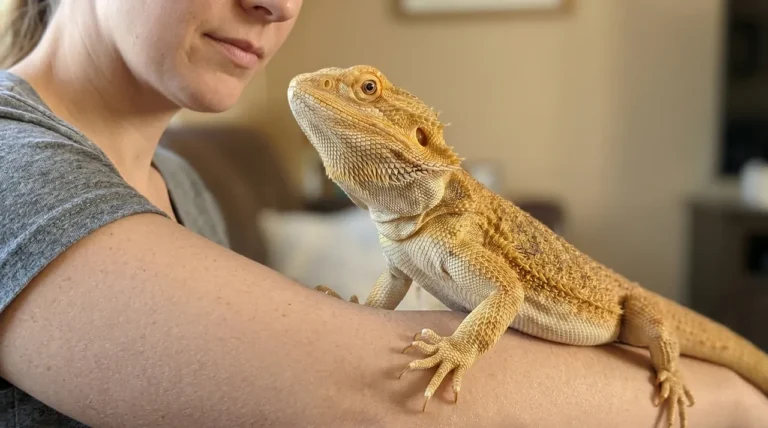
Rescue bearded dragons are most often surrendered due to owner lifestyle changes, not medical crises. Many are healthy adults with a known temperament, past the fragile hatchling stage, already accustomed to handling, and in need of a stable home rather than a chaotic one. For a keeper who doesn’t need a specific morph or hatchling age, a rescue is often the best-value option available.
The honest caveat is that dragons with an unknown or poor husbandry history require significantly more from you upfront. Metabolic bone disease, retained shed, and chronic parasite loads are common presentations in surrendered animals. Not because rescue organisations are irresponsible, but because many dragons arrive from inadequate setups in the first place.
Many rescued adults go through a period of refusing food entirely after rehoming. That is normal stress behaviour in a newly placed dragon, not a sign of illness, though knowing the difference before it happens prevents unnecessary panic. A good rescue will have completed a post-intake vet assessment and should disclose any known health history without you having to push for it.
What to Check Before You Hand Over Money
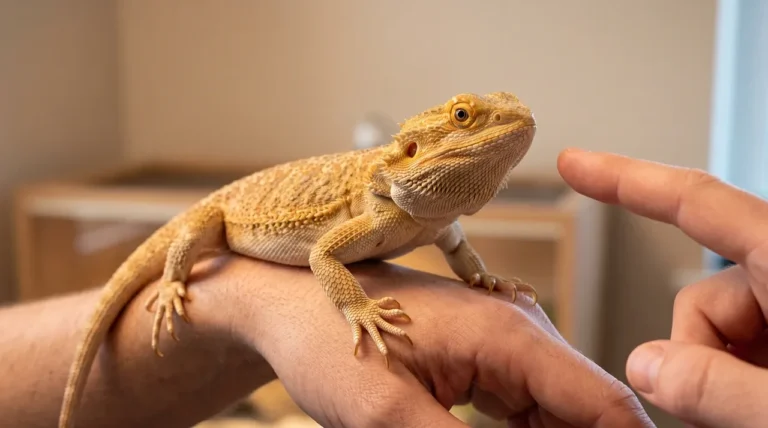
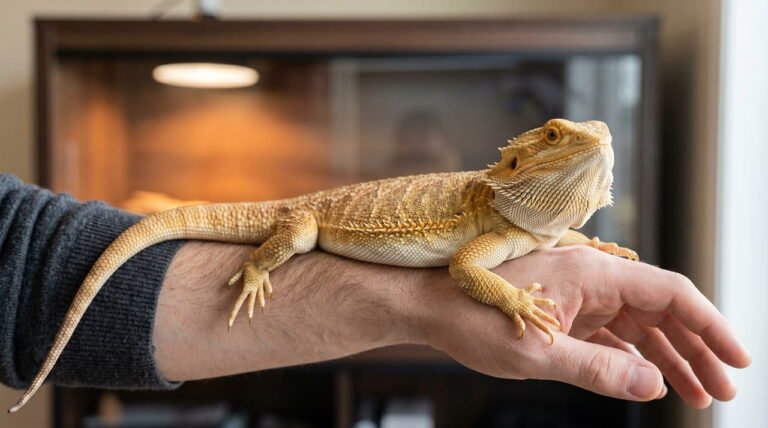
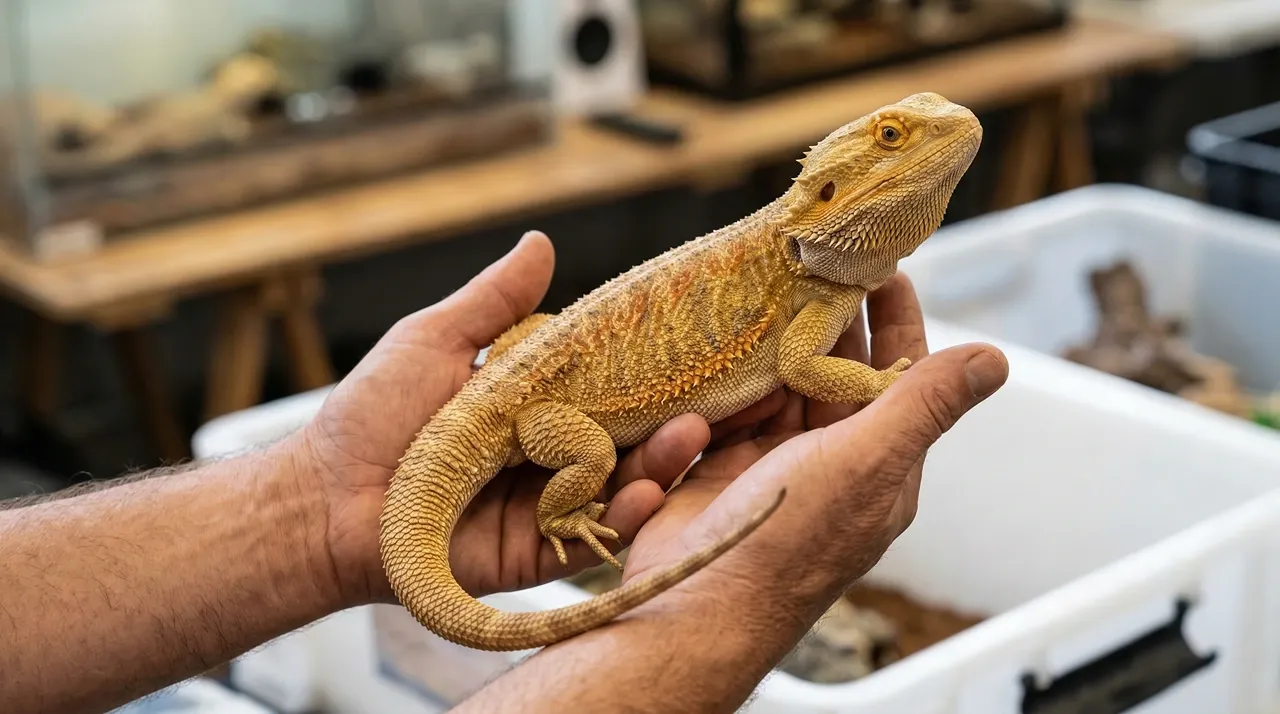
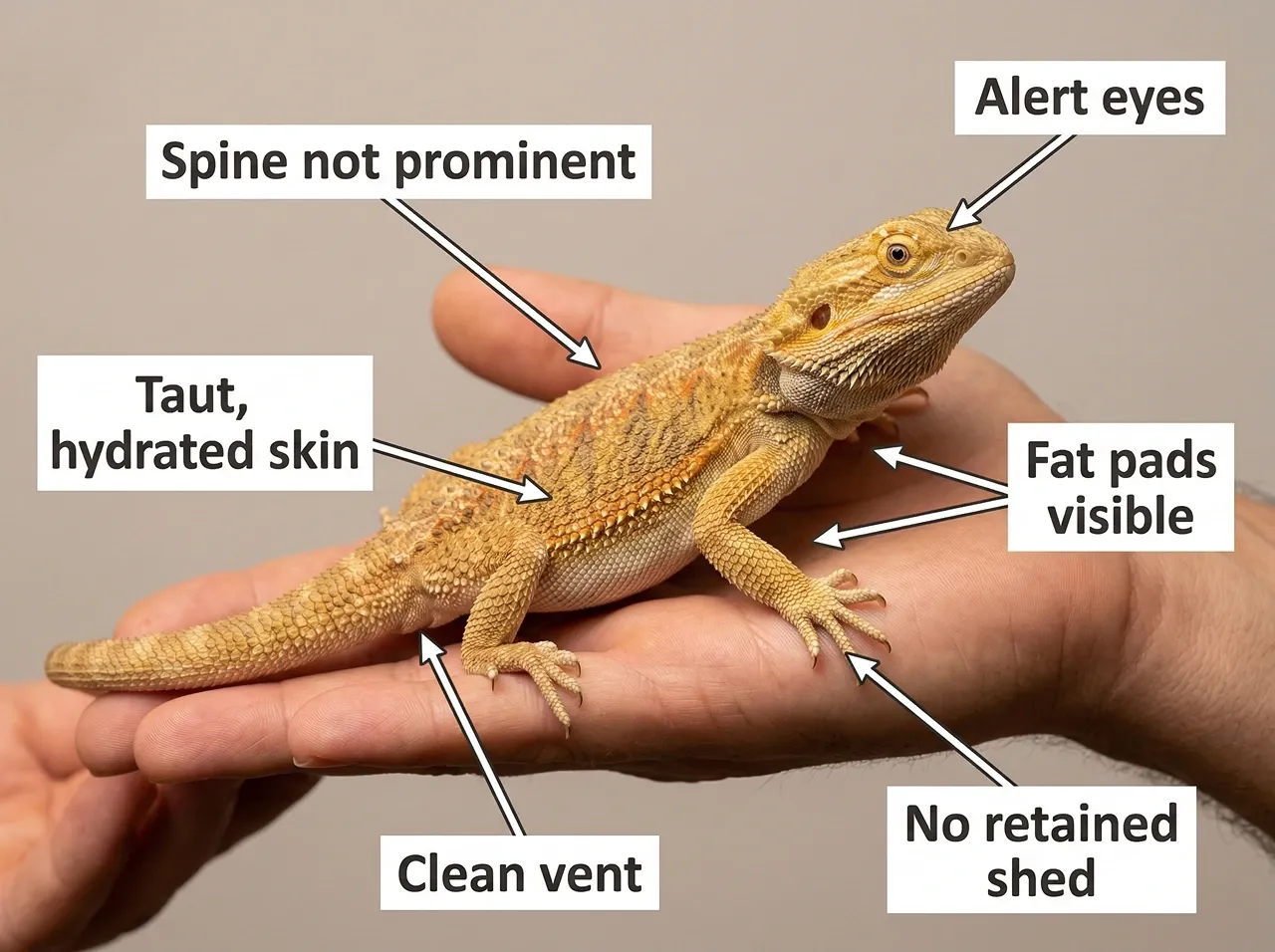
Regardless of where you buy a bearded dragon, there are six physical markers worth assessing before you pay. None require specialist knowledge, and you can run through all of them in under two minutes with the animal in your hands.
- Body weight relative to length: The dragon should feel solid and slightly dense. Run a thumb gently along the spine. You should feel scale texture, not prominent bone edges protruding through the surface.
- Fat pads at the tail base: Two small rounded deposits should be visible on either side where the tail meets the body. Absent fat pads in a juvenile indicate poor feeding history.
- Eyes: Fully open, clear, and tracking movement. No discharge, no swelling around the eyelid margins, no cloudiness in the cornea.
- Vent: Clean and dry, with no crusting, swelling, or staining on the surrounding scales.
- Toes and tail tip: Check for retained shed. Tight constricting rings around digits or the tail tip cause circulation loss that progresses to tail rot if left unaddressed.
- Responsiveness: Place the dragon gently on a flat surface. A healthy animal raises its head, flattens its beard slightly, and tracks movement. An animal that sits motionless without lifting its head warrants a closer look before you commit.
These checks matter most with hatchlings under eight weeks old, which carry the highest health risk of any age group. A juvenile between eight and sixteen weeks is considerably more resilient and gives you more reliable signals to assess at the point of purchase.
Which Source Fits Your Situation Best
No single source suits every keeper. The table below compares the most practical factors across each option so you can match the right choice to your specific situation.
| Source | Typical Price (Juvenile) | Health Risk | Genetic Info Available | Post-Purchase Support | Best For |
|---|---|---|---|---|---|
| Chain Pet Store | $50–$120 / £30–£80 | High | None | None | Not recommended for any keeper |
| Independent Reptile Store | $80–$150 / £50–£120 | Moderate | Sometimes | Occasionally | Convenience buyers who verify conditions first |
| Private Breeder (local) | $80–$250 / £80–£200 | Low | Full | Yes | First-time buyers who want documented history |
| Reptile Expo | $80–$200 / £80–£180 | Low–Moderate | Usually | Often | Buyers who want to assess animals in person |
| Online Breeder | $100–$300 / £100–£250 | Low (if reputable) | Full | Yes | Buyers without local expo or breeder access |
| Rescue | $0–$50 adoption fee / £0–£40 | Variable | Partial or none | Via rescue org | Keepers open to adult dragons and potential rehab |
Frequently Asked Questions
Is It Safe to Buy From Petco or PetSmart
It is possible to get a healthy dragon from a chain store, but the odds are considerably lower than buying from a reputable breeder. Most chains source from commercial suppliers with inconsistent husbandry standards, and staff rarely have the specialist knowledge to identify health issues before they become your problem.
How Do I Find a Reputable Bearded Dragon Breeder
Start with established keeper communities such as the r/BeardedDragons subreddit, where members share direct breeder recommendations based on personal experience. MorphMarket’s public rating system and local reptile society expo exhibitor lists will also surface breeders in your region you can contact or meet in person before committing.
What Is a Fair Price From a Breeder
Expect to pay $80–$250 in the US or £80–£200 in the UK for a healthy standard-morph juvenile from a reputable breeder. Prices significantly below this range for “healthy babies” should prompt more scrutiny, not excitement. Deep discounts on young reptiles almost always reflect a compromise somewhere in the supply chain.
Should a First-Timer Adopt a Rescue Dragon
It depends on the individual animal rather than your experience level. A rescue that has already been health-assessed and maintained well by the organisation is a reasonable first dragon. One in poor condition with no medical history requires genuine willingness to invest in rehabilitation before the animal stabilises.
Do Breeders Ship Bearded Dragons
Yes, reputable breeders ship via overnight courier in insulated containers with temperature-appropriate packs for the season. A written live-arrival guarantee is standard practice from any professional operation, and you should not pay for a shipped animal without one confirmed in writing before the box leaves the breeder’s hands.
Before You Commit to Any Source
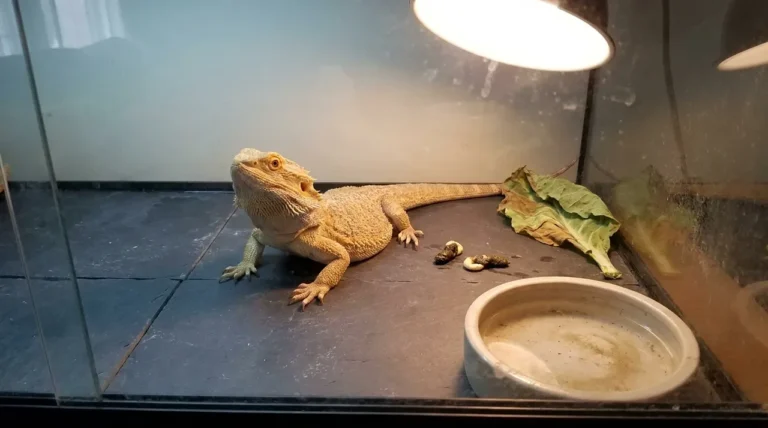
Have your enclosure running for at least 48 hours before you buy, not after. Verified temperatures, confirmed UVB output, and a stable basking spot on day one are the baseline the animal needs from the moment it arrives. Working through the complete enclosure requirements before you finalise a purchase date also helps with budgeting, since knowing exactly what equipment you still need tells you how much you realistically have available for the animal itself.
Once you have a shortlist of sources, spend 30 minutes on keeper forums before committing any money. Search the breeder’s name alongside “review” on Reddit and community boards. An established operation with nothing to hide has a visible, searchable presence. If no community presence exists at all, ask directly in a forum thread before proceeding.
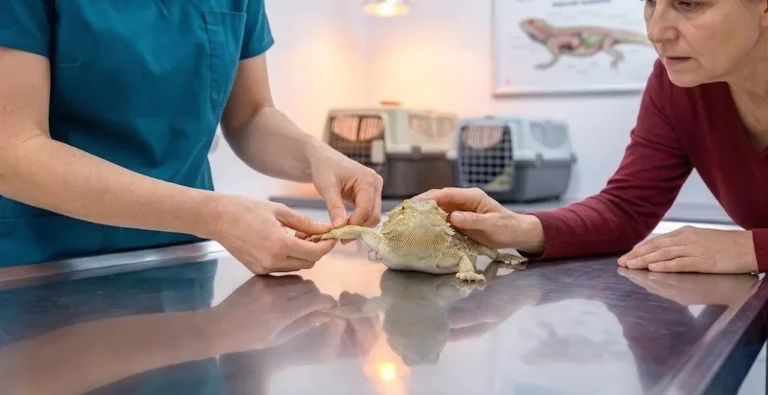
Book a vet appointment within the first two weeks of bringing any new dragon home, regardless of where it came from. A baseline health check catches parasite loads, early metabolic markers, and weight concerns before they escalate. When you call, ask specifically about reptile experience. Not every vet is equally comfortable assessing a bearded dragon, and knowing that upfront saves time when it matters.
Written by
Sarah ArdleySarah has kept bearded dragons for over ten years. She founded Beardie Husbandry after discovering that most mainstream care advice — including what she followed with her first dragon — was doing more harm than good. Every article on this site is grounded in veterinary research and real keeper experience.