Bearded Dragon Not Pooping – Every Real Cause
Three days without a bowel movement and you’re already searching. A bearded dragon not pooping can mean twelve different things, most of them fixable at home. The one thing you should not do is reach for home remedies before ruling out the causes that actually need a vet.
Working through the causes in the right order saves time. If the dragon is producing waste but something looks off, the colour and texture guide is the better starting point.
A Dragon That Won’t Eat Won’t Poop
This one catches keepers off guard. A dragon that has eaten very little for the past week simply has less to move through. Nothing is physically wrong with the gut. There is just nothing in it to produce.
A dragon slowing into seasonal brumation is the most common version of this. Reduced food intake, extended sleeping, and minimal waste output are all normal physiology in a brumating animal. It does not need intervention.
The same applies to a dragon recovering from a stressful shed, one that went off food during a recent temperature disruption, or a newly rehomed animal still adjusting. If intake dropped before the poop schedule did, that sequence tells you something important. Follow the food intake first.
Low Basking Temperature
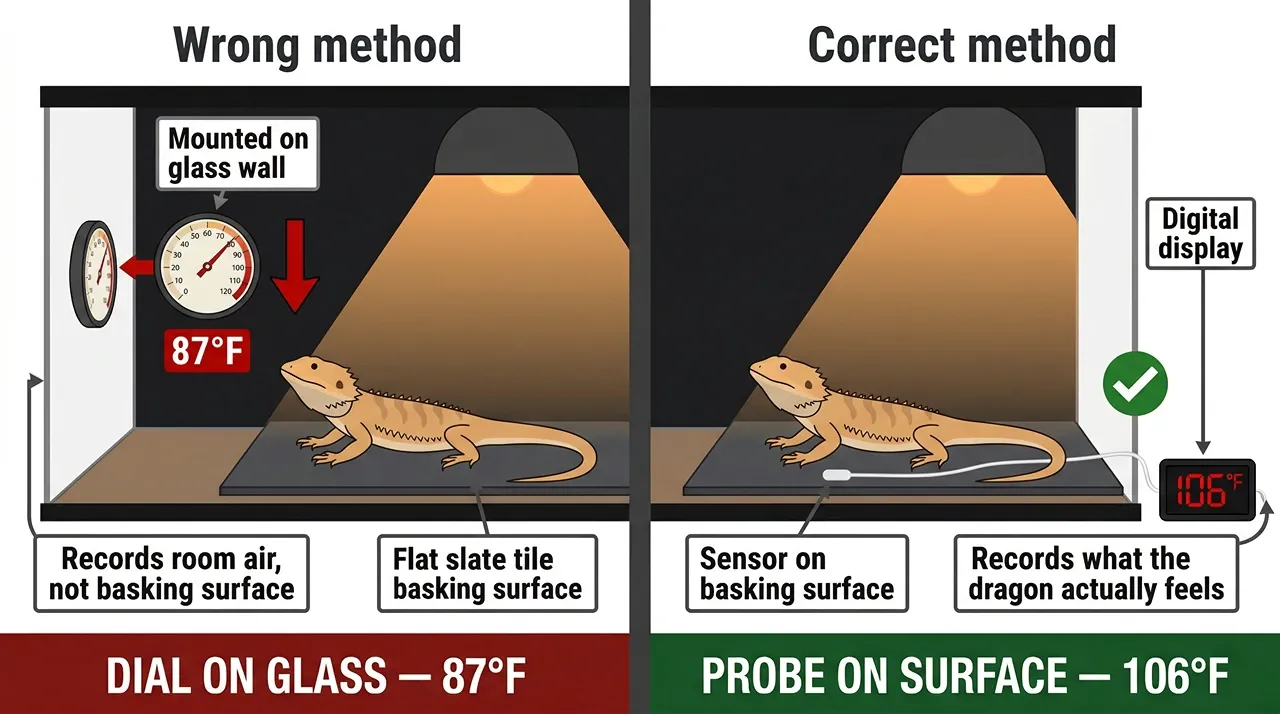
This is the most underdiagnosed cause of a bearded dragon not pooping, and it is almost always the first husbandry factor to verify. Digestion in reptiles requires heat. Without an adequate basking spot, gut motility stalls and food sits in the digestive tract instead of moving through it.
Stick-on dial thermometers routinely read 10–15°F below actual surface temperature. Verify the basking spot with a probe or infrared thermometer before assuming the heat setup is correct.
The correct basking surface temperature for an adult is 100–110°F. The cool side should sit between 80–85°F during the day. A cool side below 80°F means food is moving through a digestive tract that cannot drive it forward efficiently in either direction.
Dehydration
A dehydrated gut pulls water from its contents to compensate, making stool progressively harder and more difficult to pass.
By the time loose skin and chalky urates are visible, that backup has usually been building for days. Recognising the earlier hydration signals gets ahead of it before constipation sets in.
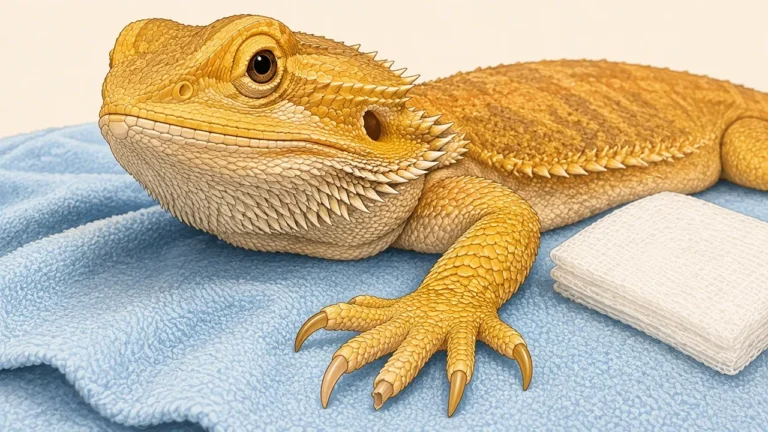
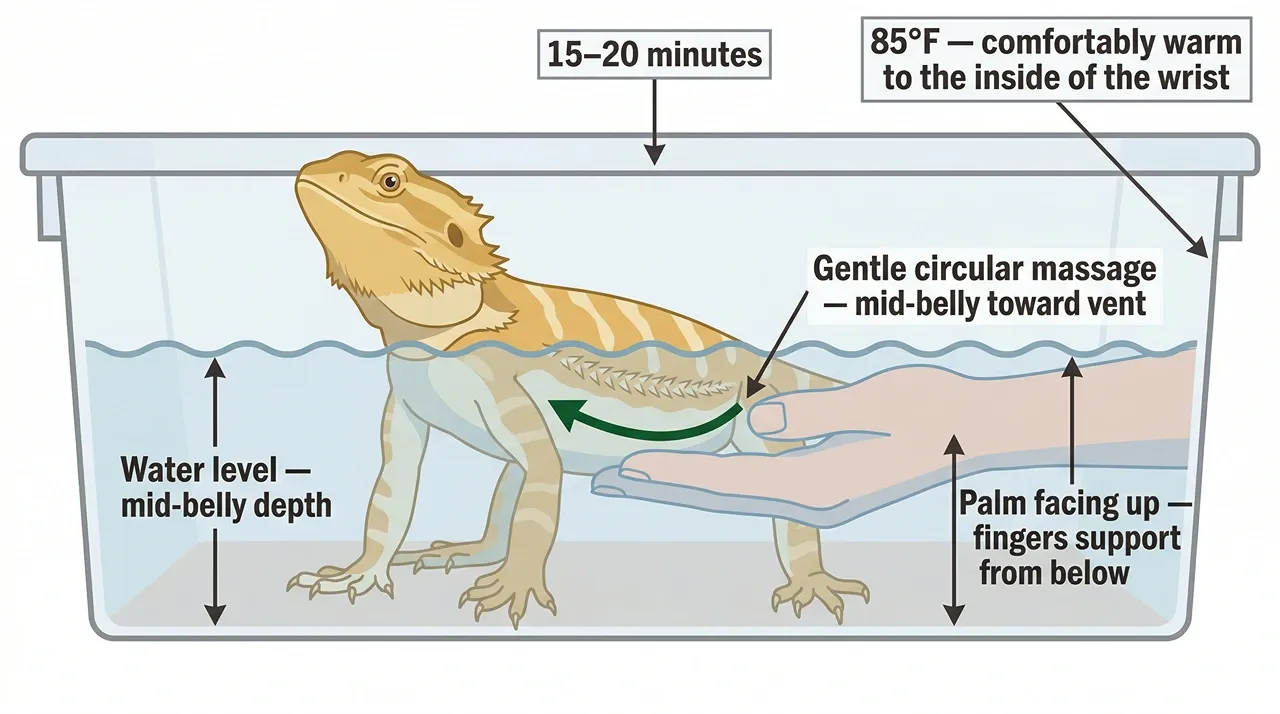
A bearded dragon not pooping due to dehydration responds well to warm 85°F baths for fifteen to twenty minutes, three times a week.
The water absorbed through the cloaca softens stool while the heat drives gut motility. These work simultaneously, which is why a bath is always the first response rather than the last.
Diet That Slows the Gut
Too Much Chitin
Mealworms and superworms have a tough outer shell made of chitin. Fed as an occasional treat, this poses no problem. Fed regularly as a primary protein source, the accumulated chitin slows transit time through the gut considerably. It is one reason mealworms as a staple consistently underperform for adult digestion.
Switching to softer-bodied feeders like dubia roaches alongside a higher proportion of leafy greens usually resolves chitin-related sluggishness within a week or two.
Not Enough Fibre
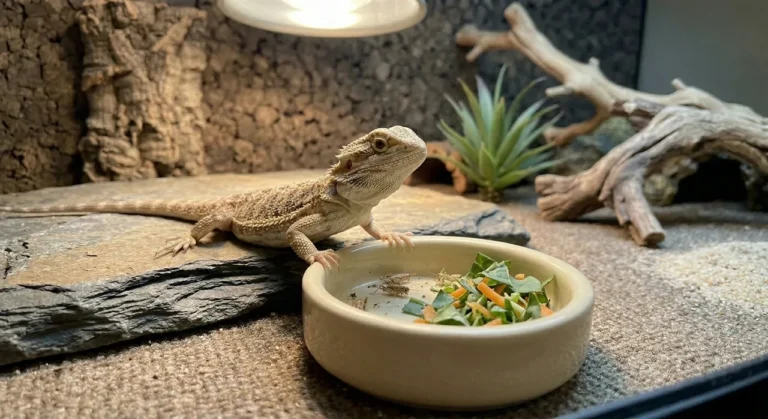
Adult dragons need a diet weighted heavily toward leafy greens. A dragon eating mostly insects will have a slower, less regular digestive cycle than one hitting the correct adult ratio of roughly 70–80% greens to 20–30% protein.
Collard greens, mustard greens, and dandelion leaves move through the gut efficiently and make a noticeable difference to transit regularity.
Feeders That Are Too Large
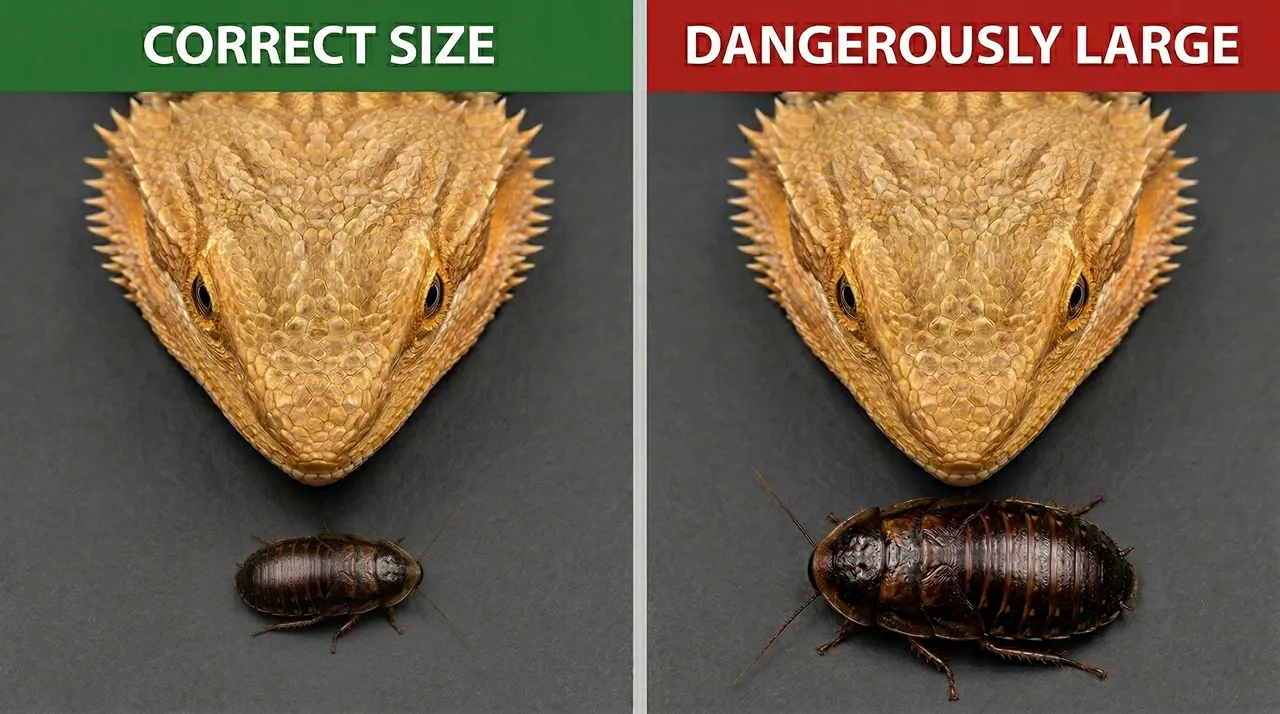
Feeders larger than the gap between a dragon’s eyes place more demand on the digestive process than the gut can handle cleanly, especially at lower temperatures. This does not cause impaction on its own, but it slows transit time and compounds the problem when other factors are already present.
Constipation vs. Impaction
These two terms get used interchangeably in most care content, and that causes real problems because the responses are different.
Constipation is sluggish transit. The stool is present but moving slowly. Warmth, hydration, dietary adjustment, and baths can resolve most cases at home.
Bearded dragon impaction is a physical blockage. Something is obstructing the digestive tract: substrate, a foreign object, compacted waste, or in severely dehydrated animals, a hardened mass of urates lodged inside the cloaca. A physical blockage does not resolve on its own regardless of how many baths you give.
Signs the Problem Is Impaction
The progression from constipation to impaction shows up in specific physical signs. Any of these shift the situation from a watch-and-bath response to a vet call.
- Visible straining at the vent with no output after a warm soak
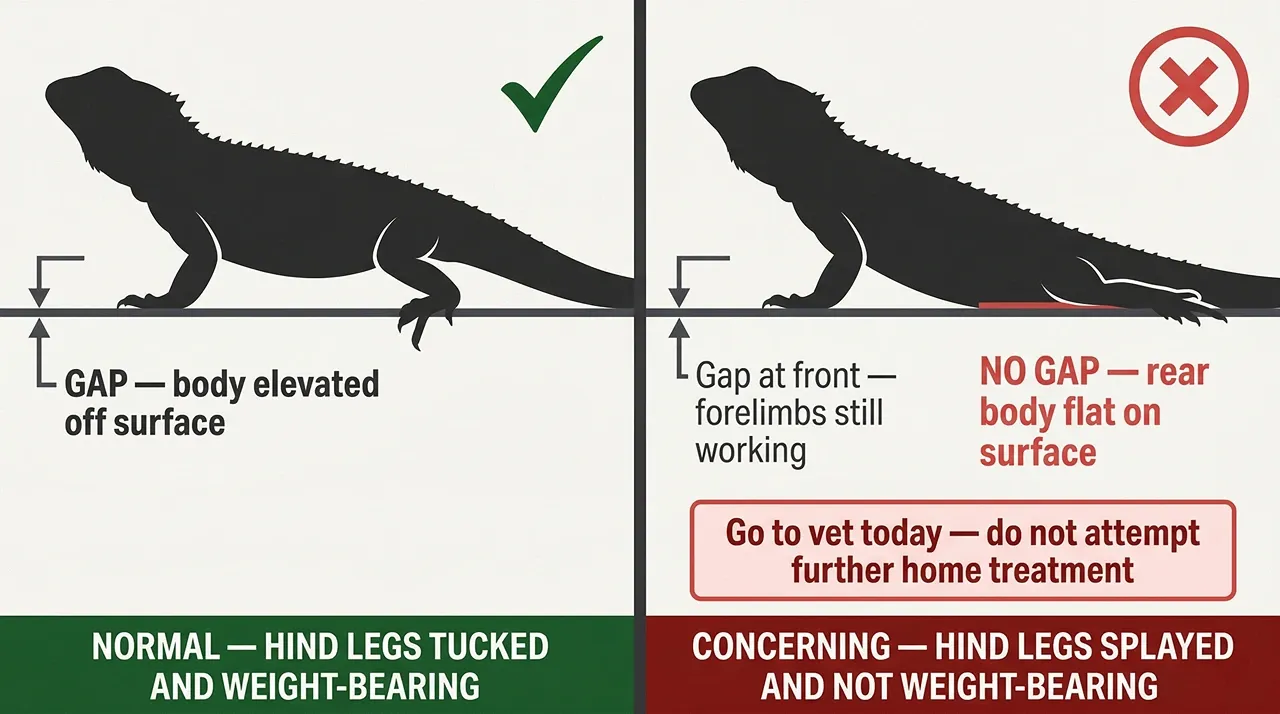
- Hind leg weakness or dragging, because a large colonic mass can press directly on the spine
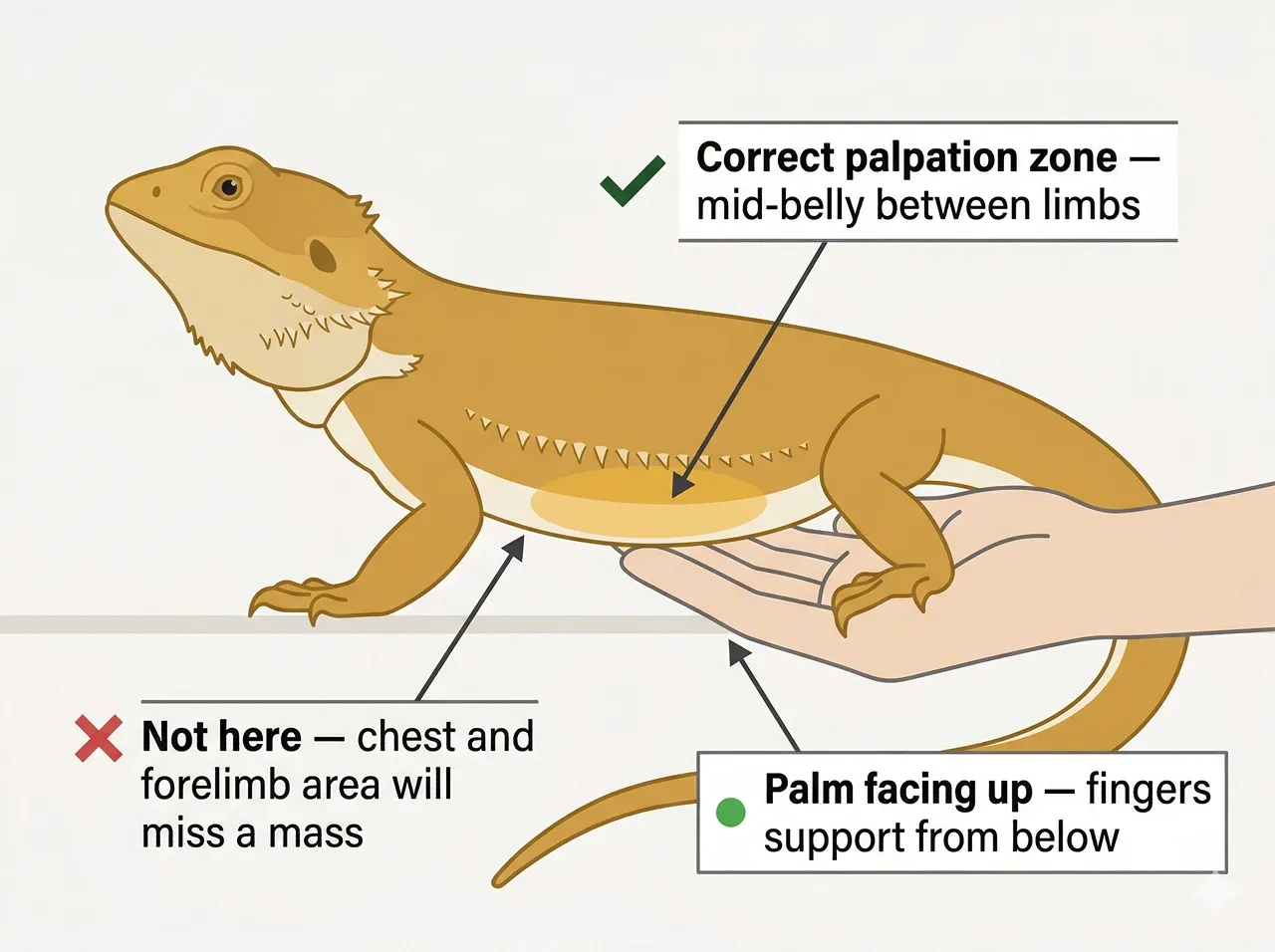
- A firm, cylindrical lump palpable along the underside of the abdomen
- No improvement after two to three days of correct warm baths
- Lethargy and appetite loss alongside the constipation
Hind leg involvement is a hard stop. Do not attempt further home treatment if the rear legs are showing weakness or dragging. That needs a vet today.
Substrate Ingestion
A mineral-deficient dragon will mouth and ingest loose substrate attempting to self-correct. This is not random behaviour. It points to a gap in the calcium and vitamin supplementation routine rather than simply being a substrate problem in isolation.
The fix is closing the nutritional gap through correct dusting while also eliminating the ingestion opportunity. Tile, slate, or textured vinyl flooring remove the risk entirely. Fine sand and play sand are the highest-risk options for any dragon already showing signs of deficiency.
Causes That Get Missed
Urate Plug Blocking the Cloaca
A urate plug is one of the most consistently overlooked reasons for a bearded dragon not pooping, and it is entirely distinct from gut impaction.
Urates are the solid form of reptile kidney waste. In chronically dehydrated animals they can accumulate, harden, and lodge inside the cloaca, physically blocking anything from passing through.
The dragon will strain repeatedly near the vent, posture as if about to go, and produce nothing. Sometimes a small amount of liquid stool passes around the blockage.
Warm soaks resolve mild cases. Moderate to severe plugs require a vet to flush the cloaca safely, typically using a warm-water catheter. Veterinary Partner covers the clinical process in detail in their guide on reptile constipation and urate plugs.
Egg Development in Females
Female bearded dragons produce eggs whether a male is present or not. As follicles mature inside the body cavity, they occupy significant space and can physically compress the colon. A female producing infertile eggs will often stop defecating, dig repeatedly, and appear visibly swollen in the lower abdomen.
This does not respond to baths, diet changes, or any other home approach. A vet visit to confirm gravidity and rule out egg binding is the correct next step. Egg binding is life-threatening and shares enough surface presentation with general constipation that the distinction needs professional confirmation.
Parasites
Intestinal parasites do not always cause diarrhoea. In some presentations, particularly where coccidia or flagellated protozoa have reached a load that disrupts gut motility without triggering liquid stool, the dragon simply slows down or stops going altogether.
Persistent constipation without a clear husbandry explanation warrants a fecal parasite test. It is one of the most affordable diagnostics in reptile medicine.
MBD and Gut Muscle Weakness
Calcium is required for smooth muscle contraction, including in the gut wall. A dragon with chronically low calcium from poor UVB provision, incorrect supplementation, or both will have weakened gut motility alongside the skeletal symptoms of metabolic bone disease.
If constipation persists alongside jaw softening, trembling limbs, or difficulty lifting the body, MBD should be on the vet’s assessment list. Treating the constipation alone without addressing the calcium deficiency produces no lasting improvement.
What to Try at Home
For a bearded dragon not pooping, the right home response depends entirely on what is driving the problem. This table maps each probable cause to the appropriate action and the point at which home treatment should stop.
| Suspected Cause | Home Action | Try For | Escalate If |
|---|---|---|---|
| Low basking temperature | Correct thermometer setup, recheck surface readings | 48 hours | No poop after temperature is confirmed correct |
| Dehydration | 85°F baths, 15–20 min, three times weekly | 3 days | No output; urates still orange or chalky |
| Diet (high chitin, low fibre) | Increase greens, switch to softer feeders | 5–7 days | No poop in 7 days (adult) or 4 days (juvenile) |
| Brumation | No intervention; monitor weight | Weeks to months | Significant unexplained weight loss |
| General constipation | Warm bath and gentle belly massage toward the vent | 2–3 days | No improvement after three bath sessions |
| Impaction suspected | Single warm bath, then vet promptly | Same day | Any hind leg involvement: vet immediately |
| Female, gravid suspected | Vet promptly | Do not delay | Egg binding is life-threatening |
The belly massage technique: after a bath, place the dragon on a warm, flat surface. Use two fingers to apply gentle circular pressure along the underside, working from mid-belly toward the vent. The goal is stimulation, not force. If the dragon stiffens or shows visible distress, stop.
Olive Oil Is Not a Safe Laxative
Multiple care sites still recommend giving olive oil orally for constipation in bearded dragons. This carries a genuine aspiration risk. If oil enters the airway rather than the oesophagus, it causes respiratory complications that are harder to treat than the original constipation. The risk is not theoretical.
Plain canned pumpkin purée, not pie filling, mixed into food is a safer dietary option. It adds fibre without aspiration risk. Neither pumpkin nor olive oil addresses impaction, urate plugs, or colonic pressure from egg development. They are relevant only for mild, diet-driven sluggishness.
When to Go Straight to the Vet
Some causes of a bearded dragon not pooping skip the home-treatment window entirely. These warrant a vet call the same day, not after another round of baths.
- Any hind leg weakness or dragging
- Visible straining at the vent with no output after a warm soak
- A firm lump palpable along the underside of the belly
- No poop in more than 10 days for an adult eating normally
- No poop in more than 4 days for a juvenile eating normally
- A female with a swollen lower abdomen who is digging
- Lethargy accompanying the constipation
A digital X-ray at the vet gives a definitive picture of what is happening inside the digestive tract. For impaction and urate plugs, the clinical options available at the clinic, including rehydration, enemas, and manual extraction, are not replicable at home safely.
Your Bearded Dragon Not Pooping Questions Answered
How long can a bearded dragon go without pooping
Adults can go five to seven days without a bowel movement and remain within normal range, particularly if food intake has been lower than usual. Beyond ten days without a clear explanation warrants investigation. Babies and juveniles have a shorter window: three to four days is the point to act.
Can a bearded dragon die from not pooping
Untreated impaction can be fatal. A severe blockage prevents nutrient absorption and fluid balance, and the compacted mass can press on the spine causing permanent nerve damage. Prolonged constipation with any neurological signs, particularly hind leg involvement, needs a vet rather than further home remedies.
Does a warm bath actually help
Yes, for constipation driven by dehydration, sluggish gut motility, or low ambient temperature. The warmth raises core body temperature and drives digestion forward, while water absorbed through the cloaca softens stool. It does not dissolve a physical impaction or remove a hardened urate plug blocking the cloaca.
What is a urate plug
A mass of hardened urate material lodged inside the cloaca that physically prevents stool from passing. The dragon will strain repeatedly near the vent but produce little or nothing. Warm soaks resolve mild cases. Moderate to severe plugs require a vet to flush the cloaca safely using a warm-water catheter.
My beardie stopped pooping after a tank change
A temporary stress response to environmental change is common and usually resolves within one to two weeks as the dragon settles. Check that all husbandry parameters are correct, avoid intervening aggressively, and monitor weight. If the dragon is actively straining rather than simply not going, that changes the situation considerably.
What to Do Right Now
Write down the last five days: what the dragon ate, what temperatures you recorded at the basking spot, and when you last saw a bowel movement. That timeline, checked against the causes above, usually identifies whether this is a bath-and-diet situation or a vet call.
A bearded dragon not pooping is rarely a mystery once you stop treating the symptom and start working through causes in sequence. Temperature first, then hydration, then diet.
If all three check out and nothing has improved in two to three days, a fresh fecal sample and a reptile vet will give you the answer faster than any amount of forum research.
Written by
Sarah ArdleySarah has kept bearded dragons for over ten years. She founded Beardie Husbandry after discovering that most mainstream care advice — including what she followed with her first dragon — was doing more harm than good. Every article on this site is grounded in veterinary research and real keeper experience.