Why Is My Bearded Dragon Tilting Its Head?
A head cocked sideways, locked at an angle that looks wrong, sometimes lasting hours and sometimes vanishing the second you walk over. A bearded dragon head tilt sits in the most uncomfortable spot in symptom-watching. It might be nothing. It might be the first visible sign of something serious. What else is happening alongside it usually decides which.
Not every tilted head means a vet emergency, but a few causes worsen fast if missed. The job here is to read the full picture, not panic at the tilt itself.
What follows covers every realistic cause, how to read accompanying symptoms, and exactly when to escalate. A 2022 neurological study on healthy bearded dragons published by veterinary researchers found that 19 of 26 healthy adults displayed some form of observable head tilt during examination, so context matters more than the tilt itself. Distinguishing a true vestibular tilt from a casual postural one starts with reading normal beardie posture cues first.
The First Thing to Check Before Anything Else
Is It Actually a Tilt or Is It Bobbing
These two get mixed up constantly because owners describing the behaviour over the phone or in a forum post often use the words interchangeably. They are not the same thing. Head bobbing is a voluntary, rhythmic up-and-down motion the dragon controls themselves. It is communication, usually territorial display in males or submission in females, and the head returns to a normal level position between bobs.
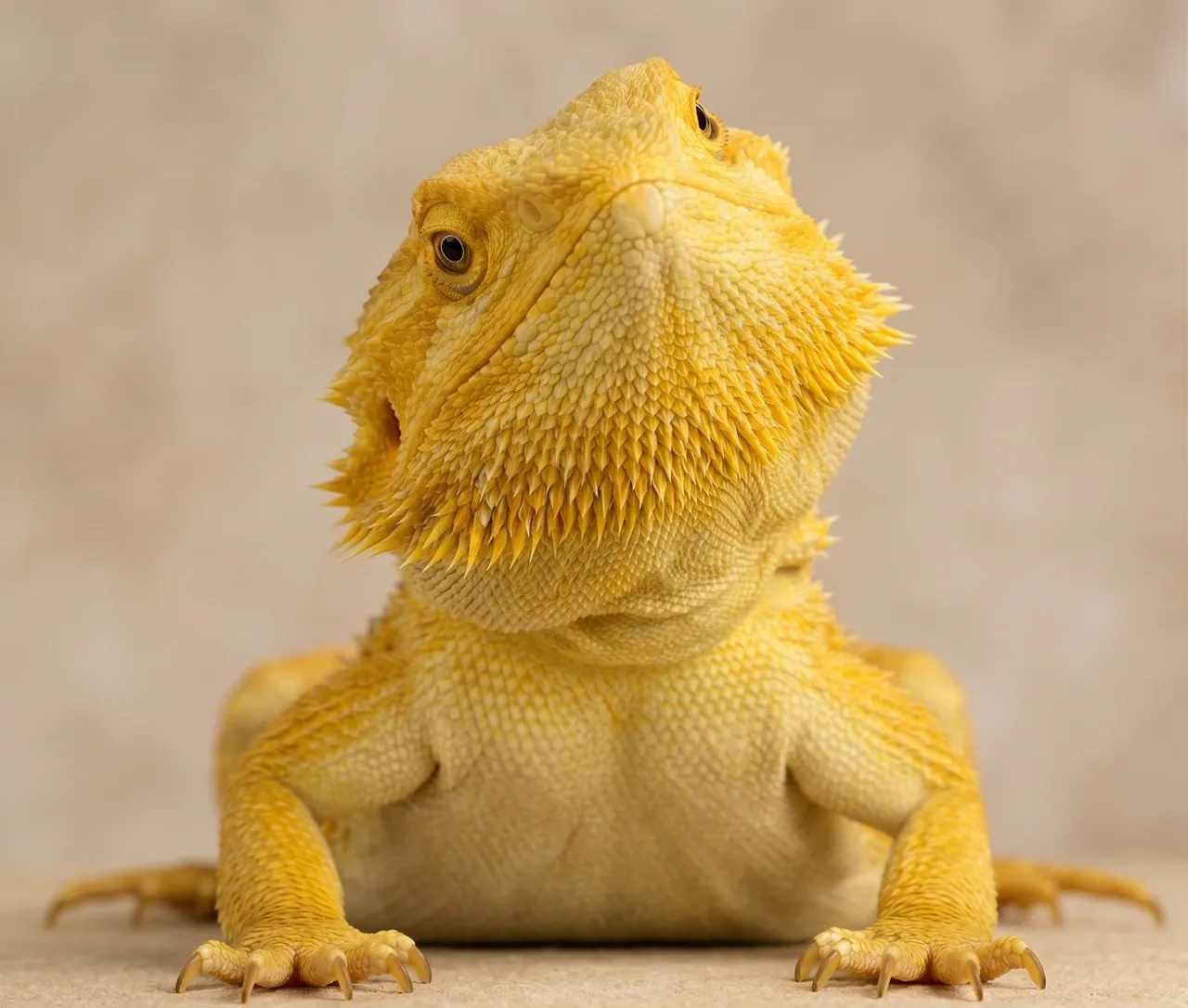
A head tilt is sustained. The head holds at an angle for long stretches and the dragon cannot easily right it. If the head returns to level on its own between movements, that is bobbing and the rest of this article does not apply. If the head stays locked sideways, you are looking at a real tilt.
Watch Without Interfering First
Before assuming the worst, watch your dragon for ten to fifteen minutes without interfering. A true vestibular head tilt is persistent and the dragon cannot correct it themselves. A postural tilt, where the dragon is just looking at something, resolves the moment they shift their attention.
Gently tap on the opposite side of the enclosure. If the head tracks the sound and returns to a tilted resting position, you are likely dealing with a real neurological or balance issue. If the head straightens completely and stays that way once they look around, that was posture, not pathology.
What a Bearded Dragon Head Tilt Is Telling You
Three things matter when reading a bearded dragon head tilt. The direction it leans. How persistent it is. What other symptoms travel with it.
Direction matters because in mammalian vestibular medicine, the head tilts toward the side of the lesion. The same anatomical principle applies to reptiles, so a left-leaning head usually points to a left-side inner ear or neurological problem. That single observation can save a lot of guessing at the vet.
Does It Come and Go or Stay
An intermittent tilt that comes and goes is more likely to be transient. Water trapped in the ear after a bath, a brief postural quirk, or stress will all produce on-off tilting. A persistent tilt that holds for hours and worsens is much more likely to be a developing infection, a virus, or a calcium-related neurological problem.
What to Watch For Alongside It
The accompanying symptoms tell you which condition is most likely. The table below maps the common pairings.
| Head tilt plus this symptom | Most likely cause | How urgent |
|---|---|---|
| Stargazing, twitching, circling | Atadenovirus | Vet within 24 hours |
| Mucus, clicking, open mouth breathing | Respiratory infection extending to inner ear | Vet within 24 hours |
| Tremors, weak jaw, rubbery limbs | Metabolic bone disease | Vet within a week |
| One eye closed, swelling, discharge | Eye or ear infection | Vet within 48 hours |
| Recently bathed, no other symptoms | Water in the ear | Monitor 24 hours |
| Squinting under coil bulb, eye rubbing | UVB photo-kerato-conjunctivitis | Remove bulb today |
| None, dragon eating and active | Postural or normal variation | Monitor |
When Stargazing Points to Atadenovirus
If a bearded dragon head tilt comes with twitching, circling, or the dragon arching its head straight up at the ceiling, atadenovirus moves to the top of the differential list. Stargazing happens when the virus reaches the nervous system in advanced cases.
Adenovirus in bearded dragons typically causes hepatitis and gastrointestinal signs first, with neurological symptoms appearing later as the disease progresses. Younger dragons are hit hardest. A 2017 retrospective study of 529 captive bearded dragons confirmed neurological signs as a recognised presentation in chronic adenoviral infection.
The disease is widespread in captive collections and spreads through direct contact, shared tools, and recycled food. Diagnosis requires a PCR test on a choanal-cloacal swab, sent to a specialist lab. Treatment focuses on managing complications rather than curing the virus, which is why stargazing and adenoviral infection needs early veterinary involvement to give the dragon the best possible chance.
When Respiratory Infection Reaches the Inner Ear
A bacterial respiratory infection that goes untreated can extend into the middle and inner ear. Once it reaches the inner ear, you get otitis interna, and otitis interna produces classic vestibular signs including head tilt, circling, and falling toward the affected side.
The giveaway is the timing. The dragon usually shows respiratory symptoms first. Mucus around the nose, audible clicking when breathing, gaping, and lethargy come before the head tilt appears.
If you have already been watching your dragon for any of those clicking and mucus warning signs and a head tilt has now appeared, the infection has likely escalated. This is a same-day vet visit.
Why Antibiotics Alone May Not Fix the Tilt
Even after the infection clears, some dragons retain a residual tilt because the inner ear damage takes weeks or months to compensate. Vets see this in dogs and cats too. The vestibular system rewires itself slowly. A persistent mild tilt after successful treatment is not always a treatment failure.
When MBD Looks Like a Balance Problem
Severe metabolic bone disease can produce a bearded dragon head tilt that looks very similar to vestibular disease. Hypocalcaemia disrupts nerve function, and you can see tremors, weakness, head tilting, and uncoordinated movement.
The pattern is different from atadenovirus though. MBD-related tilts usually come with rubbery jaw bones, swollen limbs, weak grip, and a history of poor UVB or no calcium dusting. The dragon often has trouble lifting its head off the ground at all, not just holding it tilted.
Reversing nutritional secondary hyperparathyroidism is possible in early cases but slow. Veterinary calcium therapy for MBD needs pairing with a complete husbandry overhaul, particularly fixing the UVB and dialling in a proper supplement schedule.
When Pain on One Side Causes the Tilt
A localised eye or ear infection on one side can make a dragon hold their head at an angle simply because of pain. This is not a true vestibular tilt. It is a pain-avoidance posture, and you will usually see one eye closed more than the other, swelling around the eye or ear opening, or visible discharge.
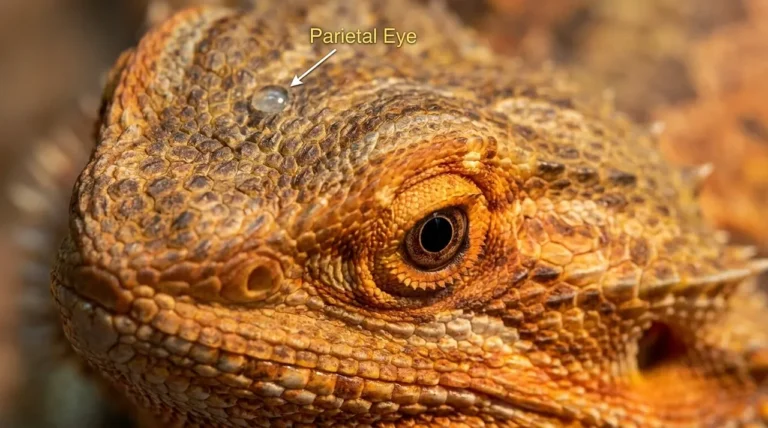
Bearded dragons do not have an external ear flap like a mammal. Their ear is a small, flat opening on each side of the head, just behind the eye. Check both sides under good light. Crusting, asymmetric swelling, or fluid is a clear flag.
If you see signs around the eye specifically, an eye infection in a bearded dragon can develop fast and progress to the eyelid or surrounding tissue. The pain-driven head angle disappears once the underlying infection is treated, usually within days of starting antibiotics.
Three Causes That Get Missed
These three causes show up constantly in keeper experience but rarely make it into care articles. They matter because two of them resolve on their own and one is preventable.
After a Bath, Check for Trapped Water
If your dragon has just had a bath or a deep soak, water can pool in the ear canal. The result is a temporary tilt, often with mild head shaking, that resolves within 24 to 48 hours as the water drains. There is nothing to treat. Keep the basking spot fully on so they can warm and dry naturally.
If the tilt persists past 48 hours, water alone is no longer the most likely explanation and you should look for other symptoms.
When the UVB Bulb Is the Cause
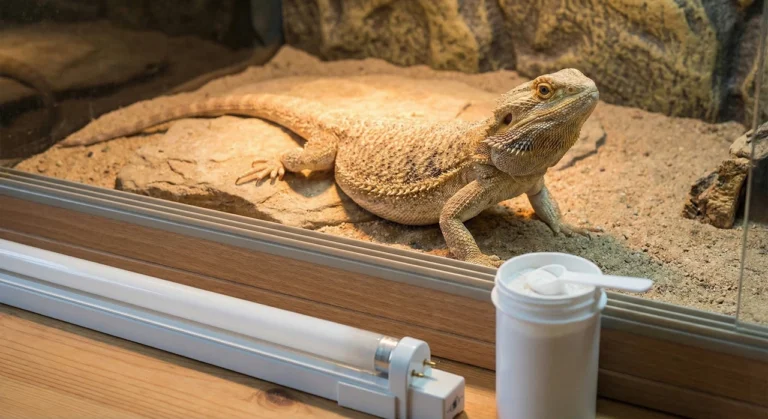
Older compact coil UVB bulbs have caused photo-kerato-conjunctivitis in bearded dragons, particularly close-mounted ones. The dragon squints under the light, rubs at their eyes, and may hold their head at an angle to avoid direct exposure. Several keepers have reported a bearded dragon head tilt disappearing within hours of switching to a long T5 tube.
Modern T5 high-output tubes mounted at the correct distance are the safer standard. Choosing between coil and tube UVB lighting is not just about UVB output. It matters for eye safety too.
When a Large Feeder Caused It
Feeding prey items that are too large can cause pressure in the gut that compresses spinal nerves and produces neurological signs. This is rare but documented. The signs usually resolve once the food passes, but if a dragon recently ate something oversized and now has a head tilt with no other symptoms, mild bulk impaction is worth ruling out.
What to Do Today
If your dragon has just developed a head tilt, work through this checklist before contacting a vet. It will help the vet diagnose faster and may rule out the easy causes.
- Film the behaviour and time how long it persists.
- Check whether they recently had a bath in the last 48 hours.
- Inspect both ear openings under bright light for swelling, crust, or discharge.
- Check both eyes for asymmetry, squinting, or one closing more than the other.
- Listen for clicking, gaping, or any breathing sound when held close to your ear.
- Confirm UVB type and age. If a coil bulb is over six months old, replace it.
- Check basking surface temperature with an infrared thermometer.
- Note appetite, poop frequency, and energy level over the last week.
If any item in the table above pointed you toward a same-day or 24-hour vet visit, contact a reptile-experienced clinic now. Locating a reptile-experienced veterinarian ahead of an emergency is one of the most useful things any keeper can do.
Frequently Asked Questions
Is head bobbing the same as head tilting
No. Head bobbing is a voluntary up-and-down motion used for communication, common in healthy dragons during territorial or mating displays. A head tilt is a sustained sideways angle the dragon cannot easily correct, and it usually indicates a medical issue.
Can a bearded dragon recover from a head tilt
Yes, recovery depends on the cause. Transient causes like water in the ear resolve within 48 hours. Infection-driven tilts often resolve fully with antibiotics, though some dragons retain a mild residual tilt as the inner ear adapts.
Is a bearded dragon head tilt always serious
No. Healthy dragons can show mild postural tilts that resolve on their own. A tilt becomes serious when it persists for more than 24 hours or appears alongside lethargy, breathing changes, twitching, or refusal to eat.
How fast does atadenovirus progress to head tilting
Neurological signs like head tilt and stargazing usually appear in chronic or advanced cases, sometimes months after initial infection. Acute cases more often present with sudden lethargy and death rather than progressive neurological signs.
Can poor UVB cause head tilting
Yes, in two ways. Long-term calcium and vitamin D3 deficiency causes neurological MBD symptoms including tilting. Older coil bulbs can also cause direct eye damage that triggers a pain-related head angle.
The One Thing to Remember
A bearded dragon head tilt on its own is not a diagnosis. It is a symptom that points in different directions depending on what travels with it. Read the full picture, decide which underlying condition is most likely, and act on the right escalation timeline for that cause.
Film it. Check the accompanying symptoms against the table. If anything in the urgent column matches, get to a reptile vet. If nothing does, give it 24 hours, recheck, and then escalate if it has not improved.
Written by
Sarah ArdleySarah has kept bearded dragons for over ten years. She founded Beardie Husbandry after discovering that most mainstream care advice — including what she followed with her first dragon — was doing more harm than good. Every article on this site is grounded in veterinary research and real keeper experience.