Can Bearded Dragons Eat Fruit Every Day? How Much Is Safe
Your dragon spots the strawberry before it hits the dish and practically climbs the bowl for it. The greens you put down an hour ago sit untouched. It is tempting to give in and make fruit the daily reward, because at least then something gets eaten.
So can bearded dragons eat fruit every day? Not safely as a daily habit. A small amount of fruit folded into the salad now and then does no harm, but fruit fed every single day shifts the sugar load high enough to cause real problems over time.
The confusion is understandable. One vet site says fruit can be a few percent of the diet daily, another says once a week maximum, and they are both technically describing the same thing from different angles. Sort out which rule you are actually following and the answer becomes simple.
Why Daily Fruit Causes Problems
Fruit is mostly water and sugar with very little of what a dragon actually needs. It carries almost no usable calcium, and several popular fruits sit at a poor calcium-to-phosphorus ratio that works against the mineral balance you spend so much effort getting right.
One strawberry on a Tuesday is nothing. The issue is the daily pattern.
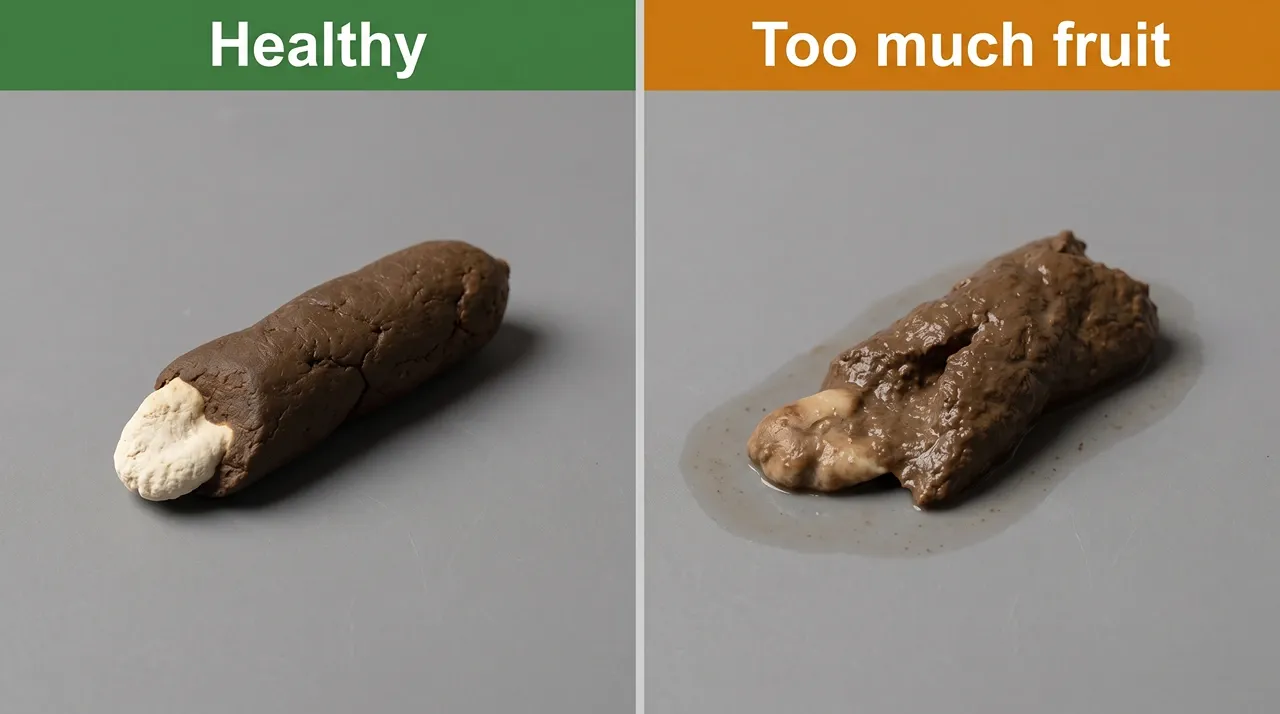
When fruit becomes an everyday item, the sugar adds up faster than most keepers realise. The gut flora that handles a dragon’s normal greens-and-insect diet does not cope well with a constant sugar drip, and the result usually shows up first as loose, smelly stools.
Pro tip: Runny stool after a fruit-heavy week is your earliest warning. Pull fruit for a week and watch it firm back up. If it stays watery, foul-smelling, or discoloured once the fruit is gone, that points to something beyond sugar and is worth a vet call.
What Too Much Fruit Does Over Time
The short-term mess is the mild end. Fed daily for weeks and months, high fruit intake pushes a dragon toward obesity, and excess sugar puts strain on the liver that can develop into fatty liver disease.
None of this happens from an occasional treat. It happens when fruit quietly becomes part of the everyday routine and nobody steps back to add it up.
That slow creep is exactly how a lot of overweight dragons get there, and reversing an overweight dragon takes far longer than the months it took to cause.
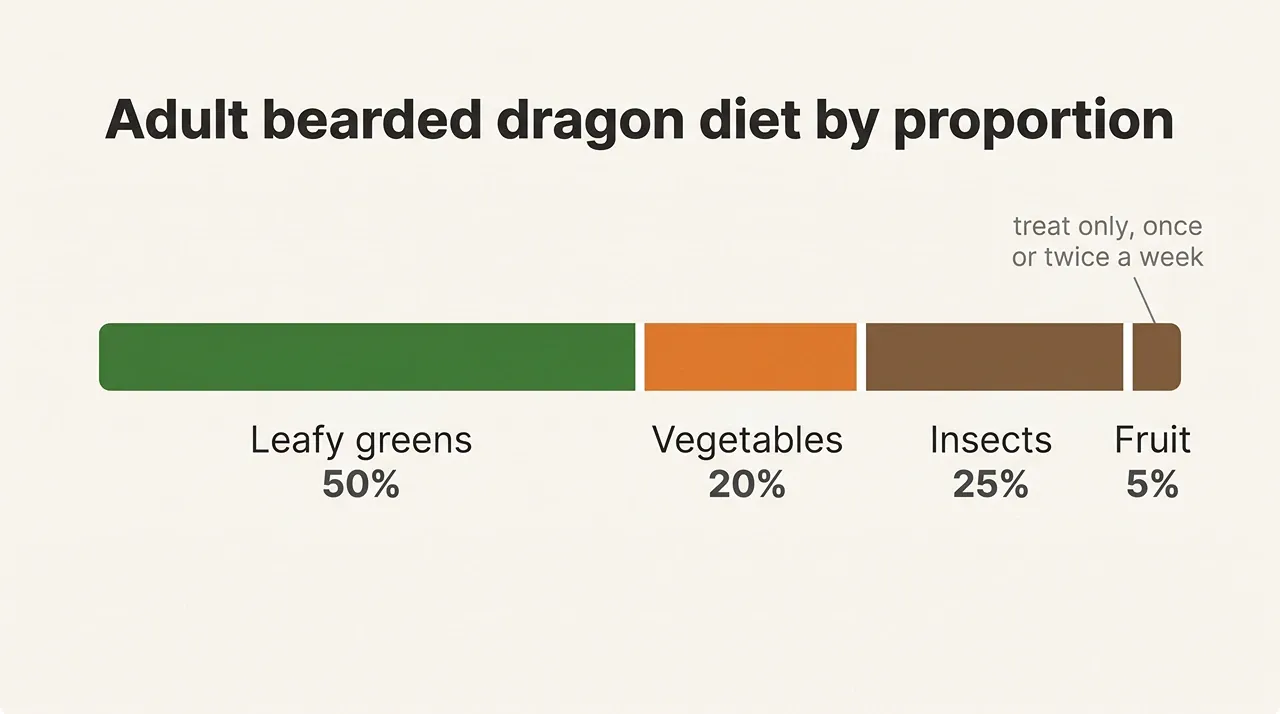
Fruit Is Only 5 Percent of the Diet
Here is the contradiction sorted out. An adult dragon’s diet is roughly 80% plants and 20% insects, and of that plant portion, only a small slice should be fruit. North Carolina State University’s veterinary hospital puts fruit at a maximum of 5% of the diet.
That is where the two “rules” you keep reading actually meet.
If you frame it as a percentage, a tiny daily sliver technically fits inside 5%. If you frame it as frequency, that same small amount lands at roughly once or twice a week in any practical feeding routine.
Same target, two ways of saying it. The frequency version is just easier to follow without weighing food.
For the full plant-to-insect breakdown by life stage, the complete feeding ratios matter more than the fruit question alone, because fruit only becomes a problem when the rest of the diet is already off balance.
| Fruit | How often | Why |
|---|---|---|
| Blueberries, raspberries | 1 to 2 times a week | Reasonable calcium ratio, good fibre |
| Strawberries, mango, apple | Once a week | Higher sugar, fine in rotation |
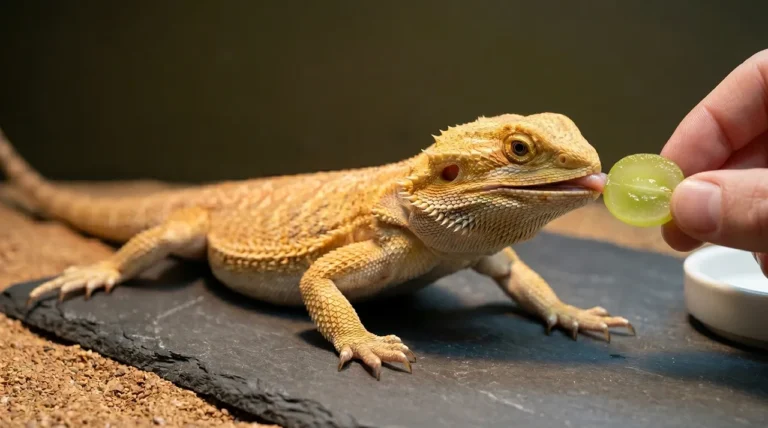
| Grapes | Once a week, seeds removed | High sugar, grape seeds are a risk |
| Banana, watermelon | Twice a month at most | High phosphorus or mostly water |
| Citrus (orange, lemon) | Never | Too acidic, upsets the gut |
Notice that “how often” is not one answer. A blueberry is a different proposition to a banana, and treating all fruit as interchangeable is where keepers slip into feeding the wrong thing too frequently.
Babies and Juveniles Are a Special Case
This is where the once-a-week advice gets muddy, and most articles get it wrong. A baby dragon eats mostly insects, with greens introduced early and built up gradually as it grows.
The percentage rule and the frequency rule pull in opposite directions for a hatchling.
A baby eats tiny volumes, so even a small piece of fruit is a large share of one meal. The safe move is less fruit for babies, not more, despite their obvious enthusiasm for it.
A juvenile moving through the shift in feeding frequency can handle slightly more as the plant side of the diet grows, but fruit stays a weekly treat, never a daily one.
Watch for this: A baby that fills up on sweet fruit will refuse the insects it actually needs for growth. Underfed protein at this stage is a far bigger risk than missing a fruit treat.
When Your Dragon Refuses Greens but Loves Fruit
This is the real reason most people end up feeding fruit daily. The dragon turns its nose up at collards and kale, then inhales a blueberry, so fruit becomes the only reliable way to get plants in.
It feels like progress. It is actually training the problem deeper.
Every time fruit rescues a refused salad, the dragon learns that holding out gets it the sweet option. The fix is not more fruit, it is making greens the path of least resistance again.
Several tricks for stubborn eaters work better than caving, and they break the cycle instead of reinforcing it.
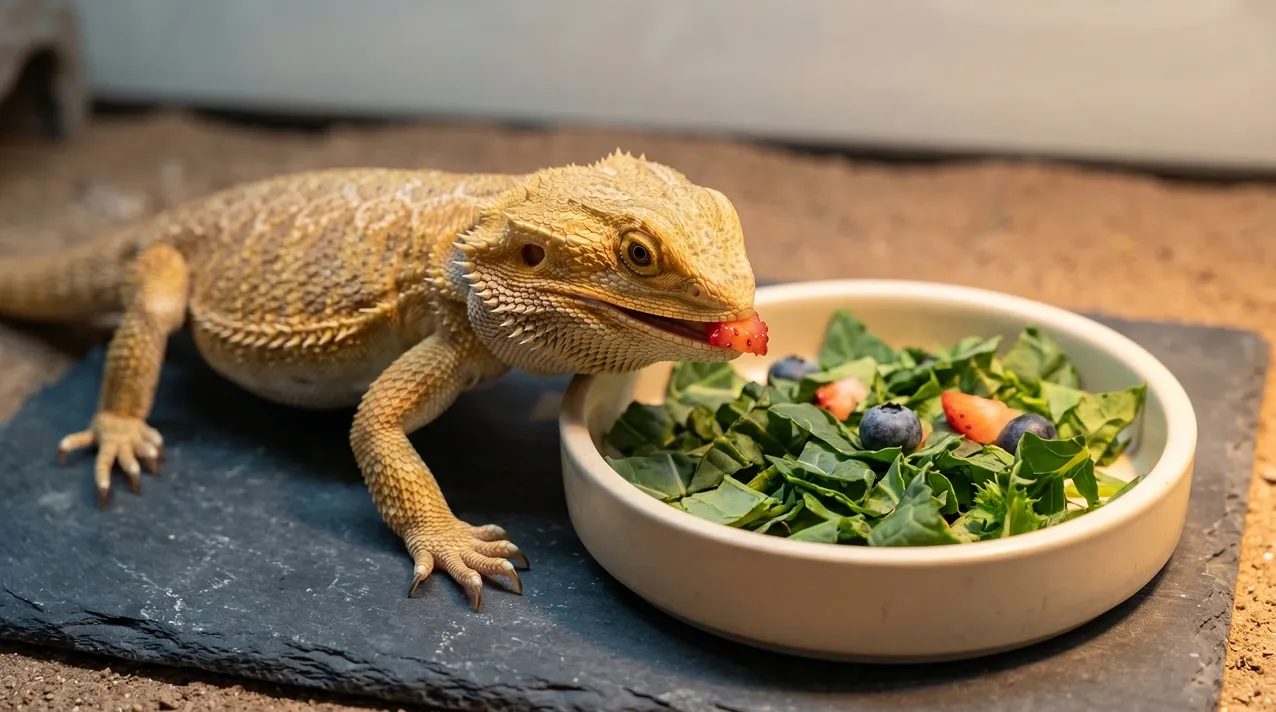
Used the other way round, fruit is a useful tool. A few berries chopped through a fresh salad can tempt a fussy dragon into eating the greens underneath, as long as the fruit stays the garnish and never becomes the meal.
Prep Every Fruit Before It Goes In
Frequency is only half the job. How you serve it matters just as much, because a few fruits carry choking and impaction risks that have nothing to do with sugar.
Remove every seed, pit, and stem before serving. Apple seeds, grape seeds, and stone-fruit pits can cause a digestive blockage that turns a treat into an emergency.
Beyond seeds, keep preparation simple:
- Wash thoroughly, especially non-organic fruit, since berries carry high pesticide residue
- Peel apples and anything with a tough skin that is awkward to chew
- Slice into pieces smaller than the space between your dragon’s eyes
- Remove uneaten fruit after 30 minutes so it does not spoil in the heat
Gut-loaded insects do most of the nutritional work in a dragon’s diet, so improving what your feeders eat delivers far more value than any fruit ever will. Fruit is flavour and enrichment, not nutrition.
How Much Fruit Is Actually Safe
Picture the serving rather than a percentage and it gets easy. For an adult, a safe portion is a single sliced strawberry, two or three blueberries, or a thumbnail-sized piece of mango. Offered once or twice a week, that sits comfortably inside the 5% target without any weighing.
For a baby, halve that and offer it less often. Their meals are small and protein matters more than treats at that stage.
The clearest test is your dragon’s stool. Firm and well-formed means the balance is right. Loose or runny in the day or two after fruit means you are offering too much, too often, and the simplest fix is to scale the fruit back rather than add anything new.
Common Questions About Feeding Fruit
What happens if a bearded dragon eats fruit every day?
Fed daily, fruit raises the sugar load enough to cause loose stools, weight gain, and over months, strain on the liver. The calcium-to-phosphorus balance also tips the wrong way, which works against bone health. An occasional piece is harmless; the daily pattern is the problem.
Can baby bearded dragons eat fruit?
Babies can have small amounts of fruit, but less often than adults, not more. Their meals are tiny, so even one piece is a large share of a single feed, and it can crowd out the insect protein they need to grow.
How much fruit should a bearded dragon eat per week?
Once or twice a week is the safe ceiling for an adult, at a portion of one sliced strawberry, two or three blueberries, or a thumbnail of mango. Babies should get half that, offered less frequently.
What fruit can bearded dragons eat daily?
No fruit is safe to feed every day, including low-sugar berries. Even the fruits with a better calcium ratio, like blueberries and raspberries, top out at one to two times a week because of their sugar content.
Why does my bearded dragon only want fruit and not greens?
Fruit is sweet, so a dragon will hold out for it once it learns refusing greens gets the better option. The fix is keeping fruit rare and making greens the default, not rewarding the refusal with more fruit.
The One Habit Worth Building
Treat fruit the way you would treat dessert for a child. Not banned, not daily, and never the thing that replaces a proper meal.
So can bearded dragons eat fruit every day without harm? No, but a dragon offered fruit once or twice a week stays interested in it as a genuine treat. That is exactly what keeps it useful for tempting a fussy eater later on.
The keepers whose dragons eat a clean, varied diet are not the ones with the strictest fruit ban. They are the ones who kept fruit small and occasional from the start, so it never had the chance to crowd out the greens and insects that actually keep a dragon healthy.

Written by
Sarah ArdleySarah has kept bearded dragons for over ten years. She founded Beardie Husbandry after discovering that most mainstream care advice — including what she followed with her first dragon — was doing more harm than good. Every article on this site is grounded in veterinary research and real keeper experience.