Can Bearded Dragons Eat Spinach? Risks and Limits
Spinach turns up in almost every fridge, so it lands in a lot of bearded dragon salads without much thought. The question of whether bearded dragons eat spinach safely tends to surface the moment someone reads the word oxalate on a care sheet. Here is the honest version.
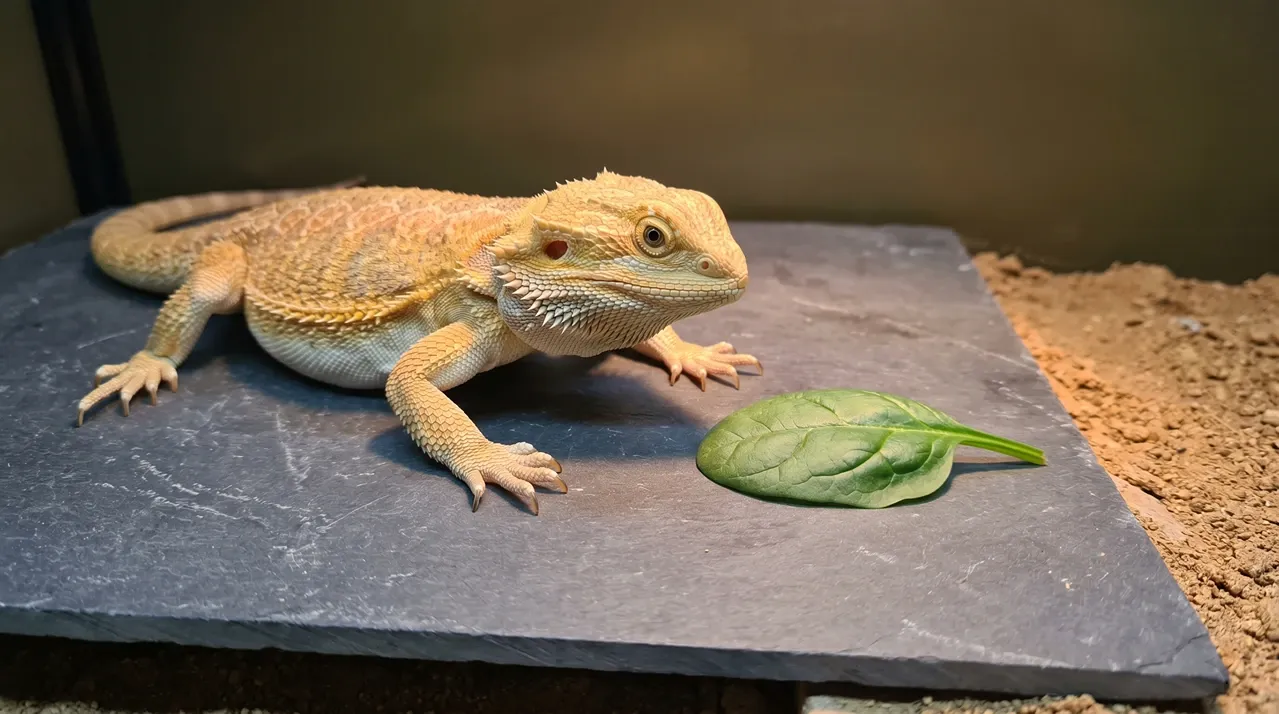
Spinach is not toxic, and a single leaf will not hurt your dragon. It is also one of the worst greens you can offer on any regular basis, and the reason has nothing to do with poison.
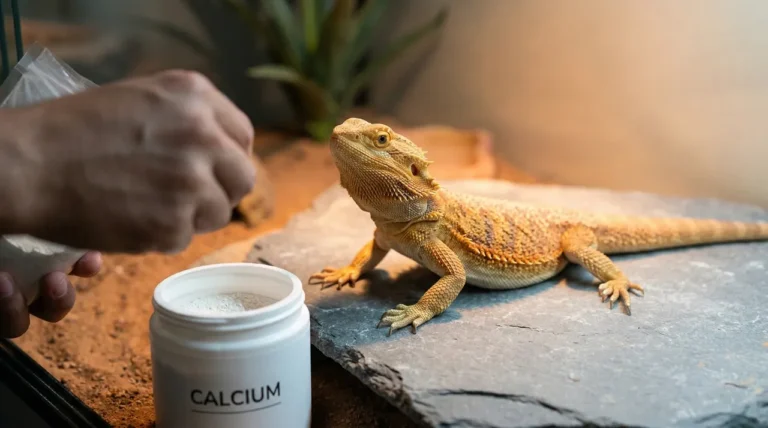
The whole problem is calcium. Spinach carries a heavy oxalate load, and oxalates lock up calcium so the body cannot use it. For a reptile whose entire skeleton depends on a steady calcium supply, that works directly against what a good daily salad is meant to do.
Spinach Is Safe in Tiny Amounts Only
So can bearded dragons eat spinach at all? Technically yes. A stray leaf mixed into a varied salad once in a blue moon will not harm a healthy adult.
The trouble starts when spinach becomes a regular feature. A dark leafy green looks like it should work the same as collards or dandelion, so it quietly earns a spot in the weekly rotation. That is where the damage builds, slowly and out of sight, over months.
Why Oxalates Make Spinach a Problem
What Oxalates Actually Do to Calcium
Oxalates are natural compounds that plants use to manage minerals. When your dragon eats them, the oxalates bind to calcium in the gut and form calcium oxalate, which passes straight out in waste.
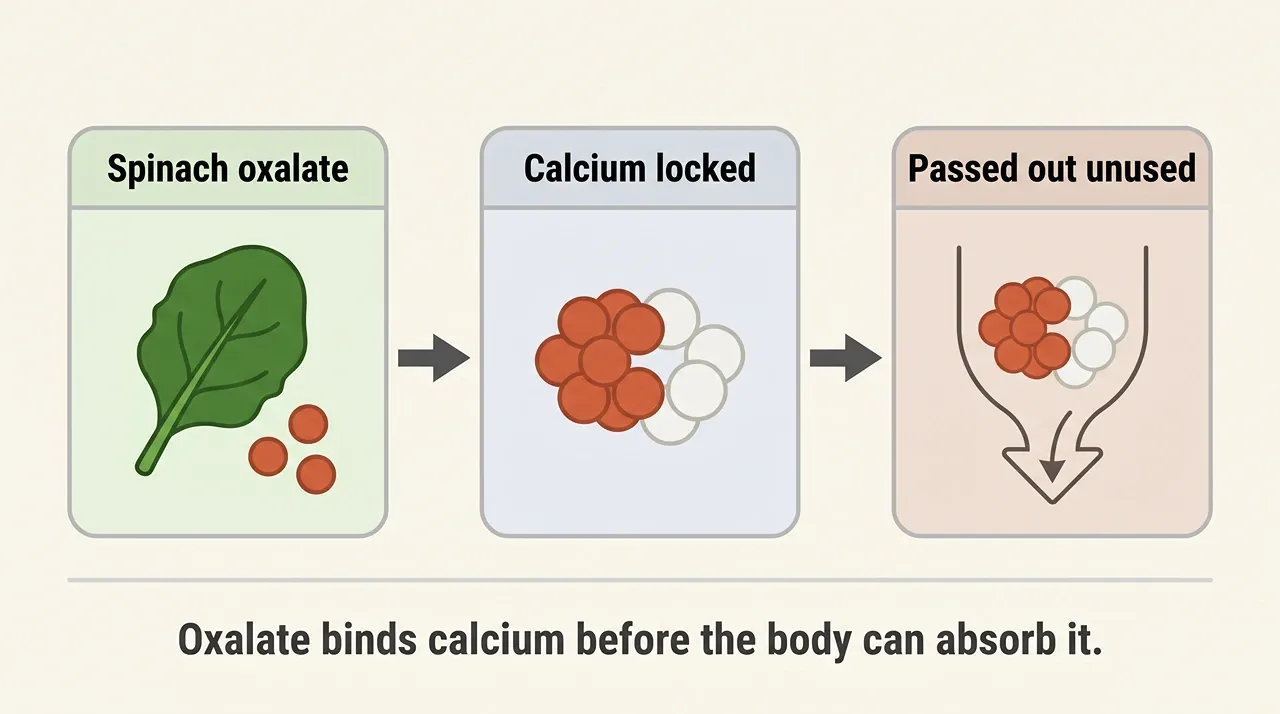
That calcium is gone. It does not matter how carefully you handle calcium dusting, or how much calcium sits in the rest of the salad. An oxalate-heavy meal quietly cancels part of that effort every single time.
Stack that up week after week and you set the stage for metabolic bone disease, the bone-weakening condition that comes from a chronic calcium shortage.
The same oxalates that trap calcium also bind other trace minerals your dragon needs. That double cost is why spinach belongs on the offer-rarely list, not the staple one.
How Spinach Compares to Other Greens
Numbers make the gap obvious. Spinach is not slightly higher than safe greens, it sits in a different league entirely.
| Green | Oxalate level (per 100g) | Verdict |
|---|---|---|
| Spinach | Around 970 mg | Rare extra at most |
| Swiss chard | Very high | Avoid as a staple |
| Kale | Around 20 mg | Safe in rotation |
| Collard greens | Low | Daily staple |
| Dandelion greens | Low | Daily staple |
| Mustard greens | Low | Daily staple |
Around 970 mg of oxalates per 100 g puts spinach near the top of any chart. Kale, the green it usually gets lumped in with, sits closer to 20 mg. That single contrast explains why one belongs on the staple list and the other does not.
How Often Can Bearded Dragons Eat Spinach
Most care sheets dodge this with vague lines like feed sparingly. Here is a straight answer.
Treat spinach as a rare extra, never a scheduled food. A few small pieces once every few weeks is the ceiling for a healthy adult, and even that earns your dragon nothing it could not get from a safer green.
The simplest call is to skip it. There is no frequency at which bearded dragons eat spinach and come out ahead, because every benefit it offers exists in a green that does not block calcium.
My Dragon Ate Spinach Should I Worry
Watching bearded dragons eat spinach by accident worries a lot of owners, but a single serving is not an emergency. If your dragon grabbed a few leaves once, there is nothing to do except leave it out next time.
Real risk comes from repetition. The danger is months of regular oxalate exposure, not one salad. A dragon on a solid calcium routine carries enough of a buffer to absorb the odd mistake without trouble.
When to call a vet
Long-term oxalate problems show up as the early signs of calcium deficiency. Watch for:
- A soft or rubbery lower jaw
- Trembling or twitching limbs
- Reluctance to climb or visible weakness
- Swelling along the legs
Any of these points to a calcium problem already underway, and a reptile vet should see your dragon promptly.
Babies and Juveniles Face the Bigger Risk
Adults keep some margin. A growing dragon does not.
Hatchlings and juveniles lay down bone fast, and they need every bit of calcium they take in. An oxalate-heavy green hits a young dragon’s diet far harder than an adult’s, because demand for calcium is at its lifetime peak.
For anything under 18 months, there is no reason to offer spinach at all. The trade sits entirely on the wrong side of the ledger.
Cooked Spinach Is Still Not Safe
A common myth says blanching or steaming removes the oxalates. It does lower soluble oxalate a little. But it does not turn spinach into a safe staple, and it still leaves you feeding cooked vegetables to an animal built for fresh ones.
Bearded dragons eat raw greens by nature. No version of spinach, cooked or raw, beats a plain low-oxalate green served straight from the fridge.
What to Feed Instead of Spinach
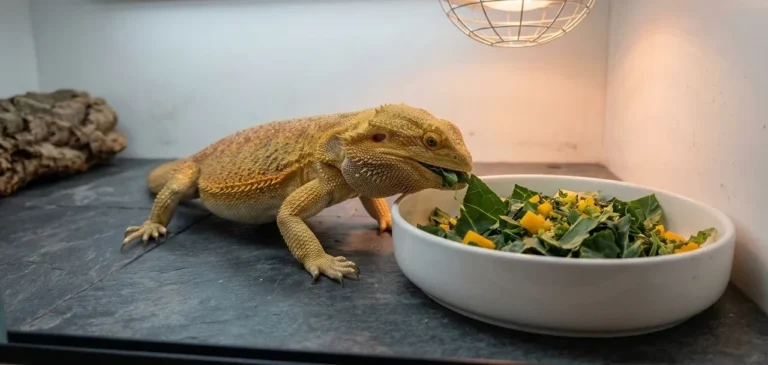
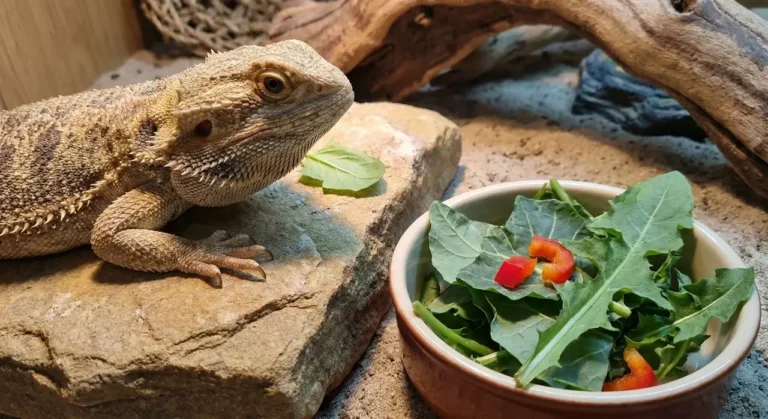
The fix is easy, because the alternatives are everywhere. Build the salad base from low-oxalate greens that deliver calcium your dragon can actually absorb.
- Collard greens, a calcium-rich daily staple
- Mustard greens, slightly peppery and well accepted
- Dandelion greens, high in calcium and easy to grow yourself
- Turnip greens, another solid rotation green
- Endive and escarole, mild and well tolerated by fussy eaters
Rotate two or three of these as the backbone of every salad. If your dragon turns its nose up at leaves, the cause is usually habit rather than taste, and even a stubborn green refuser can almost always be retrained with patience.
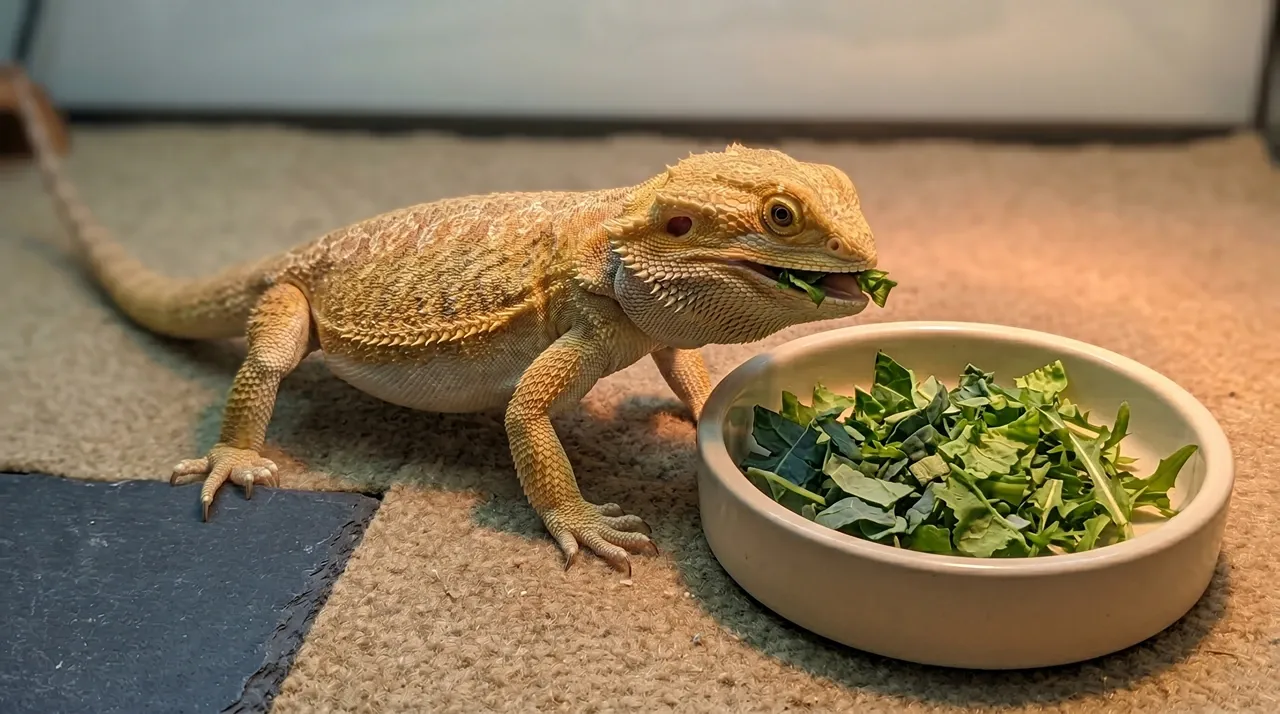
Variety still matters beyond the staples. Knowing which extras are safe versus toxic keeps the rest of the salad honest once the base is sorted.
Frequently Asked Questions
Can bearded dragons eat baby spinach?
Baby spinach holds somewhat less oxalate than mature leaves but is still far too high for regular feeding. Treat it exactly like standard spinach, a rare extra at most.
Can bearded dragons eat cooked spinach?
Cooking lowers some soluble oxalate but does not make spinach safe, and dragons are built for raw greens. There is no real benefit to feeding it cooked.
Is spinach toxic to bearded dragons?
Spinach is not toxic, and a single leaf will not poison your dragon. The harm comes from regular feeding, which blocks calcium absorption over time.
How much spinach can a bearded dragon eat?
A healthy adult can have a few small pieces once every few weeks with no issue. Anything more often risks calcium problems, and there is no nutritional reason to push it.
What greens can bearded dragons eat every day?
Collard greens, mustard greens, dandelion greens, and turnip greens are all safe daily staples. They supply calcium without the oxalate load that makes spinach a problem.
The Easiest Fix Is to Skip It
Spinach looks healthy and quietly works against the one mineral your dragon cannot afford to lose. It is not poison, and a stray leaf is nothing to lose sleep over.
Build every salad on staple greens like collards and dandelion instead, and the spinach question stops mattering. Let bearded dragons eat spinach only by rare accident, and the calcium math stays in your dragon’s favour.
Written by
Sarah ArdleySarah has kept bearded dragons for over ten years. She founded Beardie Husbandry after discovering that most mainstream care advice — including what she followed with her first dragon — was doing more harm than good. Every article on this site is grounded in veterinary research and real keeper experience.