The Bearded Dragon Poop Guide: Normal vs. Abnormal
Bearded dragon poop is one of the most reliable daily health checks you have. A dragon can look perfectly alert, eat enthusiastically, and still be in the early stages of a parasite infection or dehydration. The waste almost always flags the problem first, often days or weeks before behaviour shifts.
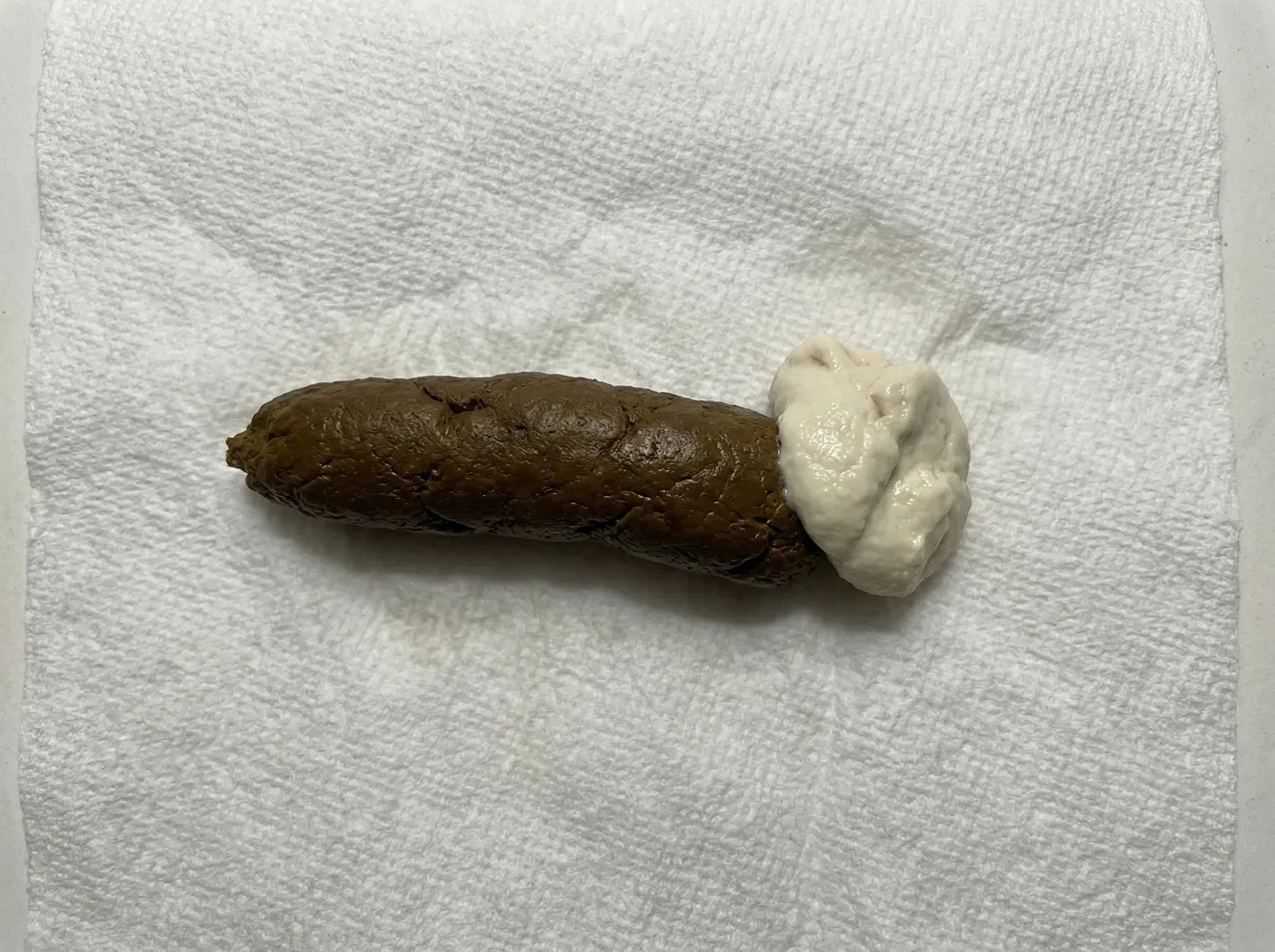
Healthy stool has a consistent look: a firm brown log with a white or cream paste at one end. Both components exit through the cloaca together, the single opening reptiles use for all waste.
That white paste is the urate. There is no separate urination event, and the urate tells you just as much about the dragon’s health as the brown section does.
What Healthy Bearded Dragon Poop Looks Like
The brown section should be firm but not rock hard, roughly log-shaped, and hold together without crumbling. If you pick it up on a paper towel, it should not leave a liquid ring around it.
Colour can range from dark brown to a medium tan depending on what the dragon ate most recently, and that variation is completely normal.
Smell matters too. Reptile waste has a distinctive earthy odour that is unmistakable but not overwhelming. Poop that clears the room, smells sour, or has a chemical edge is worth taking seriously before anything else changes.
What Normal Urates Look Like
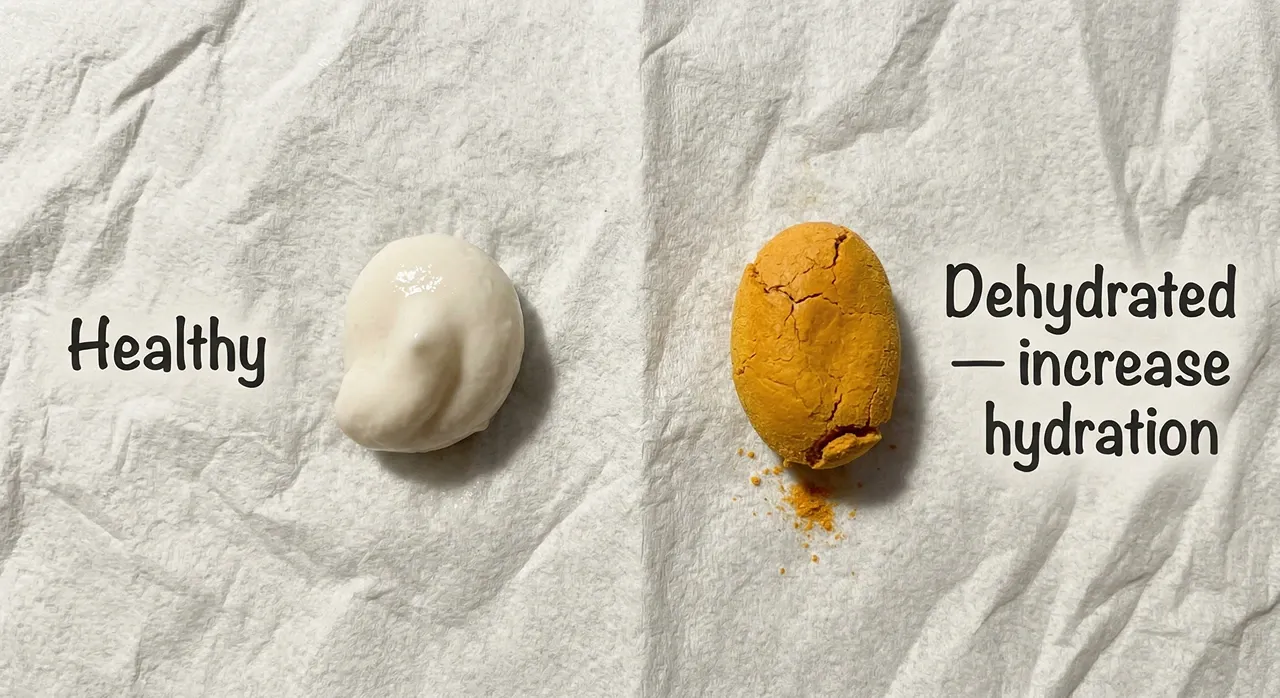
The urate is the white or cream-coloured portion, usually positioned at one end of the log or alongside it. Its consistency should resemble firm toothpaste, pliable but not brittle.
If the urate crumbles, snaps, or has a powdery texture, the dragon is not absorbing enough water. This is one of the earliest reliable signs of dehydration you can catch without a vet visit, and it often appears before the dragon shows any other symptoms.
Urates can occasionally be slightly yellow or cream rather than pure white, and that is generally fine as long as the dragon is active and eating normally. What you do not want to see is urates that are orange, bright yellow, or hard enough that the dragon strains when passing.
How Often Bearded Dragons Poop
There is no single correct number. Frequency depends on age, diet, temperature, and whether the dragon is going through brumation. What matters most is knowing your individual dragon’s normal baseline so a change registers immediately rather than going unnoticed for weeks.
| Age | Typical Frequency | Primary Driver |
|---|---|---|
| Baby (0 to 3 months) | 1 to 3 times daily | High-protein diet for rapid growth, fast digestion |
| Juvenile (4 to 18 months) | Every 1 to 2 days | Diet transitioning, digestion stabilising |
| Adult (18 months and older) | 1 to 7 times per week | Wide range depending on diet and temperature |
| During brumation | Rarely or not at all | Metabolism slows; minimal food intake |
The ratio of greens to insects in an adult’s daily feeding routine directly affects poop frequency. Dragons eating a diet weighted heavily toward insects often produce darker, drier stools and go less often. Adults eating a properly balanced mix of leafy greens and feeders tend to go more regularly.
Temperature is the most overlooked driver of irregular poop schedules. Bearded dragons are ectotherms that depend entirely on external heat to power digestion. A dragon sitting on a basking spot reading 90°F instead of 100–110°F will digest meals considerably slower.
If your adult dragon’s schedule suddenly slows and nothing obvious has changed, check your basking temperature readings before assuming something is medically wrong.
Post-brumation bearded dragon poop deserves a specific mention. The first bowel movement after weeks of minimal eating is often alarming: large, very dark, and intensely odorous. This is normal. The dragon has been slowly moving old material through a slowed gut, and the result looks far worse than it is.
What Each Poop Color Actually Means
Colour variation is where most owners end up in forums at midnight. The table below is a quick reference, and the individual sections that follow cover the cases that need more nuance.
| Poop Colour | Urate Colour | Likely Cause | Action |
|---|---|---|---|
| Brown | White or cream | Normal | Nothing needed |
| Green | White or cream | High-greens diet, food dye, or medication | Monitor; vet if runny or foul-smelling |
| Red or pink | White or cream | Red-pigmented foods (beets, red peppers, berries) | Monitor 2 to 3 days; vet if straining present |
| Black | White or cream | Heavy insect diet; old dried waste | Increase greens; vet if watery or foul-smelling |
| Yellow or orange | White or cream | Yellow food pigment; possible excess calcium | Review supplement schedule; vet if persists |
| Any colour | Orange or bright yellow | Dehydration | Increase hydration; vet if no improvement in 3 days |
| Any colour | Hard or chalky | Dehydration or excess calcium | More baths; vet if straining observed |
| Any colour | Liquid or absent | Diarrhoea or parasites | Collect fecal sample; vet promptly |
Green Poop
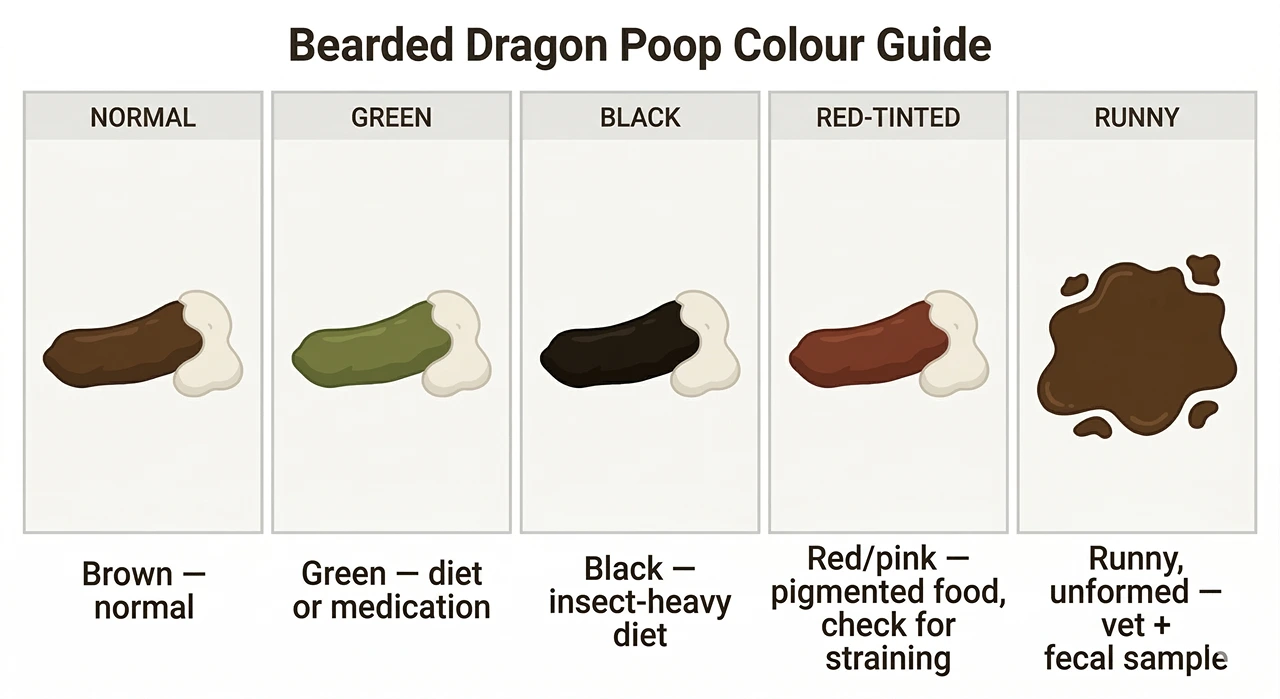
Green bearded dragon poop is the most common colour concern and the least likely to indicate a problem. Adult dragons eating a diet weighted toward leafy greens, which is exactly how adults should be fed, will regularly produce green-tinted stool. Certain medications also turn it green.
As long as the texture is firm and there is no unusual smell, it does not need investigation.
Red or Pink Poop
Red pigment from beets, raspberries, red bell pepper, or strawberries passes through cleanly and tints the stool for a day or two. If the dragon has not eaten anything red-pigmented and you are seeing a pink or red tinge, watch closely.
Actual blood in stool tends to appear as darker smears or streaks rather than an even tint, and it typically accompanies straining or lethargy. If straining is present, do not wait another few days.
Black Poop
Dark or black stool is common in dragons whose diet skews heavily toward insects with minimal greens. On its own it is rarely concerning.
The combination to watch for is black poop that is also watery, foul-smelling, or accompanied by weight loss. That combination points toward a parasitic infection rather than diet.
Yellow or Orange Stool
Yellow stool can come from yellow-pigmented foods, but persistent yellow colouring is worth reviewing your calcium dusting schedule. Excess calcium in the diet produces yellow-tinted waste in some dragons. Yellow or orange urates specifically are a dehydration flag.
Male dragons occasionally pass what looks like an alarming yellow, waxy, string-like plug from the base of the tail. This is a seminal plug from the hemipenal pockets, not a digestive issue. New owners frequently mistake it for abnormal stool.
A warm bath and gentle massage around the base of the tail usually resolves it within a day or two. If the dragon strains visibly or the area looks swollen, a vet check is appropriate.
That Clear Puddle Around the Poop
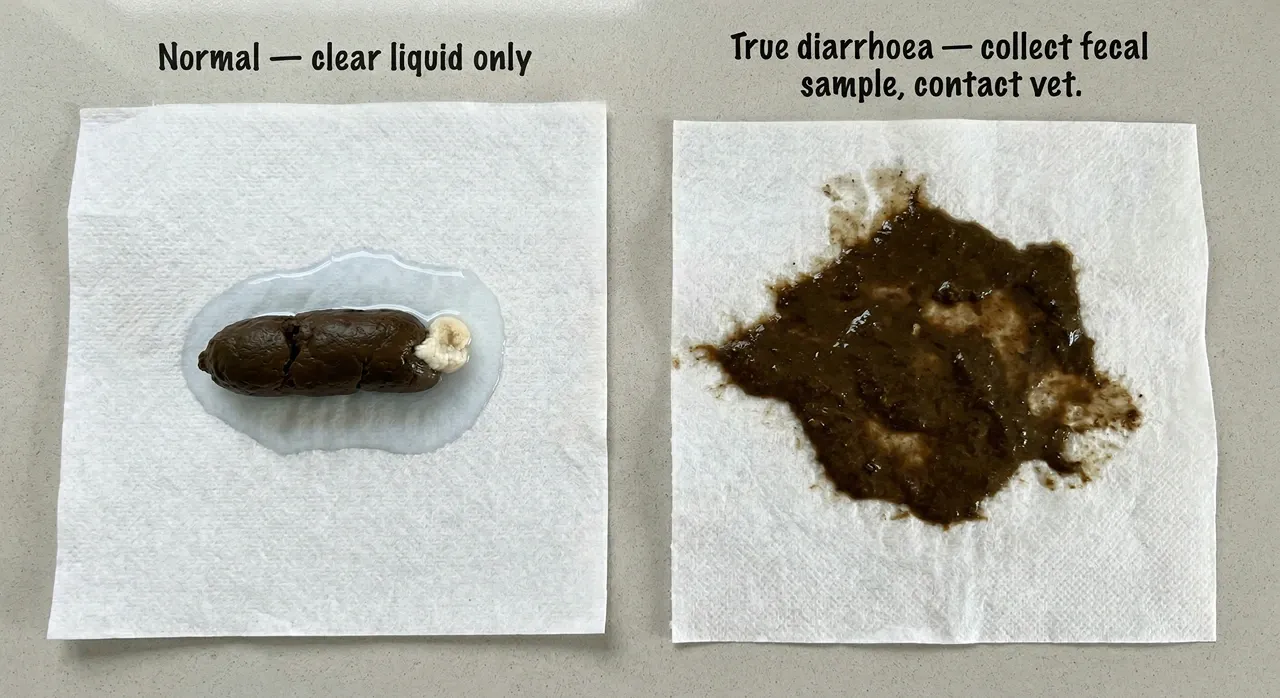
If the brown log is firm and the urate looks healthy but there is clear or slightly cloudy liquid surrounding it, this is excess water passing through the gut, not diarrhoea.
It often happens after the dragon ate particularly hydrating foods like hornworms, cucumber, or blueberries, or shortly after a bath.
True diarrhoea presents differently. The brown section itself will be unformed, mushy, or completely liquid rather than a solid log sitting in a puddle of water. If the entire stool is watery with no solid component, that needs investigation.
What Runny Poop Is Telling You
Runny or unformed bearded dragon poop has two primary causes that present slightly differently, and telling them apart matters because the response is different for each.
Diet-related diarrhoea usually follows a specific feeding event. If the dragon had too many hornworms, a large serving of cucumber, or a fruit-heavy meal, the stool will be loose for a day or two and then return to normal. The smell will be the usual reptile odour, just wetter.
Intestinal parasites like coccidia and pinworms tend to produce persistent loose stools that smell unusually rank or sour, and they may contain visible mucus. This can stay subclinical for a long time before poop changes become obvious.
If loose stools last more than three to four days without a clear dietary explanation, collect a fecal sample and get it to a reptile vet rather than waiting it out.
Not Pooping for Several Days
An adult missing one bowel movement alongside reduced food intake is nothing to worry about. The threshold that should prompt action is an adult that has not gone in seven to ten days despite eating normally, or a baby or juvenile that has not gone in three to four days.
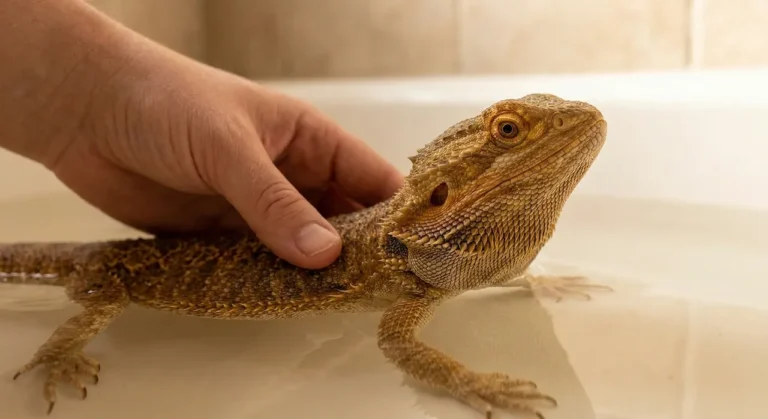
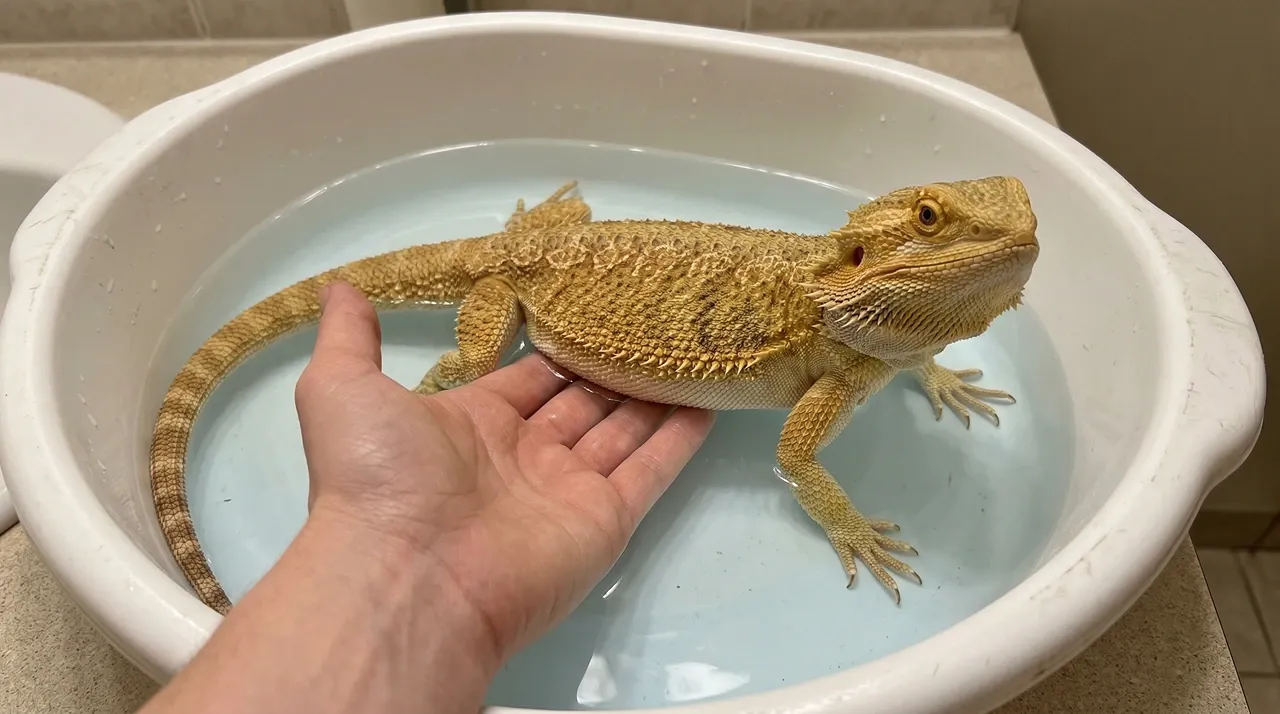
The first response is a warm bath at around 85°F for fifteen to twenty minutes, combined with a gentle belly massage. The combination of hydration and tactile stimulation often triggers a bowel movement within a few hours.
If the dragon goes in the water during the soak, that is a productive outcome.
If two to three days of baths produce no result and temperatures are confirmed correct, bearded dragon impaction becomes the primary concern. Impaction is a blockage in the digestive tract that baths and massage cannot clear.
It requires veterinary diagnosis and should not be managed with home remedies beyond the initial bath attempt.
Undigested Insects in the Stool
Seeing whole or partially intact feeder insects in the waste is unusual, but the cause is almost always temperature before anything else. Digestion in reptiles requires adequate heat, and a dragon not reaching the correct basking temperature will pass food before fully breaking it down.
Check the basking spot first, every time.
The second cause is overfeeding. A juvenile that has eaten more than its gut can efficiently process will occasionally pass some insects whole. Correct the quantity and confirm the basking spot is hitting 100°F to 110°F.
If the issue resolves within a few days, no further action is needed. Persistent undigested food despite correct temperatures warrants a vet visit to rule out digestive illness.
How to Collect a Fecal Sample
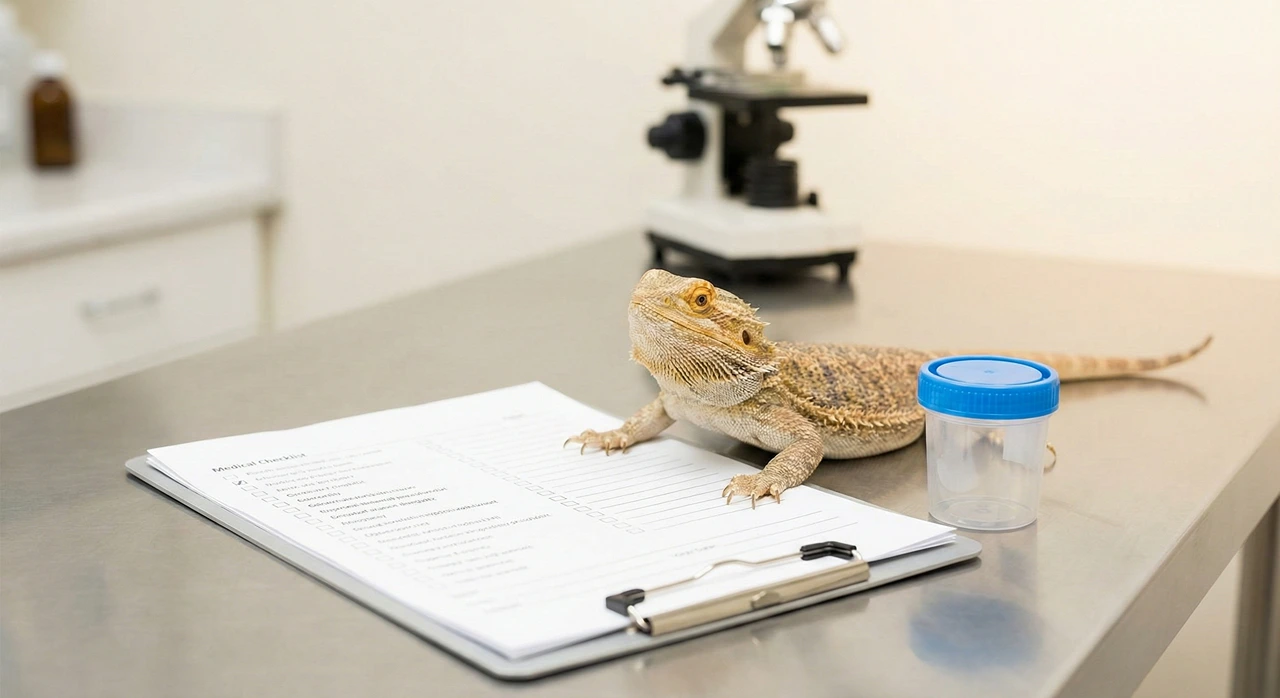
Every resource that tells you to “collect a fecal sample” skips the part that actually matters: how fresh it needs to be. Vets need a sample taken less than twelve to twenty-four hours before the appointment.
Older samples are less reliable because parasite eggs degrade quickly. Coccidia oocysts in particular are fragile, and a sample collected two days ago is often useless.
Use a clean zip-lock bag or a specimen container. Pick up the stool with a clean disposable spoon or gloved hand and seal it immediately. Refrigerate it. Do not freeze it.
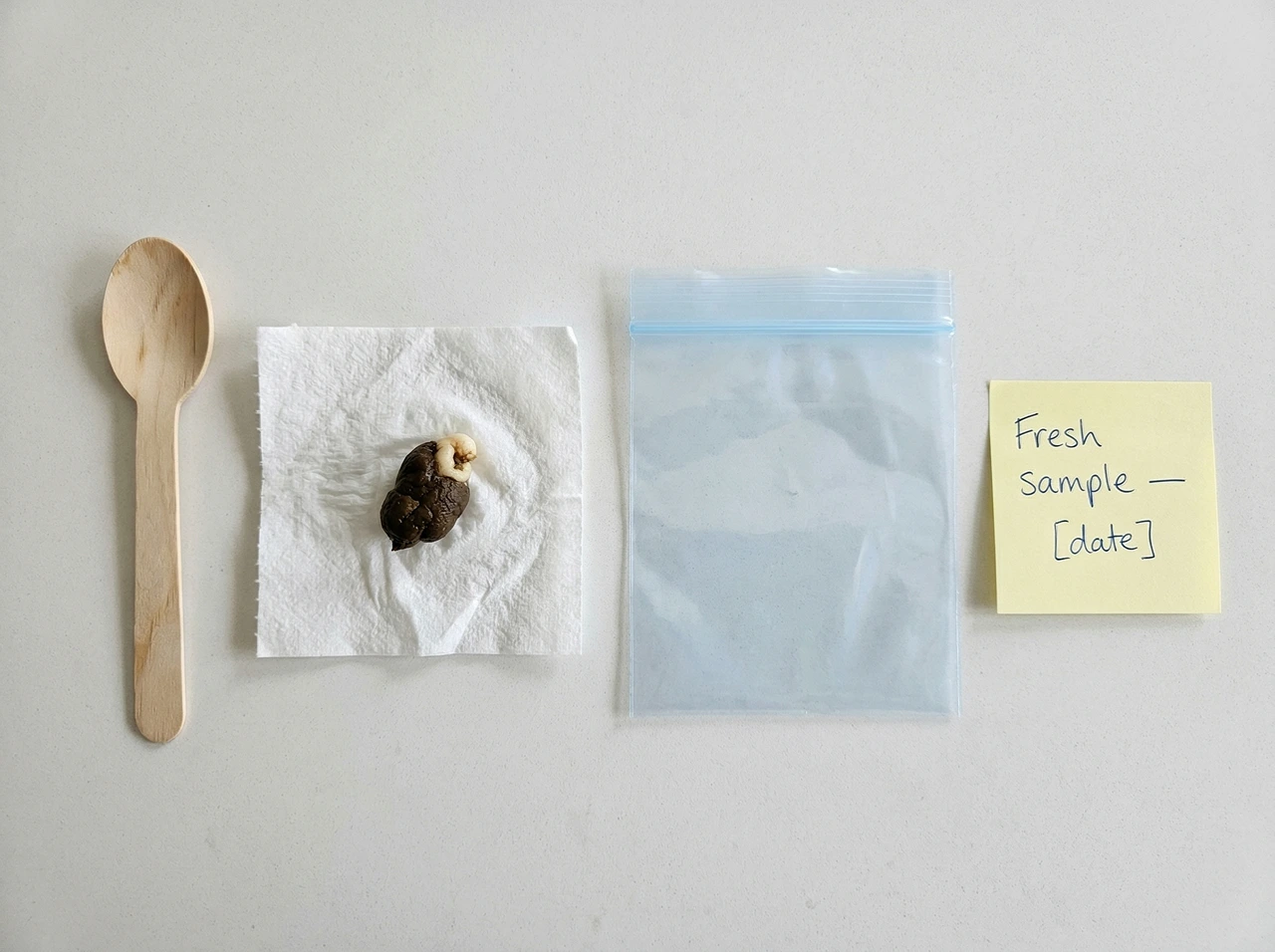
Call the clinic before you go, because some exotic practices want advance notice to prepare the fecal exam. Bring the whole stool if possible; a pea-sized portion is the minimum most vets can work with reliably.
Under the microscope, the vet is looking for parasite eggs, coccidia oocysts, flagellates, and bacterial indicators. A fecal exam gives a far more accurate picture than trying to diagnose bearded dragon poop problems from appearance alone, and it is one of the most affordable diagnostics available to reptile owners.
Poop Hygiene and Salmonella
Bearded dragon poop routinely carries Salmonella bacteria, and handling the enclosure without washing your hands is the most common transmission route. The bacteria is rarely a problem for the dragon but can cause serious illness in humans, particularly young children, elderly people, and anyone immunocompromised.
Spot-clean the enclosure as soon as you see waste, wash hands thoroughly with soap and warm water after any handling, and keep the dragon away from food preparation areas entirely.
Families with young children or vulnerable household members should review VCA Animal Hospitals’ guidance on Salmonella in reptiles for specific transmission and prevention advice.
Your Bearded Dragon Poop Questions Answered
How often should a bearded dragon poop
Babies typically go one to three times daily. Juveniles every one to two days. Adults anywhere from daily to once a week, with brumating dragons sometimes not going for several weeks. What matters most is knowing your dragon’s individual pattern and noticing when that changes.
What does healthy poop look like
A firm brown log with a white or cream-coloured urate paste at one end. The urate should be pliable, not chalky or crumbly. The stool should hold its shape, not leave liquid on the surface beneath it, and have a mild earthy smell.
Why are my dragon’s urates orange
Orange or bright yellow urates are a reliable dehydration signal. Increase fluid intake through more frequent baths, misting food, or adding more hydrating feeders like hornworms to the diet. If urates remain orange after two to three days of improved hydration, a vet check is the next step.
That yellow waxy plug near the tail
In male dragons, this is a seminal plug from the hemipenal pockets, not a digestive issue. A warm bath and gentle massage around the base of the tail usually resolves it. If the area appears swollen or the dragon is straining, have a vet take a look.
No poop for over a week
Start with a warm 85°F bath for fifteen to twenty minutes and a gentle belly massage. If no result in two to three days, check basking temperatures and consult a reptile vet to rule out impaction. Do not administer olive oil orally. The aspiration risk is not worth it.
Can dragon poop give you Salmonella
Yes. Reptile waste routinely carries Salmonella. Thorough handwashing after any enclosure contact, prompt removal of waste, and keeping the dragon away from food preparation areas reduces transmission risk to a manageable level for most households.
What to Do Right Now
Feeding time is a natural daily check. While preparing the meal, glance at the enclosure for any waste from the previous day. Abnormal bearded dragon poop rarely needs to be acted on after a single event, but a pattern of changes is a different matter entirely.
If something looks off, run through this sequence before calling a vet:
- Check the basking spot temperature with a probe thermometer, not a stick-on dial
- Review the last three days of feeding for new foods, excess protein, or very hydrating feeders
- Check urate texture for dehydration signs
- Offer a warm 85°F soak for fifteen to twenty minutes
- Collect the next abnormal stool in a clean sealed bag and refrigerate it
If abnormal bearded dragon poop persists past three to four days, or if it is runny, foul-smelling, or contains mucus, do not delay. The same applies if the dragon is lethargic or losing weight alongside the change.
A fresh fecal sample and a qualified reptile vet will give you an accurate answer faster than any amount of forum research.
Written by
Sarah ArdleySarah has kept bearded dragons for over ten years. She founded Beardie Husbandry after discovering that most mainstream care advice — including what she followed with her first dragon — was doing more harm than good. Every article on this site is grounded in veterinary research and real keeper experience.