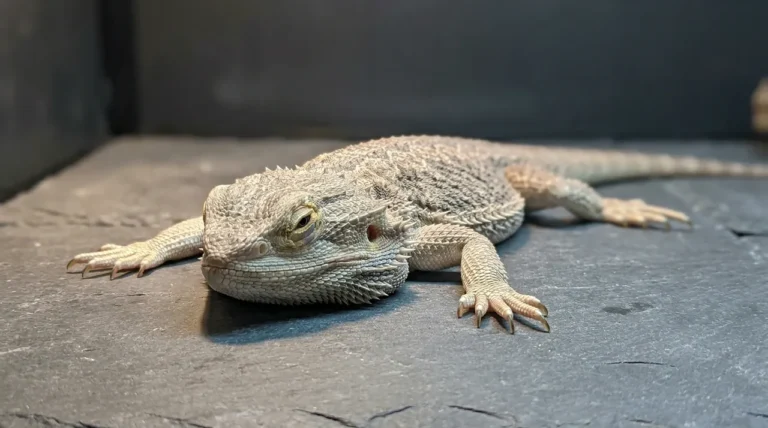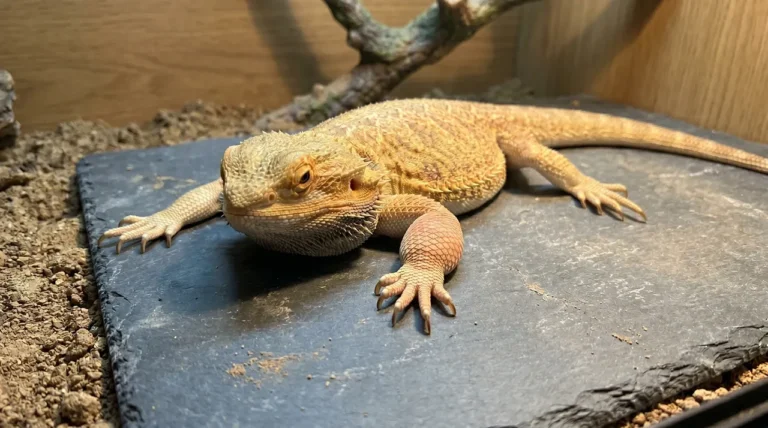
Bearded Dragon Respiratory Infection: Clicking, Mucus & RI
A clicking sound that matches your dragon’s breathing is not something to dismiss. Bearded dragon respiratory infections start quietly, often as nothing more than a faint click on exhale or a small bubble at the corner of the mouth.
Caught at this stage, they are highly treatable. Left untreated for a few days longer, they are not.
Unlike many reptile health problems where watchful waiting is reasonable, an RI in a bearded dragon can escalate to pneumonia in under 72 hours. Understanding what you’re hearing, why it happens, and how to act quickly is what determines the outcome.
What That Clicking Sound Actually Tells You
The clicking or popping on exhale is air being forced through airways that are partially blocked by mucus. It happens on the out-breath, which is why it sounds rhythmic and repeating rather than random.
Owners frequently describe it as sounding like a cricket in the substrate or a ticking timer near the tank, before they realise the sound syncs perfectly with every single breath.
If you suspect it, record a short video on your phone before your vet appointment. Most exotic vets will want to hear the sound, and it’s far easier to capture it at home than to replicate it on demand in a waiting room.
Sounds That Are Not RI
Rule these out before assuming the worst. The morning beard puff is an exaggerated breath dragons produce when inflating their beard first thing. It happens once and stops.
A defensive hiss during handling is a single sharp exhale, not a repeating pattern. A shedding nose whistle comes from dry skin partially blocking one nostril and disappears when the shed clears.
None of these follow your dragon’s breathing rhythm the way a respiratory infection click does.
Signs of RI in Bearded Dragons
Bearded dragon respiratory infections follow a fairly predictable progression. Early signs are subtle enough that many keepers second-guess themselves for a day or two. Later signs are unmistakable, but by that point the infection has typically been present for a week or more.
Early Warning Signs
- Faint clicking or popping sound on exhale, present with every breath
- Slightly reduced appetite with otherwise normal behaviour
- More time spent on the cool side of the tank
- Brief open-mouth breathing after activity or handling
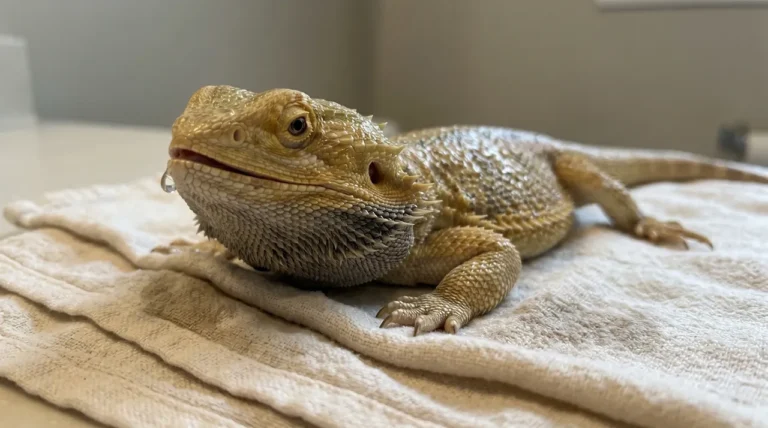
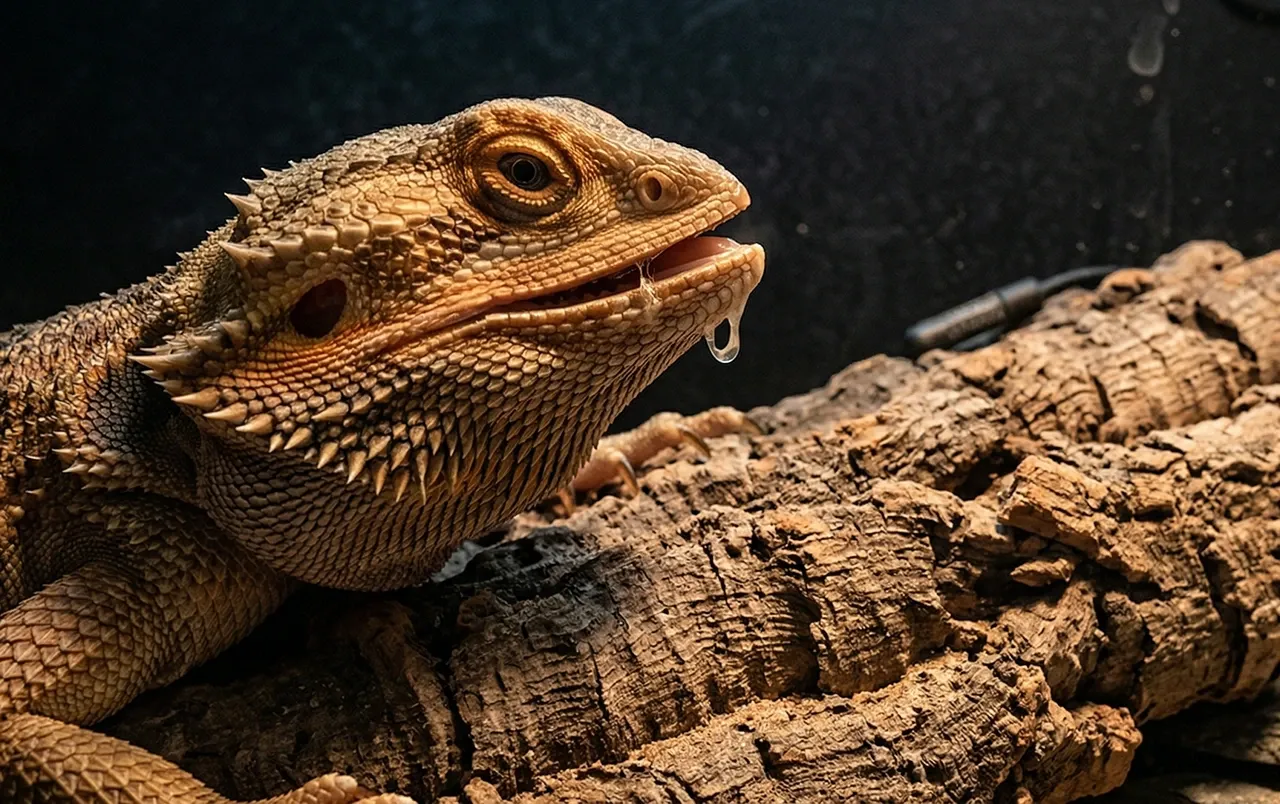
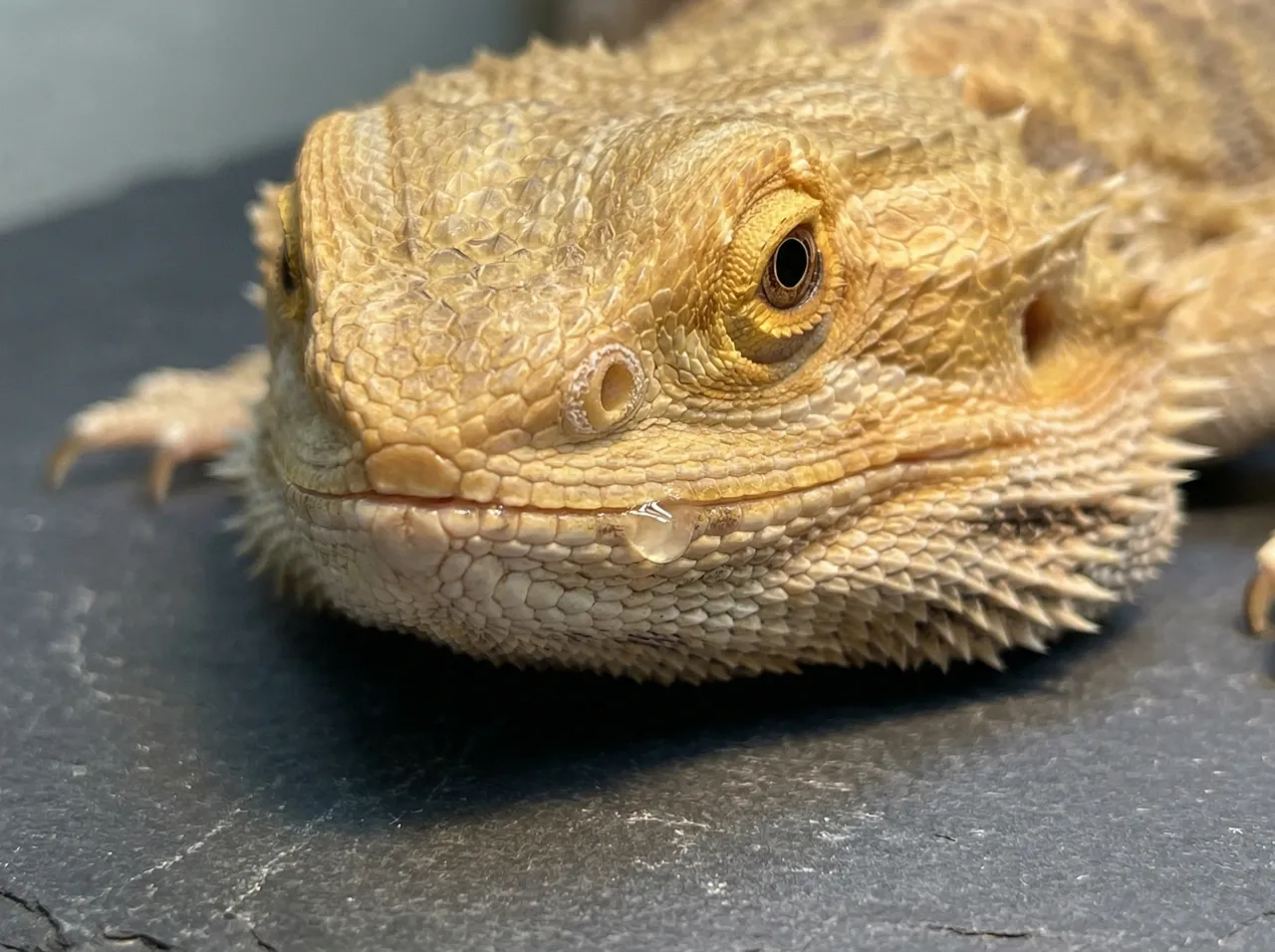
- Thin, clear mucus visible at the corners of the mouth
- Crusty or partially blocked nostrils
Signs That Need Immediate Attention
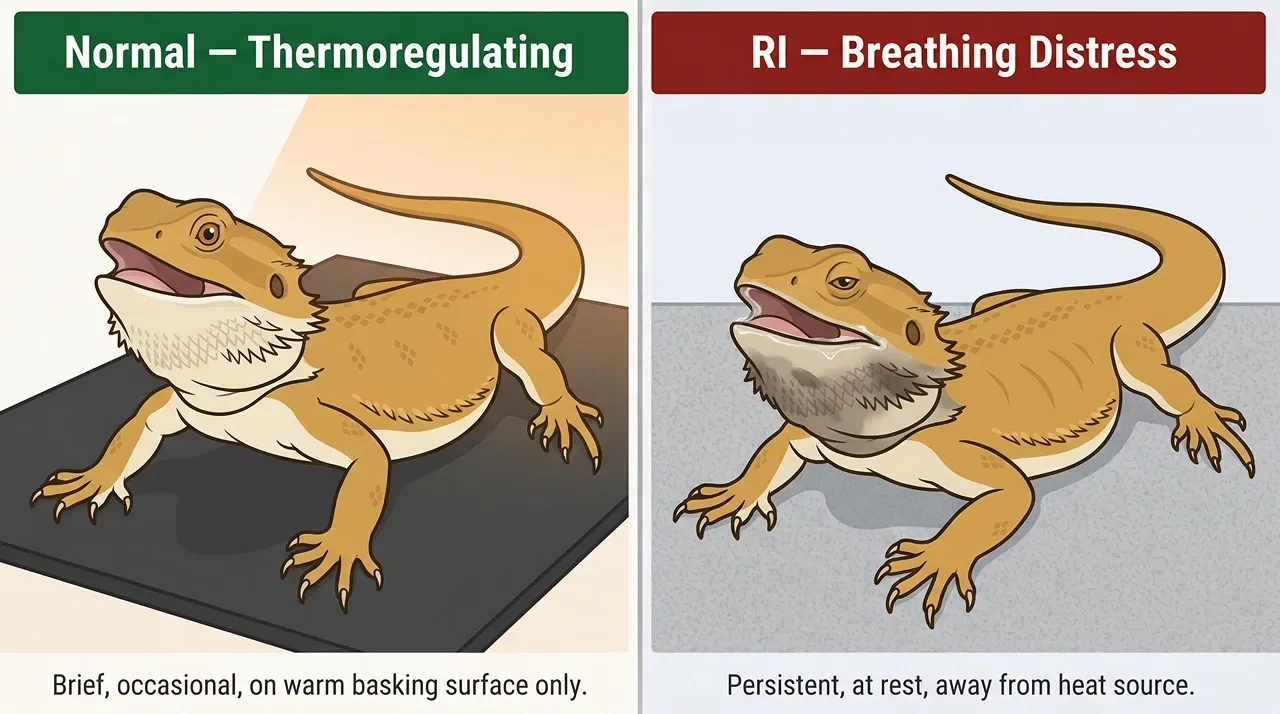
- Open-mouth breathing at rest, including on the basking spot
- Visible effort with every breath, with ribs expanding dramatically and the beard heaving
- Thick, ropy, or stringy mucus around the mouth or nose
- Bubbles from the nose or mouth while breathing
- Complete refusal to eat for more than 48 hours
- Extreme lethargy, unresponsive to handling or touch
Why Bearded Dragon Lungs Handle This So Badly
Bearded dragons have no diaphragm. They rely on body movement and positional shifts to move air through their lungs, which means they cannot generate anything close to a forceful cough. Once mucus starts building in the airways, there is no effective mechanism to clear it on their own.
Their lung tissue is also spongy and slow to clear infection without medical intervention.
An upper respiratory infection that gives a mammal a week of sniffles can become full pneumonia in a beardie in under three days if temperatures drop, humidity spikes, or the immune response stays suppressed. That is why speed matters here in a way it often doesn’t with other conditions.
What Causes a Bearded Dragon Respiratory Infection
Most cases have an environmental trigger. A healthy dragon in a correct setup rarely develops RI out of nowhere. There is almost always a husbandry factor that lowered the immune response enough for bacteria, fungi, or viruses to establish themselves.
Humidity and Low Temperature Together
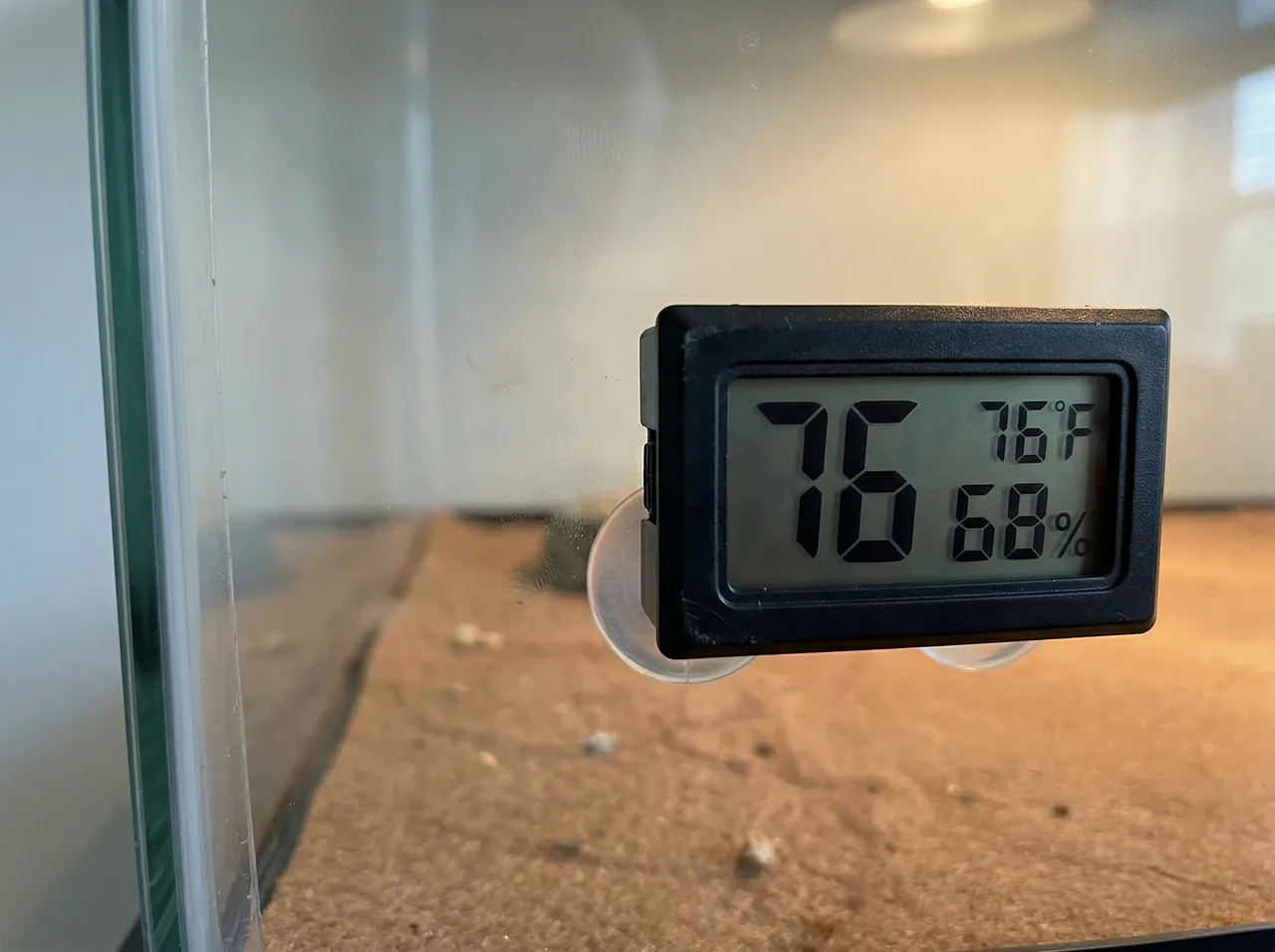
This combination drives more RI cases than anything else. Humidity above 50% paired with ambient temperatures below 80°F creates conditions where bacteria thrive and your dragon’s immune function runs below capacity.
Bearded dragons are ectotherms. Their immune cells need warmth to work, and a dragon that isn’t warm enough simply cannot fight infection at full capacity.
Foggers and misters are behind a large proportion of preventable cases. They spike humidity rapidly and coat tank surfaces in a fine moisture layer that supports bacterial growth. Reliable temperature and humidity monitoring using a digital probe at both the basking spot and cool side is the single most useful early-warning habit you can build, and it reveals problems a stick-on dial will never catch.
When Bath Water Becomes a Problem
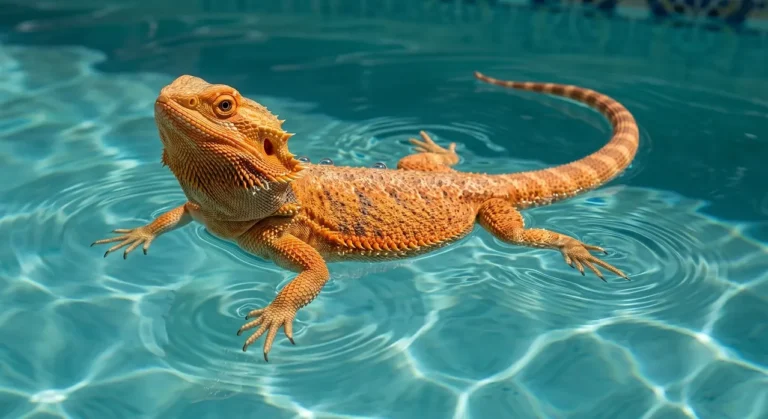
Aspiration pneumonia from bathing is an underappreciated risk that competitors rarely mention. If bath water is deep enough to sit at vent level or higher, shallow breathing during a warm soak can draw small amounts of water into the airways. The correct water depth for a bearded dragon is knee-deep at most, with the dragon able to hold its head completely clear without effort.
Substrate That Traps Moisture or Creates Dust
Bark chips, coconut fibre, and mulch hold moisture long after misting or a spill, keeping humidity elevated in the lower part of the enclosure where your dragon spends most of its time. Dusty loose substrates like calcium sand or crushed walnut irritate the airways even without triggering a full infection. The substrate you choose has a direct impact on both ambient humidity and long-term respiratory health.
Bacterial, Viral and Fungal Causes
Bacteria account for the majority of cases. Common culprits include Pseudomonas, Aeromonas, Mycoplasma, and various gram-negative species that respond well to antibiotics when caught early.
Fungal infections are far harder to clear and typically require much longer treatment courses.
Viral causes, including nidovirus, are the most difficult to treat. Antibiotics do nothing against them, and these cases require specific diagnostic testing to identify.
Vet Now or Vet Tomorrow
| What You’re Seeing | Urgency | Action |
|---|---|---|
| Faint click on exhale, eating normally, otherwise active | Urgent | Call vet now, book within 48 hours |
| Reduced appetite, thin clear mucus at mouth corners | Urgent | Vet appointment within 24 hours |
| Open-mouth breathing at rest, visible effort with every breath | Same-day | Call the vet now, describe the breathing, and go today |
| Thick or stringy mucus, bubbles from nose or mouth | Emergency | Exotic emergency vet immediately |
| Gasping, limp, unable to hold head up | Emergency | Exotic emergency vet immediately |
If the nearest reptile-experienced vet cannot see your dragon within 48 hours, call and describe the symptoms specifically. Most clinics will triage a same-day appointment for a dragon in visible respiratory distress rather than ask you to wait a week.
What the Vet Will Do
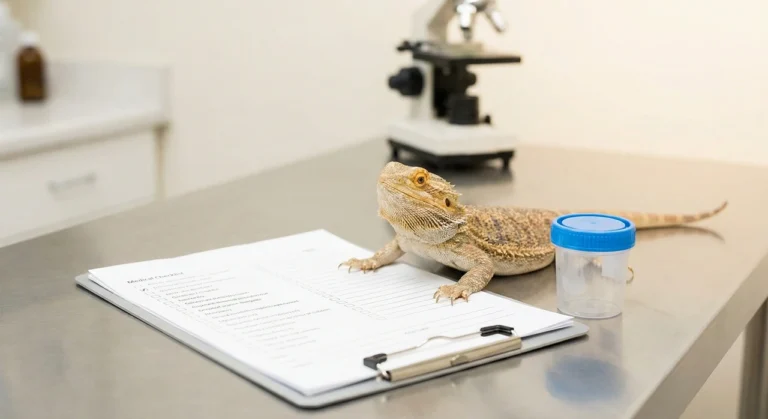
A physical examination checks for mucus, nasal discharge, and abnormal sounds using a stethoscope placed against the body wall.
Many vets recommend chest X-rays at the same visit to determine whether pneumonia has set in and how much lung tissue is affected, since the answer changes the treatment protocol.
Injectable antibiotics are often preferred over oral in sick reptiles because absorption through the gut is unreliable when a dragon is already compromised. Baytril (enrofloxacin) is frequently prescribed, though Fortaz (ceftazidime) is considered more effective for certain gram-negative respiratory pathogens.
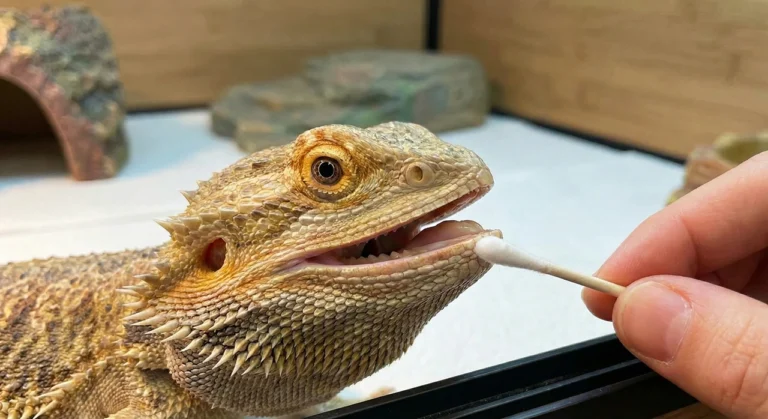
If the infection has not responded to a previous course, ask your vet for a culture and sensitivity swab. This process identifies the exact bacteria present and confirms which antibiotic will actually clear the infection rather than just suppress symptoms temporarily.
While You Wait for the Vet
Getting an appointment booked is the priority. In the meantime, some specific steps support your dragon’s recovery, while others actively make the situation worse.
Raise ambient temperature by 3 to 5°F across the entire enclosure, not just under the basking lamp. A quality thermostat running a ceramic heat emitter overnight keeps the temperature stable even as the room cools down, which a lamp on a basic timer cannot do.
Remove any fogger, mister, or water bowl if humidity is running high.
Offer food without forcing it. A dragon refusing to bask when sick needs the enclosure kept warm overall, not just relocated under a hot lamp. Moving it to the hot end does not help if it immediately retreats.
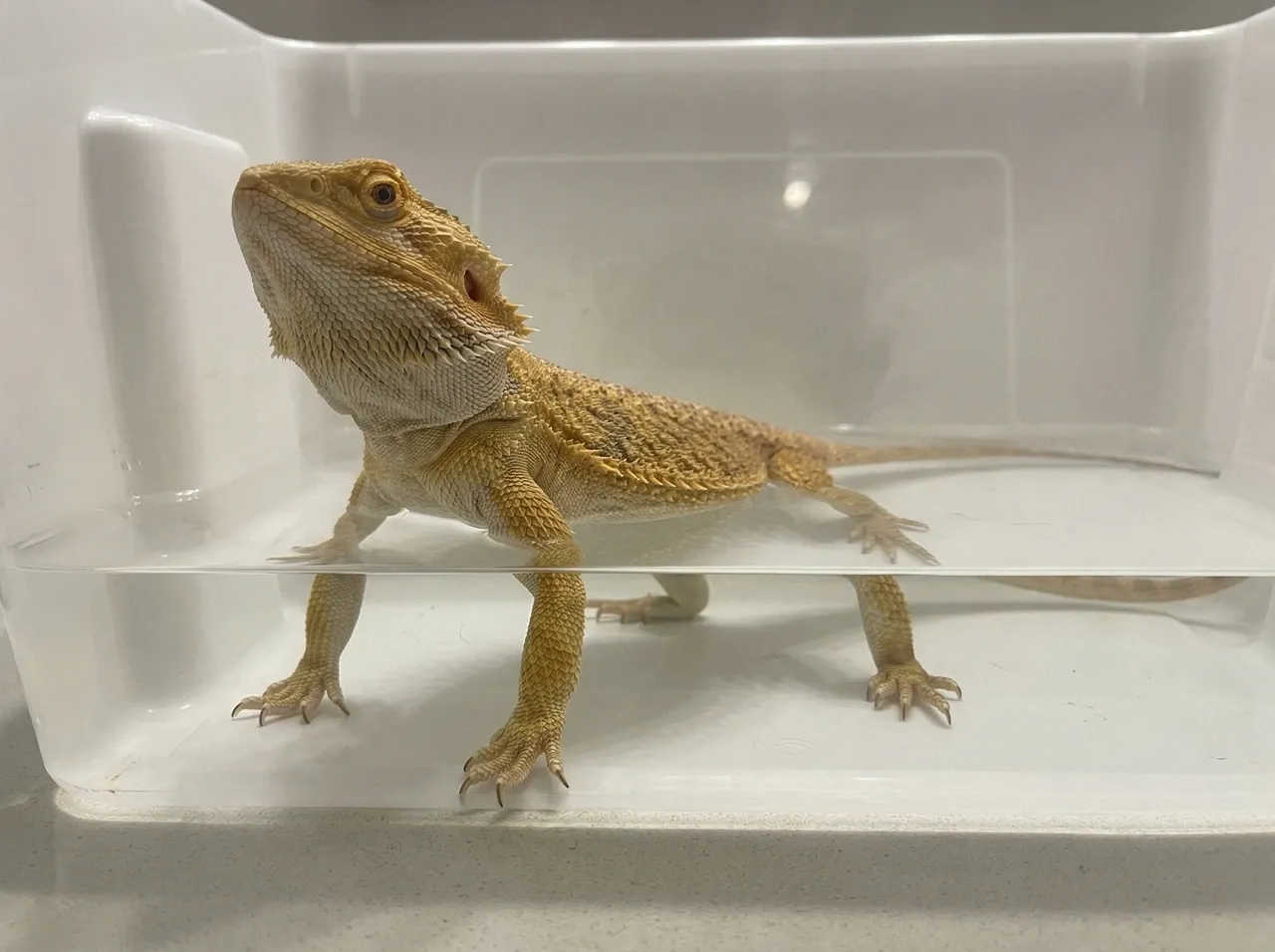
Daily warm soaks help loosen secretions and keep fluid intake up. Keep water at 90–95°F, knee-deep only, for 15 minutes with close supervision. Dry the dragon thoroughly afterward so it doesn’t lose heat.
A sick dragon that is off food can show signs of dehydration faster than a healthy one, and soaking is one of the few reliable ways to support hydration when appetite is gone.
How Treatment Works at Home
A typical antibiotic course for a bearded dragon respiratory infection runs 2 to 4 weeks. Most keepers see the clicking become quieter and appetite start to return within 5 to 7 days.
Energy levels are usually the last thing to fully recover, often lagging a week or more behind the improvement in breathing.
Giving Liquid Antibiotics to Your Dragon
Most prescriptions for RI come as a liquid administered with a small syringe. Place the tip at the corner of the mouth and deposit the dose slowly, giving the dragon time to swallow rather than spit it straight out.
A fully warmed-up dragon on the basking spot before dosing absorbs medication more efficiently and is generally more cooperative than a cold, sluggish one pulled from the cool side of the tank.
Watch for Stomatitis Setting In
An untreated or slow-to-respond RI can spread bacteria from the airways into the mouth tissue, resulting in mouth rot or stomatitis. If you notice a yellow or brown crust forming at the gum line during or after treatment, mention it to your vet at the next check.
These two conditions can develop in parallel and need treating simultaneously, not sequentially.
When RI Keeps Coming Back
Recurring infections almost always point to a husbandry problem that was never fully corrected.
The most common culprits are humidity creeping above 40% after room temperature drops overnight, an ambient temperature that falls too low in the evening, and a UVB bulb that has degraded past its useful output without being replaced.
If a dragon has had two or more RI episodes despite completing full antibiotic courses, ask your vet about PCR testing for nidovirus or Mycoplasma. Neither responds to standard antibiotics, and treating a viral RI with antibiotics only manages secondary bacterial infections rather than the underlying cause.
A culture and sensitivity swab should also be requested any time the initial antibiotic does not produce clear improvement within 5 to 7 days of starting the course.
How to Prevent the Next Infection
The humidity target for a bearded dragon enclosure is 30–40%. If readings consistently drift above that, check whether your substrate is retaining moisture, whether a water bowl is raising ambient humidity, or whether your enclosure has insufficient ventilation.
A full open-mesh top lid resolves a persistent humidity problem for many keepers without any other changes needed.
Stable ambient temperatures matter more for RI prevention than almost any other single factor. Keep a written log of your readings taken at different times across a full week.
Most RI cases turn out to involve conditions that look acceptable at feeding time but drop sharply overnight. A second digital probe is worth running for a week just to see what the cool end really does while you’re asleep.
Frequently Asked Questions
Can a dragon recover without antibiotics?
A very mild infection caught at the first faint click, combined with immediate correction of humidity and temperature, occasionally resolves without antibiotics. This is the exception. Most established respiratory infections in bearded dragons require prescription antibiotics to fully clear, and attempting to manage without them after symptoms have been present for more than 24 to 48 hours risks a serious and fast-moving setback.
Is RI contagious between dragons?
Yes. Bacterial respiratory infections can spread through direct contact and shared surfaces. Isolate the sick dragon immediately and wash your hands thoroughly between handling individual animals. Keep them separated until the full antibiotic course is complete and the sick dragon has been symptom-free for at least a week.
How long does a full treatment course take?
Visible improvement in breathing and appetite typically appears within 5 to 7 days of starting antibiotics. A full course usually runs 2 to 4 weeks depending on severity and the specific antibiotic prescribed. Never stop early because the dragon appears recovered. Incomplete treatment is the most common cause of relapse.
Can I use steam or essential oils to help?
No to both. Essential oils are toxic to reptiles and should never be used near the enclosure or in the same room. Steam from a humidifier raises moisture levels in the tank, which worsens the conditions that contributed to the infection in the first place.
Will raising temperatures alone be enough?
Raising ambient temperatures supports the immune system and can be sufficient for a very early-stage infection where only faint clicking is present and a clear husbandry trigger exists. Once mucus is visible, appetite is declining, or the dragon is lethargic, warmth alone is a support measure. The dragon needs antibiotics.
What antibiotics do vets typically prescribe?
Baytril (enrofloxacin) and Fortaz (ceftazidime) are two of the most commonly used options for bacterial respiratory infections in reptiles. The right choice depends on the specific pathogen involved, which is why culture and sensitivity testing matters when an initial course does not produce improvement within a week.
First Steps When You Suspect RI
A bearded dragon respiratory infection responds well to fast, correct action. Run through this checklist the moment you notice that clicking sound or any other early sign:
- Record a short video of the breathing to share with your vet
- Check current temperature and humidity with a reliable digital probe
- Remove any fogger, mister, or water bowl if humidity is elevated
- Raise ambient temperature across the whole enclosure by 3 to 5°F
- Call your reptile vet today, describe the specific symptoms, and do not wait to see if it improves
- Isolate the sick dragon from any others in the household immediately
- Offer a 15-minute warm soak at 90–95°F, knee-deep only, with supervision
- Complete the full antibiotic course your vet prescribes, even after symptoms resolve
Written by
Sarah ArdleySarah has kept bearded dragons for over ten years. She founded Beardie Husbandry after discovering that most mainstream care advice — including what she followed with her first dragon — was doing more harm than good. Every article on this site is grounded in veterinary research and real keeper experience.