Bearded Dragon Egg Binding Signs Every Owner Must Know
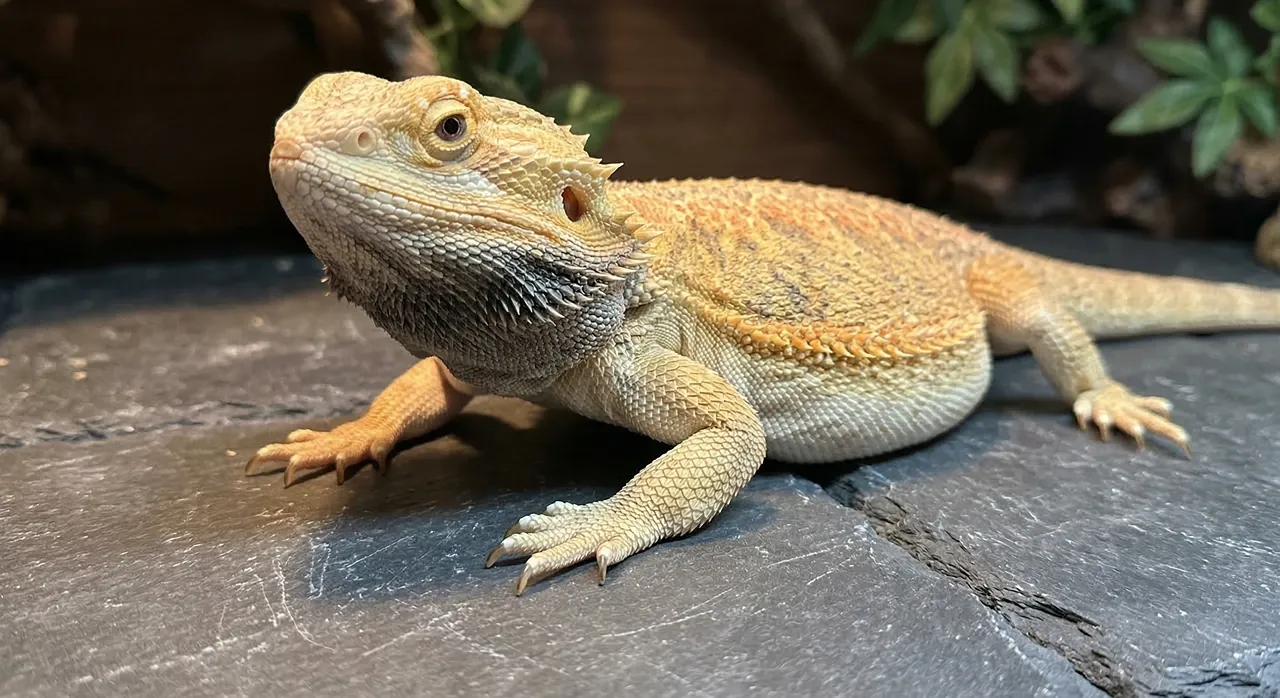
A female that was digging frantically yesterday and is lying flat and unresponsive today is not resting. Bearded dragon egg binding is the inability to pass eggs that have already formed. It is the reproductive emergency that kills more captive females than almost any other condition.
The window between “concerning” and “critical” is measured in hours, not days. Most owners lose that window because they do not know what they are looking at until it is already late.
If your female is still showing her first gravid signs and you need to set up a lay box, the egg laying guide covers the normal process in full. If she has been attempting to lay and nothing is coming out, keep reading.
What Egg Binding Actually Means
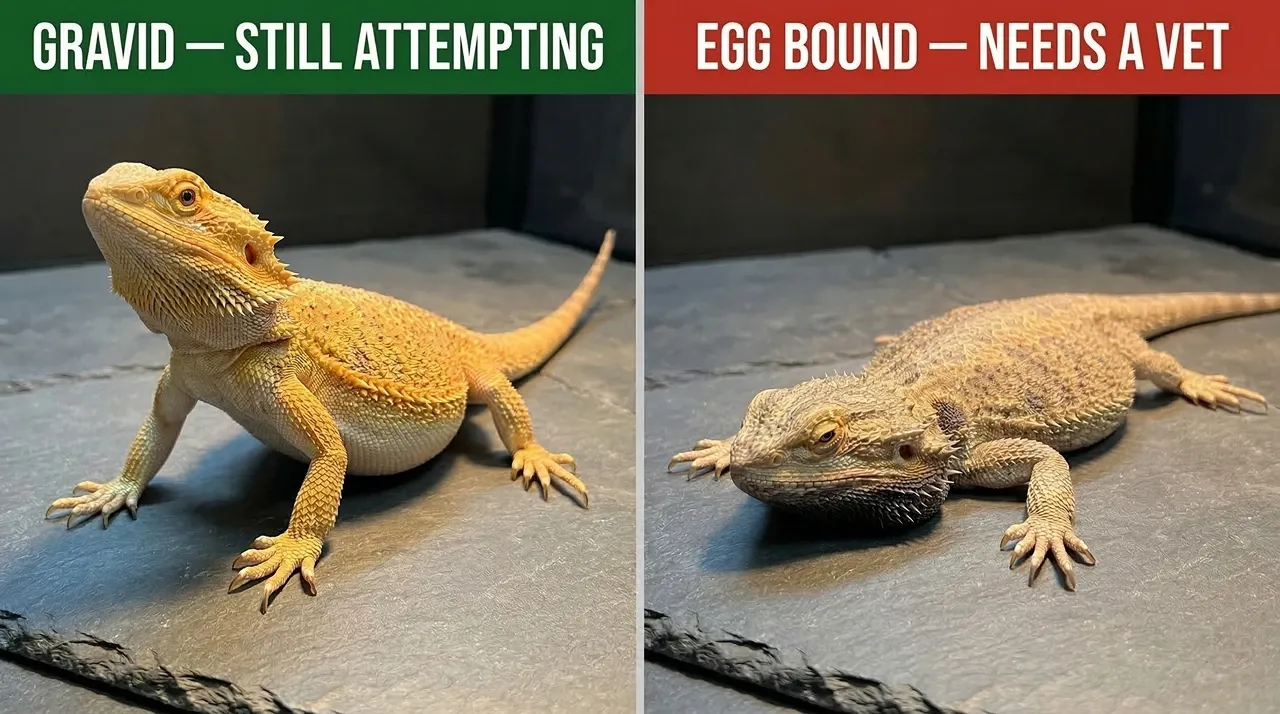
Bearded dragon egg binding, also called dystocia, occurs when a female cannot pass eggs that have already formed in her oviducts. It is not the same as being gravid, which simply means carrying eggs. A gravid female that has not yet laid is not egg bound. A gravid female that is trying to lay but cannot is. A swollen abdomen alone does not confirm either state. Only behaviour and imaging can.
The distinction matters because the two states require completely different responses. A gravid female needs a lay box, privacy, and time. An egg-bound female needs a vet. Confusing the two is how egg binding becomes fatal. Waiting for a lay box to solve a problem it cannot solve costs the time you need.
Why Bearded Dragon Egg Binding Happens
Dystocia falls into two categories with different causes, different treatments, and different implications for what you can do at home. Understanding which type you are dealing with changes the urgency considerably.
When the Problem Is Muscle Not Obstruction
Non-obstructive dystocia means there is nothing physically blocking the eggs from passing. The pathway is clear, but the female cannot generate the muscle contractions needed to move them. This is almost always a husbandry failure. The most common causes are calcium deficiency, chronic dehydration, temperatures too low for muscle function, and a female in poor physical condition from overfeeding or lack of movement. A calcium-depleted skeleton cannot support the muscle contractions laying requires.
Some non-obstructive cases can respond to warm soaks, corrected temperatures, and calcium supplementation at home, but only in the very early stages and only if the female is still alert and attempting to dig.
When Something Is Physically Blocking the Eggs
Obstructive dystocia means something is physically preventing the eggs from passing. A malformed or oversized egg, an abnormality in the reproductive tract, an injury, or eggs that have calcified from being retained too long can all cause an obstruction.
Nothing you do at home resolves an obstruction. A warm soak does not move a calcified egg. A calcium supplement does not correct a physical blockage. If your female is straining with no result after more than an hour, assume obstruction and call a vet immediately.
When No Eggs Actually Form
Preovulatory follicular stasis (PFS) catches keepers off guard because it does not look like egg binding at first. PFS occurs when follicles develop on the ovary but never progress to form shelled eggs. Instead they stagnate, grow, and eventually die off inside the body as a necrotic mass.
Because no eggs ever formed, there is nothing to lay, and no amount of lay box time will produce a result. The signs look identical to standard egg binding: swollen abdomen, lethargy, and appetite loss. Palpation reveals a softer, more diffuse abdominal mass rather than the firm distinct lumps of formed eggs.
PFS requires veterinary diagnosis and cannot be distinguished from standard dystocia without imaging. If your female has a visibly swollen abdomen but is not producing any eggs despite repeated lay box sessions, PFS is one explanation a vet needs to rule out.
The Signs of Bearded Dragon Egg Binding
The signs below appear in the order they typically develop. Early signs give you time to act. Late signs mean the situation is already an emergency and calling the vet tomorrow is not an option.
| What You See | Stage | What It Means | Action |
|---|---|---|---|
| Frantic digging, no eggs produced after 7 days | Early | Laying attempt failing. May be non-obstructive. | Warm soak, verify lay box, check temps. Vet if no change in 24 hours. |
| Straining visibly, tail raised, bearing down, no eggs | Early–Mid | Active attempt to pass eggs that are not moving. | Vet same day. Do not wait overnight. |
| Lays some eggs then stops, belly still visibly swollen | Mid | Partial clutch. Remaining eggs retained inside. | Return to lay box. If no more eggs in 24 hours, vet visit. |
| Sudden switch from digging to complete stillness | Mid–Late | Female has stopped attempting to lay. Exhaustion or obstruction. | Vet immediately. This is not rest. |
| Lethargy, lying flat, unresponsive to handling | Late | Systemic decline from retained eggs pressing on organs. | Emergency vet. Do not wait until morning. |
| Black beard combined with gravid abdomen | Late | Severe pain response. | Emergency vet. Pain at this level means the situation is critical. |
| Dragging back legs | Critical | Eggs compressing spinal nerves. Paralysis beginning. | Emergency vet. Every hour from this point matters. |
| Tissue protruding from cloaca | Critical | Prolapse from straining. Combined emergency. | Keep tissue moist with a clean damp cloth. Emergency vet immediately. |
How Fast This Goes Wrong
A normal laying process from the first signs of digging to the last egg buried typically spans two to seven days, with the actual laying itself taking two to twelve hours. Those numbers give a false impression of how much time you have once things go wrong.
Once a female begins visibly straining with no eggs produced, you have roughly 24 to 48 hours before the situation becomes critical. Retained eggs begin causing internal pressure on organs within that window. By the time lethargy sets in, the process is already well advanced. The mistake almost every owner makes is treating the first day of straining as normal variation. It is not.
She Laid Some Eggs but Is Not Finished
A female lays eight or ten eggs, the owner sees eggs in the lay box, assumes the process is complete, and stops monitoring. The remaining eggs, still inside, are never passed. This is the most common reason a manageable situation becomes a surgical one.
Over the following days or weeks, the retained eggs begin to calcify. Once calcified, they cannot be passed naturally regardless of the female’s muscle strength or hydration. A situation that would have been addressable at day two becomes a surgical case at day fourteen.
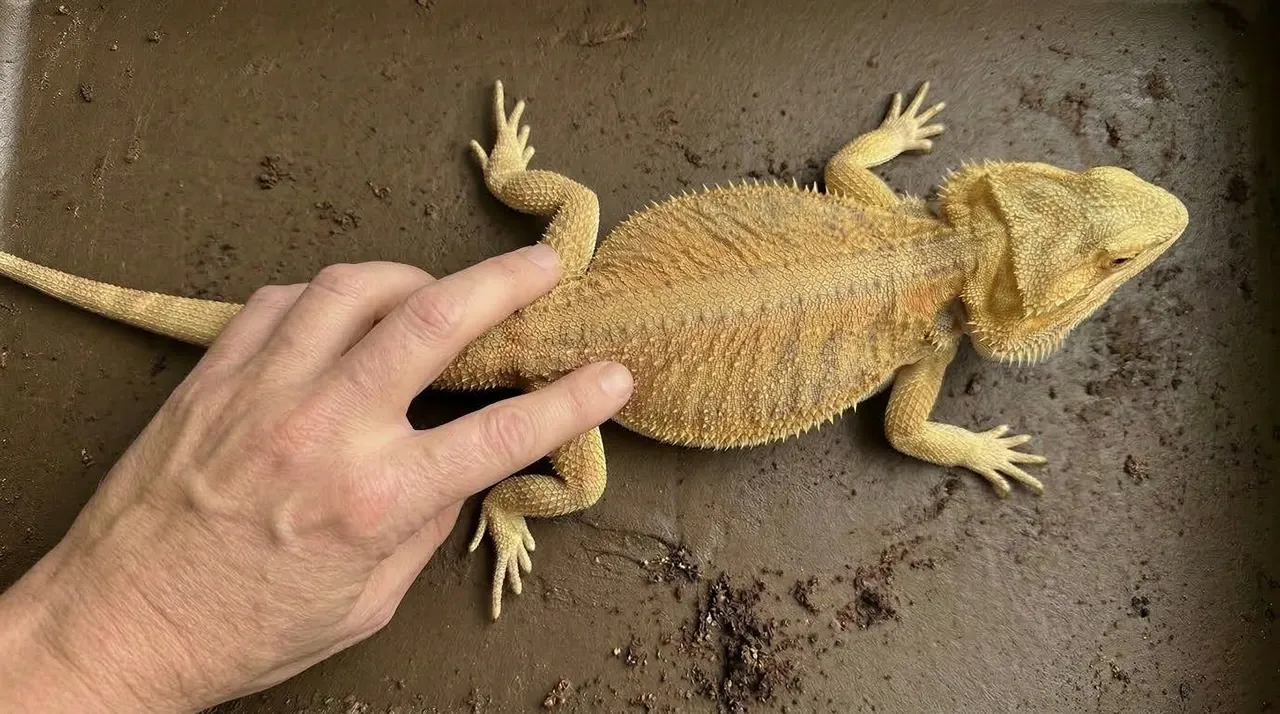
Knowing what a finished lay looks like is what prevents this misread. After a completed clutch, the female should look visibly deflated. The pear-shaped distension of the lower abdomen is gone and she is noticeably thinner from belly to tail base. She will typically be exhausted and want to drink immediately. If the swollen belly shape is still present after she returns from the lay box, she is not done.
After every laying session, feel the abdomen gently. If it still feels lumpy with distinct firm shapes, she has more to pass. Return her to the lay box. If she is still carrying eggs but shows no interest in digging after 24 hours, that is a vet visit.
Unresolved bearded dragon egg binding after a partial clutch is one of the most avoidable surgical cases a vet sees. The poop guide covers how bowel output can serve as one additional indicator of internal pressure from retained eggs.
What You Can Do Before the Vet
There are two things that actually help in the pre-vet window and one that is often recommended but frequently wastes time you do not have.
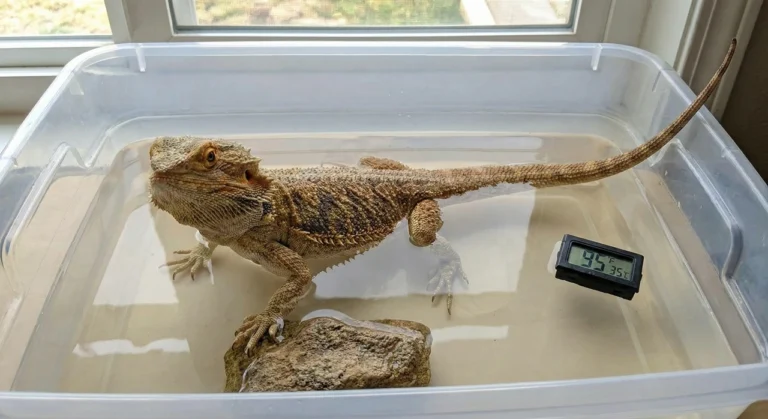
A 20-minute warm soak at 85–90°F helps in non-obstructive cases by rehydrating the female and relaxing the musculature around the cloaca. It costs nothing and causes no harm at this temperature. Do it once while you are arranging the vet visit, not instead of arranging it.
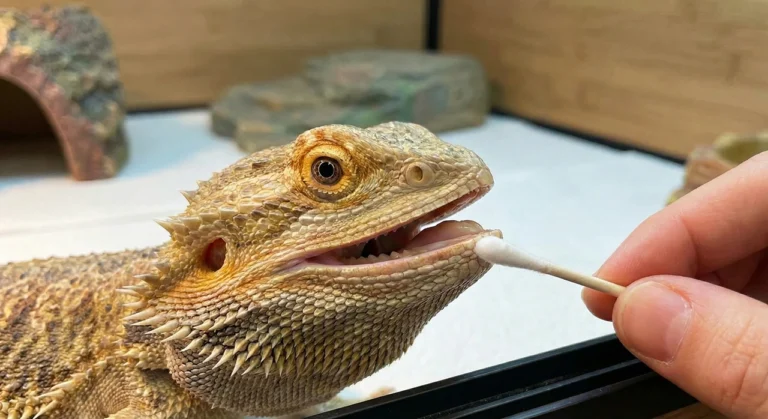
Liquid calcium glubionate, dropped onto the snout for her to lick, supports muscle contraction if calcium deficiency is contributing. If you keep this in your reptile first aid kit, use it. If you do not have it, do not delay the vet trip to find some.
What does not help is extended lay box time once active straining has failed. If she has been in the box for two or more hours, is straining without result, and is declining in alertness, the lay box has done what it can. More time in the box does not fix an obstruction and may push the situation past the point where medical treatment, rather than surgery, is still an option.
What Happens at the Vet
Knowing what the vet visit involves reduces the anxiety that sometimes delays the call.
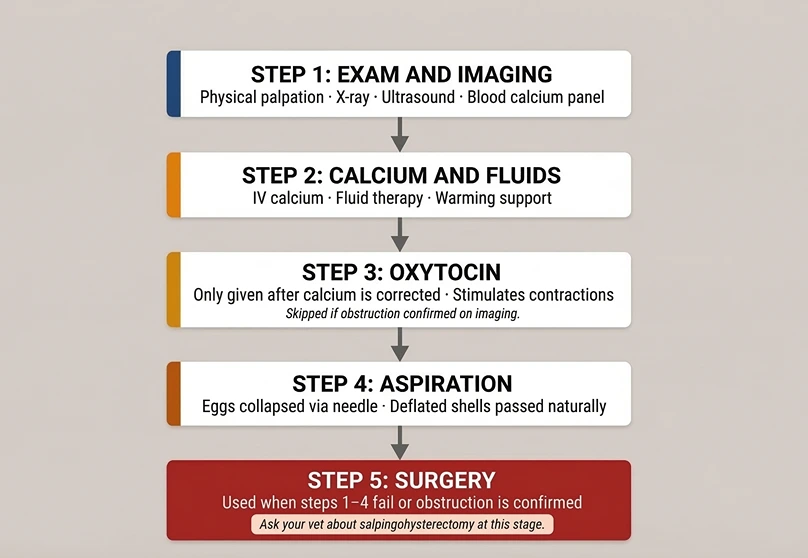
The vet will begin with a physical examination and palpation, then move to imaging. X-ray confirms the number, position, and size of retained eggs and whether any have calcified. Ultrasound may be used alongside X-ray to assess the state of the oviducts and distinguish formed eggs from follicular masses. Blood work may follow if the female appears systemically unwell, to assess calcium levels and organ function.
Warm fluid therapy and IV or subcutaneous calcium are often the first treatments, giving the female’s muscle function the best possible environment. If the calcium and fluid response is adequate, oxytocin, a hormone that stimulates uterine contractions, may be administered to trigger active expulsion. Oxytocin only works when calcium levels are sufficient and the pathway is clear, which is why calcium always comes first.
If oxytocin does not produce results, the vet may attempt manual massage of the eggs through the abdominal wall, or aspiration, which collapses the eggs with a needle and syringe so the deflated shells can be passed. Surgery is the final step when all other options have failed or when imaging shows a physical obstruction that cannot be resolved medically.
Should You Ask About Spaying Your Dragon
For a single pet female with no breeding purpose, many reptile vets will raise the option of salpingohysterectomy, meaning the removal of both ovaries and oviducts, during the same anaesthetic episode as egg removal surgery. This is the reptile equivalent of a spay.
A female that has experienced dystocia once is more likely to experience it again. The same husbandry factors, reproductive tract characteristics, and calcium demands that caused the first episode do not disappear once the eggs are removed. Each subsequent episode carries the same risks, and the cumulative toll on a female’s condition across multiple dystocia events is real.
For a pet that will never be bred, removing the reproductive organs eliminates the risk permanently and does not affect the dragon’s quality of life, temperament, or lifespan. It is not the right choice for every situation, but it is a conversation worth having with your vet when the surgical option is already on the table.
Repeat Layers and Long-Term Risk
Some females produce two or three clutches per year. Each clutch carries the same calcium demand, the same muscle load, and the same bearded dragon egg binding risk as the first. A female that sailed through her first two clutches can still develop egg binding on her fifth, particularly as she ages and her muscle condition changes.
Treat each gravid period as a calcium and monitoring event rather than something that manages itself. Your calcium dusting schedule must be elevated during every gravid period, not just the first one. A female that has previously had a partial clutch should be palpated after every laying session until you are confident she is clear.
Overweight females face a much higher risk of repeat dystocia. Fat deposits around the oviducts physically reduce the space available for eggs to pass. If your dragon is carrying excess weight, address it between cycles, not during one. The guide on managing excess weight covers the dietary approach in detail.
Recovery After Egg Binding
Recovery from bearded dragon egg binding, particularly the surgical kind, is a longer process than recovery from a normal laying. The female has been under anaesthetic, had abdominal surgery, and likely entered the procedure in a calcium-depleted and dehydrated state. Expect several weeks of reduced activity and modified husbandry rather than the rapid bounce-back that follows a normal clutch.
Keep temperatures at the higher end of the normal range during recovery to support tissue healing. Calcium supplementation should remain elevated for at least two to three weeks post-procedure. Soaking daily for the first week keeps any suture site clean and supports hydration. Follow the vet’s specific discharge instructions above any general guidance, particularly around feeding timelines after anaesthetic.
Monitor the cloaca and surrounding area daily for the first two weeks. Any swelling, discharge, or discolouration around the surgical site warrants a follow-up call to the vet. Dehydration signs are worth checking daily during this period. A dragon recovering from dystocia surgery is at elevated risk and will not always show the thirst response clearly.
Frequently Asked Questions
How Long Until Egg Binding Becomes Fatal
There is no fixed safe window because severity depends on the cause, the female’s condition, and whether eggs are pressing on organs. A female actively straining without result can deteriorate within 24–48 hours. A female with calcified retained eggs may decline over weeks. Either way, waiting beyond 24 hours once straining has failed without result is not a safe choice.
Does a Warm Bath Actually Help
A warm bath at 85–90°F can help in early non-obstructive cases by rehydrating the female and relaxing cloacal muscles. It cannot resolve an obstruction, move a calcified egg, or replace veterinary treatment once straining has failed. Use it once as a supportive measure while arranging a vet visit, not as an alternative to one.
How Much Does Egg Binding Treatment Cost
Medical management covering calcium injection, fluid therapy, and oxytocin typically runs between £150 and £400 depending on the practice and location. Surgery costs considerably more, often £600–£1200 or above when anaesthetic, imaging, and aftercare are included. The earlier treatment begins, the more likely medical management is sufficient and the lower the overall cost.
Do First-Time Layers Get Egg Bound
Yes. First-time layers carry the same risk as experienced ones. In many cases they face higher risk because the owner has not yet learned to read the signs or built the monitoring habits from previous clutches. Early sexual maturity in well-fed captive females means dystocia can occur as young as 8–10 months.
Can She Lay Eggs Again After Treatment
After medical management, yes. Future clutches are possible, though the risk of recurrence is elevated. After surgical removal without salpingohysterectomy, future clutches are also possible but carry the same elevated risk. After salpingohysterectomy, the reproductive cycle ends permanently. For a single pet female with no breeding purpose, many vets and keepers consider this the most responsible long-term outcome.
Your Egg Binding Action Plan
- ✅ Know the difference between gravid and egg bound before an emergency happens. A gravid female is alert, active, and digging. An egg-bound female transitions to stillness, straining, and declining alertness. The shift can happen within hours.
- ✅ Set a one-hour straining threshold and hold to it. If she is visibly bearing down with no eggs produced for one continuous hour, call a vet. Not tomorrow. That session.
- ✅ After every laying session, palpate the abdomen. Distinct firm lumps mean she is not done. A completely deflated belly means she is. If she still feels lumpy and will not return to the lay box after 24 hours, see a vet.
- ✅ Know the late-stage signs before you need them. Black beard, back leg dragging, flat unresponsive posture, and cloacal prolapse are all critical emergencies. No home treatment applies at this stage.
- ✅ Keep liquid calcium glubionate in your first aid kit. It cannot treat egg binding, but it supports muscle function in non-obstructive cases and buys time while you arrange veterinary care.
- ✅ Elevate calcium supplementation during every gravid period, not just the first. Calcium demand is the same for clutch five as it was for clutch one.
- ✅ If surgical intervention is recommended, ask about salpingohysterectomy. For a pet female with no breeding purpose, eliminating future reproductive cycles is worth discussing while she is already under anaesthetic.
- ✅ Replace your UVB tube before a gravid period if it is older than 12 months. An ageing tube reduces D3 synthesis and undermines calcium absorption at exactly the moment demand is highest.
Medical Disclaimer: This article is written for educational purposes by an experienced keeper and is not a substitute for veterinary advice. Egg binding is a medical emergency. If you suspect your dragon is egg bound, contact a reptile-experienced veterinarian immediately. The Association of Reptile and Amphibian Veterinarians has a searchable directory to find a qualified exotic vet near you.
Written by
Sarah ArdleySarah has kept bearded dragons for over ten years. She founded Beardie Husbandry after discovering that most mainstream care advice — including what she followed with her first dragon — was doing more harm than good. Every article on this site is grounded in veterinary research and real keeper experience.