Bearded Dragon Eye Infection – Symptoms, Causes and Treatment
Swollen, closed, or weeping eyes in a bearded dragon have several different causes, and only some of them are infections. That distinction matters because treating the wrong cause either delays the right fix or makes things worse. A dragon rubbing its face on the glass with one eye half-shut is a very different situation from a dragon with both eyelids sealed with yellow crust.
Start by looking at both eyes. One eye affected almost always points to something local — stuck shed, a particle, a scratch, or an abscess on that side. Both eyes affected at the same time points toward something systemic, like a bacterial infection or Vitamin A deficiency.
What Healthy Eyes Look Like
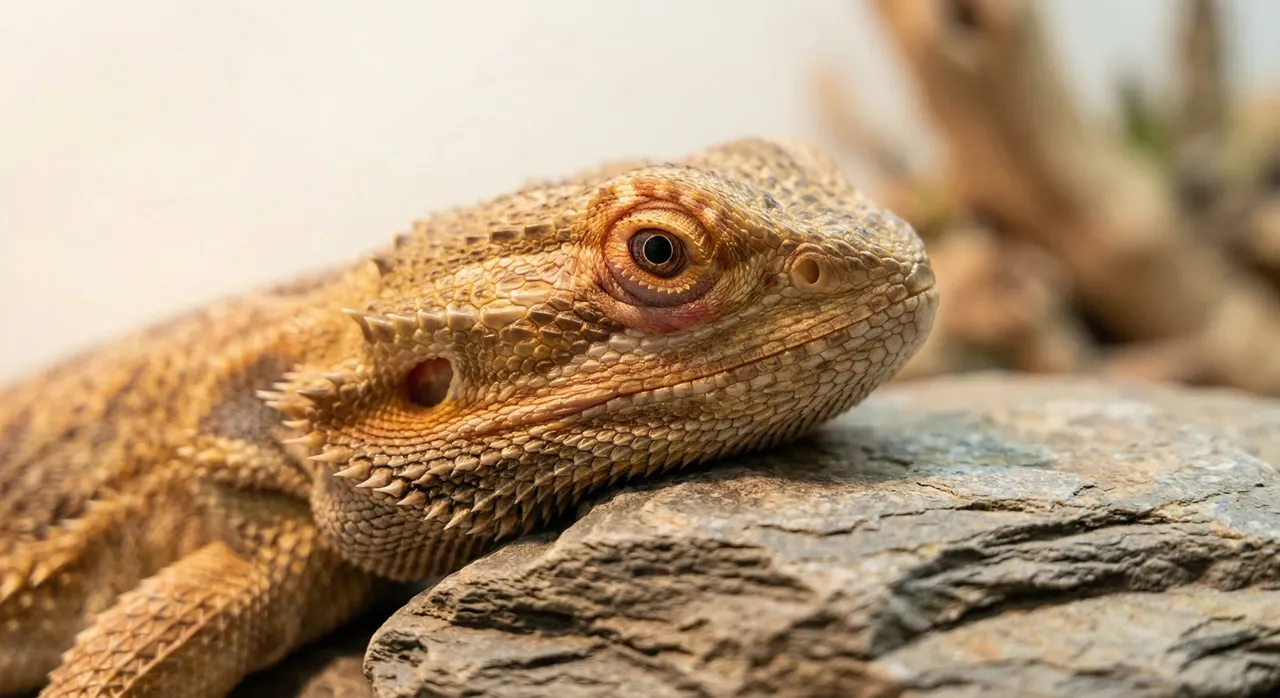
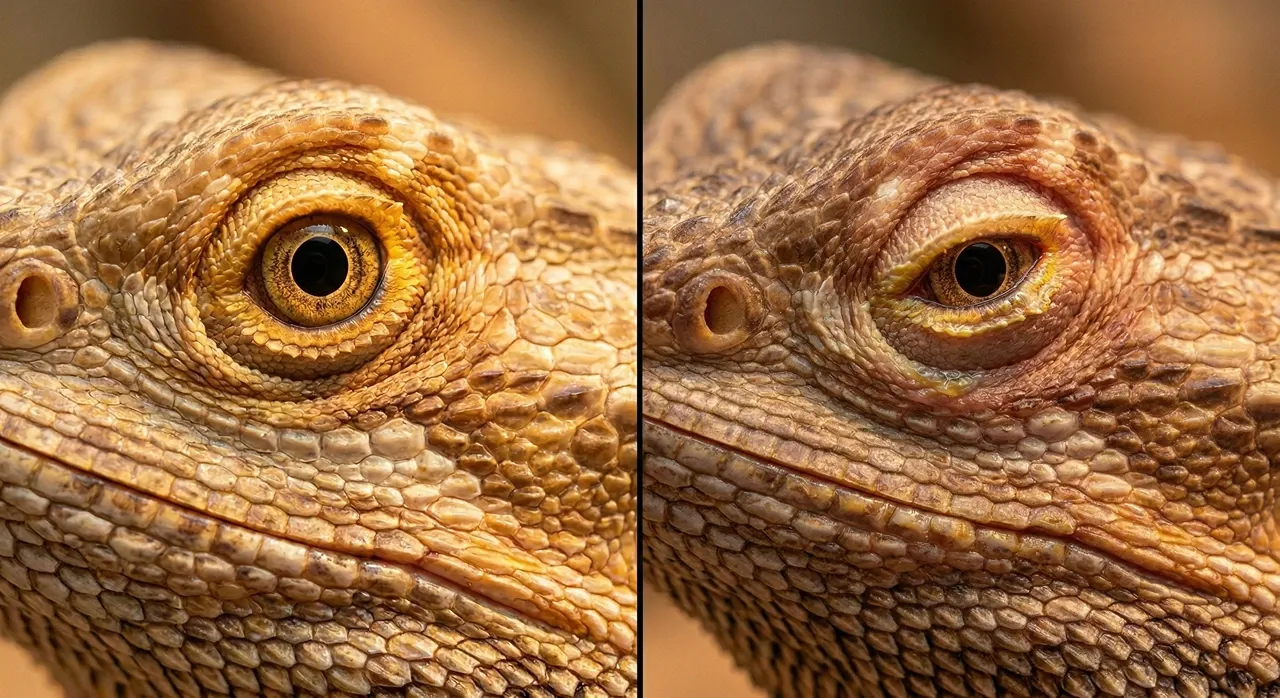
Clear, bright, fully open, symmetrical. No discharge, no puffiness around the eyelid, no crusting. The dragon tracks movement and blinks normally. Any persistent deviation from that is worth looking into, even if the dragon is otherwise behaving normally.
Three Things That Look Like Eye Infections But Are Not
Stuck Shed
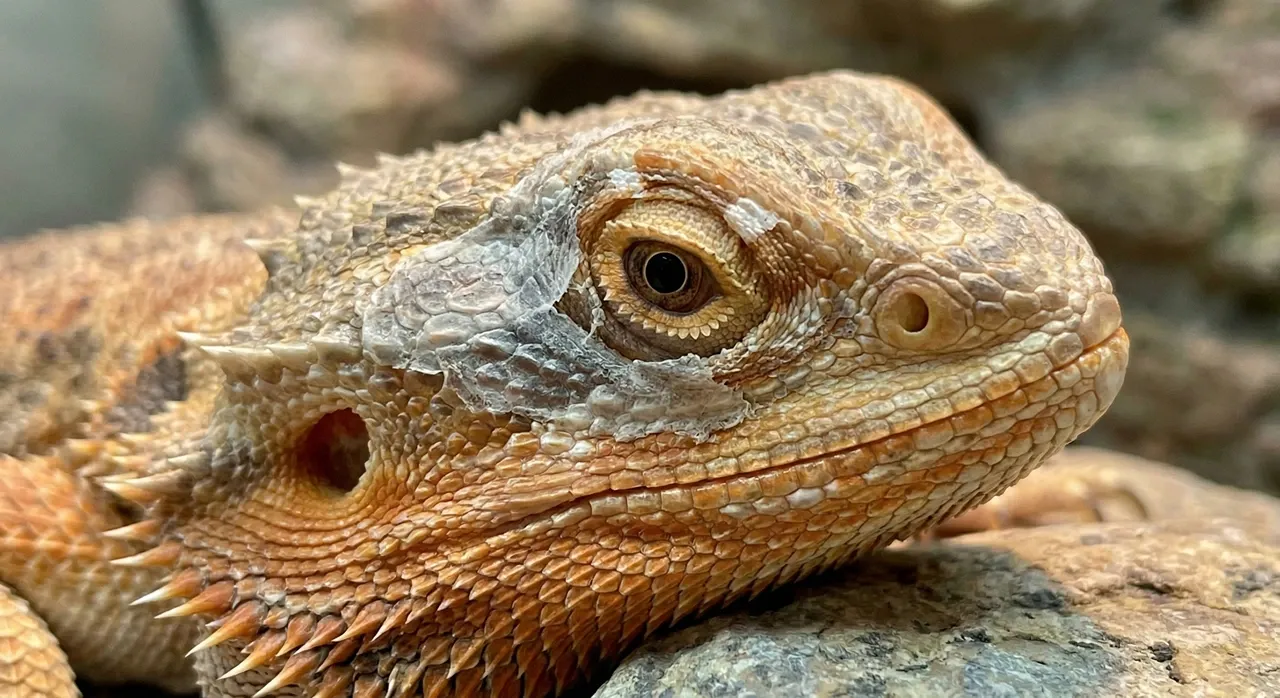
During a shed, the skin around the eyes dries tight and can pull the eyelid partially closed. The eye may water as it tries to flush the irritation. It can stay partly shut for several days. From a distance this looks like swelling or infection, but the skin around the eye will feel dry and papery rather than soft and puffy.
If the rest of the body is also shedding or has recently shed, and the dragon is eating and moving normally, stuck shed is almost certainly what you are dealing with. A 15-minute soak at 85–90°F loosens the skin without forcing anything. Keep the water at shoulder depth with the head above the surface. Repeat daily until the shed clears. The shedding guide covers when stuck shed around the eyes needs more direct intervention.
Dehydration
A dehydrated dragon develops sunken, dull-looking eyes that appear half-closed. The skin around the socket looks slightly loose or wrinkled. This is not an eye problem. It is a hydration problem that shows up in the eyes because the tissue behind them loses volume.
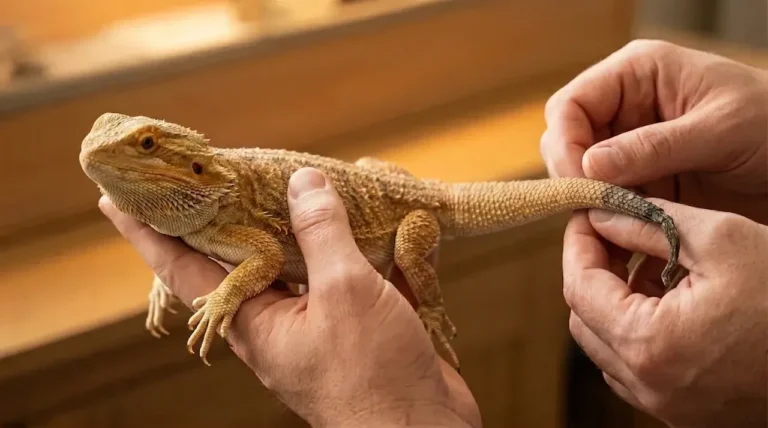
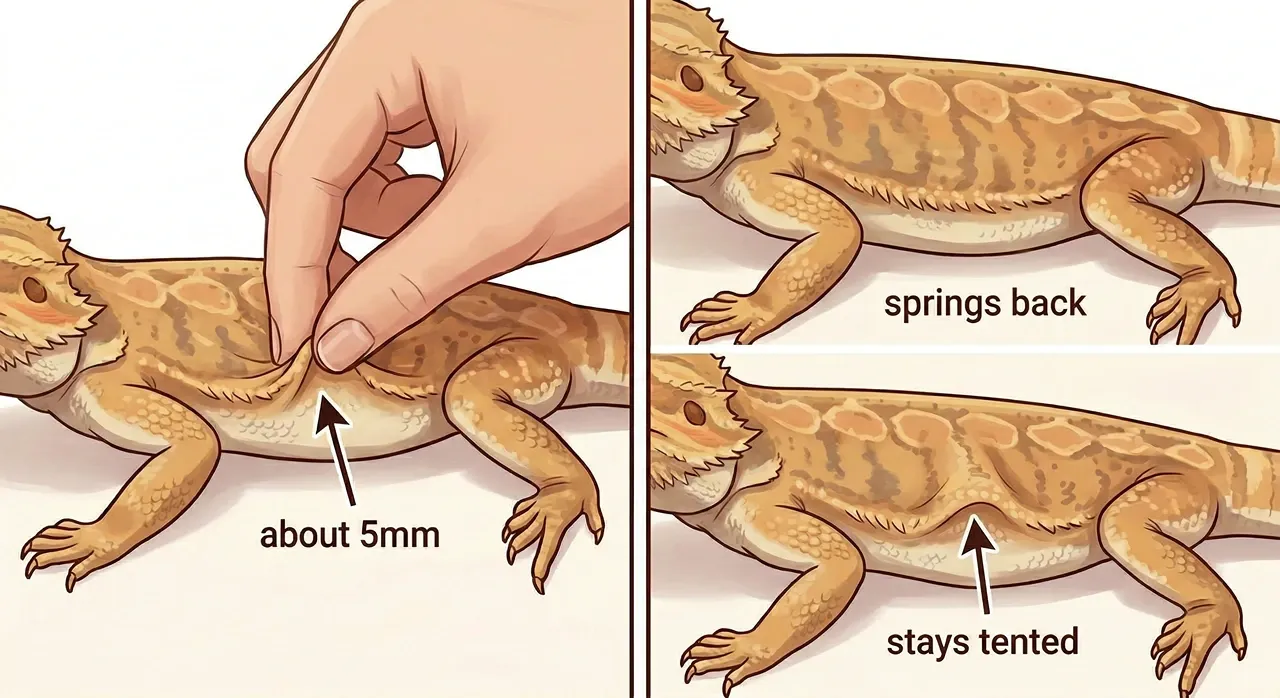
Pinch the skin gently along the side of the body. Hydrated skin springs back immediately. Dehydrated skin returns slowly or stays tented for a moment. If the skin tent test is positive alongside the eye changes, soaking and hydration are the fix, not eye drops. The dehydration guide covers the most reliable ways to get a reluctant dragon rehydrated.
Pre-Shed Eye Bulging
Some dragons push their eyes outward dramatically in the days before a shed. They are using internal pressure to stretch the skin around the eye socket and loosen it. It looks alarming. It passes within a few minutes each time and leaves no swelling behind. If the bulging resolves quickly and the dragon is alert, tracking movement, and otherwise normal, this is not a medical issue. The body language guide explains the visual difference between this behaviour and actual eyelid swelling.
Actual Causes of Eye Infections and Eye Damage
Bacterial Infection
Bacteria enter the eye through a scratch, a foreign body, or a contaminated environment and cause conjunctivitis. The signs are specific: redness in the tissue surrounding the eye, yellow or green discharge, crusting that glues the eyelid partly or fully shut, and swelling of the eyelid itself rather than just the skin around it. The eye may weep consistently, not just after sleep.
Bacterial infections do not resolve without antibiotic eye drops. They worsen. If you see coloured discharge, this needs a vet visit, not a wait-and-see approach.
Substrate Particles
Sand, fine gravel, and calcium sand get under eyelids. A particle that sits against the cornea scratches it, triggers inflammation, and creates an entry point for bacteria. The sequence from irritation to infection can happen within a day or two. The eye will water, the dragon will rub their face on surfaces, and redness develops quickly.
If you are using any loose particle substrate and one eye suddenly becomes red and watery, change the substrate before anything else. Leaving the animal on the same surface while treating the eye is treating the symptom while the cause is still present. The substrate guide covers the safest options and why loose particles cause more problems than most keepers expect.
Vitamin A Deficiency
Vitamin A is needed for the tissue lining the eyelids and tear ducts. Without enough of it, that tissue breaks down. The eyelids swell, the tear ducts block, and secondary bacterial infection follows. The clinical name is Hypovitaminosis A. It is more common in dragons fed a diet consistently low in leafy greens.
The pattern that points toward this rather than a standard infection: both eyes affected equally, swelling primarily in the eyelid tissue rather than around or behind the eye, no obvious substrate or trauma trigger, and a history of limited greens. Recovery involves adding Vitamin A-rich foods to the diet — collard greens, mustard greens, dandelion greens, butternut squash, and bell peppers are all good sources — alongside a reptile multivitamin once per week. The diet guide has the full supplement schedule. Do not add high-dose Vitamin A drops without a vet confirming the deficiency first. Vitamin A toxicity in reptiles is a real problem.
Mites
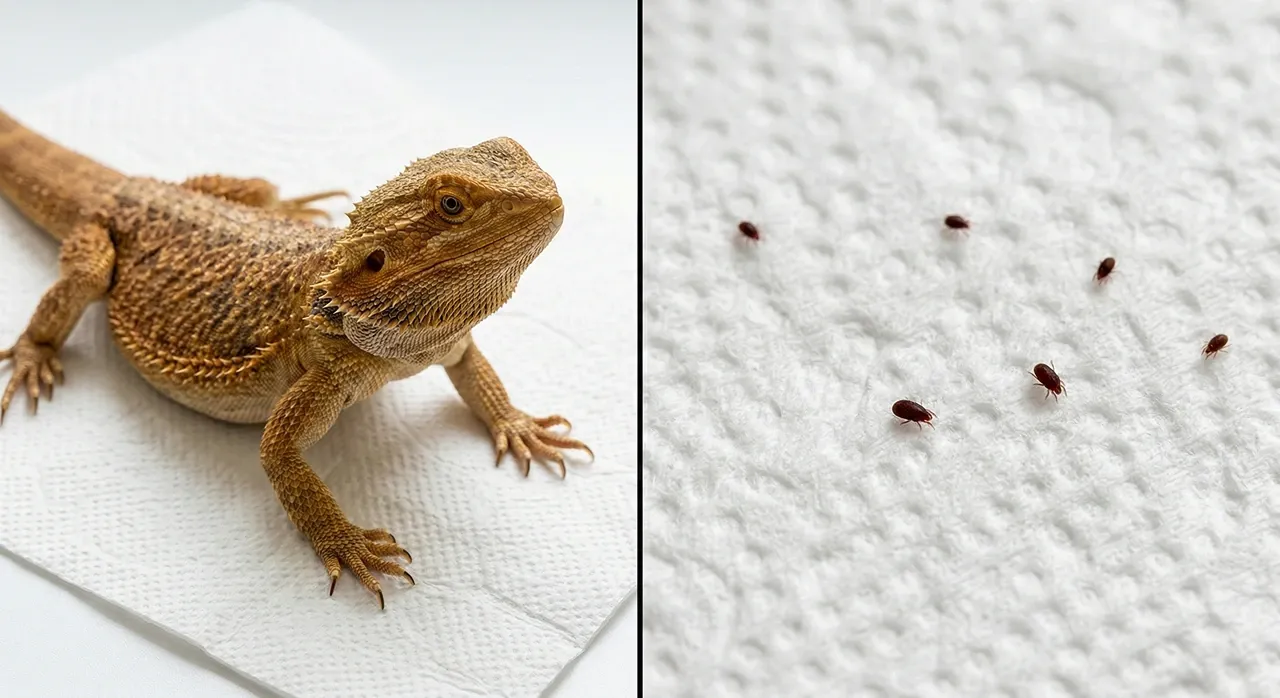
Reptile mites concentrate in skin folds around the eyes and cause intense irritation that looks like infection. They appear as tiny red, brown, or black moving dots. White specks in the skin folds are eggs. Place the dragon on a white paper towel for a few minutes. Any mites present will walk off and become visible against the white surface. The enclosure needs treating alongside the dragon. The parasite guide covers the full decontamination process.
Abscess From the Mouth or Ear
The eye, ear canal, and mouth are anatomically close. An abscess developing inside the mouth or behind the ear puts pressure on surrounding tissue and pushes the eye on that side outward. From the outside it looks exactly like an eye infection. The difference is the swelling pattern. If one eye is affected and there is also visible swelling along the jaw, cheek, or base of the skull, the source is likely elsewhere. Check the mouth for early signs of mouth rot. This needs a vet regardless of what the eye looks like on the surface.
Corneal Ulcer
A scratch from sharp decor, a cricket bite, or contact with a tankmate damages the corneal surface. The eye stays partially or fully closed because it hurts to open. There is usually no discharge initially. The dragon will show sensitivity to light and avoid opening the eye fully even in dim conditions. Corneal ulcers are confirmed with fluorescein staining at a vet. Left untreated they deepen and can cause permanent vision loss. If you suspect a corneal injury, check the enclosure for sharp edges and remove them immediately.
What Not to Do
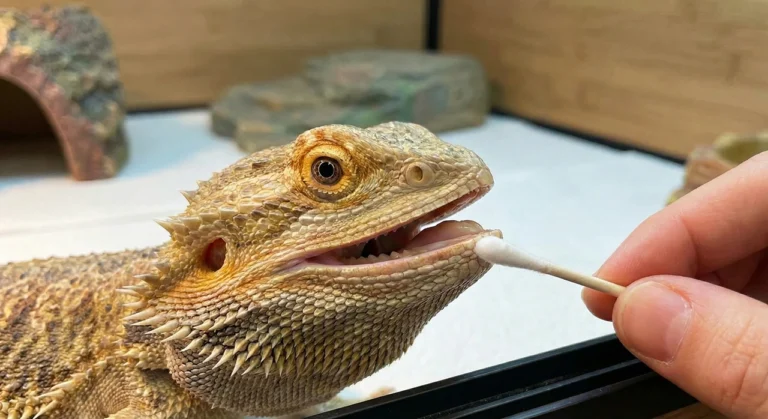
If there is discharge crusted on the eyelid, use a cotton-tipped applicator and roll it gently along the eyelid to collect the debris. Roll in one direction. Do not wipe across the eye. Wiping drags bacteria and debris across the cornea.
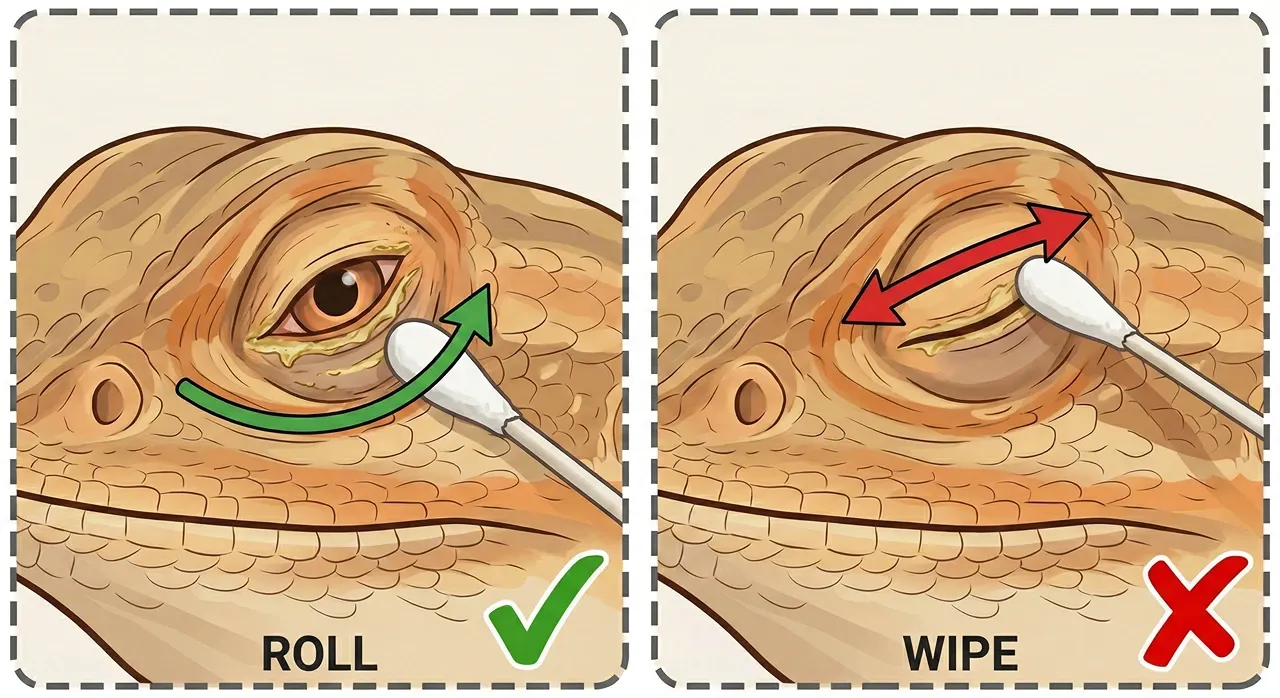
Do not try to force a swollen eyelid open. The swelling is caused by pressure or inflammation underneath. Forcing the lid risks rupturing tissue that is already compromised.
Quick Reference — What You Are Seeing and What It Likely Means
| What You Are Seeing | Most Likely Cause | What to Do |
|---|---|---|
| One eye partially closed, dragon currently shedding | Stuck shed | 15-min soak at 85–90°F. Shoulder depth only. Daily until shed clears. |
| Both eyes sunken, skin tents when pinched | Dehydration | Daily soaks. This is a hydration issue, not an eye issue. |
| Eyes bulge outward briefly then return to normal | Pre-shed behaviour | Nothing needed if it passes within minutes. |
| One eye red and watery, loose substrate in enclosure | Substrate particle irritation | Change substrate first. Warm soak. Vet if no improvement in 24 hours. |
| Yellow or green discharge, eyelid crusted shut | Bacterial infection | Exotic vet. Antibiotic drops required. |
| Both eyelids swollen equally, limited greens history | Vitamin A deficiency | Vet visit. Add Vitamin A-rich greens and weekly multivitamin. |
| Tiny red or black moving dots around the eye | Mites | Vet for treatment. Full enclosure decontamination required. |
| One eye swollen, swelling also along jaw or cheek | Abscess from mouth or ear | Exotic vet same day. Check mouth for mouth rot. |
| One eye held shut, no discharge, light sensitivity | Corneal ulcer | Exotic vet. Fluorescein staining confirms diagnosis. |
When You Actually Need a Vet
Stuck shed and dehydration can be managed at home if the dragon is otherwise eating and moving normally and the eye is not sealed shut. Give it 24–48 hours of soaking and see whether things improve.
Book a vet visit within 24 hours if there is any yellow or green discharge, if the eyelid is fully sealed, if swelling is getting worse rather than staying stable, or if the dragon has stopped eating alongside the eye issue.
Go same day if the eye looks physically damaged or collapsed, if there is bleeding around the eye, or if both eyes are sealed shut at the same time.
Frequently Asked Questions
Can a bearded dragon eye infection clear up on its own
Stuck shed and dehydration-related eye changes can resolve with home care. A bacterial infection will not. It gets worse without antibiotic drops. If there is discharge present and the eye has not improved after 48 hours of soaking, see a vet. Do not wait longer than 72 hours from first noticing discharge before getting treatment.
One eye is closed and the other is open — what does that usually mean
One eye affected points to something local on that side. Stuck shed, a particle, a scratch, or an abscess. Systemic causes like Vitamin A deficiency and bacterial infections tend to affect both eyes. Start by looking closely at the affected eye for stuck skin, debris, or discharge before assuming infection.
What eye drops are safe to use at home
Nothing without vet guidance. Human eye drops including Visine are toxic to reptiles. Contact lens saline contains preservatives that can damage reptile eye tissue. Even plain sterile saline should be confirmed with your vet before applying. The safest approach is a warm soak while you arrange a vet visit.
My dragon keeps rubbing its eye on the glass
Face rubbing usually means irritation rather than infection. Check for stuck shed, mites around the eye area, and whether the dragon is in a current shed cycle. If the rubbing continues beyond 24 hours with no obvious shed-related explanation, look at the eye closely under good light for redness or debris. Any visible redness or discharge warrants a vet call.
How do I prevent this happening again
Four things cover most cases. Use a solid non-particle substrate. Maintain a weekly multivitamin in the feeding schedule to keep Vitamin A levels stable. Keep the enclosure clean. Check decor regularly for sharp edges. Dragons sourced from pet stores are worth having checked by a vet within the first month regardless of whether they look healthy.
What Recovery Looks Like After Treatment
Most bacterial eye infections respond to antibiotic drops within 5–7 days. Discharge typically reduces within 48 hours. The eye starts opening more fully within 3–4 days. Finish the full course even if the eye looks normal earlier. Stopping treatment early lets resistant bacteria survive and the infection comes back.
Keep the enclosure clean throughout the treatment period. Spot-clean daily and remove uneaten food promptly. Reintroducing bacterial load from a dirty environment slows recovery.
If there has been no visible improvement after 5 days of drops, go back to the vet. The bacteria may not be responsive to the initial antibiotic. A culture swab identifies what will actually work.
Vitamin A deficiency takes longer to resolve. Eyelid tissue rebuilds slowly. Expect 3–4 weeks of consistent dietary improvement before the eye looks fully normal. The complete food list has every Vitamin A-rich food ranked by nutritional value if you want to optimise the diet during recovery.
Disclaimer: This article is for general husbandry guidance only and does not constitute veterinary advice. If your bearded dragon has discharge from the eye, a sealed eyelid, or any eye symptom that has not improved within 48 hours of home care, contact a qualified reptile veterinarian promptly.
Written by
Sarah ArdleySarah has kept bearded dragons for over ten years. She founded Beardie Husbandry after discovering that most mainstream care advice — including what she followed with her first dragon — was doing more harm than good. Every article on this site is grounded in veterinary research and real keeper experience.