What Causes a Bearded Dragon Runny Nose
A bearded dragon runny nose is one of the most common things owners message forums about at midnight, and the responses they get are almost always the same: respiratory infection, antibiotics, vet immediately. That advice is sometimes right, and sometimes it sends owners to a vet for a problem that needed nothing more than a check of the humidity dial.
The discharge from your dragon’s nostrils may be nasal salt secretion, post-bath moisture, or humidity-triggered mucus. All three resolve without treatment. Reading what you are actually looking at is the first step.
Why White Crust at the Nostrils Is Normal
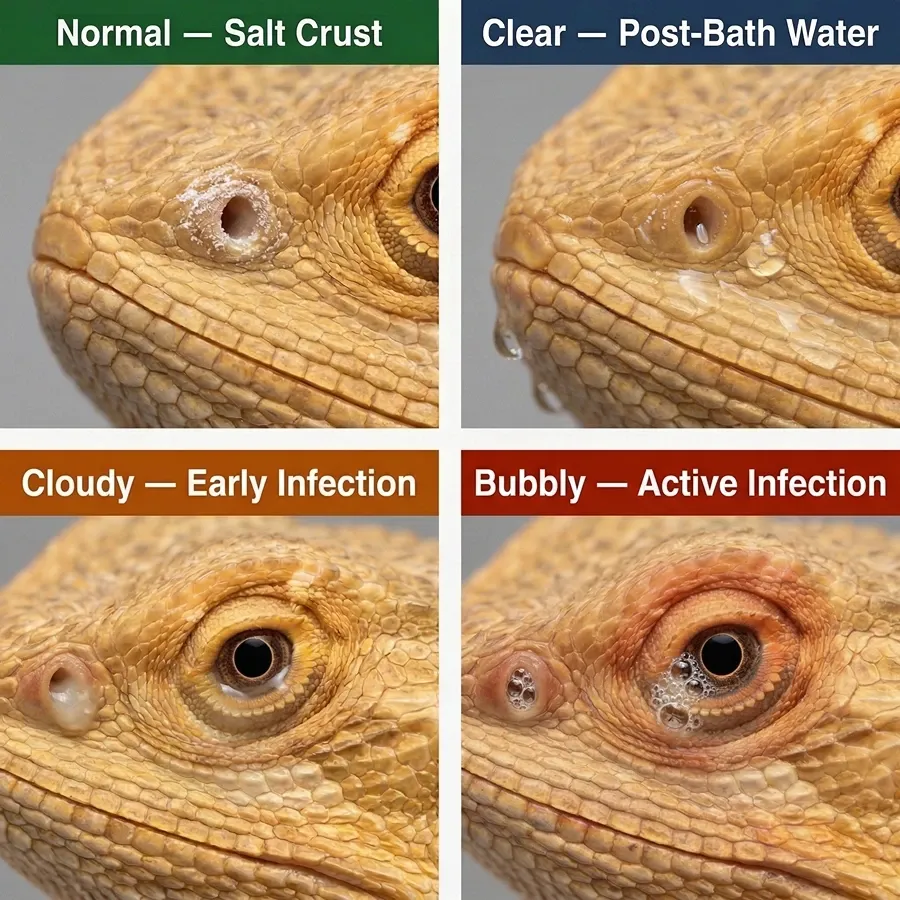
Bearded dragons have a nasal salt gland that actively excretes excess salt from the bloodstream. When this happens, you see white or off-white powdery deposits or a faint crusty residue around the nostrils. It can look like dried discharge, and it is not. It is a normal physiological process, the reptile equivalent of sweating out excess mineral load.
If what you are seeing is white, dry, and appears in small amounts at the nostril rim, it is almost certainly salt secretion. It is more noticeable after the enclosure lights have been on for a while, and it often appears on one nostril more than the other. No action is needed. A warm soak will clear it if it bothers you to look at, but it is not a symptom of anything requiring treatment.
Read the Discharge Before Anything Else
Before looking at causes, look at the discharge itself. The appearance, colour, consistency, and whether it is coming from one nostril or both tells you more than any list of possible causes. Most owners skip straight to causes without doing this.
Clear and Watery Discharge
Thin, clear fluid that appears after a bath or soak is almost always residual water in the nasal passage. Bearded dragons occasionally take in water during a soak and it drains over the next hour or two. If the dragon is behaving normally, eating well, and the discharge stops within a few hours of the soak, there is nothing to investigate.
If clear watery discharge appears without any bath or misting and persists for more than 24 hours, check the enclosure humidity. High humidity causes excess mucus production in the nasal passages. The fix is ventilation, not medication.
Cloudy or Mucoid
Thicker, cloudy, or slightly off-white discharge that is actual fluid rather than crusty is the first sign worth taking seriously. This is what early-stage respiratory infection looks like in most cases.
At this stage the dragon may still be eating normally and showing no other symptoms. That is both reassuring and a reason not to wait. A respiratory infection caught at the cloudy discharge stage responds much better to treatment than one that has progressed to open-mouthed breathing and lethargy.
Bubbly or Foamy
Bubbles at the nostrils, or bubbles appearing at the mouth while breathing, indicate that air is mixing with mucus in the respiratory tract. A bearded dragon runny nose at this stage is no longer a monitoring situation. The dragon needs a vet contact within 24 hours. A dragon producing bubbles is working harder to breathe than it should be, even if it looks otherwise settled.
Yellow, Green, or Thick
Coloured discharge, or discharge thick enough to partially block the nostril, means a bacterial infection is already established. This does not resolve without antibiotic treatment prescribed by a vet. Attempting to clear the nostril yourself without a vet assessment risks driving material deeper into the nasal passage. Book a same-day or next-morning appointment.
Setup Problems That Cause a Runny Nose
The majority of bearded dragon runny nose cases that are not RI trace back to the enclosure. These are fixable without a vet visit if you catch them before the nasal discharge becomes thick or bubbly.
Humidity Too High
Bearded dragons come from semi-arid environments and need ambient humidity between 30–40%. Anything consistently above 50% causes excess mucus production in the upper respiratory tract. This presents as a clear or slightly cloudy bearded dragon runny nose with no other symptoms. The dragon eats, basks, and behaves normally throughout the day. The wet nose is the only sign, and it clears once the humidity drops.
Common humidity culprits: a bioactive setup with a moisture-retaining substrate, a heavily misted enclosure, a water feature, or a vivarium positioned near a kitchen or bathroom. Check your humidity with a digital hygrometer, not a stick-on dial. If it is running above 50% consistently, increase ventilation by opening additional mesh panels or switching to a more breathable enclosure design. The discharge usually clears within 48–72 hours of correcting the humidity.
Temperatures Too Low
A dragon that cannot maintain its core body temperature has a suppressed immune response. Low temperatures, particularly a cool end dropping below 75°F at night without a ceramic heat emitter, create conditions where bacteria that are ordinarily harmless become an infection risk.
A bearded dragon runny nose that appears in winter or after a thermostat failure is often temperature-related. Correct the temperature gradient first, then monitor whether the discharge resolves over 3–5 days before deciding whether a vet visit is needed.
Stuck Shed on the Nostrils
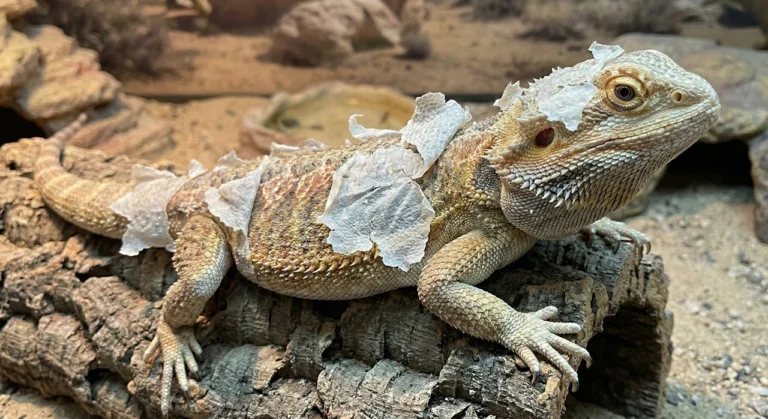
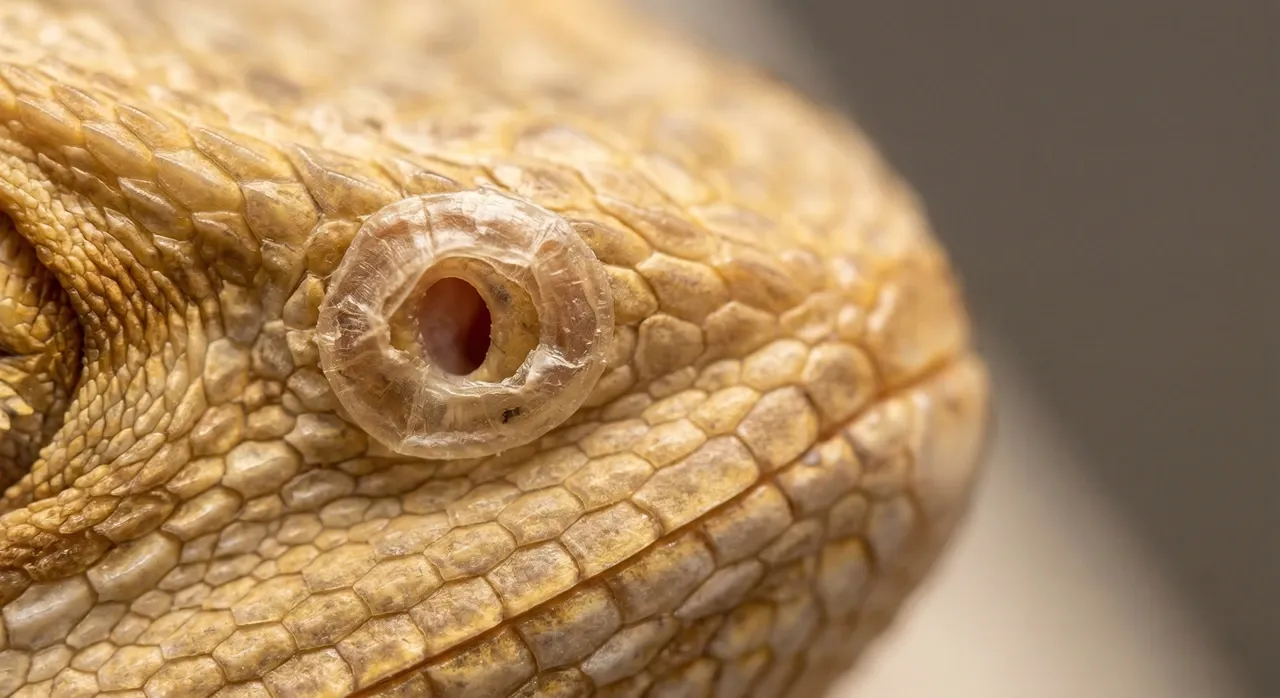
During a shed cycle, retained skin can partially block the nostrils, creating pressure and mild discharge, and occasionally forcing the dragon to breathe through its mouth. Look closely at the nostril rim. Retained shed looks like a tight translucent ring around the opening, slightly raised and papery.
A 15–20 minute warm soak usually softens it enough to release on its own. Do not attempt to pick it off dry. If the shed is retained across multiple soak sessions, a vet can irrigate the nostril safely.
When the Runny Nose Is Actually an Infection
A bearded dragon runny nose caused by a respiratory infection does not arrive with just nasal discharge. RI rarely presents as a single symptom. What you are looking for is discharge plus at least one other sign from the following list.
- Open-mouthed breathing when the dragon is not at peak basking temperature
- Audible breathing sounds: clicking, wheezing, or a crackling quality to each breath
- Lethargy or a sudden drop in basking time
- Loss of appetite that appeared alongside the nasal symptoms
- Holding the head tilted upward at an angle while resting (an attempt to keep the airway clear)
- Discharge from the eyes alongside nasal discharge
Any one of these alongside nasal discharge pushes the situation past the “monitor at home” threshold. Two or more of them mean a vet contact the same day, not tomorrow morning.
Respiratory infections in bearded dragons are almost always bacterial. Viruses and fungi are possible but uncommon. A vet will typically swab for culture and sensitivity before prescribing antibiotics, which tells them which antibiotic the specific bacteria will respond to.
Treating with a broad-spectrum antibiotic without culture results is less effective and risks resistance developing. The Merck Veterinary Manual notes that bacterial respiratory infections in reptiles require targeted rather than empirical antibiotic therapy. A swab matters even when it feels like an extra step.
Discharge Type vs What to Do
| What You See | Most Likely Cause | Action | Vet Needed |
|---|---|---|---|
| White powder or dry crust at nostril rim | Salt secretion (normal) | Warm soak to clear. No other action needed. | No |
| Clear watery fluid, appeared after a bath | Residual soak water draining | Monitor for 2–3 hours. Resolves on its own. | No |
| Clear fluid persisting 24+ hours, no bath | Humidity too high | Measure humidity. Increase ventilation if above 50%. | No, unless it continues after fix |
| Cloudy or slightly thickened discharge | Early respiratory infection or low temps | Check temperatures. Monitor 24 hours. Book vet if no improvement. | If persists beyond 24–48 hours |
| Bubbles at nostrils or mouth | Active respiratory infection | Vet contact within 24 hours. | Yes, within 24 hours |
| Yellow, green, or thick discharge | Established bacterial infection | Same-day or next-morning vet appointment. | Yes, urgent |
| Nostril partially blocked, papery rim | Retained shed | Warm soak 15–20 minutes. Repeat if needed. | Only if soaking fails after 2–3 attempts |
| Discharge alongside lethargy and appetite loss | Systemic illness, RI with complications | Vet same day regardless of discharge colour. | Yes, same day |
What Happens at the Vet
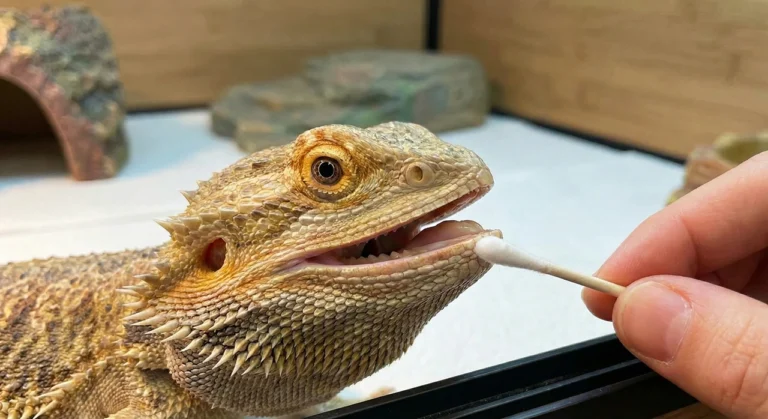
Knowing what to expect makes it easier to decide when to go. A vet assessing a bearded dragon runny nose will typically examine the nostrils and mouth, listen to the lungs if RI is suspected, and may take a nasal or oral swab for culture. In more advanced cases, chest X-rays show how far a lower respiratory infection has progressed.
If the vet confirms a bacterial infection, they will prescribe an antibiotic, usually given by injection at the clinic or by oral syringe at home over 10–14 days. They will also advise adjusting temperatures to the high end of normal to support immune function, and reducing handling to minimise stress while the dragon recovers.
A dragon recovering from dehydration alongside RI may need fluid support before antibiotics can work effectively. Dehydrated tissue responds poorly to systemic medication.
The single most common mistake owners make with RI treatment is stopping the antibiotic course early because the discharge clears up. The discharge clearing is not the same as the infection clearing. Finish the full course your vet prescribes or the infection can re-establish with antibiotic-resistant bacteria.
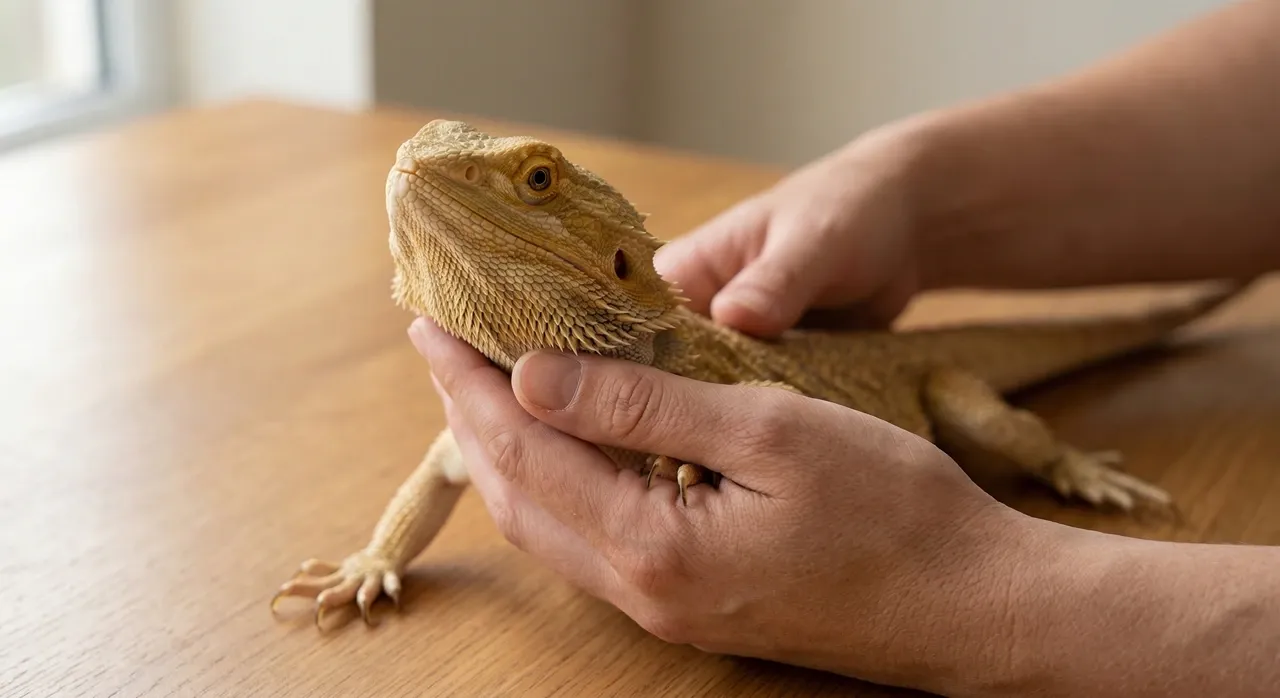
What If Something Is Stuck in the Nostril
A foreign body in the nostril is a less common but genuine cause of a one-sided bearded dragon runny nose that owners rarely consider. A piece of substrate (loose sand, a reptile carpet fibre, a fragment of dried greens) can lodge in the nostril and cause irritation, mild discharge, and occasional sneezing.
The signs that point toward a foreign body rather than infection are: discharge from one nostril only, no other symptoms at all, and a dragon that sneezes occasionally but otherwise behaves completely normally. Repeated gentle sneezing in a healthy, eating, basking dragon is the body’s own attempt to clear the passage.
A 20-minute soak in warm water and a slightly more humid environment for 24–48 hours gives the nasal passage moisture and often clears it. If it persists beyond 48 hours or the dragon begins showing additional symptoms, a vet can examine the nostril with an otoscope and irrigate it safely.
This is another reason loose particle substrates create avoidable problems. Substrate dust is a common nostril irritant in enclosures using sand or fine-grain substrate, and switching to tile or reptile carpet removes the risk entirely.
How to Stop a Runny Nose Coming Back
A bearded dragon that has had one respiratory infection is more susceptible to a second if the triggering conditions are not fixed. The most common culprits are cold nights without ceramic heat emitters, enclosures with poor ventilation running high humidity, and rooms that drop below 65°F overnight in winter.
Keeping accurate temperature and humidity readings with a digital probe rather than an analogue gauge removes the guesswork. An enclosure running at 35–40% humidity and correct temperatures throughout a 24-hour cycle is one where respiratory infections are rare. When they do appear in a correctly set up enclosure, it usually signals stress-suppressed immunity, which is worth discussing with the vet alongside the immediate treatment.
Frequently Asked Questions
Is a Runny Nose Always a Respiratory Infection
Not always, and the colour is what tells you. White crusty discharge is normal salt secretion. Clear fluid after a bath is residual soak water. Prolonged clear discharge without other symptoms is usually a humidity problem. Only cloudy, bubbly, or coloured discharge alongside other symptoms points toward RI.
Can I Treat a Runny Nose at Home
You can address the environmental causes (correcting humidity, fixing temperatures, allowing shed to soak off) without a vet. You cannot treat a bacterial respiratory infection at home. Antibiotics require a vet prescription, and giving the wrong one does more harm than none at all.
My Dragon Has One Runny Nostril Not Two
A single blocked or weeping nostril is more often shed-related or a localised minor irritation than a respiratory infection, which typically affects both sides. Watch it for 24–48 hours after a soak. If it persists or if discharge appears in the second nostril, move toward a vet assessment.
How Long Does RI Take to Resolve
With correct antibiotic treatment and improved enclosure conditions, most uncomplicated bacterial RIs in bearded dragons resolve in 2–4 weeks. Advanced infections involving the lower airways take longer and may require repeat vet visits and adjusted antibiotic courses.
Can Humans Catch RI from a Dragon
The bacteria that cause reptile RI are not typically transmissible to healthy humans. Wash your hands after handling a sick dragon as standard practice. The more realistic concern is cross-contamination between reptiles in the same household. Keep sick animals isolated and use separate equipment.
Your Bearded Dragon Runny Nose Checklist
- ✅ Look at the discharge type before doing anything else. White and crusty means salt secretion. Clear and watery means post-bath or humidity. Cloudy, bubbly, or coloured means vet contact.
- ✅ Check your humidity with a digital hygrometer. If it is above 50%, that is your first fix. Increase ventilation before assuming infection.
- ✅ Check both temperature ends. Cool end below 75°F and night temperatures below 65°F suppress immunity and make bacterial infections more likely. Fix the temperatures first and monitor for 24–48 hours.
- ✅ Look at the nostril rim for retained shed. A tight translucent ring around the nostril opening during or after a shed cycle is a different problem entirely. Soak it off rather than treating for RI.
- ✅ Check whether the dragon is eating and basking normally. A runny nose with normal behaviour and appetite is rarely an emergency. A runny nose with lethargy, appetite loss, or audible breathing is a same-day vet situation.
- ✅ Do not increase humidity. If you have read that humidity helps a runny nose in bearded dragons, that information is wrong. Raising humidity worsens the conditions that cause nasal discharge.
- ✅ Finish the full antibiotic course if your vet prescribes one. Stopping early because the discharge clears is the most common reason RI returns within a few weeks.
Medical Disclaimer: This article is for general husbandry guidance only and does not constitute veterinary advice. A bearded dragon showing bubbly or coloured nasal discharge, audible breathing, open-mouthed breathing, lethargy, or appetite loss alongside a runny nose requires assessment by a qualified reptile veterinarian. When in doubt, call your vet the same day.
Written by
Sarah ArdleySarah has kept bearded dragons for over ten years. She founded Beardie Husbandry after discovering that most mainstream care advice — including what she followed with her first dragon — was doing more harm than good. Every article on this site is grounded in veterinary research and real keeper experience.