Bearded Dragon Substrate Guide: Sand, Tile, or Carpet?
The substrate you choose for your bearded dragon’s tank can literally mean the difference between life and death. Many of the “calcium sands” and reptile carpets sold in standard pet store starter kits are actually responsible for severe bacterial infections, lost toes, and fatal intestinal blockages.
There is no single “perfect” substrate for every dragon. A healthy, fully-grown adult with perfect basking temperatures can thrive on a natural dirt mixture, while that same loose dirt could easily cause a fatal impaction in a clumsy 3-month-old baby.
Here is the breakdown of which substrates are completely safe for beginners, which ones offer the best digging enrichment for adults, and the popular pet store traps you need to throw in the trash immediately.
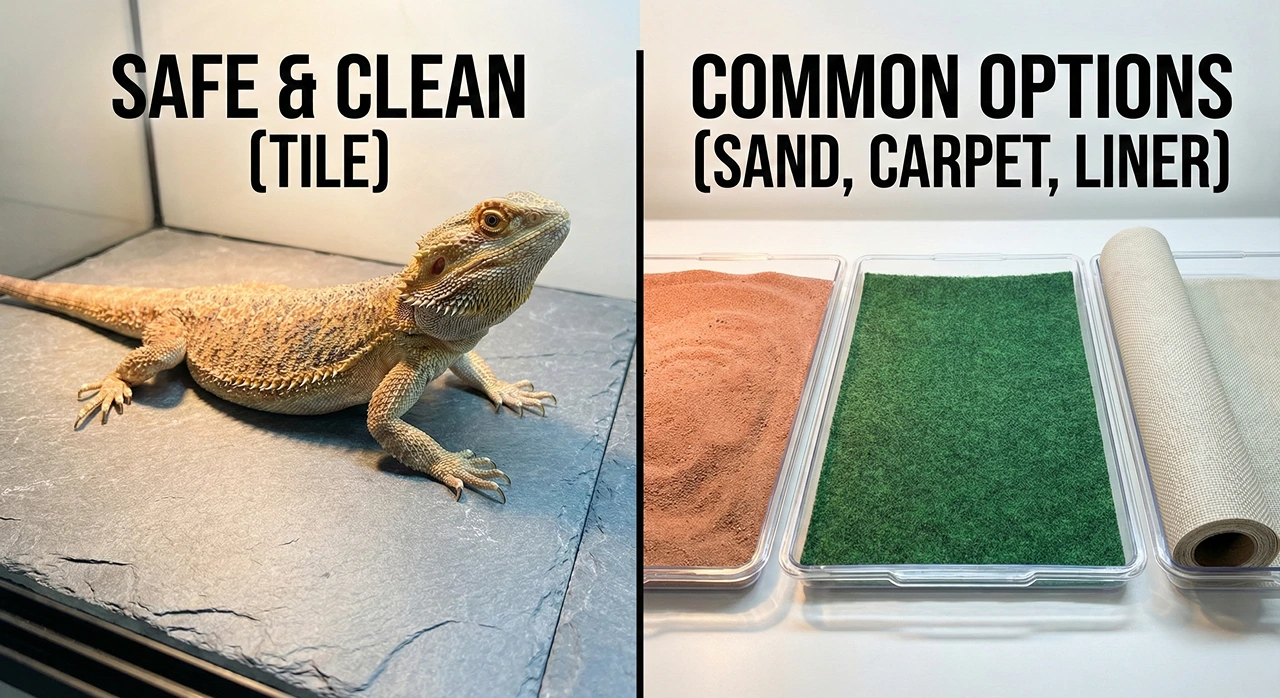
• New Owner? → Slate Tile or Shelf Liner (Zero Risk)
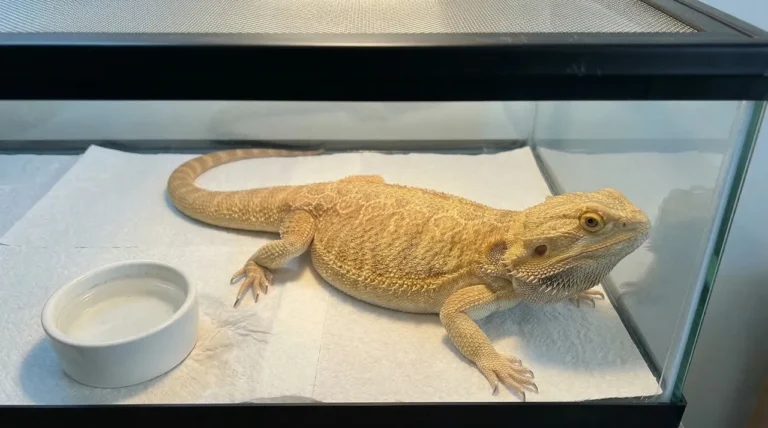
• Baby or Sick Dragon? → Paper Towels (Sterile)
• Adult + Perfect Temps + Experience? → Topsoil/Sand Mix (Enrichment)
• Starter Kit Included Sand/Carpet? → Remove it immediately.
Substrate Comparison Table
| Substrate | Impaction Risk | Cleaning Ease | Natural Behavior | Recommended For |
|---|---|---|---|---|
| Slate / Ceramic Tile | None (Zero) | ⭐⭐⭐⭐⭐ (Wipe) | Low (No digging) | ✅ Beginners |
| Shelf Liner | None (Zero) | ⭐⭐⭐⭐ (Wash) | Low | ✅ Beginners |
| Topsoil/Sand Mix | Low* | ⭐⭐ (Sift) | High (Digging) | ⚠️ Experts Only |
| Excavator Clay | Low | ⭐⭐⭐ (Spot) | Medium (Tunnels) | ⚠️ Intermediate |
| Calcium Sand | 🔴 HIGH | ⭐ (Clumps) | High | ❌ NO ONE |
Substrate by Age: When Can I Use Sand?
Age plays a huge role in safety. Babies are clumsy eaters and lick everything, making them high-risk for impaction. If you are currently raising a hatchling, ensure you are following a specific baby bearded dragon care guide to navigate these fragile early months safely.
| Dragon Age | Recommended Substrate | Why? |
|---|---|---|
| Baby (0-6 Months) | Paper Towels or Tile | High impaction risk. Needs sterile environment. |
| Juvenile (6-12 Months) | Tile or Shelf Liner | Still growing rapidly. Digestion is sensitive. |
| Adult (12+ Months) | Topsoil/Sand Mix OR Tile | Digestive tract is larger and robust enough for loose substrate (if healthy). |
Tier 1: The “Sterile” Options (Best for Beginners)
If you are a new owner, I strongly recommend starting here. These options carry zero risk of impaction and are incredibly easy to clean.
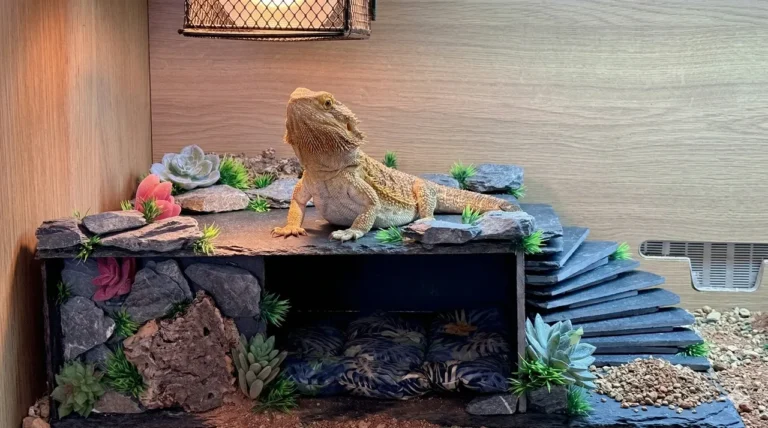
1. Slate or Ceramic Tile (The Gold Standard)
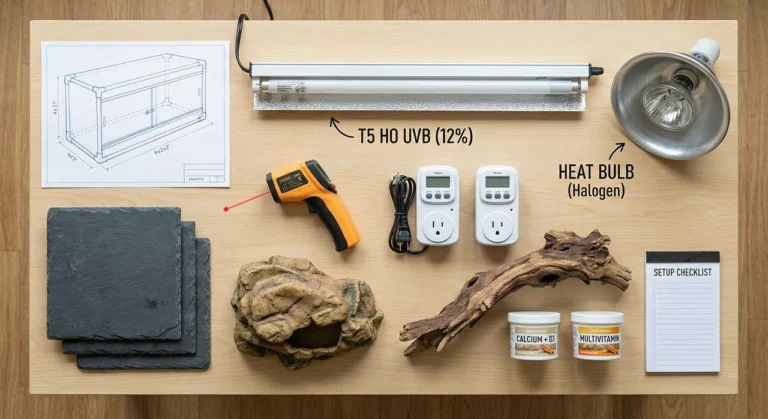
Go to a hardware store and buy rough slate or ceramic tiles.
- Pros: The rough texture naturally files down your dragon’s nails. (Saving you from having to learn how to trim bearded dragon nails manually). It absorbs heat well from your overhead lamp, keeping their belly warm for digestion. It is easy to wipe clean and sanitize.
- Cons: Heavy. You may need a tile cutter to fit them perfectly in your 4x2x2 enclosure.
💡 Pro Tip: Joint Health Warning
While tile is safe, it is hard on joints. To prevent arthritis in older dragons, ensure you have soft areas (like a hammock or a flat piece of safe driftwood) so they aren’t sleeping on hard stone 24/7.
2. Non-Adhesive Shelf Liner
This is the rubbery matting used to line kitchen drawers.
- Pros: Cheap, soft, and comes in many colors. Easy to take out and wash in the sink.
- Cons: Crickets can crawl under it. Warning: Ensure it is “Non-Adhesive.” The sticky glue on regular contact paper releases toxic fumes when heated.
3. Paper Towels / Newspaper
- Pros: The most sanitary option. If your dragon is sick, recovering from surgery, or a baby, this is the best choice for monitoring their health while you master the basics of caring for a baby bearded dragon.
- Cons: Ugly and needs to be replaced daily.
Tier 2: Loose Substrate (For Experienced Keepers)
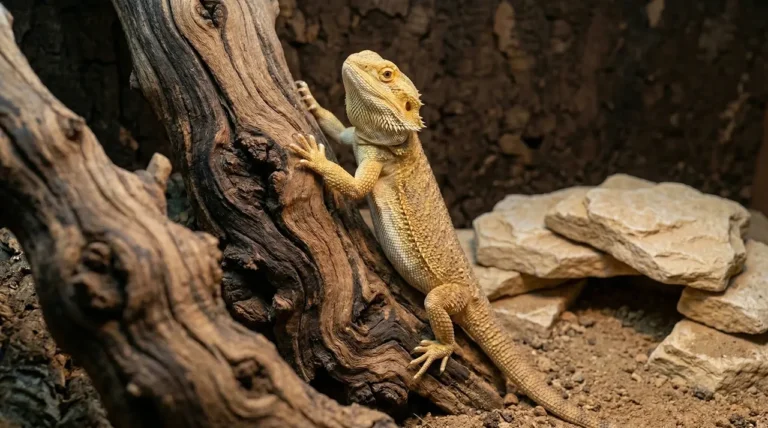
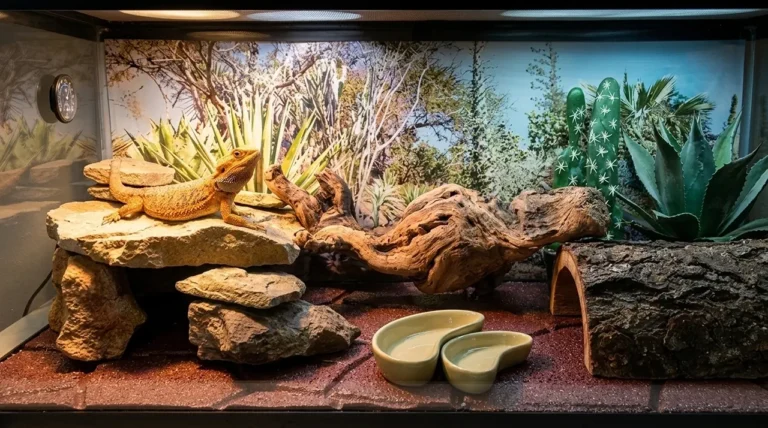
In the wild, bearded dragons live on compacted soil, sand, and hard clay—not tile. Loose substrate is natural and allows for digging behaviors, which is excellent enrichment.
Loose substrate does not cause impaction by itself. Impaction happens when cold temperatures + dehydration + poor nutrition slow down digestion. A healthy, warm, hydrated dragon can pass small amounts of ingested soil easily. A cold, sick dragon cannot. If you are unsure about your temps, stick to tile.
Option A: The “DIY Mix” (Topsoil + Play Sand)
This is the industry standard for naturalistic and bioactive enclosures.
- The Recipe: Mix 50% Organic Topsoil (fertilizer/pesticide-free) with 50% Washed Play Sand.
- Exact Brands to Buy:
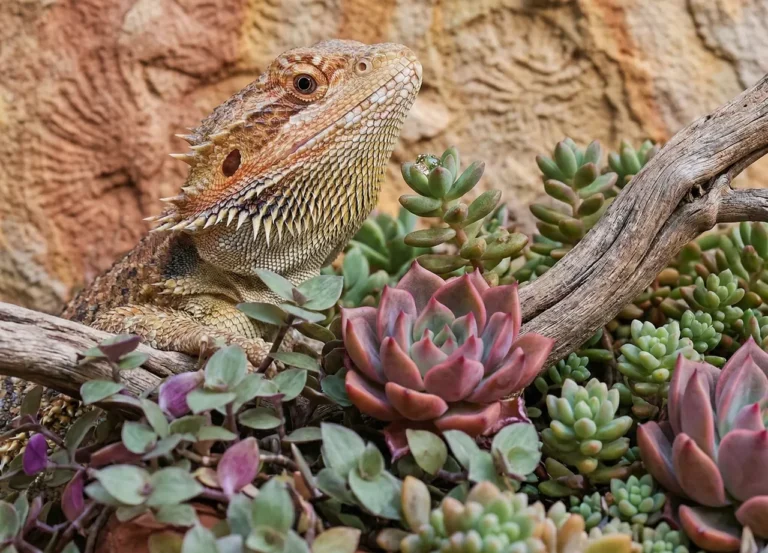
- Topsoil: Scott’s Premium Topsoil (Red Bag) or Timberline Topsoil. (Avoid anything with white “perlite” balls). Using a fertilizer-free base is critical; if you plan on planting live succulents or herbs, ensure the soil has been stripped of all systemic chemicals that could poison a foraging reptile.
- Sand: Quikrete Washed Play Sand (from Home Depot/Lowes) or Jurassic Natural Australian Sand.
- Why it works: It holds burrows better than pure sand and doesn’t clump in the gut like Calcium Sand.
- Feeding Tip: Always feed insects from a bowl or separate feeding container when using loose substrate to minimize accidental ingestion.
Option B: Excavator Clay (The Hybrid Choice)
If you want the look of sand without the mess, Zoo Med Excavator Clay is a fantastic middle ground.
- How it works: You mix the clay powder with water, mold it into hills and tunnels inside the tank, and let it dry.
- The Result: It hardens into a solid, rock-like terrain that allows for natural burrowing but carries almost zero impaction risk once dry.
Tier 3: The “Danger Zone” (Avoid These!)
These products are sold in every pet store, but they are responsible for countless vet visits and deaths.
1. Calcium Sand (Vita-Sand)
The Trap: It is marketed as “digestible” and a source of calcium.
The Reality: It encourages dragons to eat it. When mixed with stomach acid, the calcium carbonate acts like an antacid and turns into a solid cement block in their intestines. It is the #1 cause of substrate-related impaction. Avoid at all costs.
2. Crushed Walnut Shells
The Trap: It looks like natural desert sand and is often marketed as a “natural” alternative.
The Reality: Under a microscope, walnut shells look like shards of glass. If swallowed, they can cut the digestive tract. They are also incredibly dusty, leading to eye infections and respiratory issues.
3. Reptile Carpet
The Trap: It comes with many “Starter Kits” and looks easy to clean.
The Reality:
- Bacteria Trap: You cannot scrub poop and urates out of the fibers perfectly. It becomes a petri dish for bacteria over time, making your dragon highly susceptible to systemic bacterial infections like mouth rot (stomatitis) and scale rot.
- Claw Snagging: Overgrown nails can easily snag in the carpet loops. I have seen panicked dragons rip their own toes off trying to get free. If you are temporarily stuck using carpet, you must learn how to safely trim their nails to prevent severe degloving injuries.
Summary Checklist
- ✅ Beginner? Buy rough Slate Tile or Non-Adhesive Shelf Liner.
- ✅ Expert? Mix 50% Organic Topsoil + 50% Play Sand.
- ❌ Trash: Throw away Calcium Sand, Crushed Walnut Shells, and Reptile Carpet immediately.
- ❌ Monitor: If using loose substrate, feed bugs in a bowl to reduce accidental ingestion.
Written by
Sarah ArdleySarah has kept bearded dragons for over ten years. She founded Beardie Husbandry after discovering that most mainstream care advice — including what she followed with her first dragon — was doing more harm than good. Every article on this site is grounded in veterinary research and real keeper experience.