How to Trim Bearded Dragon Nails (Safe Step-by-Step Guide)
If your bearded dragon is constantly getting their claws snagged on your shirt, or if their toes are starting to twist sideways when they walk on flat ground, it is time for a trim. Learning how to trim bearded dragon nails is one of the most nerve-wracking parts of reptile keeping for a beginner.
Every new owner is terrified of cutting the “quick” and making their lizard bleed. I get it.
But letting their nails overgrow is much more dangerous. If a needle-sharp nail gets snagged on a hammock or a piece of reptile carpet, a panicked dragon will thrash and rip the entire nail out of the nail bed, leading to massive infections or permanent toe damage.
If you are reading this because your dragon snagged a nail and you want to trim the jagged edge, look at the cuticle first. Stop reading and book an exotic vet appointment immediately if you see any of the following:
- Swollen, asymmetrical toes: Compare the toe to the exact same toe on the opposite foot. If it looks twice as thick or resembles a sausage, the infection has reached the tissue.
- Missing scales at the nail base: The scales where the nail meets the skin are missing, peeling, or look raw and red.
- Solidified Pus: Reptiles do not produce liquid pus. They produce a hard, solid, cheese-like substance (caseous exudate). If you see a yellow or white crusty lump bursting from the base of the nail bed, you cannot treat this at home.
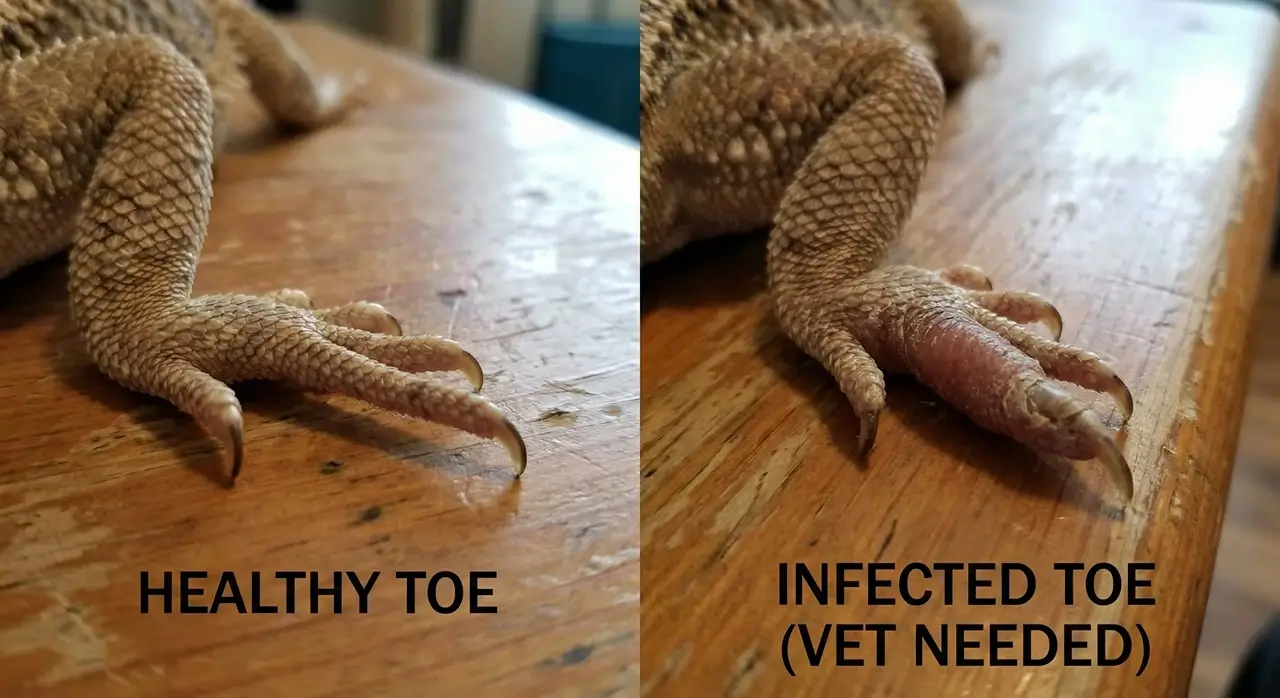
These are clinical signs of osteomyelitis (a severe bone infection). The vet will need to surgically debride the solid pus, amputate the dead portion of the toe, and start injectable antibiotics. Trimming the nail at this stage will do absolutely nothing.
If the toes look healthy and just need a trim, grab a small towel and your clippers. We are going to look at how to safely isolate the toe, find the dead cutting zone, and get this over with quickly and safely.
The Anatomy of a Bearded Dragon Claw
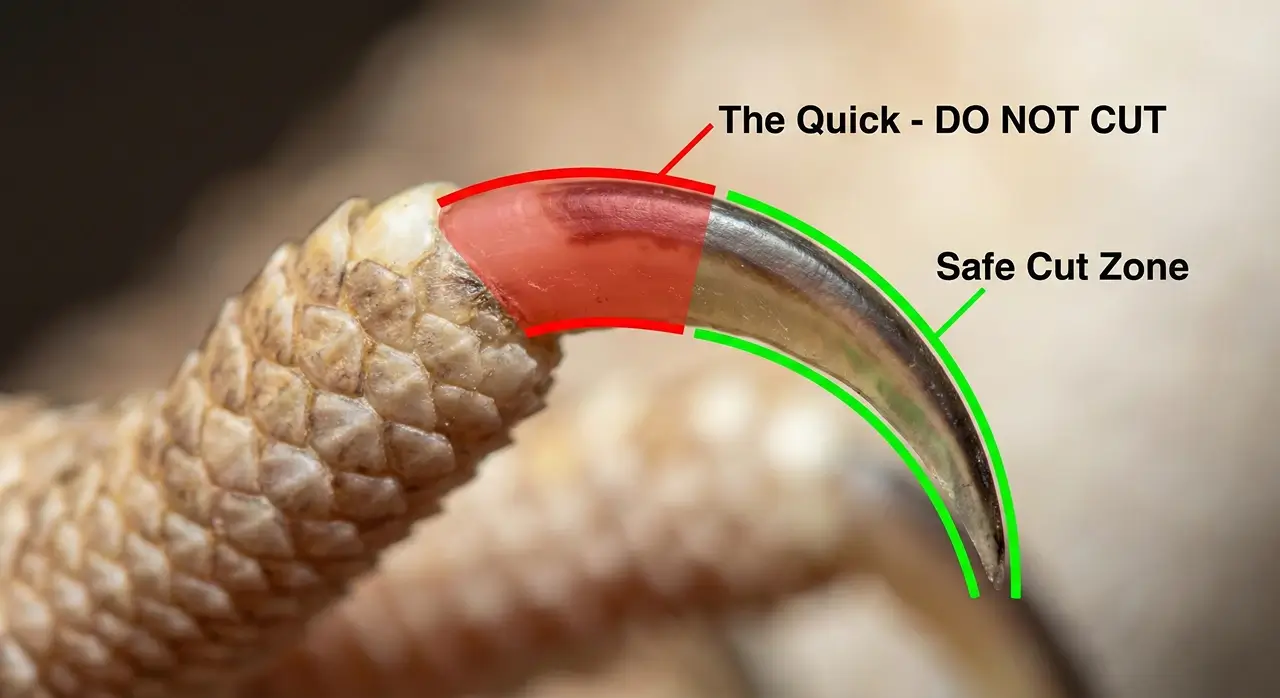
Before you pick up the clippers, you need to understand the target. A bearded dragon’s nail is not flat like a human fingernail; it is a curved sheath divided into two parts:
- The Quick (Do Not Cut): This is the thicker, wider base of the nail closest to the toe. It contains a live blood vessel and a nerve. Cutting this will cause pain and significant bleeding.
- The Tip (Safe to Cut): This is the razor-thin, curved, needle-like point at the very end of the claw. It is composed of dead keratin. Cutting this causes zero pain.
Identifying the Quick (Two Methods)
If your dragon has clear or light-colored nails, the quick is easy to see—it’s the pink, opaque line running about halfway down the nail. Note: Many dragons have a dark stripe of pigment running along the top ridge of the claw. This is just color, not the blood vessel. Look at the underside or core of the nail.
If your dragon has dark or black nails, you need different tactics:
- The Flashlight Trick: Take your phone’s flashlight and shine it directly right against the nail. The live quick should glow slightly pink or appear as a solid dark shadow, while the dead tip will look translucent or hollow.
- The “Sliver” Method (For Pitch-Black Nails): If the nail is so dark that a flashlight won’t penetrate it, do not guess. Only clip the tiniest sliver off the very end (about 1 millimeter). Look at the flat surface where you just cut. If it is solid white/grey keratin, you can take another tiny sliver. If you see a small dark dot appear in the center of the cut surface, STOP. That dot is the very tip of the blood vessel.
The Tool Kit: What You Need
Do not use standard adult human fingernail clippers. Their shape crushes the sides of the round reptile nail before cutting, which can splinter the claw and cause discomfort. You need tools designed for round claws:
- The Clippers: Small scissor-style cat claw clippers work best. They provide a clean slice rather than a crushing snap. Buy a dedicated pair just for your reptile to prevent cross-contamination, and wipe the blades with rubbing alcohol before and after use.
- Styptic Powder or Cornstarch: A clotting powder sold at pet stores (or basic baking flour). If you nick the quick, dipping the nail into this stops bleeding. Never start trimming without this sitting open on the table.
- The Pro Upgrade (Silver Nitrate Matchsticks): While powders are fine for emergencies, they are messy and require you to hold pressure on a squirming lizard’s toe for 60 seconds. Exotic vets use Silver Nitrate Applicator Sticks (around $8–$12 online). They look like wooden matches with a black chemical tip. If you clip the quick, strike the tip directly against the bleeding vessel. It chemically cauterizes the vein in two seconds flat, sealing the wound against bacteria instantly.
How to Trim Bearded Dragon Nails (Step-by-Step)
Step 1: The Setup & The “Burrito” Method
Pick a quiet room with excellent lighting. To prevent dangerous falls if your dragon squirms free, sit on the floor or work in the center of a very large, low table. Timing matters: try trimming them right before their lights go out for the night, or early in the morning before they have warmed up, as they will be naturally lethargic.
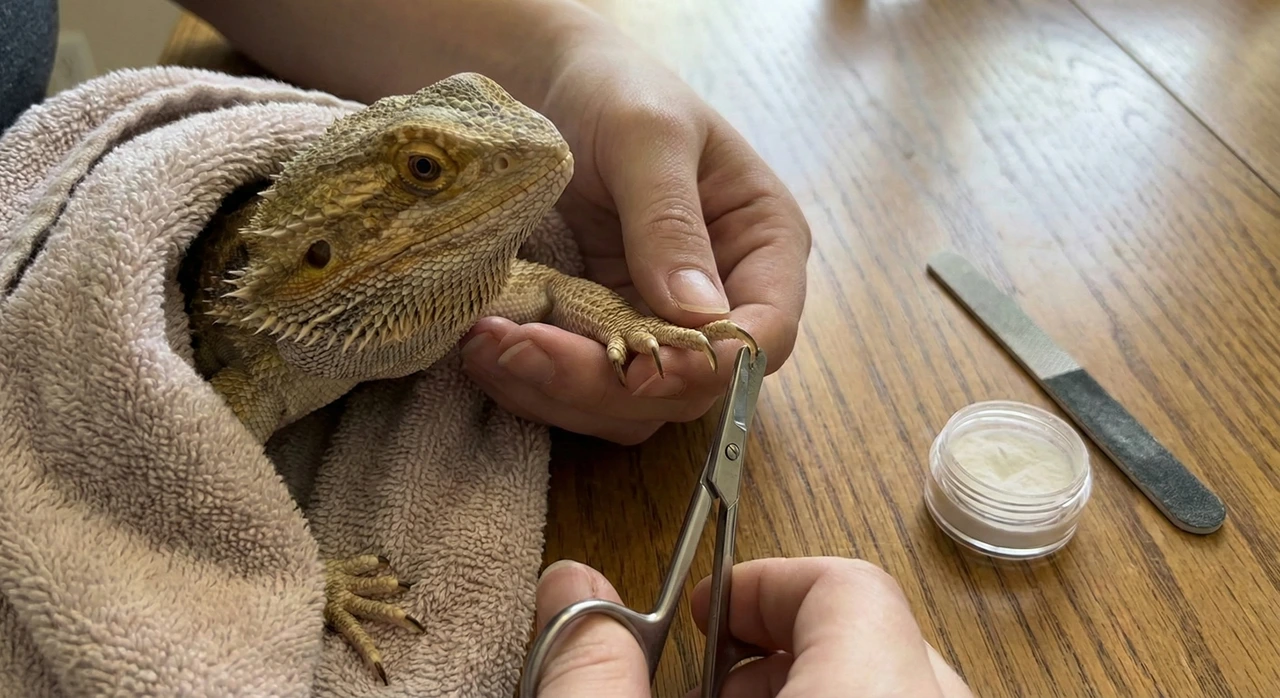
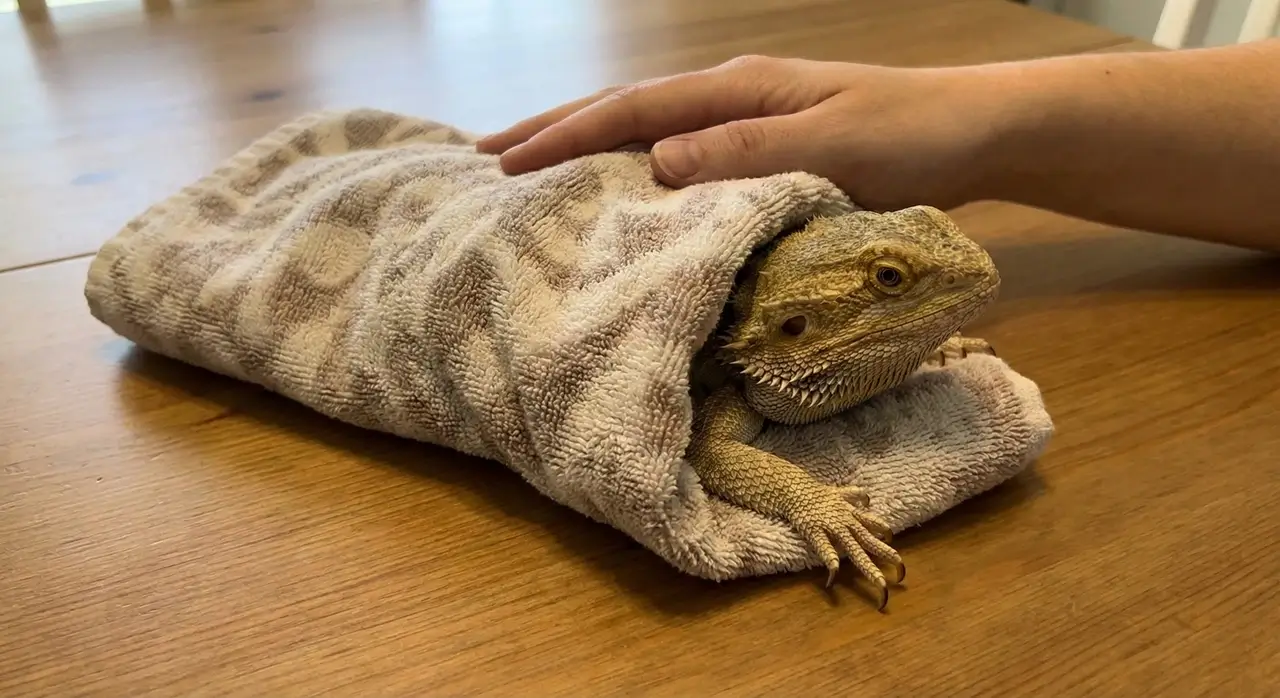
If your dragon is squirmy, use the “Burrito Method.” Wrap them snugly in a small, soft towel with only one leg exposed at a time. This gently restrains them and prevents sudden jerking motions that could cause you to slip.
Step 2: Isolate the Toe Safely (Do Not Pull!)
This is where most beginners cause injury. Never pull the dragon’s leg toward you. Their joints are fragile. Instead, let their foot rest naturally flat on your palm. Use your thumb and index finger to gently pinch and isolate just the one toe you are working on, supporting the digit from underneath.
The “Degloving” Risk: If your dragon jerks its leg backward exactly as you clamp the clippers down, let go immediately. If you maintain an iron grip on the clippers while the lizard death-rolls or yanks, their own body weight will deglove the claw—literally ripping the entire keratin sheath and blood vessel straight off the bone. A degloved nail leaves a raw, exposed nerve that hurts intensely, takes months to grow back, and frequently requires a month-long course of systemic antibiotics (like Ceftazidime) to prevent sepsis. Let the dragon win the tug-of-war.
Step 3: Snip Just the Tip
Position the clippers horizontally (side-to-side across the nail). Aim only for the very end of the needle-like tip where it curves downward. It is always better to cut off too little than too much. Clip quickly and cleanly, then move to the next toe.
Once you are done, offer them a favorite treat (like a hornworm) as a reward. Handling your dragon regularly outside of maintenance tasks is crucial; if you only pick them up to clip their nails, they will quickly learn to panic the moment you reach into their tank.
Post-Trim Gait Adjustment (Rehabilitating Severe Overgrowth)
If you are taking in a rescue dragon whose nails have been overgrown for years, their toes have likely been forced to lay completely sideways. When you finally clip those “stilts” off, the dragon’s center of gravity and grip mechanics will violently change.
Do not expect them to walk normally right away. For 7 to 14 days post-trim, the dragon will likely slip, slide, and appear clumsy on hard surfaces as their atrophied toe tendons stretch back into a flat-footed position. During this physical therapy window, you must lower their basking logs and hammocks to a maximum of 4 to 6 inches off the floor. They will lack the grip strength to climb vertically until they relearn how to use their shortened claws.
Troubleshooting Common Issues
It rarely goes perfectly the first time. Here is how to handle common roadblocks.
| Problem | Solution |
|---|---|
| Dragon is thrashing uncontrollably | Stop immediately to prevent degloving. Try again later when they are colder (early morning) or deeper in sleep cycles. Ensure the towel burrito is snug but not tight. |
| Nails are curling back into the toe pad | This is severe neglect. Do not try to clip this yourself. A vet needs to carefully cut the nail out of the pad and treat the resulting wound for infection. |
| I’m too scared to use clippers | Use a standard human emery board (nail file). Gently file just the sharp tips. It takes much longer, but there is zero risk of bleeding. |
How to Stop Trimming (Natural Prevention)
In the wild, nobody trims a bearded dragon’s nails. They are naturally filed down by running and digging on harsh Australian rocks and hard-packed dirt.
If you have to trim your dragon’s nails monthly, your tank setup is too soft. Substrates like reptile carpet, paper towels, and silicone mats provide zero abrasion, allowing nails to grow needle-sharp.
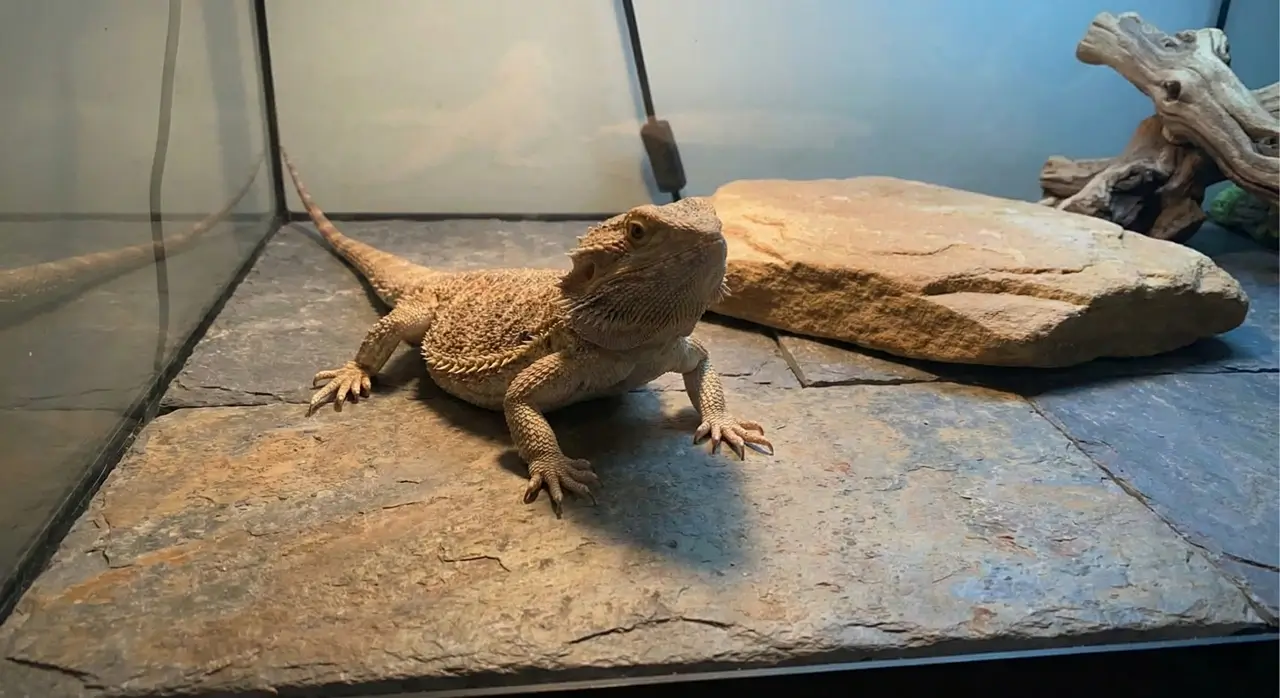
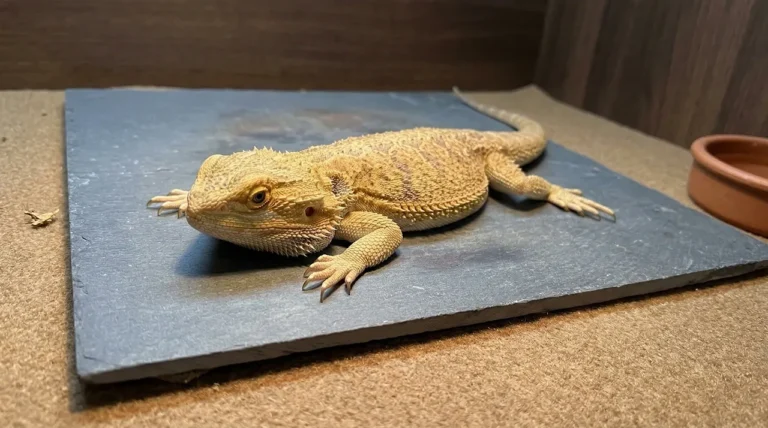
The Fix: Replace a section of your floor with rough slate tile (available cheap at hardware stores). Place a rough, flat basking stone under their heat lamp. The daily act of walking and basking on these abrasive surfaces will file their tips naturally, reducing trimming needs to once or twice a year.
Frequently Asked Questions (FAQ)
Why are my dragon’s toes twisting sideways?
This is a sign of chronic neglect. When nails become severely overgrown, they act like stilts. The nail hits the floor first, forcing the toe to twist sideways so the foot can rest flat. Over time, this permanently deforms the joints and leads to painful arthritis. If the toes are sideways, a trim is urgently needed.
Can I use a Dremel tool?
It is generally not recommended for beginners. The noise and vibration terrify most dragons, making them jerk unpredictably. Furthermore, a high-speed Dremel can grind through the tiny tip and hit the quick in a split second. Manual clippers or a hand file are much safer.
My dragon hates this. Can I just take them to a professional?
Absolutely. Most exotic vet clinics will perform a “pedicure” for a small fee (usually $15-$25) with a vet tech. Additionally, many specialized local reptile stores or weekend reptile expos have experienced breeders on hand who will happily trim a dragon’s nails for a few dollars. It’s a great option if you are too nervous or if your dragon is extremely difficult to handle.
The Final Safety Check
If you are standing in front of your dragon’s enclosure right now holding a pair of clippers, take a deep breath and remember the three golden rules of a safe trim:
- Never pull the leg: Let the foot rest flat in your palm so you don’t dislocate a shoulder.
- Only clip the tip: Aim exclusively for the translucent, needle-like point.
- Let them win: If the dragon thrashes, put the clippers down and try again tomorrow. Do not risk a degloved nail.
Once you get their current nails under control, your next step should be fixing the environment so you don’t have to do this again next month. Head over to our Substrate & Setup Guide to learn how to install natural slate tile and rough basking rocks that will file their claws down automatically.
Written by
Sarah ArdleySarah has kept bearded dragons for over ten years. She founded Beardie Husbandry after discovering that most mainstream care advice — including what she followed with her first dragon — was doing more harm than good. Every article on this site is grounded in veterinary research and real keeper experience.