Bearded Dragon Not Moving – Every Reason Explained
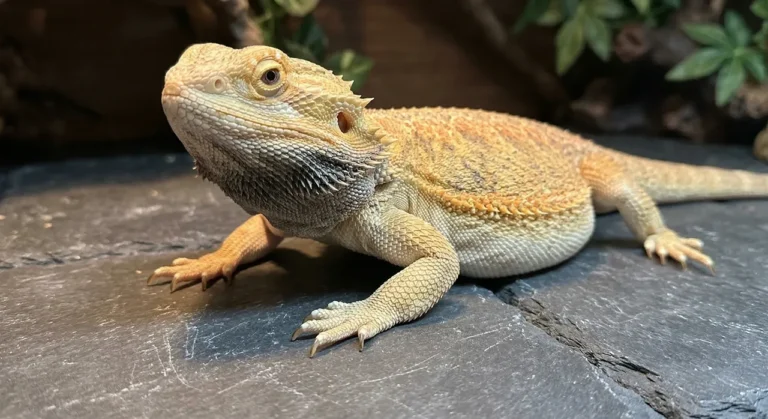
A bearded dragon sitting completely still for hours is one of those things that sends new keepers straight to the search bar. I remember panicking the first time my juvenile beardie didn’t move for half a day. Most of the time, this stillness is completely normal. Beardies spend a significant portion of their day motionless—especially after eating, during a shed cycle, or when they are thermoregulating.
But not all stillness is equal, and a few causes genuinely need your attention right now. The key is knowing what else is happening. Are they still responsive when you walk by? Are they in their usual basking spot or huddled somewhere weird? Have their droppings changed? Let’s walk through every real reason your dragon isn’t moving, starting with the harmless stuff and moving down to the red flags.
Harmless Reasons Your Dragon Is Sitting Still
They Are Digesting a Big Meal
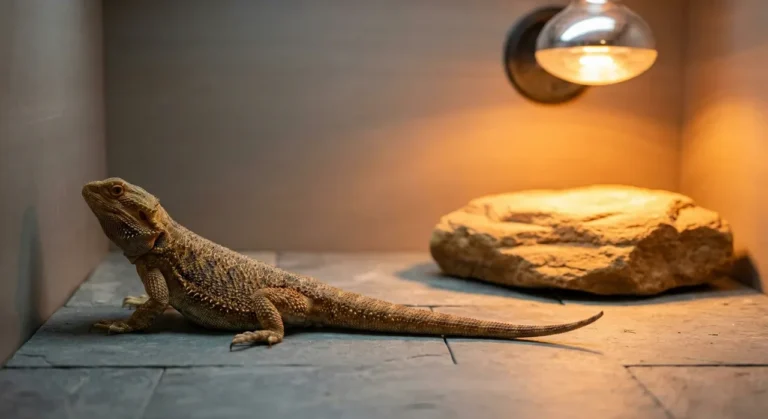
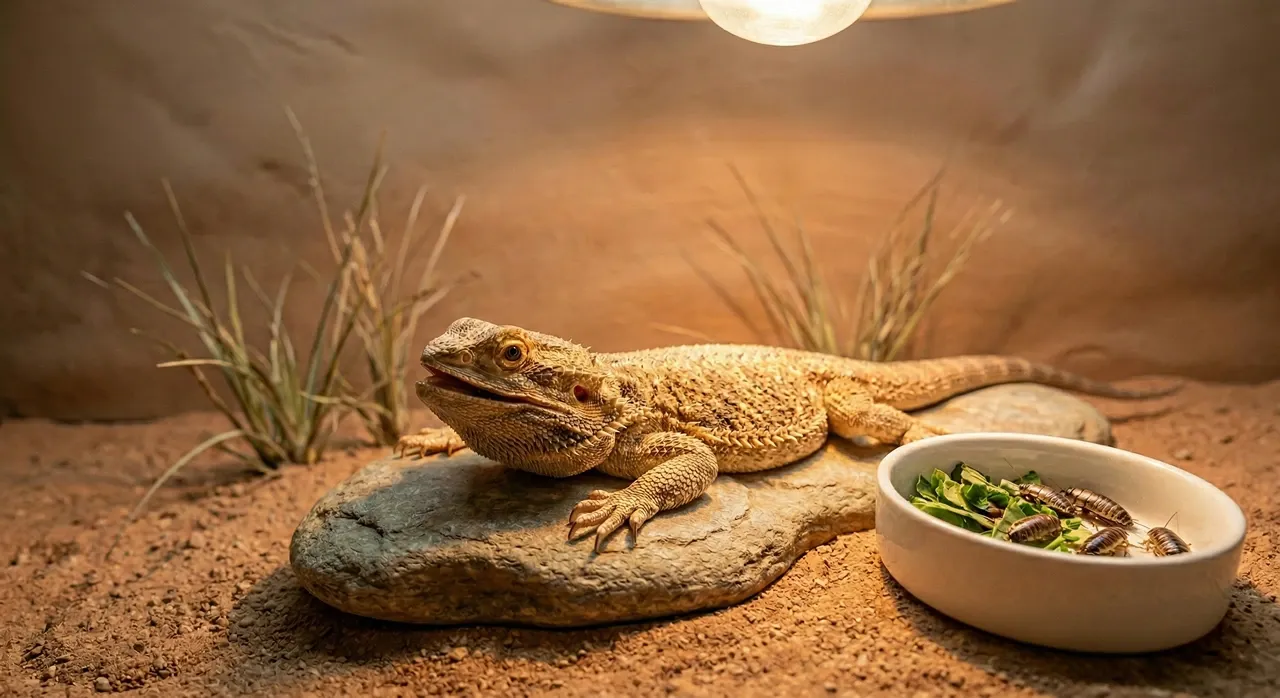
After eating, bearded dragons go almost completely still for anywhere between one and four hours. Digestion in reptiles requires intense heat. Your dragon is maximizing their core body temperature by staying flat on the basking rock, funneling all their energy into processing that food. Moving around burns calories and drops their temperature. So, they just park themselves.
If your dragon was active before feeding and goes still immediately after, leave them alone. They will start moving again in a couple of hours. Always leave the basking light on for at least an hour after their final meal of the day so the food doesn’t sit and ferment in a cooling gut.
They Are Absorbing Heat on the Basking Rock
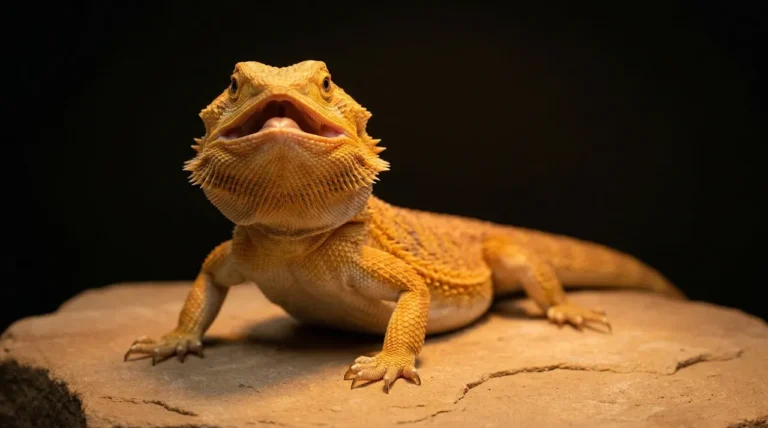
A beardie sitting under the lamp with its mouth slightly open, completely still, is doing exactly what it is supposed to do. Thermoregulation is an active, conscious process. They position their body to absorb maximum heat, stay still to retain it, and only move when they need to shift temperature zones. You will often see this for a few hours in the morning as they warm up.
If you want to understand what normal basking looks like versus genuine sickness, check out the body language guide to spot the subtle differences in posture.
A Shed Cycle is Starting
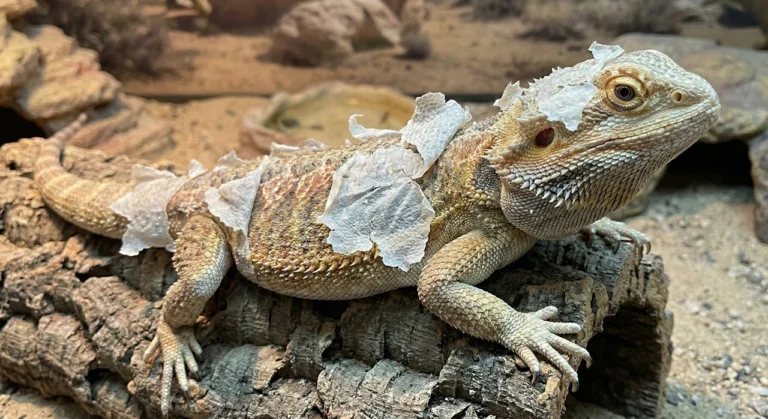
In the days before a shed begins, most dragons slow right down. Their skin starts to look dull, slightly grey, or whitish in patches. Their eyes might look a bit cloudy, and their appetite often drops. They tend to hide more and move less. This resolves the moment the shed completes.
If you see dull, tight-looking skin around the face, limbs, or tail base, a shedding cycle is happening. A warm 10-minute soak helps loosen any stubborn skin.
They Are Going Into Brumation
As daylight hours shorten in autumn and winter, many bearded dragons slow down dramatically. Some stop eating for weeks. Some sleep for 20+ hours a day. Some go almost completely motionless for days at a time. This is biological brumation, and it is the most common reason a healthy adult suddenly becomes a statue between October and February.
The ultimate test between brumation and illness is body weight. A brumating dragon should not lose more than 10% of its starting weight over the entire winter. Weigh your dragon on a kitchen scale every 7 days. Loss beyond that threshold means something else is going on. You can find the full breakdown of what to expect in the brumation guide.
🦎 Pro Tip: Age Matters for Brumation
Bearded dragons do not fully brumate until they are at least 9–12 months old and have the body mass to sustain it safely. If your 5-month-old dragon has become a rock, check your temperatures and UVB immediately.
The Winter Slowdown for Juveniles
Dragons between 4 and 8 months old are too young to fully brumate, but they frequently go through a partial slowdown in autumn that looks very similar. They sleep more, eat less, and move less for a few weeks. This metabolic slowdown resolves on its own. The difference here is that a semi-brumating juvenile still responds to handling, maintains their weight, and bounces back to normal within 3–6 weeks.
Tank Setup Problems Causing Lethargy
The Basking Spot is Too Cold
This is the most common fixable cause of a seemingly lazy dragon. If the basking surface is too cool, your dragon simply cannot warm up enough to be active. Digestion stalls, appetite disappears, and they sit still because their metabolism is stuck in neutral.
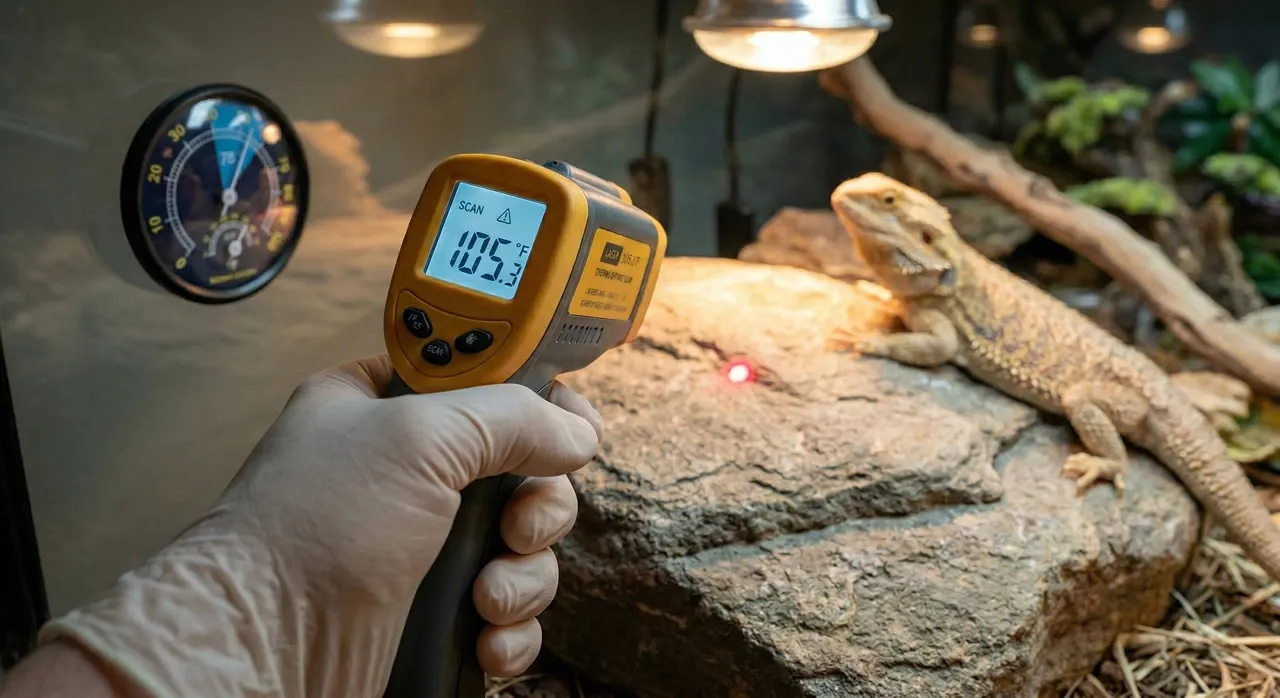
The basking surface needs to hit 100–110°F for adults and 105–115°F for babies. You must measure this directly on the rock with a digital infrared temperature gun. Stick-on wall thermometers are routinely 15–20°F off. The temperature measurement guide explains exactly how to get this right.
The Whole Enclosure is Overheating
We always check if the tank is too cold, but overheating shuts them down just as fast. A basking surface over 115°F will cause a dragon to become stressed and ultimately still as they shut down to protect their organs. They will abandon the basking area and park themselves on the cool side, looking flat and unresponsive.
Check your cool side. It should sit between 80–85°F. If the cool side is pushing 90°F+, they have nowhere to escape the heat.
Your UVB Bulb is Weak or Expired
Without proper UVB, a dragon cannot synthesize Vitamin D3. Without D3, calcium absorption fails, which wrecks muscle function and energy metabolism. The result is a sluggish, uninterested dragon that barely moves, even if your temperatures are perfect.
Coil bulbs do not produce meaningful UVB at basking distance. T5 HO linear tubes older than 12 months produce degraded UVB, even if they still light up. If your bulb is old, the wrong type, or sitting on top of a dense mesh screen, your dragon is running on empty. Check the lighting setup guide for hardware specifics.
They Are Chronically Stressed
A highly stressed dragon spends most of its day hiding and motionless. Common triggers include a cramped tank, seeing their reflection in the glass, nowhere to hide on the cool side, or a tank at floor level where heavy foot traffic keeps them terrified. If they are glass surfing, sporting a black beard, and hiding constantly, fix the environment before assuming they are sick.
Medical Issues That Make a Dragon Stop Moving
Early Signs of Metabolic Bone Disease
One of the earliest signs of metabolic bone disease is a dragon that stops climbing, moves clumsily, and seems weak. Calcium depletion affects the muscles long before it warps the bones.
Keepers often mistake early MBD for laziness. The giveaway is that an MBD-affected dragon will also show muscle tremors, twitching toes, and a reluctance to lift their belly off the floor when walking. If you see twitching alongside the stillness, review your UVB setup and calcium dusting schedule today.
A Heavy Parasite Load
Internal parasites (like coccidia) are a massive cause of lethargy, especially in pet store dragons. A dragon overrun with parasites eats less, moves less, loses weight, and produces foul-smelling, loose droppings. If you suspect this, get a fecal float test at an exotic vet. Ensure you explicitly ask them to check for coccidia, as standard worm tests miss it entirely.
A Bowel Blockage (Impaction)
A dragon with a blocked bowel becomes progressively more lethargic as the impaction backs up. Watch for a firm, swollen belly and straining to poop without producing anything.
The main red flag is zero waste output. If your dragon hasn’t pooped in over a week despite eating regularly, pay attention. The impaction signs and treatment guide covers the soaking and massaging steps you can try at home before a vet visit.
Severe Dehydration
A dehydrated dragon crashes fast. If your dragon is lethargic, look at their eyes and skin.
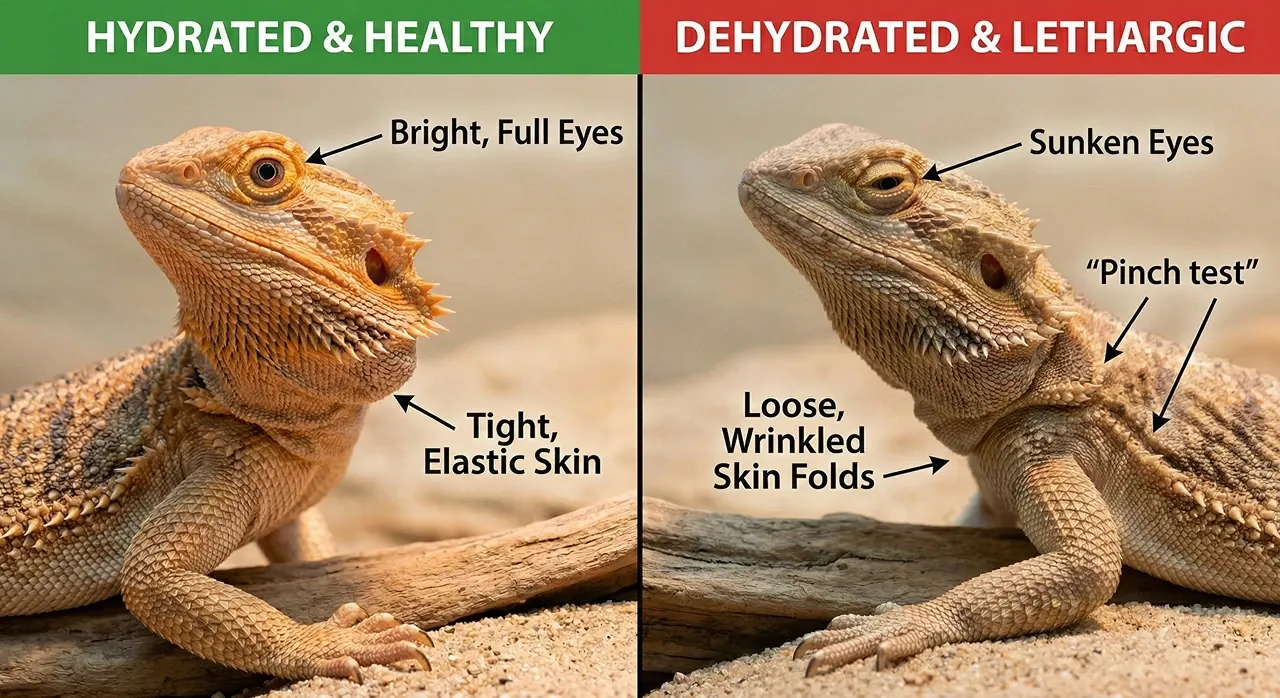
Start with a 15-minute warm soak. For a lethargic dragon showing these signs, you can offer water via a syringe (about 1ml per 50g of body weight per day). Go incredibly slowly. Do not force water down the throat of an unresponsive dragon, as they will choke. Read the guide on water intake for safe methods.
Adenovirus Infection
Adenovirus (“wasting disease”) is an incurable viral infection passed between dragons. Affected dragons become progressively weaker, stop eating, and eventually stop moving entirely. Some show neurological signs like star-gazing (staring straight up) or head tilts. If your dragon is slowly fading away and your husbandry is flawless, ask your vet about a PCR test.
They Have a Respiratory Infection
A dragon fighting a respiratory infection stops moving to redirect all energy to its immune system. Look for gaping while sitting on the cool side of the tank, wheezing or clicking noises, mucus around the nostrils, and a persistent black beard. This requires immediate antibiotics from a vet.
Your Female is Egg-Bound
If your female dragon spent the last week frantically digging and suddenly stops moving entirely, she may be egg-bound. This means she cannot physically pass the eggs. It is a medical emergency. Watch for extreme lethargy, straining, a rock-hard belly, and zero appetite. Get to an exotic vet immediately. The egg laying guide covers the warning signs in detail.
What to Expect With a Brand New Dragon
A new dragon that barely moves for the first 14 days is dealing with relocation stress, not illness. A new tank, new smells, and new giant humans staring at them will cause them to shut down.
Leave them alone. Ensure the temps are right, drop food in daily, and stop picking them up to “check if they are okay.” The new dragon care guide details exactly how to navigate these first two weeks.
Quick Diagnostic Reference Table
| What You Are Seeing | Most Likely Cause | What to Do |
|---|---|---|
| Still after eating, basking normally | Digestion | Nothing. Normal for 1–4 hours. |
| Still on basking rock, mouth open | Thermoregulation | Nothing. They reached optimal temp. |
| Sleeping mostly, Oct–Feb, stable weight | Brumation | Weigh weekly. Leave them alone. |
| Lethargic, basking spot under 100°F | Too cold | Fix basking temp with an infrared gun. |
| Lethargic with twitching toes | Early MBD | Check UVB tube and calcium schedule. |
| Lethargic, 7+ days no poop, firm belly | Impaction | Warm soak. Vet if no output after 24 hrs. |
| Wheezing, gaping on the cool side | Respiratory Infection | Vet visit. Do not wait. |
Common Questions About Lethargy
My bearded dragon is not moving and has its eyes closed, should I worry?
Closed eyes during a basking session just means they are relaxed. However, closed eyes combined with a limp body or zero reaction when you gently touch their tail is a massive red flag. A healthy sleeping dragon will always react to being touched. If they don’t, call a vet.
Is it normal for a baby bearded dragon to not move much?
No. Babies are little eating machines with high metabolisms. A baby that is consistently hiding, flat, or not eating after their initial 2-week adjustment period is in trouble. Check your poop guide for abnormal waste, as parasites hit babies very hard.
My dragon stopped moving after I changed their tank decor.
Any disruption to their territory causes stress. A new branch, a substrate swap, or moving their favorite hide can make them incredibly sulky for 48–72 hours. Let them adjust.
Your Pre-Vet Checklist
Before assuming the worst, check the physical environment. Most “sick” dragons are just cold or lacking UVB.
- ✅ Verify the basking surface temp. (100–110°F for adults, measured with a temp gun).
- ✅ Check the age of your UVB bulb. If it’s a T5 tube older than 12 months, or a coil bulb, replace it today.
- ✅ Check their weight. Rapid weight loss is never brumation.
- ✅ Check for dehydration. Sunken eyes and wrinkled skin mean they need fluids immediately.
- ✅ Check their waste. Has it been more than a week since they pooped?
If your husbandry is perfect and they are still unresponsive, limp, or losing weight rapidly, skip the internet and book an exotic vet.
Medical Disclaimer: The information in this article is based on extensive husbandry experience and intended for general guidance only. It does not constitute veterinary advice. If your bearded dragon is unresponsive, losing weight rapidly, or showing respiratory symptoms alongside lethargy, contact a qualified reptile veterinarian immediately.
Written by
Sarah ArdleySarah has kept bearded dragons for over ten years. She founded Beardie Husbandry after discovering that most mainstream care advice — including what she followed with her first dragon — was doing more harm than good. Every article on this site is grounded in veterinary research and real keeper experience.