Why is My Bearded Dragon’s Beard Black? (8 Causes & When to Worry)
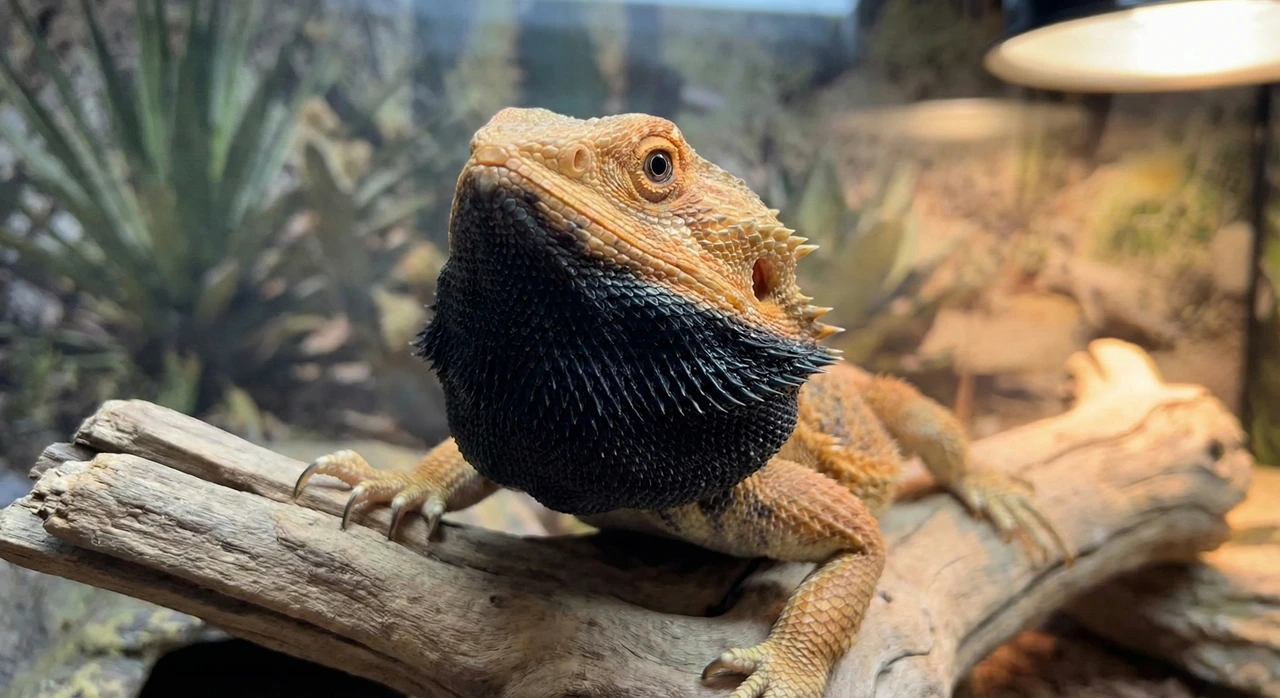
If you just walked up to your bearded dragon’s tank and their chin is suddenly pitch black, your first instinct is probably to freak out. For the Central Bearded Dragon (Pogona vitticeps), a black beard is the reptile equivalent of a blaring car alarm. It means your lizard is highly stressed, in pain, or reacting to a major change in their tank.
Sometimes, it just means they are cold. Other times, it means they are terrified, feeling territorial, or actively sick.
A black beard by itself doesn’t tell the full story. To figure out if you need to fix their lighting, give them some space, or rush them to an exotic vet, you have to look at when they are doing it and what the rest of their body is doing.
⚠️ The 24-Hour Rule & Lethargy
A black beard is totally normal if it lasts for a few minutes or a few hours after a stressful event (like a bath, a loud noise, or a dog walking into the room). However, stop reading and book an exotic vet appointment immediately if you see this mix of warning signs:
- Duration: The beard has been solid black for 24 to 48 hours without fading back to normal.
- Lethargy: The dragon is hiding on the cool side of the tank, refusing to bask, and keeping its eyes half-closed all day.
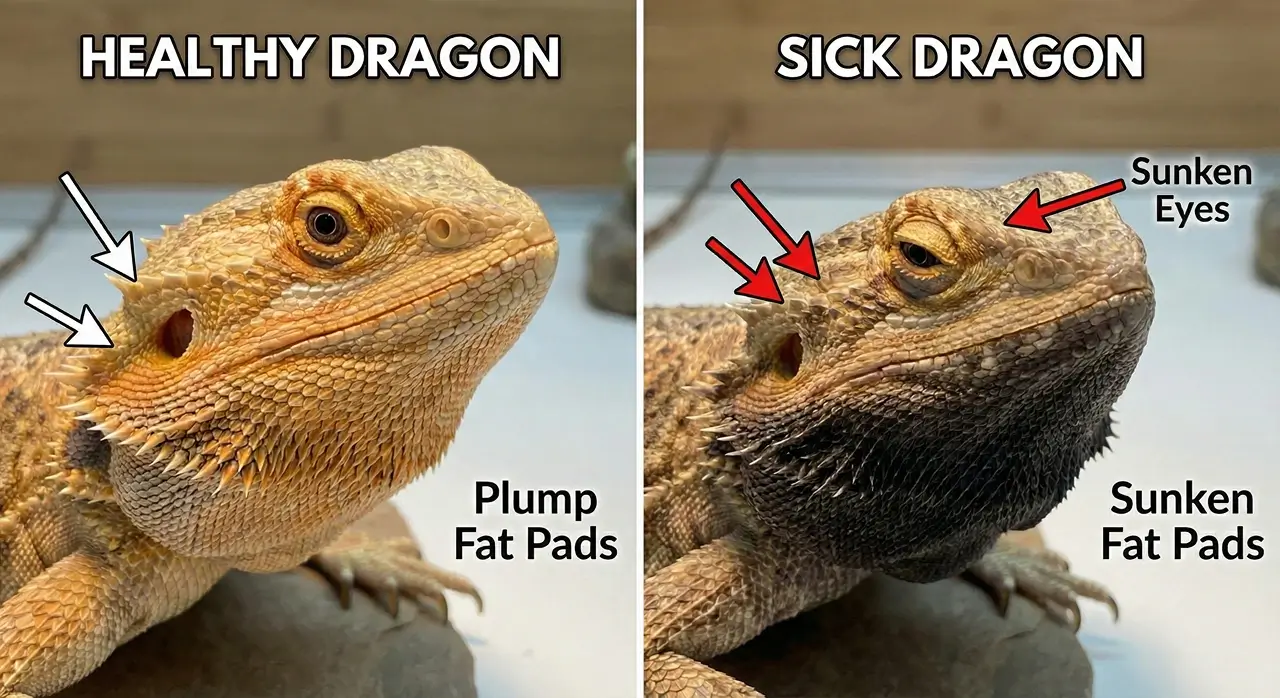
- Sunken Eyes & Fat Pads: Their eyes look tired and pushed into their skull, and the two fleshy bumps on top of their head look flat or caved in. If their skin stays tented up when you gently pinch it, they are severely dehydrated.
This combination means your dragon is severely ill or in real pain. It’s a strong indicator of a severe gut blockage (impaction), gout, a nasty respiratory infection (URI), or failing organs. (Just a heads up: expect an initial exotic vet exam and an X-ray/fecal test to run between $75–$150 depending on your area).
The 8 Reasons Your Bearded Dragon’s Beard is Black
1. They Are Cold (Thermoregulation)
The Context: You just turned their lights on in the morning, or you just took them out of a bath.
If your dragon is pancaked flat on their basking rock with a black beard first thing in the morning, they aren’t angry at you. Bearded dragons can actually control the pigment cells in their skin. Dark colors absorb heat faster. They are turning their beard and back black to act like a solar panel and warm up their core temperature. Once they are warm, the black will fade away.
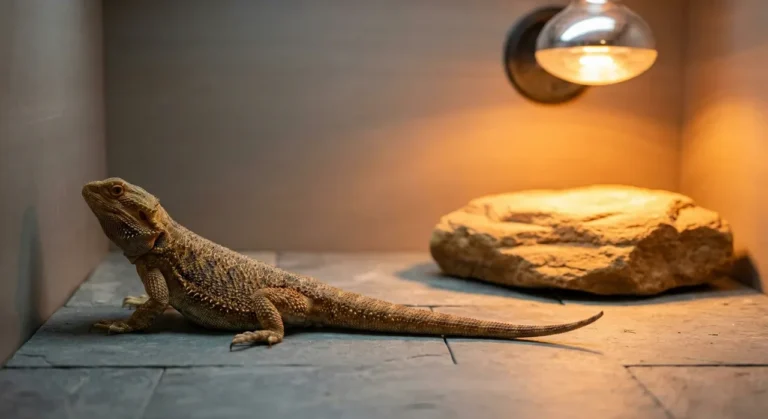
The Fix: Check your surface basking temperatures with a digital temp gun. The rock needs to read between 100°F and 108°F. If it is under 95°F, your heat bulb is too weak and your dragon is physically unable to digest their food.
2. Glass Surfing (Reflection Stress)
The Context: They are frantically scratching at the glass, black bearding, and jumping at the walls.
Bearded dragons don’t understand the concept of glass. If the lighting inside the tank is brighter than the room outside the tank, the glass turns into a one-way mirror. Your dragon sees a “rival” staring back at them and is black bearding to defend their turf against their own reflection.
The Fix: Tape a matte aquarium background (or just basic construction paper) to the outside of the back and side walls. If the reflection disappears, the black beard usually vanishes in ten minutes.
3. Springtime Hormones (Mating Season)
The Context: It is spring, and your dragon is running around the tank, black bearding, and aggressively jerking its head up and down (head bobbing).
When males hit puberty (usually around 8 to 12 months of age), their hormones go into overdrive. During the spring mating season, males will get a pitch-black beard, stomp their front feet, and head-bob violently at everything in the room. They are signaling that they are big, tough, and ready to mate.
The Fix: Let them burn off the energy. Don’t put your bare hand directly in front of their face, as hormonal males are highly prone to biting. Let them run around a safe, reptile-proofed room for 20 minutes to tire themselves out.
4. Overnight Feeder Bites
The Context: You wake up, turn on the lights, and your dragon is already awake, black bearding, and twitching its toes or hiding.
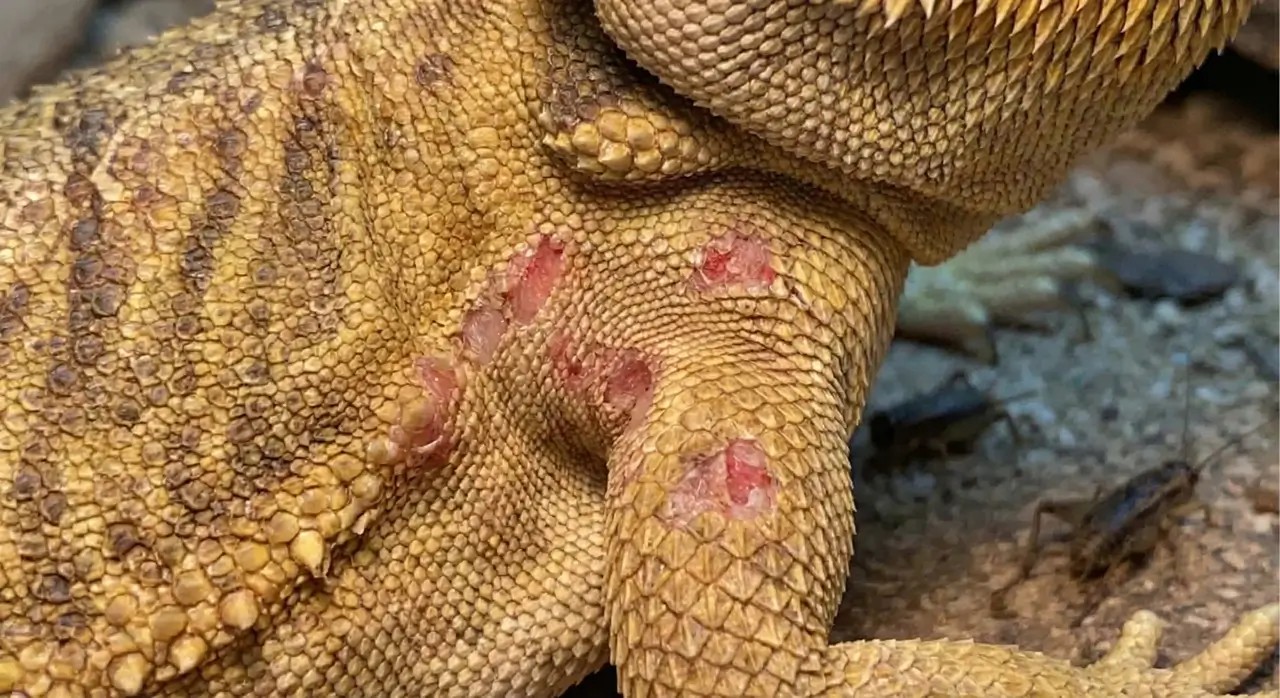
If you leave live crickets or locusts in the enclosure overnight, those bugs will get hungry. When the lights go out and your dragon goes to sleep, the insects will crawl onto your reptile and chew on their soft scales (usually around the armpits, eyelids, or vent). This causes terrible stress, pain, and easily leads to bacterial infections.
The Fix: Never leave live feeders in the tank for more than 15 minutes. If your dragon doesn’t eat them, scoop them out. Inspect your dragon’s belly and armpits for red, chewed-up scales.
5. Environmental Fear & Over-Handling
The Context: They are puffed up, their mouth is slightly open (hissing), or they turn black the moment you pick them up.
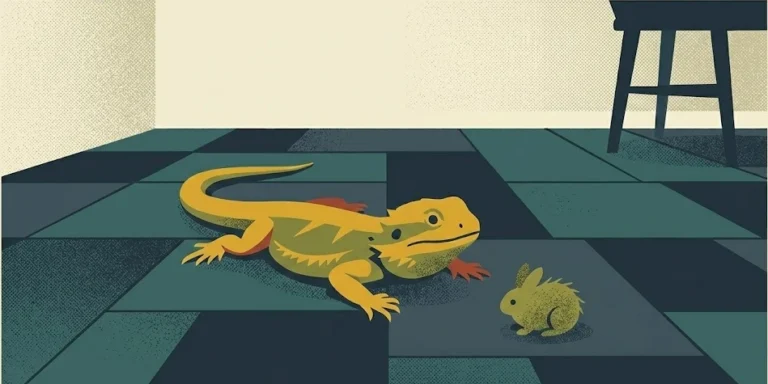
If you just brought your dragon home, they view you as a giant predator. The black beard and puffed-up body is just a defensive bluff. Alternatively, if they are an established pet but turn black while being held, they are simply exhausted and want to be put down. Finally, check your room: is the family cat staring into the enclosure? Having nosy pets nearby causes massive, chronic stress.
The Fix: Keep cats and dogs out of the reptile room. If your dragon is new, give them a strict 14-day “hands-off” quarantine to settle in. If they black beard while hanging out on your shoulder, it’s a polite request to go back to their warm tank.
6. Female Emergency: Egg-Binding (Dystocia)
The Context: You have an adult female (over 12 months old) who spent the last 2 to 3 days frantically tearing up the substrate in her tank, but she suddenly stopped, looks exhausted, and is now sporting a solid black beard.
She is likely egg-bound. Female dragons will lay clutches of infertile eggs even without a male present. If she lacks calcium or a proper dig box (8+ inches of a 50/50 topsoil and play sand mix), the eggs will get stuck inside her. The black beard means the trapped eggs are putting crushing pressure on her lungs and spine.
The Fix: This requires an immediate exotic vet visit for oxytocin/calcium injections, or in severe cases, an emergency spay (which can cost anywhere from $500 to $1,200).
7. The Deadliest Edge Case: Toxic Bugs (Fireflies)
The Context: Your dragon was just roaming the house or backyard, or you fed them a wild-caught insect, and they instantly develop a pitch-black beard, open their mouth to gasp, or vomit.
Do not wait to see if they get better. If they ate a firefly (lightning bug), they have ingested lucibufagins—a defensive toxin that is 100% fatal to bearded dragons, often within 2 hours. A sudden, violent black beard paired with gasping right after free-roaming is an immediate, drop-everything emergency.
The Fix: Rush them to an exotic vet immediately and tell them exactly what the dragon ate. There is no at-home fix for this.
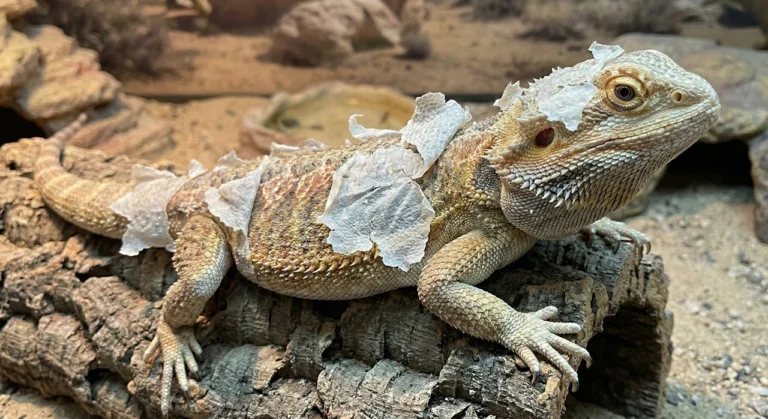
8. The “Grumpy Shed”
The Context: Their scales look dull, grey, or white, and they are aggressively rubbing their face on rocks.
Shedding is an incredibly itchy and annoying process. As the old skin tightens around their chin, snout, and eyes, many dragons will hold a mild, patchy black beard simply because they are miserable.
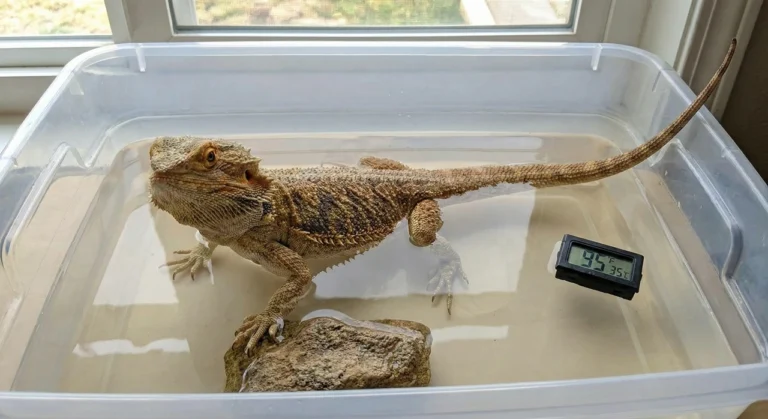
The Fix: Provide rough surfaces (like natural slate tile or sanitized driftwood) for them to rub against, and offer a warm 15-minute soak in shallow water. Never peel or pull the skin for them; pulling shed rips the live scales underneath and causes permanent scarring.
Common Keeper Mistake
A massive mistake beginners make is throwing a black-bearding dragon straight into a bathtub. Pet store employees often parrot the outdated advice that a warm bath will “calm a stressed reptile down.”
If your dragon is black bearding due to relocation stress or fear, dropping them into a slippery, unfamiliar tub of water will just escalate their fear into a full-blown panic. If they have a Respiratory Infection (URI), the humidity and pressure on their chest will literally make it harder for them to breathe. Only use baths to help with stuck shed, impacted bowels, or severe dehydration—never use water as a psychological pacifier.
Cheat Sheet: What is My Dragon Trying to Tell Me?
If you aren’t sure which of the causes applies, use this quick cheat sheet to translate their body language and figure out your next step.
| Secondary Symptom | What It Means | Action & Urgency |
|---|---|---|
| + Pancaking under heat lamp | Thermoregulation (Cold) | Low: Grab your temp gun. Verify the basking spot is 100°F–108°F. |
| + Rapid Head Bobbing / Stomping | Hormones / Dominance | Low: Block glass reflections. Watch your fingers. |
| + Squirming while being held | Over-handled / Overwhelmed | Low: Put them back in their enclosure to rest. |
| + Open Mouth Hissing / Puffed | Extreme Fear | Medium: Back away. Keep cats/dogs out of the room. |
| + Frantic digging, then sudden exhaustion | Egg-Binding (Dystocia) | EMERGENCY: Vet immediately. May need surgery. |
| + Gasping / Vomiting after free-roaming | Toxic Bug Ingestion | EMERGENCY: Drop everything. Vet right now. |
| + Lethargy / Hiding on Cool Side | Severe Illness or Pain | EMERGENCY: Call an Exotic Vet within 24 hours. |
| + Black or shriveled tail tip | Tail Rot (Dying tissue) | EMERGENCY: Vet immediately. Usually requires antibiotics. |
Frequently Asked Questions (FAQ)
Is my bearded dragon actually black bearding, or am I just seeing dark scales?
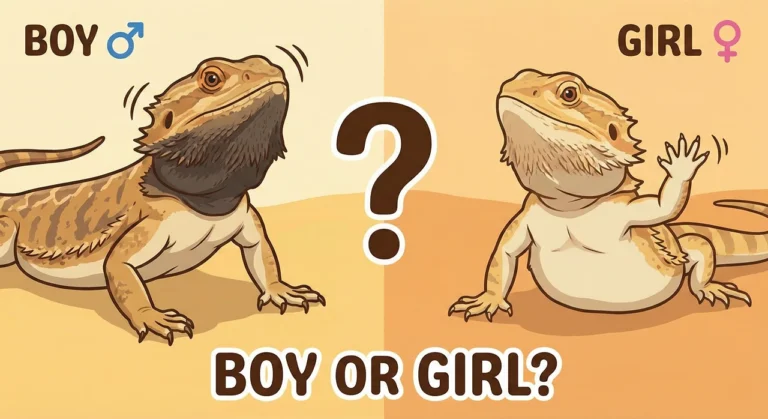
Many beginners panic when their dragon stretches its neck to yawn or bask. The skin between a bearded dragon’s spikes is naturally black. If you only see thin black lines stretching between normal-colored scales, that is just their anatomy. A true black beard is unmistakable—the entire pouch puffs out and turns the color of dark charcoal.
Is a black beard normal after brumation?
Yes. When your dragon first wakes up from brumation (reptile hibernation), their body is undergoing massive adjustments to lighting, temperature, and appetite. It is very common for them to sport a dark or fully black beard for a few days while they groggily warm back up. Give them a warm bath and a few days to fully adjust.
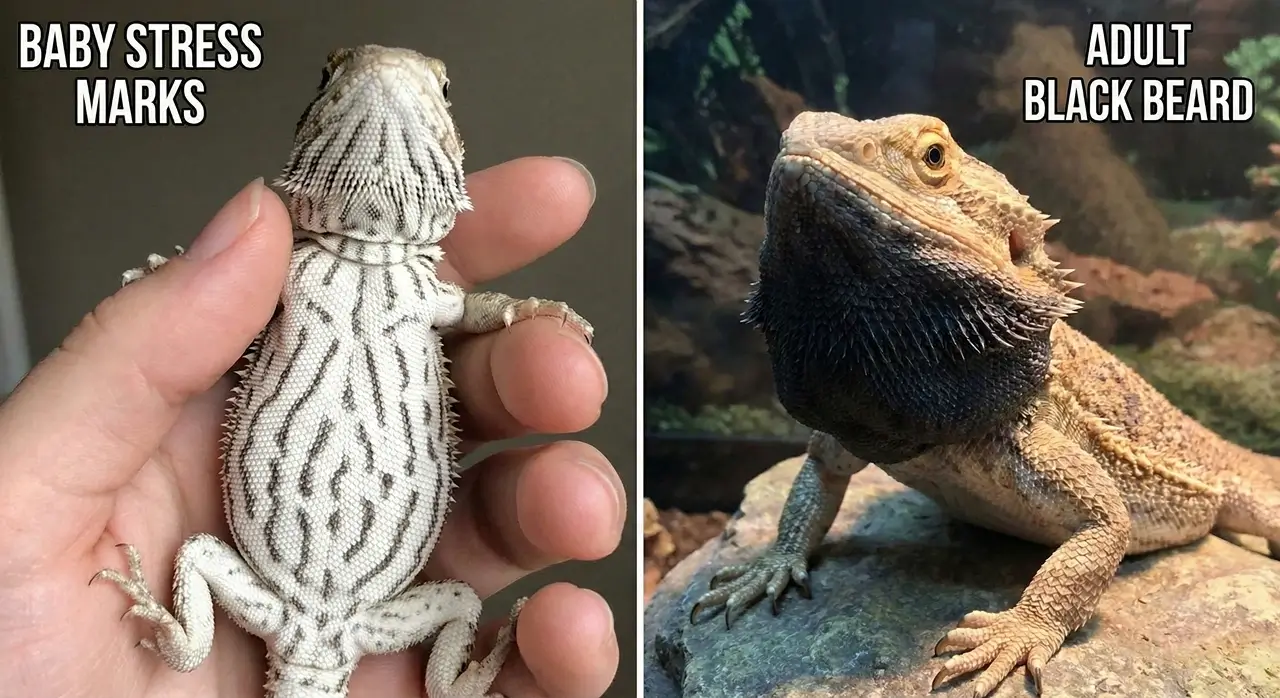
Is my baby bearded dragon black bearding, or is it just patterns?
If your dragon is under 4 months old, you are probably just seeing “stress marks.” Babies often get dark, tiger-like stripes on their white bellies and chin when they are startled, cold, or adjusting to a new tank. This is totally normal for babies and is not the same as the solid, jet-black puffed-out beard of an adult.
Do female bearded dragons get black beards?
Yes. It’s a common misconception that only males can do this. While males tend to use it more often for territorial displays, females will absolutely black beard if they are cold, highly stressed, in pain, or preparing to lay a clutch of unfertilized eggs.
Can I pick up my bearded dragon when their beard is black?
It depends entirely on why they are doing it. If they are black bearding because they are cold under the heat lamp, yes, you can scoop them up. If they are black bearding while hissing, puffed up, or rapidly head bobbing, do not touch them. You will likely get bitten. Let them calm down first.
Before You Call the Vet: Check These 4 Tank Settings
If your bearded dragon is constantly showing stress signals, 90% of the time it is caused by an environmental failure inside the tank, not a personality problem. Before you spend money at the vet, run through this quick checklist to fix the root cause:
- Check the glass: Are they seeing their own reflection? Tape paper to the walls to break the mirror effect.
- Check the heat: Are they freezing? Use a digital temp gun to ensure the basking rock is over 100°F. Do not rely on those cheap, plastic stick-on dial thermometers—they can be off by as much as 20 degrees.
- Check the UVB: Are you using a cheap coil UVB bulb? These emit concentrated, dangerous radiation and don’t cover the whole tank. You need a linear T5 HO tube (like an Arcadia 12% or ReptiSun 10.0) spanning half the length of the enclosure.
- Check the space: Do they have enough room to escape the heat? If you are using a tiny 40-gallon breeder tank for an adult, it is physically impossible to create a proper temperature gradient, meaning they are chronically stressed and unable to cool down.
If these signs point toward an enclosure issue, your next step is to audit your husbandry. Head over to our complete Bearded Dragon Substrate & Setup Guide to verify your lighting, temperatures, and tank size are up to current veterinary standards.
Written by
Sarah ArdleySarah has kept bearded dragons for over ten years. She founded Beardie Husbandry after discovering that most mainstream care advice — including what she followed with her first dragon — was doing more harm than good. Every article on this site is grounded in veterinary research and real keeper experience.