Why Your Bearded Dragon Licks the Glass and When to Worry
Tongue pressed flat to the side of the tank, dabbing the same spot over and over. It looks strange the first time, and it sends plenty of owners straight to a search bar.
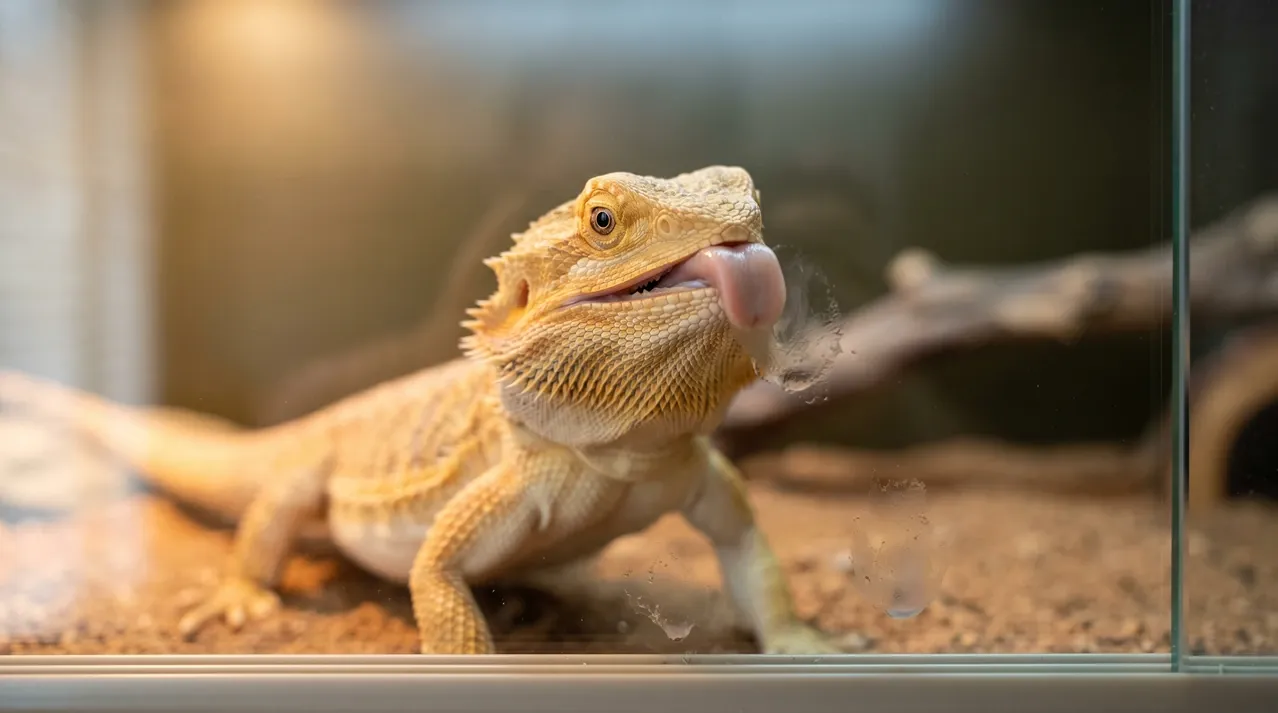
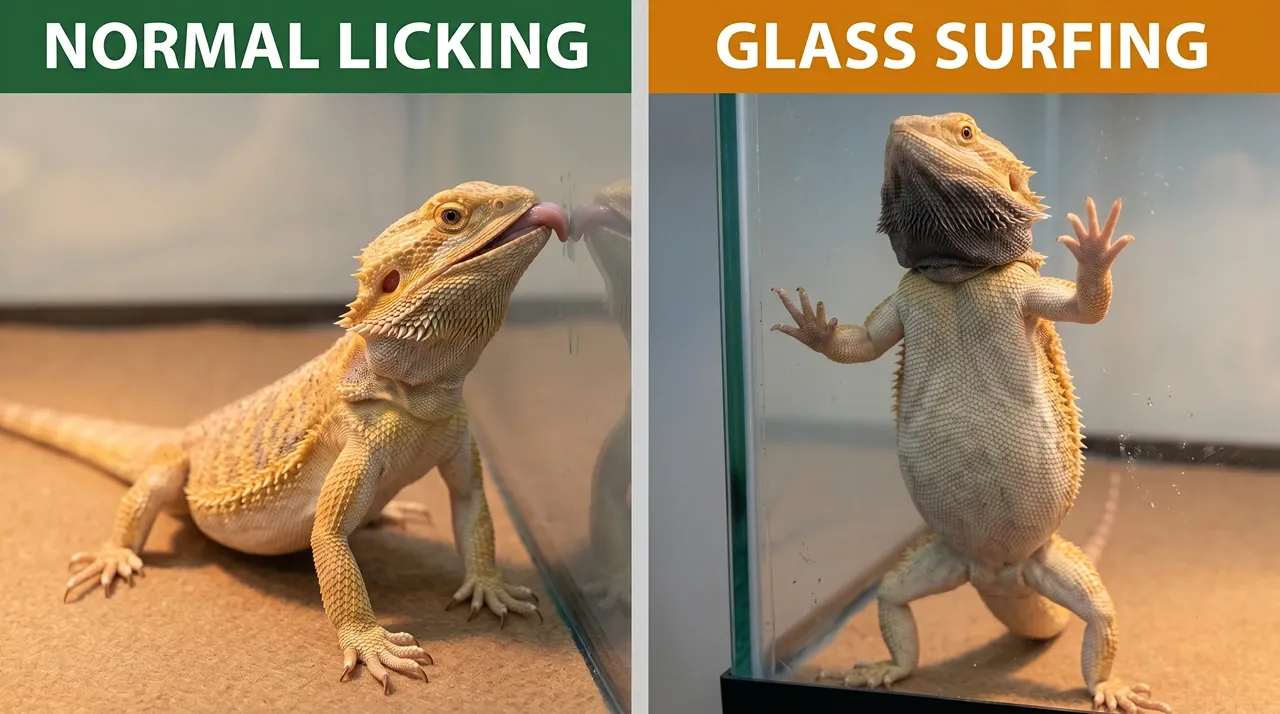
A bearded dragon licking glass is almost always normal exploratory behaviour, not a sign that something is wrong. Dragons read the world through their tongues, and a smooth pane is just another surface to map.
The behaviour only matters in a few specific situations, and those are easy to spot once you know what sits alongside the licking. Telling harmless tasting apart from a stress signal takes about two minutes to learn.
Why Dragons Lick Things in the First Place
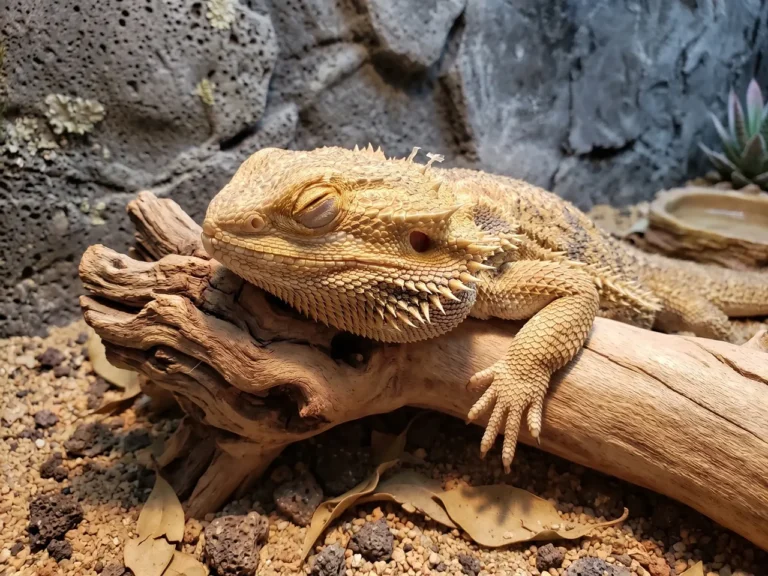
Bearded dragons have a Jacobson’s organ in the roof of the mouth. When the tongue touches a surface and retracts, the forked tip carries scent particles up to that organ. Your dragon is effectively smelling with its tongue.
This is the same chemical sensing system that snakes and other reptiles rely on to read their surroundings. The vomeronasal organ lets a dragon build a picture of its environment without a large nose getting in the way.
Glass is smooth and holds very little scent, so a dragon often licks it more, not less. There is nothing there to read, so it keeps checking.
Reading the rest of your dragon’s subtle warning signs alongside the licking tells you whether this is plain curiosity or something to act on.
It Spikes in a New Tank
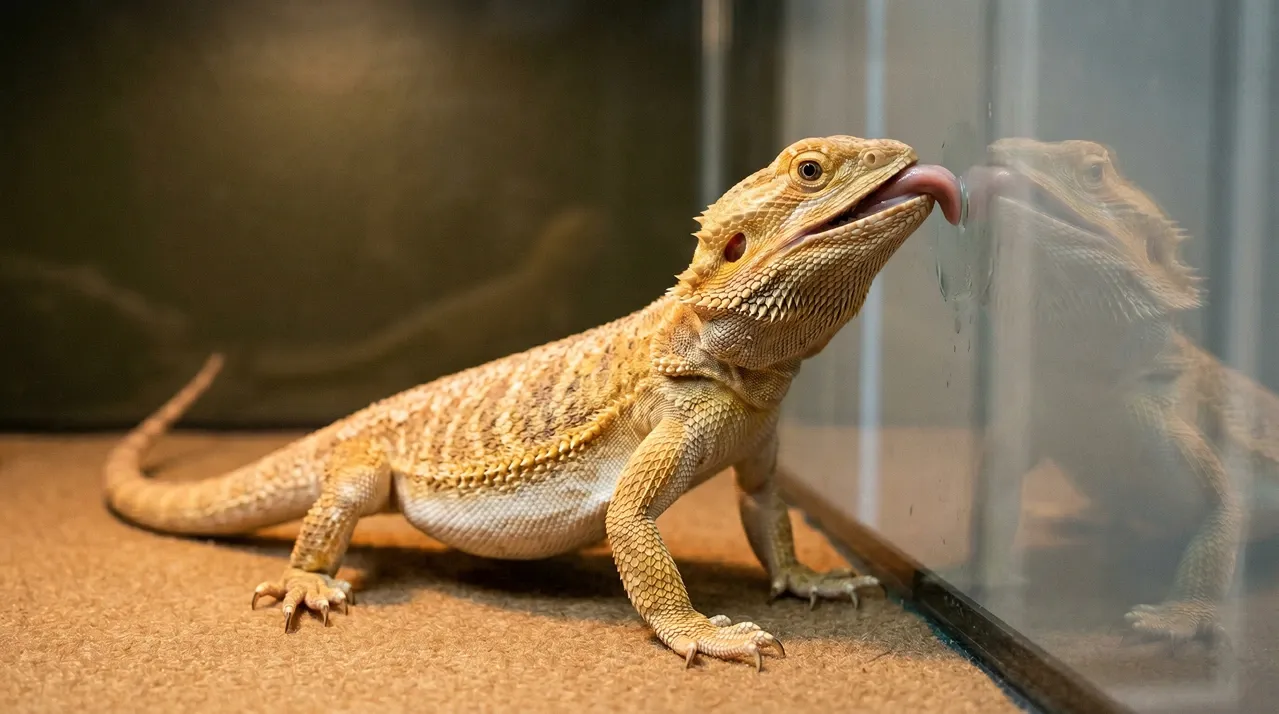
A dragon that has just moved home will lick everything in sight for the first week or two. Every surface is unfamiliar and needs cataloguing. This burst of tongue-flicking is one of the clearest signs a new dragon is settling in and exploring rather than shutting down.
The licking calms down as the enclosure becomes familiar. If your dragon arrived recently and is dabbing at the glass constantly, give it time before reading anything into it.
When Glass Licking Is Completely Normal
Most glass licking falls into a handful of harmless categories. If your setup is correct and your dragon is otherwise bright and active, this behaviour needs no fix at all.
- General exploration: a relaxed dragon tasting its territory, usually a few licks then moving on
- New environment: heavy licking in the first weeks after a move or a tank upgrade
- After cleaning: fresh scents from a wipe-down or new decor invite a round of inspection
- Mating season: a seasonal rise in licking, often alongside head bobbing and a darker beard
The mating season spike catches a lot of owners off guard. It usually starts about a month after brumation ends, in early spring.
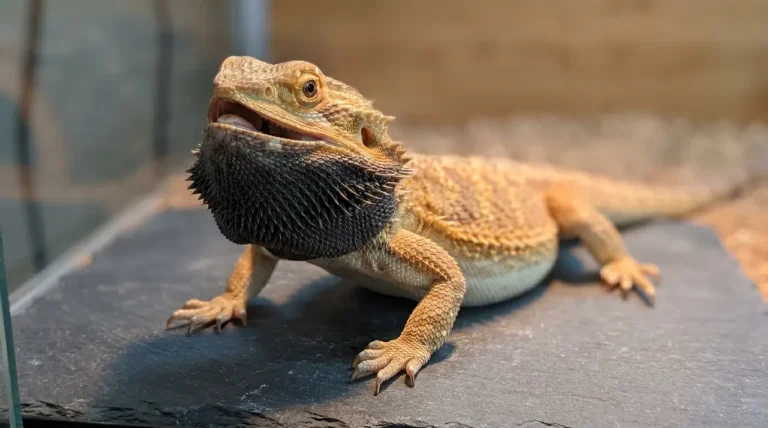
A male in breeding mode will lick more, bob his head, and may darken his beard. None of it signals a problem with the tank.
Pro tip: Watch what your dragon does straight after licking. A few licks followed by basking, walking off, or settling means pure curiosity. Licking that comes with frantic pacing or clawing at the glass is a different behaviour worth investigating.
What to Do When Licking Turns Into Surfing
Licking on its own is calm. The picture changes when the tongue work comes bundled with your dragon rearing up on its back legs and paddling its front arms against the glass.
That paddling motion is a recognised stress behaviour with its own set of causes, from an enclosure that feels too small to a reflection the dragon mistakes for a rival.
The combination of licking plus that frantic clawing at the glass is worth treating as a stress flag rather than simple exploring.
If you are seeing the rear-up-and-paddle pattern, the licking is a side note. The real issue is whatever is driving the surfing, and that is the behaviour to chase down and fix first.
When the Licking Actually Signals a Problem
A handful of situations turn normal licking into something worth checking. None of these are common, but each one is easy to miss if you only watch the tongue and ignore the rest of the animal.
| What you see | Likely cause | What to do |
|---|---|---|
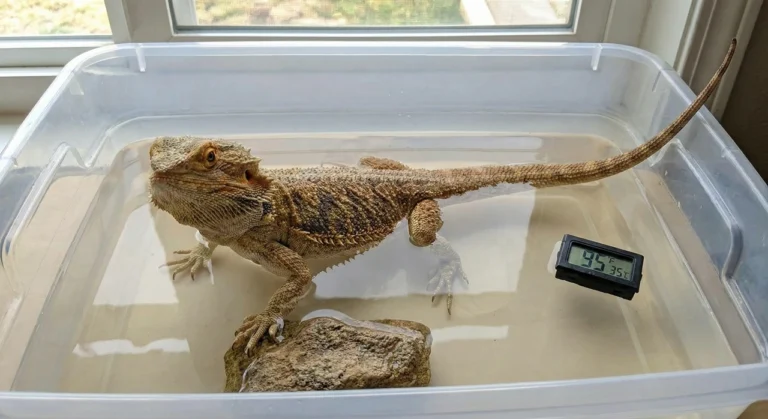
| Licking with sunken eyes and wrinkled skin | Dehydration | Offer a shallow bath, review water access and humidity |
| Licking the air with mouth gaping repeatedly | Heat too high or a bad smell in the tank | Check basking temperature, spot-clean any waste |
| Licking plus paddling at the glass | Stress, boredom, or reflection | Address enclosure size, cover reflective panels |
| Sudden obsessive licking of one cold spot | Possible escape attempt or draught | Check for a temperature gradient fault |
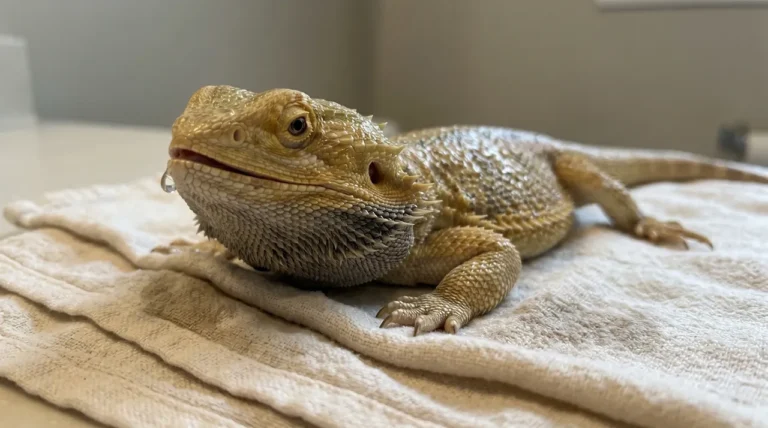
Dehydration is the one most owners overlook. A dragon short on water will sometimes lick surfaces more as it hunts for moisture. Pair the licking with the wider early warning signs like sticky saliva and skin that stays tented when pinched.
Air Licking and a Gaping Mouth
Licking the air with the mouth held open is a slightly different signal. Short bursts are fine and often just thermoregulation while basking. A dragon holding its mouth open for long stretches may be telling you the basking zone is running too hot.
Pull a reading off the basking surface with a digital probe. If it sits well above the mid-40s in Celsius, drop the wattage or raise the lamp before anything else.
How to Cut Down Obsessive Glass Licking
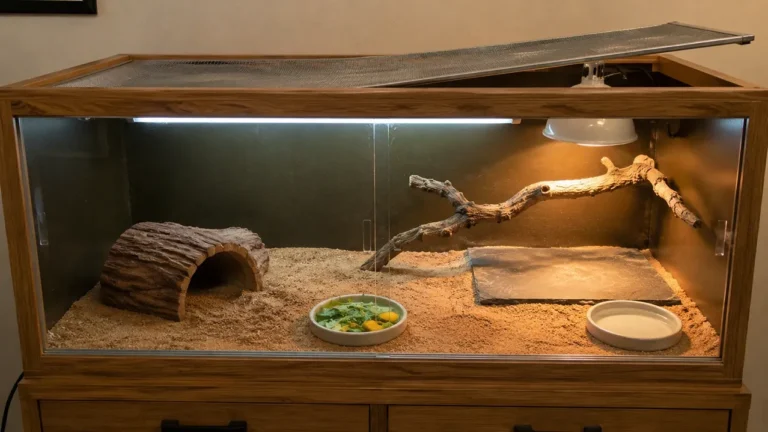
If the licking has tipped from occasional to constant, the goal is to give the tongue something better to read than a blank pane. A bare tank with nothing to investigate pushes a curious dragon toward the only surface available.
Adding scent-rich, textured surfaces redirects the behaviour fast. Branches, cork bark, and rough rock all hold smell in a way glass never will, so the dragon spends its mapping time on them instead.
- Add texture and enrichment: safe branches and varied natural climbing surfaces give the tongue real work to do
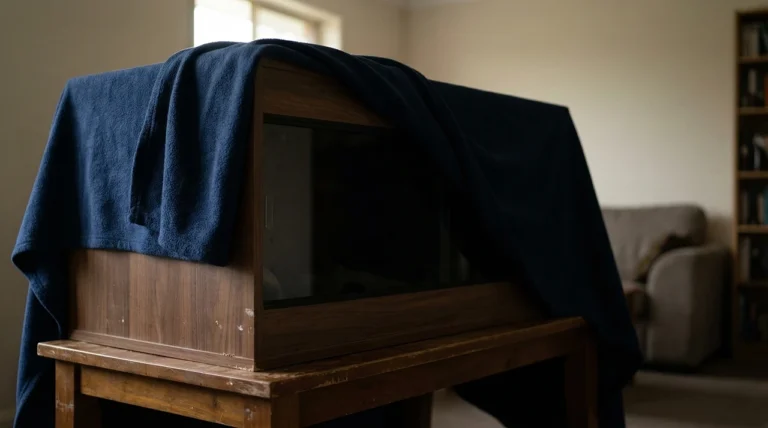
- Break up the reflection: tape paper or a background over the most reflective panel for a week
- Confirm the temperature gradient: a tank that is uniformly hot or cold leaves a dragon restless and pacing
- Increase out-of-tank time: supervised floor time burns the curiosity that fuels constant licking
Warning: Never house a dragon on loose sand or fine particle substrate to satisfy licking curiosity. A dragon that licks the floor can ingest the grains, and loose substrate is a known cause of gut impaction in juveniles.
Is a Bearded Dragon Licking Glass Harmful
The licking itself causes no harm. A dragon’s tongue against clean glass is harmless, and the behaviour is part of how the animal understands where it lives.
The only real risk is what sits on the glass. Cleaning residue, hard-water film, or anything sprayed near the tank can end up on the tongue.
Wipe the inside panels with plain warm water or a reptile-safe cleaner, never a household disinfectant, and let it dry fully before the dragon goes back in.
Frequently Asked Questions
Why does my bearded dragon lick the glass so much?
Heavy glass licking is usually exploration, especially in a new or recently cleaned tank. Glass holds little scent, so a curious dragon keeps checking it. Constant licking with pacing or paddling points to stress instead.
Is my bearded dragon licking the glass because it is hungry?
Hunger can raise general licking as the dragon hunts for food scents. If feeding is on schedule and the dragon is active, hunger is unlikely. Watch for begging at the front of the tank around usual feeding times.
Can licking the glass mean my dragon is thirsty?
It can. A dehydrated dragon sometimes licks surfaces looking for moisture. Check for sunken eyes, sticky saliva, and skin that stays tented when gently pinched, and offer a shallow bath.
Should I stop my bearded dragon from licking the glass?
Occasional licking needs no action and is healthy curiosity. Only step in if it becomes obsessive, when adding texture, enrichment, and out-of-tank time usually redirects it within a week.
Why does my dragon lick the glass and scratch at it?
Licking paired with scratching or paddling is glass surfing, a stress behaviour. Common triggers are a small enclosure, a mistaken reflection, or a temperature fault. Treat it as a stress signal, not simple exploring.
Your Quick Action Checklist
Run through this the next time you catch your dragon working the glass:
- Watch what happens after the licking. Calm and moving on means curiosity, nothing to fix.
- Check for paddling or pacing. If present, treat it as a stress signal and find the trigger.
- Pinch the skin gently and check the eyes. Tented skin or sunken eyes means offer water now.
- Confirm the basking temperature with a digital probe if the mouth is gaping open.
- Add textured, scent-holding surfaces if a bare tank is pushing constant licking.
- Wipe the panels with reptile-safe cleaner only, and never use a household disinfectant.
Written by
Sarah ArdleySarah has kept bearded dragons for over ten years. She founded Beardie Husbandry after discovering that most mainstream care advice — including what she followed with her first dragon — was doing more harm than good. Every article on this site is grounded in veterinary research and real keeper experience.