Do Bearded Dragons Need Heat Mats? (Proper Heating Explained)
Plenty of starter kits still ship with an under-tank heat mat in the box, sometimes next to a coil bulb that belongs in a drawer. So do bearded dragons need heat mats? No, and running one adds risk without solving anything.
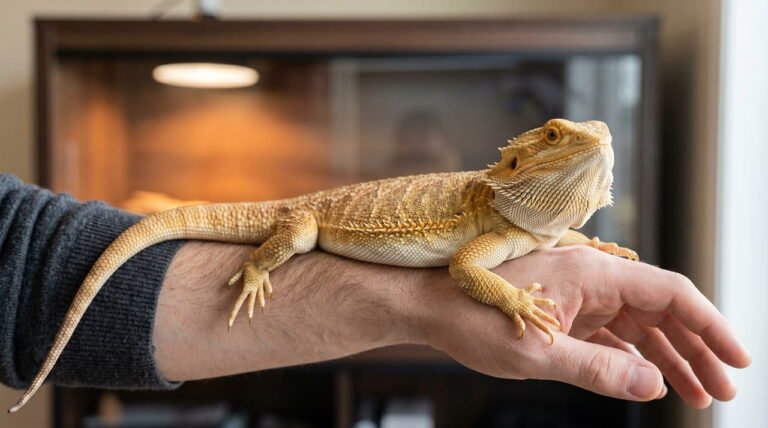
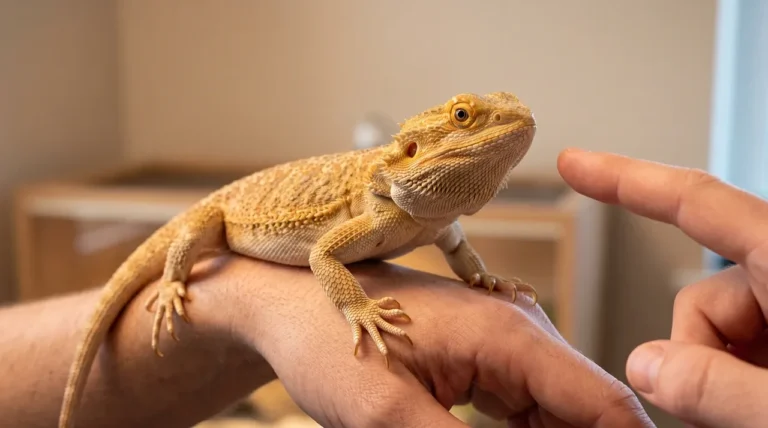
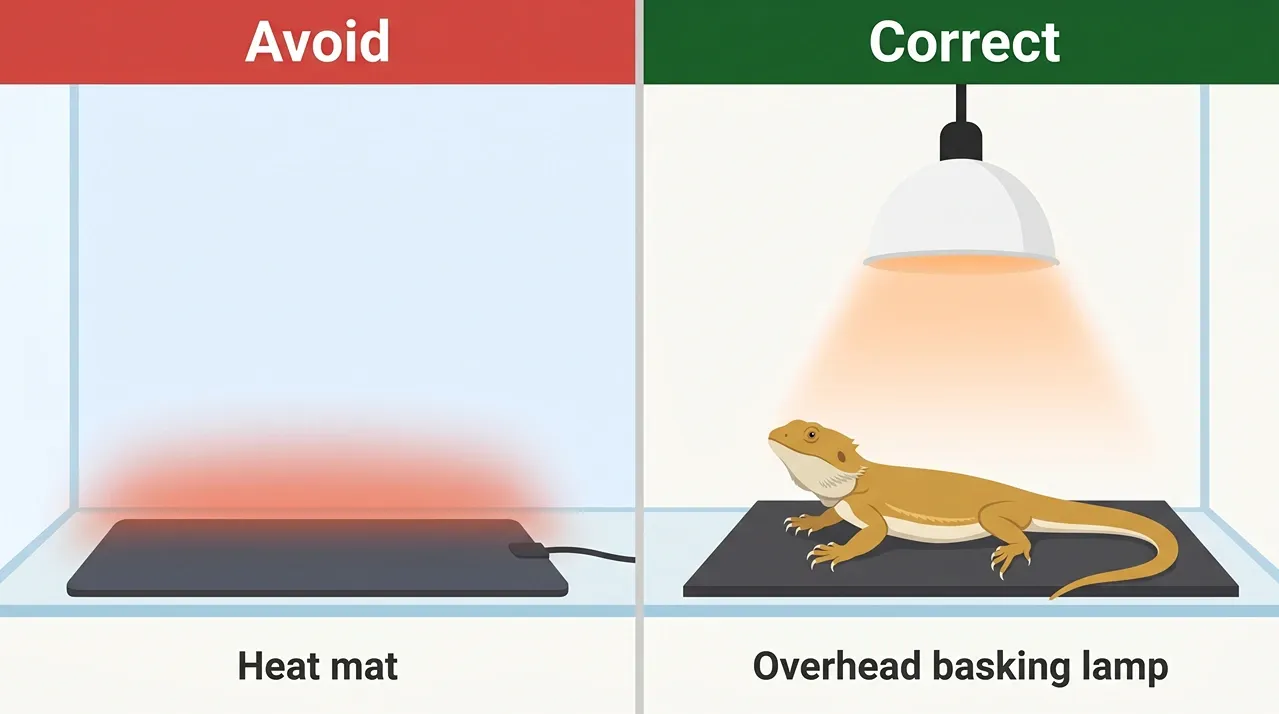
Bearded dragons take their heat from above. In the wild they bask under direct sun, flatten out on warm rock, and read temperature through receptors along the back and head. A mat under the glass speaks a language their body was never built to hear.
The correct setup is also simpler than the box of kit suggests. One halogen flood over a proper basking spot setup covers everything a mat claims to do, without the burn risk that comes with belly heat.
Why Heat Mats Fail for Bearded Dragons
New keepers googling do bearded dragons need heat mats have usually just unboxed a kit that includes one, so the assumption is understandable. The equipment came in the box, so it must belong in the tank.
It does not. Pogona vitticeps is a heliothermic lizard, the technical way of saying it warms itself by basking under the sun rather than pressing against warm ground.
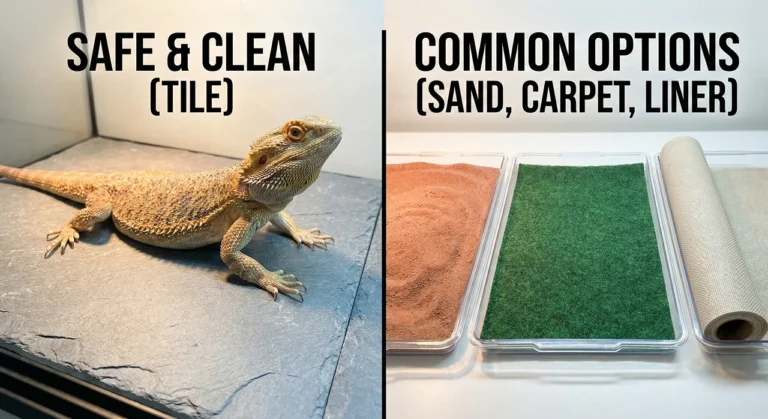
Heat mats were designed for species that do the opposite. They warm a small patch of floor or glass, raise that surface a few degrees, and leave the air above them almost untouched.
A beardie regulates its body temperature by moving through an air gradient, from a basking zone near 105–110°F (40–43°C) down to a cool side around 75–85°F (24–29°C). A mat cannot build that gradient. It only makes one patch of floor warm.
Beardies Cannot Feel Heat From Below
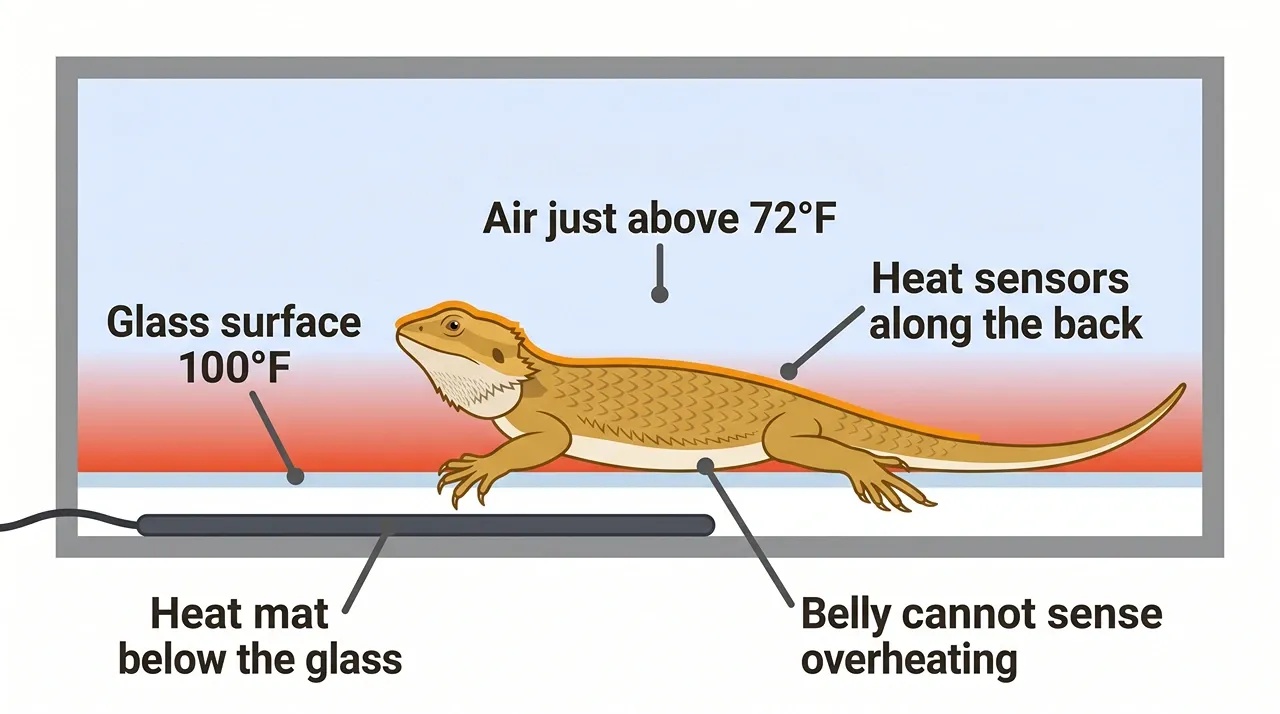
The thermoreceptors a bearded dragon uses to judge warmth sit along its dorsal surface, across the back and the top of the head. The belly gives very poor feedback by comparison.
That wiring is the real danger. A dragon lying on an overheating mat does not register the problem and stays put, because nothing on its back tells it to move. Damage builds on the belly and the underside of the tail before the keeper sees anything wrong.
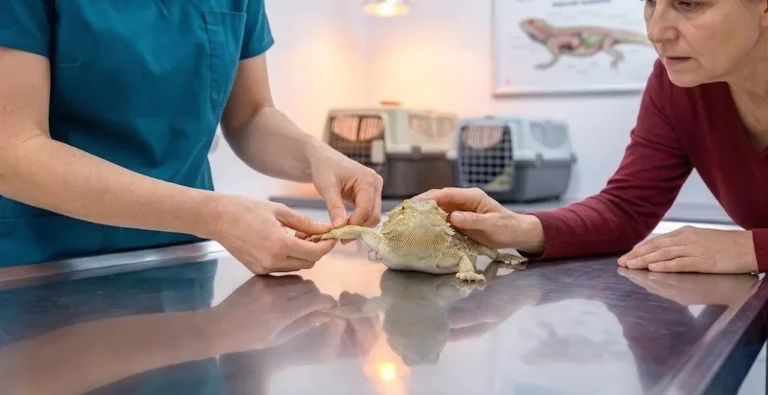
Warning: A beardie that loves lying on the warm patch above a mat is not doing it safely. It cannot feel how hot its belly is getting, and reptile vets treat thermal burns from mats that owners swore their dragon was comfortable on.
Heat Mats Warm Surfaces, Not Air
Air is a poor conductor, so the warmth coming off a mat rises an inch or two and dissipates. Hold a digital probe four inches above a running mat and the reading barely moves.
That matters because the temperatures a beardie lives in are air temperatures. The warm side, the cool side, and the overnight minimum are all read in the air column, not on the glass.
Keepers who add a mat to fix a cold tank discover this the slow way. The substrate feels warm to the hand, the dragon stays sluggish, and the probe thermometer readings have not shifted at all.
Mats Suit Geckos for a Different Reason
Leopard geckos and many snakes are crepuscular or nocturnal. They press their bellies against rock that held the day’s warmth, and their digestion relies on that contact heat from below.
That is the niche heat mats were built for, which is partly why do bearded dragons need heat mats gets such mixed answers on general reptile forums. Gecko keepers run them successfully every day.
The Merck Veterinary Manual lists mats among workable reptile heat sources, with the proviso that every heater is thermostat controlled and positioned to create a gradient. Workable for reptiles in general is not the same as right for a desert basker.
A bearded dragon sits at the far end of that spectrum from a gecko. The kit that keeps a leo healthy is the wrong tool here, the same way a basking flood blasting down on a gecko hide would be.
What to Use Instead of a Heat Mat
Daytime heat comes from one place: a halogen flood bulb over the basking platform.
Halogens produce infrared A and B, the wavelengths sunlight delivers and the ones that penetrate muscle rather than just warming the skin surface. A 50–75W halogen flood in a dome usually hits target in a 4ft enclosure once it is dialled in on a dimming thermostat.
Overnight is a separate question. Most homes hold above 65°F (18°C) after lights-out, and at those temperatures no supplemental heat is needed at all.
Where a room runs colder, a ceramic heat emitter lifts the actual air temperature in a way no mat can. Whether your enclosure needs heat at night comes down to a single overnight probe reading on the cool side.
| The situation | What actually fixes it |
|---|---|
| Daytime basking heat | 50–75W halogen flood on a dimming thermostat |
| Whole tank too cool in the day | Higher wattage flood or a second one, then recheck the gradient |
| Cold nights below 65°F (18°C) | Ceramic heat emitter on a pulse thermostat |
| Power cut in winter | Wrapped hand warmers and blankets, not mains equipment |
| Sluggish digestion after meals | Correct basking surface temperature, never belly heat |
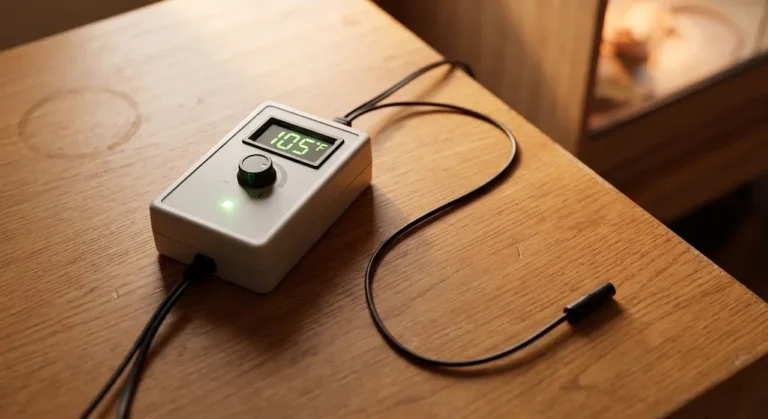
Pro tip: Whatever heats the tank runs through a thermostat, no exceptions. Halogens take a dimming stat, ceramics take a pulse stat. Unregulated heaters are behind most equipment burns vets see.
When Your Room Runs Cold in Winter
Some guides sell mats as winter back-up for exactly this scenario, and it is bad advice. A mat warms the glass it touches while your dragon’s air stays cold.
Raise the ceramic emitter wattage, insulate the back and sides of the enclosure, or move the setup off an exterior wall. Even in an unheated room in January, the answer to do bearded dragons need heat mats stays no.
A blackout changes the rules, because mains-powered heating of any kind stops being an option. A proper power outage plan runs on wrapped hand warmers, blankets, and body heat instead.
Frequently Asked Questions
Do bearded dragons need heat mats at night?
No. Night heat, when needed at all, comes from a ceramic heat emitter that warms the air rather than the floor. A mat leaves the air cold and adds a contact burn risk while your dragon sleeps on it.
Why does my bearded dragon lie on the heat mat?
The warmth feels mildly pleasant, and it has no way to sense when its belly starts to overheat. Comfort-seeking on a mat is exactly how contact burns happen. Remove the mat rather than trusting the behaviour.
Are heat rocks safe for bearded dragons?
No. Heat rocks combine the belly-heat problem with notoriously poor temperature control, and they sit behind some of the worst burns reptile vets see. Nothing in a beardie setup should deliver heat through direct contact.
Can a thermostat make a heat mat safe for a beardie?
A thermostat stops the mat overheating, but it cannot make the mat useful. The air gradient a dragon needs still is not there. You end up with regulated equipment that solves nothing.
Do bearded dragons need heat mats in winter?
No, not even in a cold room. Raise the ceramic heat emitter wattage and insulate the enclosure instead. The fix for cold air is more air heating, never floor heating.
If a Heat Mat Is Running Right Now
- Unplug it today. Nothing about removing a mat needs phasing out gradually.
- Check the belly and the underside of the tail for grey, brown, or blistered patches. Book a reptile vet if you find any.
- Probe-check the basking surface. An adult needs 105–110°F (40–43°C) directly under the flood.
- Log the cool-side minimum overnight. Below 65°F (18°C), add a ceramic heat emitter on a pulse thermostat.
- Confirm every heater in the setup runs on its own thermostat before you walk away from it.
This article is written for educational purposes and is not a substitute for veterinary advice. If you suspect a burn or any other health concern, contact a reptile-experienced vet promptly.
Written by
Sarah ArdleySarah has kept bearded dragons for over ten years. She founded Beardie Husbandry after discovering that most mainstream care advice — including what she followed with her first dragon — was doing more harm than good. Every article on this site is grounded in veterinary research and real keeper experience.