Bearded Dragon Eyes Closed: Causes and When to Worry
A bearded dragon with its eyes shut sends most keepers straight into a panic, and that reaction makes sense. These lizards evolved to keep their eyes open and scanning, so a closed eye reads as wrong.
Sometimes it is wrong. A bearded dragon with its eyes closed can be doing something completely normal, or it can be flagging a problem that needs a vet this week.
The trick is knowing which one you are looking at. A dragon dozing under a cooling basking lamp at lights-out is fine. A dragon squinting one eye shut at midday with crusting around the lid is not.
This article sorts the harmless reasons from the ones that matter, gives you a quick way to tell them apart, and tells you exactly when to stop watching and call someone.
Bearded Dragon Eyes Closed, Normal or Not
Before you read a single cause, run the dragon in front of you through a fast sort. Most closed-eye situations fall into one of three buckets, and the bucket tells you how fast you need to move.
The table below is the same triage I run mentally before I even pick the dragon up. Match what you are seeing to the left column, then act on the right.
| What you are seeing | Most likely meaning | What to do |
|---|---|---|
| Both eyes shut, calm, near lights-out or cool morning | Sleep or settling | Leave it. Recheck when lights are up to temperature. |
| Eyes shut only while being stroked or held | Stress or dislike of handling | Put the dragon down. This is a back-off signal. |
| Eyes shut or squinting under the basking lamp, dragon otherwise active | Light too bright or UVB too strong | Check bulb age, type, and distance today. |
| One eye shut, dragon rubbing or pawing at it | Foreign body, stuck shed, or injury | Inspect the eye in good light. Vet if not clear in 24 hours. |
| Eye swollen, crusted, weeping, or stuck shut | Infection or eye damage | Book a reptile vet now. |
| Eyes shut, sunken face, skin tents when pinched | Dehydration | Hydrate and assess. Vet if severe or not improving. |
| Eyes shut, not moving, cool to touch, winter | Possibly brumation, possibly illness | Confirm breathing and rousability before assuming sleep. |
If you landed in one of the bottom three rows, you already know roughly where this is going. The sections below explain each cause and give you the specifics that the table cannot.
Eyes Shut at Lights Out Is Just Sleep
The most common reason for a closed-eyed dragon is the most boring one. They are asleep, or getting there.
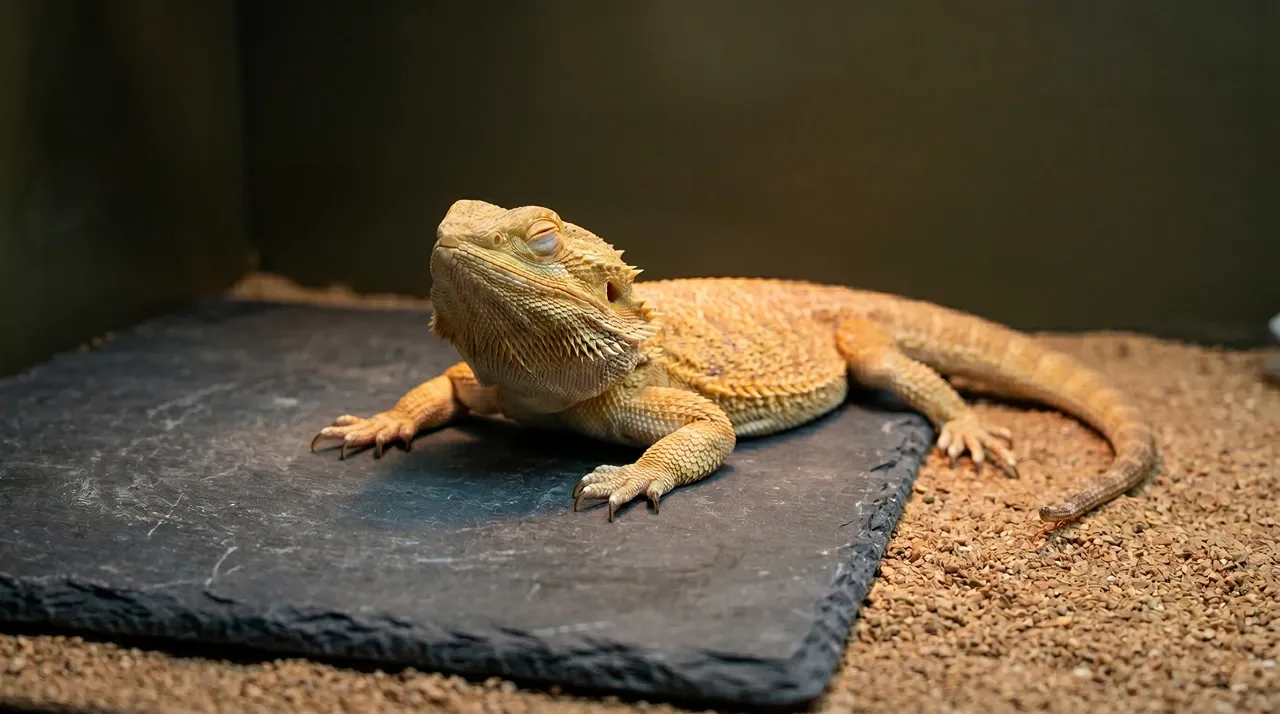
Bearded dragons sleep with their eyes closed the same way we do. As the basking lamp cools toward the evening, a dragon will often settle, flatten slightly, and let both eyes drift shut well before the lights actually switch off.
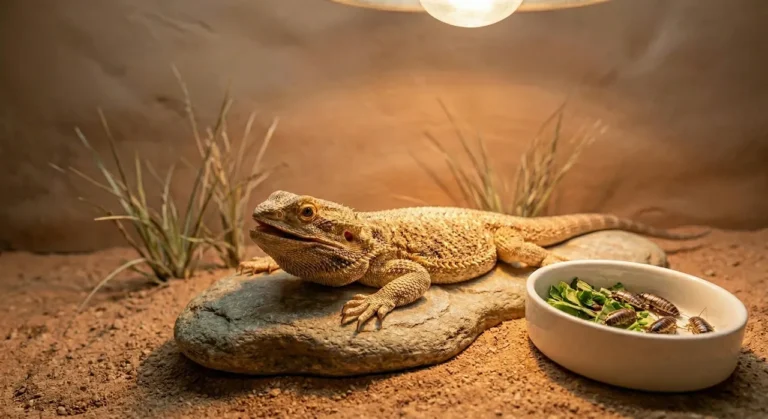
You will also see a relaxed, half-closed look during a warm afternoon basking session. Both eyes soft, body splayed across the warm spot, no rubbing or distress. That is contentment, not a symptom.
Pro tip: A truly settled dragon reopens its eyes and reacts normally the moment the heat comes back up. If yours stays shut once the basking spot hits temperature and the day is fully underway, that is your cue to look closer.
Why They Shut Their Eyes When Petted
This one trips up almost every new owner. You stroke your dragon along the back, the eyes slowly close, and it looks exactly like a cat enjoying a fuss. It usually is not.
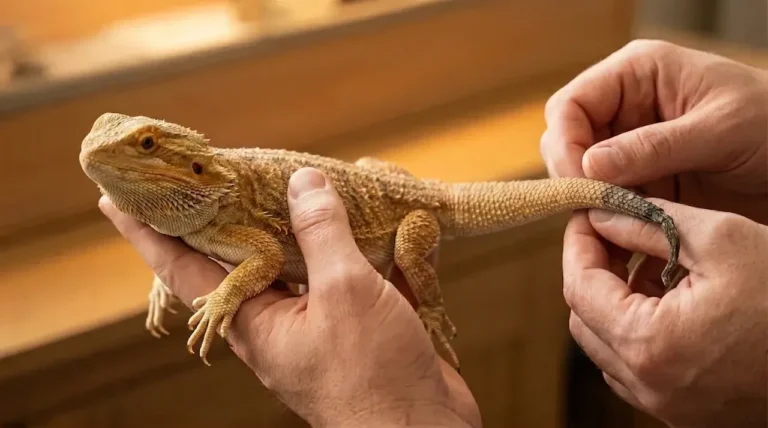
In most cases, a bearded dragon closing its eyes while being handled is mildly stressed and tolerating contact it would rather avoid. The closed eyes are a passive coping signal, not a sign of pleasure.
That does not mean you are hurting your dragon. Plenty of dragons tolerate handling perfectly well and never show distress. But the slow eye-close under your hand is worth reading for what it is rather than as affection.
If the eyes close and the dragon also flattens, turns away, or tries to walk off your hand, put it back. Pushing through that signal is how you end up with a dragon that hates being picked up.
Calm, confident handling that respects the back-off signs is covered in our guide on handling without getting bitten, and it makes a real difference over weeks.
Bright Light and the Wrong UVB
Here is the cause most articles get half right. A dragon that squints or shuts its eyes under the basking lamp, while otherwise alert and active, is very often reacting to its lighting.
Two separate things can be going on, and they need different fixes.
When the Basking Lamp Is Simply Too Bright
Some dragons squint against a very bright white basking bulb the same way you would squint into the sun. If the squinting only happens directly under the lamp and stops elsewhere in the tank, brightness is the likely culprit.
Raising the lamp slightly or switching to a bulb with a less harsh output usually settles it, as long as you keep the basking surface temperature in the correct range. Get the temperature side right first using a proper basking spot setup, then adjust brightness without dropping the heat.
The UVB Problem That Damages Eyes
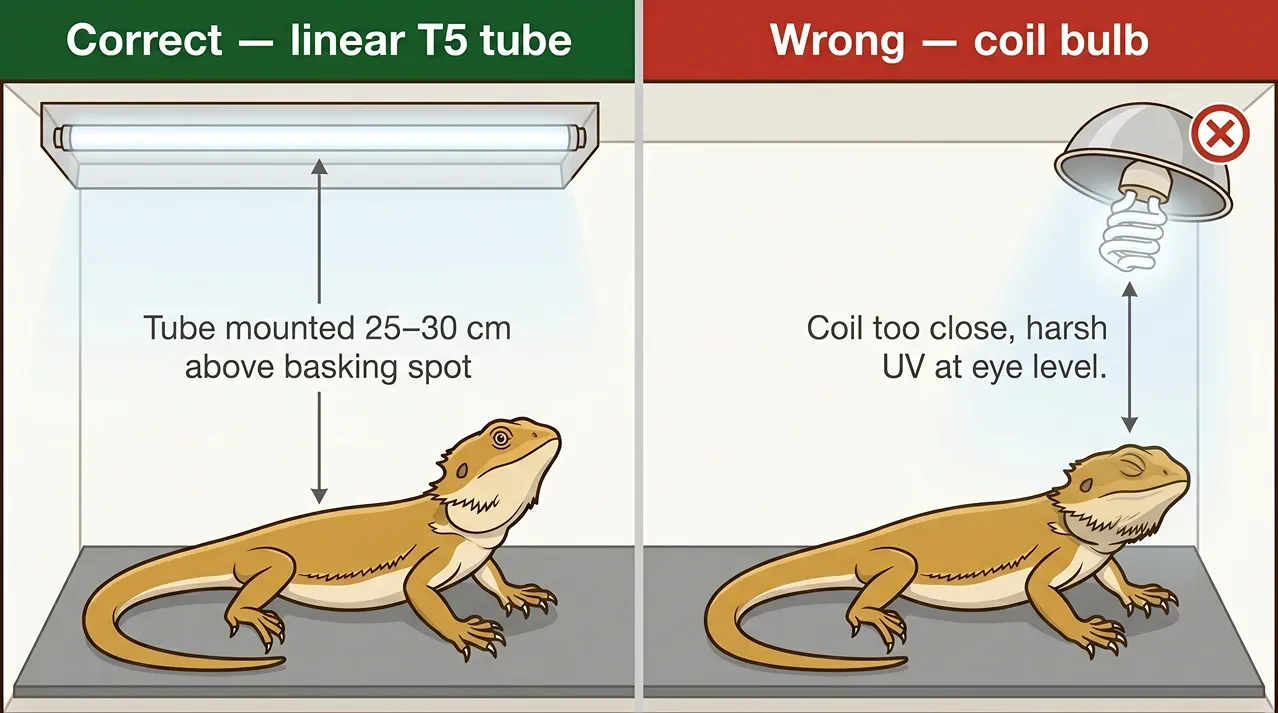
This is the serious version. Old, cheap, or coil-type UVB bulbs can emit the wrong wavelengths, and over-strong or faulty UVB causes a painful eye inflammation that makes dragons clamp both eyes shut.
The classic tell is more than one symptom at once: both eyes affected, sometimes the whole body held low, and the dragon avoiding the lit end of the tank entirely.
Check your UVB now if both eyes are shut. Coil bulbs in particular have a history of causing eye damage. Confirm you are running a quality linear tube, that it sits the correct distance from the basking spot, and that it has been replaced within the last 12 months. UV output dies long before the visible light does.
If you are not sure which type you are running or how high to mount it, the difference is bigger than most people expect. The wrong coil versus tube choice is behind a lot of unexplained squinting.
Stuck Shed Around the Eye
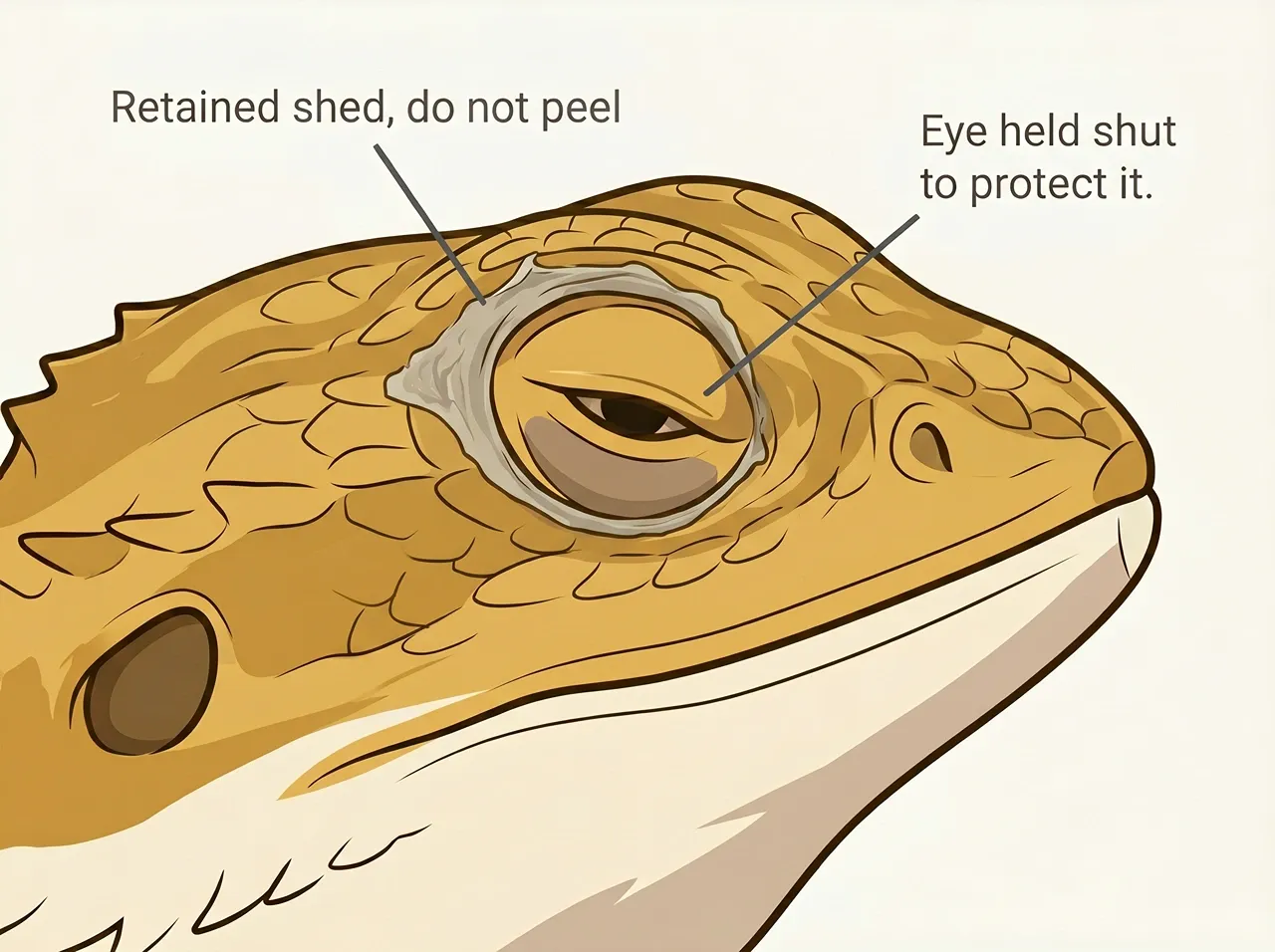
Shedding causes more one-eyed dragons than almost anything else, and it is easy to miss. As a dragon sheds, thin skin around the eyelids and the bony ridge above the eye can lift and dry before it releases.
That drying skin pulls and irritates, so the dragon holds the eye shut to protect it. You will sometimes spot a faint papery rim around the lid or a slightly puffy, dull look to the skin near the eye.
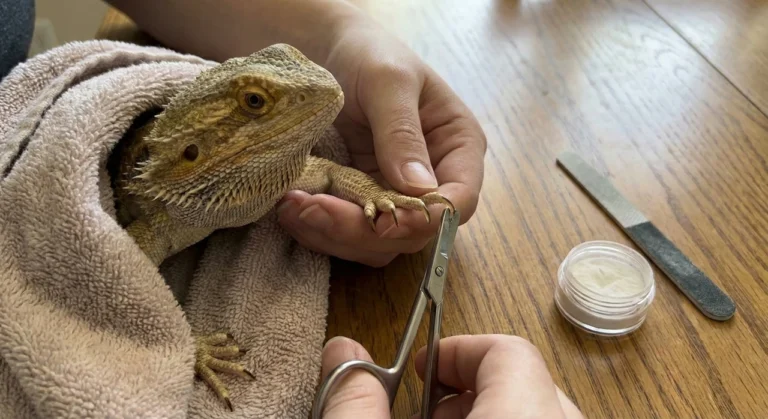
Never pick or peel shed from around the eye. The tissue underneath is delicate, and forcing it risks far worse damage than the stuck shed itself. Warm baths and patience are the safe route, and the full picture on stuck shed and what to do walks through the timing.
Pro tip: A short, shallow warm-water soak softens shedding skin and often releases a stuck eyelid rim on its own within a day or two. If shed around the eye has not cleared after two or three sheds’ worth of patience, have a vet look before it traps moisture and turns into an infection.
What you are looking for is subtle. A dull, papery rim hugging the eyelid, not a thick crust, and it should clear gently with soaks rather than handling.
Sunken Eyes Often Mean Dehydration
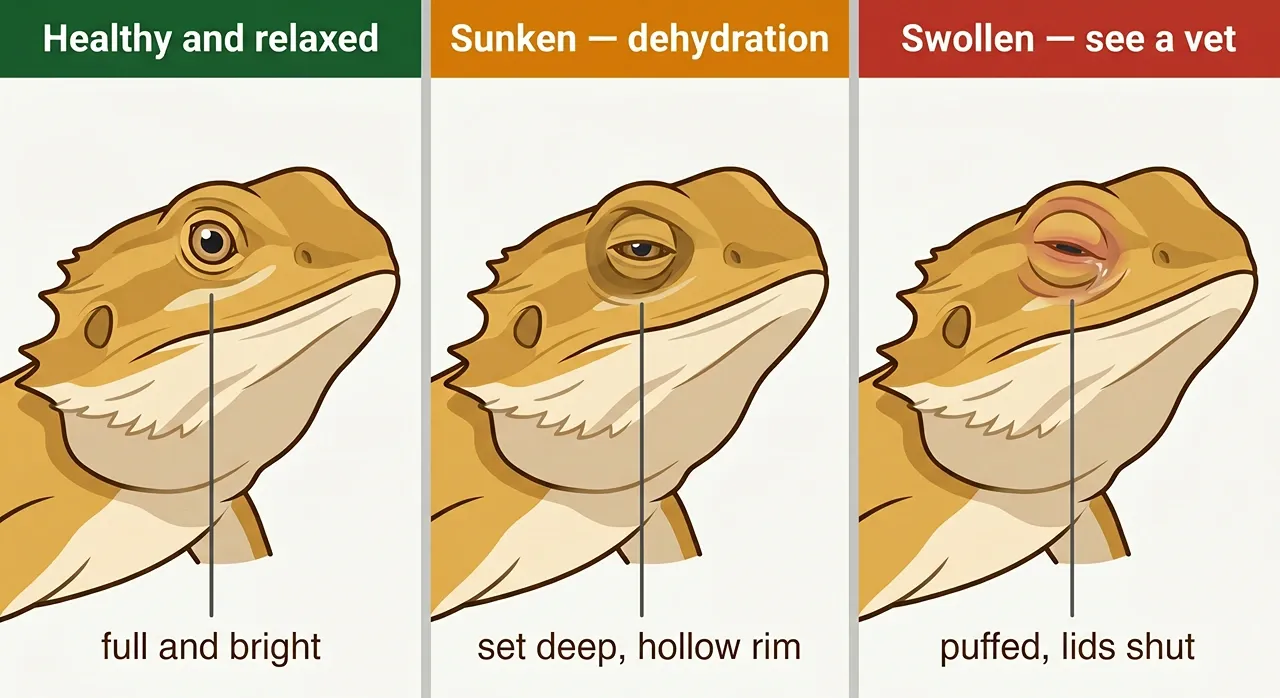
A dehydrated dragon will sometimes keep its eyes closed, and the look is distinctive once you have seen it. The eyes appear sunken into the skull rather than full and round, and the dragon is often flat and sluggish with it.
Dehydration creeps up slowly, especially in dragons fed mostly dry diets with little fresh moisture and kept in very dry, warm tanks. The closed, recessed eyes are one of the clearer late signs.
Mild cases respond to a warm bath, fresh greens with high water content, and a check on tank humidity. The other warning signs are worth learning to catch earlier, since spotting dehydration early means you act before the eyes ever sink.
If the eyes stay sunken after rehydrating, or the dragon is also refusing food and barely moving, that is past home care. Book a vet.
Something Stuck in the Eye
Loose substrate, a stray bit of food, or a piece of bedding can lodge under the lid and force the eye shut. This shows up suddenly, usually affects one eye, and often comes with the dragon rubbing its face against decor or a paw.
Look in good natural light. A genuine foreign body is sometimes visible as a speck against the eye or a fold of irritated lid.
Only flush with reptile-safe sterile saline. A gentle rinse with a sterile saline made for eyes can shift loose debris. Never use tap water, contact lens solution with cleaning agents, or anything you would not put in a human eye. If the eye is not clear and comfortable within 24 hours, treat it as a vet job.
Loose particulate substrate is a recurring offender here. If you are fighting repeated eye irritation, the substrate you have chosen may be the root of it rather than bad luck.
Mites Target the Eyes
Reptile mites are uncommon in well-kept single dragons but worth ruling out, especially after introducing a new animal or second-hand decor. Mites favour soft tissue, and the skin around the eyes is a prime target.
A mite-irritated dragon may hold the eye shut and rub at it. Look closely for tiny dark moving specks around the eyes, in the ear openings, and in the soft folds of skin. You may also see them as black dots in the water bowl after a soak.
Mites need proper treatment and a full enclosure clean-down, not a spot fix. Speak to a reptile vet for a safe product, because some over-the-counter mite treatments sold for reptiles are unsafe.
When the Eye Is Swollen, Crusted, or Weeping
This is the cluster that means business. An eye that is visibly swollen, crusted shut, weeping discharge, or red and inflamed points toward infection or significant eye damage, and it does not resolve on its own.
Infections can start from a scratch, a tankmate bite, water quality, or as a knock-on from poor husbandry. Left alone, an eye infection can spread and threaten the eye itself.
There is no safe home treatment for a true eye infection in a bearded dragon. The diagnosis, the cause, and the medication all need a vet. Our detailed walk-through of eye infection symptoms and treatment covers what to expect at the appointment, but the appointment is the point. Do not delay it.
For the underlying biology of how reptile eye and respiratory infections develop, the Merck Veterinary Manual on bacterial diseases of reptiles is a reliable reference, though it is written for clinicians rather than keepers.
Vitamin A Imbalance Cuts Both Ways
Diet plays a role that most closed-eye articles skip entirely. Both too little and too much vitamin A can cause swollen, puffy, or closed eyes in bearded dragons.
A deficiency tends to come from a narrow diet poor in the right precursors. The opposite problem, vitamin A toxicity, usually comes from over-supplementing with preformed retinol rather than relying on beta-carotene from greens.
This is why a sensible, measured approach to supplements matters. Heavy-handed dosing causes real harm, and getting your supplement schedule right protects against both ends of the problem. If eye swelling persists with no obvious injury or infection, raise diet and supplementation with your vet.
Eyes Shut and Not Moving in Winter
This is the scenario that frightens keepers most, and for good reason. A dragon with eyes closed that is also still, cold to the touch, and unresponsive in the colder months might be entering brumation. It might also be seriously ill.
Telling them apart is not always obvious in the moment, and the stakes are high if you guess wrong.
What Brumation Actually Looks Like
A brumating dragon slows right down, hides, and sleeps for long stretches with its eyes shut. The key reassurance is that it still breathes rhythmically and can be roused, even if slowly, when gently warmed and handled.
Healthy brumation tends to build gradually over weeks as the dragon goes off food and seeks cooler, darker spots. It does not arrive overnight in an otherwise normal dragon.
The Signs That It Is Not Just Sleep
An ill dragon that looks like it is brumating will usually show other red flags alongside the closed eyes and stillness.
- Sudden onset rather than a gradual seasonal slowdown
- Weight loss, sunken eyes, or a hollow look to the body
- Laboured, irregular, or open-mouthed breathing
- Cannot be roused at all when gently warmed
- Any discharge, swelling, or visible injury
If you are seeing any of those, do not write it off as brumation. The difference between a sleeping, brumating, or declining dragon is laid out in full in our brumation guide. Read it before you decide to leave a still dragon alone.
Checking the Eye Safely at Home
Before you reach for the phone, a careful look gives your vet useful information and sometimes solves the problem outright. Do this gently and only once.
- Move the dragon to a calm, well-lit spot, ideally near a window in daylight.
- Look at both eyes and compare them. One affected eye points to a local problem; both points to lighting, dehydration, or illness.
- Check for swelling, crusting, discharge, redness, or a papery rim of stuck shed.
- Look for anything lodged on the eye surface or under the lid.
- Watch how the dragon holds the eye when left alone, not just when you are leaning over it.
That five-point check takes a minute and tells you which section above you are actually dealing with.
Red Lines That Mean Call a Vet
Some signs do not warrant watchful waiting. If any of the following are present, the home-care stage is over and you need a reptile-experienced vet.
Stop watching and book a vet if you see:
- An eye swollen, bulging, crusted, or stuck shut
- Any discharge, pus, or weeping from the eye
- A closed eye that has not opened normally within 48 hours
- Closed eyes alongside refusing food, sunken features, or laboured breathing
- A still, unrousable dragon outside a clear, gradual brumation
Eye problems escalate faster than they look. A reptile vet has the tools to examine the eye properly, and finding one before an emergency hits is far easier than scrambling during one. It is worth knowing how to find a reptile vet in your area before you ever need the number.
Common Questions About Closed Eyes
Why does my bearded dragon close its eyes when I pet it
It is usually mild stress, not enjoyment, despite how relaxed it looks. The closed eyes are a passive signal that the dragon is tolerating contact it would rather avoid. If it also flattens or turns away, put it back down.
Is it normal for a bearded dragon to sleep with eyes closed
Yes, completely normal. Bearded dragons close both eyes to sleep and often settle with them shut as the basking lamp cools in the evening. A calm dragon that reopens its eyes once the tank warms up is fine.
Why is my bearded dragon keeping one eye closed
One eye usually points to a local problem rather than a whole-body illness. The common causes are stuck shed around the lid, a foreign body like loose substrate, or an early injury. Inspect it in daylight and see a vet if it is not clear within 24 hours.
Can a UVB light make a bearded dragon close its eyes
Yes, and it is a frequently missed cause. Old, cheap, or coil-type UVB bulbs can emit harmful wavelengths that inflame the eyes, making a dragon clamp both shut. Check the bulb type, mounting distance, and whether it has been replaced within the last 12 months.
When should I worry about my bearded dragon’s eyes being closed
Treat it as urgent if the eye is swollen, crusted, weeping, or stuck shut, or if closed eyes come with refusing food or laboured breathing. A closed eye that has not opened normally within 48 hours also warrants a reptile vet. Anything else can usually be watched and managed at home first.
What to Do Today
Most cases of a bearded dragon with eyes closed resolve once you place the dragon in the right bucket. Work through this list in order based on what you have seen.
- Run the dragon through the triage table at the top and place it in a bucket.
- If it is sleep, settling, or handling stress, leave the dragon alone and recheck when fully warmed up.
- If one eye is shut, do the five-point home eye check in daylight and look for debris or stuck shed.
- If both eyes are shut under the lamp, audit your UVB bulb type, age, and mounting distance today.
- Offer a shallow warm soak for suspected dehydration or stuck shed, then reassess.
- For any swelling, discharge, crusting, or a still and unrousable dragon, book a reptile vet now.
- Note the date and what you saw, so you can tell the vet how fast it came on.
Written by
Sarah ArdleySarah has kept bearded dragons for over ten years. She founded Beardie Husbandry after discovering that most mainstream care advice — including what she followed with her first dragon — was doing more harm than good. Every article on this site is grounded in veterinary research and real keeper experience.