Why Is My Bearded Dragon Hiding? Normal vs Worrying Signs
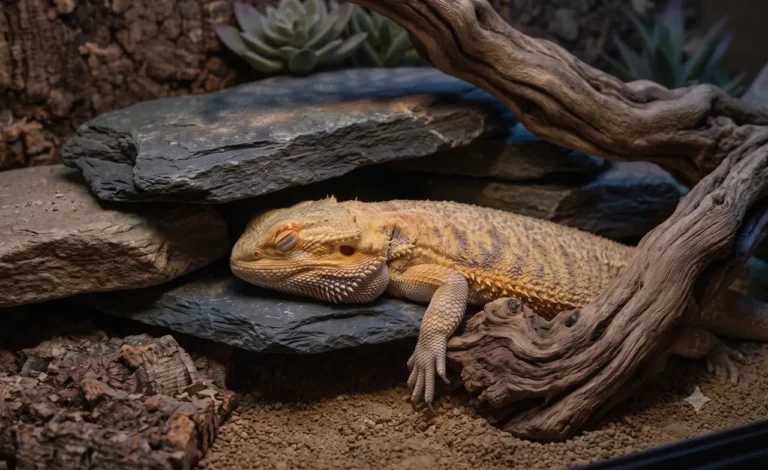
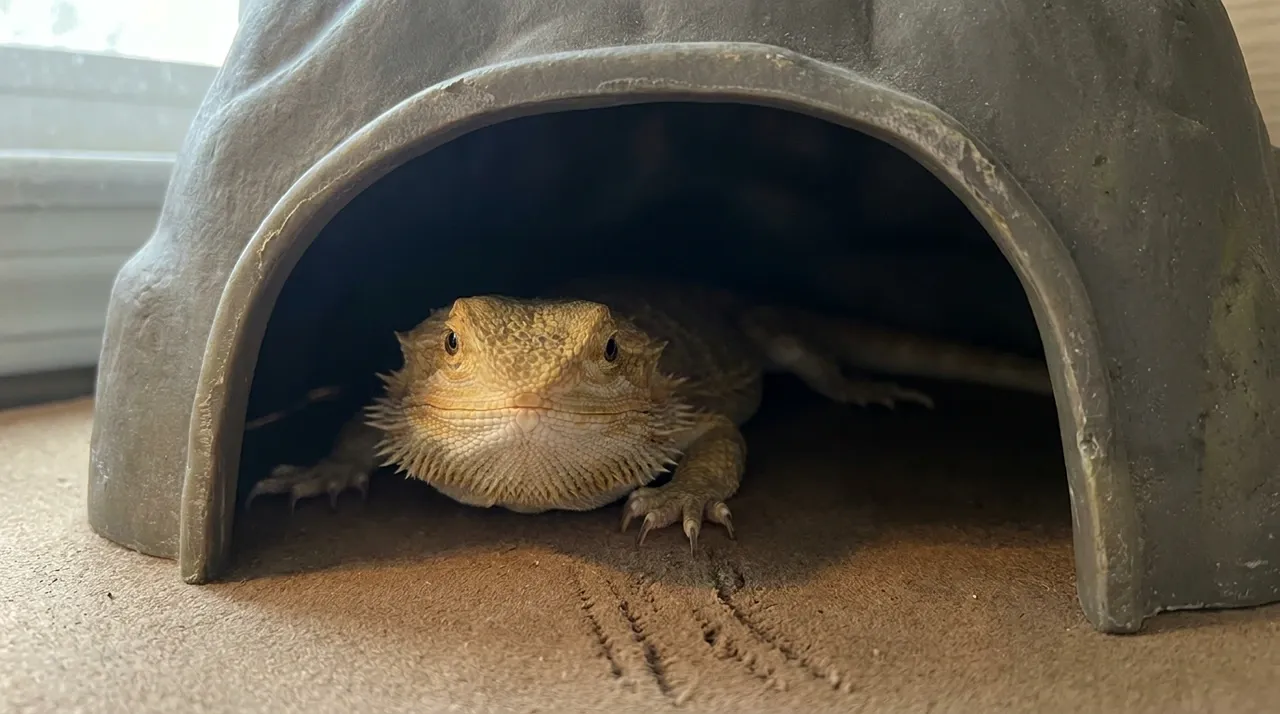
A bearded dragon that suddenly spends most of the day tucked under a rock or wedged into a cave worries almost any keeper. In most cases bearded dragon hiding is normal behaviour, not a warning sign. Wild dragons hide constantly to control their body temperature, dodge predators, and rest.
The question that matters is not whether your dragon hides. It is how much, where, and what else has changed.
A dragon that vanishes for half an hour after a heavy basking session is fine. One that has not left its hide in four days and refuses food is not. Telling those two apart takes a few specific checks you can run in about five minutes.
Start With Where Your Dragon Hides
Where a dragon chooses to hide tells you more than the hiding itself. Almost all bearded dragon hiding has a cause you can pin to a spot in the tank.
A dragon parked at the cool end all day is often escaping a basking spot temperature that has crept too high. One burrowed into the substrate at the warm end is a different story, and so is a dragon pressed flat into a corner.
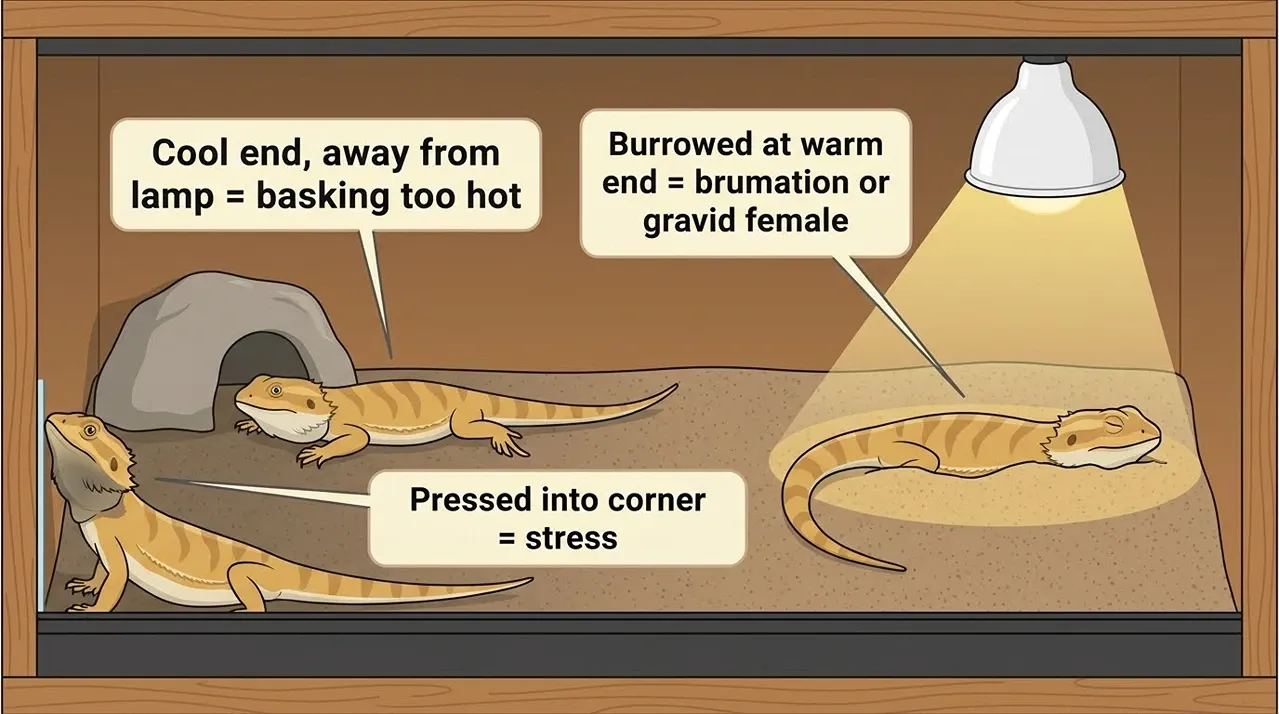
The spot rarely lies, but it reads best alongside the season and the dragon’s appetite. A dragon burrowing in autumn after going off food is a very different case from one digging in midsummer.
| Where it hides | Most likely reason | First thing to do |
|---|---|---|
| Cool end, far from the lamp | Basking zone running too hot | Measure the basking surface temperature |
| Burrowed into substrate, warm end | Brumation onset or a gravid female | Check the season, sex, and weight |
| Pressed into a corner or against glass | Stress from something in the room | Look for new pets, noise, or reflections |
| In the hide most of the day, eating less | Illness or an approaching shed | Track appetite and watch for shed signs |
When Bearded Dragon Hiding Is Normal
Most bearded dragon hiding falls into one of four harmless patterns. Recognising them saves you a panic and an unnecessary vet bill.
A New Dragon Will Hide for Days
A newly homed dragon often hides almost constantly for the first week or two. It does not know the tank is safe yet, and being watched feels like being hunted.
Leave it alone. Keep handling to a minimum for seven to fourteen days and let it explore on its own terms. Hiding during this stretch is expected and usually fades as confidence builds.
Shedding Sends Them Into Hiding
Dull, greyish skin and loose patches mean a shed is coming, and most dragons go quiet and retreat until the old skin lifts. A humid hide makes the process easier on them.
This kind of hiding clears up within a few days of the shed finishing. Handling is best kept light until then.
Midday Cool Downs Are Normal
After a long stretch under the lamp, a healthy dragon will often duck into the shade for thirty to sixty minutes to shed heat. This is thermoregulation working exactly as it should.
Winter Slowdown Looks Like Hiding
As daylight shortens, a dragon may burrow down and sleep far more, the first signs of winter brumation. Appetite drops and activity falls off over a few weeks.
One caveat. A dragon under roughly ten months rarely brumates, so heavy hiding in a young dragon deserves a closer look rather than a seasonal shrug.
When Hiding Is a Red Flag
That same bearded dragon hiding turns into a problem when the cause is heat, stress, or sickness. These are the cases where a quick response matters.
The Basking Spot Might Be Too Hot
A dragon that bolts to the coolest corner and stays there is usually telling you the warm end is overcooked. A surface reading past 110°F drives them away from the heat they need to digest.
Measure the basking surface with a probe thermometer, not a stick-on dial. Adults want 95–105°F on the basking surface and a cool end of 75–85°F. Adjust the bulb height or wattage until those numbers hold.
Stress Will Drive a Dragon Into Hiding
Dark stress marks along the belly or limbs, paired with constant hiding, point to something the dragon wants to escape. A new cat at the glass, a loud television, or its own reflection are common culprits.
Track down the trigger before anything else. Cover reflective sides, move the tank away from foot traffic, and give a jumpy dragon a few quiet days.
A Female May Be Trying to Lay
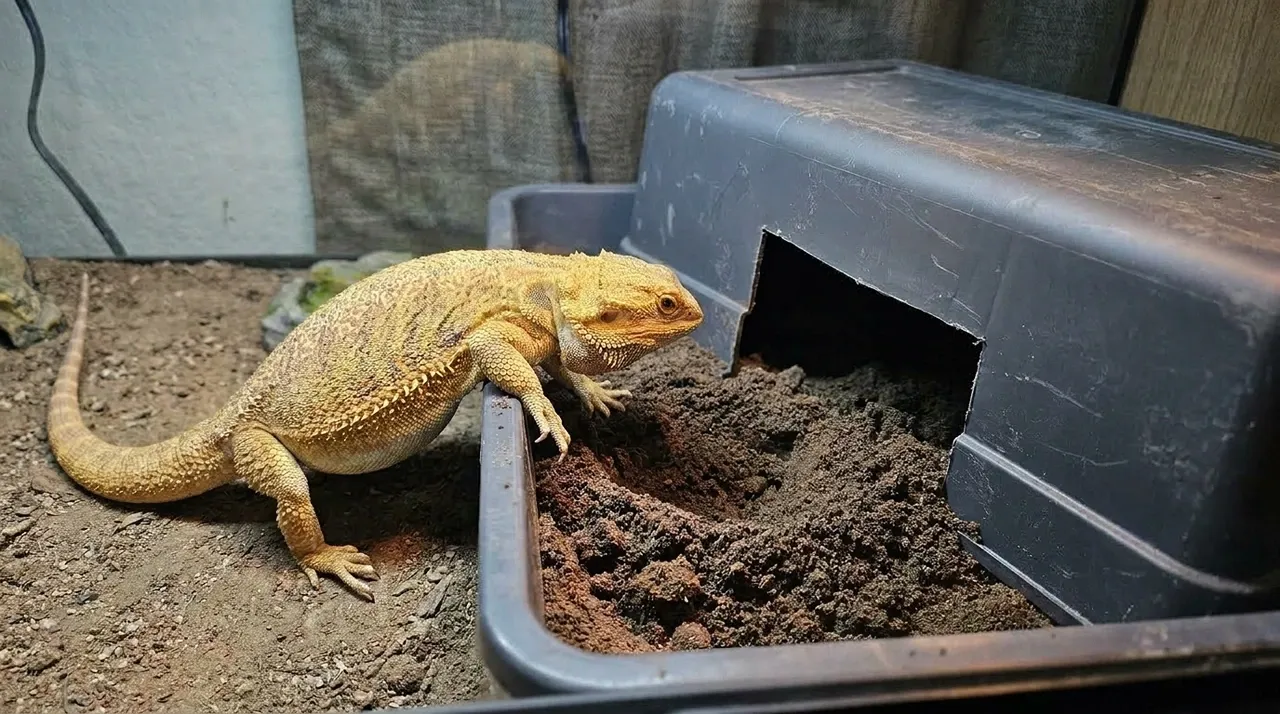
A female that suddenly digs, hides, and paces is often preparing to lay eggs, even with no male around. Swollen sides and restlessness usually come with it.
She needs a deep, slightly damp lay box to dig into. A female straining for more than a day or two without producing eggs may be egg bound, which is a same-day vet call.
Illness Often Starts With Hiding
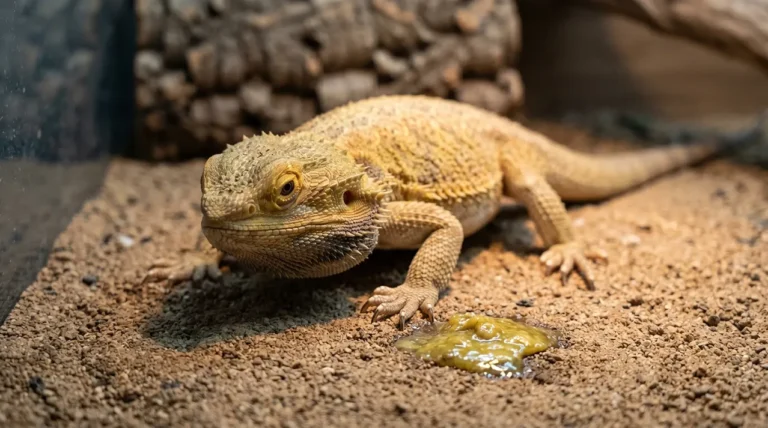
Sick dragons withdraw. Hiding paired with sunken eyes, a beard held dark for hours, a hard or swollen belly, runny stool, or open mouth breathing at the cool end is the pattern that should move you to act.
A hard, distended belly with straining can mean an impaction, one of the more common reasons a dragon stops moving and hides. Spotting the early signs of impaction buys you time.
None of these symptoms alone confirms anything. It is the cluster that matters, and lethargy paired with appetite loss sits among the warning signs vets watch for most closely.
See a vet promptly if hiding comes with any of these:
- Sunken eyes, wrinkled skin, or other dehydration signs
- Open mouth breathing or mucus around the nose
- A female straining to lay for more than a day
- No food for more than a week in a non-brumating dragon
- Inability to right itself, tremors, or visible weakness
How to Get a Hiding Dragon Back Out
Once you know the likely cause, most fixes are mechanical. Work through the husbandry first, because the bulk of bearded dragon hiding traces back to the setup.
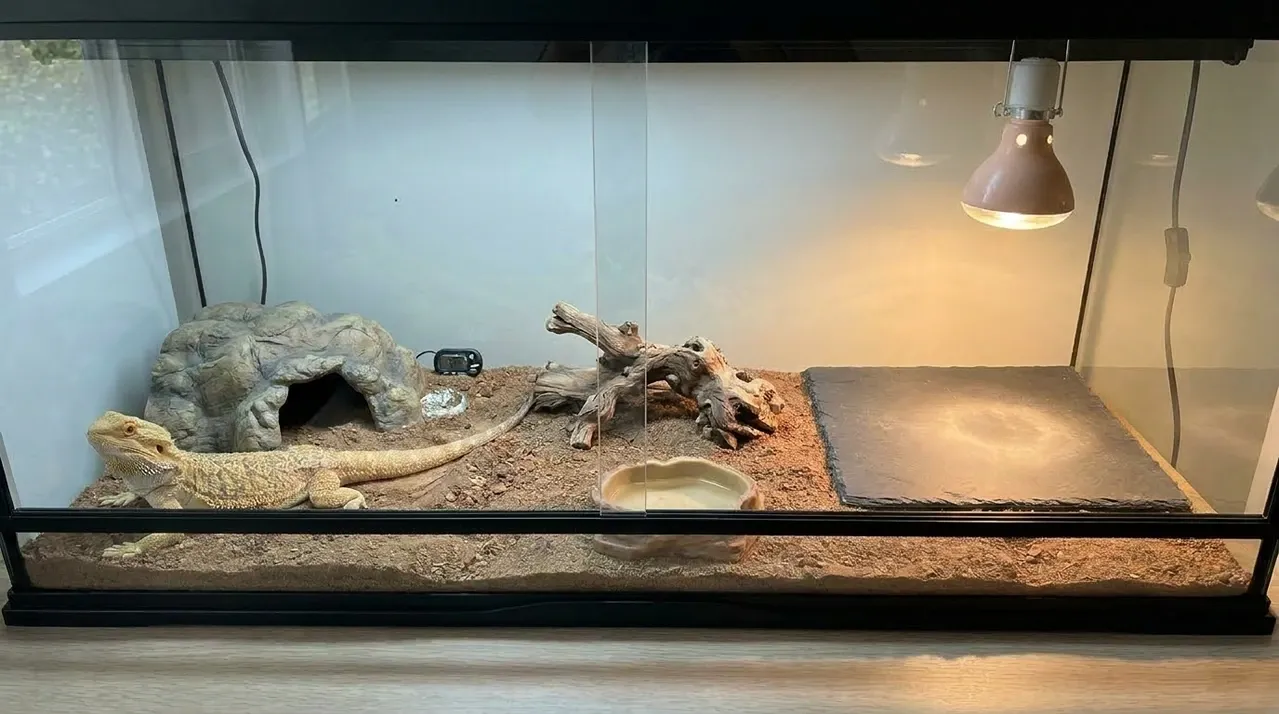
- Measure basking and cool end temperatures with a probe, and correct anything outside range.
- Check the age of the UVB tube and replace it if it is over twelve months old, even if it still lights up.
- Add a proper hide on the cool end so the dragon never has to choose between heat and safety.
- Remove or cover new stressors, including reflective glass and nearby pets.
- Leave a new or shedding dragon undisturbed and let it surface on its own.
Frequently Asked Questions
Is it normal for my bearded dragon to hide all day?
An occasional full day of hiding is usually fine. Hiding all day every day, especially alongside reduced eating, points to temperature, stress, or illness and is worth checking.
Why is my bearded dragon hiding and not eating?
Reduced appetite with hiding most often means cool temperatures, an oncoming shed, or brumation. Check the basking surface temperature first, then watch for weight loss or other symptoms.
How long should I leave a new bearded dragon alone if it hides?
Give a new dragon seven to fourteen days with minimal handling. Hiding through this settling period is normal and usually eases once it learns the tank is safe.
Should I pull my bearded dragon out of its hide?
No. Dragging a dragon out of its hide adds stress and slows trust. Fix the underlying cause and let it come out on its own.
When is hiding an emergency?
Hiding becomes urgent when it comes with sunken eyes, open mouth breathing, a female straining to lay, or a week of refused food. Any of these needs a reptile vet without delay.
What to Check Right Now
- Measure the basking surface and cool end with a probe thermometer and confirm both sit in range.
- Note exactly where your dragon hides and match it against the location table above.
- Inspect the UVB tube’s age and swap it if it has been running more than a year.
- Cover reflective sides and pull the tank away from anything new and noisy.
- Log food and weight daily, and if hiding plus other symptoms run past a few days, book a reptile-experienced vet.
Written by
Sarah ArdleySarah has kept bearded dragons for over ten years. She founded Beardie Husbandry after discovering that most mainstream care advice — including what she followed with her first dragon — was doing more harm than good. Every article on this site is grounded in veterinary research and real keeper experience.