How to Calm an Angry Bearded Dragon Fast
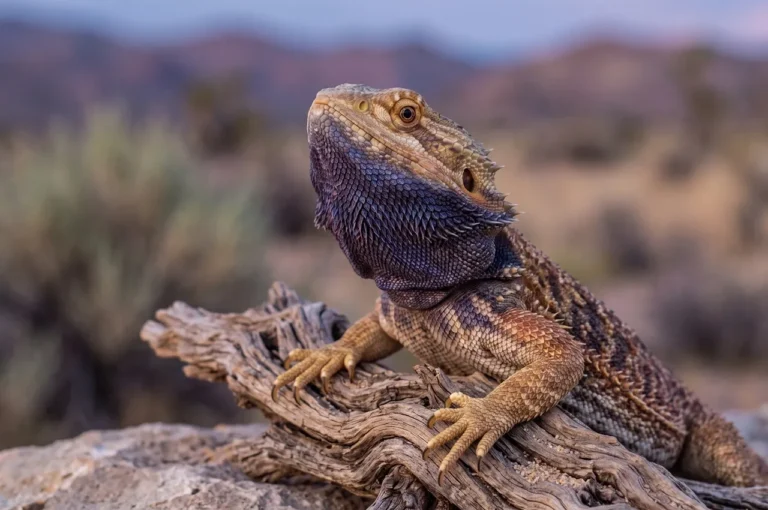
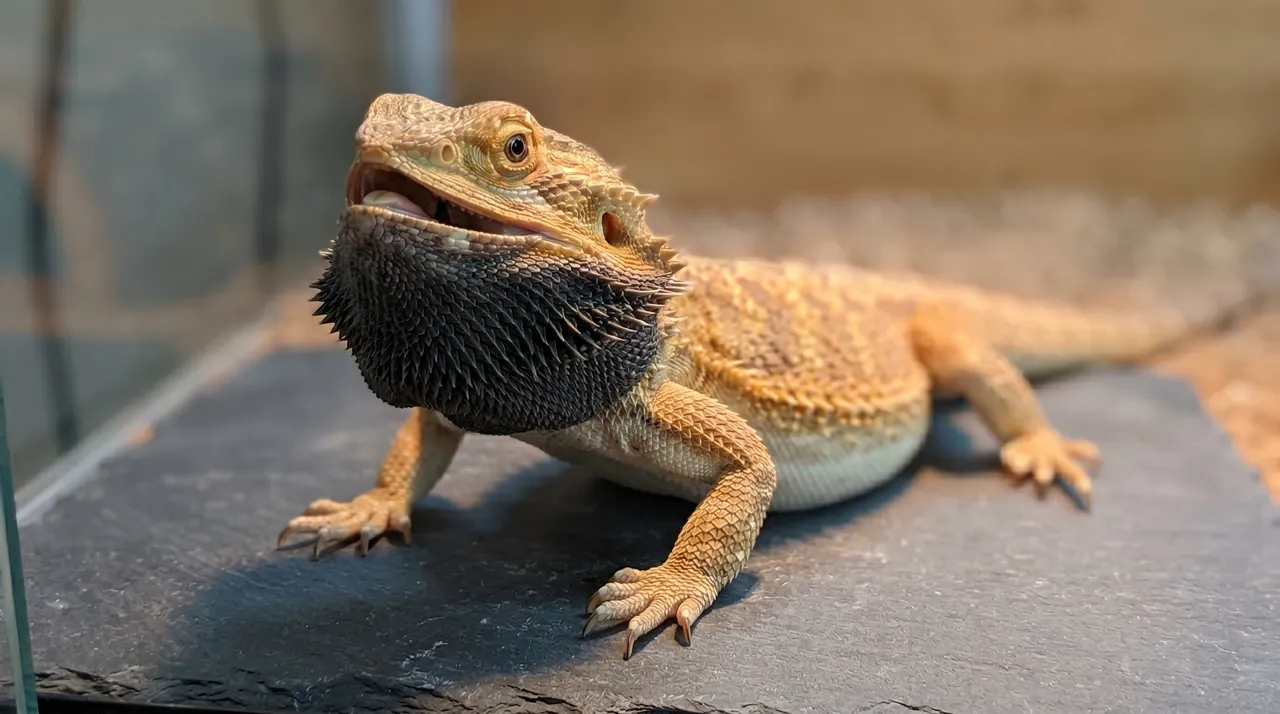
A bearded dragon with a jet-black beard, flattened body and an open mouth looks like it wants to hurt you. It almost never does. That display is a bluff, and the dragon performing it is far more frightened than dangerous.
Knowing how to calm an angry bearded dragon comes down to one skill: reading the body language to tell whether the display is fear or hormones. Match your response to the cause. The same move that calms a frightened dragon will inflame a hormonal one.
Most of what owners call anger settles within minutes once you back off correctly. A smaller share points to pain or illness wearing an aggressive mask. Learning to calm an angry bearded dragon properly means handling both, so this starts with what to do in the next sixty seconds.
What to Do in the First Sixty Seconds
The fastest way to calm an angry bearded dragon in the moment is to stop reaching in. The single most common mistake is pushing through a warning display to “show the dragon it’s fine.” You confirm the threat instead.
Pull your hands back slowly. Sudden withdrawal reads as prey fleeing and can trigger a lunge. Move at the speed of a slow exhale.
Then drop the visual pressure. Standing over the enclosure puts a large shape directly above a prey animal, which is exactly what a hawk looks like from below.
If a bite is already happening: never yank your hand away. The teeth curve backward and pulling tears the gums and your skin. Stay still. The dragon lets go within seconds once nothing is fighting back.
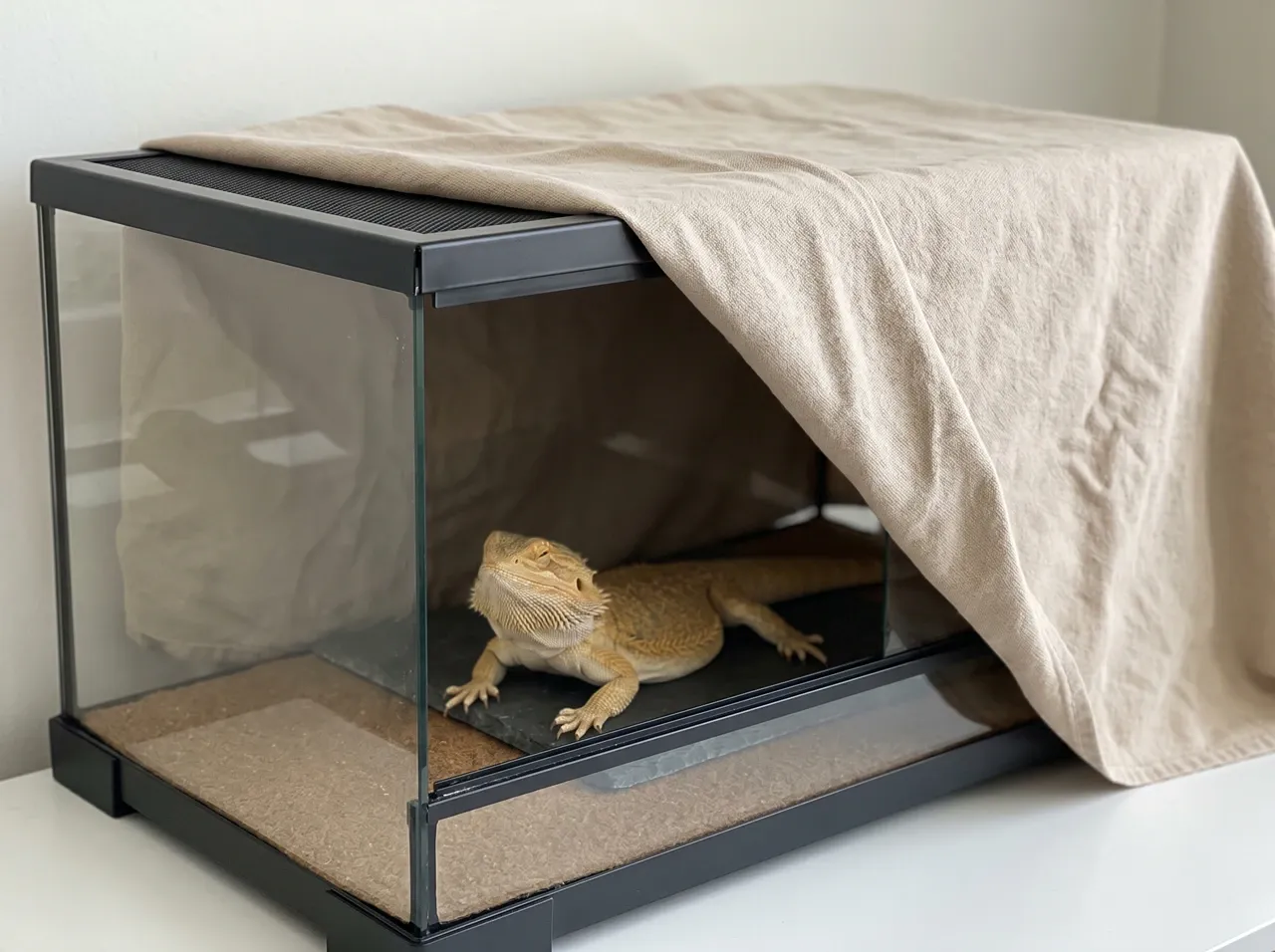
For a dragon that stays lit up after you retreat, drape a light towel over two thirds of the enclosure. Reducing the visual field calms a defensive reptile faster than anything you can say or do with your hands.
How Long Calming Down Actually Takes
A purely defensive dragon usually drops the beard and softens its posture within five to ten minutes of being left alone. Colour returns to normal first, then the body deflates.
A hormonal or territorial episode runs longer. Expect days to weeks of a shorter fuse during breeding season, not a five-minute reset. Knowing which clock you are on prevents a lot of panic.
Is It Fear or Hormones
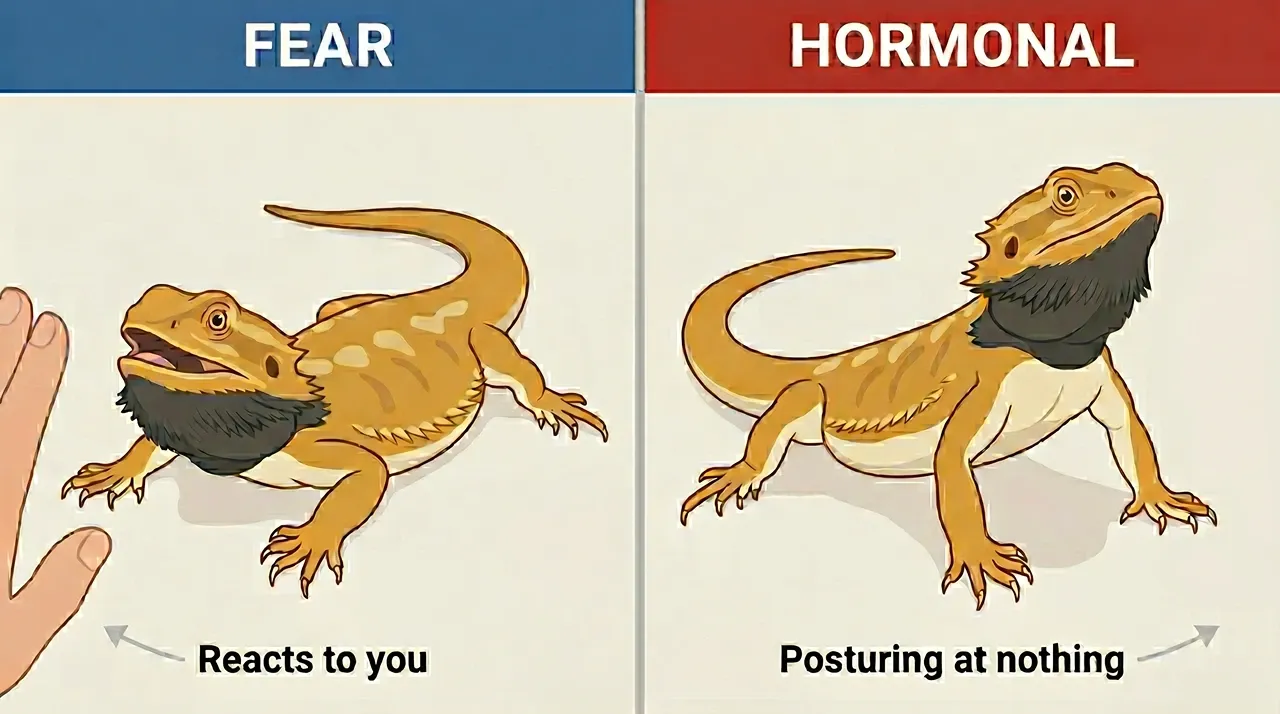
This is the distinction every competing guide skips, and it changes everything you do next. The same black beard means opposite things depending on context.
Fear-based displays are reactive. They fire when you approach, when a hand enters the tank, when the dog walks past, or right after you moved something. The dragon wants distance and goes calm the moment it gets it.
Hormonal aggression is proactive and self-sustaining. The dragon bobs, struts and darkens with no trigger from you, often glass surfing at its own reflection.
This pattern peaks in spring and is normal short-term behaviour in maturing males. The seasonal hormone surges that drive spring breeding behaviour push the same buttons whether or not a mate is present.
Quick test: remove yourself and every visible trigger from the room. If the display stops within ten minutes, it was fear. If the dragon keeps bobbing and posturing at nothing, it is hormonal.
The fix splits cleanly from there. Fear responds to less pressure and slow trust-building. Hormones respond to patience and reduced reflective surfaces, because no amount of handling talks a dragon out of its own endocrine system.
Reading the Warning Signs Correctly
A dragon escalates through a predictable ladder before it ever bites. Catching the early rungs lets you back off before things peak, and the gap between a mild flare and a committed defensive posture is wider than most owners realise.
The Early Warnings Owners Miss
Beard flaring without colour change is rung one. The dragon puffs the throat to look bigger but has not committed to anything yet. This is your cue to slow down, not stop entirely.
A darkening beard is rung two. Sudden black under the chin signals real stress or threat in that moment, and it can flood in within seconds of a trigger appearing.
When the Display Means Back Off Now
An open, gaping mouth combined with hissing is the final warning. The dragon has told you twice already and is now stating it plainly.
Flattening the whole body against the floor while angling sideways toward you makes the dragon look as wide as possible. A dragon doing this is committed to defending itself and will bite if pressed.
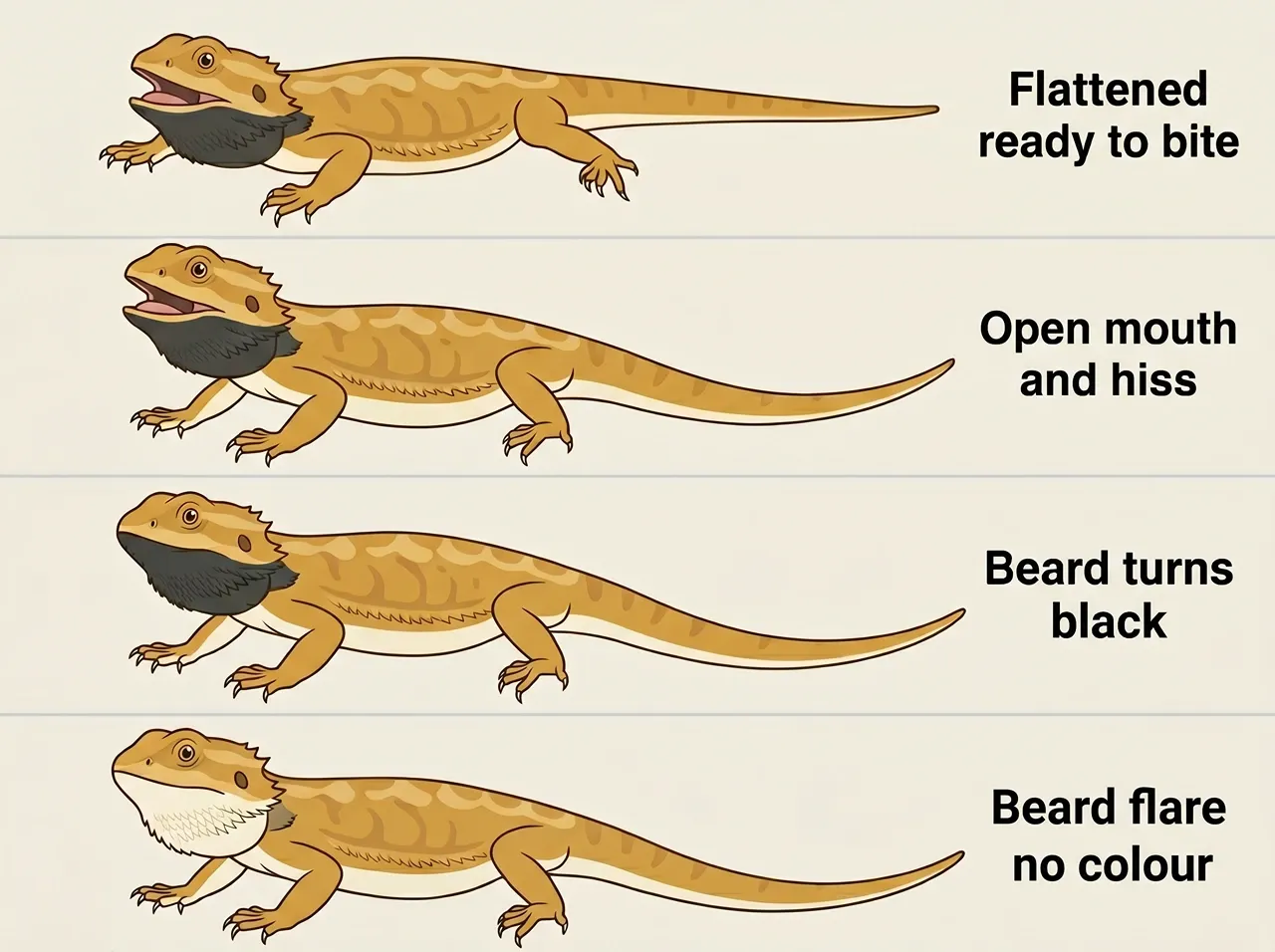
The quickest way to act on a display is to match the exact signal to the right response. This table pairs each warning with the move that defuses it.
| Signal | What it means | Your move |
|---|---|---|
| Beard flare, no colour change | Mild unease, early warning | Slow down, give space |
| Black beard on approach | Acute stress or perceived threat | Withdraw hands, lower yourself |
| Open mouth and hissing | Final warning before biting | Stop, cover tank, leave room |
| Body flattened and tilted | Committed defensive posture | Do not touch, wait it out |
| Bobbing at nothing, glass surfing | Hormonal, not fear | Reduce reflections, be patient |
The Triggers Behind Most Anger
Once the immediate display has passed, the real work is removing whatever set it off. You cannot lastingly calm an angry bearded dragon while the trigger stays in place, so a settled dragon is one whose environment stopped giving it reasons to fight.
You Are Handling a Dragon That Hates It
New dragons need weeks of low-pressure exposure before tolerating handling. Forcing a frightened animal into your hands daily builds dread, not a bond.
Sit with your hand resting palm-up inside the enclosure for a few minutes at a time, asking nothing of the dragon. Trust grows from predictability, and a dragon that already trusts you is far less likely to react defensively to handling.
The Enclosure Is Cooking Them
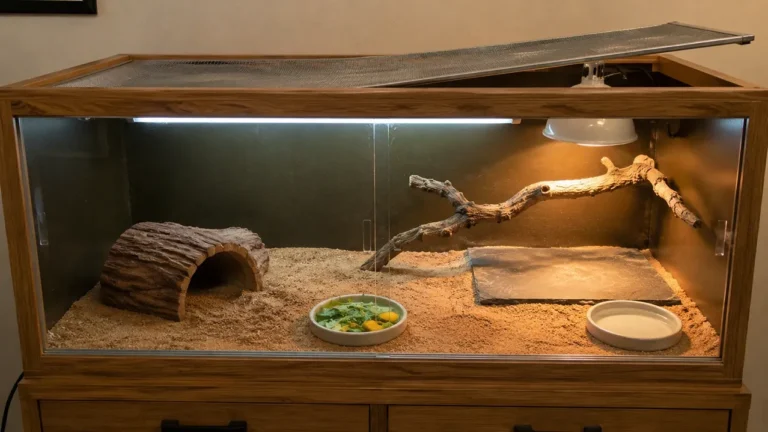
An overheated dragon is an irritable dragon. A basking surface above 110°F for an adult, or above 105°F for a baby, pushes them into a constant low-grade stress state.
Check the temperature at the surface where the dragon actually sits, not the air. Use a probe or infrared gun, because the stick-on dial gauges read the glass and miss the truth by ten degrees or more.
Their Own Reflection Is the Enemy
A dragon that attacks the glass is often fighting a rival it cannot defeat: itself. Reflective tank walls turn a calm beardie into a frustrated, glass-surfing wreck.
Persistent pacing and clawing at the walls signals more than reflections, though, and the deeper causes of repetitive glass surfing range from cramped space to stray sightlines of other pets.
Something in the Room Changed
Dragons read their territory closely. A new piece of furniture, a relocated tank, a cat that now sits on the windowsill, or a different feeding time can all read as a threat.
Often you can calm an angry bearded dragon simply by working backward through the last few days. Whatever changed right before the mood shift is usually the culprit, and reversing it tends to reset the dragon within a day.
You Put Two Dragons Together
Cohabitation is the single most preventable cause of chronic stress aggression. Bearded dragons are solitary and read a tankmate as a permanent rival.
The constant dominance displays, blocked basking access and suppressed appetite that come with housing two dragons together rarely show as open fighting until real damage is done. Veterinary guidance on solitary reptile housing is blunt about it: overcrowding drives stress and competition. Separate them.
When Anger Is Actually Pain
Here is the threshold no listicle names clearly. A dragon that was tame and suddenly turns aggressive is not having a personality change. It is often telling you something hurts.
Reptiles hide illness until they cannot. New aggression, especially with reduced appetite or lethargy between flare-ups, warrants a closer look rather than a behavioural fix.
Call a reptile vet if aggression comes with any of these: visible swelling, refusal to eat for more than a week, a limb held oddly, weight loss, or aggression that worsens daily with no environmental trigger you can find.
Gravid females turn defensive too, guarding a body busy producing eggs. A female that has never been near a male can still develop them, and the territorial edge that comes with a female carrying eggs resolves once she lays.
Pain-driven aggression does not respond to towels or patience. A dragon that needs a vet needs one fast, and knowing where to find a reptile vet before an emergency saves precious hours when one hits.
Calm an Angry Bearded Dragon for Good
A consistently calm dragon is built, not bought. You rarely have to calm an angry bearded dragon that lives in a stable, correctly heated enclosure with a predictable daily rhythm, because the reasons to flare simply stop appearing.
Keep the routine boring. Same basking schedule, same approach from the side rather than above, same unhurried pace every single time you interact.
Hand-feeding a favourite insect during calm moments rebuilds a soured relationship faster than anything. The dragon learns your hand predicts good things.
Over a few weeks you stop needing to calm an angry bearded dragon at all. A tame adult that links you with safety simply has fewer reasons to escalate.
Frequently Asked Questions
Why did my bearded dragon suddenly become aggressive
Sudden aggression usually points to breeding-season hormones, a recent environmental change, or pain from an underlying illness. If it appeared overnight with no new trigger and no breeding-season timing, have a reptile vet rule out a health problem.
How do I calm an aggressive bearded dragon
To calm an angry bearded dragon fast, stop reaching in, withdraw your hands slowly, and lower yourself below the dragon’s eye line. Draping a towel over most of the enclosure reduces the visual threat and settles a defensive dragon within minutes.
Is a black beard always a warning sign
No. A black beard can signal stress, temperature regulation, or even normal morning behaviour. Context decides: a beard that darkens the instant you approach is a warning, while one present at random often is not.
Will the aggression go away on its own
Fear-based and hormonal aggression usually fade as the dragon matures and learns its environment is safe. Aggression driven by illness, cohabitation stress, or a bad enclosure setup will continue until you fix the cause.
Can I make my dragon enjoy handling again
Yes, with patience. Short, low-pressure sessions and hand-feeding during calm periods rebuild trust over weeks. Never force handling on a dragon showing warning signs, as it sets the process back.
Your Calm-Down Action Plan
- Stop reaching in and withdraw your hands at the speed of a slow exhale.
- Lower yourself below the dragon’s eye line and step back from the glass.
- Drape a light towel over two thirds of the enclosure if the display continues.
- Run the fear-versus-hormones test: leave the room and watch whether the display stops within ten minutes.
- Check the basking surface temperature with a probe, not a stick-on gauge.
- Cover or reposition any reflective tank wall the dragon surfs against.
- Trace back any change in the room from the last few days and reverse it.
- If aggression is sudden, daily-worsening, or paired with appetite loss, book a reptile vet.
Written by
Sarah ArdleySarah has kept bearded dragons for over ten years. She founded Beardie Husbandry after discovering that most mainstream care advice — including what she followed with her first dragon — was doing more harm than good. Every article on this site is grounded in veterinary research and real keeper experience.