Bearded Dragon Sleeping Positions: Normal vs Weird Explained
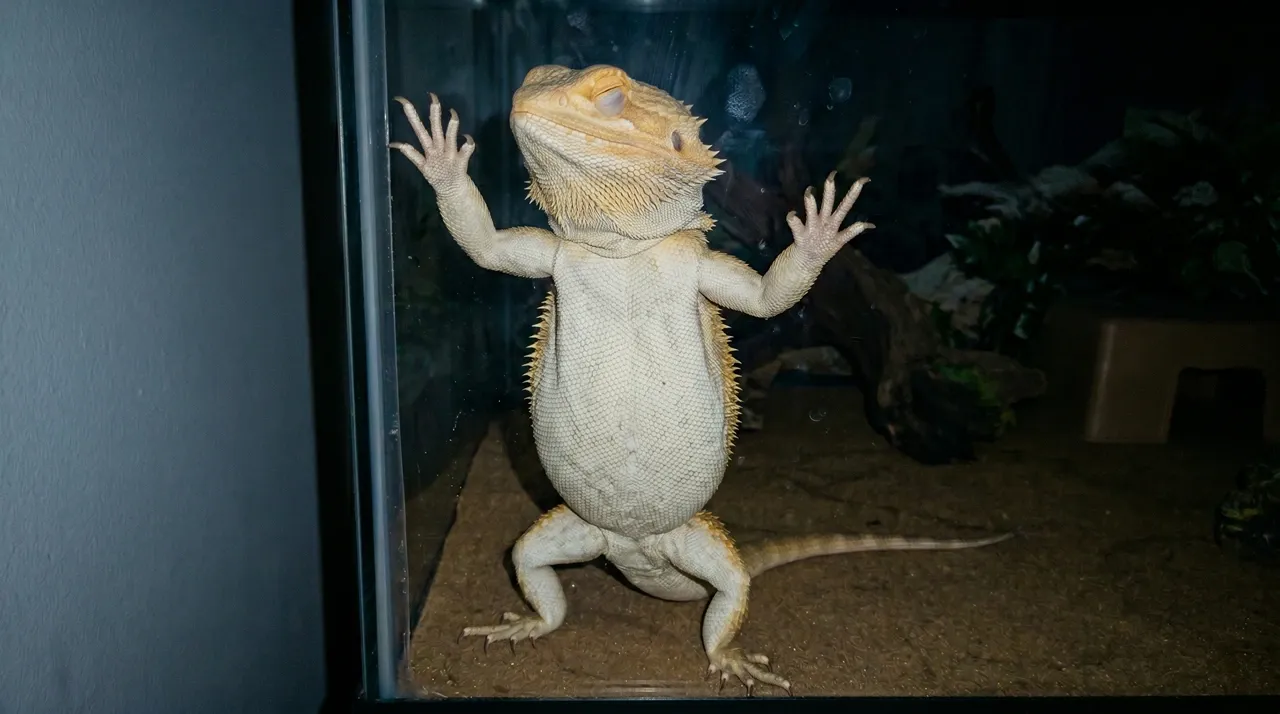
A dragon flattened against the glass at a forty-five degree angle, chin jammed in the cool corner, looks like it gave up halfway through a thought. Bearded dragon sleeping positions get strange, and the odd ones are usually the healthy ones. A dragon that wedges itself somewhere ridiculous is one that feels safe enough to stop caring how it looks.
The positions that should worry you are rarely the dramatic ones. A relaxed dragon will sleep upright, on its back, half-buried, or draped over a branch with one arm in the air. What matters is whether it settled there itself, whether it wakes normally, and whether the timing fits a dragon that sleeps at night and basks by day.
Most of the panic online comes from a single misread: treating a quirky posture and a sick posture as the same thing. They are not, and learning to read your dragon’s resting body language is what separates them. Once you know the difference, the weird stuff stops being frightening and the genuine red flags become obvious.
Why They End Up in Such Odd Spots
Dragons have terrible night vision. In the wild they watch the sun drop, find a spot while they can still see, and settle before dark. In a vivarium the light does not fade. It goes from full daylight to black in one switch flick.
So your dragon gets caught out. Wherever it happens to be standing when the lights cut is often where it sleeps. That is why so many end up upright on the glass or jammed in a corner instead of in the hide you carefully set up.
This is also why a gradual dimming routine helps. A dragon given a few minutes of fading light will usually pick a sensible spot. One left under a hard on-off switch sleeps where it froze. You can read more about nighttime temperatures and lighting if you are still running anything after dark, because a leftover light source disrupts the same instinct.
None of this is a health problem. It is a vision quirk meeting an artificial environment, and it explains roughly ninety percent of the positions that make new owners reach for the camera at midnight. Researchers at the Max Planck Institute even confirmed dragons cycle through REM and slow-wave sleep much like we do, so a deeply settled dragon really is properly asleep.
The Normal Sleeping Positions You Will See
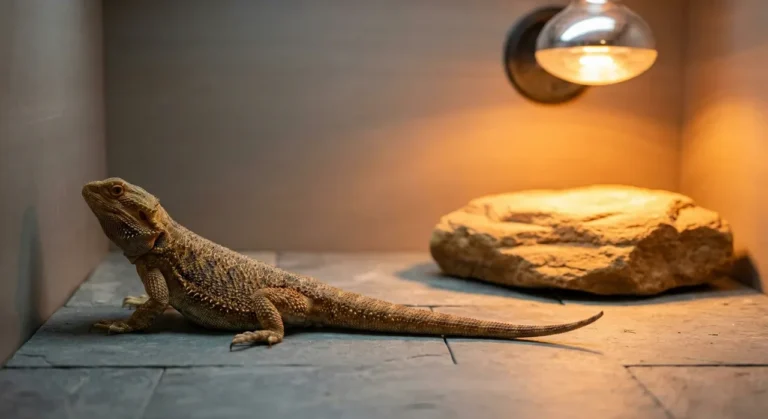
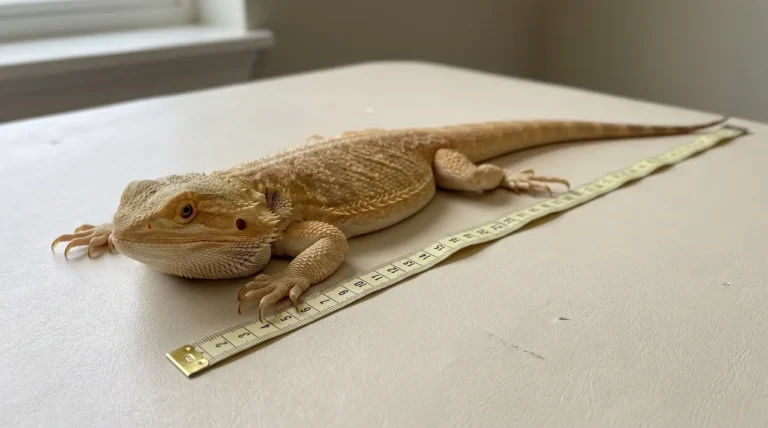
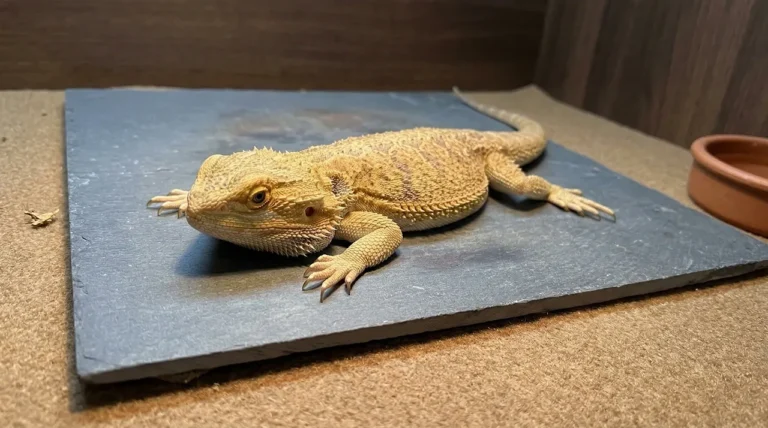
Belly flat on the floor or basking spot is the textbook one. Limbs splayed, chin down, tail straight out behind. This is the resting default and nothing about it should ever concern you.
The stranger ones are just as healthy. Upright against the glass with the front arms spread is pure vision quirk, not a cry for help. Some dragons sleep with one arm raised, some flip partly onto their side, some bury themselves in loose substrate until only the snout shows.
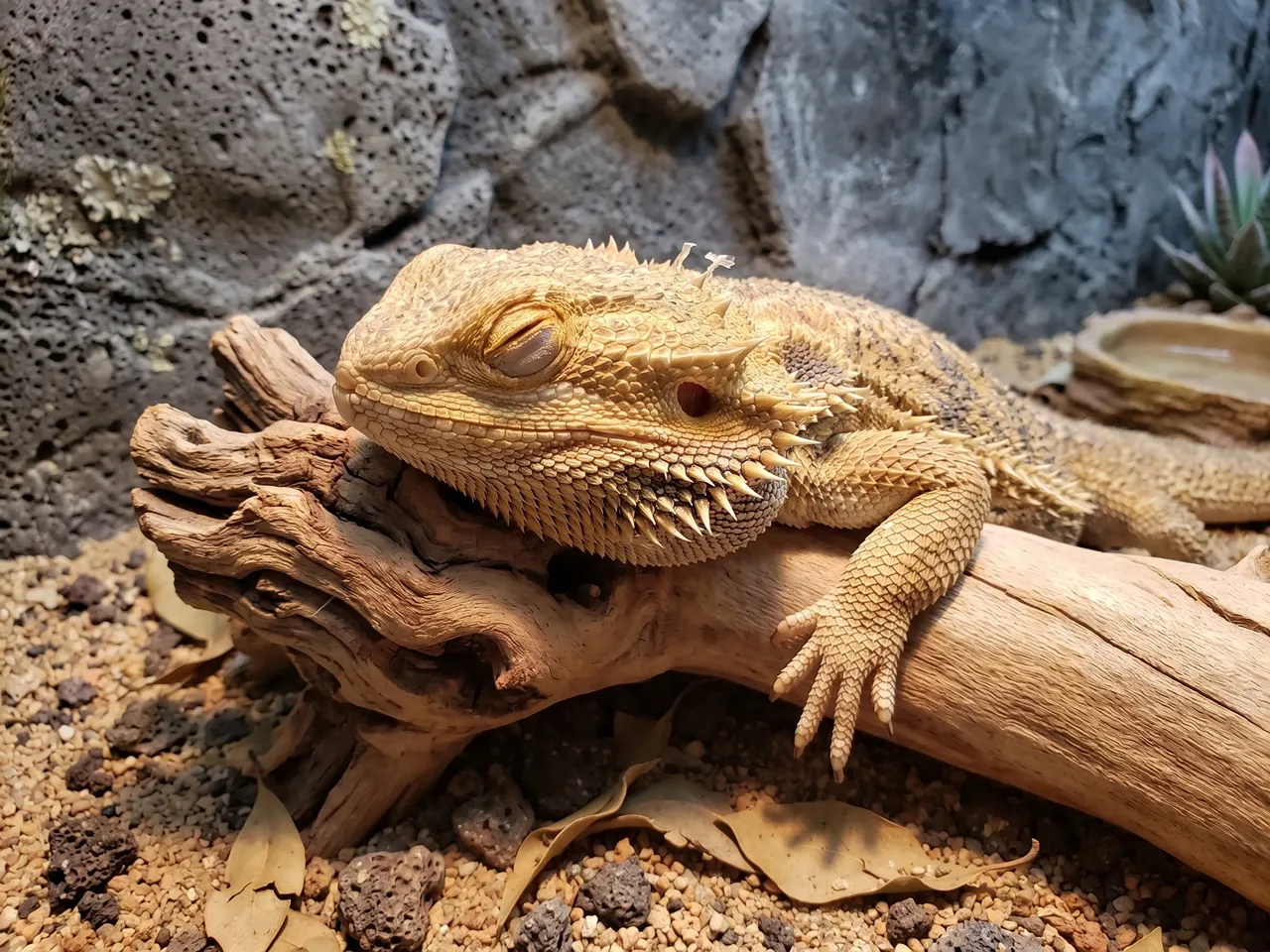
Sleeping wedged into a tight corner is common too, and it tracks with how a wild dragon seeks a snug spot away from open ground. A juvenile that drapes itself over a branch with its belly hanging in the middle is doing the same thing its instincts tell it to do. These resting habits shift as a dragon ages and gets bolder in its enclosure.
Here is the quick reference for the positions that send people searching, and the honest verdict on each.
| Sleeping position | What it usually means |
|---|---|
| Belly flat, limbs splayed, chin down | The normal resting default. No concern. |
| Upright against the glass, arms spread | Caught out by lights-off, poor night vision. Normal. |
| One arm raised in the air | Relaxed, mid-shift sleeping. Normal. |
| Half-buried in substrate, snout out | Seeking a snug, secure spot. Normal unless digging is frantic. |
| Wedged tightly into a corner | Wild snug-spot instinct. Normal. |
| Curled or draped over a branch, belly hanging | Common in juveniles. Normal. |
| Lying in the water bowl, head propped up | Usually fine if head stays clear. Watch the cooling risk. |
| Asleep during peak basking hours | Not a position issue. A timing red flag. Investigate. |
The pattern is simple. Almost any shape is fine if your dragon chose it, settled into it, and wakes normally when you lift the lights. The shape is rarely the problem. The timing and the waking are what tell you something.
What About Sleeping in the Water Bowl
This one comes up constantly and deserves a straight answer. A dragon sleeping in its water bowl is usually fine, with two real caveats worth watching.
The first is cooling. Water pulls heat from the body faster than air, and a dragon that sleeps damp all night can drop below the temperature it needs. If your room runs cold overnight, that matters more.
The second is the head position. As long as the chin and nostrils stay propped above the waterline, there is no drowning risk in a shallow bowl. A dragon that has slid down so its face is in the water is a different situation and needs lifting out at once.
A sudden new habit of sleeping somewhere damp or cool can occasionally point at a dragon trying to escape something. An overheating basking zone, a light it cannot get away from, or mites driving it to water. Rule those out before you file it under harmless.
When the Position Is Actually a Warning
Here is the line competitors never draw clearly. A weird position chosen by a relaxed dragon is fine. A position the dragon cannot seem to get out of, or one tied to other symptoms, is not.
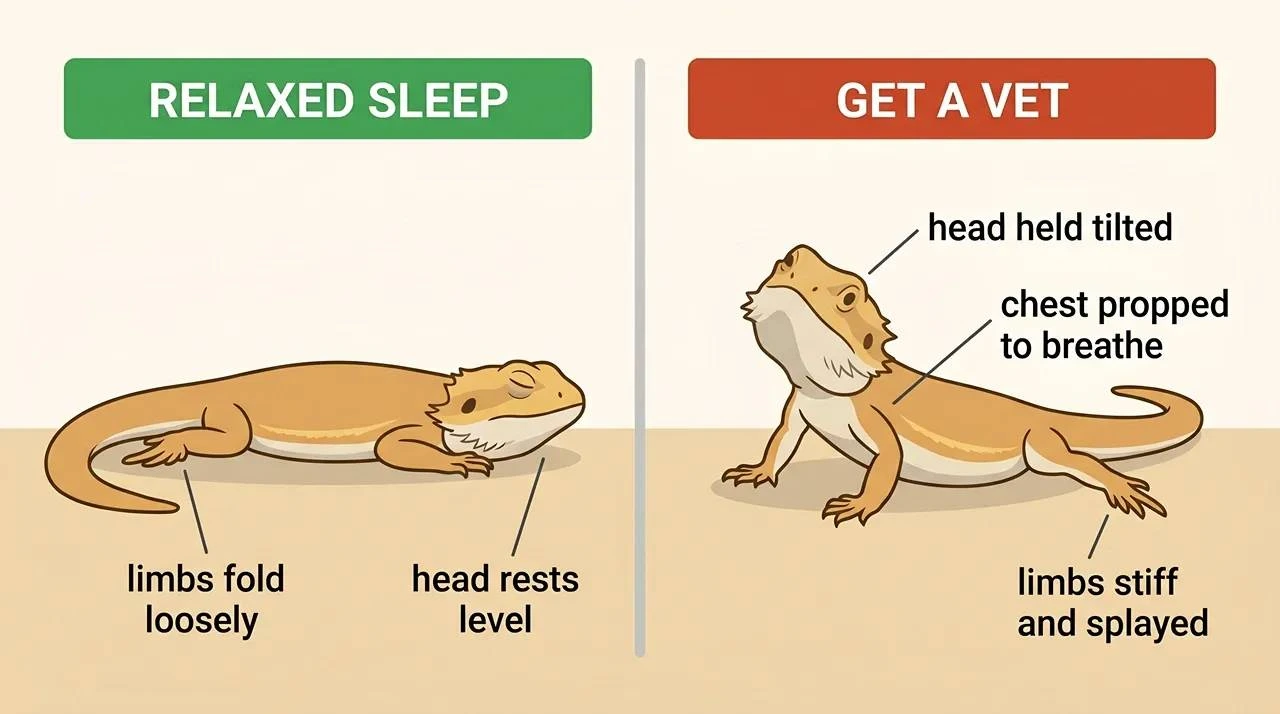
The posture itself is rarely the alarm. What the dragon does around the posture is. A healthy sleeping dragon is limp, settled, and rouses when you lift it or turn the lights on. A dragon in trouble holds tension, resists normal handling, or fails to wake the way it should.
Get a reptile vet involved if you see:
- A head tilt or twisted neck held constantly, asleep and awake, especially if the dragon stargazes or cannot track movement
- The chest propped up off the surface to breathe, often with open-mouth breathing or audible clicking
- Stiff, splayed limbs the dragon cannot fold normally, or visible tremors
- A dragon that will not rouse properly when the lights come on, or seems disoriented when it does
- Any odd posture paired with a black beard held for hours, refusal to eat, or sunken eyes
A fixed head tilt is the one to take most seriously. It can signal a neurological problem or an inner ear infection, and it does not resolve on its own. The full picture behind a persistent head tilt is worth understanding before you decide how urgently to act.
Stiff or splayed limbs that will not tuck can point toward calcium and bone problems. When the skeleton softens, normal resting posture becomes physically difficult to hold. The early stages of metabolic bone disease often show up first as a dragon that simply cannot get comfortable.
Daytime Sleeping Changes Everything
This is the distinction that matters most and the one nearly every other article blurs. The shape your dragon sleeps in is almost never the real concern. Timing is.
A dragon asleep at night in a bizarre pose is normal. The same dragon asleep through peak basking hours, lights on and warm, is telling you something. Healthy dragons are diurnal. They want to be up and basking when the lamp is at its strongest.
A dragon that keeps sleeping during the day, or seems sluggish and reluctant to wake under a hot lamp, is showing lethargy rather than a sleeping preference. That points at husbandry or health, not posture.
The usual culprits are a basking zone that is too cold to motivate movement, a UVB tube that has aged out, or the early slide into seasonal slowdown. If your basking surface temperature sits below the mid eighties Fahrenheit, a dragon simply will not have the drive to stay active, and daytime sleeping follows.
Brumation muddies this further. A dragon truly entering its winter slowdown will sleep far more, sometimes for days, and that can be completely normal for the season. Telling true brumation from illness rests on appetite, weight, and stool more than on how much it sleeps.
How to Tell Quirk From Problem
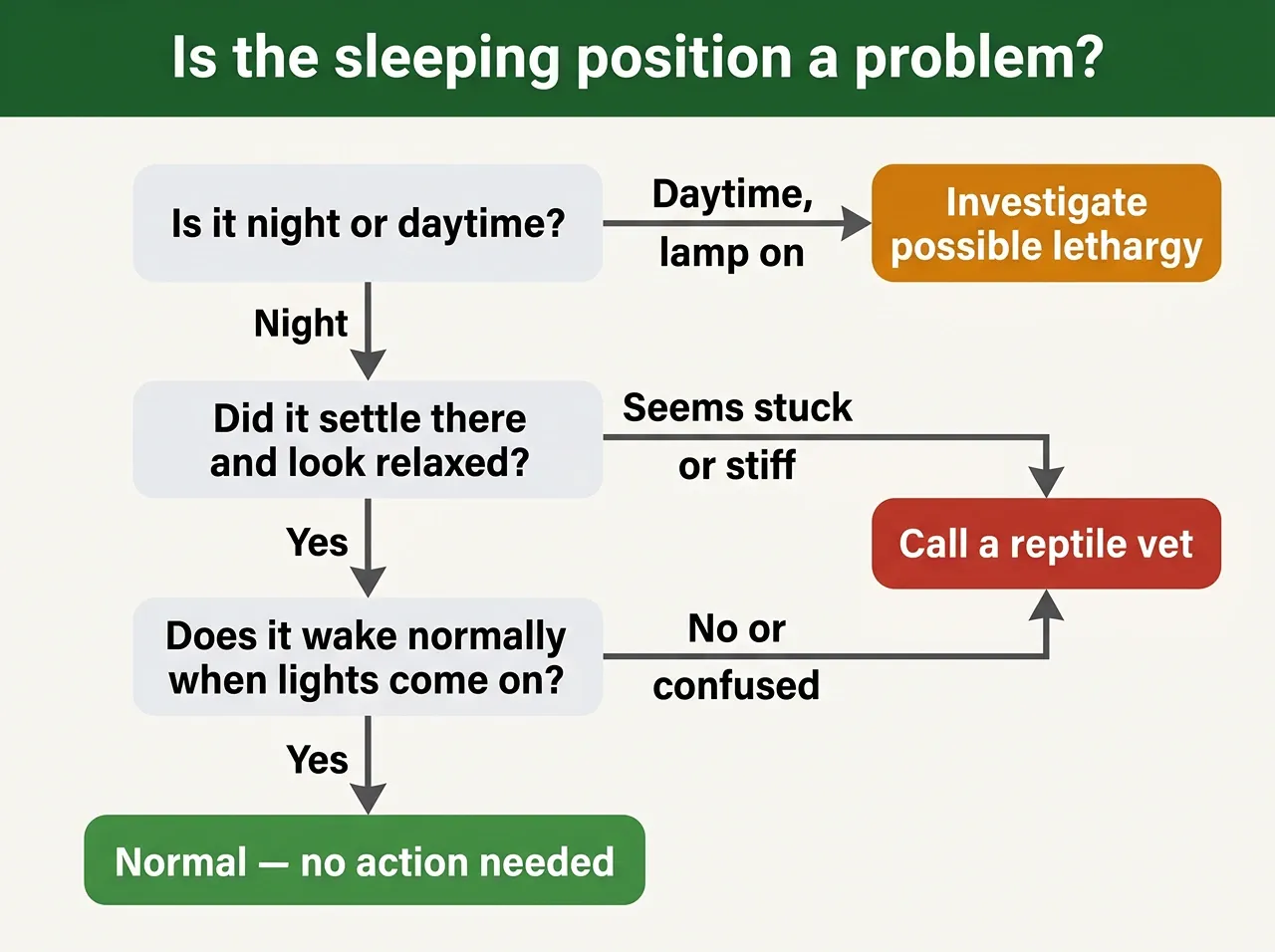
When you find your dragon somewhere strange, run a quick mental check before you panic. The position alone answers nothing. The context around it answers everything.
Ask whether it is night or day. Night sleeping in any posture is almost always fine. Daytime sleeping under a working lamp is the thing to dig into.
Ask whether the dragon chose the spot and settled, or seems stuck. A relaxed dragon flows into a position. A struggling one holds a posture it cannot escape, often with stiffness or tremor.
Ask whether it wakes normally. Lift the lid or raise the lights. A healthy dragon stirs, opens its eyes, and reorients within a few seconds. One that stays limp and unresponsive, or wakes confused, needs a closer look.
Finally, scan for company symptoms. A weird position on its own means little. The same position next to a black beard, refused food, weight loss, or laboured breathing changes the whole picture. That combination moves you toward finding a reptile vet sooner rather than later.
Frequently Asked Questions
Are weird bearded dragon sleeping positions normal?
Yes, in the vast majority of cases. Dragons sleep upright, on their backs, buried, or draped over branches because they feel secure, not because anything is wrong. The position only matters when paired with daytime sleeping, abnormal waking, or other symptoms.
Why does my bearded dragon sleep standing up against the glass?
It is almost always their poor night vision. When the lights cut out suddenly, a dragon sleeps wherever it was standing rather than finding its hide. As long as the beard is relaxed and it wakes normally, this position is harmless.
Is it bad if my bearded dragon sleeps on its back?
No, a dragon that flips partly or fully onto its back while sleeping is simply relaxed. It chose the position and can right itself. Only worry if it cannot turn over on its own or seems stuck there.
Should I move my bearded dragon if it falls asleep in a weird spot?
Usually no. Moving a sleeping dragon disturbs its rest and it will often return to the same spot anyway. The exception is a dragon with its face in the water bowl, which should be lifted out at once.
Why is my bearded dragon sleeping so much during the day?
Daytime sleeping under a working lamp signals a problem, not a preference. Check your basking temperature and UVB age first, then consider seasonal brumation. Persistent daytime sleeping with other symptoms warrants a vet visit.
Your Quick Night Check Before You Worry
Next time you find your dragon in an alarming heap, work through this before reaching for the vet’s number.
- Confirm it is night and the lights are off. A strange position after dark is almost certainly normal.
- Look at the beard. Flat and pale means relaxed. Held black for hours alongside the odd posture is a flag.
- Lift the lid or raise the lights gently and watch it wake. A normal stir within a few seconds is reassuring.
- Check the head and limbs. A constant tilt, a propped chest, or stiff limbs that will not fold need a vet.
- If the spot is damp or cool, make sure the head is clear of water and the body is not chilling overnight.
- Scan for company symptoms. No appetite, weight loss, or laboured breathing alongside the posture means call a reptile vet.
Run that list and the answer is almost always the same. Most bearded dragon sleeping positions, however ridiculous they look at night, come from a healthy dragon being a dragon. Save the worry for the timing and the symptoms, not the shape.
Written by
Sarah ArdleySarah has kept bearded dragons for over ten years. She founded Beardie Husbandry after discovering that most mainstream care advice — including what she followed with her first dragon — was doing more harm than good. Every article on this site is grounded in veterinary research and real keeper experience.