Do Bearded Dragons Get Lonely or Need a Friend?
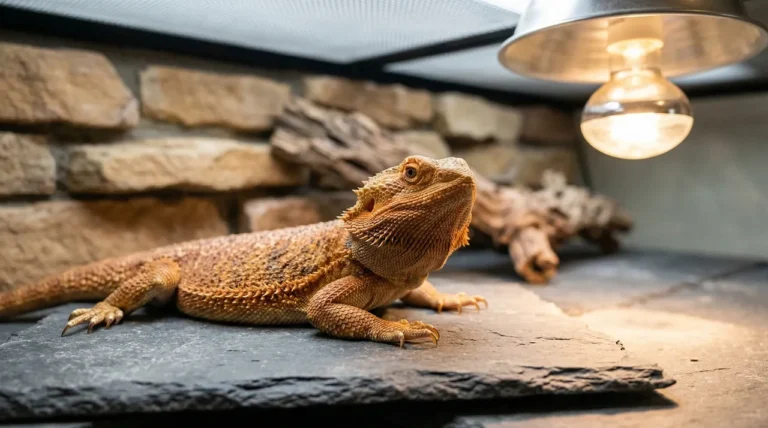
A single dragon sits flat under the basking lamp for hours, barely shifting position, and the worry creeps in fast. The tank looks empty with just one animal in it, and a thought follows close behind: maybe it wants a friend.
This is one of the most common questions new keepers ask, and the honest answer surprises most people. Bearded dragons do not get lonely the way a dog or a person does.
They are wired for a solitary life. A quiet dragon under the lamp is usually doing exactly what its biology tells it to.
That said, a dragon that suddenly goes still, stops eating, or hides for days is telling you something. It just is not telling you it needs company. The rest comes down to reading the behaviour correctly.
Why a Solitary Lizard Is Not a Sad One
In the wild, these animals live alone across large territories in arid Australia. A male holds ground that several females range across, and they come together to mate or to fight over territory, then separate again.
They do not form groups. There is no herd, no pack, no pair bond. A dragon has everything it needs to survive without another of its kind nearby.
The reason this matters is neurological. Mammals that live in social groups have brain structures that reward bonding and punish isolation with stress. Reptiles never evolved that wiring, so the loneliness response that drives a person to seek company simply is not there in a beardie.
When you read your dragon’s stillness as sadness, you are projecting a mammal’s emotional world onto an animal that does not share it. That instinct comes from a kind place. It just leads to the wrong conclusion.
What Owners Mistake for Loneliness
Most “lonely” behaviour is something else entirely. A worried owner sees a flat, inactive dragon and reaches for the emotional explanation when the real cause is almost always husbandry or season.
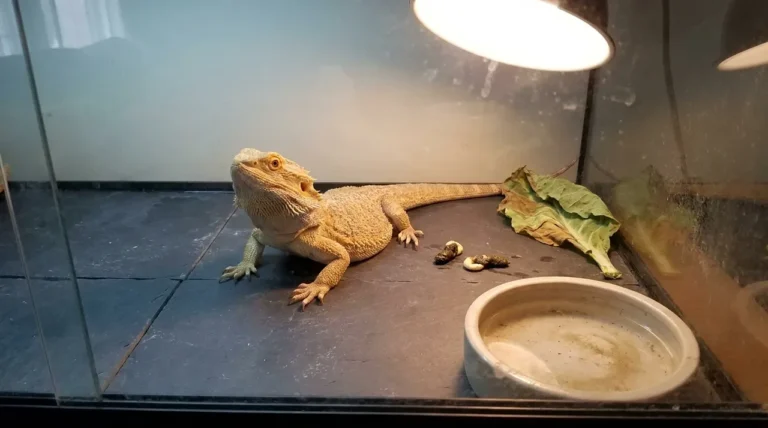
Reduced movement in autumn and winter is often the early edge of brumation, the reptile version of dormancy. A dragon winding down for the cold months will sleep more, eat less, and dig into a corner. None of that is depression.
A cool basking spot produces the same flat, sluggish dragon. When the surface under the lamp sits below 95°F for an adult, the animal cannot reach the body heat it needs to move and digest. So it sits still and waits.
Reading those signals correctly is the whole game. The subtle posture cues a dragon uses tell you far more about its state than the size of its social circle ever will.
| What you see | Likely real cause | What to do |
|---|---|---|
| Sitting still, sleeping more, autumn or winter | Brumation onset | Lower stress, monitor weight, let it rest |
| Flat and sluggish all day, weak appetite | Basking temperature too low | Check basking surface hits 95–110°F |
| Not eating, sunken eyes, weight loss | Illness or parasites | Weigh weekly, book a reptile vet |
| Pacing the glass, scratching corners | Stress or enclosure too small | Review tank size and sightlines |
| Active, alert, basking normally | Healthy solitary behaviour | Nothing, your dragon is fine |
Does My Beardie Need Another Dragon
No. Adding a second dragon does not cure a problem your dragon does not have, and it usually creates several real ones.
Beardies are territorial. Put two in one tank and the dominant animal claims the best basking spot, leaving the other cold, stressed, and often underfed. The submissive dragon can slowly decline while you assume both are settled.
Worse, they bite. Injuries to limbs, tails, and toes are common in shared setups, and a smaller or younger dragon can be seriously hurt by a larger cage mate. The risks of housing two together outweigh any imagined social benefit every time.
Never house two dragons to fix loneliness. There is no loneliness to fix, and cohabitation introduces territorial stress, food competition, and bite injuries that a solitary animal would never face.
What About a Mirror
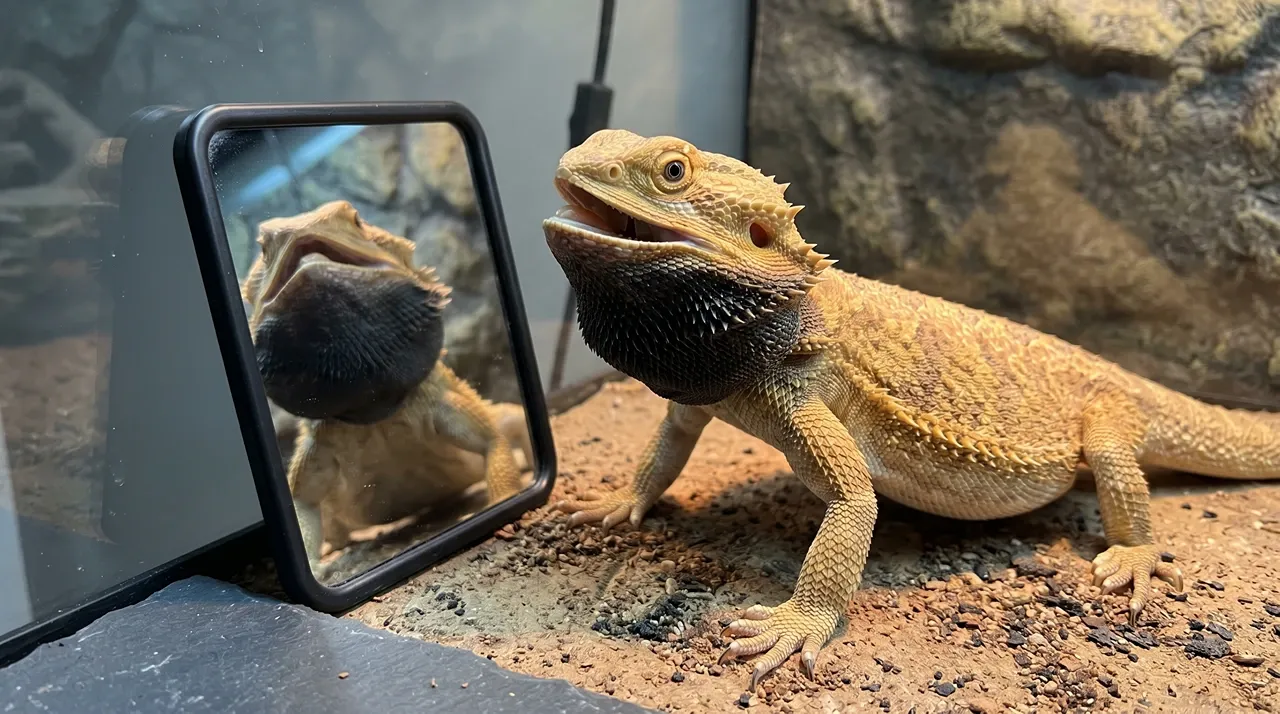
Skip it. A dragon shown its own reflection does not see a companion; it sees an intruder in its territory.
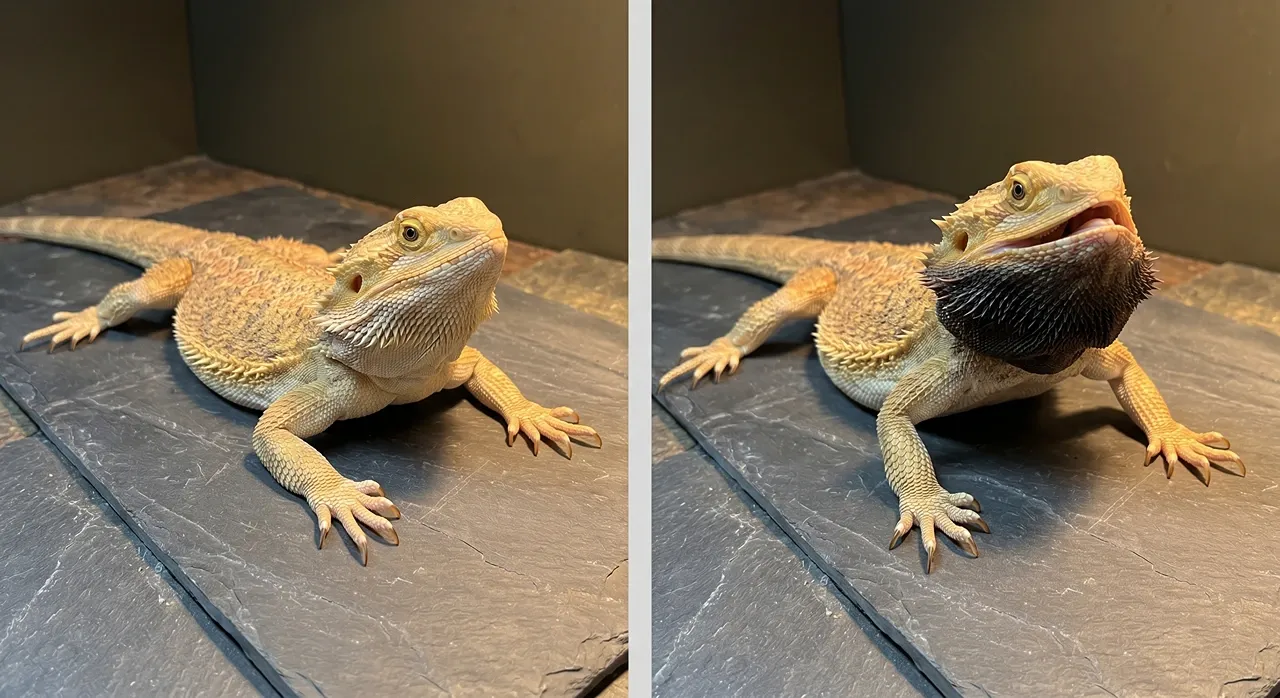
The reaction people read as excitement is a threat display. Black bearding, frantic glass scratching, and head bobbing at a mirror are signs of stress, not joy. Leaving a mirror in the tank keeps the animal in a low-grade panic.
What Your Dragon Actually Wants From You
Here is the part that confuses people. A beardie does not want a dragon friend, but it is not indifferent to its keeper either.
Studies have shown that dragons left with no interaction at all can become withdrawn and defensive over time. They learn your scent, recognise your voice, and settle when a trusted person handles them. That is not loneliness for company; it is a response to routine and safety.
The bond is real in its own reptilian way. Many keepers notice their dragon tracking them across a room, and that owner recognition behaviour builds steadily with consistent, calm handling over weeks.
How to Keep a Single Dragon Content
The fix for a bored-looking dragon is enrichment and contact, not a cage mate. A few practical changes do more than any companion could.
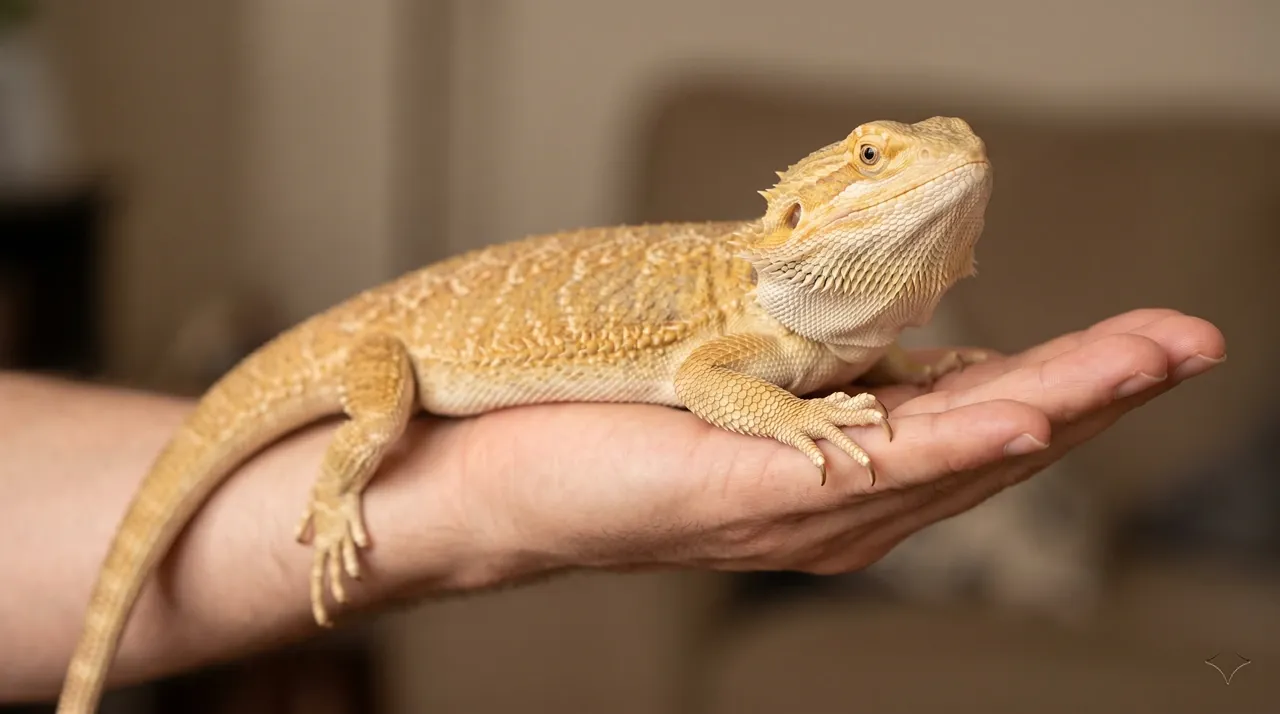
- Handle your dragon for short, calm sessions most days so it associates you with safety
- Rearrange hides, branches, and basking platforms every few weeks for new terrain to explore
- Offer supervised floor time in a warm, safe, draught-free room
- Vary the feeding routine with foraging for live insects rather than bowl-only meals
- Position the tank where the dragon can watch household activity without feeling exposed
Out-of-tank time matters more than most owners realise. Structured out-of-tank play gives a curious animal the stimulation a static enclosure never can, and it strengthens the keeper bond at the same time.
Pro tip: a dragon that paces the glass is far more likely reacting to a tank that is too small, or to its own reflection in the side panels, than feeling lonely. Check enclosure size before anything else.
When Quiet Behaviour Needs a Vet
Loneliness is a myth, but apathy can still mask a genuine health problem. The skill is knowing which is which.
Seasonal slowdown comes on gradually as temperatures drop and the dragon keeps a stable weight. A problem looks different. Sudden inactivity, weight loss, sunken eyes, or a refusal to eat outside brumation season points to illness, not mood.
Brumation itself can also be confused with something more serious, and learning to tell dormancy from genuine decline is one of the most useful skills a keeper develops. When in doubt, weigh the animal and watch the trend.
Do Bearded Dragons Get Lonely Without Company
No, and this is the question worth settling for good. A single dragon with correct heat, proper lighting, and regular handling is not missing anything by living alone.
The worry that bearded dragons get lonely comes from comparing them to social pets. They are not built like those animals, and a solitary tank is the setup they are designed for.
FAQ
Do bearded dragons get lonely if kept alone?
No. Bearded dragons are solitary by nature and do not experience loneliness the way social mammals do. A single dragon kept with proper heat, lighting, and handling is content on its own.
Will my bearded dragon be happier with a friend?
No. Adding a second dragon creates territorial stress, competition for the basking spot, and a real risk of bite injuries. A solitary dragon is healthier and safer kept alone.
Why does my bearded dragon seem sad and still?
Stillness is usually brumation, a cool basking spot, or illness rather than sadness. Check that the basking surface reaches 95–110°F and watch for weight loss before assuming anything emotional.
Do bearded dragons miss their owners?
They do not miss you the way a dog would, but they recognise your scent and voice and settle with a trusted handler. Regular calm interaction builds a genuine, if reptilian, bond.
Is it cruel to keep a bearded dragon by itself?
Not at all. Solitary housing matches their natural biology. The cruelty risk runs the other way, since forcing two together causes the stress and injury that single keeping avoids.
What to Do Today
- Measure your basking surface temperature and confirm it hits 95–110°F for an adult
- Weigh your dragon and note the figure so you can track any trend
- Remove any mirror from the enclosure or block reflective side panels
- Add one new hide or branch to give fresh terrain to explore
- Schedule a short daily handling session to build trust and routine
- If stillness comes with weight loss or no appetite outside winter, book a reptile vet
Written by
Sarah ArdleySarah has kept bearded dragons for over ten years. She founded Beardie Husbandry after discovering that most mainstream care advice — including what she followed with her first dragon — was doing more harm than good. Every article on this site is grounded in veterinary research and real keeper experience.