Why Is My Bearded Dragon Sneezing? (And When to Worry)
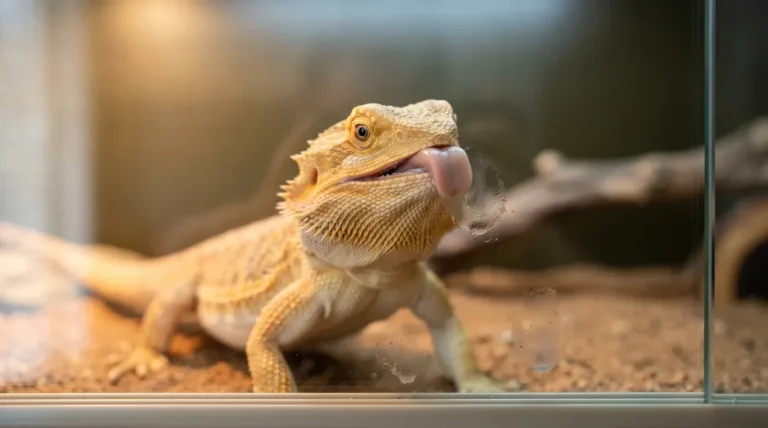
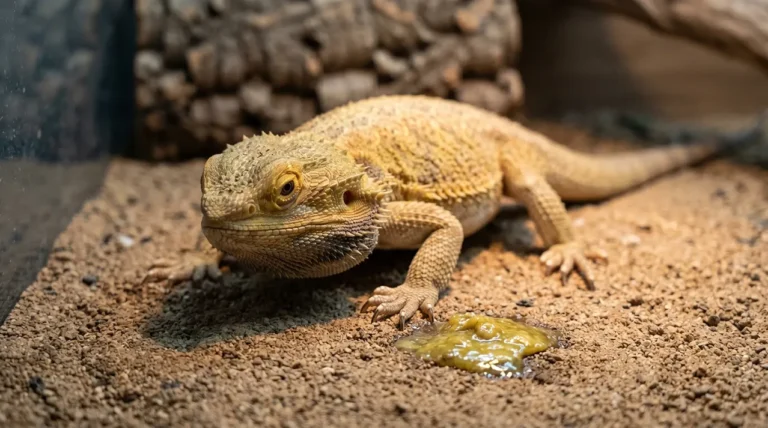
A bearded dragon sneeze is louder and wetter than people expect from such a small animal. There is a quick puff of air, a fine spray, sometimes a faint head shake, and a scatter of white specks left on the glass.
In most cases that is a healthy salt sneeze, and bearded dragon sneezing ranks high on the list of things new keepers worry about without real cause.
The behaviour itself is normal. What matters is what comes with it. An occasional dry sneeze from a bright, alert dragon reads very differently to frequent sneezing paired with mucus, lethargy, or laboured breathing.
Most Bearded Dragon Sneezing Is Harmless Salt
These lizards evolved in arid parts of Australia, where holding on to water matters more than flushing salt out through urine.
To shed excess salt without losing fluid, they use a pair of nasal salt glands. The glands concentrate sodium and chloride, then spray it out through the nostrils.
That fine spray is the sneeze, and it is what nearly all bearded dragon sneezing actually is. It dries into small white crusty flecks on the nearest glass or on the dragon’s snout.
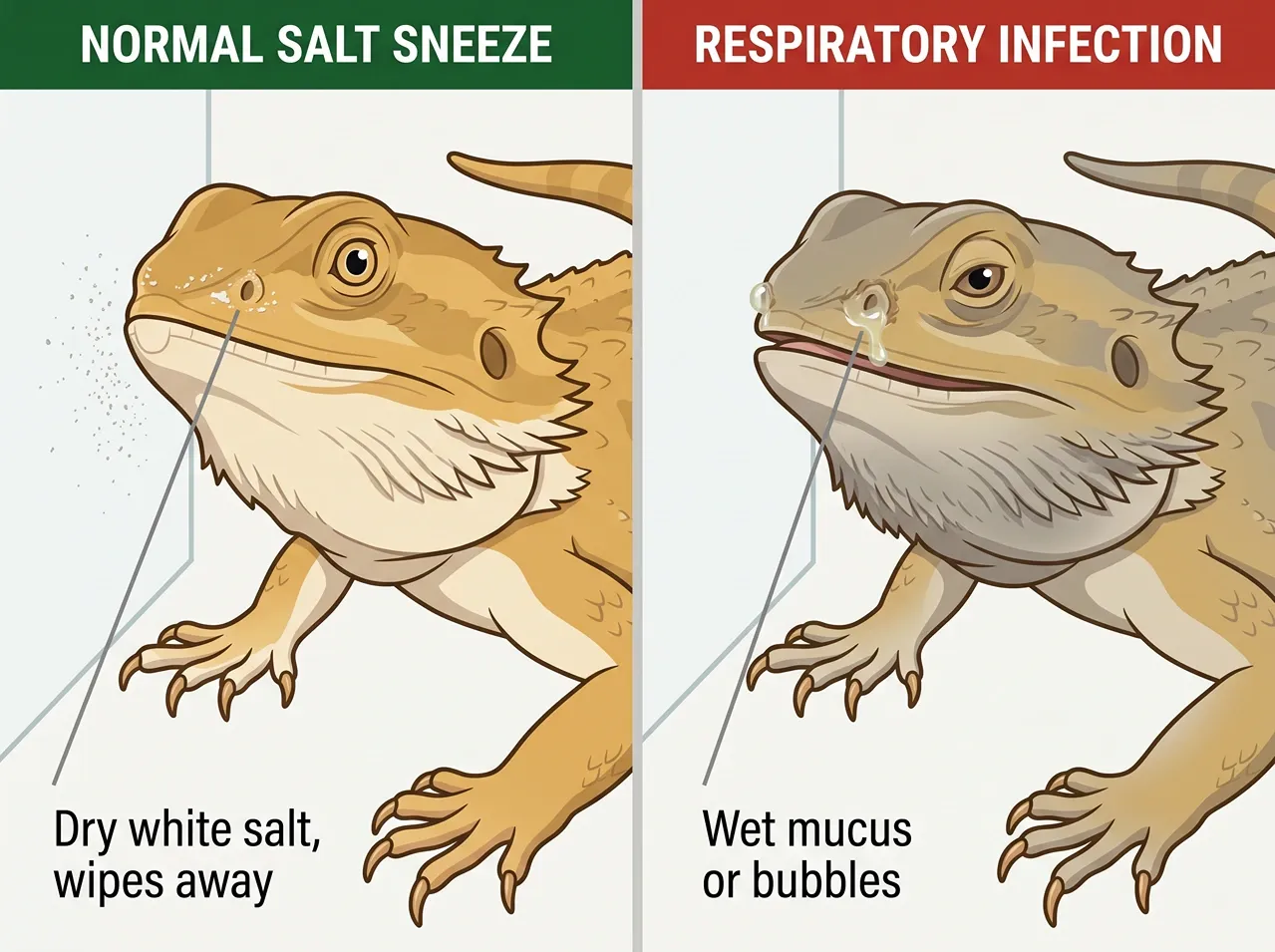
Those flecks are dry salt, not discharge. The distinction matters, because wet mucus around the nostrils points towards a runny nose or an infection, while dry crust that wipes away cleanly is the normal residue of a working salt gland.
Salt Sneeze or Something Worse
The fastest way to read bearded dragon sneezing is to look at everything around it. It means reading the whole dragon, the same way you would read any other body language cue. A healthy salt sneeze travels alone. A sneeze that signals trouble brings company.
| What you see | What it usually means | What to do |
|---|---|---|
| Occasional dry sneeze, white crust on glass, dragon bright and eating | Normal salt sneeze | No action, wipe glass during cleaning |
| A sneeze right after a drink, bath, or juicy insect | Clearing the airway | Watch, normal if it settles in minutes |
| Frequent sneezing on loose, dusty substrate | Substrate irritation | Swap the substrate, then monitor |
| Wet mucus or bubbles at the nose or mouth | Possible respiratory infection | Call a reptile vet |
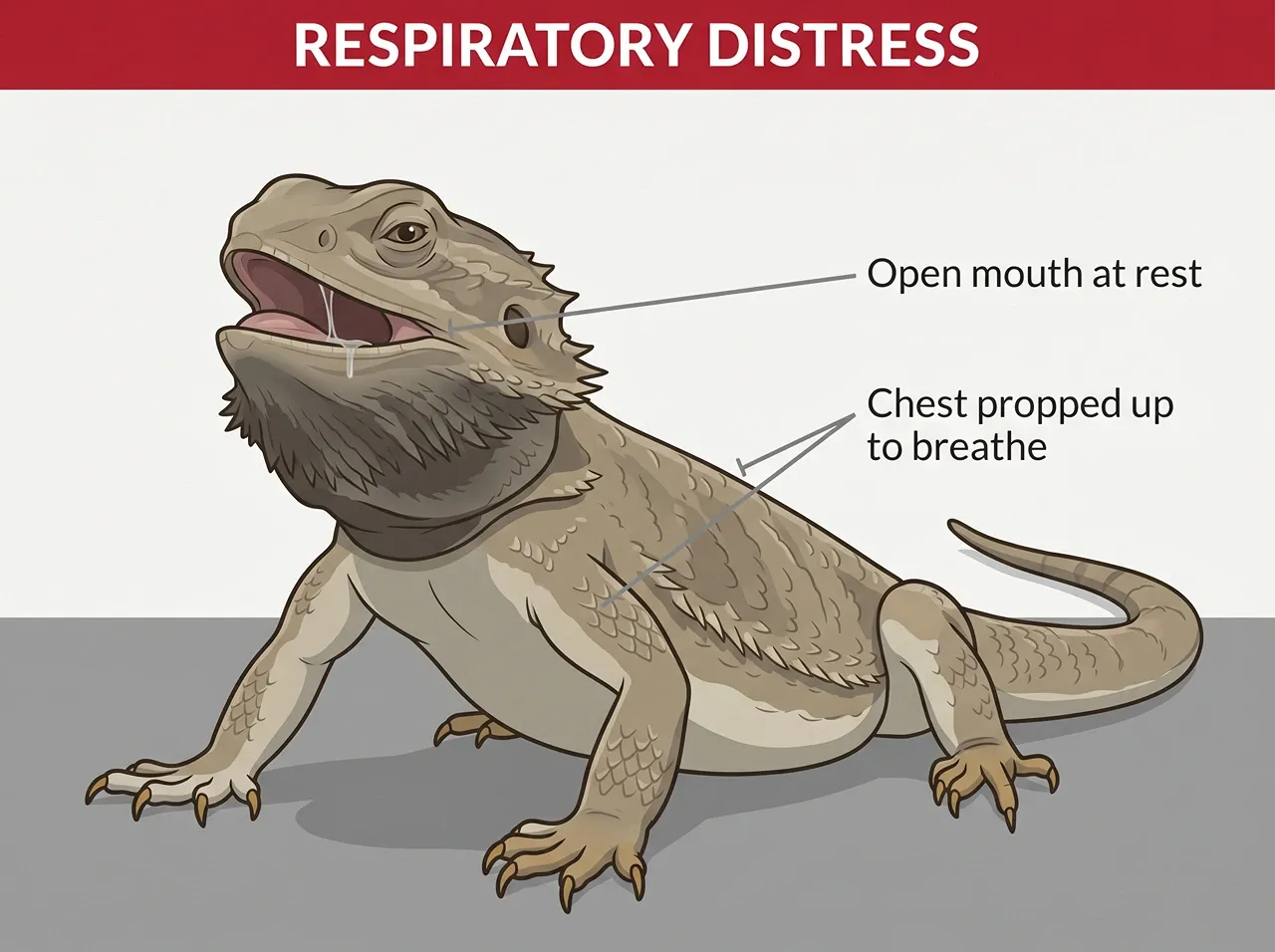
| Open-mouth breathing, wheezing, or clicking at rest | Respiratory distress | Vet the same day |
| Sneezing plus lethargy or refusing food | Systemic illness | Vet promptly |
What the dragon does between sneezes matters more than the sneeze itself. A dragon that carries on basking and eating normally is almost always dealing with salt. One that turns dull or goes off its food alongside the sneezing has moved into territory worth a vet’s eyes.
When Sneezing Means a Respiratory Infection
A respiratory infection is the one cause of bearded dragon sneezing worth ruling out first, and it rarely appears from nowhere. In dragons it usually follows a husbandry slip: temperatures that ran too cool, humidity that sat too high, or an enclosure with poor airflow.
The tell is the discharge. Salt is dry. A respiratory infection produces wet mucus, sometimes bubbles or foam at the nostrils or mouth, and the sneezing clusters rather than happening once an hour.
What to Do If It Is an Infection
Fixing the conditions that let the infection start matters as much as treatment. Check that the warm end holds its target and that temperature and humidity are measured at the dragon’s level, not guessed from a dial.
There is no safe home cure once an infection takes hold. A vet needs to confirm the cause and prescribe the right medication, and a wrong guess online wastes days the dragon may not have.
While you wait for the appointment, hold the warm end at the top of its normal range. A slightly warmer dragon mounts a stronger immune response, which is why reptile vets keep sick patients toward the upper end of their temperature range.
Dusty Substrate Is a Common Trigger
If the bearded dragon sneezing only started after a substrate change, the bedding is the first suspect. Loose particulate substrates throw fine dust that settles in the nostrils and triggers a clearing sneeze.
The usual offenders are loose, dusty beddings:
- Play sand and calci-sand
- Crushed walnut shell
- Fine wood shavings or bark chips
Switching to a solid or non-particulate substrate removes the irritant at the source, and the sneezing usually settles within a day or two.
Sneezing After a Bath or Meal
A sneeze or two right after a warm bath, a long drink, or a particularly juicy insect is nothing to read into.
A little moisture reaches the back of the nostrils and the dragon clears it the only way it can. If it settles within a few minutes and does not repeat, leave it be.
Stuck Shed Around the Nose
Sneezing that shows up mid-shed often traces back to loose skin near the nostrils. As the old skin lifts, small flakes catch around the nares and tickle the dragon into sneezing them clear.
This kind fades once the shed finishes, usually within a couple of days. Never pull at skin around the nose or eyes to speed it along. A short soak softens stubborn shed far more safely.
Frequently Asked Questions
Is it normal for a bearded dragon to sneeze?
Yes, occasional sneezing is normal and usually a salt sneeze, where the dragon expels excess salt through its nostrils. It only becomes a concern when it turns frequent or arrives with mucus, lethargy, or breathing trouble.
Why does my bearded dragon leave white spots on the glass when it sneezes?
Those white spots are dried salt sprayed out during a normal salt sneeze. They wipe away easily and show the salt glands are working as they should.
How do I know if my bearded dragon has a respiratory infection?
Look for wet mucus, bubbles at the nose or mouth, open-mouth breathing, wheezing, or a clicking sound on each breath. Any of these alongside sneezing means a same-day call to a reptile vet.
Can substrate make my bearded dragon sneeze?
Yes, loose dusty substrates like sand or walnut shell throw fine particles that irritate the nostrils. Switching to a solid substrate usually stops the sneezing within a day or two.
Should I worry if my bearded dragon sneezes after eating or drinking?
No, a sneeze right after a meal, drink, or bath is just the dragon clearing moisture from its airway. As long as it settles within a few minutes and does not repeat, it is harmless.
Run Through This Before You Call
Before you decide whether the bearded dragon sneezing needs a vet, work through these in order:
- Watch the dragon for ten minutes. Note whether the sneeze is dry and occasional or wet and repeated.
- Check the nostrils up close. Dry white crust is salt. Wet mucus or bubbles is not.
- Look at the substrate. If it is loose and dusty, swap it for a solid surface today.
- Read the breathing. Open-mouth breathing, wheezing, or clicking at rest means calling a vet now.
- Confirm the warm-end temperature and enclosure airflow are correct.
- If the sneezing is frequent and paired with lethargy or appetite loss, book a reptile-experienced vet rather than waiting it out.
Written by
Sarah ArdleySarah has kept bearded dragons for over ten years. She founded Beardie Husbandry after discovering that most mainstream care advice — including what she followed with her first dragon — was doing more harm than good. Every article on this site is grounded in veterinary research and real keeper experience.