Why Your Bearded Dragon Smells Bad and What It Means
Most healthy bearded dragons have almost no smell of their own. So when a real odour starts to follow your dragon around the room, something specific is usually behind it.
If your bearded dragon smells bad, the cause is nearly always one of two things. Either there is a mess in the enclosure, or there is a health problem on the animal itself. Telling those two apart is the whole job, and it is easier than most owners expect.
Work out which one you are dealing with first. Everything you do next depends on that single answer.
Is It Your Dragon or the Tank
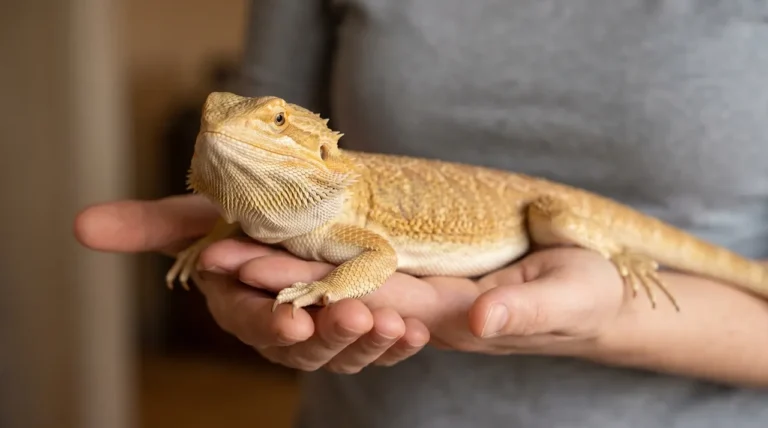
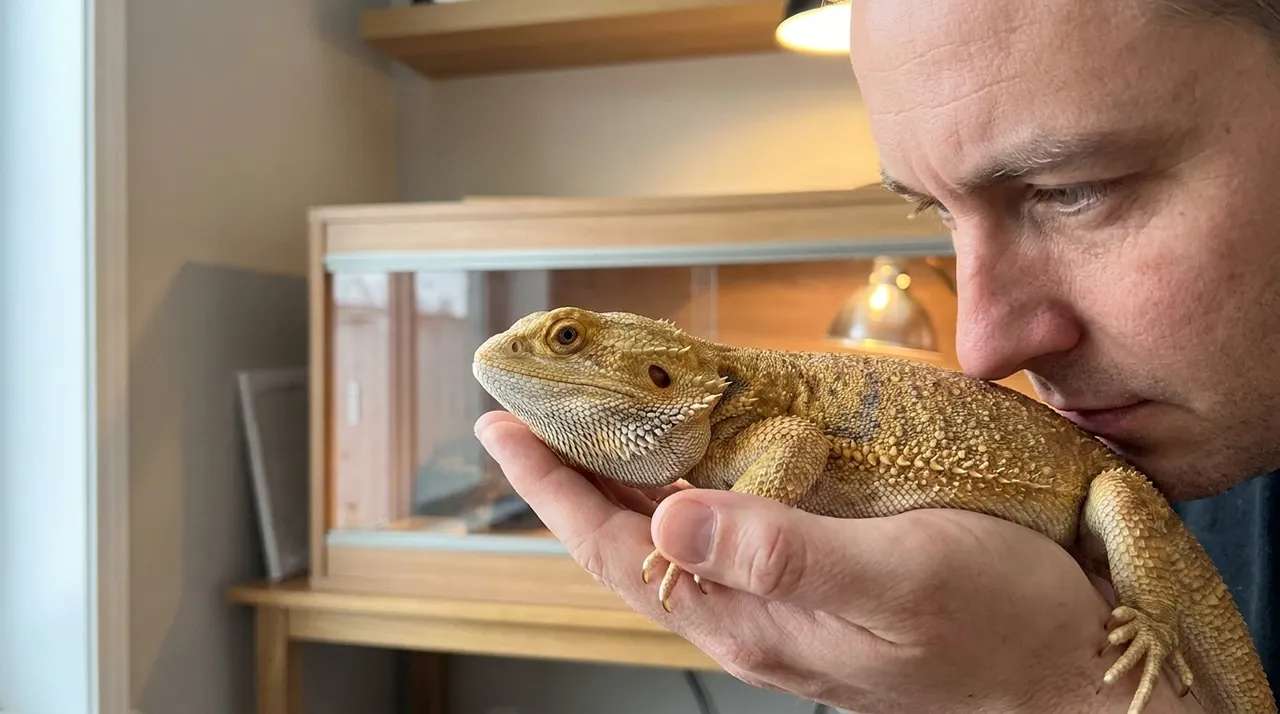
Before you start worrying about illness, run one quick test. Lift your dragon out, hold them a few inches from your nose, and smell the body directly.
Then go back and smell the empty enclosure on its own.
A clean-smelling dragon over a stinking tank means the problem is the housing, not the animal. Most of the time a bearded dragon smells bad because of the enclosure, and a foul-smelling tank traces back to waste, rotting greens, or damp substrate baking under the lamp.
The opposite result changes everything. A dragon that carries a smell on clean skin, away from the tank, is telling you about its health rather than your cleaning schedule.
A Healthy Beardie Has Almost No Smell
Bearded dragons do not sweat, and their skin does not hold oils the way a dog or cat does. They have no scent glands pumping out a musk, and their waste comes out mostly dry.
A faint earthy or dusty smell up close is normal. That is just warm skin and clean substrate, and it needs no action at all.
What is not normal is an odour you can pick up from across the room coming off the dragon and not the tank. That is the line between harmless background scent and a real warning sign.
Where the Smell Is Actually Coming From
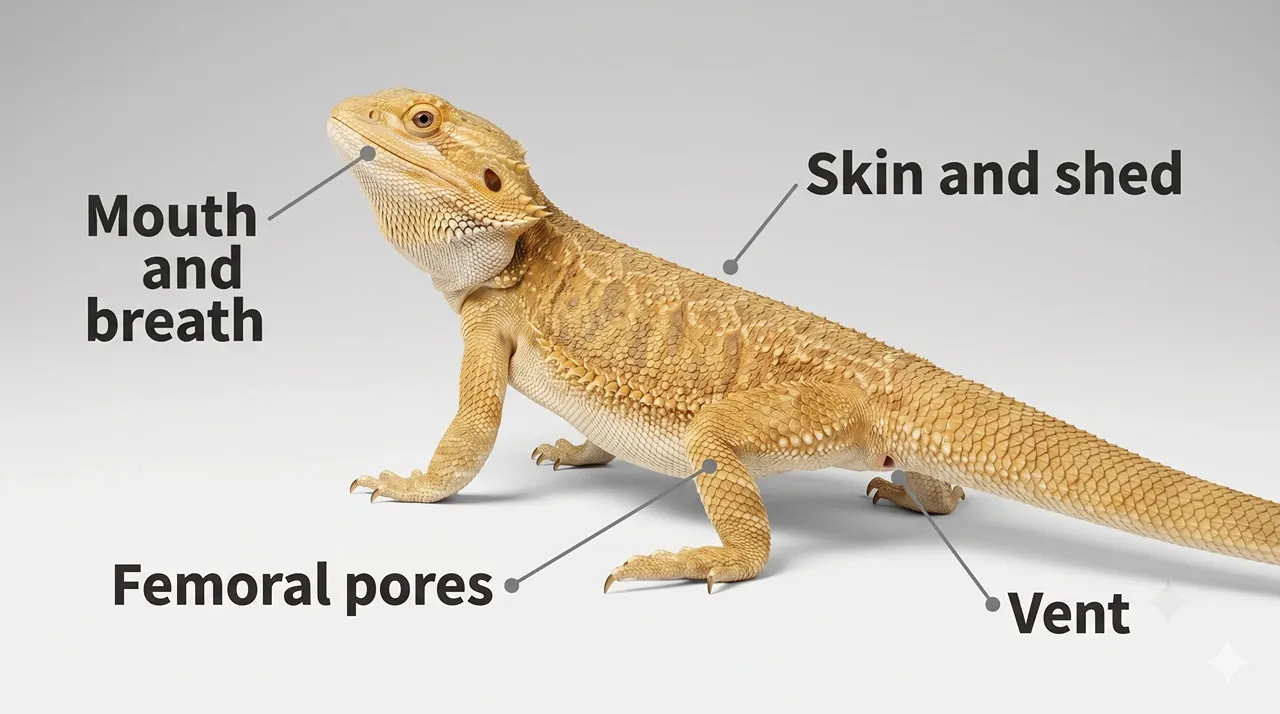
Once you know the body is the source, the next step is location. Different parts of a dragon smell bad for very different reasons, and pinpointing where it comes from tells you how worried to be.
Bad Breath Usually Means Mouth Rot
Lean in near the mouth and breathe in. A sour, rotten, or fishy smell on the breath is one of the clearest signs of infectious stomatitis, the condition keepers call mouth rot.
Check for swelling along the jawline, redness inside the mouth, a yellowish cheesy material on the gums, or loose front teeth. Caught early, mouth rot in beardies treats well, but it turns serious once the infection reaches the jawbone.
A Smelly Vent Points to the Gut
The vent is the single slit under the base of the tail. A strong, sour, or unusually foul smell there often comes from what is, or is not, moving through the gut.
Waste backed up behind early impaction sits and ferments, and so does faeces smeared around the vent after a loose stool. A warm soak and a gentle wipe clear the simple version.
Crusting, swelling, or any tissue pushing out of the vent is different. That needs a reptile vet, not another bath.
Skin That Smells Sour or Cheesy
Run a finger along the back, sides, and limbs. Skin that smells sour, cheesy, or rotten almost always has something growing on it or trapped against it.
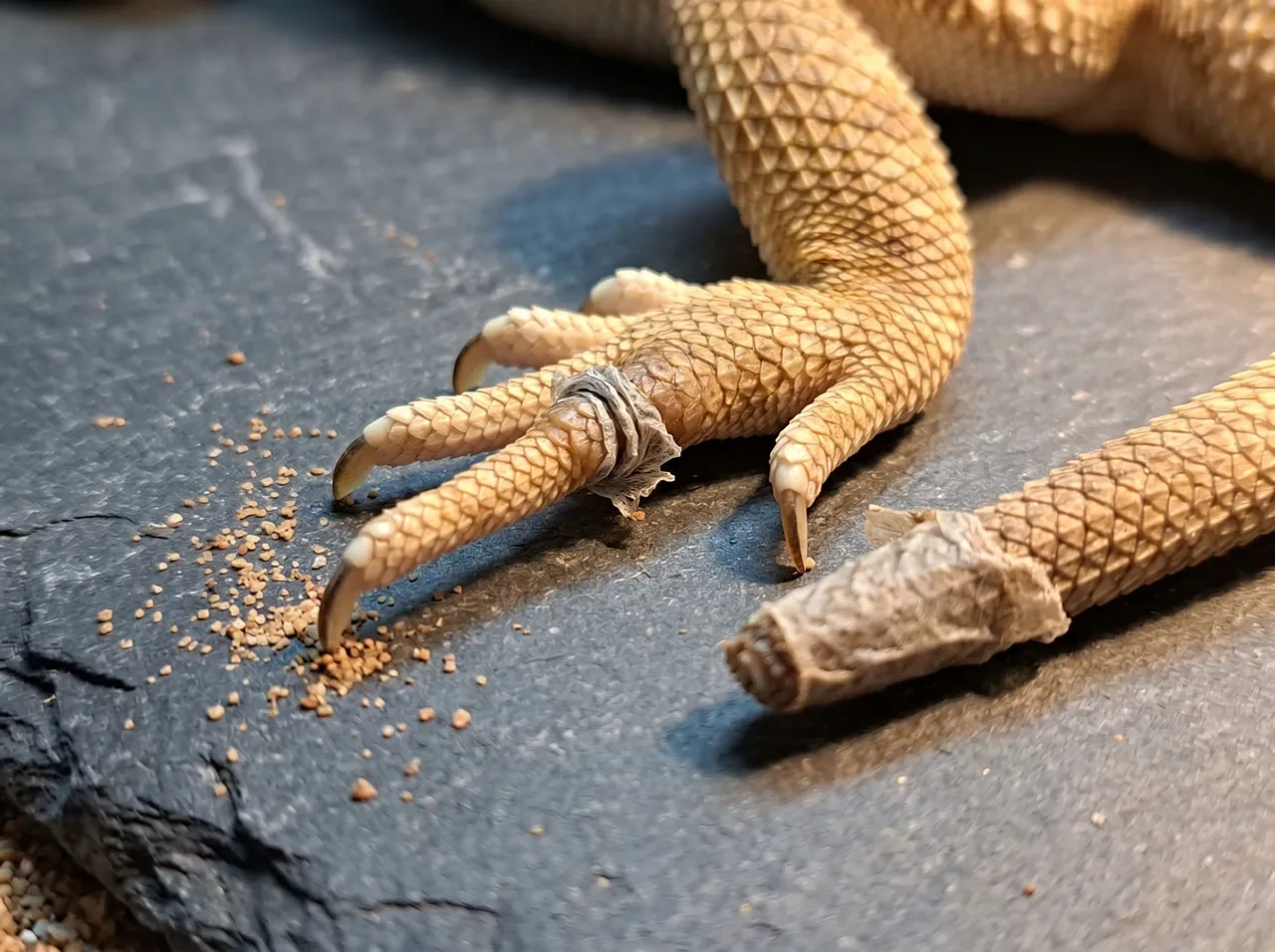
Stuck shed wrapped around a toe or the tail tip traps moisture and bacteria underneath, and that pocket starts to smell before any damage shows. A quick check while they are working through a shed catches it early.
A musty, mouldy smell with crusty yellow or grey patches is a louder alarm. That pattern fits yellow fungus disease, which spreads and needs veterinary antifungals rather than home care.
Blocked Femoral Pores Can Reek
Flip your dragon over and look at the row of small pores running along the inside of each back leg. In males especially, these can clog with a waxy, hardened plug.
A backed-up pore smells faintly rancid and presses into the skin as it builds. Warm soaks and gentle softening usually clear them, though a pore that looks red, raised, or swollen should be checked rather than squeezed.
Match the Smell to the Cause
When a bearded dragon smells bad, matching the kind of smell to its usual source saves a lot of guesswork. The table sorts the common ones from quick fixes to vet-now problems.
| What you smell | Most likely cause | What to do |
|---|---|---|
| Strong odour from the tank, clean dragon | Waste, rotting food, damp substrate | Spot clean daily, deep clean the enclosure |
| Sour or rotten breath | Mouth rot (stomatitis) | Inspect the mouth, book a reptile vet |
| Foul smell at the vent | Impaction, smeared stool, infection | Warm soak, monitor stools, vet if swollen |
| Sour or cheesy skin smell | Stuck shed trapping bacteria | Soak and ease off the shed gently |
| Musty smell, crusty yellow patches | Yellow fungus | Reptile vet promptly, isolate the dragon |
| Rancid smell from the back legs | Blocked femoral pores | Warm soak, check for redness |
When Your Bearded Dragon Smells Sick
Some smells are housekeeping. Others are the first thing you notice before a dragon ever looks unwell, which makes odour a useful early symptom.
Treat the smell as urgent when it arrives with any of these:
- Lethargy, sunken eyes, or a sudden refusal to eat
- A fishy or rotten breath paired with drooling or open-mouth breathing
- Discharge, swelling, or visible tissue at the mouth or vent
- A mouldy smell with discoloured, crusty, or lifting scales
Lining up a reptile-experienced vet before any of this happens saves a frantic search later, so it pays to know how to find a reptile vet before you need one in a hurry.
How to Keep the Smell From Coming Back
Most odour never returns once the basics are tight. The body stays clean when the environment around it does.
Build these into the weekly routine:
- Scoop waste the moment you spot it, every single day
- Pull uneaten greens and live insects within 20 minutes of feeding
- Hold humidity in the correct 30 to 40% range to stop fungal growth
- Give a warm-water soak once or twice a week to rinse skin and pores
Skip the scented candles and plug-in air fresheners. What smells pleasant to you can overwhelm or even poison a small reptile in an enclosed room.
Common Questions About Bearded Dragon Smell
Why does my bearded dragon smell like fish?
A fishy smell usually means waste or rotting food has been sitting too long and the skin has absorbed it. If the smell is on the breath instead, suspect mouth rot and check inside the mouth.
Do bearded dragons smell when shedding?
No. The dead skin that lifts during a shed has no odour of its own. Any smell during shedding comes from trapped moisture or bacteria under a stuck piece, not the shed itself.
Is it bad that my bearded dragon has no smell at all?
Not at all. A near-odourless dragon is a healthy, well-housed dragon. A faint earthy scent up close is the most you should ever notice.
Why does my bearded dragon’s breath smell bad?
Foul breath is one of the earliest signs of mouth rot. Look for redness, swelling, or cheesy material in the mouth, and book a reptile vet if you see any of those.
Can I use air freshener to cover the smell?
No. Aerosols, candles, and plug-ins release compounds that irritate a reptile’s airways. Fix the source instead, and air the room naturally if you need to.
Your Smell-Check Action Plan
Work through this in order whenever your bearded dragon smells bad and you cannot place the source.
- Smell the dragon and the empty tank separately to find the real source
- If the tank is the culprit, spot clean today and deep clean this week
- If the body smells, check the mouth, vent, skin, and femoral pores in turn
- Soak and gently clean any stuck shed, smeared vent, or clogged pore
- Book a reptile vet for foul breath, vent tissue, or a mouldy fungal smell
- Lock in daily waste removal and a weekly bath to stop it returning
Written by
Sarah ArdleySarah has kept bearded dragons for over ten years. She founded Beardie Husbandry after discovering that most mainstream care advice — including what she followed with her first dragon — was doing more harm than good. Every article on this site is grounded in veterinary research and real keeper experience.