Can Bearded Dragons Eat Watermelon? How Much Is Too Much
Slice open a watermelon near your dragon and there is a good chance it locks onto that red flesh and refuses to look away. The smell pulls them in fast. So can bearded dragons eat watermelon, or is this one of those treats that does more harm than good?
The short answer is yes, in tiny amounts, very occasionally. Watermelon is not toxic, and a small piece now and then will not hurt a healthy adult.
The trouble starts when it becomes a regular part of the bowl. Watermelon is almost all water and sugar, with very little a dragon actually needs.
Can Bearded Dragons Eat Watermelon Safely
So is it actually fine to give them? It can be, as long as it stays rare and the portion stays small. Treat it the way you would treat dessert for yourself, not a meal.
A healthy adult on a balanced diet of greens and insects can handle a small piece of watermelon once or twice a month. Push past that and the sugar starts working against you.
Fruit belongs at the very edge of the diet, not near the centre of it. Watermelon is one of the weaker picks when you weigh it against other fruits in the rotation, because it gives back so little for the sugar it carries.
How Much Watermelon Is Actually Safe
This is where most advice goes vague. People say a few small pieces and leave it at that, which tells a nervous owner almost nothing.
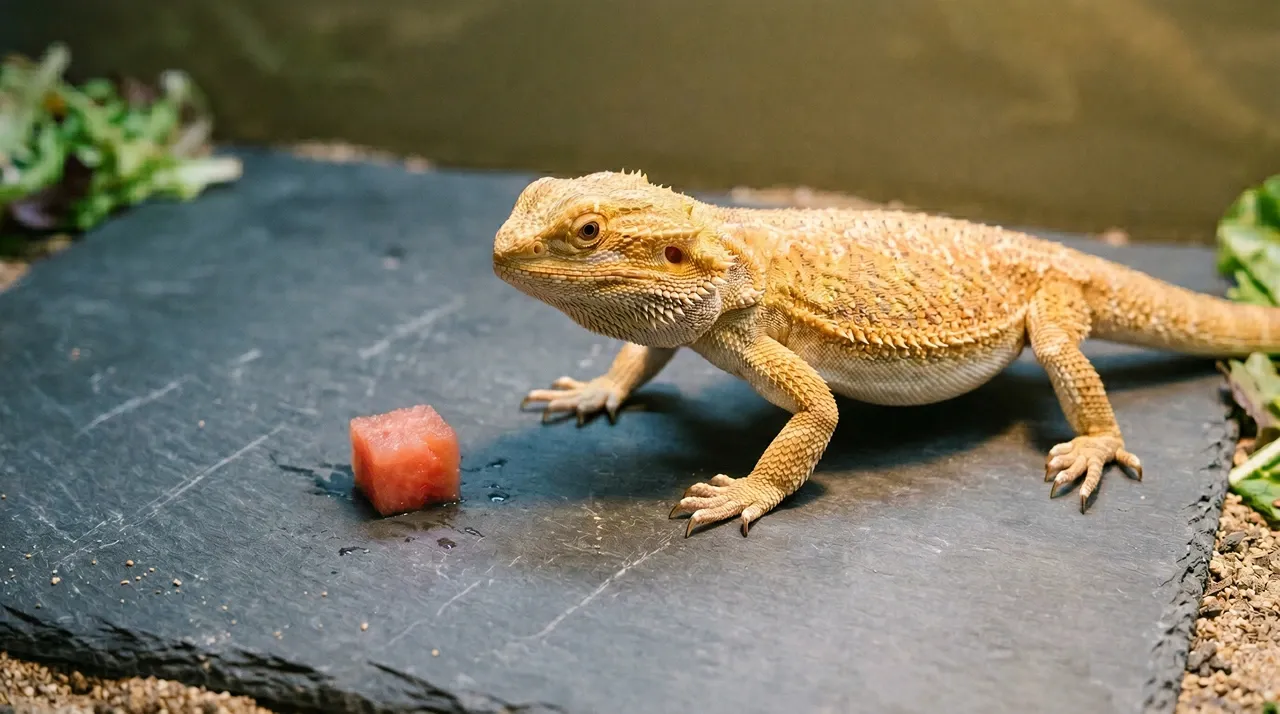
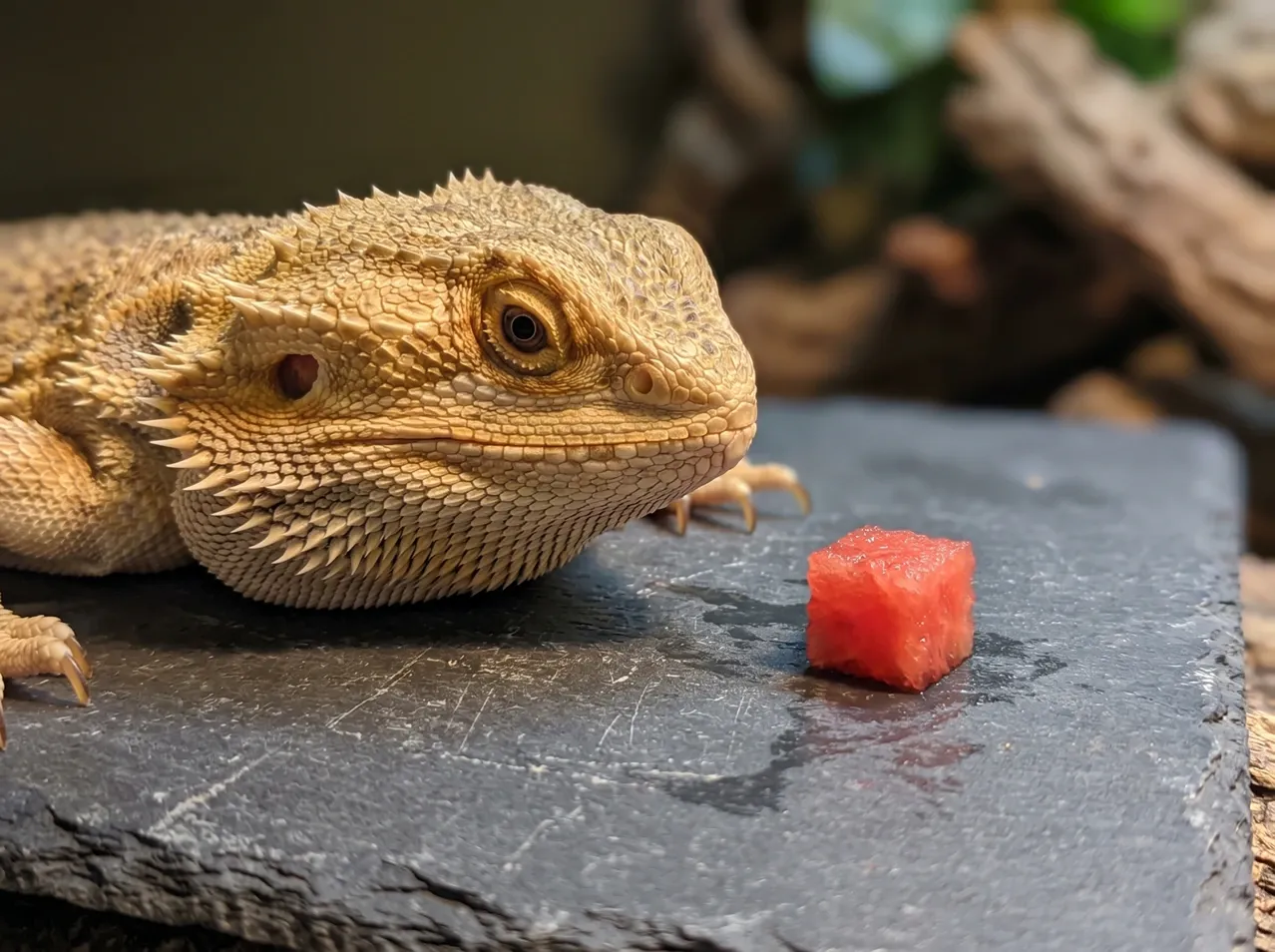
Use the same rule keepers use for prey. One piece of watermelon should be no larger than the space between your dragon’s eyes. For most adults that means one or two cubes around a centimetre each, with every seed taken out first.
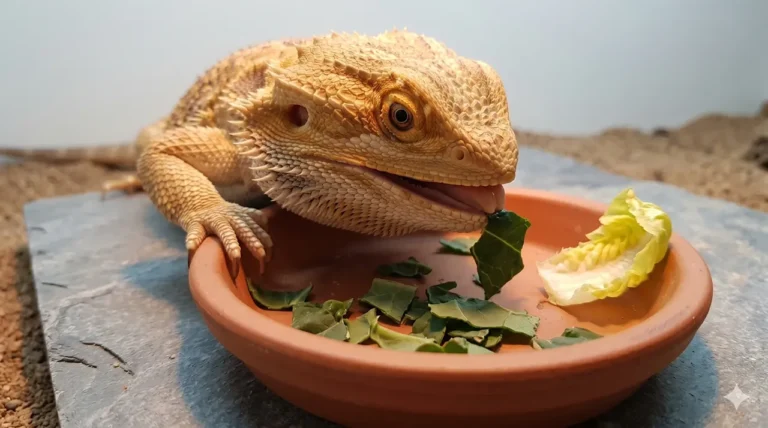
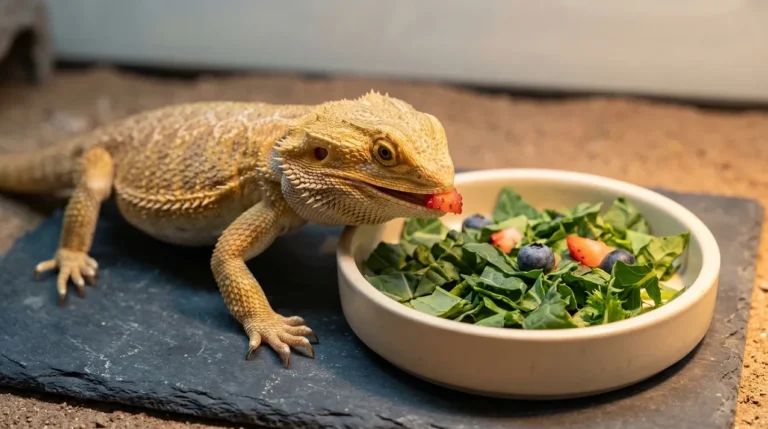
Serve it mixed through a salad rather than on its own. A little watermelon stirred into greens slows the dragon down and stops it gorging on the sweet part while ignoring everything else.
Once Or Twice A Month Is Plenty
Stick to once or twice a month for a grown adult. Younger dragons need even less, and plenty of keepers skip watermelon entirely while a beardie is still growing fast on protein.
Why Watermelon Is Not A Hydration Fix
Plenty of articles sell watermelon as a way to hydrate a dragon. That advice is backwards.
Watermelon is around 92% water, which sounds useful until you remember it arrives packaged with a sugar load the dragon does not need. Push too much water through the gut at once and you get loose stools, which drain more fluid than the fruit ever put in.
If hydration is the worry, the fixes that actually work are simple:
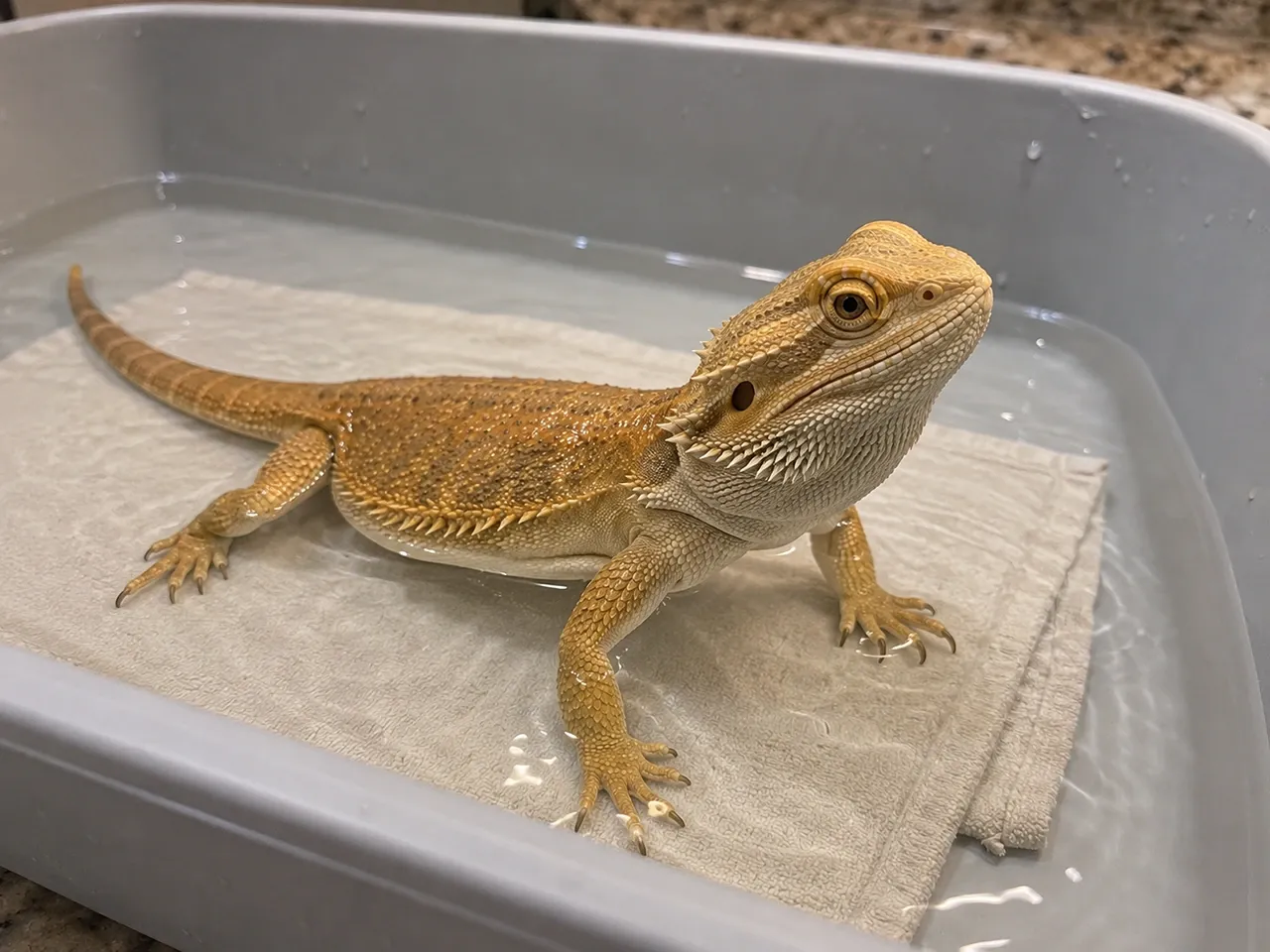
- A warm soak two or three times a week
- Fresh water in a shallow dish, changed daily
- A light misting over the greens just before serving
A dragon showing signs of dehydration needs those steps, not a bowl of fruit.
The Calcium Problem Most Owners Miss
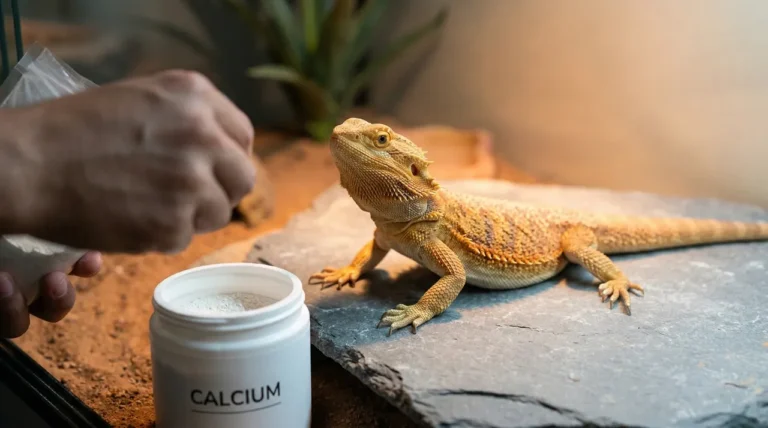
Here is the part that matters more than the sugar. Watermelon holds more phosphorus than calcium, and that balance quietly works against your dragon.
Dragons need roughly twice as much calcium as phosphorus across the whole diet. Veterinary reptile nutrition guidance puts the target near a 2:1 calcium to phosphorus ratio. Watermelon sits the wrong way round, with phosphorus slightly ahead.
One tiny piece on its own will not cause harm. The danger is the pattern. Feed phosphorus heavy foods often enough and the body starts pulling calcium from the bones, which is the road to metabolic bone disease.
Always Take The Seeds Out
Watermelon seeds are the real hazard here, more than the sugar or the water. A hard black seed is the wrong shape to pass cleanly through a dragon’s gut, and even seedless watermelon hides the odd soft white one.
Skip The Rind Completely
Never feed any part of the rind, including the pale flesh next to the skin. It is tough and fibrous, and a dragon cannot chew it down to anything its gut can handle. Stick to the soft red flesh only.
What To Do If The Stool Turns Runny
A single runny stool after a watermelon treat is not unusual and not an emergency. The sugar and water move things along faster than greens do. What matters is how the dragon looks afterwards and how long it lasts.
| What you see | What it usually means | What to do |
|---|---|---|
| One loose stool, dragon acting normal | Mild reaction to sugar and water | Skip fruit for two weeks, offer a warm soak |
| Loose stools past 48 hours | Gut still unsettled | Stop all fruit, watch weight, call a reptile vet |
| Runny stool plus lethargy or no appetite | More than a simple food reaction | Contact a reptile vet promptly |
| Straining or no stool after eating seeds | Possible impaction | Treat as urgent, call a vet the same day |
Most dragons bounce back within a day once the watermelon is out of the rotation. The cases that need a vet are the ones where the dragon goes quiet, stops eating, or strains without producing anything.
Can Baby Bearded Dragons Have Watermelon
They can, but there is little reason to bother. Babies and juveniles grow fast and need protein and calcium far more than they need sugar and water.
A baby’s gut is smaller and more easily upset, so even a normal treat portion hits harder. If you want to offer a taste, make it a single tiny fleck and watch the next stool closely.
Most keepers wait until a dragon is a well grown adult before adding watermelon at all.
Watermelon Questions New Owners Ask
Can bearded dragons eat watermelon every day?
No. Watermelon is too high in sugar and water and too low in nutrients to feed daily. Once or twice a month as a small treat is the safe ceiling for a healthy adult.
Can bearded dragons eat watermelon rind?
No, skip the rind entirely. The tough outer layer and the pale flesh beside the skin are too fibrous for a dragon to chew and digest. Only the soft red flesh is safe.
Is watermelon good for hydrating a bearded dragon?
Not really. The water comes with a sugar load and can trigger loose stools that leave the dragon more dehydrated than before. A warm soak and fresh drinking water work far better.
Can bearded dragons eat yellow watermelon?
Yes, yellow and orange watermelon follow the same rules as red. They are still high in sugar and water, so keep the portion tiny and the frequency low. Remove every seed first.
Can bearded dragons eat watermelon seeds?
No, take them out first. A few swallowed seeds might pass, but they carry a real impaction risk that is not worth the gamble. Watch for straining or a missed stool if one slips through.
How To Serve Watermelon The Right Way
The answer stays simple. Can bearded dragons eat watermelon without problems? Yes, as long as these habits hold every time:
- Pick out every seed, including the soft white ones in seedless fruit
- Cut the red flesh into pieces no bigger than the gap between the eyes
- Mix it through a greens salad rather than serving it alone
- Offer it once or twice a month at most, never as a daily food
- Check the next stool, and skip fruit for a fortnight if it turns runny
Get those five right and watermelon stays a harmless treat instead of a problem waiting to happen.
Written by
Sarah ArdleySarah has kept bearded dragons for over ten years. She founded Beardie Husbandry after discovering that most mainstream care advice — including what she followed with her first dragon — was doing more harm than good. Every article on this site is grounded in veterinary research and real keeper experience.