Do Bearded Dragons Need a Water Bowl in Their Tank?
Most owners go weeks without ever seeing their dragon drink, then start wondering whether the dish in the corner is doing anything at all. One forum says pull it because of humidity. The next says removing it invites dehydration, and both sides sound completely certain.
So do bearded dragons need a water bowl? In most setups, yes. A shallow dish that gets cleaned daily gives your dragon the option to drink when it needs to. In a normally ventilated enclosure it will not push humidity anywhere dangerous.
The exceptions are real, though. A humid room, a sealed glass tank, or a hatchling small enough to get stuck in the dish all change the answer. Getting this right takes about five minutes once you know what to check.
Why Most Dragons Ignore Standing Water
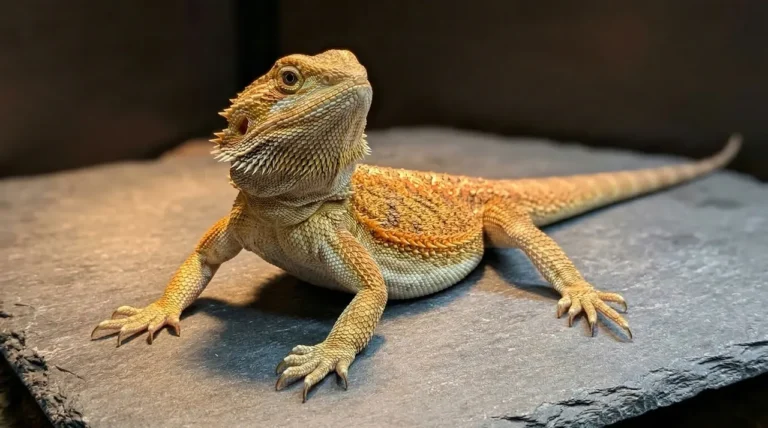
Wild bearded dragons drink dew off plants, rain running down their own heads, and the occasional puddle. Every one of those sources moves, glints, or drips. A flat dish of still water does none of that, so plenty of dragons walk past it for months.
That is a recognition problem, not proof they never drink. In one community survey, over half of owners who kept a bowl had never once seen their dragon use it. A dragon that never drinks visibly can still be well hydrated through its food.
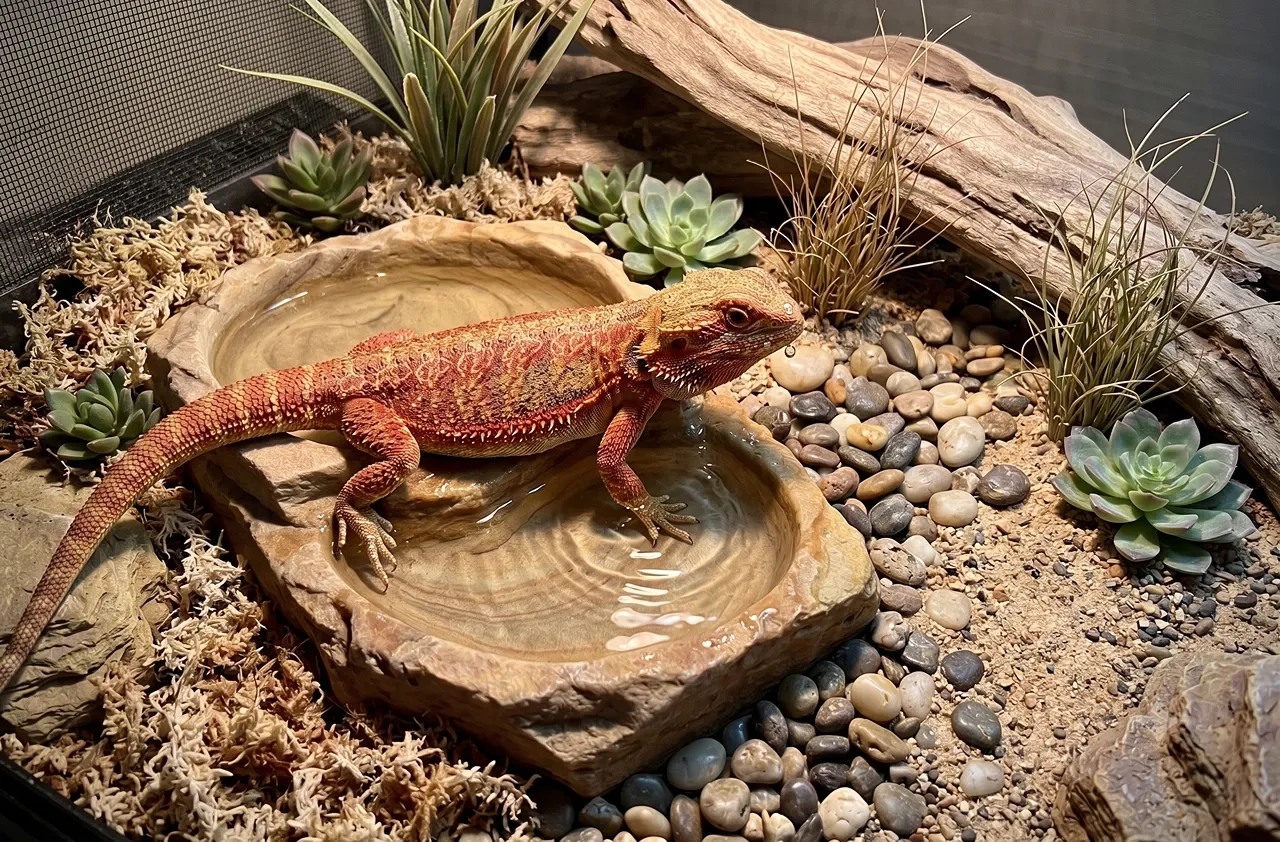
A dragon that walks through the dish, sits in it, or flicks its tongue at the rim is still using it. Standing in shallow water is normal behaviour and counts as enrichment rather than confusion.
The Case for Keeping a Bowl Anyway
Reptile vets see dehydrated dragons constantly, and most come from tanks with no water source at all. When researchers deprived bearded dragons of water for 48 hours in a 2018 study, the dragons drank eagerly the moment water returned. They know when they need it.
That is the whole argument in one line. Your dragon may ignore the dish for three months, then drink hard after a rough shed, a course of antibiotics, or waking from brumation.
The bowl costs nothing on the days it goes unused. On the one day it matters, it is there. Veterinary guidance from VCA Animal Hospitals backs this position with no hedging: fresh water should be available every day.
Dragons Cannot Drink Through Their Vent
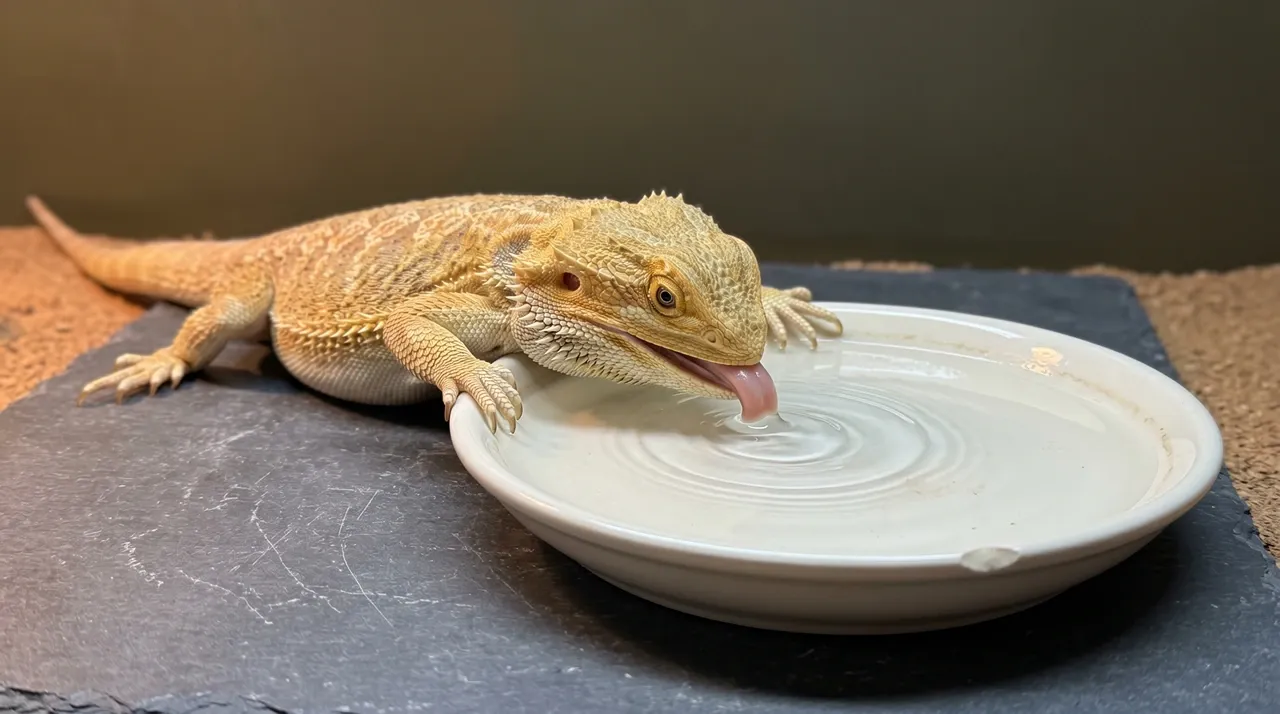
Old care sheets claim bath water gets absorbed through the skin or the vent. It does not. Dragons hydrate in the bath by lapping, which is the slow tongue-dip you see once they settle into the water.
This myth matters because owners skip the bowl, give a weekly soak, and assume the job is done. If the dragon never drank during that soak, it took on almost nothing.
When a Water Bowl Causes Real Problems
The anti-bowl argument is built on humidity, and it is not imaginary. Bearded dragons do best between 30 and 40% relative humidity. A tank that sits above the correct humidity range for weeks grows bacteria and mould faster than most owners expect.
Chronic damp is also the classic setup for a respiratory infection, which means a vet visit rather than a husbandry tweak.
Here is the honest scale of the problem. A mug-sized dish in a ventilated 4x2x2 typically moves the gauge by 2 to 3%. A wide bowl in a small sealed glass tank in a humid climate is a different story entirely.
Keep the Dish on the Cool End
Placement decides most of the humidity question. Water under the basking lamp evaporates fast and turns warm within the hour, and warm stagnant water is exactly what bacteria want.
On the cool end, evaporation slows to almost nothing and the water stays fresh far longer. Check the effect with digital hygrometer readings taken mid-tank before and a day after adding the dish. A change under 5% means the bowl is not your humidity problem.
Skip Deep Bowls for Hatchlings
A hatchling can drown in water an adult would barely notice. Babies are clumsy, fall asleep in odd places, and lack the strength to push out of a slick-sided dish.
Under roughly three months, skip standing water entirely. Mist their greens, offer drops from a syringe, and lean on the rest of a solid hatchling care routine. From three to six months, a milk-bottle-cap depth of water is plenty.
Does Your Dragon Need a Water Bowl
Do bearded dragons need a water bowl in every single setup? No. The answer comes down to your climate, your enclosure, and the dragon’s age, so run your own situation against this table rather than someone else’s.
| Your situation | What to do |
|---|---|
| Adult in a dry or average home | Shallow bowl on the cool end, water changed daily |
| Humid room or sealed tank reading over 50% | Offer the bowl a few hours a day. Hydrate mainly through wet greens and soaks |
| Hatchling under three months | No standing water. Misted greens and syringe drops instead |
| Juvenile three to six months | Bottle-cap depth only, watched closely the first week |
| Leatherback or silkie morph | Bowl plus extra misting. Reduced scales lose water roughly twice as fast |
| Recovering from constipation or a stuck shed | Bowl plus warm soaks until poop and skin return to normal |
Where Most of Their Water Actually Comes From
Even bowl-trained dragons take most of their water from food. Collard greens, rocket, and squash all run high in water content, and a salad served still wet from rinsing quietly delivers a daily drink.
Misting the salad works better than misting the tank. The droplets sit where the dragon is already eating, and nothing lands on the substrate to push humidity up.
Soaks are the backup, not the foundation. The full soak technique only hydrates a dragon that drinks during the bath, so watch for lapping rather than assuming the water itself did anything.
Whatever mix you settle on, learn the early dehydration signs. Skin that tents when gently pinched and urates that turn dry and chalky are telling you the current routine is falling short.
How to Set Up the Bowl Properly
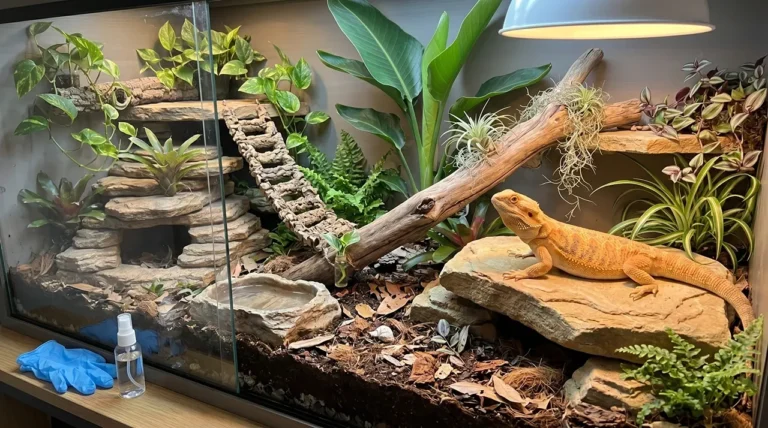
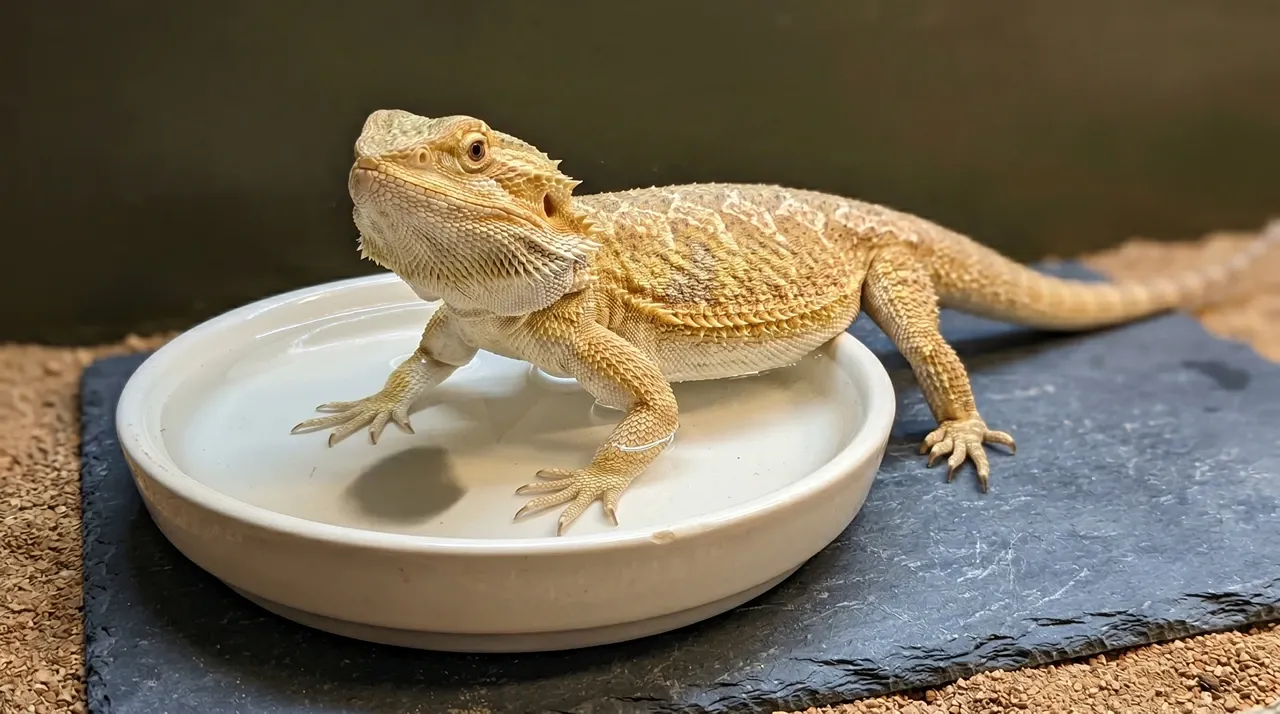
The right bowl is wide, shallow, and heavy. A glazed ceramic dish about the diameter of a coffee mug, filled no higher than the dragon’s knees, covers drinking and the occasional wallow with zero drowning risk. For most adults that is 1 to 1.5 cm of water.
Skip anything tall, narrow, or lightweight. Plastic scratches and holds bacteria in the grooves, and a light bowl tips over the first time your dragon digs next to it.
Tap water is fine in most areas. Hard water carries no risk for reptiles, a conditioner like ReptiSafe is optional rather than required, and distilled water has no place here at all.
Change the water daily whether it looks used or not, and scrub the dish with reptile-safe disinfectant once a week. Biofilm forms on the bottom within a couple of days, and a slimy bowl does more harm than no bowl.
Questions New Owners Keep Asking
Why does my bearded dragon sit in its water bowl?
Usually cooling off, easing a shed, or plain habit, and none of those are a concern in shallow water. If it lives in the bowl all day, check your basking and cool-end temperatures, because constant soaking can signal an overheated tank.
Can bearded dragons drink tap water?
Yes, in most areas. Hard water is safe for reptiles, and a water conditioner is optional rather than necessary. Skip distilled water, which carries no minerals at all.
How often should I change the water in the bowl?
Daily, plus a disinfecting scrub once a week. Replace it immediately any time the dragon walks through it with dirty feet or poops in it.
Do baby bearded dragons need a water bowl?
No, and a deep one is a drowning risk. Hydrate hatchlings with misted greens and syringe drops, then introduce a bottle-cap depth of water from around three months.
Is it normal that my dragon never drinks from its bowl?
Completely normal. Over half of owners never witness bowl drinking, because dragons take most of their water from food. Keep the bowl available and judge hydration by skin and urates instead.
What to Change in Your Tank Today
Five minutes of checks settle whether your bearded dragon needs a water bowl in your setup. Work down this list in order.
- Take a mid-tank humidity reading. Under 45%, a bowl is safe in your setup.
- Swap in a heavy glazed ceramic dish no deeper than your dragon’s knees.
- Place it on the cool end, well away from the basking zone.
- Add a daily water change and a weekly disinfecting scrub to your cleaning routine.
- Serve tomorrow’s salad still wet from rinsing.
- Pinch-test the skin on the back once a week and confirm urates stay white, not yellow and chalky.
Written by
Sarah ArdleySarah has kept bearded dragons for over ten years. She founded Beardie Husbandry after discovering that most mainstream care advice — including what she followed with her first dragon — was doing more harm than good. Every article on this site is grounded in veterinary research and real keeper experience.