My Bearded Dragon Broke a Nail (What to Do Right Now)
A snapped nail on a bearded dragon bleeds far more than its size suggests. The bright red against pale skin is what sends most keepers into a panic.
The good news first: when a bearded dragon broke a nail, it is rarely a true emergency. Most cases stop bleeding within minutes and heal on their own with basic wound care at home.
The injury looks worse than it is because the nail has a living core called the quick, packed with blood vessels and nerves. Break or tear that core and it bleeds quickly.
Your job is simple. Stop the bleeding, keep the wound clean, and watch for the small number of cases that need a vet.
What you should not do matters just as much. A lot of the advice floating around reptile forums involves products that do real harm to a dragon’s healing tissue.
Knowing which ones to skip is half the battle. A small stocked first aid kit with styptic powder in it turns this from a panic into a two-minute job.
Is a Broken Nail an Emergency
For most keepers, the answer is no. A torn or snapped claw is a minor injury that a healthy adult dragon shrugs off within a week or two. The bleeding is the alarming part, not the danger.
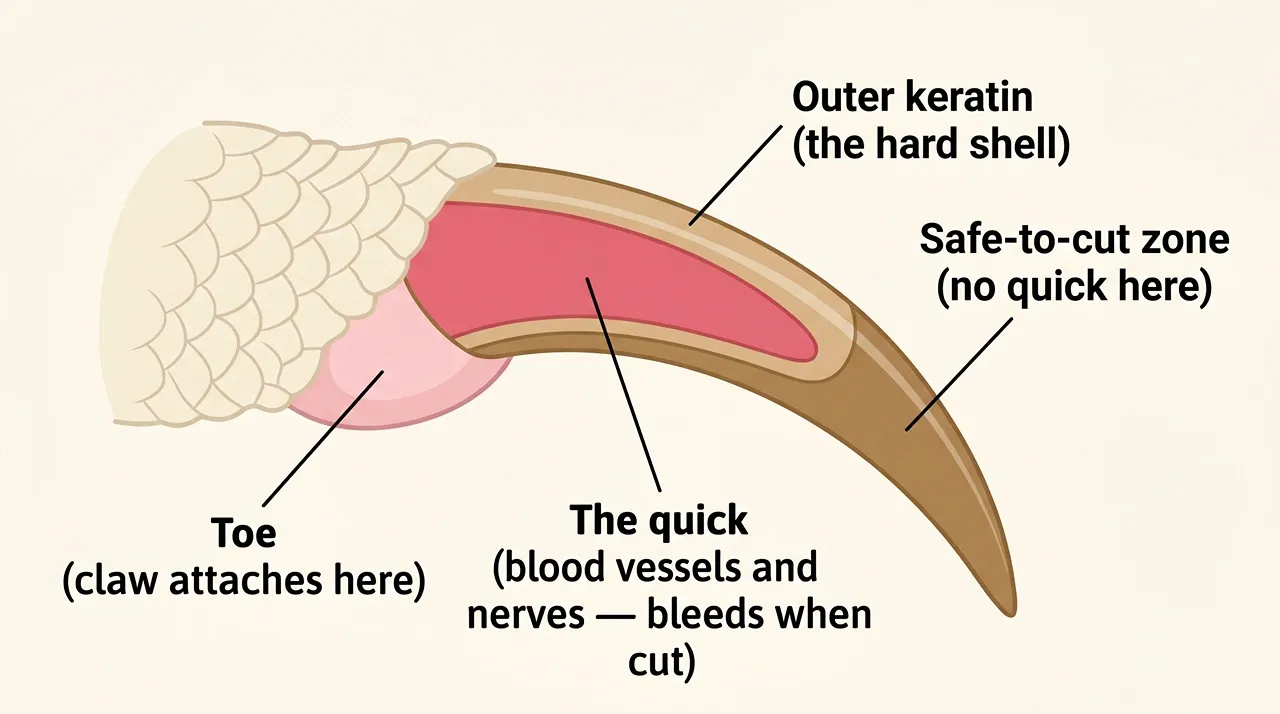
That said, the injury type changes the picture. A nail clipped slightly too short bleeds and stops fast.
A nail torn sideways with the quick hanging out is more painful and more open to infection. A nail ripped out at the base, leaving the toe raw, sits at the serious end and earns a closer look.
Knowing which one you are dealing with tells you how urgently to act. Here is how the three common scenarios break down.
| What you are seeing | Severity | What to do |
|---|---|---|
| Tip snapped or clipped short, small steady bleed | Minor | Stop the bleed at home, monitor for a week |
| Nail torn sideways, quick exposed, still attached | Moderate | Stop the bleed, clean daily, watch closely for infection |
| Nail ripped out at the base, toe raw or bone visible | Serious | Stop the bleed, then book a reptile vet |
| Old nail black, dry, falling off, no fresh blood | Different problem | Likely necrosis or infection, get it checked |
That last row catches people out. A black nail that is dry and lifting away is not a fresh break.
It points to dead tissue or an underlying infection. That is the same necrotic darkening keepers learn to spot on a rotting tail, and it needs a vet rather than a styptic stick.
How to Stop the Bleeding Fast
You have a few minutes of bleeding before this becomes worth worrying about. A healthy dragon clots a nail bleed in two to five minutes with light pressure. The faster you act, the less mess and the calmer your dragon stays.
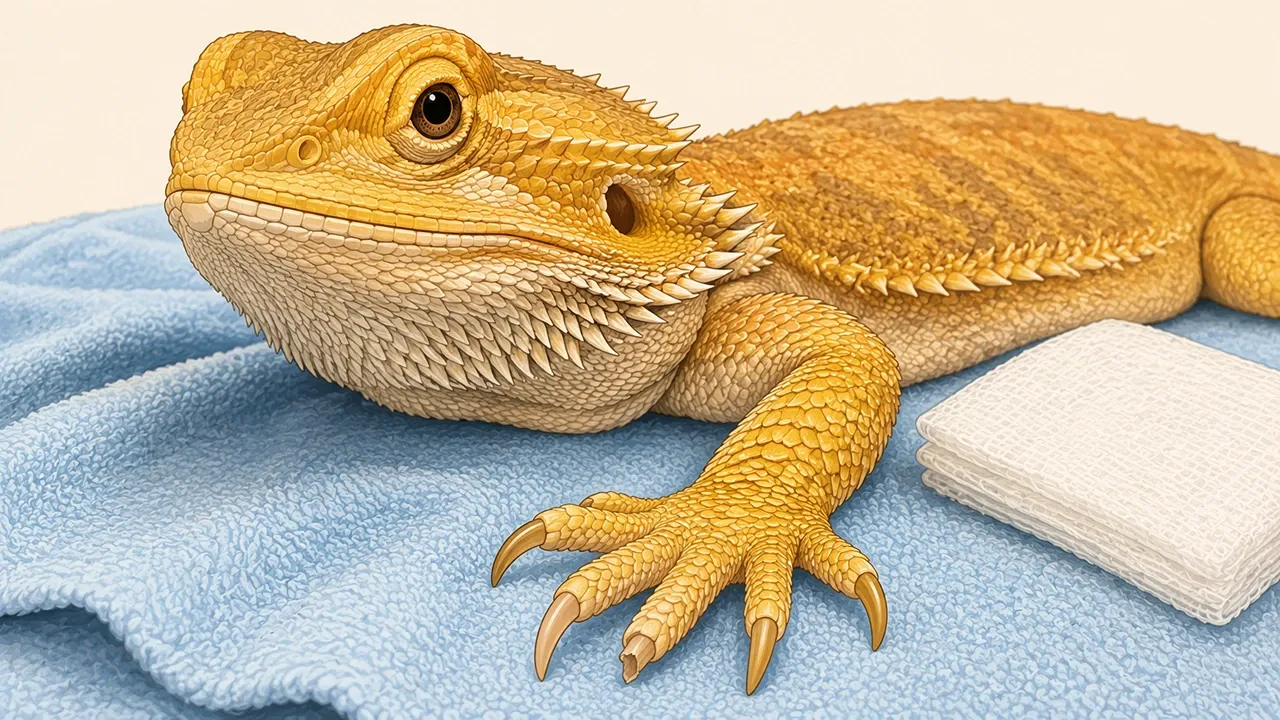
Wrap the dragon loosely in a soft towel so only the injured foot is free. This gives you a steady grip and stops the thrashing that reopens the wound.
If your dragon fights restraint, the same calm handling technique that prevents bites keeps a struggling foot still long enough to work.
Press a clean piece of gauze or kitchen roll against the nail for thirty seconds without peeking. Lifting the pad to check breaks the forming clot and restarts the bleed. If it is still going after the first try, press again for a full minute.
Pro tip: Styptic powder is the fastest stop, but plain cornflour or unflavoured flour works almost as well. Dip the nail tip straight into a small pile of it. Keep a sachet in your dragon’s kit so you are never hunting for it mid-bleed.
Avoid styptic products containing benzocaine. The numbing agent is fine for dogs and cats but not safe for reptiles. Read the label before you buy, and a plain styptic powder marketed for birds or small animals is the safest bet.
Once the bleeding stops, leave the nail alone. Resist the urge to wipe, dab, or inspect it repeatedly. The clot is fragile for the first hour and every poke risks reopening it.
What Not to Put on a Bleeding Nail
This is where most online advice goes wrong. Several popular home remedies do real harm to reptile tissue, and a panicking owner reaching for the bathroom cabinet often makes the wound worse.
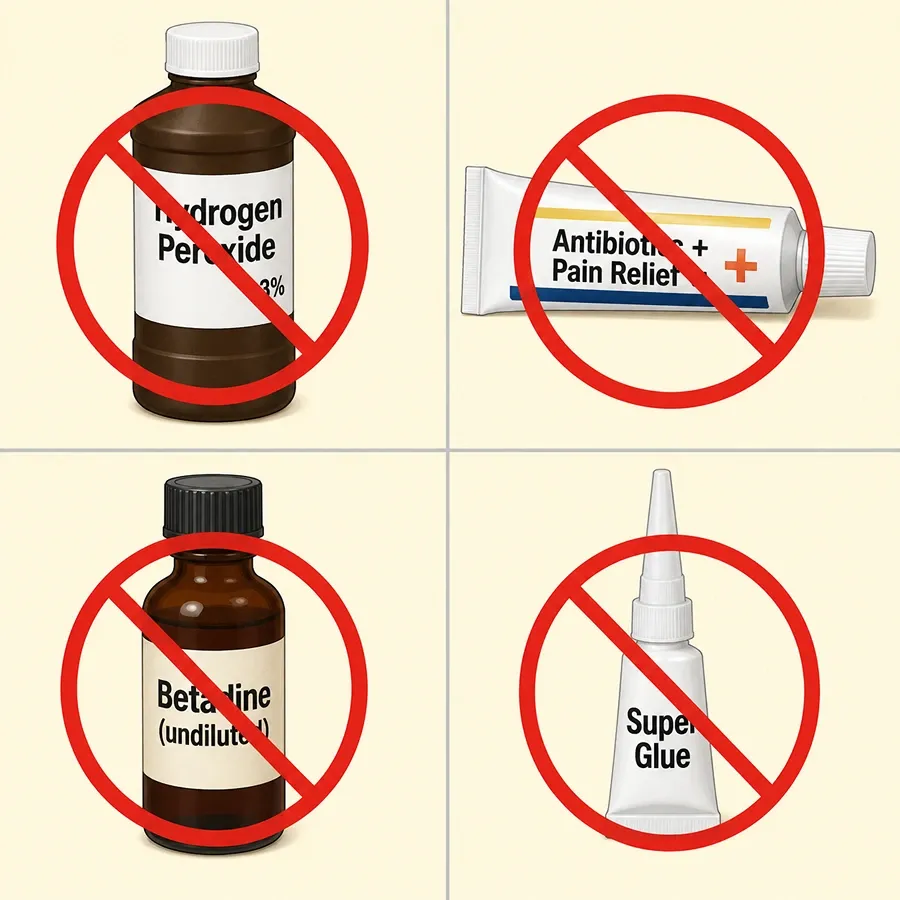
Do not use these on a bearded dragon nail:
- Hydrogen peroxide: it kills healthy tissue along with bacteria and slows healing badly.
- Neosporin or antibiotic creams containing pain relief: the “plus pain relief” versions contain ingredients toxic to reptiles.
- Full-strength Betadine: always dilute it to the colour of weak tea before it touches the wound.
- Super glue or nail glue: it traps bacteria against an open wound and is never appropriate here.
The safe approach is simpler than any of these. Stop the bleed, then keep the area clean and dry.
If you want antiseptic protection, a heavily diluted chlorhexidine or Betadine solution is the gold standard, used sparingly. Veterinary wound guidance from the Merck Veterinary Manual backs this up: clean fresh wounds with a mild disinfectant and skip the harsh stuff.
Aftercare for a Healing Nail
Once the nail has clotted and a few hours have passed, you can give the foot a gentle clean. This matters most for the torn-sideways and ripped-out cases where tissue is exposed.
Run a shallow, warm soak for ten to fifteen minutes. A few centimetres of water at around 32°C, with a tiny amount of diluted Betadine, lets the dragon sit comfortably while the wound stays clean.
The same warm soak routine you use for hydration and shedding doubles as wound care here. A calm dragon in shallow water is far easier to treat than one held mid-air.
Pat the foot dry afterward with clean kitchen roll. A thin smear of plain antibiotic ointment, the kind with no added painkiller, protects an open wound for the first day or two. Less is more here.
Pro tip: Swap loose substrate for paper towel or reptile carpet while the wound heals. Loose particles stick to an open nail bed and drag bacteria into the wound, which is the single most common cause of a nail injury turning into an infection.
You do not need to gut your whole setup. Reptile carpet over the basking area and a clean, simple layout for a week or two is enough. The full décor goes back once the toe has sealed over.
Quiet Days Heal Faster
A wound on a foot heals fastest when the dragon is not climbing and scrambling over rough surfaces constantly. You do not need to confine your dragon, but skip the rough basking rock and any sharp edges for a few days.
Daily handling should drop to the minimum while the wound seals. Quiet, low-stress days speed healing more than any ointment does.
When a Broken Nail Needs a Vet
The minority of cases that need professional help share clear warning signs. A dragon that is otherwise eating, basking, and moving normally almost never falls into this group. Swelling that spreads up the foot toward a swollen limb is the line where home care ends and a vet call begins.
Book a reptile vet if you see any of the following.
- Bleeding that does not stop after fifteen minutes of proper pressure and styptic powder.
- The whole nail ripped out at the base with the toe raw or bone exposed.
- Swelling, heat, pus, or a foul smell developing over the days that follow.
- The toe turning dark, black, or shrivelled after the injury.
- Your dragon limping, refusing to bask, or going off food for more than a day or two.
Infection is the real risk with any nail injury, not the bleeding itself. A wound that looked fine on day one can sour by day three, so the watching matters as much as the first aid.
Keeping a trusted exotics vet on file before you need one saves a frantic search during an actual emergency. A general small-animal practice often cannot treat reptiles, which is exactly the wrong thing to discover at 9pm with a bleeding dragon.
Cost is usually modest for a simple nail injury. A consult and a topical or oral antibiotic typically lands in a reasonable range, far less than owners fear when they spot blood.
Why It Happened and Stopping the Next One
Broken nails almost always trace back to one of a handful of causes, and most are easy to design out of an enclosure. When a bearded dragon broke a nail once, it tends to happen again unless something in the setup changes.
The usual culprits are overgrown claws catching on fabric, hammocks, or loose carpet loops, rough scrambling on glass during a stressed moment, and the odd accident during handling. Overgrown nails are the most common and the most preventable.
Keeping claws at a sensible length removes most of the risk. A proper claw trimming routine every few weeks keeps them from reaching the point where they hook and tear. Snagging on loose-loop fabric is another frequent cause, so swap any frayed hammock or carpet for a tighter weave.
Rough basking surfaces help wear nails down naturally between trims. A flat slate tile or a textured branch under the basking lamp does double duty, giving good grip while filing the claws as the dragon climbs.
Pro tip: Check your dragon’s claws every time you do a routine soak. A thirty-second look during a bath you are already running catches an overgrown or splitting nail long before it snags and tears.
Common Questions About Broken Nails
Will a bearded dragon nail grow back after breaking
Yes, in most cases. If the nail bed is intact, the claw regrows over several weeks to a few months. A nail torn out at the base may grow back deformed or not at all, but dragons cope perfectly well missing the odd claw.
How long will a broken nail bleed
A healthy dragon usually stops bleeding within two to five minutes with light pressure. Styptic powder or cornflour speeds this up. Bleeding that continues past fifteen minutes despite pressure needs a vet.
Can I leave a broken nail alone to heal
A minor snapped tip with no exposed tissue can often heal on its own once bleeding stops. Keep the enclosure clean and watch for infection. Open or torn-out nails need cleaning and closer monitoring.
Should I cut a partly torn nail off myself
No. A nail hanging by a thread can be tempting to remove, but cutting into living tissue causes more pain and bleeding. Leave a partly attached nail for a vet to assess if it does not come away cleanly on its own.
What can I put on a bearded dragon nail to stop bleeding
Styptic powder is fastest, and plain cornflour or unflavoured flour works in a pinch. Press it onto the bleeding point with light pressure. Skip hydrogen peroxide, which damages healing tissue.
Your Quick Action Plan
If your dragon has just torn a nail and you are reading this with blood in front of you, work through these steps in order.
- Wrap the dragon in a soft towel, leaving only the injured foot free.
- Press clean gauze or kitchen roll onto the nail for thirty seconds without lifting to check.
- If still bleeding, dip the nail in styptic powder or cornflour and press again for a minute.
- Once clotted, leave the nail completely alone for at least an hour.
- Swap loose substrate for paper towel or reptile carpet over the basking area.
- Give a shallow warm soak with diluted Betadine after a few hours, then pat dry.
- Watch for swelling, pus, smell, or a darkening toe over the next several days.
- Book a reptile vet if bleeding will not stop, the toe looks raw, or infection sets in.
Written by
Sarah ArdleySarah has kept bearded dragons for over ten years. She founded Beardie Husbandry after discovering that most mainstream care advice — including what she followed with her first dragon — was doing more harm than good. Every article on this site is grounded in veterinary research and real keeper experience.