Bearded Dragon Salmonella Risk and How to Stay Safe
Bearded dragon salmonella is one of those topics that sounds terrifying until you see how transmission actually works. Healthy dragons can carry the bacteria in their gut and shed it in their droppings without ever looking sick. You cannot spot a carrier by eye.
The risk to a healthy adult is low and almost entirely down to hygiene, not luck. Get a few habits right and the danger drops close to nothing.
The picture changes for very young children, older adults, and anyone with a weakened immune system. That is where nearly all real cases come from. Sensible routines around how you handle your bearded dragon and clean up afterwards close almost every gap.
Is Bearded Dragon Salmonella Actually Dangerous
For most healthy adults and older children, the honest answer is no, not if you wash your hands properly. Salmonella from a reptile causes the same illness as a bad case from undercooked chicken, and the same hygiene defeats it.
The danger is real but specific. It concentrates in households with high-risk members, and it climbs sharply when owners get casual about hand washing or let the dragon roam near food.
The 2024 CDC outbreak tied to pet dragons infected 15 people across nine states, and 60% of them were children under five. You can read the full detail in the CDC outbreak investigation, which tracks exactly how these infections spread.
No deaths. Four hospitalisations. That pattern repeats across every reptile-linked outbreak on record: small numbers, mostly young children, almost always preventable.
Why Healthy Dragons Still Carry It
Salmonella lives quietly in the reptile gut as a normal resident, not an infection. Your dragon is not sick and will never act sick from carrying it.
Research on captive reptiles has found that the large majority shed salmonella at some point, often intermittently rather than constantly. A single clean stool test does not prove your dragon is clear, because shedding comes and goes.
That intermittent shedding is exactly why testing the dragon is mostly pointless. The bacteria sit in the droppings, then spread to the dragon’s skin, the substrate, and every surface it walks across.
This is also why a dragon that looks spotless can still be a source. Clean-looking and salmonella-free are not the same thing. Treat every dragon as a carrier and your habits stay correct regardless of what any test says.
Who Is Most at Risk in Your Home
Risk is not equal across a household. The same contact that does nothing to a healthy adult can hospitalise an infant, because young immune systems and lower stomach acid let a smaller dose take hold.
Nearly every serious bearded dragon salmonella case in people involves one of the groups below.
Match your precautions to the person, not to a single blanket rule.
| Household member | Risk level | What to do |
|---|---|---|
| Children under 5 | High | No direct contact. An adult handles all feeding and cleaning. |
| Adults 65 and over | Raised | Limit handling, wash hands every time, stay away from food prep. |
| Pregnant household members | Raised | Avoid cleaning the enclosure where possible. Delegate the messy jobs. |
| Anyone immunocompromised | High | Avoid contact. Hand feeding and cleaning go to someone else. |
| Healthy adults and older kids | Low | Wash hands after every contact. No kissing, no kitchen-sink baths. |
If a baby or a vulnerable adult lives with you, keep the enclosure out of bedrooms and well away from the kitchen. A dragon roaming a worktop where food gets prepared is the single worst setup you can build.
How the Bacteria Reaches You
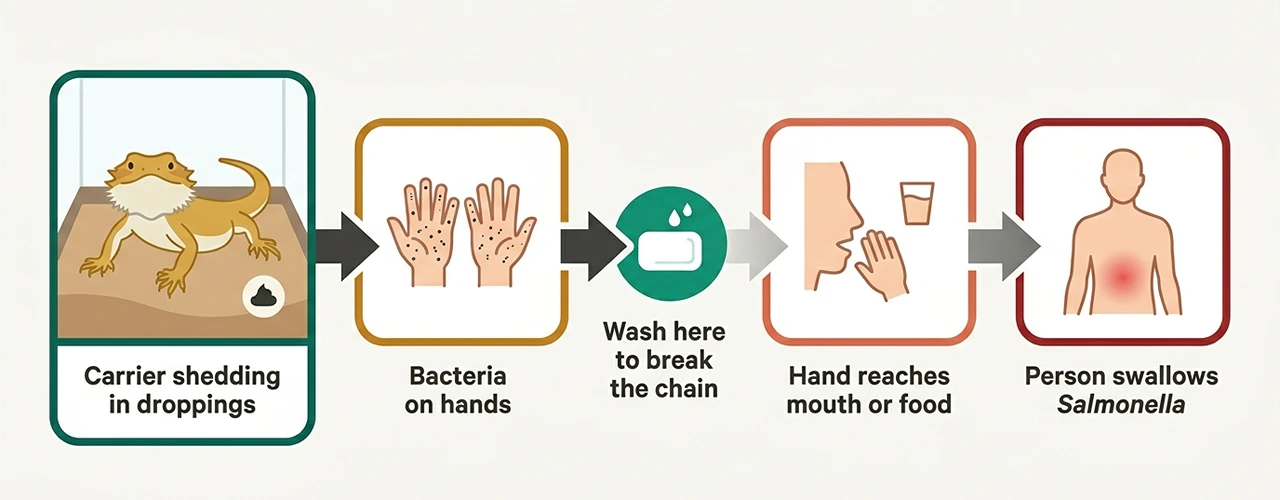
Salmonella does not jump or float. It moves on your hands. You touch the dragon or something in its enclosure, then touch your mouth, a drink, or food, and swallow it.
That is the whole chain. Break the hand-to-mouth step and you break the infection. The entire bearded dragon salmonella risk lives in that one link.
The contamination spreads wider than people expect. The bacteria living in your dragon’s droppings end up on the dragon’s feet, then on the glass, the basking rock, the water bowl, and your sleeves.
The Bath Is the Biggest Trap
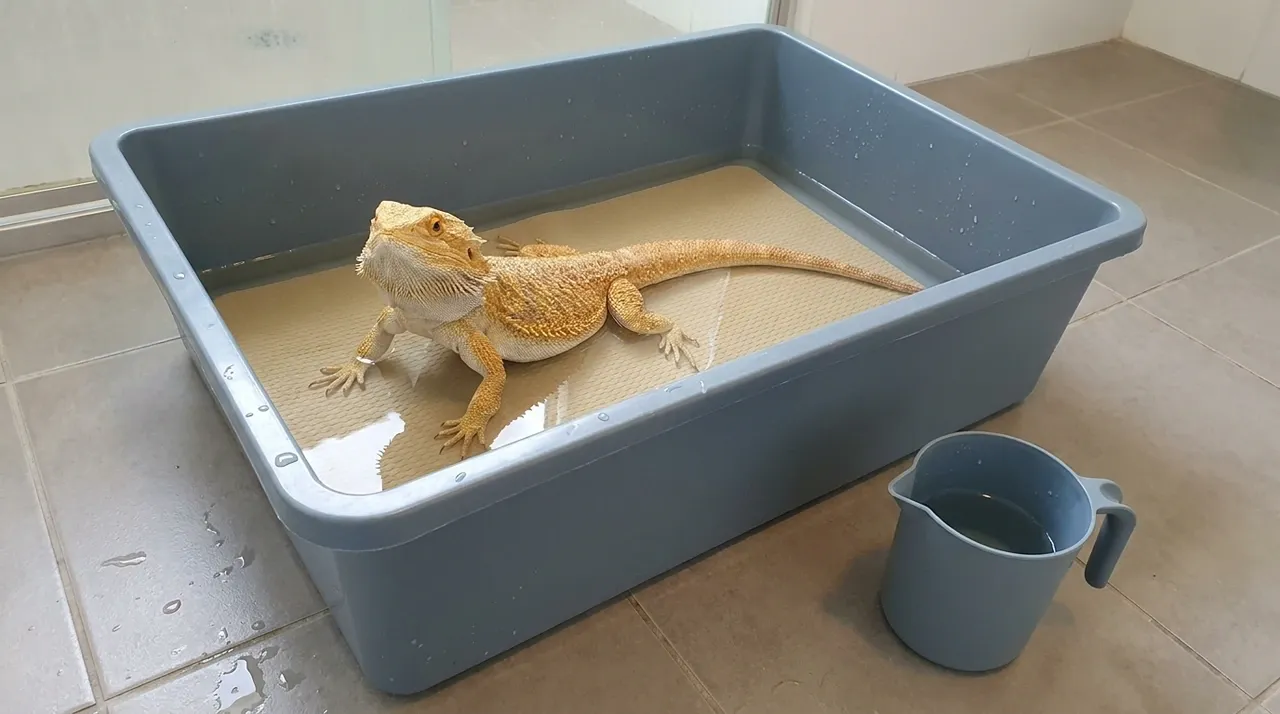
Bath time is where most owners contaminate their home without noticing. Dragons very often pass droppings in warm water, which turns the bath into a salmonella soup that then coats the basin.
Never use the kitchen sink. Never use a basin you also use for dishes or food. The safest option is a dedicated plastic tub kept only for the dragon.
After every soak, disinfect the tub and the surface around it, not just a quick rinse. The way you bathe your bearded dragon matters as much for your kitchen as it does for the dragon’s skin.
The Hand Washing Mistake Most Keepers Make
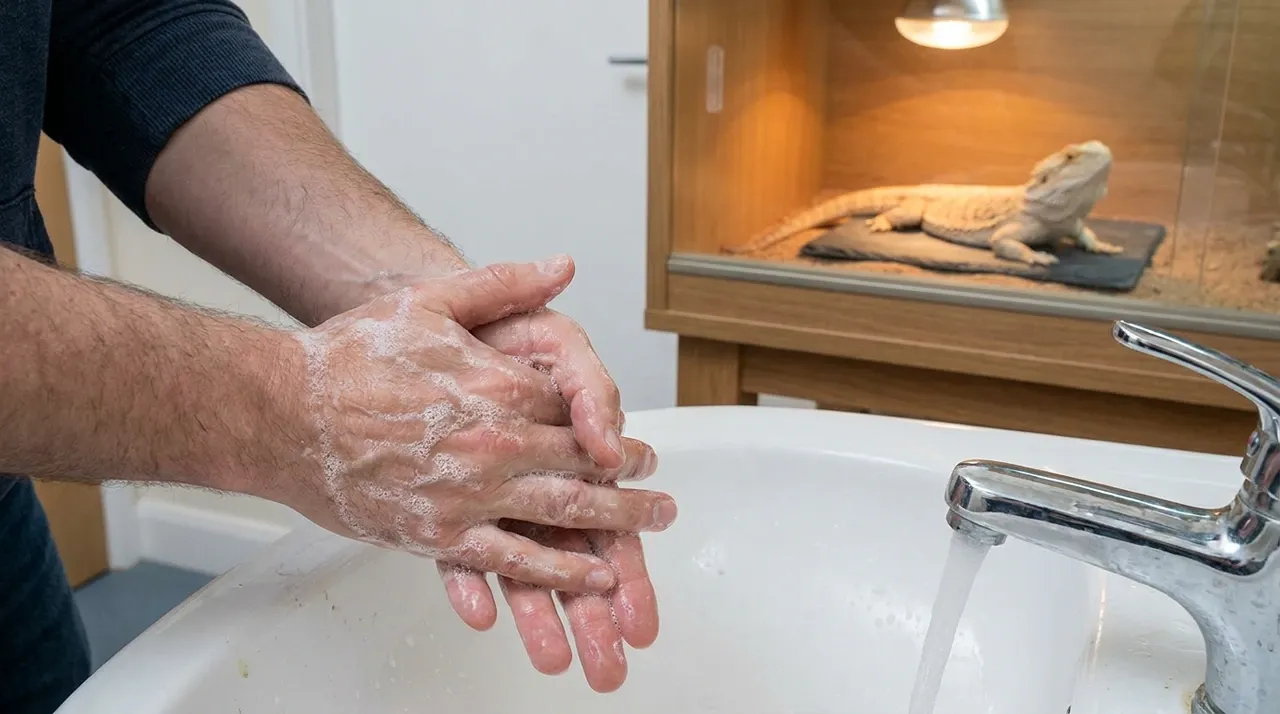
Soap and warm water for at least 20 seconds, with friction across the backs of the hands and under the nails. That is the standard, and most people fall short on time and coverage.
Wash after every single contact. Not just after cleaning, but after a five-second handle, after spot-cleaning, after touching the water bowl.
This single habit prevents the large majority of bearded dragon salmonella infections.
Why Hand Gel Is Not Enough
Alcohol hand gel does not reliably kill salmonella, and it does nothing on visibly soiled hands. After reptile contact, soap and running water is the only method you should trust. Keep the gel as a backup for when a sink really is out of reach.
This catches out careful owners who think a pump of sanitiser covers them. It does not. The bacteria has a tough outer layer that alcohol struggles with, and any speck of substrate or waste shields it completely.
How to Disinfect the Enclosure Properly
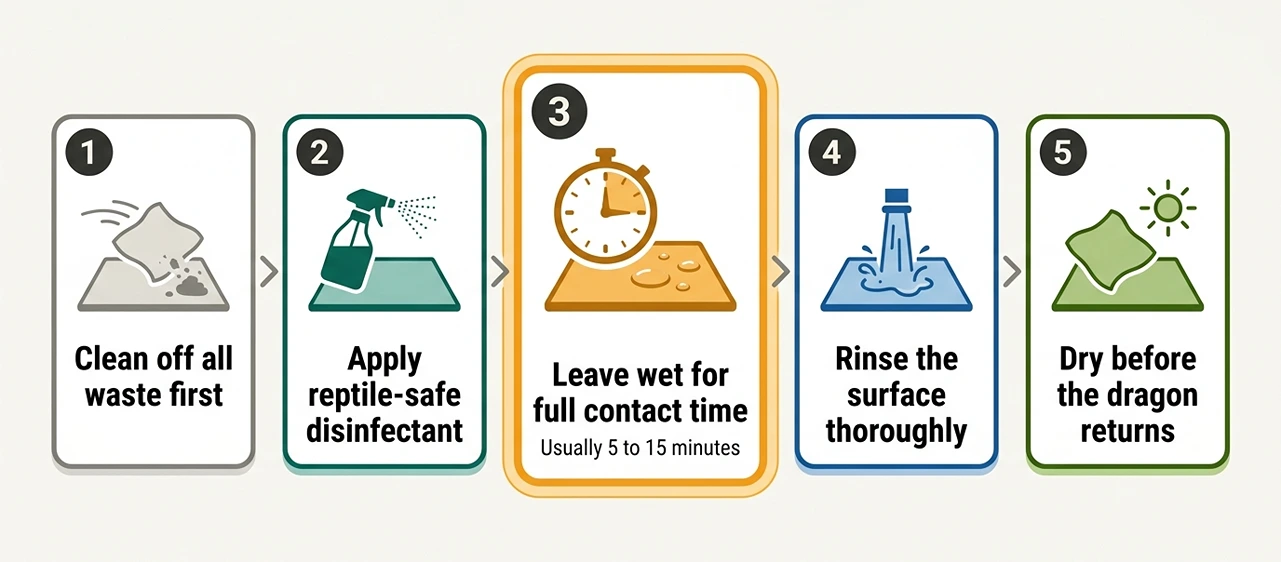
Cleaning and disinfecting are two different jobs. Wiping away mess removes the visible waste. Disinfecting kills what you cannot see, and it only works on a surface that is already clean.
Disinfecting is where the bearded dragon salmonella risk in your home actually drops.
Spot-clean droppings the moment you see them. Do a full disinfect of the enclosure on a regular schedule, and always the moment the enclosure starts to smell, since odour means waste has built up beyond what spot-cleaning caught.
What Actually Kills Salmonella
A reptile-safe veterinary disinfectant such as F10SC or an accelerated hydrogen peroxide product is the easiest reliable choice. Dilute to the label rate, leave the surface visibly wet for the stated contact time, usually 5 to 15 minutes, then rinse and dry.
Diluted household bleach works too, at roughly one part bleach to ten parts water, left for ten minutes before a thorough rinse. The contact time is the part people skip, and skipping it is the same as not disinfecting at all.
Pro tip: Keep all dragon cleaning gear separate. A dedicated sponge, scrubbing brush, and bucket that never touch human dishes. Porous decor needs the same care, so learn how to sanitise wood and rocks rather than just rinsing them under the tap.
Should You Test Your Dragon for Salmonella
Almost never, and here is the reasoning. Because shedding is intermittent, a negative stool test today tells you nothing about tomorrow. You would be paying for a result that cannot be trusted.
Testing makes sense in one situation: a vet investigating a sick dragon or a confirmed human infection traced to the home. Outside that, your money does more good spent on better hygiene gear.
Why Antibiotics Are the Wrong Move
Do not ask a vet to clear salmonella from a healthy dragon with antibiotics. It does not eradicate the bacteria, and it actively breeds resistant strains that are far more dangerous if a person does catch them.
This is settled best practice among reptile vets now. If a stool test is flagging something else entirely, that points toward internal parasites, which is a separate problem with a real treatment path. For anything ambiguous, a reptile-savvy vet is worth the trip.
Salmonella Symptoms to Watch in People
Bearded dragon salmonella produces the same illness in people as any other source of the bacteria. Human symptoms usually appear 6 hours to 6 days after exposure. Most cases bring diarrhoea, fever, and stomach cramps, and clear up on their own within 4 to 7 days.
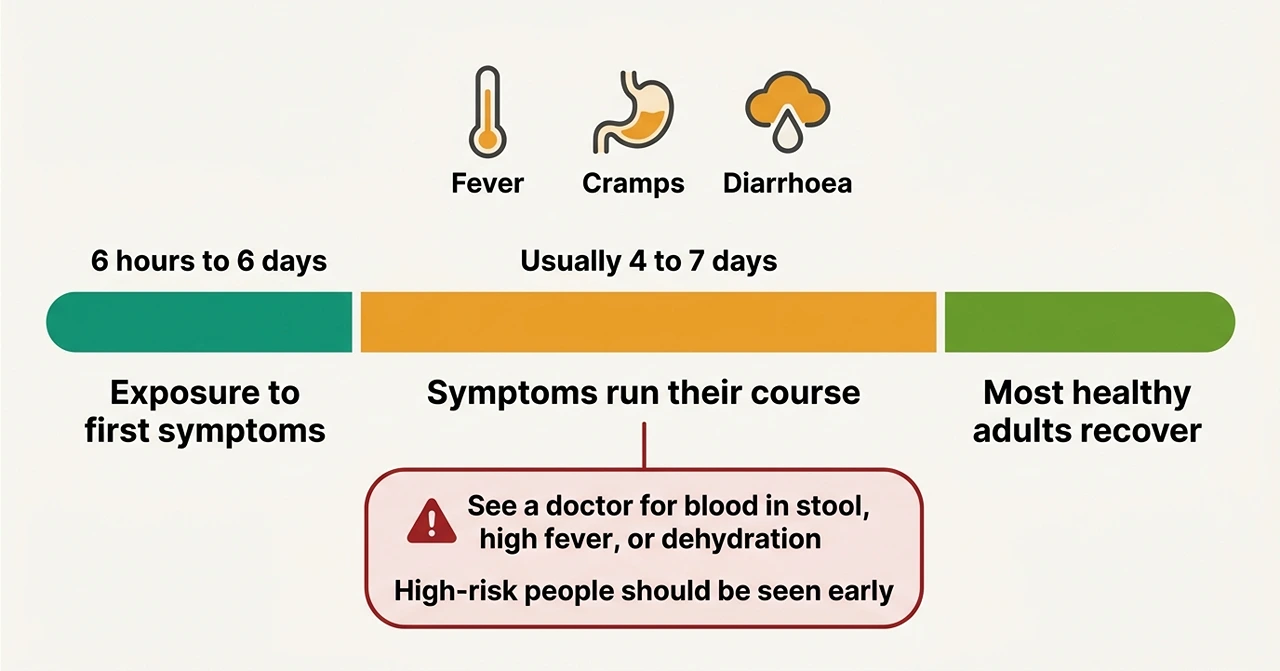
The illness rarely needs treatment in a healthy adult. Rest and fluids handle it, the same as any bad stomach bug.
See a doctor straight away if a sick person has blood in their stool, a fever above 39°C, signs of dehydration, or vomiting that blocks fluids. Anyone under five, over 65, pregnant, or immunocompromised should be seen early rather than waiting it out.
Questions Keepers Ask About Salmonella
Can I get salmonella from holding my dragon?
Not from holding alone if your hands stay away from your face. Infection needs the bacteria to reach your mouth, so the risk is in what you touch next, not the contact itself.
Does a clean enclosure mean no salmonella?
No. A spotless dragon can still carry and shed it, because the bacteria live in the gut. Cleanliness lowers the dose you meet, which is why it matters, but it never removes the carrier status.
Can the salmonella make my dragon sick?
Very rarely. In a healthy dragon the bacteria behave as a normal gut resident. Illness in the dragon usually points to a different cause worth a vet’s attention.
Can I bath my dragon in my tub?
Only if you disinfect it thoroughly afterwards every time. A dedicated tub is far safer and removes the guesswork, especially in a home with young children.
Can children keep a bearded dragon safely?
Older children can with supervision and strict hand washing. Children under five should not have direct contact, as they make up the majority of reptile-linked cases.
Your Salmonella-Safe Routine
Lock these habits in and the bearded dragon salmonella risk stays where it belongs, which is very low.
- Wash hands with soap and water for 20 seconds after every contact, no exceptions.
- Keep children under five away from direct contact entirely.
- Bath the dragon in a dedicated tub, never the kitchen sink, and disinfect it after.
- Spot-clean droppings on sight and disinfect the enclosure on a set schedule.
- Give salmonella the right contact time on every surface, then rinse and dry.
- Keep all dragon cleaning gear fully separate from human kitchenware.
- Never kiss the dragon and never eat or drink while handling it.
- Keep the enclosure out of kitchens, bedrooms, and any food-prep area.
This article is written for educational purposes and is not a substitute for veterinary or medical advice. Contact a reptile-experienced vet for any concern about your dragon, and a doctor for any suspected salmonella infection in a person, especially a child or a vulnerable adult.
Written by
Sarah ArdleySarah has kept bearded dragons for over ten years. She founded Beardie Husbandry after discovering that most mainstream care advice — including what she followed with her first dragon — was doing more harm than good. Every article on this site is grounded in veterinary research and real keeper experience.