Bearded Dragon Substrate Guide: Sand, Tile, or Carpet?
The bearded dragon substrate debate has been running since the early days of the hobby, and it shows no sign of cooling down. Pick any reptile forum and you will find slate tile, reptile carpet, and loose sand all defended with equal conviction. What most of those threads miss is that the argument is not really about which substrate looks best. It is about which substrates carry real risk for your specific dragon, at their specific age, in their specific health condition.
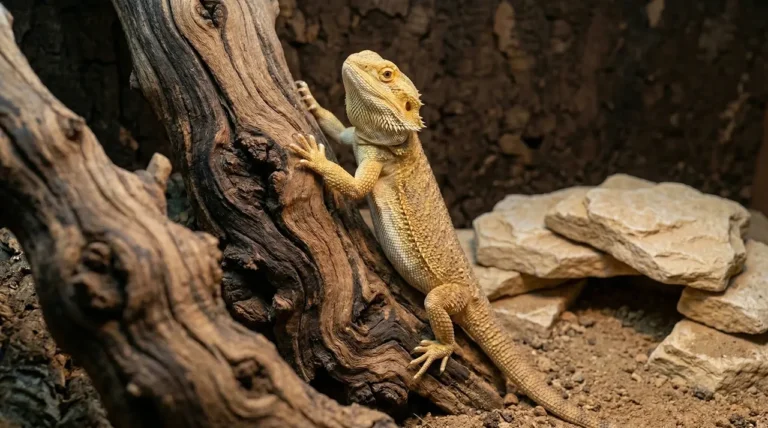
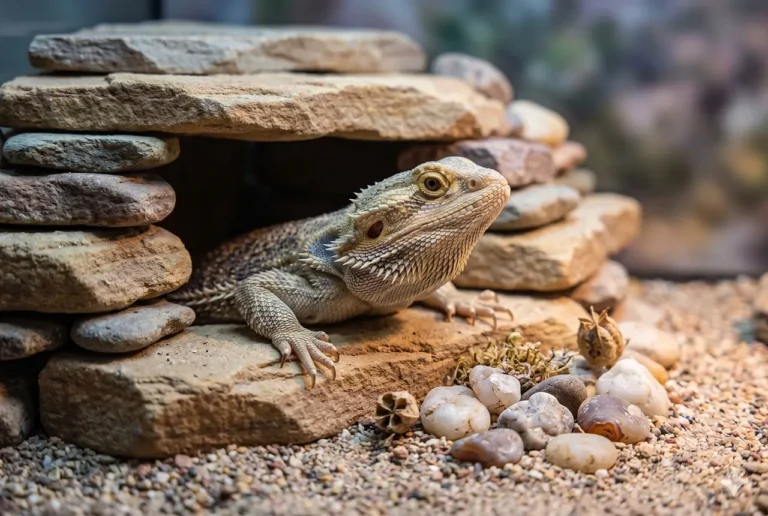
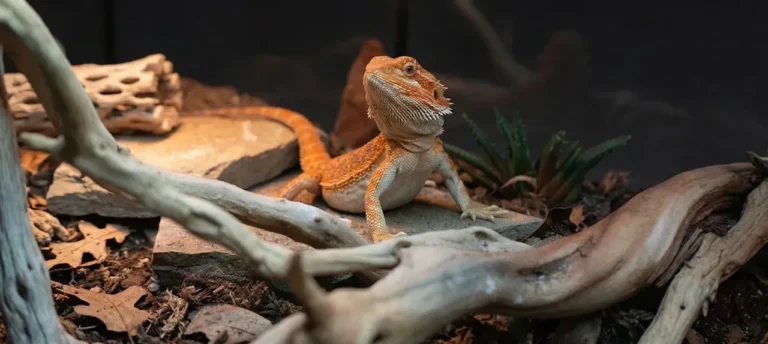
Wild Pogona vitticeps lives on hard-packed clay, compacted red soil, and rocky outcrops in the semi-arid interior of Australia. The natural surface is firm, warm, and rarely loose enough to be swallowed in meaningful quantity. That context is worth keeping in mind when you are standing in a pet store evaluating what a product is actually trying to replicate.
What Makes a Good Bearded Dragon Substrate
A substrate does more than fill the bottom of the enclosure. It needs to absorb and re-radiate heat from the basking lamp, give your dragon enough grip to walk without slipping, and stay clean between wipes. One requirement overrides all others: if your dragon accidentally eats a mouthful of it, the answer to “what happens next” must be “nothing at all.”
Solid Substrates
Solid substrates carry no impaction risk by definition. For babies, sick dragons, and any keeper who wants a simple and clean setup, a solid option is the obvious starting point. For many experienced keepers, it stays the permanent choice.
Ceramic and Slate Tile
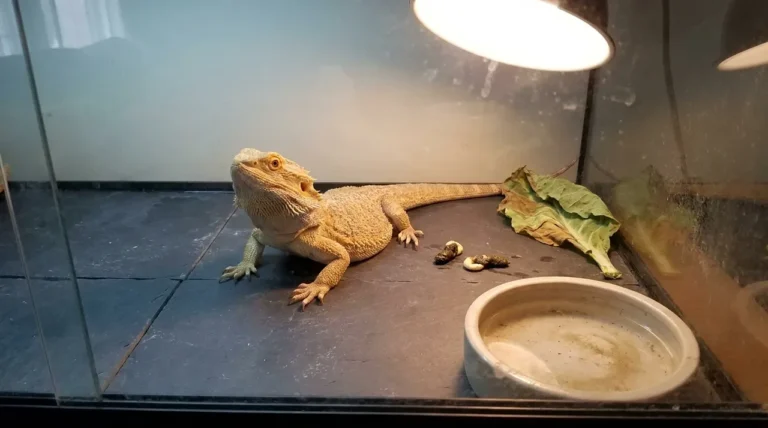
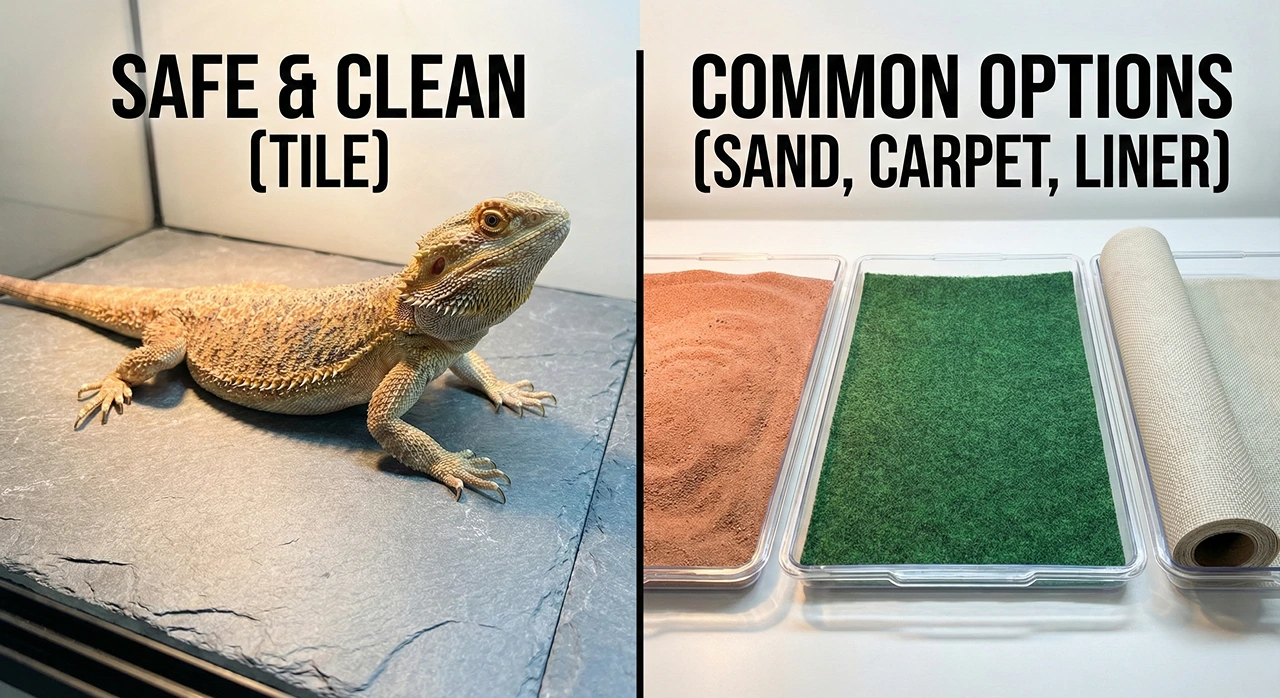
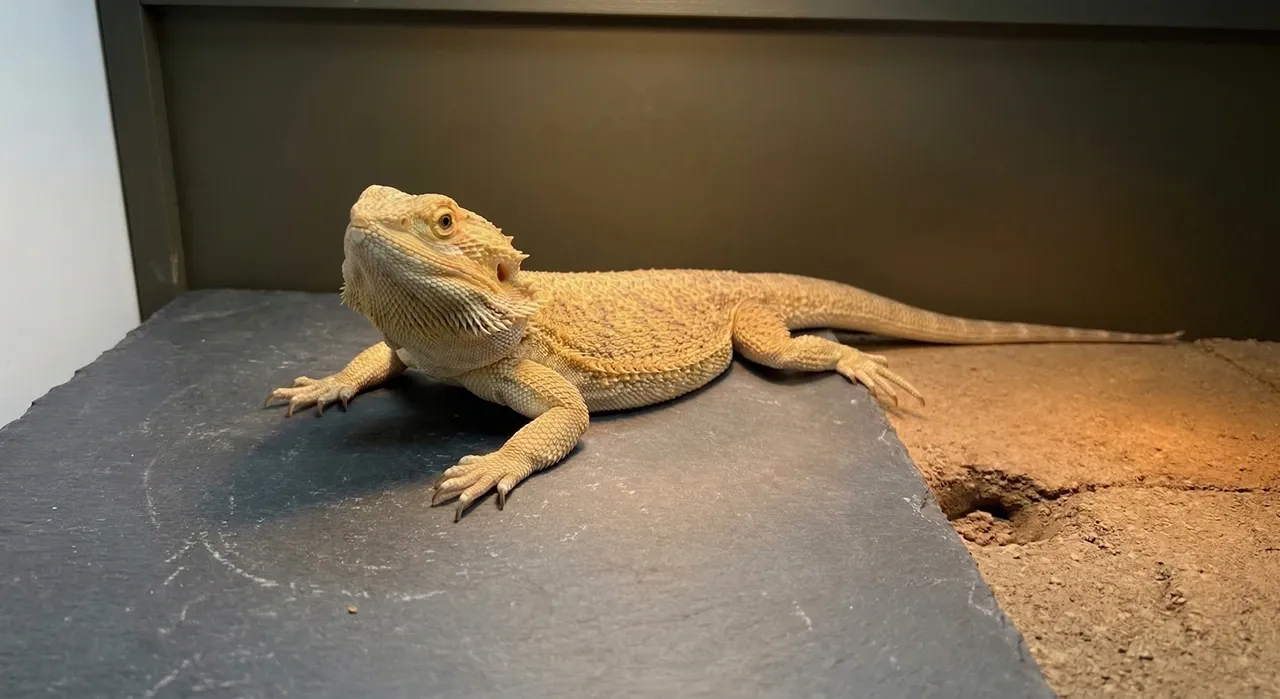
Tile is the most widely used solid substrate and the one most experienced keepers land on after trying other options. Unglazed ceramic or slate absorbs heat from the basking lamp and radiates it back as belly warmth, cannot be ingested, and wipes or bleach-washes clean in minutes. Unglazed ceramic from any hardware store, typically 12″ × 12″, is the most affordable starting point.
Before you buy, measure the internal dimensions of the enclosure, not the outside. Most tanks have a 1–2 cm wall difference that makes externally measured tile a poor fit. Measure inside, buy pre-cut or have the store cut it, and check before leaving that the pieces sit flush.
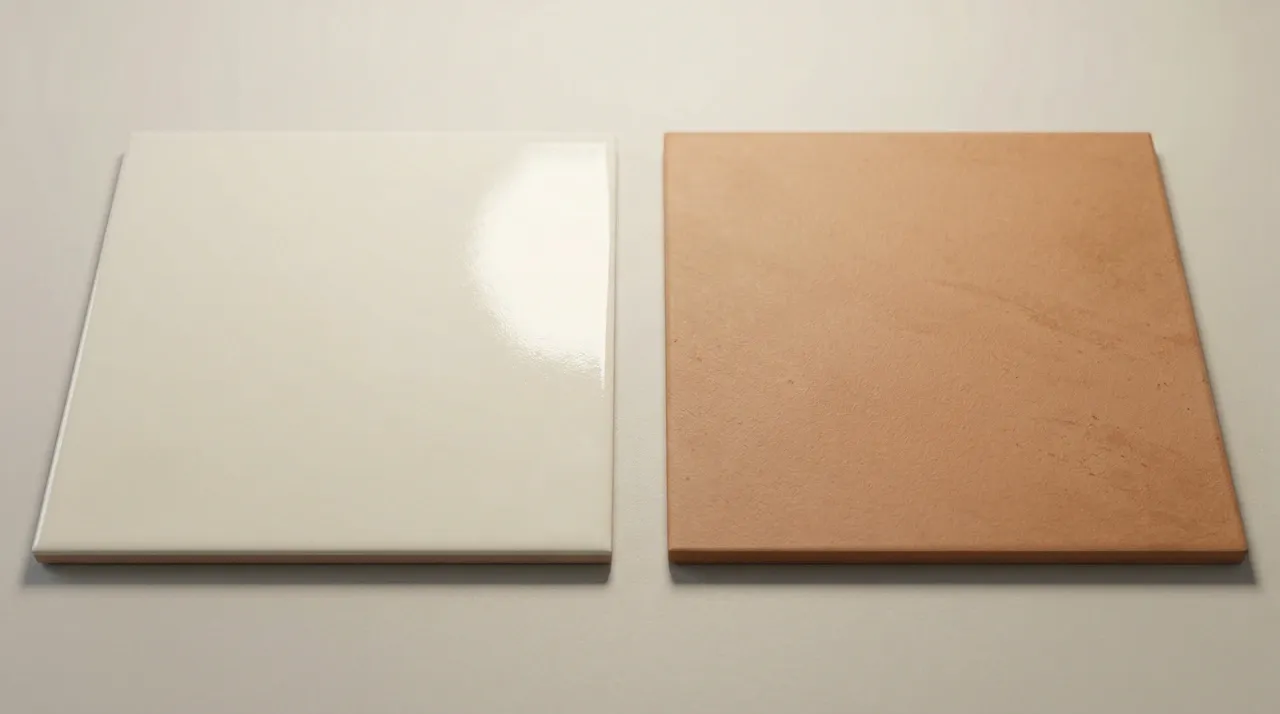
The detail that matters more than most beginners realise: never use glazed ceramic. Glazed surfaces reflect radiant heat from above rather than absorbing it, which means the basking zone reads correctly in the air while the substrate itself stays cold. A cold belly on the basking side is a genuine contributor to slowed digestion, and one of the underlying impaction risk factors that rarely gets the attention it deserves.
Babies and young dragons often slip on smooth ceramic while they are still building muscle tone. Mixing one or two pieces of textured slate with flat ceramic gives them better grip in the areas they use most without replacing the whole floor. Slate holds heat even better than ceramic, looks more naturalistic, and its texture is naturally rough. It is the better material if cost is not a constraint.
Paper Towel and Newspaper
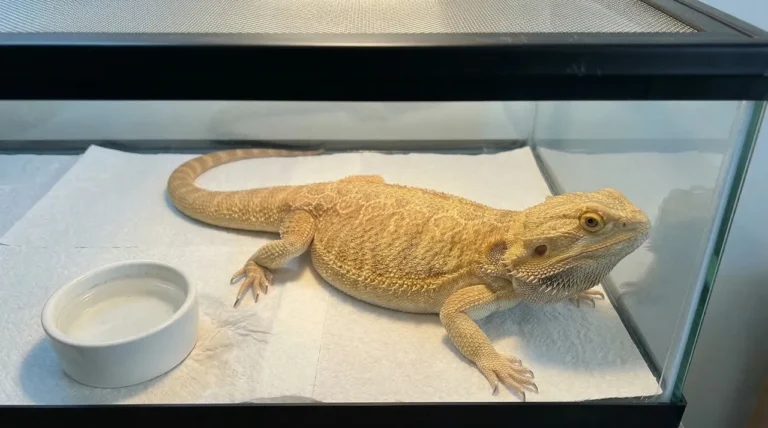
Neither looks impressive, but both have a clear and specific use case. For dragons under six months, for any dragon on medication, and for any dragon working through a parasitic infection, paper towel or newspaper is the correct choice. It can be changed in thirty seconds, carries no impaction risk, and gives you an unobstructed view of droppings for monitoring digestive output accurately.
Paper substrates provide no texture, no heat retention, and need replacing so often in an adult setup that they become a chore. Use them when they serve a purpose; do not default to them simply because they are cheap.
Non-Adhesive Shelf Liner
Foam mesh shelf liner sits between tile and paper towel in the practicality spectrum. It gives texture and grip, costs almost nothing, and can be cut to fit any enclosure. The key word is non-adhesive: adhesive-backed liners off-gas VOCs in the warmth of an enclosed vivarium, which can irritate the respiratory tract. Stick to the foam mesh type specifically, and replace it when it starts to fray or degrade.
Is Sand Safe for Bearded Dragons
Sand gets near-universal condemnation in bearded dragon communities, and that position is understandable given how badly calcium sand has been sold to beginners over the years. The blanket “all sand causes impaction” stance is an oversimplification, and understanding the actual mechanism matters for making an informed decision.
What Actually Causes Impaction
A 2017 peer-reviewed study of 529 captive bearded dragons found that impaction was rarely a primary diagnosis, and those animals that were impacted were already compromised by parasite infestation or metabolic bone disease. According to VCA Animal Hospitals, the root causes of reptile intestinal impaction are most often dehydration, inadequate temperatures, and existing illness. Loose substrate in isolation is rarely the primary cause.
A healthy, well-hydrated dragon on a correct temperature gradient passes small amounts of ingested substrate without issue. That is not a green light for careless substrate choice. It is the context that explains why a healthy adult dragon on a naturalistic sand blend fares very differently from a dehydrated hatchling on the same surface.
Sands to Avoid Without Exception
The type of sand matters far more than the presence of sand. These are off-limits regardless of the dragon’s age or health status:
- Calcium sand (Vita-Sand, Reptilite): the calcium carbonate base neutralises stomach acid and disrupts digestion even without causing a physical blockage. It also clumps when wet, which dramatically increases impaction risk compared to inert mineral sand.
- Play sand: extremely fine, uniform particles that generate heavy dust. It causes eye irritation and upper respiratory problems before impaction even becomes the concern.
- Walnut shell substrate: sharp, irregularly sized particles that do not pass cleanly through the gut. Also stays damp in ways that promote bacterial growth.
- Dyed or coloured decorative sand: unknown chemical additives with no place in any reptile enclosure.
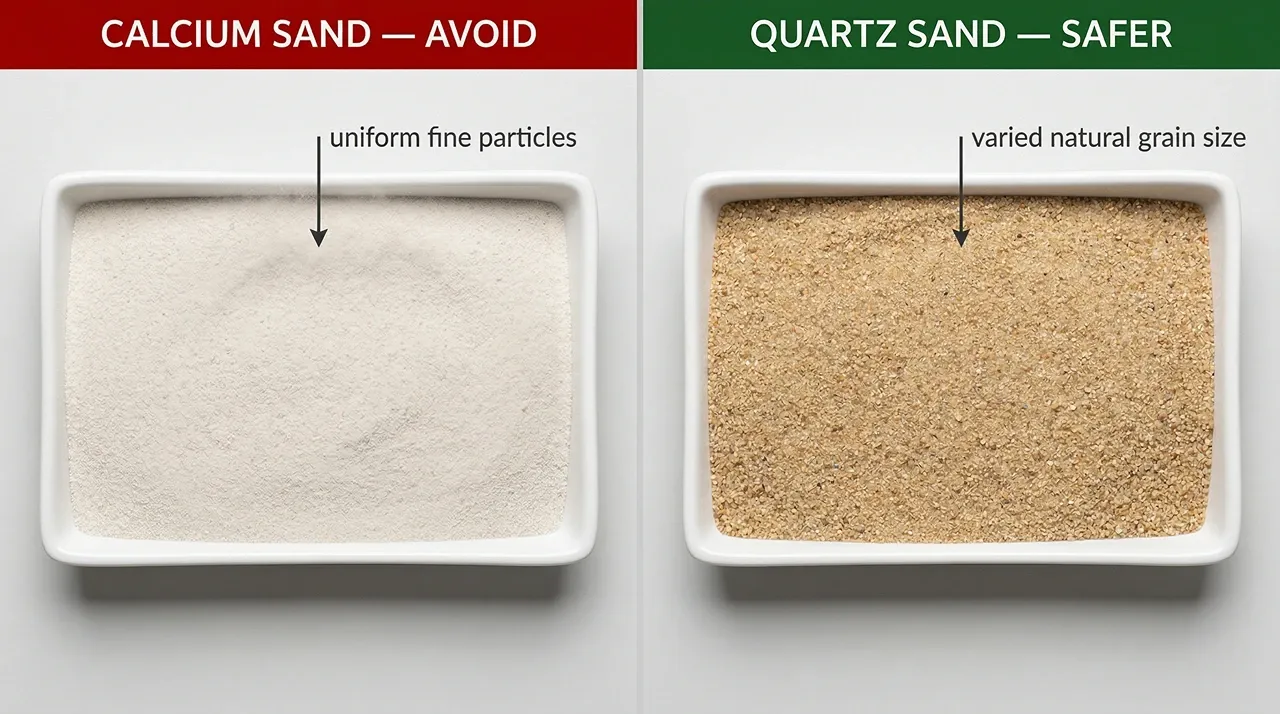
If you choose a loose substrate for a healthy adult dragon, fine quartz mineral sand blended with organic topsoil, roughly 70% topsoil and 30% sand, creates a more compacted, naturalistic surface that packs down rather than remaining perpetually loose. Never use pure loose sand as the sole bearded dragon substrate.
The Problem with Reptile Carpet
Reptile carpet is often the first recommendation from pet store staff, and in isolation it makes sense: no impaction risk, zero complexity, cheap, and it fits any tank. The problems only become apparent after a few weeks of daily use.
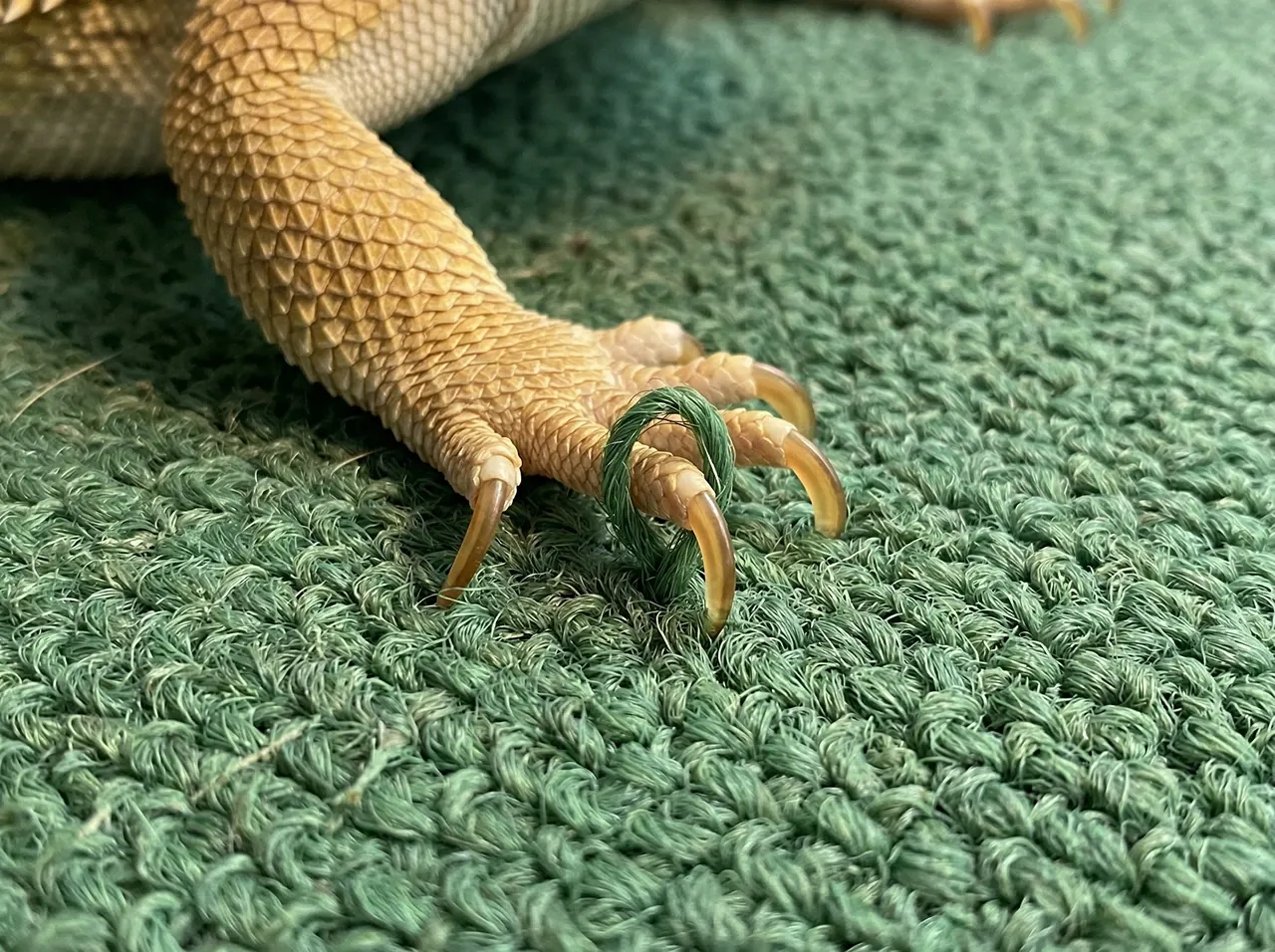
Claw snags are the most immediate issue. A dragon walking across looped carpet pulls its nails through the fibres, and a nail that catches at the wrong angle can rip back to the quick. Felt-style carpet is the worst offender; tight-weave varieties are safer, but the risk is never zero. For any keeper who already finds regular nail maintenance a chore, carpet creates more of the same problem rather than solving it.
Bacterial load is the more serious long-term concern. Carpet fibres hold moisture, food debris, and droppings in spaces no cloth can fully reach. Weekly washing does not fully decontaminate the material. A damp carpet that smells clean is not the same as a sterile one. If your dragon has been treated for a parasitic infection, carpet is one of the hardest substrates to clear of pathogen residue.
Bioactive Substrate
Bioactive setups use a deep mixed substrate, typically organic topsoil, fine sand, and clay, combined with live isopods and springtails that process waste naturally. The result is the most naturalistic environment possible and provides real enrichment through digging behaviour.
It is also the most demanding setup to manage and the least compatible with any dragon needing medical treatment. You cannot fully decontaminate a live substrate, which means any sick or treated dragon needs to be moved immediately to a sterile solid alternative. Depth, drainage layers, microfauna establishment, and plant selection all require experience to get right. Anyone ready to commit to what that maintenance actually involves will find the full process in the bioactive enclosure setup guide.
Substrate by Life Stage
| Life Stage | Recommended Substrate | Avoid | Reason |
|---|---|---|---|
| Baby (0–6 months) | Paper towel, shelf liner, or unglazed tile | All loose substrates | High lick frequency, clumsy feeders, gut motility not fully established |
| Juvenile (6–18 months) | Unglazed ceramic or slate tile, shelf liner | Loose sand, walnut shell, calcium sand | Rapid growth phase; digestive disruption delays development |
| Adult (18 months to 7 years) | Tile, slate, or naturalistic blend for healthy dragons | Calcium sand, play sand, walnut shell | Loose substrate conditional safety applies to healthy, hydrated, active adults only |
| Senior (7+ years) | Tile or slate only | All loose substrates | Gut motility decreases with age; impaction risk rises in older animals |
| Sick or recovering | Paper towel or newspaper | All loose substrates, reptile carpet | Fully disposable, easy to change frequently, no pathogen retention |
Substrates That Should Stay on the Shelf
Several products marketed specifically for reptile enclosures carry risks their packaging does not communicate clearly. These are worth knowing before you are standing in a shop with a new enclosure to fill:
- Coconut fibre (coco coir): raises enclosure humidity considerably, which puts an arid-adapted species at real risk of upper respiratory infection.
- Wood products (bark, mulch, shavings): retain moisture, harbour mould at basking temperatures, and carry impaction risk from particle size.
- Adhesive shelf liner or linoleum: off-gases VOCs in a heated enclosure. Non-adhesive foam mesh is the safe alternative and costs the same.
Just Add a Corner Dig Box
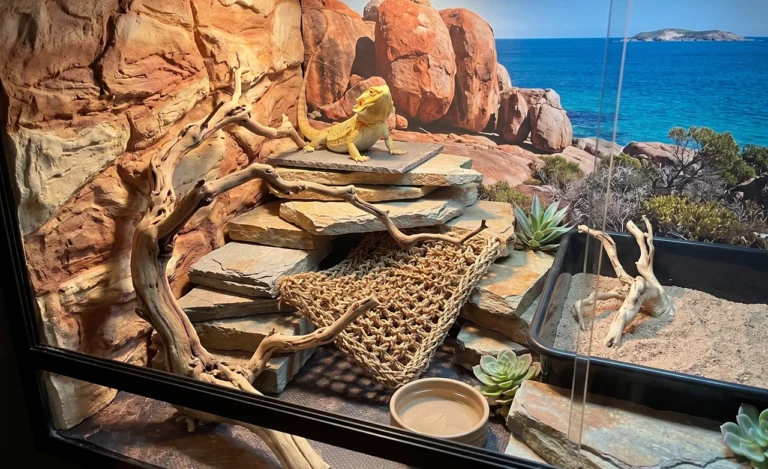
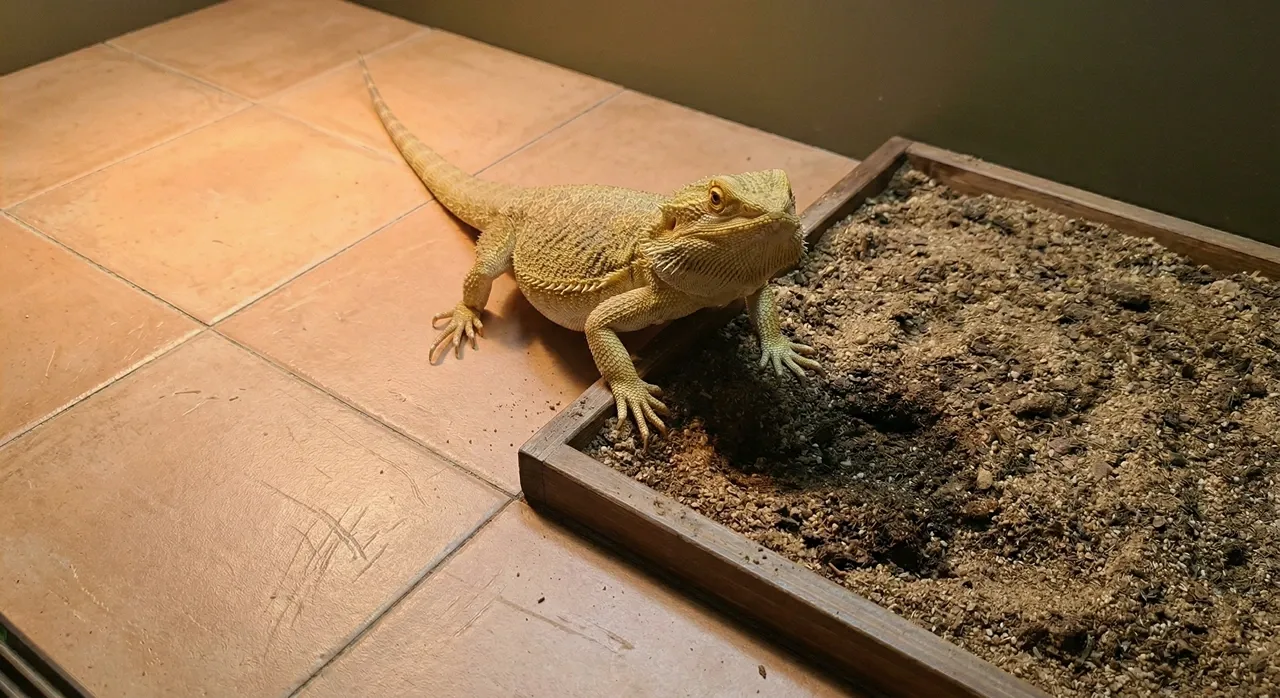
One option almost no beginner article covers is the partial dig box: a shallow tray or corner section filled with a moistened naturalistic substrate blend, placed in the cool zone of an otherwise tile-floored enclosure. It gives your dragon the digging and burrowing behaviour that a loose substrate enables, without the risk that comes from covering the entire floor in loose material.
Female dragons benefit from this most. The drive to dig intensifies around egg-laying behaviour, even in unfertilised females, and a dragon that cannot express it will dig at the walls and glass instead. A dig box that can be removed, refreshed, or replaced does not compromise the sanitation of the rest of the enclosure.
Frequently Asked Questions
Is sand safe for bearded dragons?
Fine quartz mineral sand, not calcium sand or play sand, carries conditional safety for healthy adult dragons on correct temperature gradients. For babies, sick dragons, and any animal that is underweight, dehydrated, or parasitised, the risk is real and the answer is no.
What substrate is best for a beginner?
Unglazed ceramic or slate tile. It is inexpensive, absorbs heat correctly, cannot be ingested, and wipes clean in minutes. It is also the one bearded dragon substrate that scales from day one through the life of the animal without needing to change.
Does reptile carpet cause impaction?
No. Reptile carpet is a solid substrate and carries no impaction risk. The real concerns are claw snags from the fibres and bacterial buildup between washes, both of which are ongoing management problems rather than one-time risks.
Can I use play sand for bearded dragons?
No. Play sand has extremely fine, uniform particles that generate heavy dust. Eye irritation and respiratory problems appear before impaction even becomes the concern. It is the most problematic sand type available.
How often should I change my dragon’s substrate?
Tile and slate: spot-clean daily, full bleach wash monthly. Reptile carpet: wash weekly, replace when fibres fray or odour persists after washing. Paper towel: replace at every soiling. Naturalistic loose blends: full replacement every 3–6 months, or immediately at any sign of illness or parasite treatment.
Where to Start
Unglazed tile or slate, cut to fit, is the right starting point for nearly every keeper. Buy two sets so you always have a clean replacement on hand during washing. Add a corner dig box if your dragon is an active digger or you have a female showing digging behaviour around the enclosure walls.
The bearded dragon substrate underfoot affects digestion, claw health, grip, hydration, and the bacterial load your dragon lives with every day. If your dragon is between six and eighteen months, what changes at the juvenile stage extends well beyond the floor. Getting the substrate right from the start is considerably easier than correcting a problem that has been building for months.
Written by
Sarah ArdleySarah has kept bearded dragons for over ten years. She founded Beardie Husbandry after discovering that most mainstream care advice — including what she followed with her first dragon — was doing more harm than good. Every article on this site is grounded in veterinary research and real keeper experience.