New Bearded Dragon Not Eating – Real Causes Explained
A new bearded dragon not eating in its first week or two is one of the most common things new owners panic about. Most of the time it comes down to relocation stress, a setup that is not quite dialled in, or a feeding approach the dragon does not recognise as food. Most cases resolve within 14 days once you know what to adjust.
Some causes need action sooner, particularly in very young dragons under 3 months. A baby that goes more than 5 to 7 days without eating needs closer attention than an adult skipping a few meals after arriving in a new home.
Relocation Stress Is Almost Always the Answer
Moving a bearded dragon into a new home is genuinely stressful. Their old environment smelled familiar, the light cycle was predictable, and nothing unexpected happened. Now everything is different, with new smells, new sounds, new light angles, and new hands reaching in from above. For an animal that spends its life watching for predators, that is enough to shut them down completely.
A dragon in relocation stress will hide more than usual, refuse food, glass surf, or sit completely still. Some go dark in the beard even when nothing obvious is threatening them.
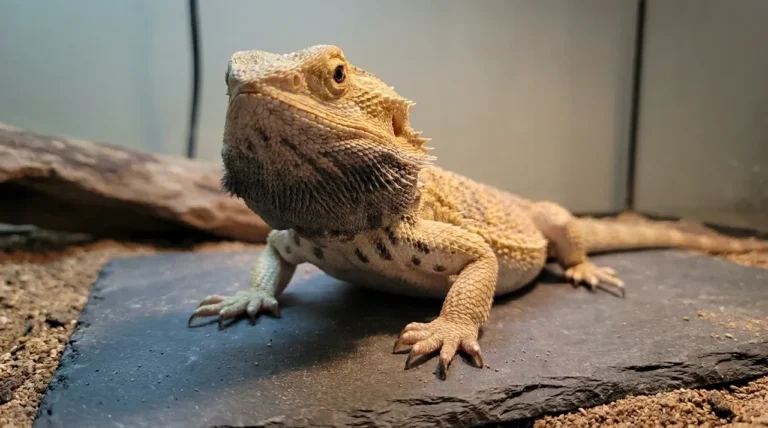
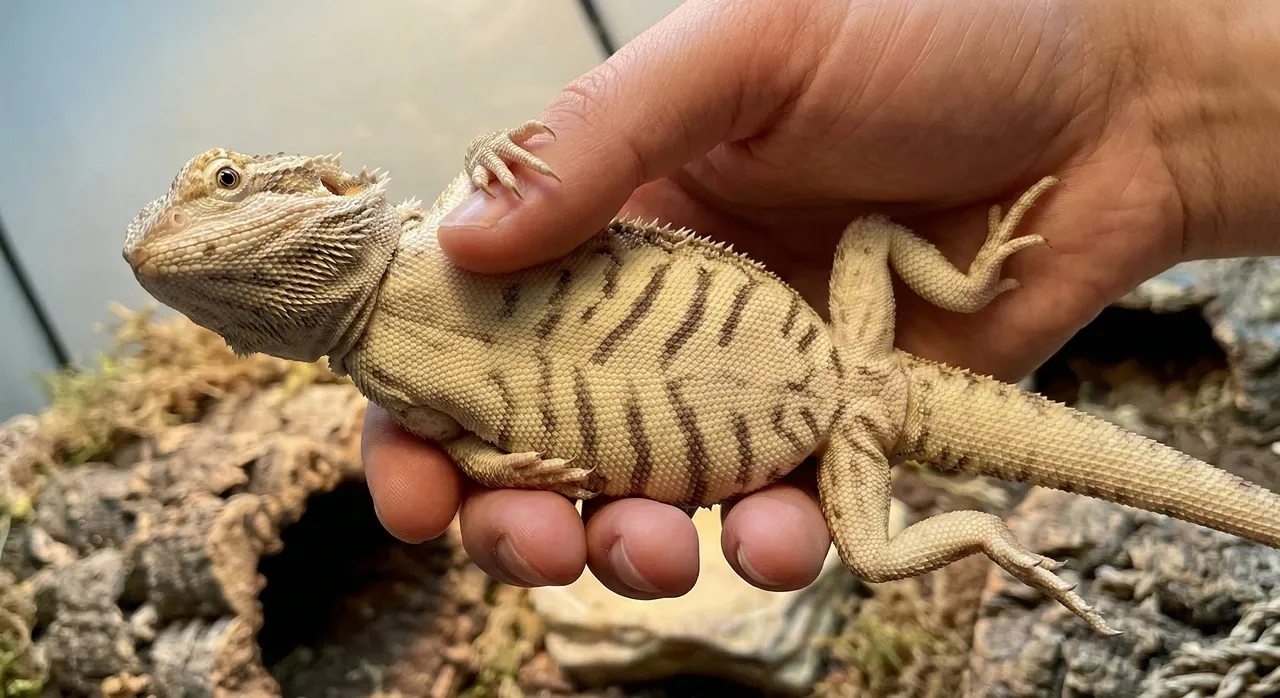
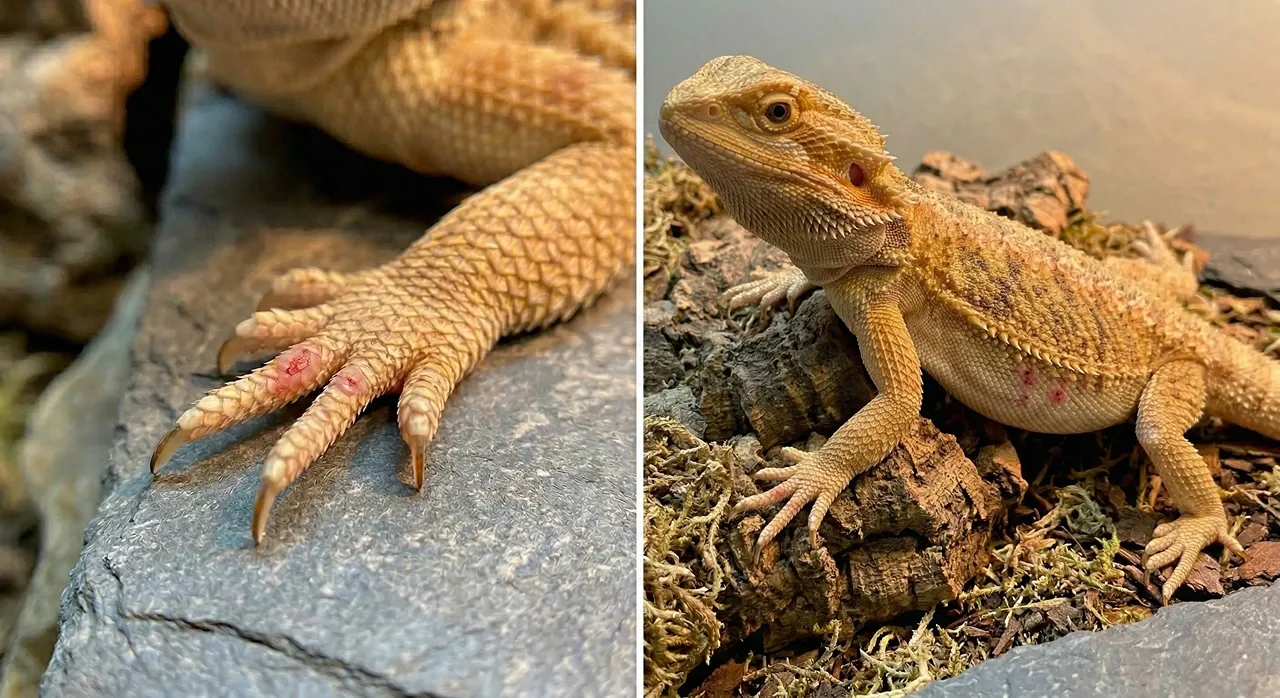
One of the clearest visual signs of relocation stress is stress marks. These are dark, tiger-stripe patterns that appear on the belly and sides, and they look like dark bands running across the underside. In babies and juveniles they can be quite prominent.
Stress marks that fade and return throughout the day are normal in the first two weeks. Stress marks that stay permanently dark for days, particularly alongside feeding refusal, mean something in the environment needs fixing beyond just time.
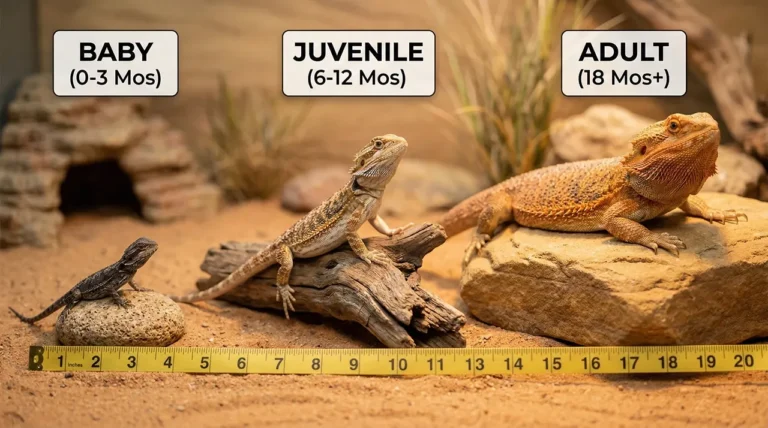
Most new dragons settle within 7 to 14 days if the setup is correct and you back off on handling. Babies under 3 months settle faster than juveniles aged 4 to 8 months, who are often more defensive about new environments.
What Actually Helps During Relocation Stress
- Minimum handling for the first 14 days. Every time you reach in to pick them up, you reset their stress clock. Offer food, then leave them alone.
- Keep the room quiet. Loud TVs, other pets walking past, vibrations from speakers all register as threats. Position the enclosure somewhere stable and low-traffic.
- Do not rearrange the tank. A single new piece of decor or a moved hide can cause feeding refusal for 2 to 3 days while the dragon reassesses the space. Once the setup is done, leave it.
- Offer food at the same time each day. Morning feeding after the basking light has been on for 30 to 45 minutes is when appetite is highest.
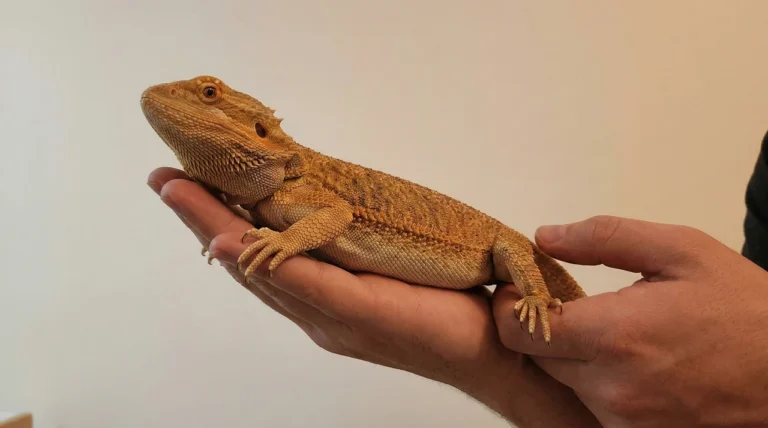
Reaching in from directly above reads as a predator strike to a new dragon, which is why the scoop method from the side is the only approach that does not reset their stress clock during the settling period.
Check Your Setup Before Anything Else
A setup that is even slightly off will prevent a new bearded dragon from eating regardless of how settled they are. A dragon cannot have an appetite if their body temperature is too low to trigger digestion.
Basking Temperature
The basking surface needs to reach 100 to 110°F for adults and 105 to 110°F for babies. Not the air temperature. The surface they are actually sitting on.
Stick-on dial thermometers commonly read 15 to 20°F lower than the actual surface. A reading of 92°F on an analogue gauge is almost certainly cold enough to suppress appetite entirely. Use a digital infrared temperature gun pointed directly at the basking rock.
Nighttime temperatures should not drop below 65°F. Below that, metabolism shuts down and the dragon warms slowly the following morning even with correct basking temps. The difference between surface and air readings is explained in detail in our basking temperature breakdown, which also covers how to dial in the wattage of your heat bulb.
UVB Lighting
Without adequate UVB, a dragon cannot synthesise Vitamin D3, cannot absorb calcium, and runs with a suppressed metabolism that kills appetite. Starter kits from major pet stores frequently include 5% output tubes, and the packaging rarely makes this obvious.
Check the model number. Anything listed as 5.0 needs replacing with a 10.0 or 12% T5 HO linear tube immediately. An Arcadia 12% or ReptiSun 10.0, mounted inside or directly on top of the enclosure without thick mesh blocking output, is the correct setup.
This is where the coil versus tube debate matters. Coil bulbs produce a narrow column of UVB that the dragon often misses entirely, and most appetite-suppressed new dragons trace back to exactly this lighting mistake.
Cool Side Temperature
The cool side should sit between 80 and 85°F during the day. Above 88°F and the dragon has nowhere to escape the heat. Gauge placement trips up most beginners, and our proper thermometer positioning walk-through explains why stick-on dials mounted on the glass side consistently read 10°F off.
Are You Housing Two Dragons Together
If your new dragon is sharing a tank with another dragon, even a smaller one, this is almost certainly contributing to the feeding refusal. The less dominant animal is outcompeted for food and basking spots, and this happens even without visible fighting.
The subordinate dragon withdraws, stops eating, and loses condition. Even setups that look peaceful on the surface cause the silent starvation pattern seen in cohabitation, so the only reliable fix is separate enclosures.
How You Are Offering Food Might Be the Problem
Bearded dragons are visual hunters. They track movement. They do not sniff out prey, forage through a bowl, or eat an insect that is sitting still. If your feeding approach does not match how a dragon hunts, they will ignore the food completely even when hungry.
The Movement Rule
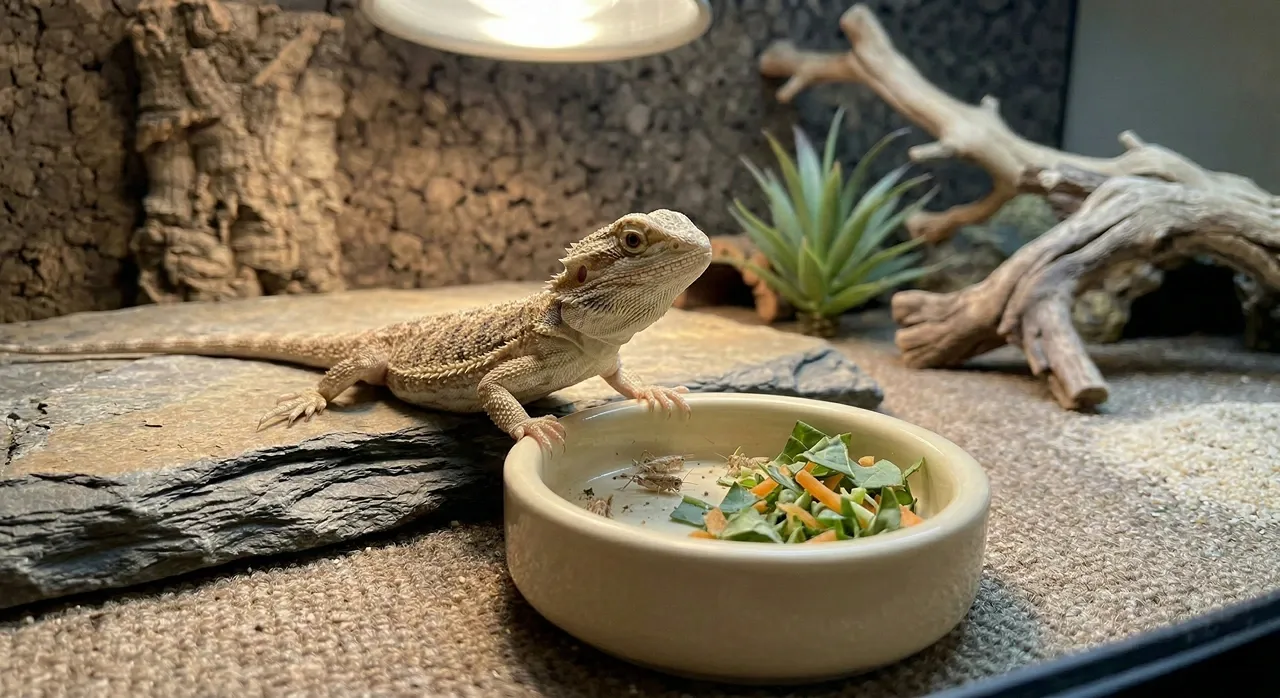
Insects need to move for a bearded dragon to register them as food. Slow-moving or dead crickets in a bowl get ignored almost every time.
Live, active feeders placed directly on the enclosure floor, or wiggled with soft-tipped tweezers, trigger the hunting response immediately. If your dragon ignores still prey but tracks moving prey with their eyes, the food itself is not the problem.
Prey Size
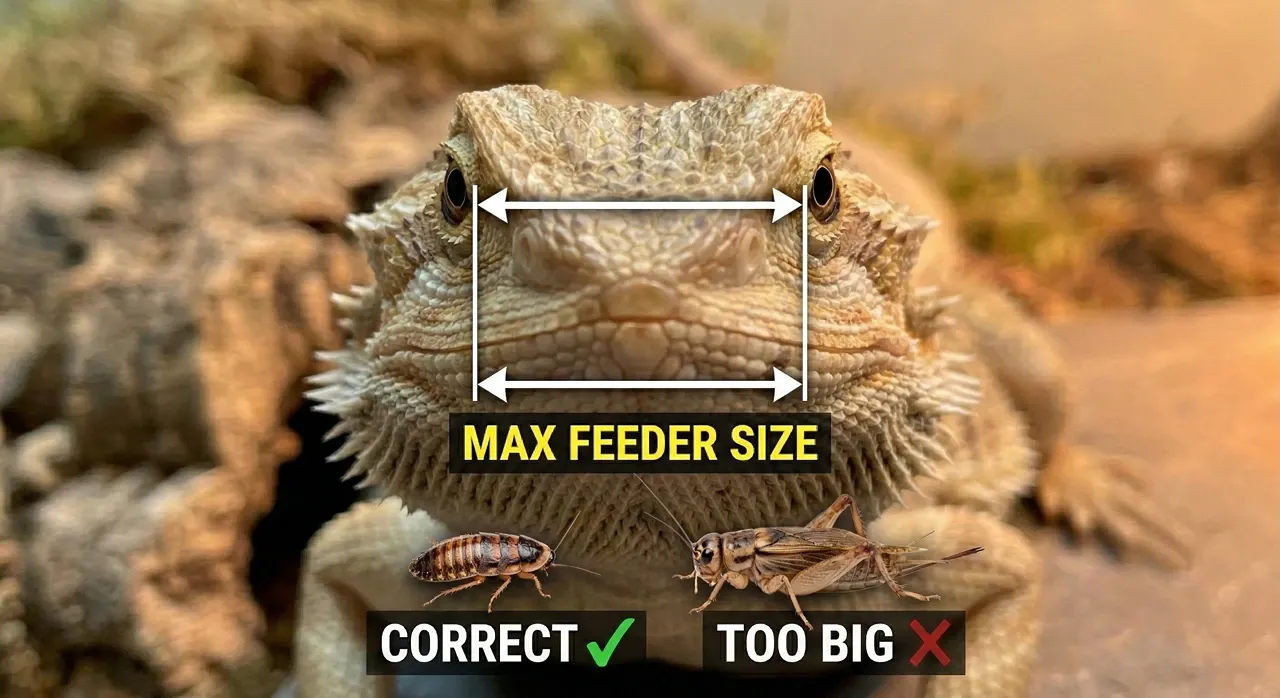
Any feeder insect larger than the gap between your dragon’s eyes intimidates young dragons rather than triggering a feed response. A baby that ignores large crickets will often eat small crickets or black soldier fly larvae immediately. Downsize before concluding the dragon is refusing to eat.
Appropriate prey sizes shift considerably between the baby, juvenile, and subadult stages, which is why our feeder size chart by age is worth checking before buying another batch of crickets.
Feeder Variety and the Cricket Biting Problem
Some new dragons have been fed exclusively one type of insect at the breeder and do not recognise other prey as food. If crickets are being ignored, try small dubia roaches. If dubias are ignored, try black soldier fly larvae, sold as NutriGrubs, Calci-Worms, or Phoenix Worms.
Black soldier fly larvae are naturally so high in calcium they need no dusting at all. They wriggle constantly and most dragons that refuse everything else will strike at these immediately.
Never leave live crickets in the enclosure overnight. Crickets left after feeding time will bite a sleeping dragon, particularly around the eyes, toes, and belly. A dragon that has been bitten will often refuse crickets for days afterward.
If your dragon was eating crickets and suddenly stopped, check for small bite marks. Palatability varies considerably between species, and the complete safe feeder list notes which insects are accepted most readily by dragons coming off a hunger strike.
Greens Refusal
Almost every new dragon ignores salad at first. Baby beardies are naturally insect-focused and have little instinct to eat vegetation early on. Keep offering a small fresh salad daily alongside insects.
Mixing bee pollen into the salad or lightly dusting greens with calcium powder often gets a reluctant dragon to take their first bite. Most come around within 3 to 6 weeks. Persistent long-term refusal has its own dedicated causes covered in our greens strike troubleshooter.
They Might Be in a Shed Cycle
Appetite drops noticeably in the days before a shed and often stays low throughout. A new dragon that arrived looking slightly dull or with tight-looking skin around the face or limbs may already be partway into a shed.
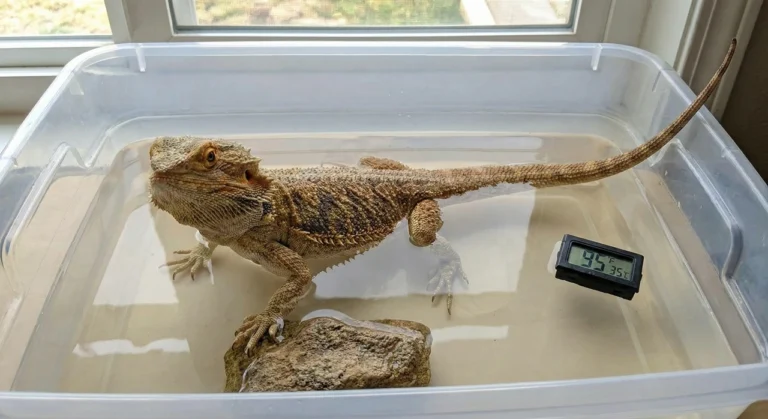
Signs include dull or greyish skin, cloudy or slightly blue-grey eyes, and reluctance to be handled. A 10-minute warm soak helps loosen the skin, and appetite returns once the shed completes. Patchy shed that does not come off cleanly can pinch circulation around the toes and tail tip, and our stuck shed rescue steps cover when to intervene.
Seasonal Slowdown in Young Dragons
If you brought your new dragon home in autumn or early winter and they went quiet within a few weeks, seasonal light changes may be a factor. Juveniles between 4 and 8 months sometimes go through a partial metabolic slowdown in response to shortening days. They sleep more, move less, and lose interest in food for 2 to 4 weeks before returning to normal.
Adults over 12 months may go into a fuller proper brumation cycle that lasts considerably longer, sometimes up to three months.
The key difference from illness is body weight. A dragon maintaining weight while sleeping more is doing something seasonal. A dragon losing weight week on week needs closer investigation.
When It Might Be a Health Problem
Internal Parasites Including Coccidia
A large number of pet store dragons carry coccidia and other common internal parasites, which suppress appetite and cause gradual weight loss. A new dragon that eats a little inconsistently, produces loose droppings, and seems thin despite appearing active may have a parasite load.
A faecal float test at an exotic vet gives a definitive result within a few days. Confirm the test covers protozoa including coccidia, not just worms. If you bought from a pet store, this test is worth doing within the first month regardless of whether the dragon looks healthy.
Early Metabolic Bone Disease
A baby that arrived from a setup running a 5% UVB tube may already have early MBD before you got them. Signs include reduced appetite, reluctance to move, and subtle muscle tremors in the legs or toes.
Telling the difference between a twitching limb, which is an MBD symptom, and a waving limb, which is normal submission behaviour, is covered in our dragon body language reference.
Why Is My New Bearded Dragon Not Eating
| What You Are Seeing | Most Likely Cause | What to Do |
|---|---|---|
| Arrived days ago, hiding, stress marks on belly | Relocation stress | Minimal handling. Offer food daily. Wait 14 days. |
| Watches insects but does not chase or strike | Insects not moving enough | Use live active feeders. Wiggle prey with soft-tipped tweezers. |
| Ignores crickets, never shown interest | Feeder type unfamiliar or cricket bites | Try black soldier fly larvae or small dubias. Check for bite marks. |
| Baby ignoring large insects | Prey too big | Downsize feeders to smaller than space between eyes. |
| Lethargic, not interested in food or movement | Basking temp too low | Verify surface temp with infrared gun. Target 100 to 110°F on rock. |
| Lethargic, coil UVB, 5% tube, or starter kit lighting | Inadequate UVB | Replace with T5 HO 10.0 or 12% linear tube immediately. |
| Eating stopped same day a tank change was made | Environmental stress trigger | Remove the new item. Give 48 hours to settle. |
| Two dragons sharing one enclosure, one not eating | Cohabitation stress | Separate into individual enclosures immediately. |
| Dull skin, cloudy eyes, hiding more than usual | Shed cycle | Warm soak. Wait for shed to complete. |
| Arrived in autumn, sleeping more, weight stable | Semi-brumation | Weigh weekly. Resolves in 2 to 4 weeks. |
| Eating a little, loose droppings, slowly losing weight | Internal parasites | Faecal float test at exotic vet. Confirm it covers coccidia. |
| Baby with twitching toes or legs, barely moves | Early MBD | Check UVB output. Vet if twitching continues beyond 48 hours. |
Frequently Asked Questions
How long can a new bearded dragon go without eating
A healthy adult can go 2 to 3 weeks without eating during relocation stress. A juvenile aged 3 to 12 months should not go more than 7 to 10 days without some food intake. A baby under 3 months needs to eat within 5 to 7 days of arriving. If nothing is going in after that window, check temperatures and feeder size first before anything else.
Should I force feed my new bearded dragon
No. Force feeding a stressed dragon breaks trust, increases stress, and risks food being inhaled into the lungs. The one narrow exception is a baby that has gone more than 7 days without any food and is visibly losing weight.
A small amount of butternut squash baby food mixed with a pinch of reptile vitamin powder, offered on the tip of a soft syringe or your finger, gives minimal nutrition without the risk of a full force feed. Keep amounts tiny. This is a short-term bridge, not a feeding strategy. If the baby has not turned around within a few days, see a vet.
How do I know if my new dragon is sick or just stressed
Weigh your dragon on a kitchen scale at the same time each week. A stressed dragon maintains weight. A sick dragon loses it. Waste output often shows the earliest warning signs, and our dropping colour and consistency breakdown explains which changes point to parasites or early illness.
If Nothing Has Changed by Day 14
Run through this in order before booking a vet appointment.
- ✅ Verify basking surface temp with an infrared gun. On the rock. Not the air. Target 105 to 110°F for babies, 100 to 110°F for adults.
- ✅ Check your UVB tube output. A 5.0 or 5% tube needs replacing with a 10.0 or 12% T5 HO linear today.
- ✅ Remove all uneaten crickets after 15 minutes. Overnight crickets bite sleeping dragons.
- ✅ Try black soldier fly larvae. If crickets and dubias are being ignored, these are the best next option.
- ✅ Confirm one dragon per enclosure. Cohabitation causes silent starvation in the weaker animal.
- ✅ Weigh them. Stable weight means patience. Consistent weekly loss means a vet visit.
- ✅ If bought from a pet store, get a faecal float test. Parasites suppress appetite before other symptoms show.
For a new dragon in the first month, the full feeding schedule, handling timeline, and week-by-week signs that your setup is dialled in sit inside our first 30 days care walkthrough.
Disclaimer: This article is for general husbandry guidance only and does not constitute veterinary advice. If your new bearded dragon is losing weight, unresponsive, or showing symptoms alongside feeding refusal, contact a qualified reptile veterinarian promptly.
Written by
Sarah ArdleySarah has kept bearded dragons for over ten years. She founded Beardie Husbandry after discovering that most mainstream care advice — including what she followed with her first dragon — was doing more harm than good. Every article on this site is grounded in veterinary research and real keeper experience.