Bearded Dragon Not Basking – Every Real Cause Explained
A bearded dragon not basking is one of those problems that looks more complicated than it usually is. The setup is almost always responsible. Temperature is wrong, the basking surface is wrong, the lights are in the wrong position, or something in the enclosure is making the dragon unwilling to sit out in the open. Health causes exist but they are less common than people assume, and they tend to come with other symptoms.
Basking behaviour also varies between individuals. Some dragons sit under the light for long uninterrupted stretches. Others do it in short bursts across the day. A dragon that used to bask for two hours and now does thirty minutes is not necessarily a problem. A dragon that approaches the basking spot and walks away repeatedly, or has stopped going near it entirely, is worth investigating.
Why Basking Cannot Be Skipped
Bearded dragons cannot generate internal body heat. They need an external surface warm enough to raise their core temperature to roughly 96–98°F before digestion works properly, before Vitamin D3 synthesis happens, before the immune system functions at full capacity. A dragon that is not basking is not thermoregulating. Over days, that affects digestion, appetite, and health in sequence.
The Basking Surface Is Too Cold
The most common cause by a wide margin. The basking surface needs to reach 100–110°F for adults and 105–110°F for babies and juveniles. Not the air temperature above the rock. The surface the dragon sits on.
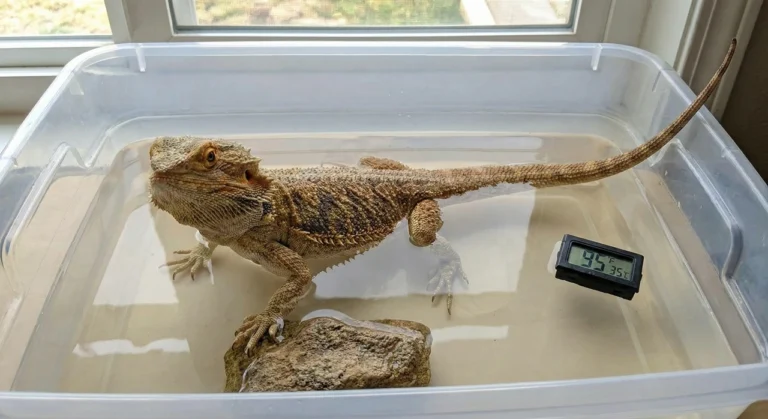
Stick-on analogue thermometers routinely read 15–20°F lower than actual surface temperature. A gauge showing 95°F can mean a real surface temperature anywhere from 78–82°F, which is not warm enough to drive basking behaviour.
An infrared temperature gun pointed directly at the basking rock is the only reading that matters here. Surface and air temperatures diverge widely in a typical setup, and our basking temperature guide walks through the numbers that actually matter. If the surface is running cold, the fix is usually raising the bulb wattage, lowering the fixture closer to the surface, or raising the basking object closer to the bulb. Change one thing at a time and recheck after 30 minutes.
The Basking Surface Is Too Hot
Less discussed but genuinely common. A surface running above 115°F causes avoidance. The dragon approaches, feels the heat before fully settling, and retreats. Owners watching this often read it as the dragon being uninterested in basking when the dragon is actively avoiding being burned.
This tends to happen after a keeper increases wattage to fix a cold reading and overshoots. It also happens as dragons grow. A juvenile sitting 12 inches below a 100W bulb becomes an adult sitting 6 inches below the same bulb because a raised platform brings them closer. Same wattage, half the distance, much more heat at the surface.
If the dragon approaches the basking spot and consistently retreats without settling, check the surface with an infrared gun. Above 115°F, reduce wattage or raise the fixture. Pointing the gun correctly matters more than most keepers realise, and our notes on accurate temperature measurement cover where to take readings.
Adult Dragons Often Need Cooler Temps Than Juveniles
Many keepers run 105–110°F throughout a dragon’s life without ever adjusting as it matures. Adults over 2–3 years old frequently prefer a basking surface closer to 95–100°F. A dragon that basked reliably as a juvenile and has gradually stopped over several weeks may simply find the current temperature too intense for where it is now.
Nothing in the setup changed. The animal changed. If you have an older dragon that used to bask consistently and has slowly stopped, try dropping the surface temperature before assuming a health problem.
The Basking Object Does Not Hold Heat
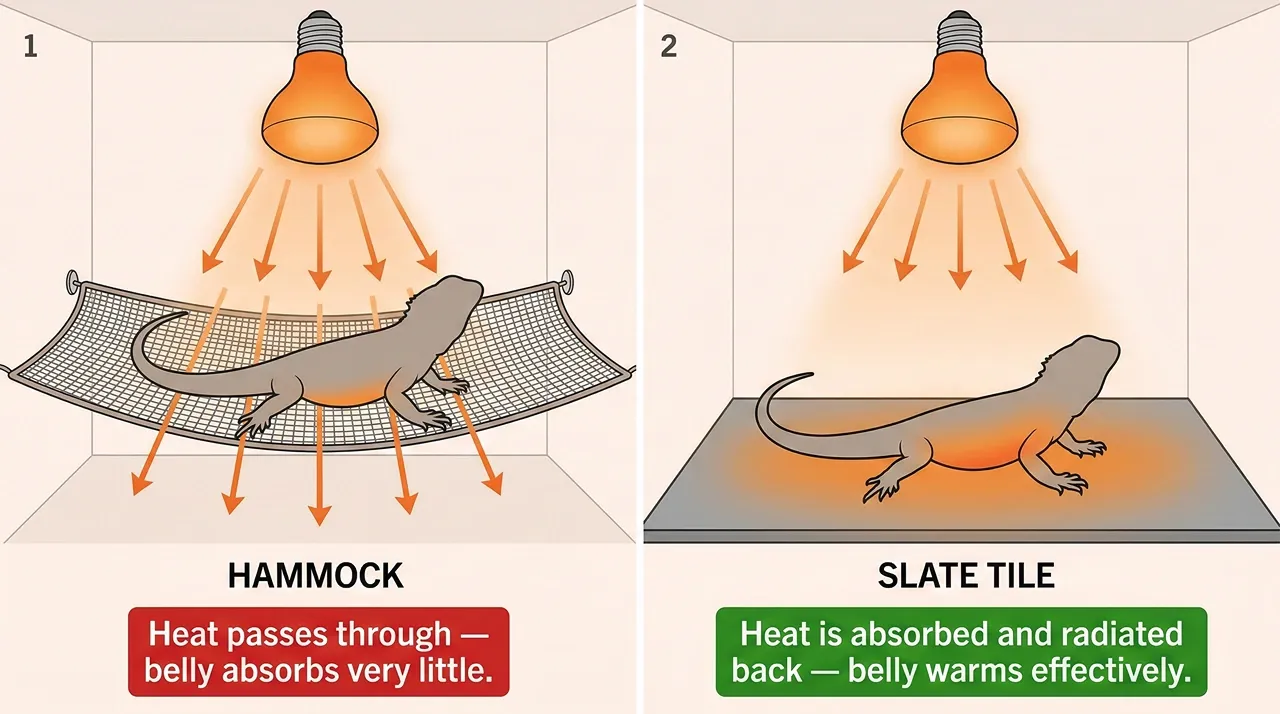
Hammocks, rope platforms, and mesh-style surfaces do not retain heat. A dragon sitting on a hammock directly under a basking bulb absorbs very little through its belly, which is where the majority of heat absorption actually happens. Some dragons work this out and stop using the hammock, moving instead to the cool side where at least the floor is solid.
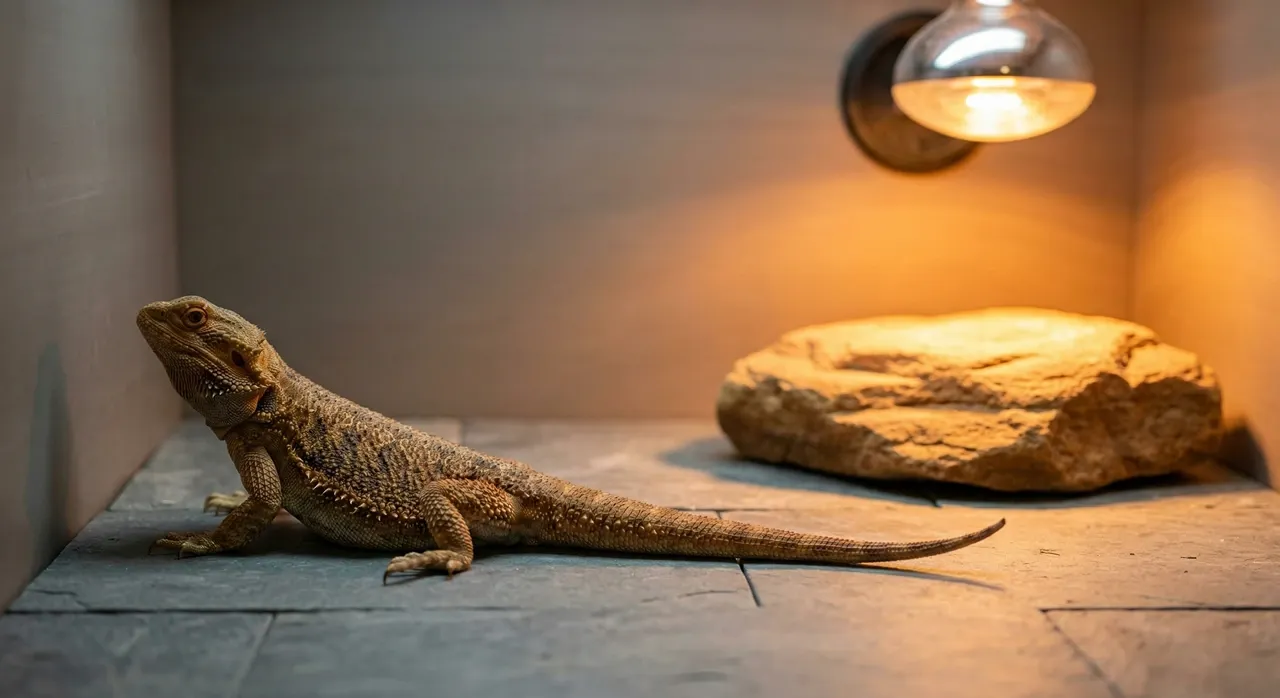
Flat slate tile, large flat rocks, and dense ceramic surfaces hold and radiate heat well. A dragon that consistently avoids a hammock basking spot will often start using a flat slate surface placed in the same position within a day or two. Basking surface materials sit alongside positioning and décor choices in the full enclosure setup guide.
UVB and Basking Light Are Not Lined Up
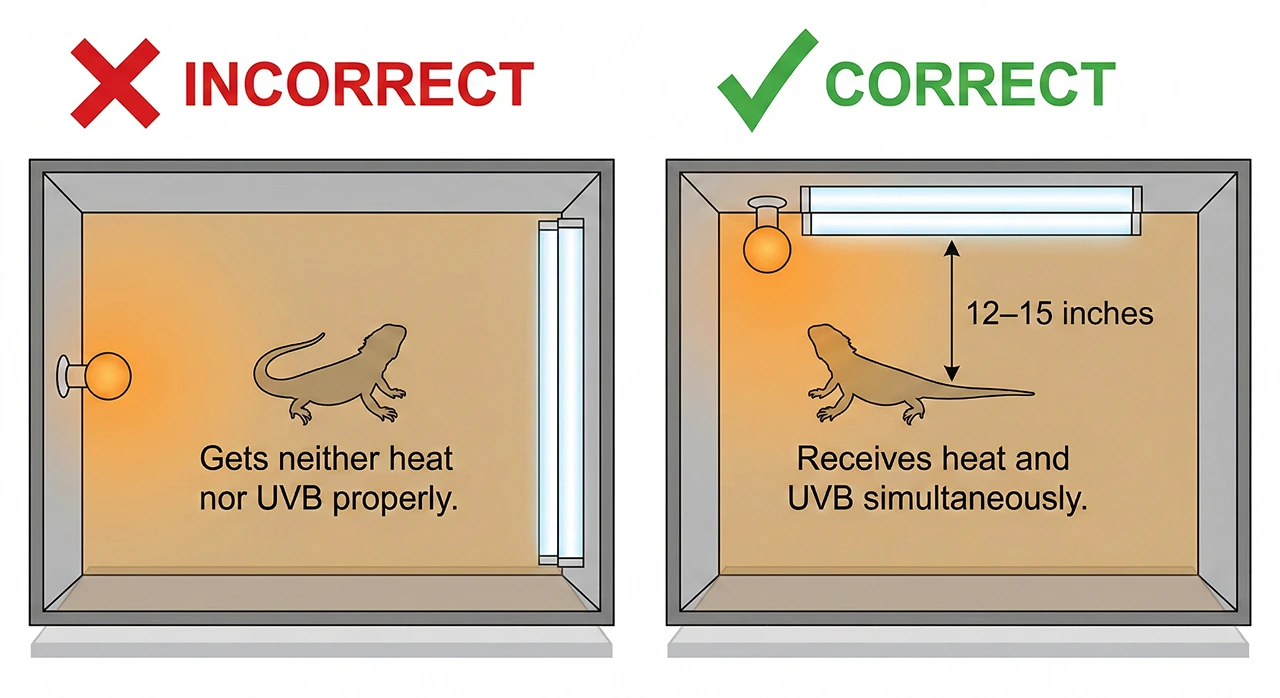
A dragon needs heat and UVB at the same time while basking. If the basking bulb sits at one end of the enclosure and the UVB tube runs along the opposite end, the dragon has to choose between the two. Many will park themselves somewhere in the middle and get neither properly. This looks like basking avoidance from the outside.
The UVB tube should run along the same end as the basking bulb. For a T5 HO tube, the ideal distance from the tube to the dragon’s back while basking is 12–15 inches. Correct positioning with measurements for different enclosure sizes lives in our full bearded dragon lighting guide.
A Screen Top Can Drop Temperatures
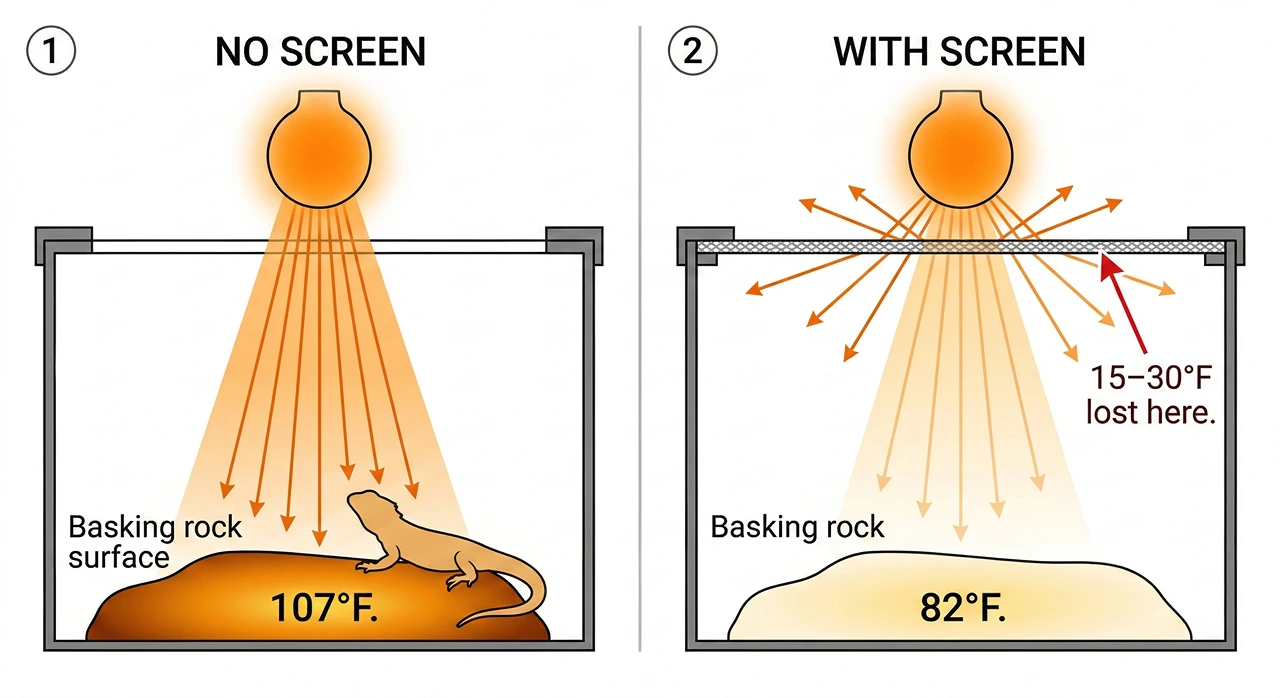
Mesh and screen tops absorb and disperse heat before it reaches the basking surface. Depending on mesh density, the reduction can be 15–30°F. An owner who measures temperatures with the screen removed, confirms the reading looks right, then replaces the screen has an inaccurate picture of what the dragon is actually experiencing.
Always measure with the screen in place and the enclosure running normally. If the screen is causing heat loss and increasing wattage risks overheating, mounting the basking bulb inside the enclosure rather than above the screen usually solves it. Mesh also blocks UV output, and the trade-offs between coil and tube UVB bulbs matter more when both heat and UV are being reduced at the same time.
No Real Temperature Gradient in the Enclosure
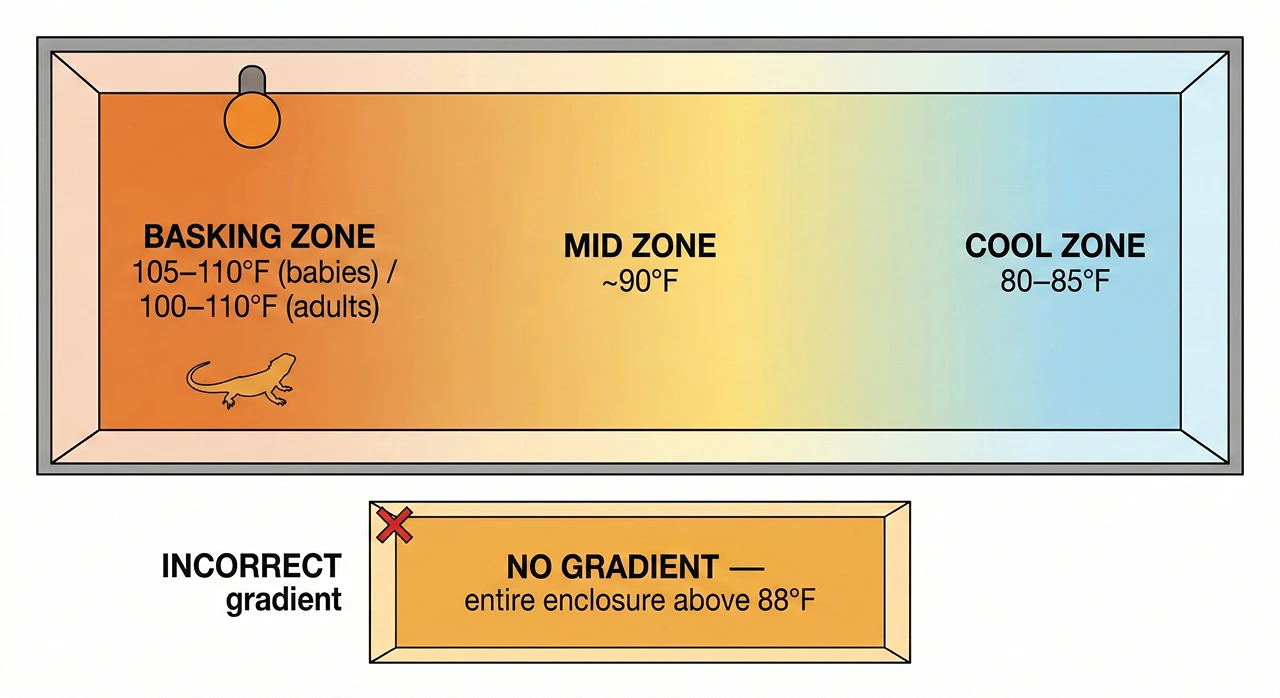
If the cool side is running above 88°F, the whole tank is warm and the dragon has no way to shed excess heat after basking. The basking spot becomes counterproductive rather than useful. In this situation many dragons avoid the warm end entirely and sit near the glass looking for somewhere cooler.
The cool side needs to sit between 80–85°F during the day. If it is running higher, check whether room temperature is contributing, whether the bulb wattage is too high for the enclosure size, or whether the enclosure itself is too small to allow a proper gradient. An adult dragon in a 40-gallon tank simply cannot have a usable thermal gradient, which is one of the core reasons our tank size recommendations rule out smaller enclosures for adults.
Reasons a Dragon Skips the Basking Spot That Are Not Problems
Post-Meal Timing
A dragon that was already warm before eating will not necessarily bask immediately afterward. If it spent the morning under the light and ate at midday, sitting on the cool side for an hour after the meal is normal thermoregulation. Feeding early in the day gives several hours of basking time both before and after meals.
Some Dragons Will Not Bask While Being Watched
Basking requires a dragon to sit out in the open. Some individuals are reluctant to do this when someone is nearby. Leave the room or step away from the enclosure for an hour. If the dragon basks in your absence but not when you are present, there is nothing wrong with the setup. It is a temperament thing, more common in dragons that are still settling into their environment.
Shed Cycle
Basking and appetite both drop during an active shed. Dull skin, cloudy eyes, tight-looking skin around the joints. Reduced basking during this period is expected and temporary, and the full timeline from early dulling to complete skin release is covered in the bearded dragon shedding guide.
Brumation
Reduced basking is usually the first sign of an approaching brumation period. More sleeping, less eating, less time under the light. Most common in autumn and early winter. If body weight is staying stable, this is almost certainly seasonal. If the dragon is losing weight consistently alongside reduced basking, get a vet check before assuming the animal is entering seasonal brumation.
Stress Can Suppress Basking for Days
A stressed dragon stays hidden. Basking means sitting out in the open, which a dragon that feels unsafe will not do. New enclosure, overhandling, cats or dogs walking past the tank, a new piece of decor. Any of these can cause basking to stop temporarily.
Reflections are worth checking. A dragon that can see its own reflection in the enclosure glass may treat it as a territorial intruder and spend time glass surfing or hiding rather than basking. Covering three sides of the enclosure with a background often resolves this within 48 hours. Distinguishing stress signals from illness signs is the job of our bearded dragon body language guide.
When the Setup Is Fine and Basking Still Has Not Returned
A sick dragon loses the drive to thermoregulate. The difference between illness and a setup problem is usually visible in other symptoms. A dragon dealing with a respiratory infection or a parasite load will often be generally lethargic across the whole enclosure, not just avoiding the basking spot.
Discharge from the nose, laboured or wheezy breathing, and visible weight loss alongside basking avoidance are the signs that point toward something medical. Wheezing and nasal discharge are the classic early signs of a bearded dragon respiratory infection. If the dragon is lethargic across the board rather than just avoiding one area, more health causes behind general inactivity sit in our breakdown of why a dragon stops moving. Keep an eye on droppings and waste changes during this period as stool shifts often appear before other symptoms become obvious.
Bearded Dragon Not Basking Quick Reference
| What You Are Seeing | Most Likely Cause | What to Do |
|---|---|---|
| Never basks, analogue thermometer in use | Surface too cold, inaccurate gauge | Check surface with infrared gun. Target 100–110°F on rock. |
| Approaches basking spot, pauses, retreats repeatedly | Surface too hot | If above 115°F, reduce wattage or raise the fixture. |
| Adult dragon, basked well as juvenile, stopped gradually | Age-related preference shift | Try dropping surface temperature to 95–100°F for adults. |
| Basking object is a hammock or rope platform | Surface not holding heat | Replace with flat slate tile or dense flat rock. |
| Sits under UVB but avoids heat bulb area | UVB and basking light too far apart | Reposition UVB tube to run along same end as basking bulb. |
| Screen top in use, temps seem low despite correct bulb | Mesh reducing heat output | Measure temps with screen in place. Consider mounting bulb inside. |
| Cool side above 88°F, dragon avoids warm end entirely | No usable temperature gradient | Cool side must reach 80–85°F. Check enclosure size and wattage. |
| Basks when you leave the room, not when observed | Watching effect | Step away. Some dragons need privacy to bask comfortably. |
| Glass surfing, stress marks, avoiding basking spot | Stress or enclosure reflection | Cover three sides with a background. Remove recent tank changes. |
| Dull skin, cloudy eyes, basking reduced | Shed cycle | Normal. Basking returns once shed completes. |
| Autumn, sleeping more, weight stable | Brumation | Weigh weekly. Normal if weight stays stable. |
| Lethargic across whole enclosure, discharge, wheezy breathing | Illness | Exotic vet within 24–48 hours. |
Frequently Asked Questions
How Long Is It Okay to Go Without Basking
One day during a shed cycle or after a warm morning is not a concern. Two to three days of complete avoidance needs the setup checked. Without adequate basking, digestion stalls within 24–48 hours and the effects compound from there. Do not leave a full basking stop uninvestigated past the 48-hour mark.
My Dragon Sits Near the Basking Spot but Never Under It
Usually means the surface directly under the bulb is too hot. The dragon is finding the warmest tolerable position just outside the hottest zone. Check the surface temperature under the bulb with an infrared gun. If it is above 115°F, reduce it and the dragon will typically move back underneath. If temperatures are correct throughout, check whether the basking object surface is solid and whether the UVB tube is positioned overhead.
My Dragon Only Basks for a Few Minutes at a Time
Short repeated sessions are normal for many adults, particularly those that hold heat efficiently. What matters is whether total daily basking time is enough for digestion and D3 synthesis. A dragon basking in several short bursts across a 12-hour light period, eating normally, and producing healthy droppings is almost certainly fine. It is the complete absence of basking that signals a problem.
Basking Stopped Right After I Moved the Enclosure
Two things happen when you move an enclosure. The room temperature changes, which affects how hard the bulb has to work to hit surface targets. The environment also changes, which causes temporary stress. A setup that ran correctly in a warmer room may run cold in a cooler one with the same wattage. Check temperatures first. Then give the dragon 5–7 days to settle before assuming something is wrong.
Do Bearded Dragons Bask Less in Winter
Many do, particularly adults. Shortening days and dropping ambient temperatures trigger a seasonal slowdown that includes reduced basking, reduced appetite, and more sleeping. This is the beginning of a brumation response in most cases. Weight is the clearest indicator. Stable weight during a winter slowdown is normal. Consistent weekly weight loss is not and warrants a vet check regardless of the season.
If Nothing Has Changed After 48 Hours
A bearded dragon not basking for longer than two days needs a structured check before a vet visit. Work through this list in order.
- ✅ Check basking surface temperature with an infrared gun. On the rock, not the air. Target 100–110°F for adults, 105–110°F for babies.
- ✅ Check if the surface is too hot. Above 115°F the dragon will avoid it. Reduce wattage or raise the fixture.
- ✅ Check what the dragon is sitting on. Hammocks and rope platforms do not hold heat. Replace with flat slate or a solid flat rock.
- ✅ Check UVB tube position. It needs to run along the same end as the basking bulb, overhead when the dragon basks.
- ✅ Check cool side temperature. Above 88°F means no usable gradient. Cool side needs to reach 80–85°F.
- ✅ Add a background to three sides. Enclosure reflections cause stress that suppresses basking.
- ✅ Leave the room for an hour. Check whether the dragon basks in your absence.
- ✅ Weigh the dragon. Stable weight with reduced basking points to something seasonal or behavioural. Consistent weekly loss alongside basking avoidance needs a vet.
Disclaimer: This article is for general husbandry guidance only and does not constitute veterinary advice. If your bearded dragon has stopped basking entirely, is losing weight, or is showing additional symptoms including lethargy, nasal discharge, or laboured breathing, contact a qualified reptile veterinarian promptly.
Written by
Sarah ArdleySarah has kept bearded dragons for over ten years. She founded Beardie Husbandry after discovering that most mainstream care advice — including what she followed with her first dragon — was doing more harm than good. Every article on this site is grounded in veterinary research and real keeper experience.