Why Your Bearded Dragon Tank Smells and How to Fix It
A bearded dragon tank smell almost never appears overnight. It builds slowly: a faint sourness one week, a sharp ammonia note near the glass the next, until the whole room carries it.
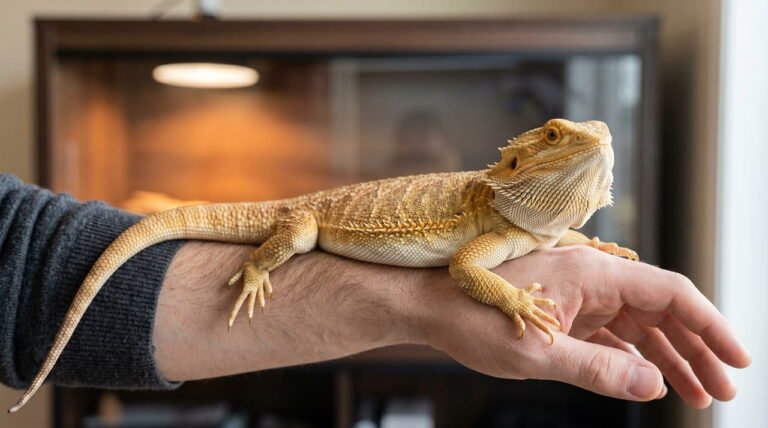
Here is the reassuring part. A healthy dragon barely smells at all. Beardies have no sweat glands and do not scent-mark, so a stinking enclosure is almost always an environment problem, not a sick animal.
Nine times out of ten the fix is mechanical. You find what is rotting or soaking, pull it out, then change the conditions that let it build back up.
The substrate choice is the most common offender, and swapping it is usually the single biggest win. A smelly tank is irritating to live with. It is rarely an emergency.
Why a Bearded Dragon Tank Smells
Odour comes from organic matter breaking down in a warm box. The basking lamp that keeps your dragon healthy also speeds up bacterial decay, so anything left sitting starts to turn faster than it would at room temperature.
Track a bearded dragon tank smell back to its source and it nearly always lands on one of four things.
Waste Left Under the Basking Light
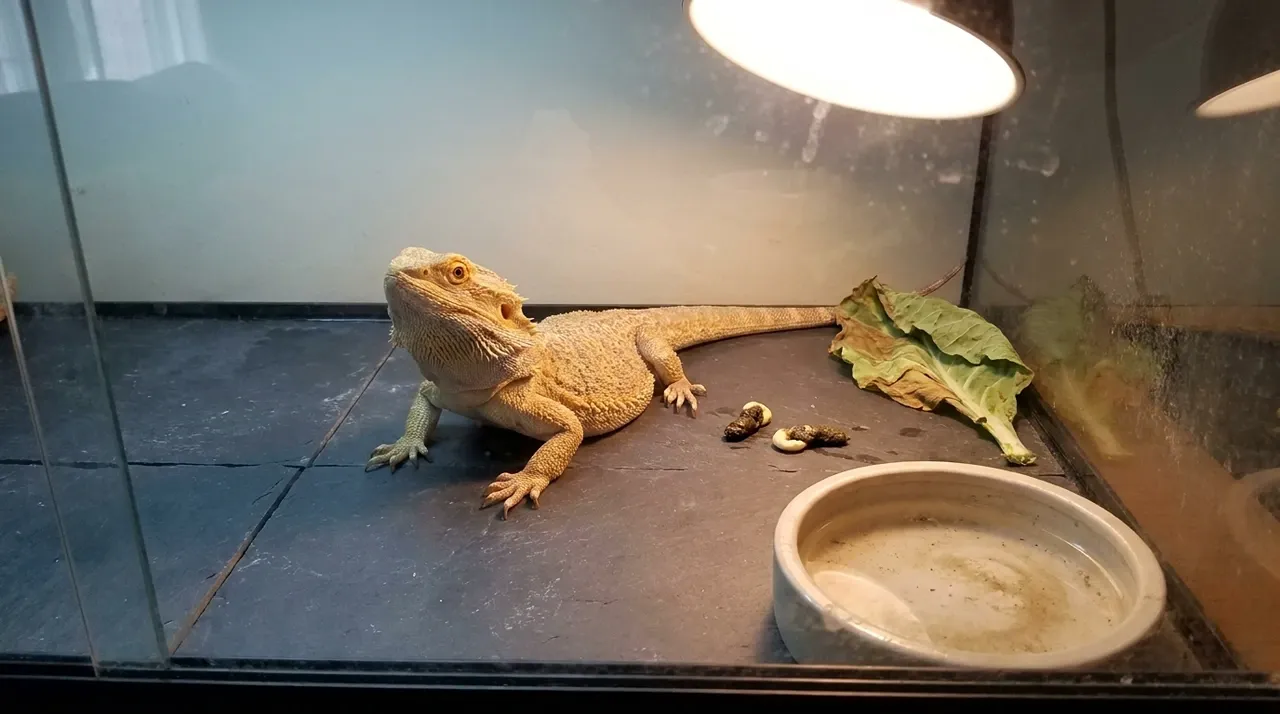
Faeces and urates are the number one source. A single poo baking at 40°C for a day will scent an entire room.
Urates, the white or yellow paste dragons pass instead of liquid urine, are the worse half. They carry the sharp ammonia note and soak into anything porous if you leave them.
Uneaten Food Rotting in the Tank
Leftover greens wilt and sour within hours under heat. A cricket or dubia that escaped into a hide and died is even worse, because you cannot see it and the smell seems to come from nowhere.
Pull all uneaten salad and any loose feeders within a couple of hours of feeding. If a smell appears with no obvious cause, check behind every hide and decoration for a dead insect first.
The Substrate Is Holding Odour
This is the one most keepers get wrong. Reptile carpet looks easy to clean, but liquid waste wicks deep into the fibres where surface wiping never reaches.
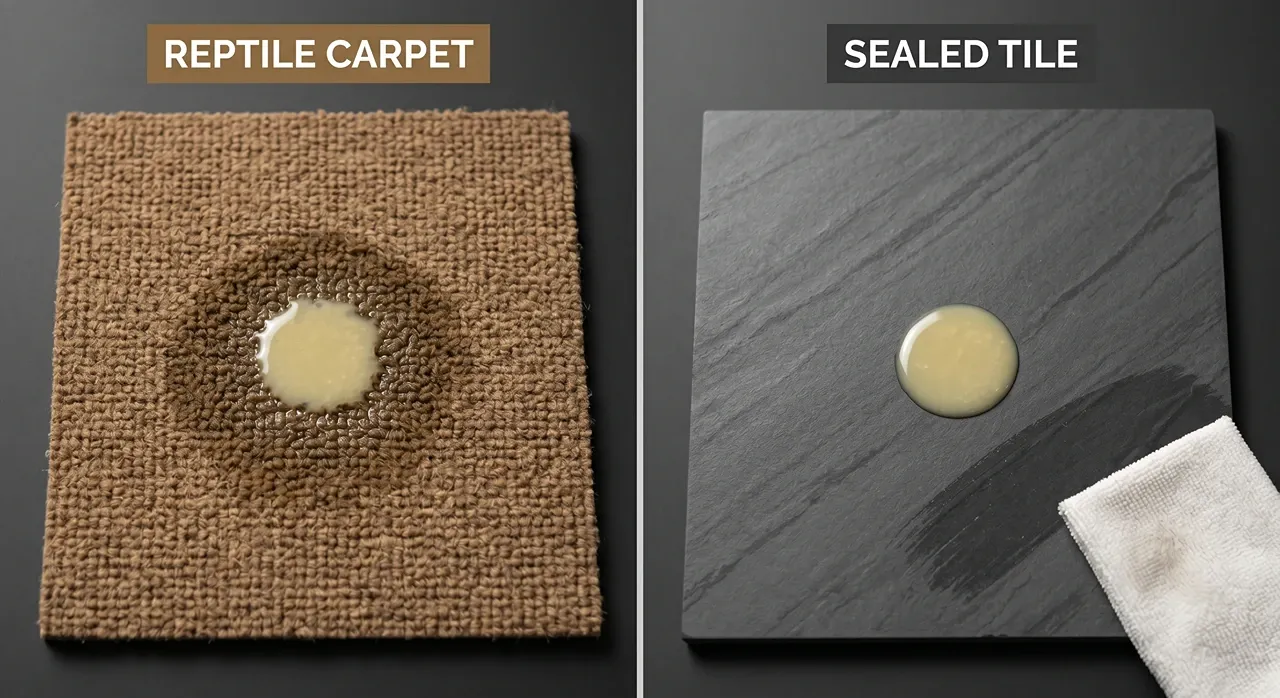
Bacteria then colonise the core and the carpet itself becomes the smell. Loose particle substrates trap waste the same way between the grains.
Stale Air From Poor Ventilation
A musty, damp, earthy note is different from sharp ammonia. It points to trapped moisture and air that is not moving, which is also the first stage of mould.
Glass vivariums with a solid lid hold humidity and odour far more than a mesh-topped enclosure. Cutting airflow to chase a humidity reading backfires badly. The Merck Veterinary Manual warns that reducing ventilation to hold temperature or humidity frequently drives skin and respiratory disease.
How to Find the Source Fast
Every bearded dragon tank smell has one dominant source, and guessing at it wastes time. A deep clean does nothing if you never fixed the cause. Use the smell itself as the clue. Different sources produce different odours, and matching one to the other tells you exactly where to look.
| What you smell | Likely source | What to do |
|---|---|---|
| Sharp ammonia or cat-litter note | Urates and waste soaked into substrate | Remove waste daily; replace or deep clean the substrate |
| Rotten, sour, vegetal | Uneaten greens or a dead feeder | Pull all food fast; check behind every hide |
| Musty, damp, earthy | Trapped moisture, weak airflow, early mould | Improve ventilation; dry the tank; check humidity |
| Foul odour coming off the dragon | Stuck shed, skin, mouth or vent infection | Bathe and inspect; call a reptile vet if it lingers |
| Strong faecal smell despite daily cleaning | Possible internal parasites | Book a vet faecal exam |
Is the Smell Your Dragon or the Tank
This matters more than anything else on the page. A dirty enclosure is a chore. A dragon that has started to smell is a health signal you should not clean away and ignore.
Run a simple test. Spot clean the tank fully, then a day later put your nose close to your dragon directly. If the animal smells fine and the enclosure has gone sour again, your problem is maintenance.
When a Bath Tells You More
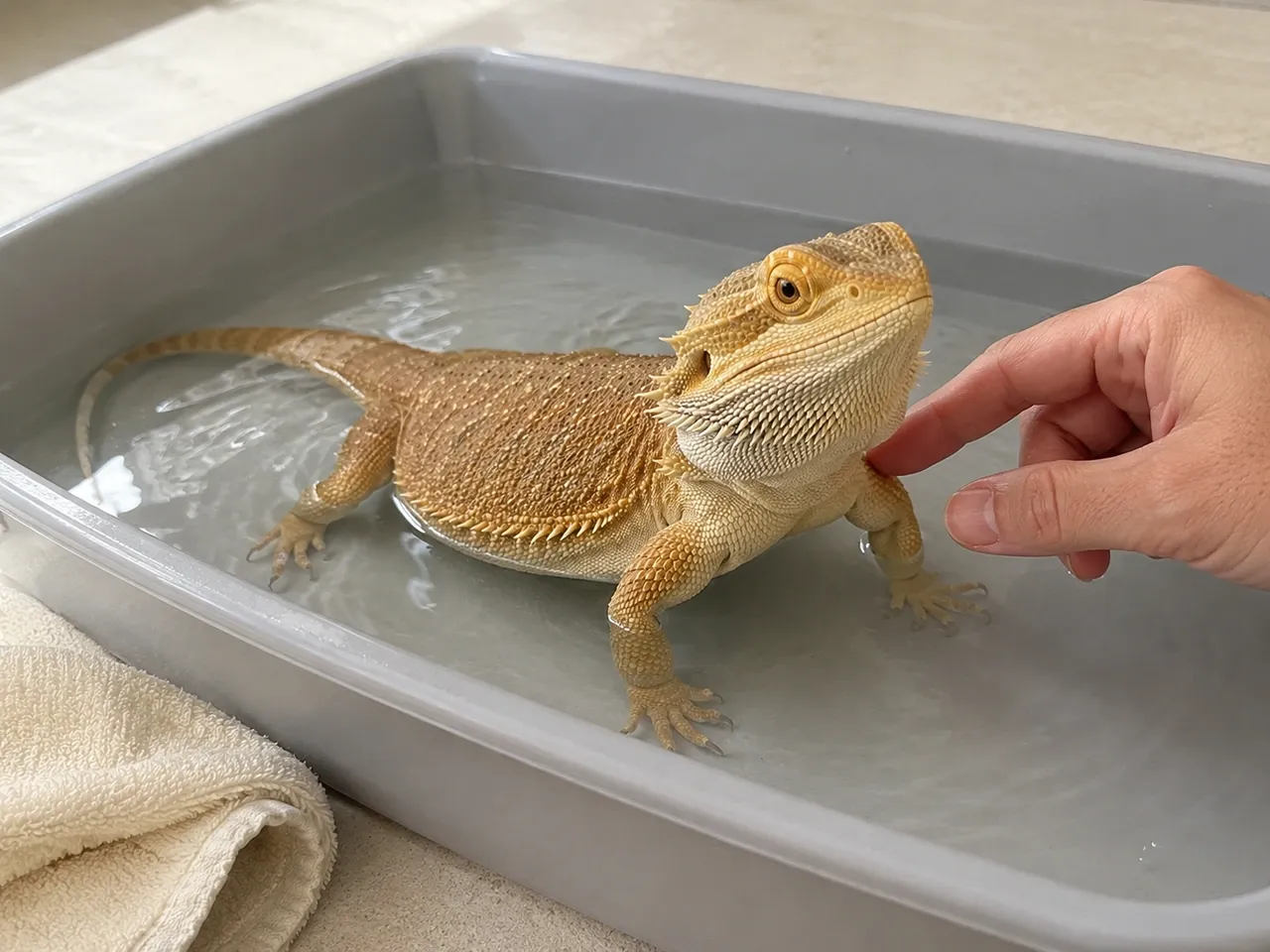
If the odour clings to the dragon, give it a warm soak and look closely while the skin is wet. A localised stink usually has a localised cause.
A sweet or sickly smell near the mouth can flag early mouth rot. A foul note at the vent points to retained waste or infection. Either one is a reason to ring a reptile vet rather than reach for more disinfectant.
The Cleaning Routine That Keeps It Gone
A bearded dragon tank smell stays gone when cleaning runs on a rhythm instead of a panic. The schedule below is what keeps an enclosure odour-free without turning maintenance into a daily ordeal.
Daily Spot Cleaning Takes Two Minutes
Remove every poo and urate the moment you spot it. Pull uneaten greens and any loose feeders. Tip out and refill the water dish, because standing water grows a bacterial film that smells on its own.
The Weekly Wipe Down
Once a week, wipe every hard surface, glass, and decoration with a reptile-safe cleaner. Check the corners and the substrate underneath hides, where waste hides and a cage smell quietly concentrates out of sight.
A Full Deep Clean Monthly
Once a month, strip the tank completely. Remove the dragon to a safe holding tub, take everything out, and replace or fully sanitise the substrate.
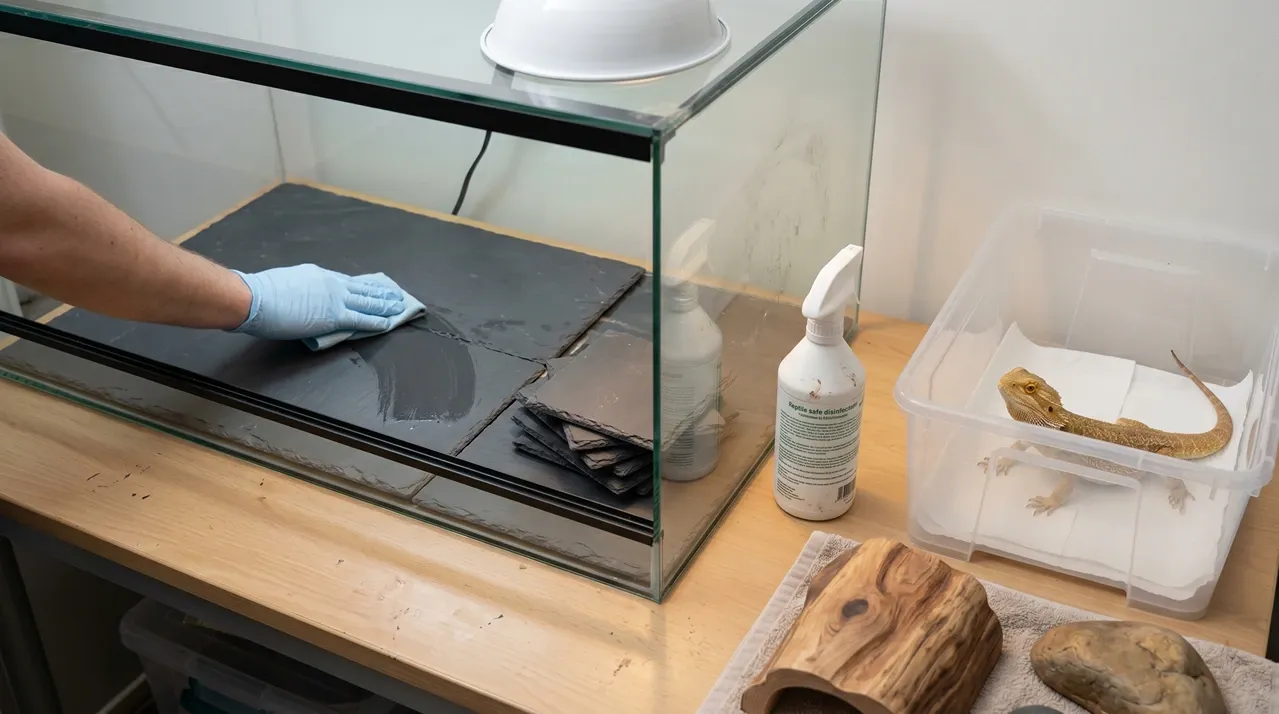
Hard décor needs proper attention too, and the method for cleaning wood and rocks differs from wiping glass because porous surfaces hold bacteria deep down.
The Long Term Fix Most Keepers Skip
If you are tired of fighting odour at all, a bioactive setup handles it biologically. A live cleanup crew of isopods and springtails breaks waste down before it can sour, so the enclosure largely self-cleans.
When the Smell Means a Vet Visit
Most odour is housekeeping. A few patterns are not, and knowing the difference is what separates a confident keeper from a worried one.
A sudden, dramatic worsening of faecal smell despite good spot cleaning can signal internal parasites and warrants a faecal exam. Smell paired with runny or discoloured stool raises the same concern.
Odour coming from the dragon rather than the tank is the clearest red flag. A musty, cheesy, or rotting smell on the skin alongside crusting or yellowing needs same-week veterinary eyes, since it can point to serious skin disease.
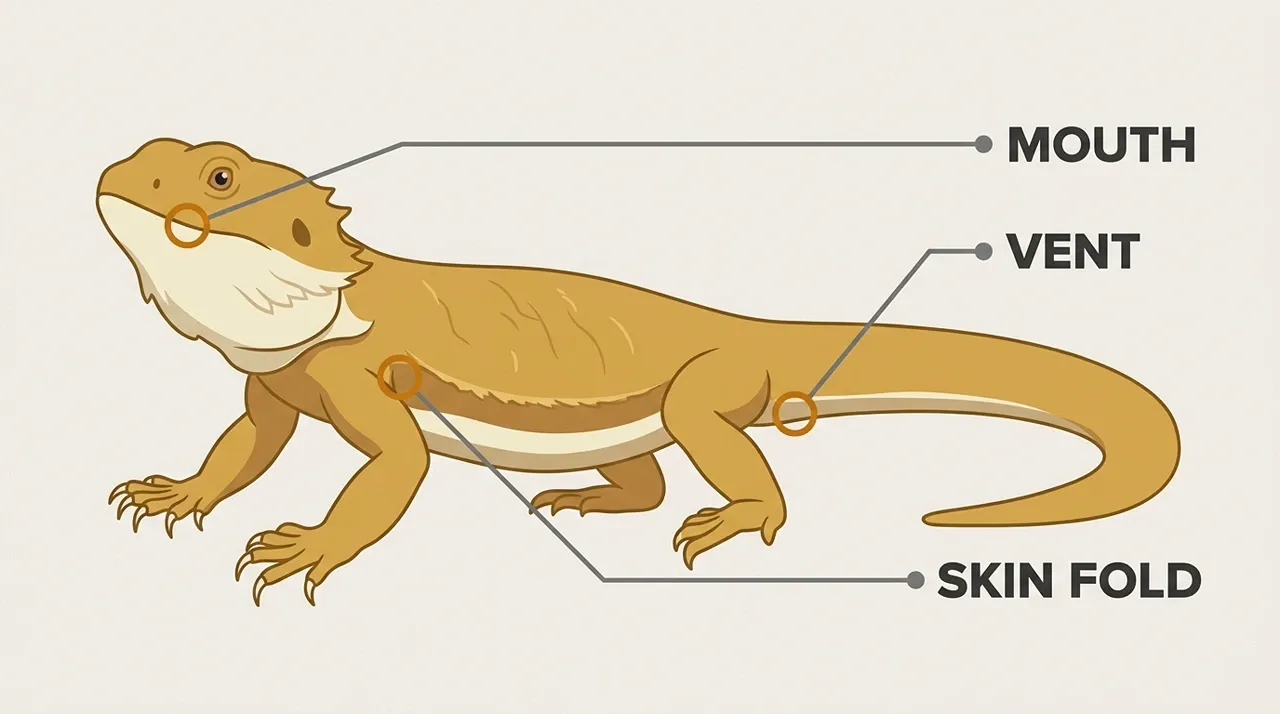
If you are unsure where to turn, a qualified reptile vet is worth more than any home remedy when a smell comes off the animal itself.
Questions Keepers Ask About Tank Smell
Why Does a Bearded Dragon Tank Smell
Ammonia is the signature of urates and urine breaking down. It almost always means waste is soaking into porous substrate or sitting too long between cleans. Remove waste daily and move to a solid, wipeable floor.
Do bearded dragons themselves smell bad
No. A healthy dragon has almost no odour because it has no sweat glands and does not scent-mark. A bad smell coming off the animal itself is a health signal, not normal.
How often should I fully clean the tank
Spot clean every day, wipe hard surfaces weekly, and do a full strip-down with substrate replacement monthly. A bioactive enclosure stretches that interval much further because the cleanup crew works constantly.
Is reptile carpet bad for odour
Yes. Liquid waste wicks into the fibres where surface cleaning cannot reach, and bacteria colonise the core. The carpet itself becomes the source, which is why solid flooring outperforms it long term.
Can a smelly tank make my dragon ill
It can. Trapped ammonia and poor ventilation irritate the respiratory tract and create conditions for bacterial and fungal growth. Fixing the smell also removes a genuine health risk.
Keep It Fresh Starting Today
You can break the cycle behind a bearded dragon tank smell in a single afternoon and a five-minute daily habit. Work through these in order.
- Strip the tank today and bin any loose or carpet substrate that has soaked up waste.
- Switch to sealed tile or another solid, wipeable floor so nothing holds odour going forward.
- Set a two-minute daily spot-clean: waste out, old food out, water changed.
- Put the weekly wipe-down and monthly deep clean on an actual calendar reminder.
- Improve airflow if the smell is musty, and never choke ventilation to hold humidity.
- Smell the dragon directly once a week, and call a vet the moment the odour is on the animal.
This article is for educational purposes and reflects hands-on husbandry experience. It is not a substitute for veterinary advice. If a smell is coming from your dragon, or you suspect parasites, infection, or any health problem, contact a reptile-experienced vet.
Written by
Sarah ArdleySarah has kept bearded dragons for over ten years. She founded Beardie Husbandry after discovering that most mainstream care advice — including what she followed with her first dragon — was doing more harm than good. Every article on this site is grounded in veterinary research and real keeper experience.