How to Handle a Bearded Dragon Without Getting Bitten
That first time you reach into the enclosure and your beardie puffs its beard, flattens its body, and opens its mouth, it is hard not to flinch.
Figuring out how to handle a bearded dragon without triggering that defensive reaction is simpler than it looks once you understand what is actually scaring them.
Beardies are among the most docile reptiles you can keep, and a calm dragon will sit on your arm for twenty minutes without flinching. One clumsy grab from above, though, can undo weeks of trust-building in a single second.
Whether you have a new baby, a skittish juvenile, or an adult rescue that has never been held, the same core principles apply. You just need to know what your dragon sees, what it fears, and how to make yourself look like a warm branch instead of a predator.
Why Beardies Bite During Handling
Bearded dragons do not bite out of malice. Every bite has a specific trigger, and knowing how to handle a bearded dragon starts with understanding those triggers so you can sidestep them entirely.
The Parietal Eye Changes Everything
There is a small photosensory organ on top of your dragon’s head called the parietal eye. It does not see images, but it detects changes in light and shadow directly above.
In the wild, this organ warns beardies about birds swooping in from overhead. When your hand passes over your dragon’s head, that organ fires the same alarm as a hawk approaching.
This is why reaching in from above a top-opening tank causes panic. The dragon does not see your friendly hand. It registers a shadow descending from the sky and goes into fight-or-flight mode.
Front-opening enclosures solve this problem entirely. If you are still using a standard aquarium with only top access, approach from one side rather than directly overhead, and move slowly enough that the shadow change is gradual.
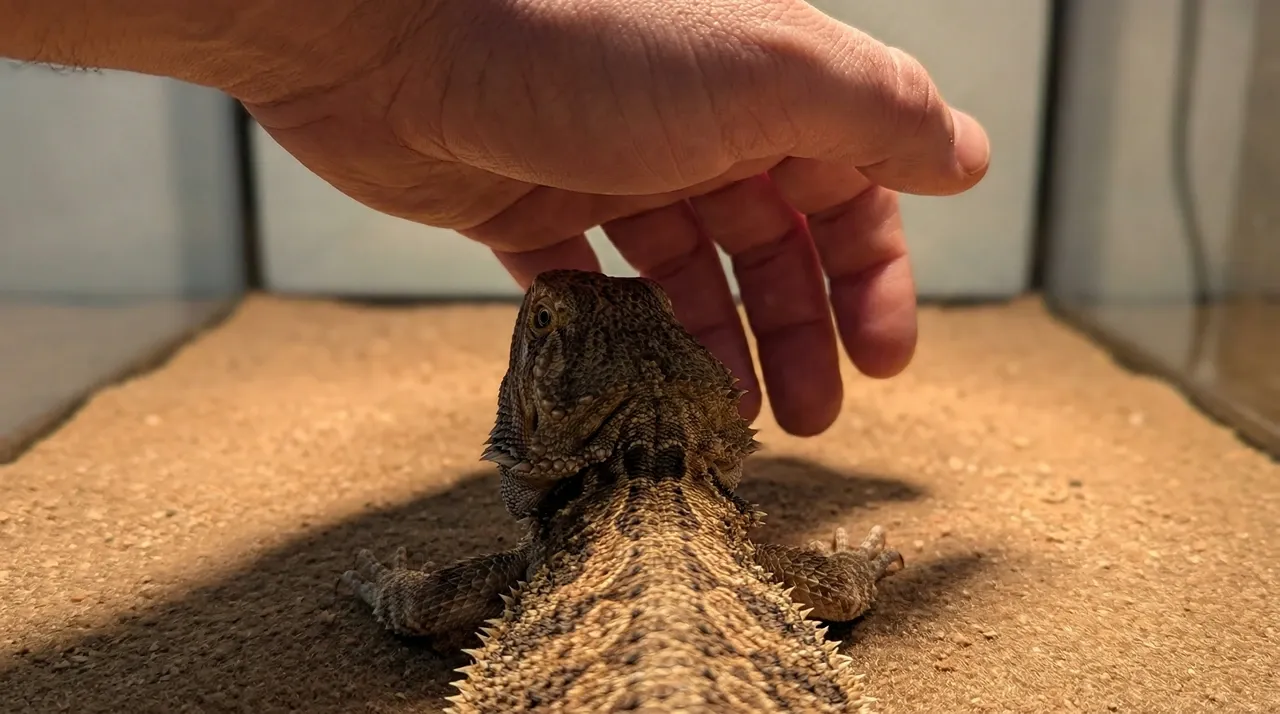
This shadow response is hardwired. Even a well-tamed dragon can flinch if you forget and reach straight down on autopilot, so front-approach should become muscle memory for every pickup.
Food Smell on Your Hands
Bearded dragons hunt by scent and movement. If your fingers smell like crickets, dubia roaches, or even banana, your dragon may strike at them thinking they are food.
This is the most common reason a beardie “bites” a child. The kid just handled feeders or fruit, reaches in with wiggly fingers, and the dragon goes for what smells like lunch.
Wash your hands with unscented soap before every handling session. After you clean off the food smell, the accidental feeding strike almost never happens.
Stress, Pain, or Territorial Behaviour
A dragon that is shedding, gravid, in mating season, or dealing with an injury will have a lower tolerance for being touched. Hormonal males in spring can become territorial enough to bite a hand that enters their enclosure uninvited.
This is not aggression in the way a dog might show it. It is a predictable defensive reaction to discomfort or hormonal pressure, and it passes once the trigger resolves.
How to Handle a Bearded Dragon Safely
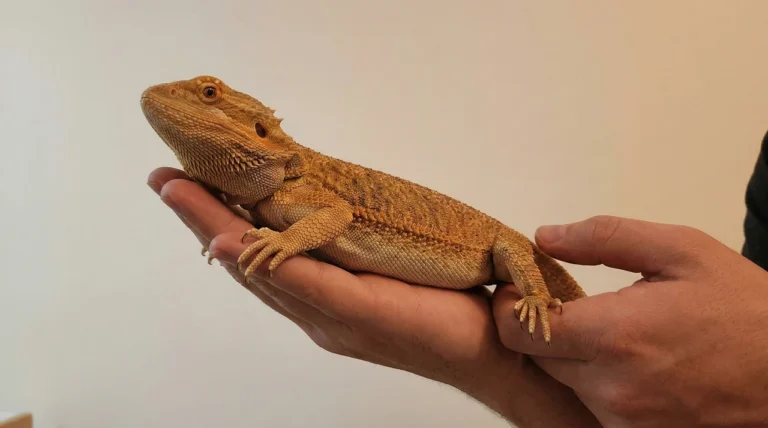
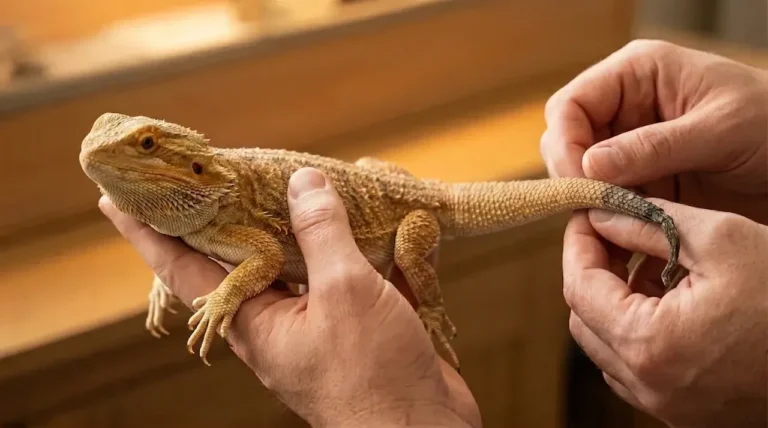
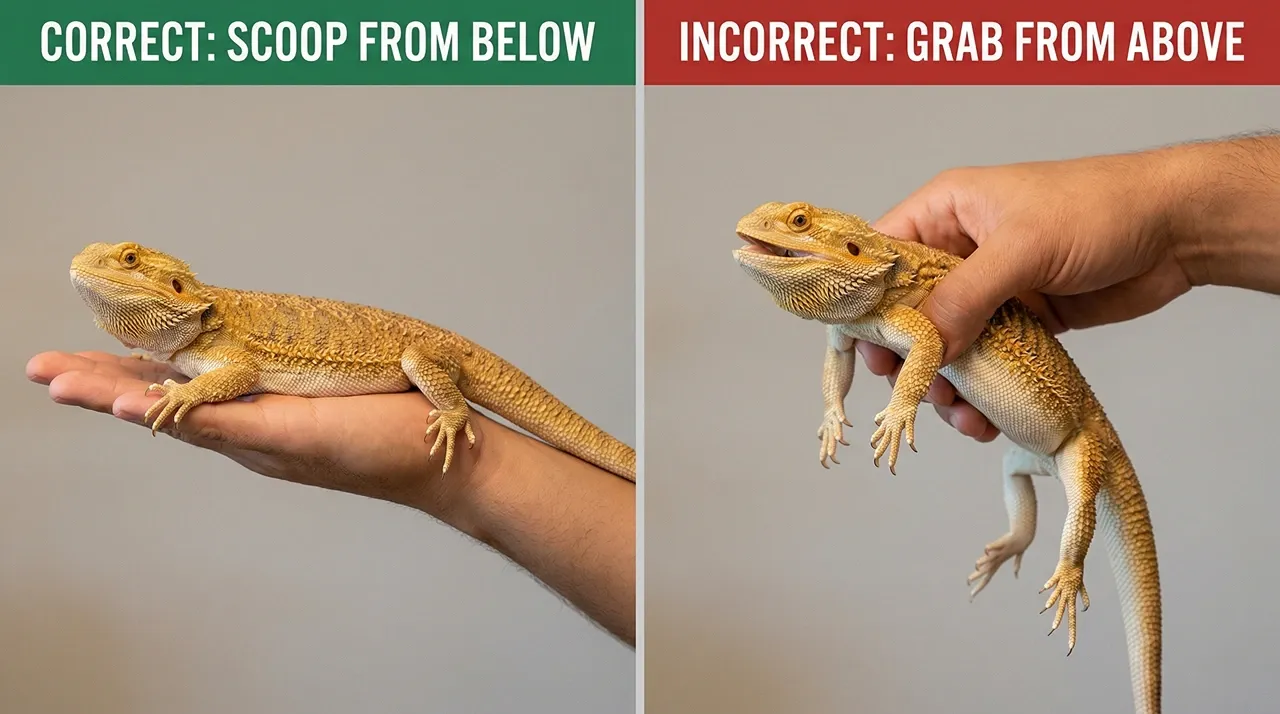
There is one correct way to handle a bearded dragon when lifting it from the enclosure. Every variation follows the same principle: support the full body from underneath so the dragon feels stable, not grabbed.
The Scoop Technique Step by Step
- Announce yourself. Speak in a normal voice so the dragon registers your presence before your hand enters the enclosure.
- Slide your hand in from the front or side, keeping it below the dragon’s eye level. Never reach straight down from above.
- Place your fingers gently under the chest, just behind the front legs. Let the dragon feel your hand before you lift.
- Use your other hand to support the hind legs and base of the tail so no limbs dangle unsupported.
- Lift slowly and bring the dragon to your chest or forearm. A dragon with all four feet on a stable surface will not thrash.
If any foot is left dangling, the dragon feels off-balance and will scramble or whip around to regain grip. That scramble is what usually leads to scratches or a defensive bite.
What Not to Grab
Never pick up a beardie by the tail. Unlike geckos, bearded dragons cannot drop and regenerate their tails. Pulling or lifting by the tail risks vertebral damage or skin tears that require veterinary attention.
Legs are equally off-limits as handles. A squirming dragon held by one leg can easily fracture a bone. Always scoop from underneath with full body contact across your palm and forearm.
The First Two Weeks Matter Most
A dragon you just brought home is stressed, and learning how to handle a bearded dragon properly means giving it time to settle first. New smells, new lighting, new temperatures, and a giant creature staring through the glass all register as threats.
Resist the urge to handle your new beardie immediately. Most experienced keepers recommend a full settling-in period of seven to fourteen days with zero handling before you try to pick up your bearded dragon for the first time.
During this window, let the dragon eat, bask, and explore its enclosure on its own terms. It needs to feel safe in its home before it can feel safe in your hands.
Building Trust Before the First Pickup
Spend time near the enclosure without reaching in. Sit next to it while you read or watch television. Your dragon will learn that your presence does not equal a threat.
Place a worn t-shirt inside the cool end of the tank for a day or two. This lets the dragon familiarise itself with your scent in a low-pressure way.
After the first week, try hand-feeding a single piece of greens or a dry pellet through the enclosure door. Wet foods like melon or cucumber can cause an accidental nip because the dragon lunges at the moisture.
Once the dragon eats calmly from your hand without puffing its beard, it is ready for its first short handling session.
Taming a Skittish Baby or Juvenile
Baby bearded dragons under three months are tiny, fast, and terrified of everything. Knowing how to handle a bearded dragon at this age means accepting that short, gentle sessions work better than long ones.
Wait until the baby is at least six inches long and roughly two months old before you start regular handling. Before that size, they are fragile enough that a startled jump off your hand can cause real injury.
Short Sessions Build Confidence Faster
Handle a baby beardie two to four times a day for just five minutes at a time. Short, frequent sessions teach the dragon that being picked up always ends safely and without pain.
Sit on the floor during these sessions so the fall distance is inches instead of feet if the baby bolts off your hand. Keep the room quiet with no other pets in the space and no loud music or sudden noises.
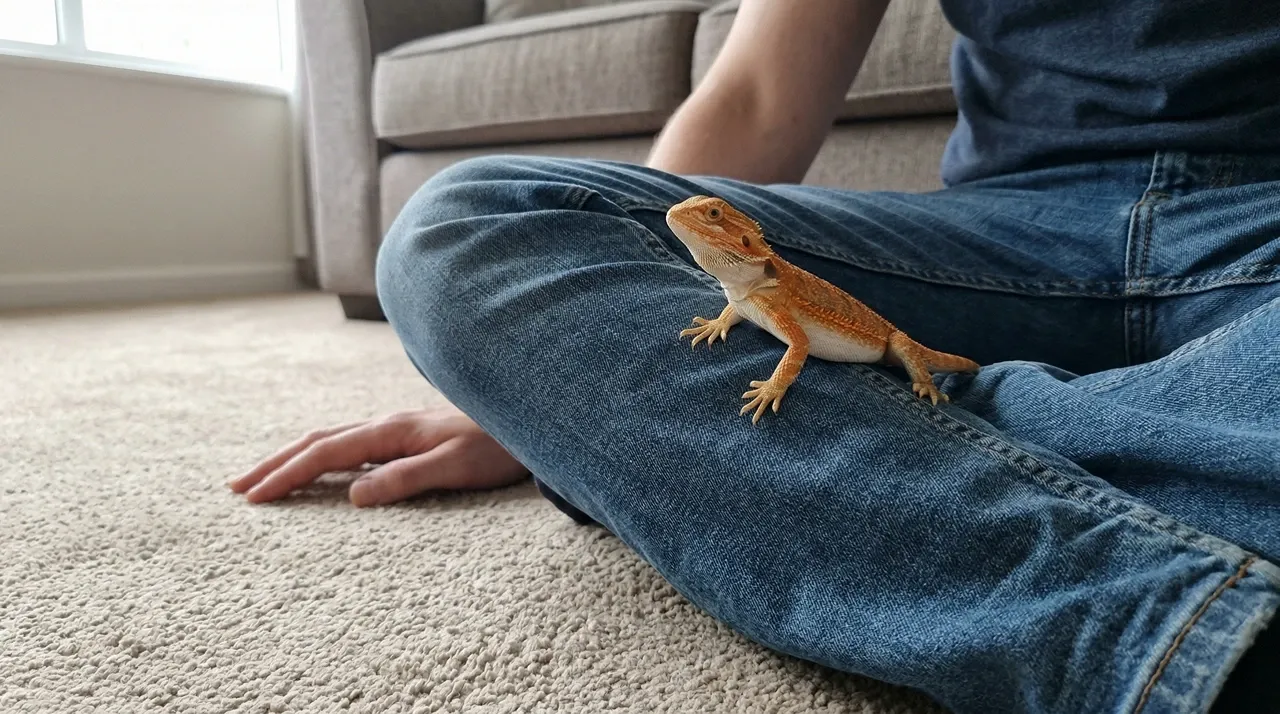
A juvenile beardie between six and twelve months can handle longer sessions of ten to fifteen minutes. By this age, most dragons that have been handled consistently will crawl onto your hand voluntarily when they see the enclosure door open.
Taming an Aggressive Adult or Rescue
An adult dragon that has not been handled regularly is a different challenge entirely. Adults are strong enough to deliver a bite that breaks skin and draws blood, so anyone learning how to handle a bearded dragon at this stage needs extra caution.
Start the same way you would with a new dragon by giving the adult a week to settle into its enclosure without handling. Spend time near the tank and hand-feed through the door once the dragon stops retreating when you approach.
Gloves Are Fine at First
Thick leather gardening gloves are a reasonable first step with a rescue dragon that has a history of biting. They protect your hands and keep you from flinching, which is half the battle.
The downside is that gloves mask your scent and change your hand’s appearance, so the dragon takes longer to recognise you. Transition to bare hands as soon as the dragon stops displaying a black beard when you reach in.
Hold the adult for at least fifteen minutes daily. Consistency matters more than session length. A dragon handled every single day for two weeks will show more progress than one handled for an hour once a week.
Body Language That Means Stop
Your dragon will always warn you before it bites. The biggest part of learning how to handle a bearded dragon safely is recognising those warnings, and reading bearded dragon body language is the fastest way to get there.
Signals to Watch For
- Black beard: The beard darkens and puffs out. This is the clearest “back off” signal a beardie gives. Stop the session immediately.
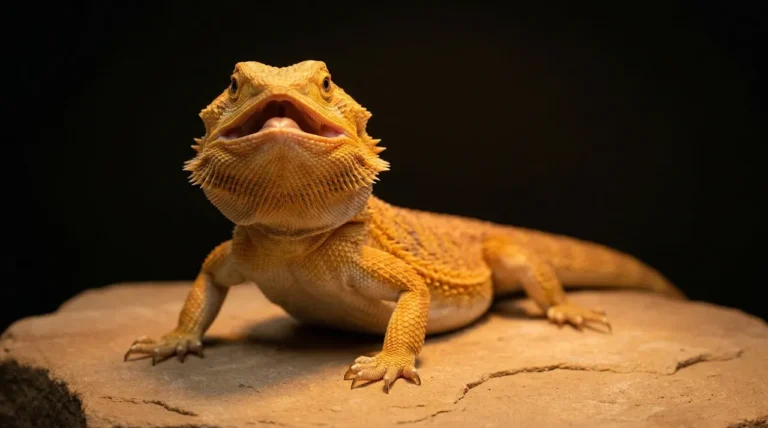
- Gaping mouth: The dragon opens its mouth wide and holds it open, sometimes accompanied by a soft hiss. This is a direct threat display.
- Flattened body: The dragon pancakes itself low to the ground and angles its body sideways toward you. It is trying to look larger and more intimidating.
- Tail raised stiffly: A rigid, elevated tail signals high alert. The dragon is ready to flee or fight depending on what you do next.
- Head bobbing with a dark beard: Rapid, aggressive head bobs combined with a black beard mean the dragon is actively territorial. This is not the slow, casual head bob you see during basking.
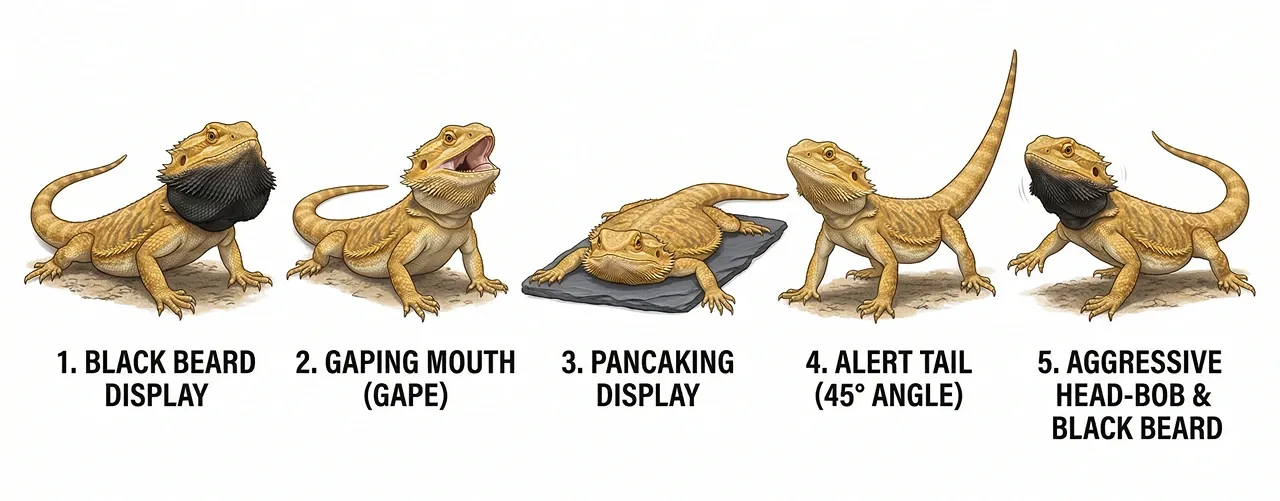
If you see any of these signals, calmly return the dragon to its enclosure. Forcing a handling session past a warning display is how trust breaks down and bites happen.
Signs That Say “I’m Fine”
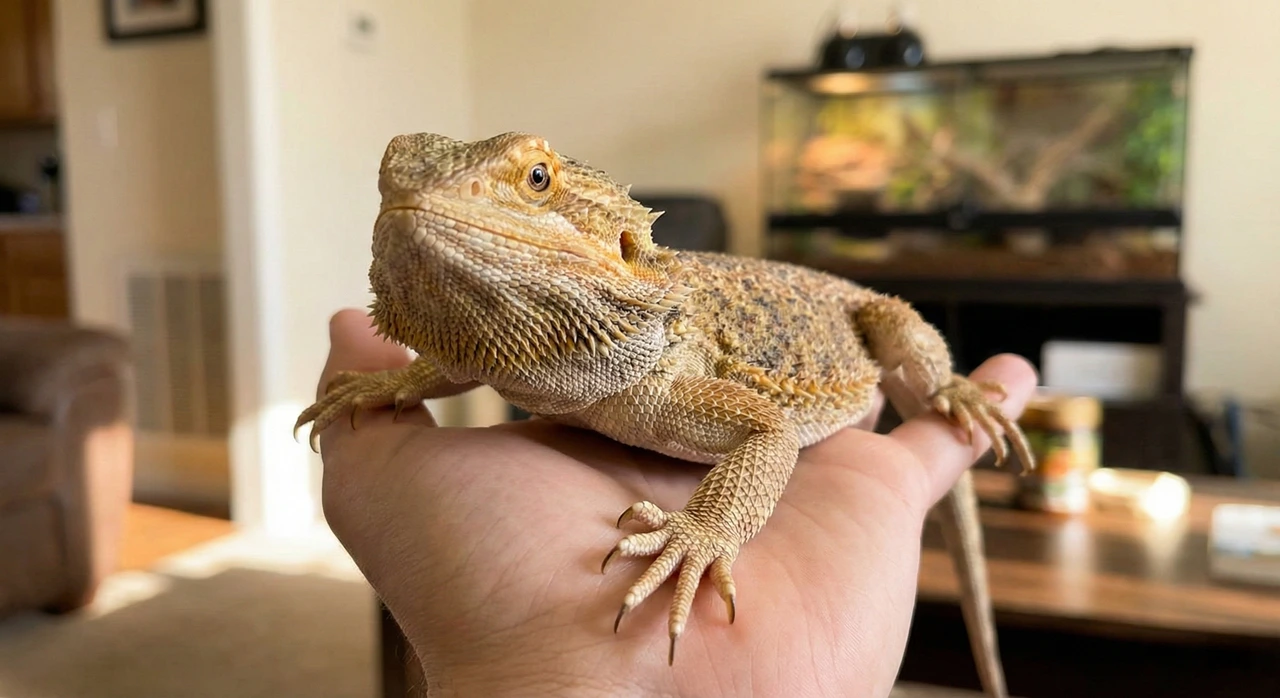
A relaxed beardie has a flat, pale beard and half-closed eyes. It may lick your hand or arm, which is exploratory behaviour, not aggression. Some dragons close their eyes completely when being stroked along the head. That is contentment.
Arm waving is often misread as distress. In many cases, it is actually a submissive gesture meaning “I see you and I’m not a threat.” This is a good sign during taming.
When You Should Skip Handling
There are specific windows where handling your bearded dragon is either unsafe for the animal, pointless for trust-building, or likely to get you bitten.
Right After a Meal
Wait at least thirty minutes after feeding before you pick up your beardie. Handling too soon can cause regurgitation, and a dragon with a full stomach is more irritable and more likely to snap.
During Active Shedding
Shedding skin is itchy and uncomfortable. A dragon in active shed may flinch or hiss when you touch a patch of loose skin that has not fully detached yet. Keep handling brief and avoid touching visibly peeling areas.
Never pull at loose shed. Peeling off skin that is still attached can tear live tissue underneath and open the door to infection.
During Brumation
A dragon deep in winter brumation is cold, sluggish, and running on minimal energy. Waking a brumating beardie for handling serves no purpose and stresses the dragon while burning energy reserves it is trying to conserve.
A cold dragon startled out of sleep is also far more likely to bite reflexively than one that is warm and alert.
When the Dragon Is Sick or Injured
Any dragon showing signs of respiratory infection, mouth rot, visible injury, or lethargy should only be handled when necessary for treatment or transport to a vet. Unnecessary handling adds stress to an already compromised immune system.
Handling for Baths, Nails, or Medication
Sometimes you need to handle a bearded dragon that does not want to be touched. Medical care and hygiene do not wait for perfect taming conditions, so knowing how to handle a bearded dragon during these tasks prevents injury to both of you.
Bath Time
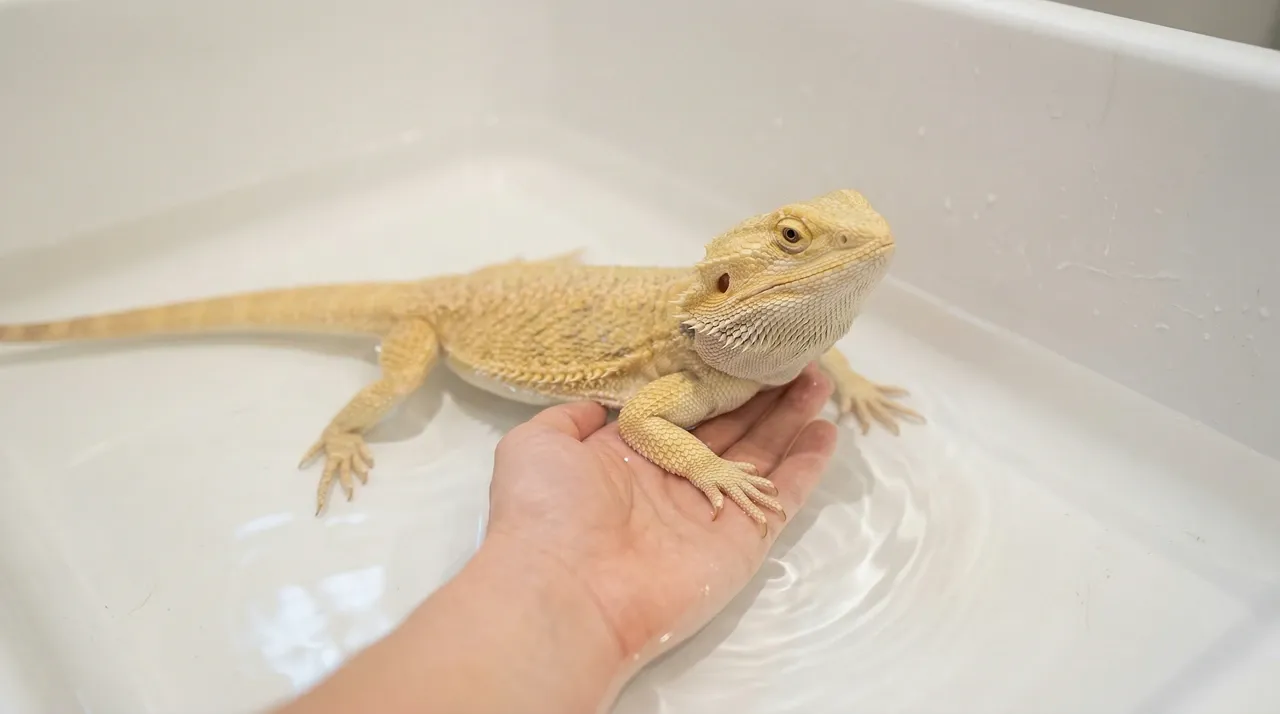
For a warm soak, scoop the dragon using the standard technique and lower it gently into lukewarm water no deeper than its elbow joints. Keep one hand close as a resting platform. Most dragons calm down within the first minute once they feel the warm water.
Nail Trims
Wrap the dragon in a thin towel with one foot exposed at a time. The towel provides gentle restraint without chest compression, and this “burrito” method keeps the dragon calm enough to hold still.
A second person holding the dragon while you trim the nails makes the process far smoother than trying to restrain and clip at the same time.
Giving Oral Medication
Hold the dragon securely against your chest with one hand supporting the body. Use your thumb or a soft silicone-tipped syringe to gently open the side of the mouth. Never pry the jaw open from the front.
Administer the liquid slowly along the side of the mouth, allowing the dragon to swallow between drops. Squirting medication directly into the throat risks aspiration into the lungs.
What to Do If You Get Bitten
First, do not pull your hand away. A bearded dragon’s teeth are small and serrated. Yanking your hand back tears the skin worse and can injure the dragon’s jaw.
The Correct Response
- Freeze. Most dragons release within a second or two once they realise you are not food.
- If it holds on, gently press the sides of the jaw near the back of the mouth. This encourages the dragon to open without forcing it.
- Return the dragon to its enclosure calmly. Reacting with a loud noise or sudden movement will make the next session harder for both of you.
- Clean the bite. Wash with warm water and antibacterial soap, then apply a basic antibiotic ointment. Bearded dragons can carry Salmonella bacteria on their skin and in their mouths, so thorough cleaning matters.
A beardie bite is not dangerous for a healthy adult. It stings, may draw a drop or two of blood, and leaves a bruise. There is no meaningful venom risk to humans.
If you see redness or swelling spreading over the following 24 hours, see a doctor for possible bacterial infection.
How Long to Keep a Beardie Out
Part of knowing how to handle a bearded dragon responsibly is watching the clock. Body temperature drops fast outside the enclosure, and a dragon’s metabolic processes depend on warmth from its basking spot to keep digestion and immune function running properly.
| Dragon Age | Session Length | Sessions Per Day |
|---|---|---|
| Baby (0–3 months) | 5 minutes | 2–4 |
| Juvenile (3–12 months) | 10–15 minutes | 1–2 |
| Sub-adult (12–18 months) | 15–20 minutes | 1–2 |
| Adult (18 months+) | 20–30 minutes | 1 |
These are guidelines for routine handling sessions. A healthy adult that is actively warm and alert can tolerate longer time outside the enclosure in a warm room.
Return the dragon to its basking spot before its belly starts feeling cool to the touch. Dehydration risk also increases during extended out-of-tank time, especially in air-conditioned rooms.
FAQ
Do bearded dragon bites hurt?
A baby’s bite feels like a light pinch and rarely breaks skin. An adult bite is sharper, can draw blood, and leaves a bruise. It is uncomfortable but not dangerous for healthy adults.
Can children handle bearded dragons safely?
Yes, with supervision. Children should sit on the floor, move slowly, and always have clean hands. An adult should place the dragon on the child’s lap rather than letting the child reach into the enclosure.
Is it safe to handle during shedding?
Brief, gentle handling is fine. Avoid touching visibly peeling patches, and never pull at loose skin. If the dragon hisses or flinches at contact, skip that session and try again tomorrow.
Should I Handle My Bearded Dragon Daily?
Yes. Daily handling builds trust faster than any other approach, and it is the single best habit for anyone still learning how to handle a bearded dragon confidently. Even five minutes of calm contact each day makes a measurable difference in how your dragon responds.
Why Does My Beardie Puff Up?
A puffed, darkened beard is a defensive display telling you the dragon feels threatened. Slow down your approach, come in from the side instead of above, and try again once the beard flattens.
Your Handling Checklist
Knowing how to handle a bearded dragon is one thing. Making it second nature takes practice. Run through this list every time until the steps feel automatic.
- Wash your hands with unscented soap before every session to remove food smells and reduce Salmonella transfer risk.
- Approach from the front or side of the enclosure, never straight down from above.
- Slide one hand under the chest behind the front legs, then support the hind legs and tail base with your other hand.
- Keep all four feet on a stable surface at all times.
- Read the beard. If it darkens and puffs, end the session calmly and try again later.
- Match session length to the dragon’s age, giving babies five minutes and adults up to thirty.
- Return the dragon to its basking spot before its belly feels cool to your touch.
- Wash your hands again after handling. Every time. No exceptions.
Written by
Sarah ArdleySarah has kept bearded dragons for over ten years. She founded Beardie Husbandry after discovering that most mainstream care advice — including what she followed with her first dragon — was doing more harm than good. Every article on this site is grounded in veterinary research and real keeper experience.