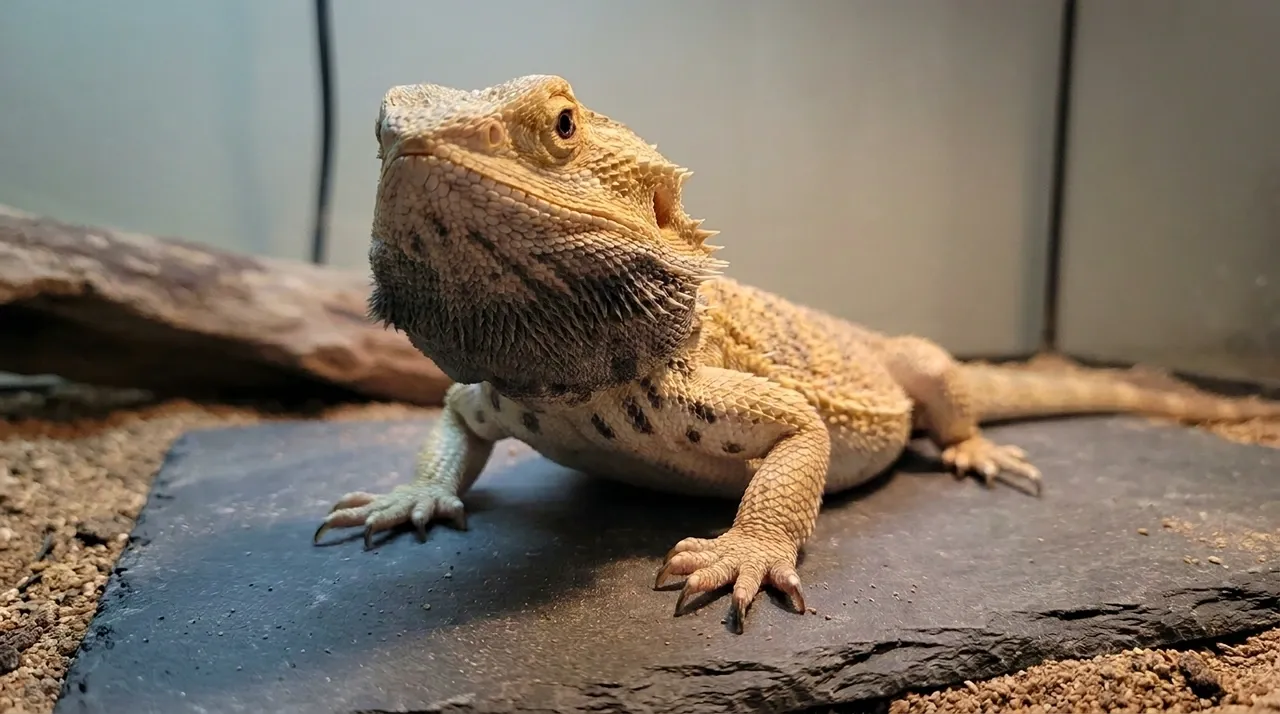
Bearded Dragon Stress Marks: What They Actually Mean
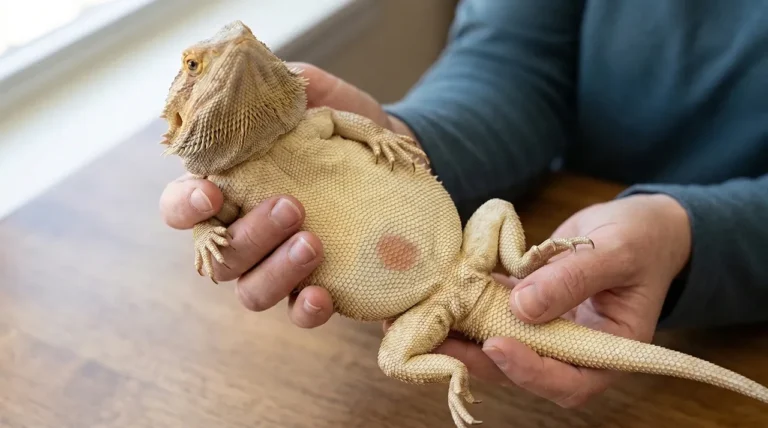
Dark ovals or squiggly lines have shown up on your dragon’s belly, and they were not there yesterday. That marking is what keepers call bearded dragon stress marks. The name sounds more alarming than the reality usually is.
In most cases the marks are a normal reaction to something temporary: a cold morning, a new tank, a hand reaching in too soon after pickup. They fade in and out with the dragon’s mood and body temperature, much like the broader colour change beardies use to communicate.
What matters is not the marks themselves. It is when they appear, how long they linger, and what else the dragon is doing while wearing them.
What Bearded Dragon Stress Marks Look Like
True stress marks sit on the underside. The belly, the chest, the chin, and sometimes the inner legs all darken into grey or black ovals, blotches, or thin stripes against the paler base colour.
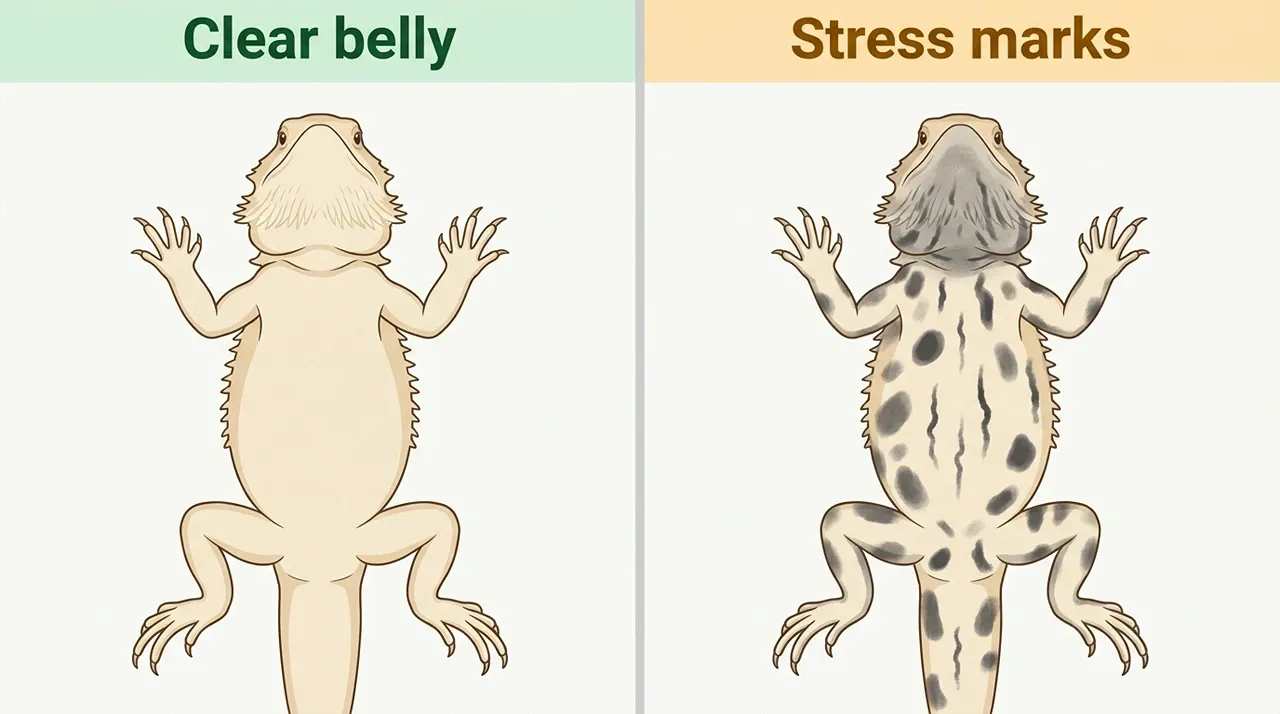
Some keepers swear the patterns look like shapes or even numbers. That is just how the pigment clusters happen to fall. The shape tells you nothing; the location and timing tell you everything.
A darkened chin or throat often shows up at the same time. It is the same pigment response that produces a black beard during a display, only without the puffing and gaping.
Why the Marks Appear in the First Place
Bearded dragons control special pigment cells in their skin, and they shift that pigment for several reasons that have nothing to do with fear. Heat absorption, excitement before a hunt, hormones, and shedding all darken the skin.
So the label is half wrong. Stress is only one trigger among several, which is why the marks confuse so many new keepers. A relaxed dragon dozing in its hide can still flash a few while it warms up.
Reading the marks alongside the rest of its body language is the only way to know which trigger is in play.
When the Marks Are Nothing to Worry About
A dragon that shows marks for an hour then clears up as the day warms is behaving normally. The same goes for a new arrival flashing marks for its first week or two while it learns the room is safe.
Babies are the biggest false alarm. Young dragons have not mastered their pigment control yet, so they wear marks almost constantly and still eat, bask, and grow without a problem.
When the Marks Point to a Husbandry Problem
The picture changes when the marks stop coming and going. A dragon that wears them all day, every day, even while settled and asleep, is telling you something in the enclosure is wrong or its body is unwell.
Pair that with a dragon hugging the cool end, refusing food, or sitting flat and dull, and the marks have shifted from chatter to a real signal.
The Timing Is the Real Tell
This is the part almost every care article skips. The marks alone mean little, but the pattern of when they show and when they lift points straight at the cause.
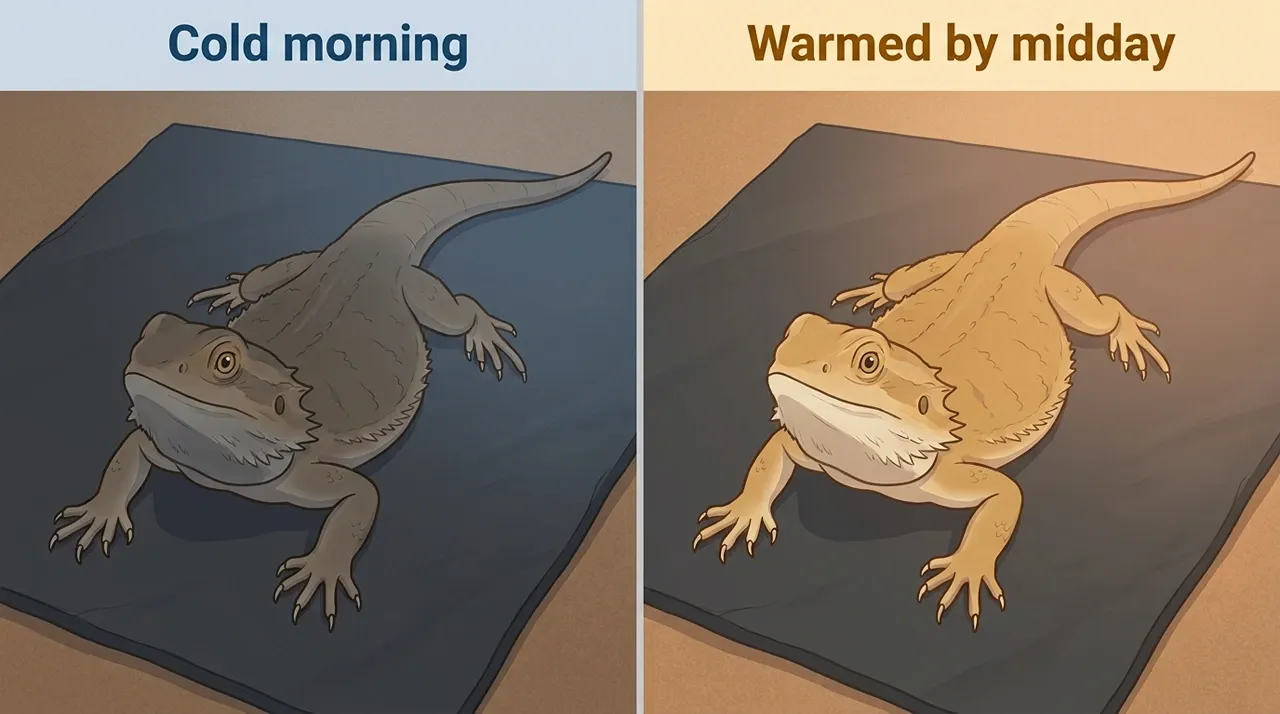
Morning Darkening That Fades by Midday
Marks that are heaviest first thing and gone by lunchtime are usually about temperature, not stress. A cold-blooded animal darkens to soak up heat faster after a cool night, then lightens once it reaches working temperature.
If this is happening daily, the overnight drop is steeper than your dragon likes. Bearded dragons cope with a night dip, and most need no extra warmth.
A room falling below 60°F for hours can push it too far, so check whether your setup actually needs heat at night before adding a bulb.
Marks That Never Seem to Lift
Constant marks that hold through the warmest part of the day are the ones to take seriously. The dragon is either reacting to a stressor that never switches off, or it is dealing with an illness that keeps the pigment locked dark.
| When the marks show | Most likely meaning | What to do |
|---|---|---|
| Mornings only, fade as the tank warms | Thermoregulation after a cool night | Check night temperatures and the basking spot, not stress |
| First week or two in a new home | Normal settling in | Reduce handling, give it space, wait it out |
| During handling, clears once back inside | Reactive stress to being held | Shorten sessions, build trust slowly |
| All day, eating and basking normally | Often a baby still learning pigment control | Monitor weight and appetite, no action needed |
| All day, even asleep, plus off food | Husbandry fault or illness | Audit the setup, then book a vet |
Stress Marks or Something Else Entirely
Not every dark patch is a stress mark, and treating the wrong thing wastes time. A few look-alikes trip up new keepers constantly.
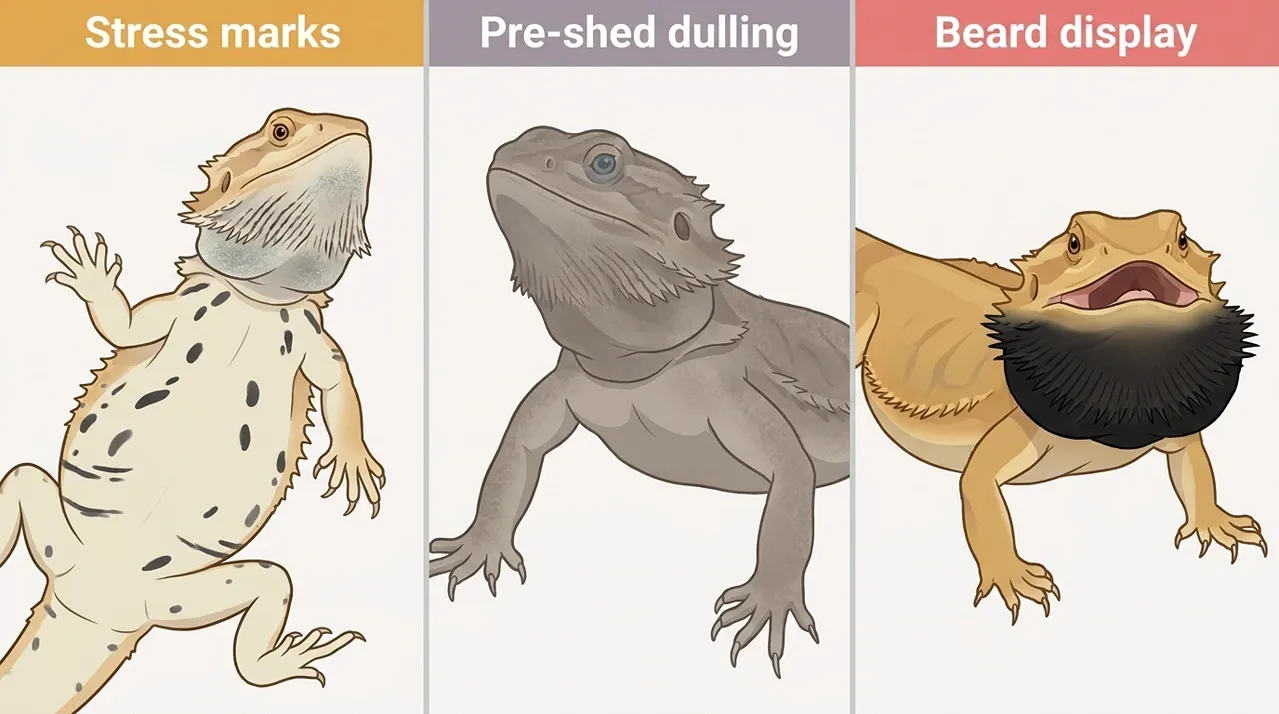
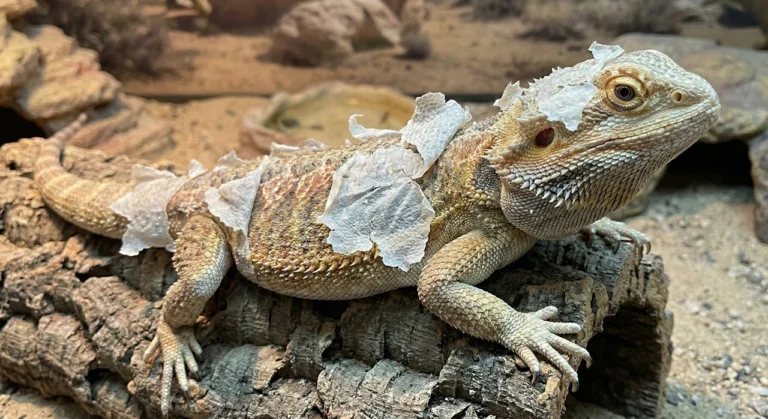
Skin that dulls and greys all over, especially before the eyes go cloudy, is the front edge of a shed rather than stress. That kind of full-body darkening that comes before a shed lifts the moment the old skin peels away.
A puffed, blackened throat during a standoff is a display, not a stress mark. A black beard that appears only when the dragon feels challenged and drops the second the threat leaves is doing its job exactly as intended.
Some morphs and individuals simply carry darker belly pigment as their natural pattern. If the marks have been there since you got the dragon and never change with mood or temperature, they are markings, not a mood.
What Sets Them Off
When the marks are stress-driven, the cause is nearly always something a keeper can find and fix. The usual suspects are short and predictable.
- A new environment: a fresh tank, a house move, or rearranged decor reads as threat until the dragon relearns the space.
- Temperature problems: a basking zone too cool or too hot leaves the dragon unable to settle. Get the basking spot temperature right before blaming anything else.
- Failing UVB: a tube past its lifespan still glows but stops producing useful output, and the slow decline stresses the body. Swapping an ageing UVB tube on schedule heads this off.
- Too much handling: frequent or rough pickups, especially with a nervous or new dragon, keep the stress response switched on.
- Predators in view: a cat staring through the glass or a dog circling the stand registers as a hunter on the prowl.
- Noise and vibration: a tank near a TV, speaker, or busy doorway never lets the dragon fully relax.
Hormonal phases add their own marks too. A male in breeding mode or a dragon easing into brumation will darken without anything being wrong. Telling these seasonal swings from real distress comes down to the rest of the picture, since a hormonal dragon still feeds and stays active.
When Dark Marks Mean See a Vet
Stress marks on their own are rarely an emergency. The concern is what travels with them, because pigment that stays dark is one of the first outward signs of a sick dragon.
Book a reptile vet if the marks come with any of these:
- Refusing food for more than a few days outside brumation
- Lethargy, weakness, or trouble holding itself upright
- Sunken eyes, wrinkled skin, or other dehydration signs
- Weight loss you can see along the tail base and hips
- Laboured breathing, gaping, or mucus around the mouth
Marks that refuse to clear after a fortnight of solid husbandry also warrant a check. At that point you have ruled out the easy fixes, so a reptile vet can look for parasites, infection, or organ trouble keeping the pigment dark.
How to Help a Stressed Dragon Settle
Before changing anything, run through the husbandry first. Most stress marks trace back to a number on a thermometer or a tube past its date, not to the dragon’s temperament.
Confirm the basking surface, the cool end, and the overnight low all sit where they should. Confirm the UVB is current and mounted at the right distance. Only once those check out should you look at handling and the room itself.
Then give the dragon control over how exposed it feels. A hide on the warm side and another on the cool side lets it retreat without leaving its preferred temperature. That does more to calm a stressed dragon than any amount of soothing.
For a new arrival, the kindest move is to do almost nothing. Keep the lights and feeding on a steady rhythm, skip the handling for a week, and let the marks fade on their own as the room stops feeling dangerous.
Frequently Asked Questions
Are bearded dragon stress marks always bad?
No. They appear during normal warming, excitement, shedding, and hormonal phases, none of which are problems. The marks only matter when they stay dark all day and pair with off behaviour like refusing food.
How long do bearded dragon stress marks last?
Reactive marks fade within minutes to a few hours once the trigger passes. New-home marks usually clear within one to two weeks. Anything holding longer than that points to a husbandry fault or illness.
Why does my baby always show stress marks?
Young dragons cannot fully control their pigment yet, so near-constant marks are normal at that age. As long as the baby eats, basks, and gains weight, the marks alone are not a worry.
Can bearded dragon stress marks mean cold?
Yes, and cold is one of the most common causes. A dragon darkens to absorb heat faster after a cool night, which is why morning marks that fade by midday usually point to temperature rather than fear.
Do bearded dragon stress marks mean dying?
On their own, no. Bearded dragon stress marks are a routine signal that something has the dragon’s attention. They only suggest serious illness alongside weight loss, weakness, sunken eyes, or a refusal to eat.
Your First Move When the Marks Show
When bearded dragon stress marks appear, work the problem in order instead of guessing:
- Note the time. Morning-only marks point to temperature; all-day marks point to stress or illness.
- Check the basking spot, cool end, and overnight low against your target ranges.
- Confirm the UVB tube is within its replacement window.
- Scan the room for predators, noise, or recent changes the dragon can see or feel.
- Watch appetite and posture for two weeks while you correct anything off.
- If the marks hold despite clean husbandry, or any warning sign joins them, book a reptile-experienced vet.
Get the husbandry right and the marks usually answer themselves. A dragon that feels warm, hidden, and safe stops broadcasting.
Written by
Sarah ArdleySarah has kept bearded dragons for over ten years. She founded Beardie Husbandry after discovering that most mainstream care advice — including what she followed with her first dragon — was doing more harm than good. Every article on this site is grounded in veterinary research and real keeper experience.