Bearded Dragon Humidity: The Correct Range and How to Fix It
A hygrometer creeping toward 55% in a desert lizard’s tank looks alarming, and it sends plenty of keepers scrambling to correct it the same evening.
Bearded dragon humidity causes more setup worry than almost any other reading, mostly because the guidance online contradicts itself. One care sheet says 30 to 40 percent, the next quotes a vet manual nearer 20, and a third treats anything above 40 as a crisis.
The reassuring part is simple. These dragons handle dry air far better than damp air, so brief swings rarely matter.
Sustained dampness is what causes real harm. Get the range roughly right, fix the few things that push it wrong, and stop watching the gauge every hour.
Where Bearded Dragon Humidity Should Sit
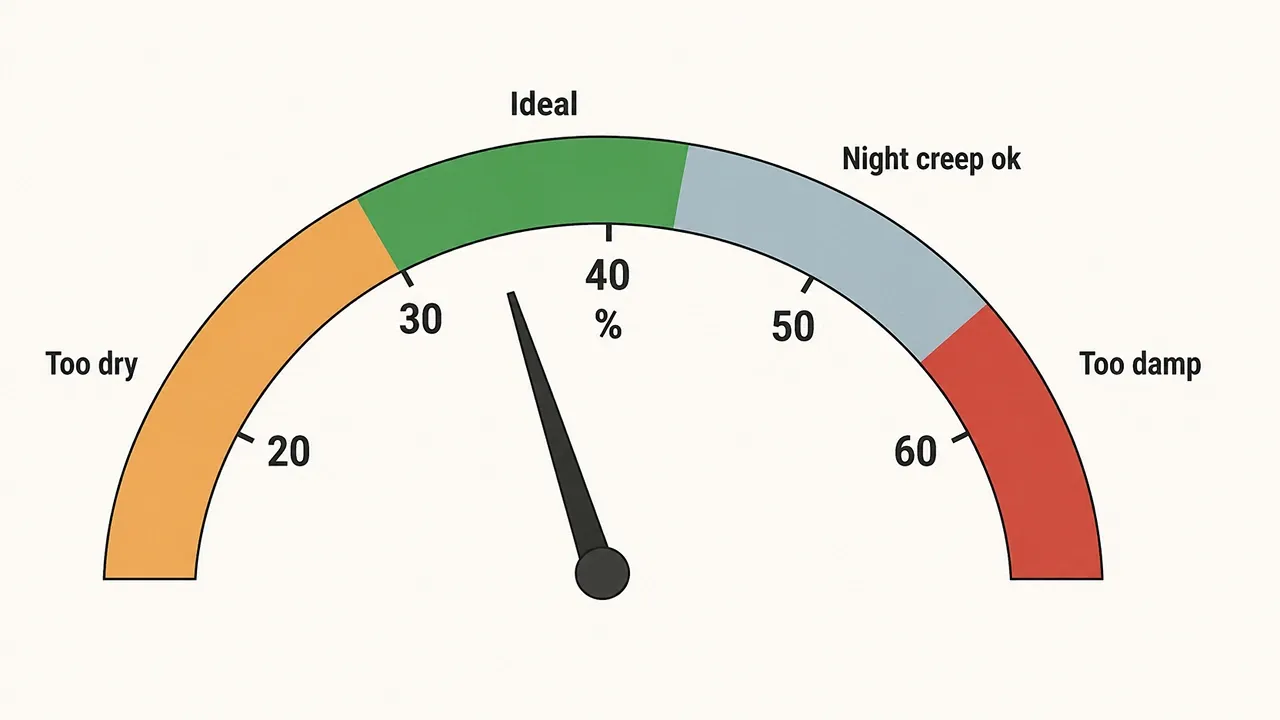
Aim for 30 to 40 percent relative humidity through most of the enclosure during the day. That band tracks the dry inland Australian habitat these animals evolved in, and it is where almost every experienced keeper settles.
Correct bearded dragon humidity is less about hitting one exact figure and more about holding a stable range. It also leans on getting the heat gradient right, since warmer air carries a lower relative humidity reading.
A reading that drifts between 32 and 38 percent is doing its job.
Why Vets List a Wider Range
Veterinary sources often quote a broader band. The veterinary teaching hospital at NC State lists 20 to 40 percent for pet bearded dragons.
A reading that dips to 25 percent on a hot afternoon is not a problem to solve. The lower end of that band sits closer to their wild daytime conditions than most home setups ever reach.
Night Creep to 50 Percent Is Fine
Home humidity almost always rises overnight as the room cools and the lamps switch off. A climb to 50 or even 55 percent for a few hours does no harm.
What matters is that it drops back once the basking lamp returns in the morning.
What Goes Wrong When It Is Too High
Persistent high humidity is the version of this problem that actually lands dragons at the vet. Damp, stagnant air is the ideal environment for the bacteria and fungi that cause infection.
The lungs are the first casualty. Trapped moisture and warm stale air let pathogens settle in the airway, which is how a sustained damp tank turns into a respiratory infection.
Skin is the second. Constant moisture against the scales encourages fungal growth, including the conditions behind yellow fungus.
When the Tank Gets Too Dry
Low humidity gets blamed for more than it causes. A dragon with constant water, correct basking heat, and a good diet copes with a dry tank without trouble.
The two real problems show up over time. The first is shedding, because skin that stays too dry clings in patches around the toes and tail tip, which is where stuck shed tends to start.
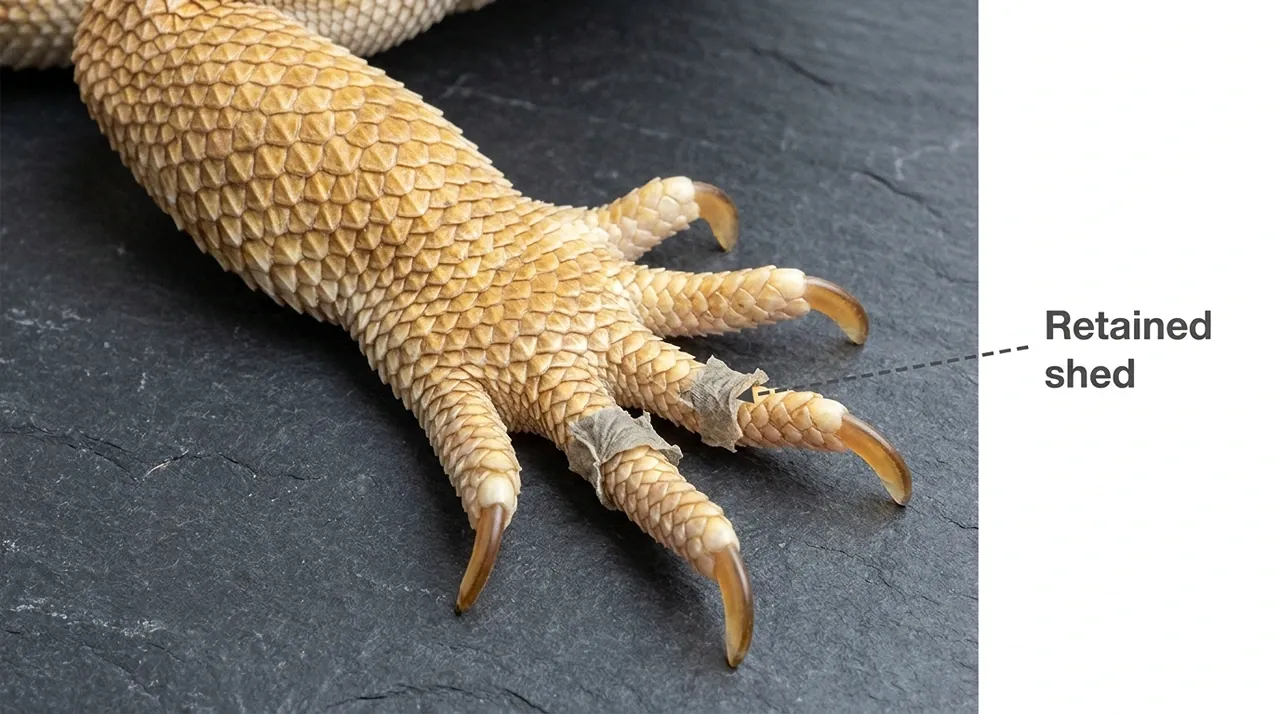
The second is hydration, but only at extremes. Weeks of very dry air plus a dragon that rarely drinks can edge toward the early signs of dehydration, such as wrinkled skin and sunken eyes.
What Pushes the Humidity Up
Before changing anything, work out what is actually adding moisture to the air. Almost every bearded dragon humidity problem traces back to one of four sources.
- A water bowl sitting under or near the basking lamp, where heat evaporates the water straight into the air.
- Damp or moisture-holding substrate. Coco fibre, soil, and bark all release water for hours after misting or a spill.
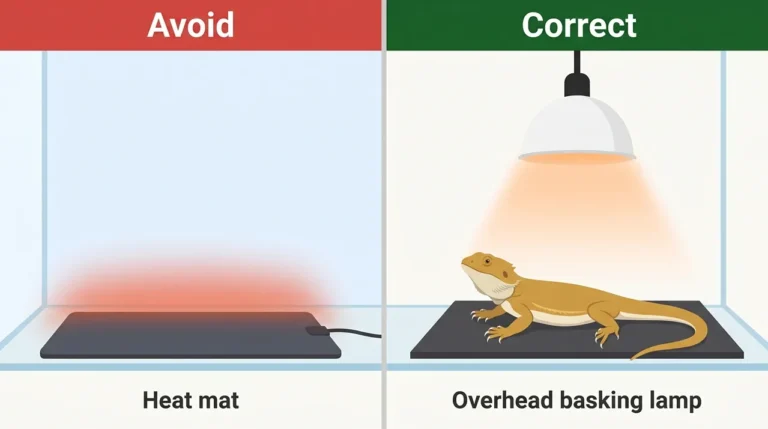
- A solid glass or plastic lid that traps warm wet air instead of letting it escape.
- High room humidity, since the tank rarely reads far below the room it sits in.
Switching to a dry, easy-to-clean substrate choice removes one of the most common moisture sources in a single step.
What Your Reading Is Telling You
Your hygrometer needs to sit at mid-tank height on the cool side, not stuck to the warm glass, or the figure means little. Reading it correctly is half the battle, and the finer points of hygrometer placement matter more than the brand you buy.
| What the gauge and tank show | What it means | What to do |
|---|---|---|
| Steady 30–40%, dry substrate | Correct | Nothing, keep monitoring once a day |
| Above 50% for days, condensation on glass | Too damp, infection risk | Move water bowl, add ventilation, dry the substrate |
| Below 20% for weeks, dry flaking shed | Too dry long-term | Light morning mist, warm soaks during a shed |
| Spikes to 55% overnight only | Normal night creep | Nothing, check it drops by midday |
| High reading plus clicking or mucus | Possible respiratory infection | Reptile vet now, not a tank fix |
How to Bring High Humidity Down
Work through these in order. Change one thing, wait a day, and read the gauge again before the next change.
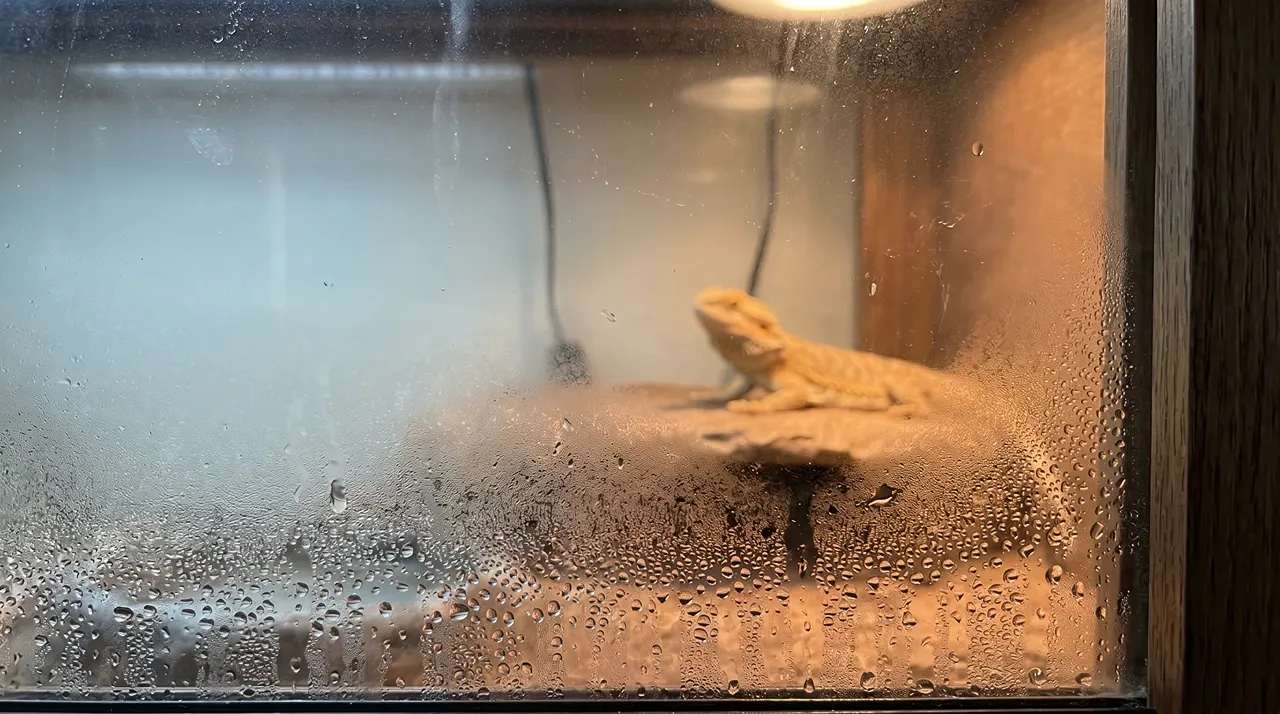
- Move the water bowl to the cool end, away from any heat source.
- Increase airflow. A mesh screen top beats a solid lid every time, and vents on opposite sides pull air through.
- Remove wet substrate and let the base dry out fully.
- Place a room dehumidifier nearby if your home itself runs damp.
If the cool end still reads high, check that your heat gradient is not running so cool that moisture lingers in the air.
How to Raise Low Humidity Safely
Real low readings are rarer and easier to fix. The key word is safely, because the wrong method creates a worse problem than dry air ever would.
- Move the water bowl toward the warm end so a little evaporates into the air.
- Mist the cool end lightly in the morning, never the basking zone, and let it dry by midday.
- Add a hide with slightly damp moss for a dragon mid-shed.
Do not raise humidity by cutting ventilation or cranking the heat. Both swap a harmless dry reading for genuine respiratory risk.
Stop Chasing a Perfect Number
The biggest bearded dragon humidity mistake is treating the gauge like a thermostat that must read one exact figure. It never will, and chasing it creates a cycle of misting, panicking at the spike, over-ventilating, then misting again.
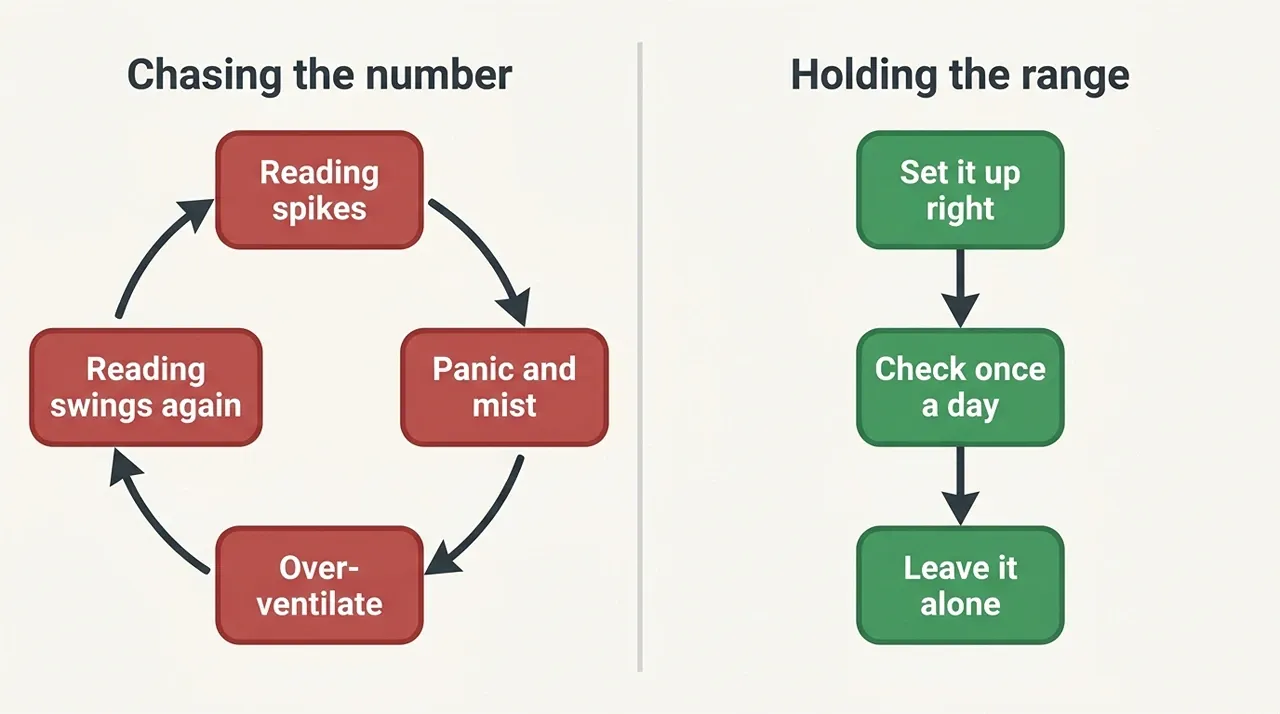
A stable range checked once a day beats a perfect number chased every hour. Set the tank up to drift inside 30 to 40 percent on its own, then mostly leave it alone.
Common Questions About Tank Humidity
What humidity does a bearded dragon need?
Aim for 30 to 40 percent relative humidity during the day. Brief overnight rises to 50 percent are normal and harmless. Sustained daytime readings above 50 percent are the ones to correct.
Is 50 percent humidity too high?
For a few hours overnight, no. Held as a daytime average for days, yes, because damp stagnant air raises the risk of respiratory and skin infection. Fix the airflow and water bowl placement if it stays there.
How do I lower bearded dragon humidity?
Move the water bowl away from the heat lamp, swap a solid lid for a mesh screen, and remove damp substrate. Add a room dehumidifier if your home itself is humid. Change one thing at a time.
Can low humidity hurt a bearded dragon?
Only at extremes held over weeks, usually showing as stuck shed or mild dehydration. A dragon with fresh water, correct heat, and a good diet handles a dry tank fine. A short mist or warm soak helps during shedding.
Why is my bearded dragon’s humidity always high?
The usual causes are a water bowl under the basking lamp, moisture-holding substrate, a sealed lid, or a humid room. Ambient room humidity is the one keepers forget, since the tank rarely reads far below the room around it.
Your Ten-Minute Humidity Check
Getting bearded dragon humidity right takes about ten minutes of setup, not constant monitoring. Run through this today.
- Read the gauge mid-tank on the cool side, not on the warm glass, and note the daytime figure.
- If it sits above 50 percent through the day, move the water bowl off the warm end first.
- Swap any solid lid for a mesh screen top to get air moving.
- Check the substrate is dry and switch off anything that holds moisture.
- If the room itself is damp, position a dehumidifier nearby rather than fighting the tank.
- Leave the gauge alone for a day after each change, then read it again before adjusting further.
Written by
Sarah ArdleySarah has kept bearded dragons for over ten years. She founded Beardie Husbandry after discovering that most mainstream care advice — including what she followed with her first dragon — was doing more harm than good. Every article on this site is grounded in veterinary research and real keeper experience.