Do Bearded Dragons Actually Like Being Held
Let’s cut right to the chase: if you are expecting the kind of affectionate cuddles you’d get from a golden retriever, a bearded dragon is going to disappoint you. They are solitary desert reptiles, and their brains simply aren’t wired to crave physical touch from another living thing.
So, do bearded dragons actually like being held?
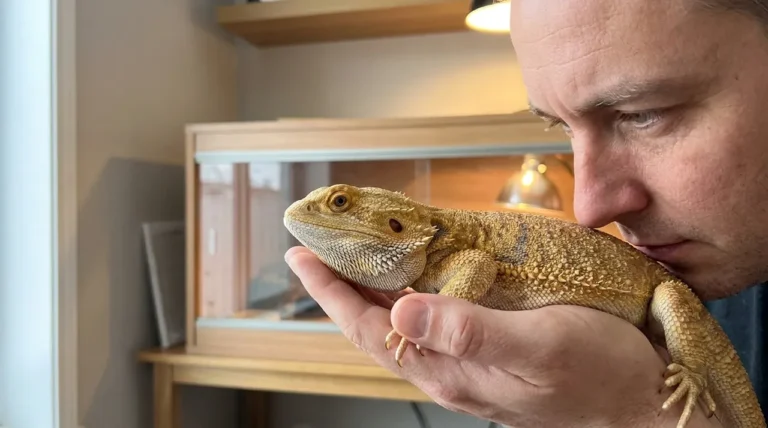
The answer is about trust and utility, not love. A well-socialized dragon isn’t just “putting up” with you; they learn that your hands mean safety, food, and—most importantly—a fantastic source of body heat. To them, you are a highly trusted, walking heat-rock. And honestly, in the reptile world, that is the highest compliment you can get.
The dangerous trap for new keepers is that a perfectly relaxed dragon and a terrified, frozen dragon can look awfully similar. To figure out if your beardie is actually comfortable or just waiting for the handling to end, you have to stop thinking like a mammal and start reading their body language signals.
Do Bearded Dragons Like Being Held
Bearded dragons are solitary desert lizards, not pack animals, and they never evolved to seek comfort from another warm body the way mammals do.
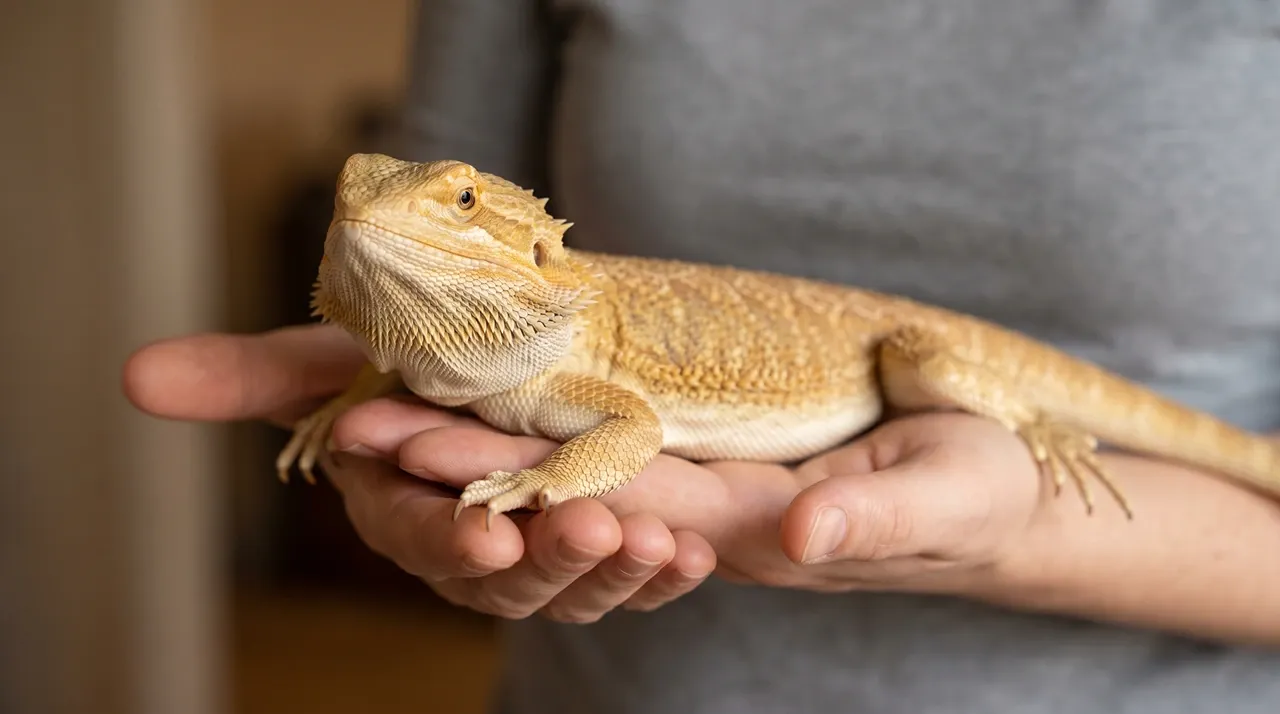
So, do bearded dragons like being held, or do they just put up with us? The useful answer is about tolerance, not affection. A calm dragon on your hand feels safe, warm, and unthreatened, which is exactly what you want.
Some clearly prefer it to sitting in the tank and climb onto your hand the moment the door opens. Others accept it politely and would rather be back under the lamp, and both responses are normal.
Signs Your Dragon Is Truly Relaxed
A properly relaxed dragon goes loose in your hand. The body sits low and soft, the limbs splay slightly, and the eyes often close.
- Loose, splayed limbs rather than a braced, rigid stance
- Eyes half closed or fully shut while resting
- Slow, settled breathing with no puffing of the throat
- Climbing onto your hand on its own when the enclosure opens
- Staying put when it has a clear chance to move away
That last point matters most. A dragon that could leave and chooses to stay is telling you something a frozen one is not.
Signs It Is Only Tolerating You
A tolerating dragon holds still, but the stillness has tension in it. The body stays flattened and braced, and the eyes keep tracking the room. It is not relaxed, it is waiting for the handling to end.
This is not failure. Calm tolerance is a fine place to be, especially early on. It only becomes a problem when you read frozen tension as contentment and push past what the dragon can cope with.
Why Your Dragon Sits On You
A dragon that flattens out on your chest and refuses to move looks like pure affection. Most of the time it is thermoregulation, because you are warm and a warm surface is what a cold-blooded animal goes looking for.
This is where owners point when they ask, do bearded dragons like being held, and decide the answer is an obvious yes. The honest read is heat, not love. That dragon on your shoulder is borrowing your body heat, not bonding with you emotionally.
It also explains the restlessness. A dragon often settles straight after coming off heat, then fidgets once it cools. When its temperature drops below the range a proper basking spot holds, it starts hunting for warmth again.
The Body Language That Means Stop
Tolerance has limits, and a dragon will tell you when you have reached them. The signals run from mild discomfort to clear distress, and your response depends on which end you are reading.
Mild signs mean wind the session down soon. Hard signs mean put the dragon back now. The quickest way to lose its trust is to keep handling straight through a stop signal.
| What you see | What it means | What to do |
|---|---|---|
| Loose body, eyes closed | Comfortable and settled | Carry on, watch for cooling |
| Flattened, braced, tracking the room | Tolerating, not relaxed | Keep it short, end on a calm note |
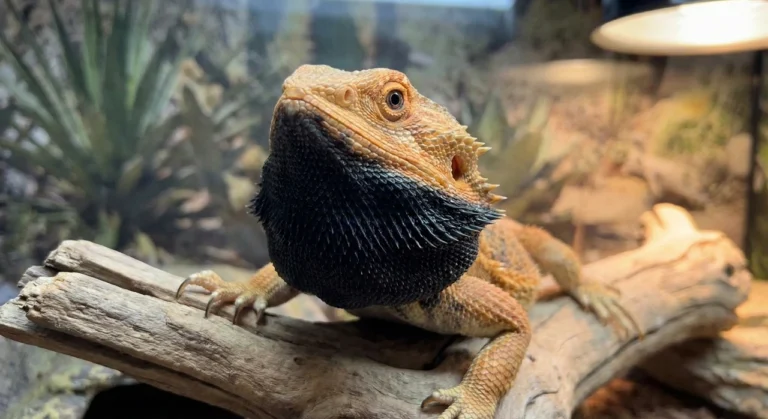
| Beard darkening or a sudden colour shift | Stress or irritation rising | Wind down within a minute |
| Gaping mouth, hissing, tail thrashing | Clear distress | Return it to the enclosure now |
| Frantic squirming or trying to leap | Panic and a real fall risk | Lower to a safe surface at once |
A beard that darkens mid-handle is worth taking seriously. On its own a black beard has several causes, but during handling it nearly always means the dragon has had enough.
The same goes for dark, marbled patterns across the belly or limbs. Those stress marks fade once the dragon feels safe, so they read as a live gauge of how the session is going.
How Long Is Too Long to Hold
Most stress during handling is not about the holding itself, it is about temperature, and a dragon off its lamp is cooling the entire time it sits on you.
For a calm adult, fifteen to twenty minutes out of the enclosure is a sensible ceiling before it warms back up. Babies and juveniles cool faster, so keep their early sessions to five or ten minutes.
Cooling matters more than the clock, and a dragon that has just eaten needs heat to digest, so handling straight after a meal is a poor idea. Watch for it going darker, pressing flat against your skin, or turning fidgety, all signs it wants its heat back.
When to Pick Them Up for Best Results
Timing shapes how handling goes more than people expect. A dragon pulled out cold first thing has not warmed enough to feel secure, and it will be jumpier for it.
The best window is mid to late morning, once the dragon has basked, woken properly, and settled. A warm, alert dragon is far more willing to be handled than a sluggish, cold one.
How you lift matters as much as when. Scoop from underneath with a flat hand and take the chest and back legs together, never grabbing from above like a swooping bird. Getting the lift right and supporting the whole body keeps the dragon feeling secure rather than caught.
Skittish Dragons Take Time to Settle
A jumpy newcomer makes owners wonder, do bearded dragons like being held at all? With a skittish dragon, the answer is not yet, and that is fine.
A new dragon that bolts, hides, or puffs up at your hand is not broken, just doing what a prey animal does in an unfamiliar place. Trust is built, not switched on.
Start with short, low-pressure sessions and let the dragon come to you rather than chasing it round the tank. Hand-feeding through the glass, then from inside, does more than forcing the issue ever will. Working patiently with a scared, skittish dragon is slow but reliable.
Rescues and dragons with a rough history take longer, and some never become lap dragons, which is a legitimate outcome. A dragon you can health-check and move without a meltdown is a real win.
Does Your Beardie Have a Favourite Person
Plenty of owners swear their dragon prefers them, and they are not imagining it. Dragons learn to link a person with food, warmth, and calm handling, and they do recognise their owners by sight and scent.
What looks like a favourite is usually the calmest, most consistent handler in the house, whose hands the dragon has learned to read as safety and warmth. Among reptiles, bearded dragons are unusually responsive to their owners, which is why patient handling pays off over a few weeks.
Common Questions About Holding a Beardie
Do bearded dragons like being held? Most tolerate it well once they trust you, and some prefer it to sitting in the tank. They do not feel affection the way mammals do, so calm tolerance is the realistic goal.
Can you hold a bearded dragon too much? Yes, mostly because of cooling rather than stress. Keep adult sessions to roughly fifteen to twenty minutes, then let the dragon warm back up under its lamp.
Why does my bearded dragon close its eyes when held? Closed or half-closed eyes usually mean it feels safe. As long as the breathing is calm and the body stays loose, take it as a good sign.
Do bearded dragons get attached to their owners? They form associations rather than emotional attachments. A dragon learns that a person means food, warmth, and safe handling, which can look a lot like attachment.
Is it normal for a bearded dragon to hate being held? Some never enjoy it, especially rescues or dragons handled roughly when young. Short, calm sessions for health checks are still worth keeping up.
Read the Dragon, Not the Rule
Do bearded dragons like being held? Some do, most tolerate it well, and either way that is enough to work with.
A dragon that stays loose and chooses not to leave is comfortable. One that flattens, darkens, or gapes has had enough. Handle for the dragon you actually have, keep sessions short and warm, and the trust builds on its own.
Do that consistently and the holding takes care of itself. Whether your beardie becomes a shoulder-rider or just tolerates a daily check, you end up with a calmer, healthier dragon.
Written by
Sarah ArdleySarah has kept bearded dragons for over ten years. She founded Beardie Husbandry after discovering that most mainstream care advice — including what she followed with her first dragon — was doing more harm than good. Every article on this site is grounded in veterinary research and real keeper experience.