Do Bearded Dragon Bites Hurt? What to Actually Expect
A bearded dragon bite looks far more dramatic than it feels. The sudden clamp and the row of small teeth startle most keepers more than they actually hurt.
So do bearded dragon bites hurt? For a baby, barely. An adult with a full set of teeth can pinch hard enough to break skin and leave a mark, though it stays minor next to a dog or cat bite.
Bites are uncommon in a settled dragon, and a little patience with calm handling makes them rarer still. The bite itself is seldom the real issue. How you free a clamped jaw and clean a broken-skin bite afterward matters far more.
Do Bearded Dragon Bites Hurt
Yes, but rarely the way new owners fear. The pain depends almost entirely on the size and age of the animal doing the biting.
A bite is a quick crush plus a row of small teeth, not a slicing wound like a cat scratch. Most adult bites feel like slamming your finger in a strong clothespin, with a brief sting if the skin breaks.
The bigger surprise for most people is the suddenness. You are not braced for it, so the shock makes it feel worse than the actual injury. The same dragon biting a finger you knew was coming would barely faze you.
What a Bite Really Feels Like
Pain scales with jaw strength, and jaw strength scales with age and size. Lumping all dragons together is where most advice falls short.
Here is what to expect across the three life stages, based on what owners consistently report and what a full set of teeth can physically do.
| Age and size | What the bite feels like | Skin damage |
|---|---|---|
| Baby, under 4 months | Light pinch, often nothing at all | Almost never breaks skin |
| Juvenile, 4 to 12 months | Firm pinch with a quick sting | Occasional scratch or shallow nick |
| Adult, 12 months and up | Hard clamp, sharp sting, lingering ache | Can break skin, bruise, or draw blood |
Baby and Juvenile Bites
A baby beardie biting you is almost comical. Their teeth are barely developed and feel like soft bumps along the gum, so most bites do not break skin.
You are far more likely to get nipped during feeding than during handling at this age. Hand-feeders learn fast that a hungry baby will lunge at a wiggling fingertip mistaken for a worm.
Adult Bites Are a Different Story
A mature dragon carries real force behind that jaw. The teeth are small but sharp, and an adult can clamp hard enough to bruise and break skin in one go.
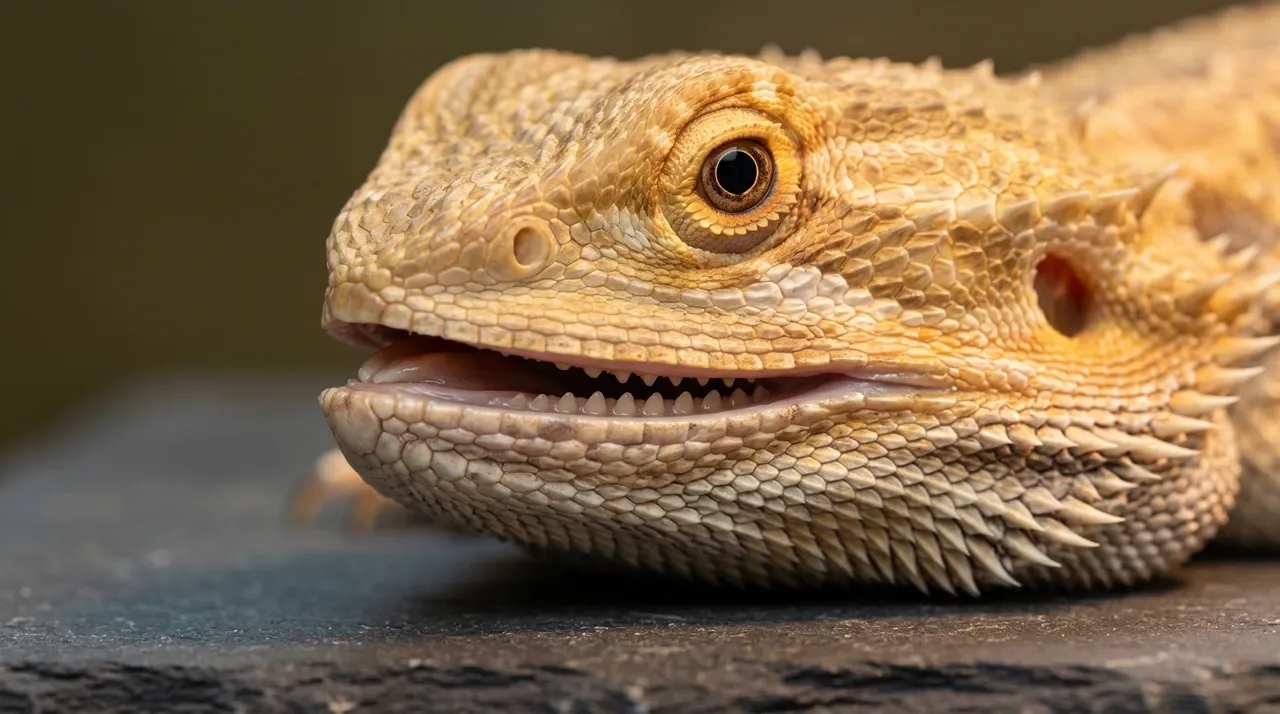
It will sting, bleed a little, and ache for a bit afterward. Even so, it stays minor compared to a dog or cat bite, which carries far more force and far deeper puncture risk.
An adult that bites without warning is usually telling you something. Hunger, territorial mood during breeding season, or stress from rough handling are the usual culprits behind a confident dragon suddenly turning snappy.
Why Your Dragon Bit You
A bite is communication, not malice. Nearly every bite traces back to one of a handful of triggers, and naming yours is how you stop the next one.
- Mistaken food. Hands that smell like crickets or roaches read as dinner. Wash them first.
- Fear. A hand swooping from above mimics a bird of prey, the dragon’s main predator.
- Hunger. An underfed or feeding-time dragon grabs first and asks questions later.
- Hormones. Males in breeding season get territorial and bolder than usual.
- Pain or illness. A dragon that suddenly starts biting may be sore or unwell.
Watch for the warning signs before contact. A dragon that puffs up and goes still, gapes its mouth, or whose beard turns black is asking for space, not a cuddle.
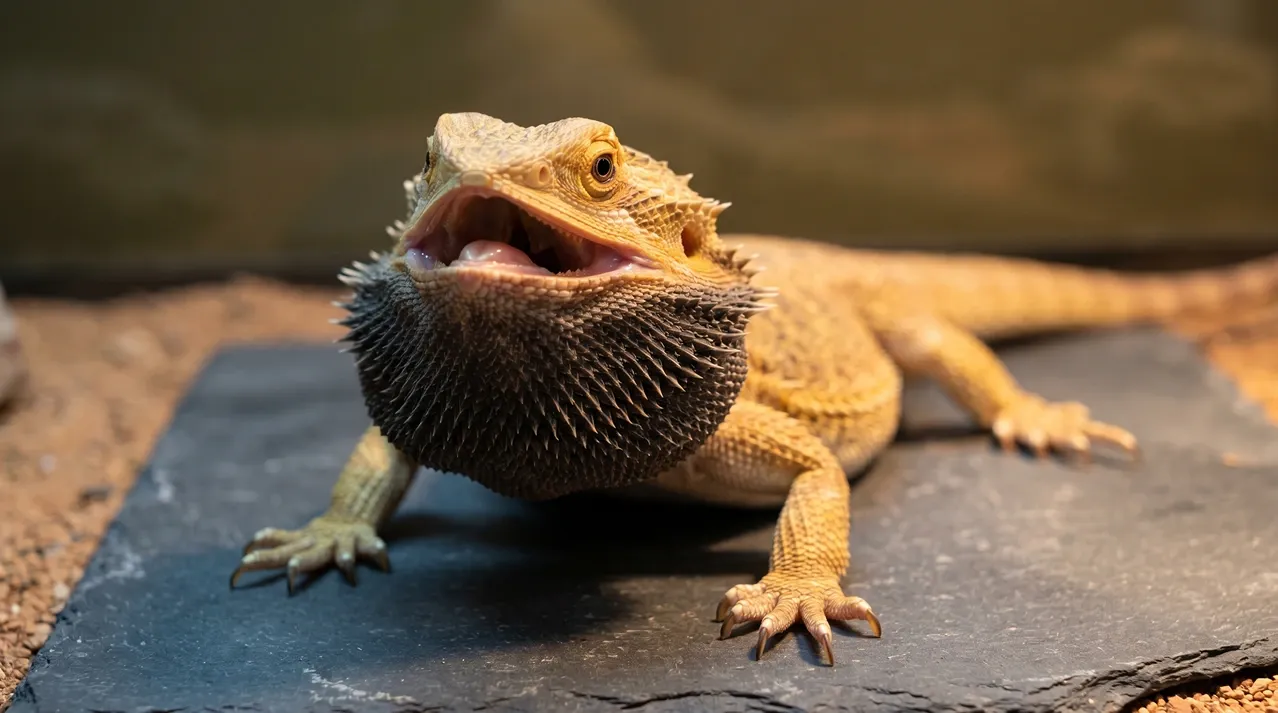
Reading these cues early is the whole game. Learning to interpret bearded dragon body language lets you back off a second before teeth ever meet skin.
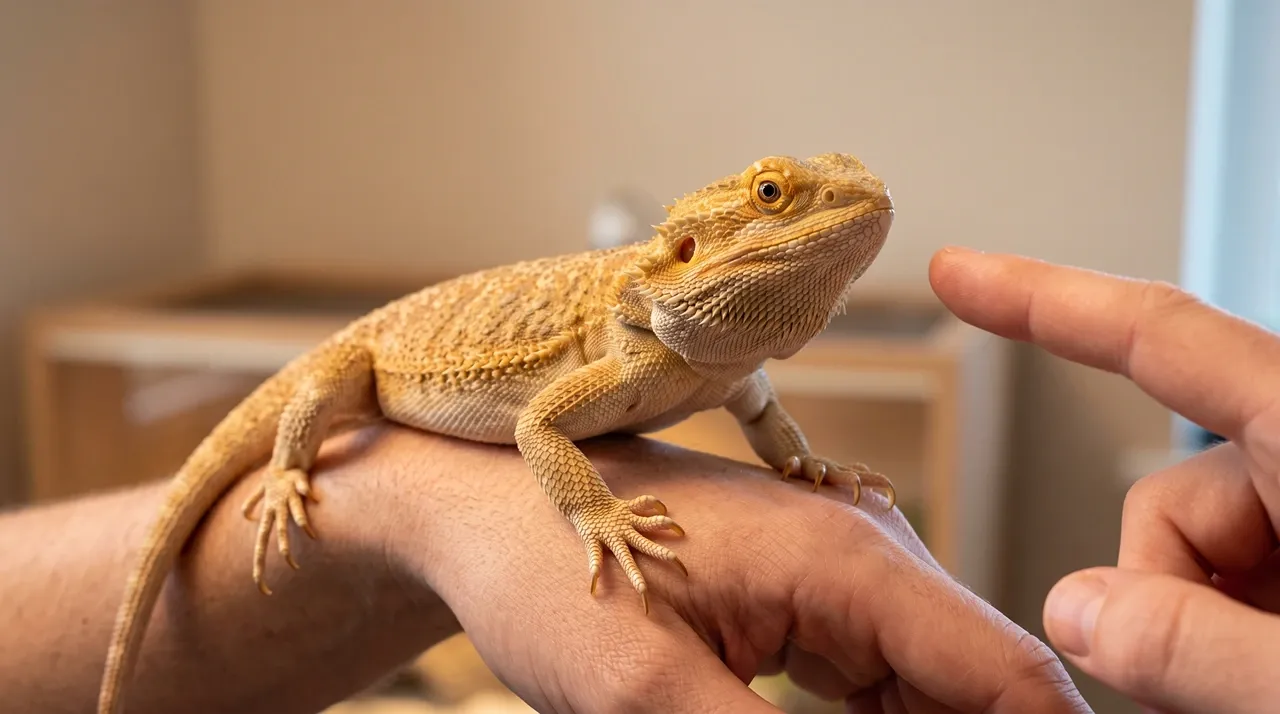
If biting has become a pattern rather than a one-off, the fix is almost always in how the dragon gets picked up. A slow routine that rebuilds trust, with no hands swooping from above, settles most repeat offenders within a few weeks.
When a Beardie Bites and Won’t Let Go
This is the scenario that scares people most, and the one competitors skip. Occasionally a dragon clamps down and holds, usually when it truly believed your finger was food.
Your instinct will be to yank away. Do not.
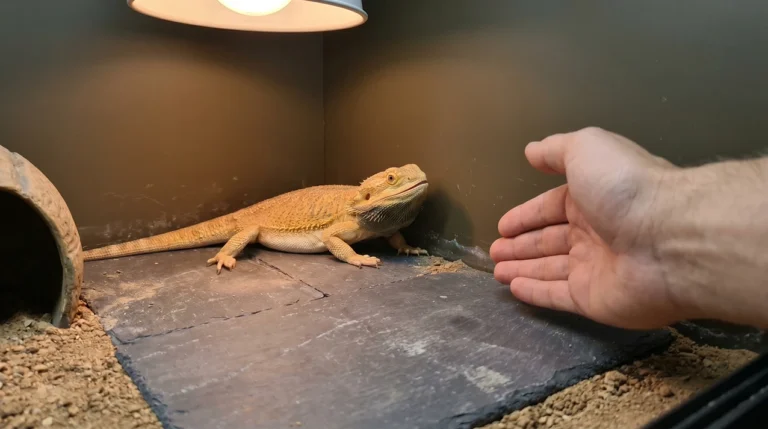
Keep your hand low and supported so the dragon cannot fall.
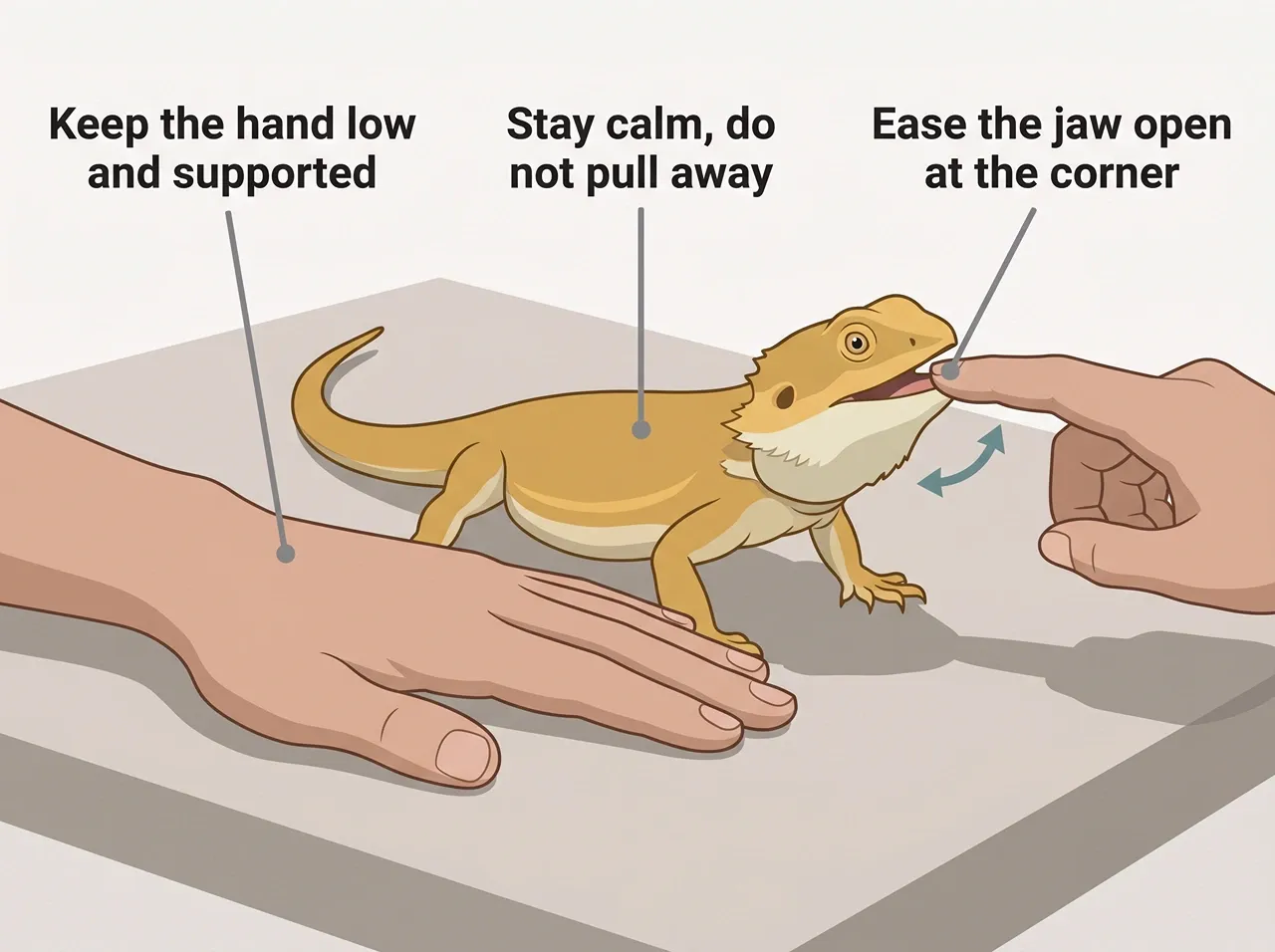
Most dragons release within seconds once they realise you are not prey. If yours holds on, try these in order.
- Lower your hand to a flat surface so the dragon feels secure.
- Wait a few seconds. Many let go on their own once the panic passes.
- If it still holds, gently nudge a fingertip at the corner of its mouth to ease the jaw open.
- A few drops of cool water near the mouth often prompts a release.
Once free, put the dragon back in its enclosure and let it settle. Punishing it does nothing useful and only adds stress that makes the next bite more likely.
How to Treat a Bearded Dragon Bite
If the skin is unbroken, you are done after a hand wash. There is no real risk from a bite that does not break the surface.
When it does break skin, treat it like any minor wound, with one reptile-specific reason to be thorough.
- Wash the bite under running water with soap for a good 20 seconds.
- Pat dry and apply gentle pressure if it is still bleeding.
- Dab on an antiseptic and cover with a plaster if needed.
- Wash again afterward, since reptiles can carry bacteria on the mouth and skin.
That last step matters more than the others. Reptiles commonly carry salmonella from reptiles without showing any illness themselves, and a broken-skin bite is a direct route in.
The US Centers for Disease Control notes that reptile-associated salmonella is preventable with basic hygiene, and you can read its guidance on reptiles and salmonella for the specifics. Wash properly and the risk drops close to zero.
Stocking a small kit ahead of time makes this painless. Antiseptic wipes and plasters live in our suggested bearded dragon first aid kit alongside the supplies you would want for the dragon itself.
When the Bite Needs a Doctor
Almost no bearded dragon bite needs medical attention. A handful of situations are the exception, and knowing them in advance saves a panicked midnight search.
| Sign after the bite | What to do |
|---|---|
| Minor break, stops bleeding fast | Clean at home, monitor for a day |
| Deep puncture or won’t stop bleeding | See a doctor for proper cleaning |
| Redness, swelling, warmth, or pus after a day or two | See a doctor, possible infection |
| Red streak spreading from the wound | Seek care promptly |
| You are pregnant, elderly, or immunocompromised | Call your doctor even for minor breaks |
If your last tetanus shot is more than ten years old and the bite broke skin, ask your doctor whether you are due. It is a reasonable precaution for any animal bite, not a reptile-specific scare.
Are Bearded Dragons Venomous
Technically yes, practically no. Research found that bearded dragons produce mild venom proteins, a leftover from a shared lizard ancestry, which is why you see the claim repeated everywhere.
It has no meaningful effect on humans. At absolute worst a sensitive person might notice slight swelling, and most feel nothing beyond the bite itself.
So the venom is real but irrelevant to your safety. The thing worth respecting is the bacteria on the teeth, not any toxin in the bite.
Does Biting Hurt the Dragon
It can, which is the part owners rarely consider. A dragon that bites and gets yanked away, or one that clamps onto a hard object, can chip teeth or strain its jaw.
Their teeth are fused to the jawbone rather than rooted like ours, so damage there is slow to heal and can invite mouth infections. This is another reason to free a stuck bite gently rather than forcing it.
Repeated stress that leads to defensive biting takes a toll too. A dragon flashing stress marks and biting often is one that needs its setup and handling reviewed, not one that needs correcting.
Frequently Asked Questions
Do bearded dragon bites hurt a lot?
Not usually. Adult bites sting and can break skin, but the pain is mild and brief. Most owners describe the surprise as worse than the bite itself.
Can a bearded dragon bite break your finger?
No. Their jaws lack anywhere near the force needed to break human bone. The worst you will get is a bruise, a shallow cut, or a little blood.
Should I let go if my dragon bites?
Stay still instead of pulling back. Lower your hand and wait, and most dragons release within seconds once they realise you are not food.
Why does my dragon bite at feeding time?
It has linked your hand with food. Use feeding tongs and wash off any insect smell beforehand, and the feeding-time nips usually stop fast.
Do baby bearded dragon bites hurt?
Barely. Their teeth are tiny and underdeveloped, so a baby bite feels like a light pinch and almost never breaks skin.
What to Do the Next Time It Happens
Do bearded dragon bites hurt enough to worry about? Almost never, once you know how to handle one. Keep this short list in mind and a bite stays a non-event rather than a scare.
- Stay calm and keep your hand low so the dragon cannot fall.
- Let go of the urge to yank away. Wait for the release instead.
- Ease a stuck jaw open gently with a fingertip or a few drops of water.
- Wash any broken skin with soap and water for 20 seconds, then again afterward.
- Watch the wound for a day or two and see a doctor if it reddens, swells, or weeps.
- Track down the trigger, whether hunger, fear, or hormones, so the next handling session goes smoothly.
Written by
Sarah ArdleySarah has kept bearded dragons for over ten years. She founded Beardie Husbandry after discovering that most mainstream care advice — including what she followed with her first dragon — was doing more harm than good. Every article on this site is grounded in veterinary research and real keeper experience.