How to Tame a Scared Bearded Dragon That Hides and Runs
A new bearded dragon that bolts to the far corner the second your hand nears the glass is doing exactly what its instincts tell it to do. Fear is the default setting for these animals, not a personality flaw.
Knowing how to tame a scared bearded dragon starts there. Nothing is broken.
Most dragons that hide and run are not damaged, just unconvinced that you are safe yet.
The first thing to sort out is whether you have a truly frightened dragon or one that simply moved house last week. A dragon in a new tank needs time to decide the space is safe before it can decide you are safe.
Give any new arrival a full week of near total quiet before you try anything. Food, water, lights on a timer, and otherwise leave it completely alone. A dragon that still flattens and sprints after two settled weeks is the one that needs an actual taming plan.
Why a Scared Beardie Bolts
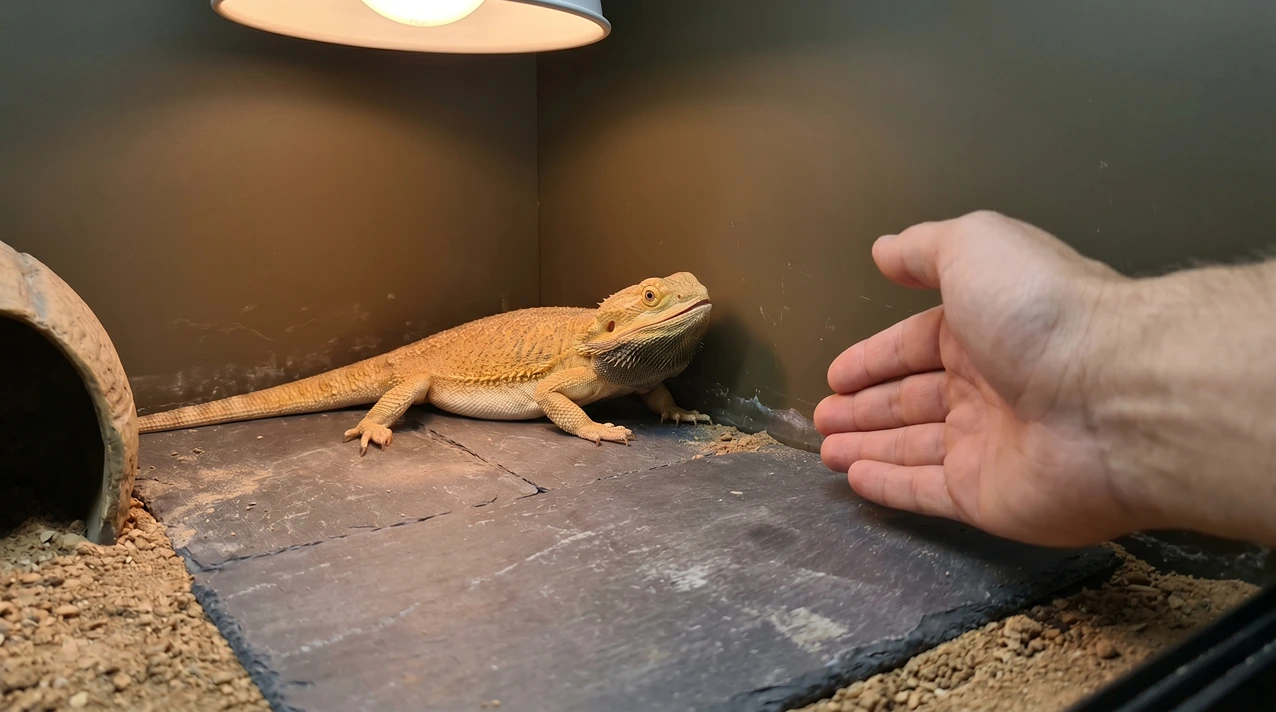
Bearded dragons are prey animals in the wild. A shape looming over the tank reads as a hawk, which is why a hand lowered from above triggers the fastest flight response you will ever see.
That instinct sits underneath almost every scared reaction. It also explains why the same dragon that bolts from your hand will happily bask out in the open when you are across the room.
Skittish behaviour also tracks with age and history. Baby dragons are naturally flighty because in the wild a baby is everyone’s lunch. A rescue or pet store dragon may have learned that hands mean grabbing, chasing, or rough handling.
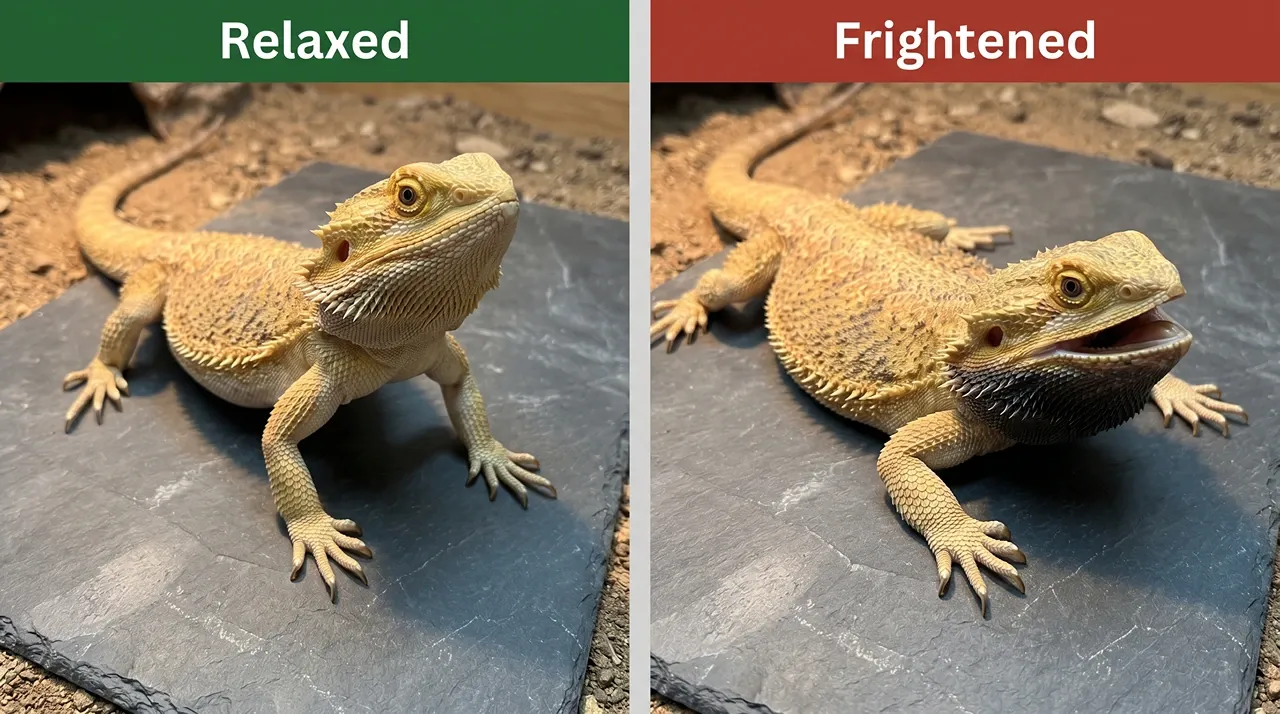
Reading the tank for what it is telling you matters more than any single technique. Learning to read a frightened beardie’s body language signals will show you when it is alert, when it is terrified, and when it has relaxed enough to try contact.
When Fear Is Really Bad Husbandry
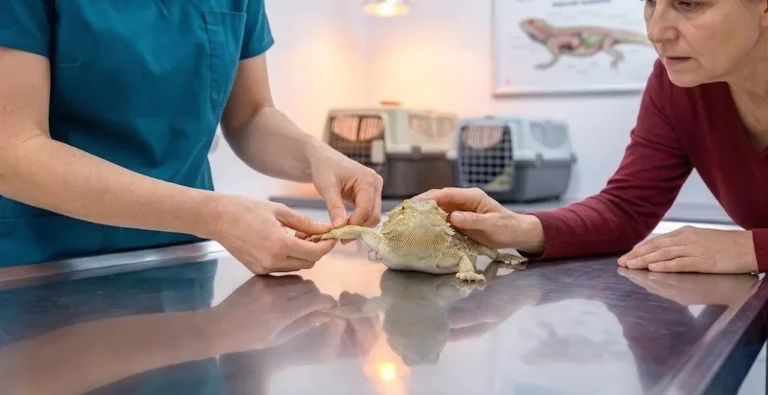
Before you spend a month on trust building, rule out the setup. A surprising number of dragons labelled nervous are actually cold, stressed, or unwell, and no amount of patient handling fixes a husbandry problem.
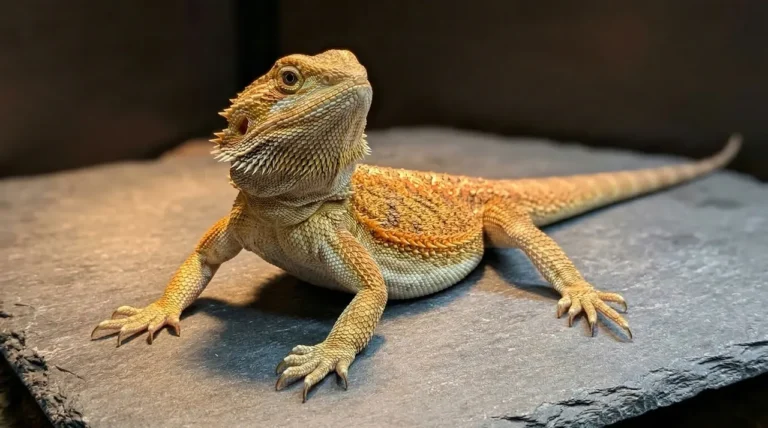
A cold dragon is a stressed dragon. If the basking spot runs below temperature, your beardie cannot regulate properly and will sit tense, dark, and reactive all day. Get a probe reading and confirm your basking temperatures are right before you blame personality.
Constant dark stress marks on the belly are another tell. Faint markings come and go, but oval patches that never fade point to something wrong in the environment rather than ordinary nerves.
Check These Before You Start
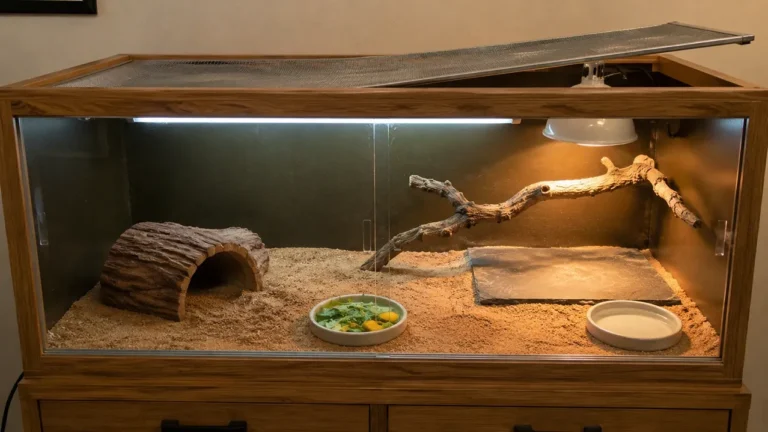
Run through the basics first. If any of these are off, fix them before you touch the dragon at all.
- Basking surface temperature sits at 95 to 110°F for an adult, hotter for a baby
- A working UVB tube replaced within the last 12 months
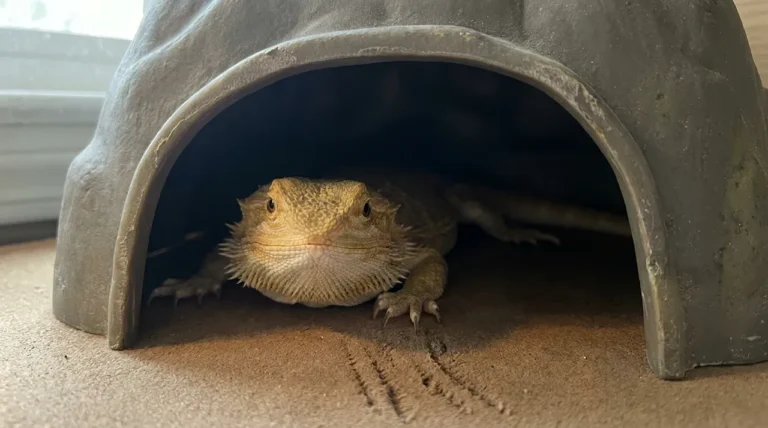
- At least one enclosed hide the dragon can fully disappear into
- The tank is not in a high traffic, loud, or busy spot in the home
- No other pets, especially cats or dogs, looming at the glass
How to Tame a Scared Bearded Dragon
Once the setup checks out, the work itself is slow and boring by design. The whole method rests on one idea. You become predictable and harmless before you ever become handsy.
Rushing is the single biggest reason taming stalls. Push a frightened dragon onto your hand on day two and you confirm every fear it already had.
Here is the four week structure that works for most scared dragons. Move to the next stage only when the current one stops producing a fear reaction.
Week One Just Be Boring
Sit beside the tank and do nothing. Read, talk softly, and let the dragon watch you exist without anything happening. A few fifteen minute sessions a day is plenty.
The goal is simply to become background noise rather than a threat.
Week Two Feed From Your Fingers
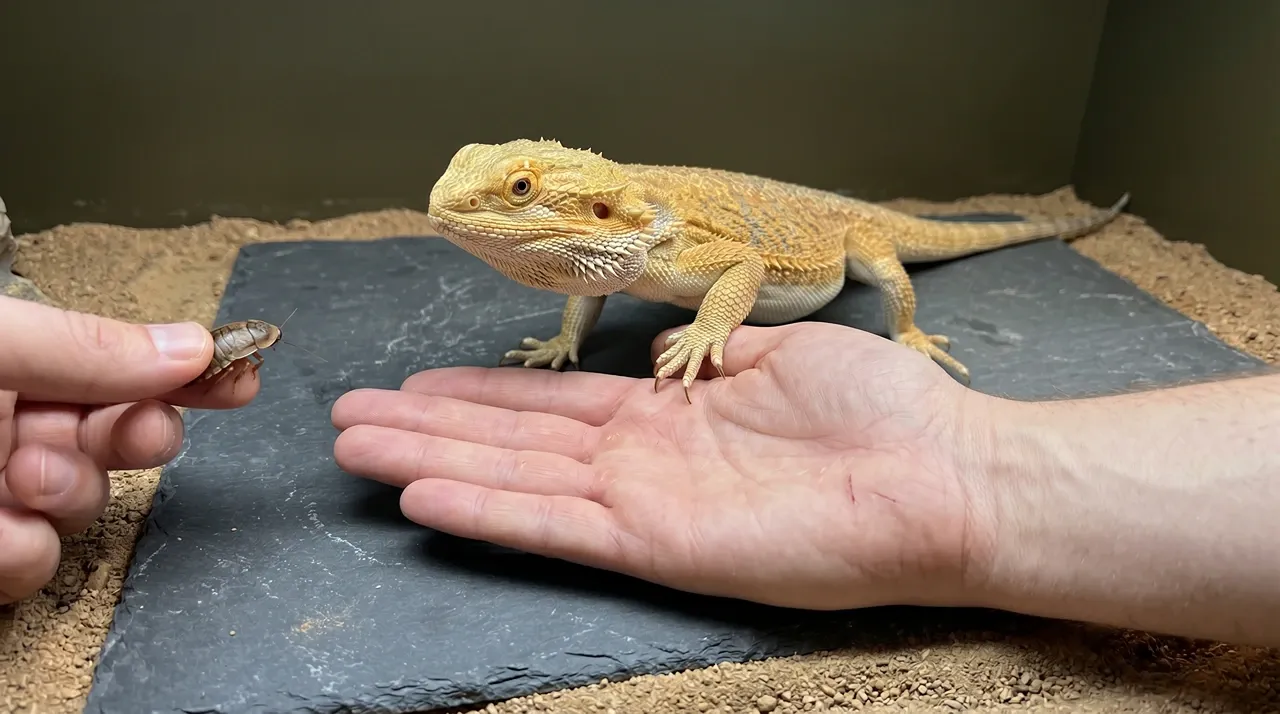
Start offering a favourite feeder by hand. A wriggling dubia or a hornworm held just inside the tank is hard for most dragons to resist, even nervous ones.
If it will not take food from fingers, place the insect near your resting hand instead. A dragon that learns to eat calmly beside your hand is closer than it looks. The same trick rescues a new dragon refusing food out of stress.
Week Three Lure Onto Your Hand
Lay your hand flat on the floor of the tank, palm up, and hold the feeder just past your fingers. Let the dragon step onto your hand to reach it. Do not lift.
Repeat this for several days until walking across your hand feels routine. You are teaching it that your hand is a surface, not a trap.
Week Four Short Calm Lifts
Now you can lift, but keep it brief. Scoop from underneath, raise the dragon a few inches, and set it back down within a minute. Slowly stretch the time as it stays calm.
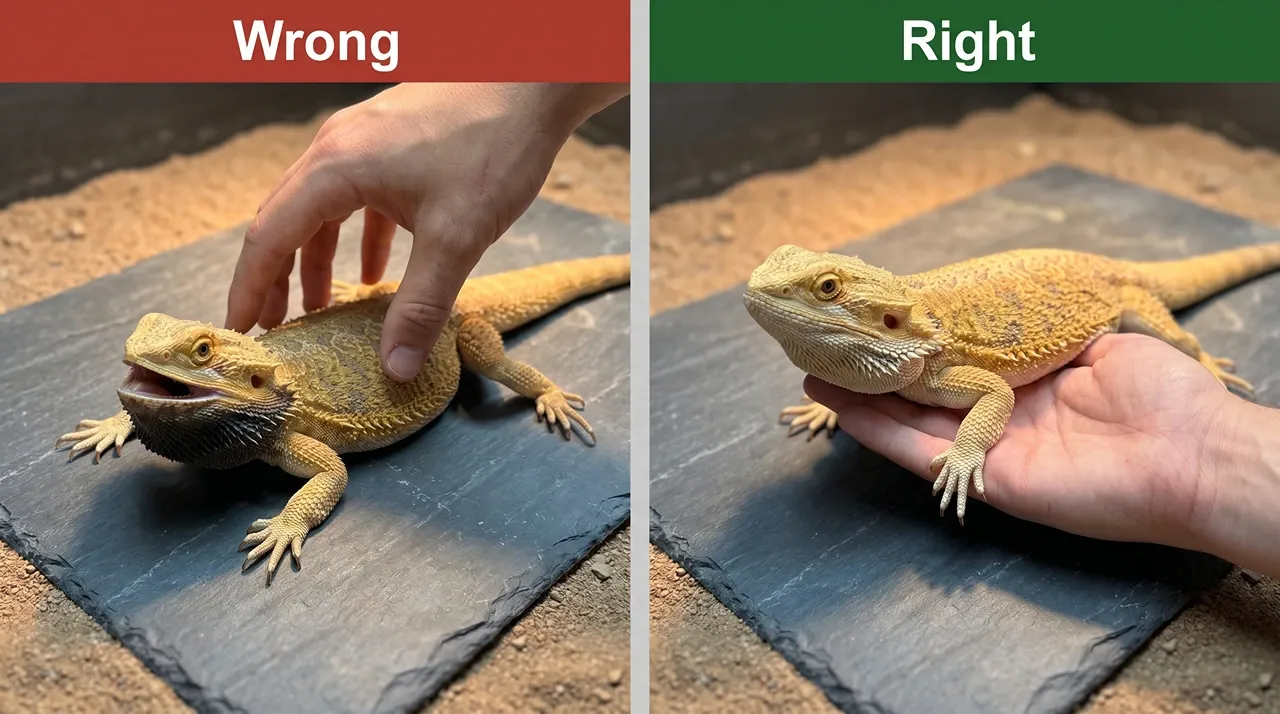
The Right Way to Lift a Bolter
How you pick up a scared dragon decides whether the last three weeks hold or unravel. Get this wrong once and you reset trust badly.
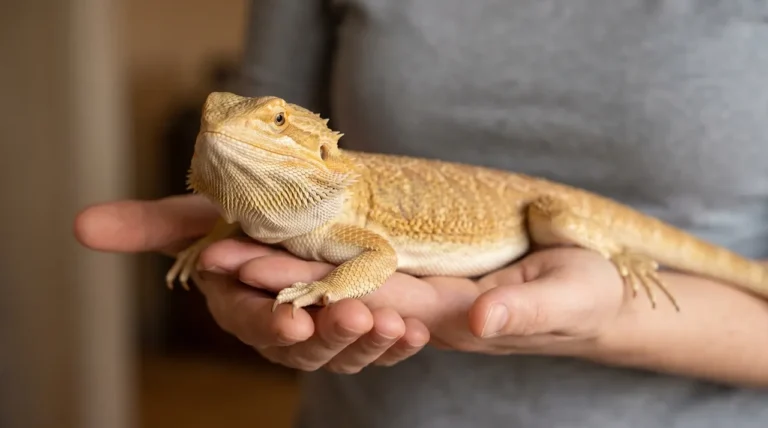
Never come down from above. Slide your hand in from the front or side, slip your palm under the belly and chest, and let the legs rest on your fingers. Supporting the whole body this way is the core of lifting without getting bitten.
A dragon that feels secure underneath stops flailing. One that dangles or feels gripped from above panics, and a panicked dragon learns nothing good.
Keep the first lifts low over a soft surface. A frightened beardie can leap without warning, and a fall from chest height onto a hard floor is how nails break and bones crack.
Stress Signs That Mean Stop Now
Reading stress in real time is what separates owners who make progress from those who go backwards. Push through these signals and you teach fear instead of trust.
| What you see | What it means | What to do |
|---|---|---|
| Flattening the body against the floor | Trying to look small and hide | Stop reaching, sit back, wait |
| Black beard and dark belly | Active fear or stress response | End the session, try tomorrow |
| Gaping mouth while you approach | Defensive warning, feeling cornered | Back off, give full space |
| Frantic glass surfing | Wants escape, often setup stress | Stop, recheck temps and hides |
| Running and refusing food for days | Possible illness, not just nerves | Pause taming, call a reptile vet |
A black beard during handling is a clear no. That is different from a male’s beard darkening in spring, which is hormonal rather than fear driven.
Mistakes That Keep Dragons Scared
Most stalled taming comes down to a handful of repeated errors. Each one quietly tells the dragon you are still a threat.
- Reaching in from above instead of the side
- Handling during a shed, when even tame dragons turn grumpy and want to be left alone
- Forcing contact while the dragon is slipping into a brumation slowdown
- Long sessions that end with a stressed dragon rather than a calm one
- Chasing it around the tank to grab it, which confirms hands are dangerous
- Giving up after a few days because progress feels invisible
Fear and aggression also get confused constantly. A dragon that puffs, hisses, and lunges is not scared in the same way, and the approach to calm an aggressive beardie differs from soothing a flighty one.
How Long Until Your Dragon Trusts You
This is the question every nervous owner wants answered, and the honest range is wide. A well started baby from a good breeder may settle in two or three weeks. A frightened rescue with a rough past can take several months.
Consistency beats intensity every time. Ten calm minutes daily does far more than an hour once a week.
Trust shows up in small shifts. The dragon stops bolting when you enter the room, then tolerates your hand, then climbs on willingly. Eventually it learns to recognise you and treats your presence as routine rather than danger.
Questions Owners Ask About Scared Dragons
Why does my bearded dragon run away from me?
It sees your hand as a predator coming from above. This is instinct, not dislike. Approaching from the side and going slowly reduces the flight response over time.
Should I handle a scared bearded dragon every day?
Yes, but keep sessions short and calm. Brief daily contact builds trust faster than occasional long ones. Stop the moment you see a fear response like flattening or a black beard.
How long does it take to tame a frightened beardie?
Anywhere from two weeks to several months. Babies and well socialised dragons settle fastest. Rescues with a rough history take longest, so judge progress by behaviour, not the calendar.
Is my dragon scared or just stressed from its setup?
Check temperatures, UVB, and hides first. A cold or exposed dragon stays tense regardless of handling. If the setup is correct and it still hides constantly, it is fear you can work on.
Will hand feeding make my bearded dragon tame?
Hand feeding is one of the fastest trust builders available. It links your presence to something good. Pair it with calm, predictable handling and most scared dragons come around.
Start Taming Tomorrow With This Plan
There is no trick to it. Knowing how to tame a scared bearded dragon is mostly patient, predictable repetition. Start with the very next quiet afternoon and work down this list in order.
- Confirm your basking temp, UVB age, and that a proper hide is in place
- Spend this week sitting calmly beside the tank with no handling at all
- Next week, offer a favourite feeder by hand or beside your resting hand
- Once it eats calmly, lay your hand flat and let it step on for food
- Only then begin short lifts, scooping from underneath, ending while it is still calm
- Stop any session the second you see flattening, a black beard, or gaping
- If it hides for days, stops eating, or looks unwell, book a reptile vet before continuing
Written by
Sarah ArdleySarah has kept bearded dragons for over ten years. She founded Beardie Husbandry after discovering that most mainstream care advice — including what she followed with her first dragon — was doing more harm than good. Every article on this site is grounded in veterinary research and real keeper experience.