What to Do If Your Bearded Dragon Inhales Bath Water
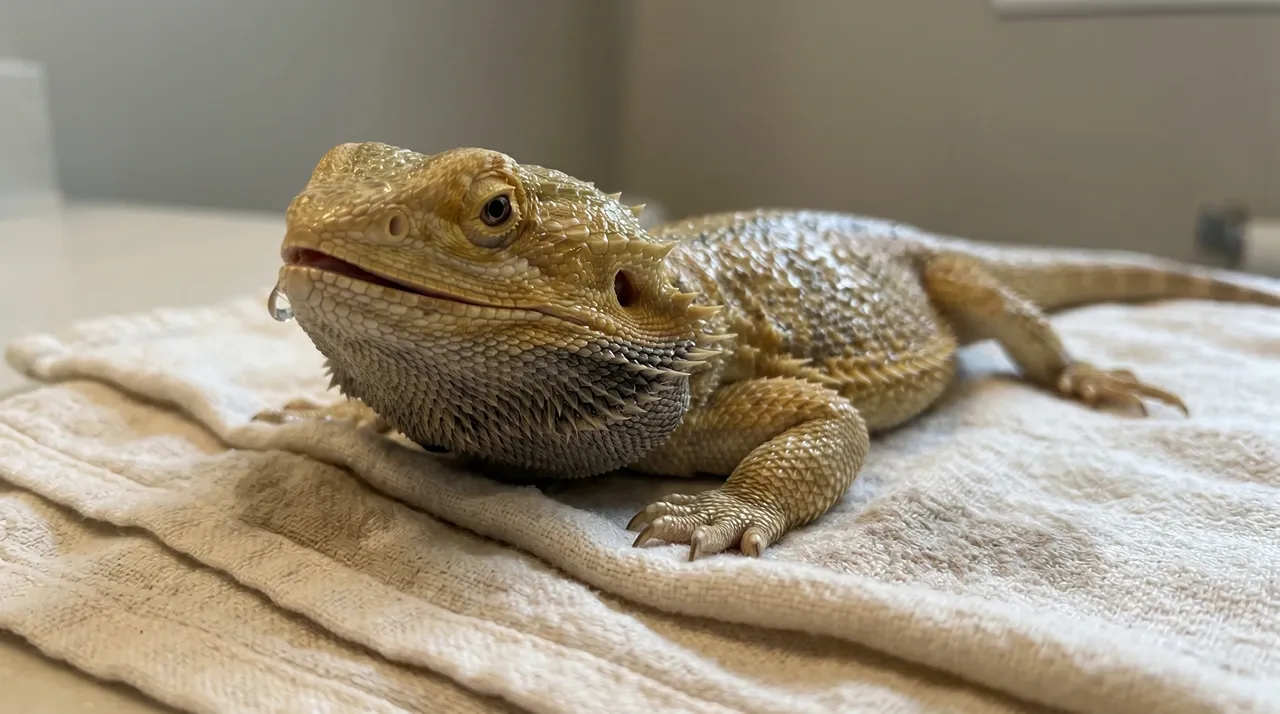
Clear fluid bubbling from the nostrils after a soak, a sudden puffing motion, maybe a small gag. That is what it usually looks like when a bearded dragon inhales bath water.
Most of the time the water stays in the nose and clears on its own within a minute or two. The part worth watching is whether any of it reached the lungs.
Water in the nose is alarming but rarely dangerous. Water in the lungs is what can quietly become a problem several days later, long after the bath is forgotten.
Telling a Nose Splash From Real Aspiration
The first thing to sort out when a bearded dragon inhales bath water is how far it actually travelled. A nose dip and a lungful are different events, and they call for different responses.
A splash that stays in the nose usually looks like this:
- Clear fluid dripping or bubbling from one or both nostrils
- A sneeze, a head shake, or a quick sniffle that settles within seconds
- Steady breathing and normal posture once the nose clears
Water that reached the airway or the lungs looks more worrying:
- Open-mouth breathing that does not settle after a minute
- Gurgling, bubbling, or a wet clicking on each breath
- Gaping with the head held high and tipped back
- Sudden limpness, then a brief recovery, then fading again
Those last signs are not the calm posture shifts you read as everyday body language. They mean fluid is sitting where air should be.
The sound is the tell I trust most. A dry sneeze is sharp and over fast. Air dragging past trapped water is wet and crackly, and it repeats with every breath.
What to Do in the First Minutes
Stay calm and move slowly. A thrashing, panicked dragon pulls more water in, so the first job is to settle them rather than fix everything at once.
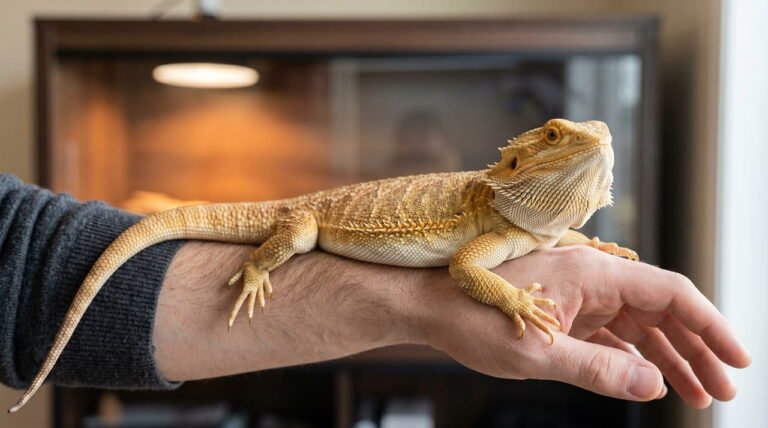
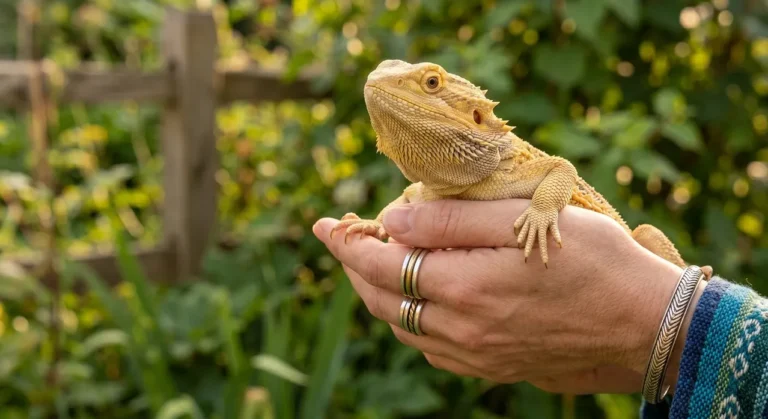
Support the body fully in both hands so they cannot twist, the same secure grip used for handling a stressed dragon at any time. Tilt them gently so the head sits lower than the hips.
Hold that decline for ten to fifteen seconds and let gravity pull the fluid out through the mouth and nose.
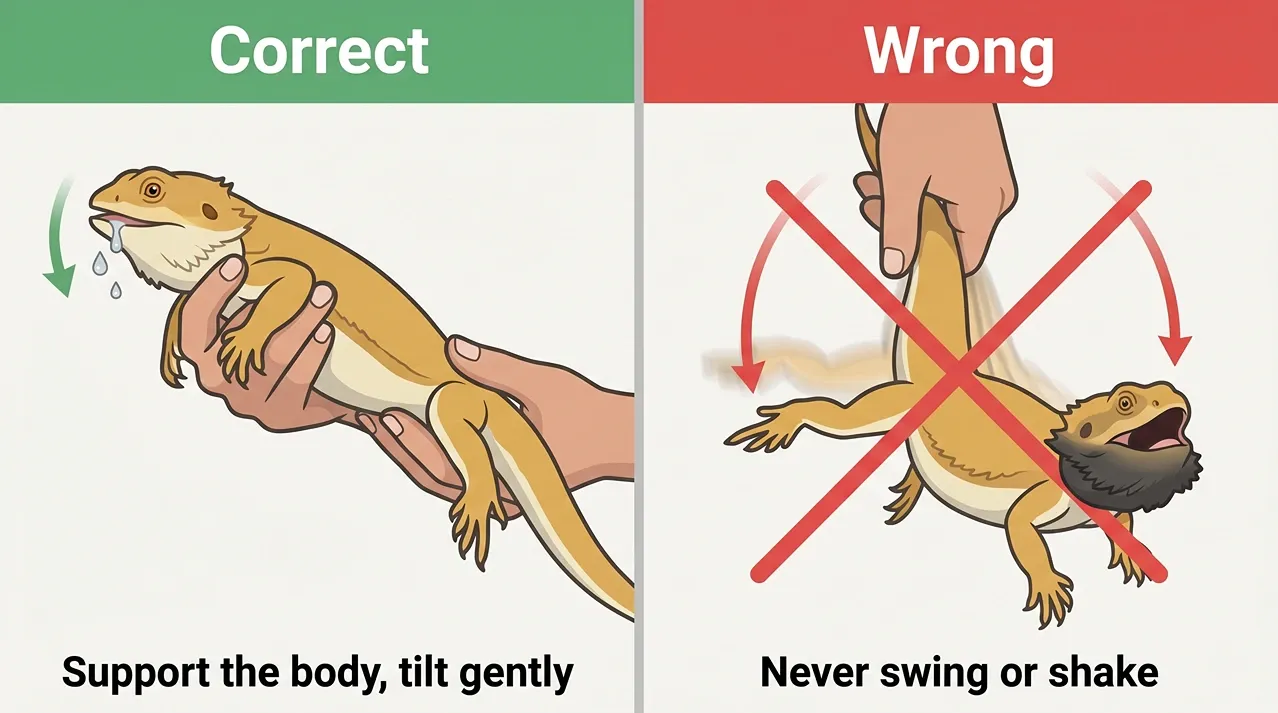
Set them upright, give it a moment, then repeat once if more water comes.
Get Them Warm, Not Hot
Once the water is out, warmth is the priority. A dragon kept too cool cannot mount the immune response that clears the lungs, which is exactly when a minor aspiration turns into an infection.
Put them back under the basking lamp and keep the basking temperature in its normal range of 100–107°F for an adult. Hold that for the rest of the day rather than cranking the heat higher than usual.
Why a Bearded Dragon Inhales Bath Water
Three situations cause almost every case where a bearded dragon inhales bath water:
- Fast, desperate drinking from a dragon that is short on fluids
- The head dipping or being held too low in deep water
- Panic thrashing that pulls water into an open mouth
The fast-drinking case matters most, because it points at a husbandry gap rather than a one-off accident. A dragon that gulps the second it touches the water is often dehydrated.
The signs of dehydration usually show before the bath if you know the look:
- Eyes that sit slightly sunken in their sockets
- Saliva that strings or looks tacky when the mouth opens
- Skin on the flank that is slow to flatten after a gentle pinch
Fix the underlying hydration and the frantic gulping tends to stop. That removes the main reason the water went down the wrong way in the first place.
The Black Beard Is Usually Just Stress
Mid-rescue, the beard often goes jet black and the tail darkens too. That sight convinces a lot of keepers the dragon is dying in their hands. It almost never means that.
A black beard is a fear response, not a readout of how much water reached the lungs. The colour comes from the same reflex that makes a beard turn black during a vet visit or a tank move: adrenaline, not damage.
Watch the breathing, not the beard. As the dragon settles over the next hour, the colour usually fades on its own. Laboured breathing that continues after the beard lightens is the signal that actually matters.
Aspiration Pneumonia Is the Real Danger
Here is the part the forums tend to undersell. The choking and spluttering at bath time is rarely what hurts a dragon. The danger after a bearded dragon inhales bath water is aspiration pneumonia, and it can take days to show.
Water sitting in the lungs is an irritant and a breeding ground for bacteria. The infection that follows is what turns a frightening bath into a serious illness, often well after everyone has relaxed.
Signs of pneumonia rarely appear in the first day or two. They tend to surface across the following two weeks, so a dragon that seemed fine on the night can still get sick later.
Veterinary guidance from VCA Animal Hospitals notes that respiratory infections take hold most easily when a dragon is stressed, cool, or run down. A bad aspiration leaves them in exactly that state.
What to Watch for Over Two Weeks
Keep a closer eye on them than usual for a fortnight. The early signs of a respiratory infection after an aspiration are easy to miss if you are not watching for them:
- Clicking, popping, or wheezing sounds while breathing
- Open-mouth breathing at rest, not just after basking
- Mucus or bubbles around the nostrils or mouth
- Loss of appetite, low energy, or more sleeping than normal
- Holding the head and neck stretched upward to breathe
When to Call the Vet
Some situations can be watched at home. Others need a phone call straight away. The table below sorts what you are seeing into what to do about it.
| What you are seeing | What it means | What to do |
|---|---|---|
| Limp, grey or blue mouth, or not breathing | Airway may be blocked or oxygen is critically low | Emergency vet now, do not wait |
| Laboured or open-mouth breathing past 30 minutes | Fluid is still sitting in the airway | Call a vet the same day |
| Clicking, wheezing, or appetite loss within two weeks | Possible aspiration pneumonia developing | Book an exam and ask about x-rays |
| Brief spluttering, nose clears, normal within minutes | Minor splash, water did not reach the lungs | Dry, warm, and monitor for two weeks |
If you do not already have a reptile vet on file, finding one before you need it saves time you may not have later. Not every clinic treats exotics.
A reptile-experienced vet can run the x-rays that confirm or rule out pneumonia. That imaging is the only way to know for certain whether the lungs are affected.
How to Stop It Happening Again
Almost every case where a bearded dragon inhales bath water traces back to one of a few preventable setups. None of them need new equipment, just a small change to how baths run.
Keep the water shallow. It should sit no higher than the elbows or shoulders, never near the chin. Getting the right water depth matters more than water temperature or how long the bath lasts.
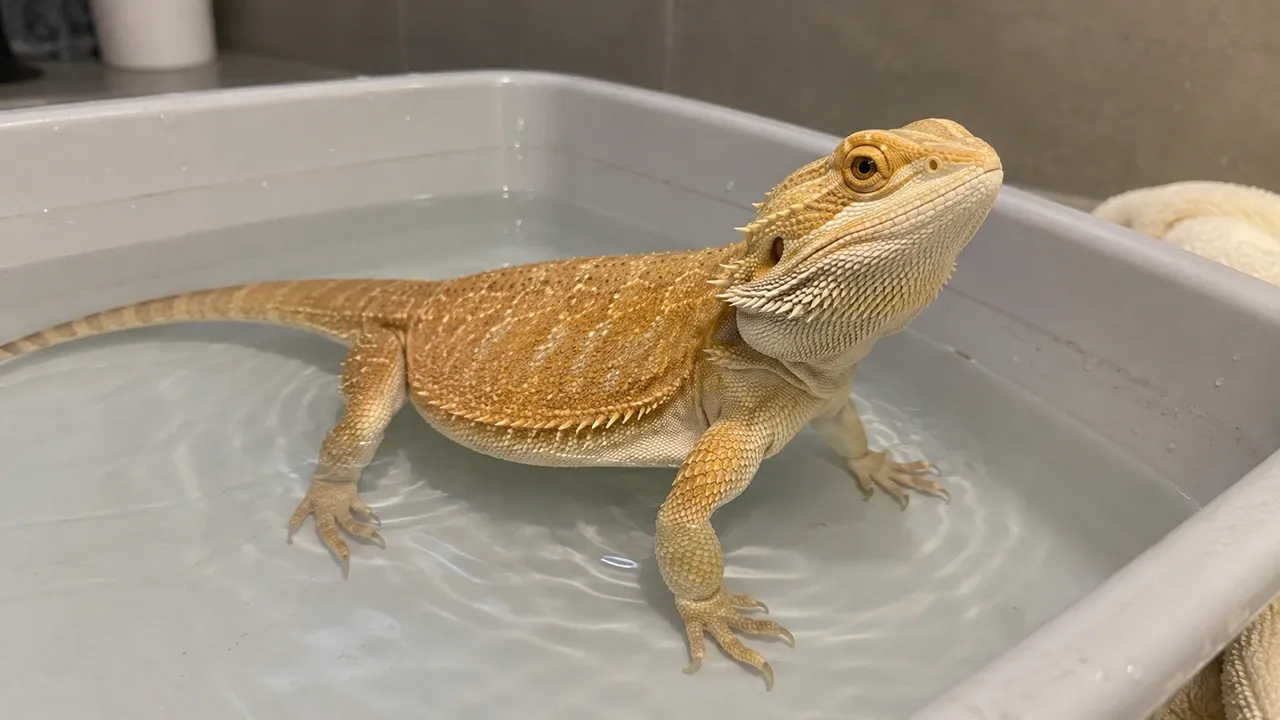
Skip the running tap. A lot of keepers run a thin stream because the dragon drinks from it, but a face held under moving water is the quickest route to a lungful.
Supervise every bath from start to finish. Never step away, even for a moment, and never bathe a dragon that is already showing breathing trouble or coming off a recent illness.
Common Questions About Inhaled Bath Water
What happens when a bearded dragon inhales bath water?
Most of the time the water stays in the nose and clears within a minute or two. The real risk is water reaching the lungs, which can lead to aspiration pneumonia over the following two weeks. Watch the breathing closely rather than the panic of the moment.
Should I tip my bearded dragon upside down to drain the water?
No, never swing or hold them fully upside down. Support the body and tilt them to a gentle head-down angle for ten to fifteen seconds instead. Hard swinging can injure the spine or push more water in.
How long after inhaling water can pneumonia develop?
Signs usually take more than a day or two to appear and can surface across the next two weeks. Clicking, wheezing, mucus, and appetite loss are the warnings to watch for. A vet x-ray is the only way to confirm it.
My dragon’s beard went black, is that an emergency?
A black beard during the event is almost always fear and stress, not lung damage. It usually fades as the dragon calms over the next hour. Continued laboured breathing matters far more than the colour.
Can a small splash up the nose hurt my bearded dragon?
A brief splash that clears quickly rarely causes harm. Dry them, keep them warm, and watch their breathing for a couple of weeks to be safe. Problems come from water in the lungs, not a wet nose.
What to Do, Step by Step
When a bearded dragon inhales bath water, the response below works in order, from the first second to the two-week mark.
- Stop the bath and lift the dragon out, supporting the whole body.
- Tilt them to a gentle head-down angle for ten to fifteen seconds to drain fluid. Never swing or shake them.
- Set them upright, dry them off, and return them to the warm basking end.
- Keep the basking temperature in its normal range and leave the heat on for the rest of the day.
- Record a short video of their breathing as a calm baseline to compare against.
- Watch for clicking, wheezing, mucus, or appetite loss for the next two weeks.
- Call a reptile vet the same day for ongoing laboured breathing, and immediately if they go limp or stop breathing.
This article is written for educational purposes and reflects hands-on keeping experience, not veterinary diagnosis. It is not a substitute for advice from a qualified vet. Contact a reptile-experienced veterinarian for any breathing change or other health concern in your bearded dragon.
Written by
Sarah ArdleySarah has kept bearded dragons for over ten years. She founded Beardie Husbandry after discovering that most mainstream care advice — including what she followed with her first dragon — was doing more harm than good. Every article on this site is grounded in veterinary research and real keeper experience.