Bearded Dragon Overheating: 7 Warning Signs to Know
Spot your bearded dragon gaping nonstop, digging at the glass, or glued to its water bowl, and the first question is simple. Is this normal basking behaviour, or bearded dragon overheating? Most of the time it’s an easy fix once you know what to check. Occasionally it’s the start of a real emergency. Here are the seven signs that separate a quick lamp adjustment from a trip to the vet.
1. Why Gaping Doesn’t Always Mean Overheating
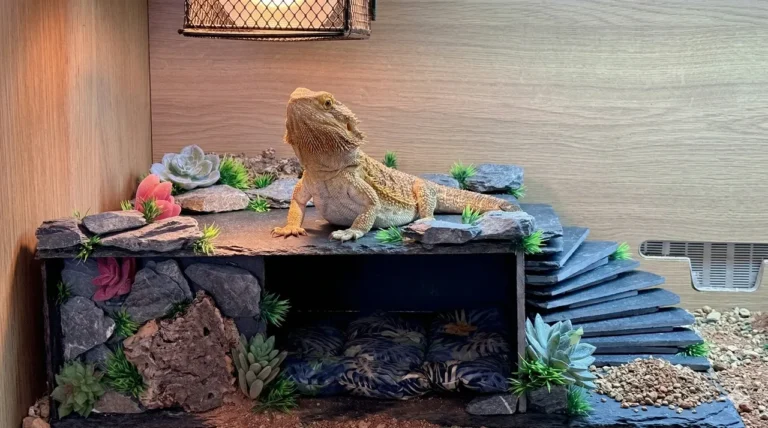
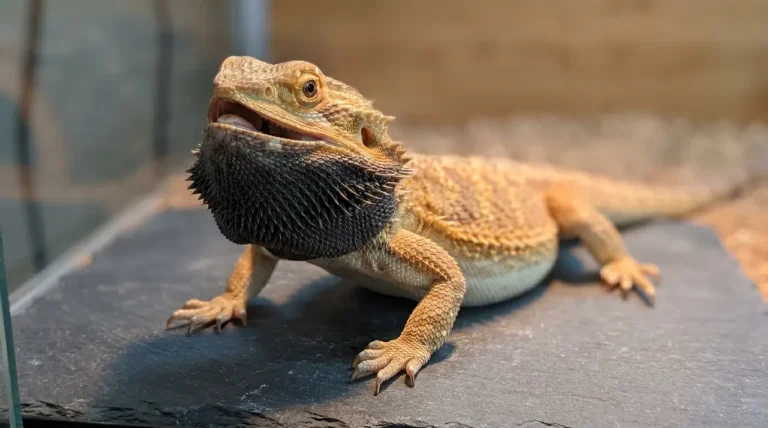
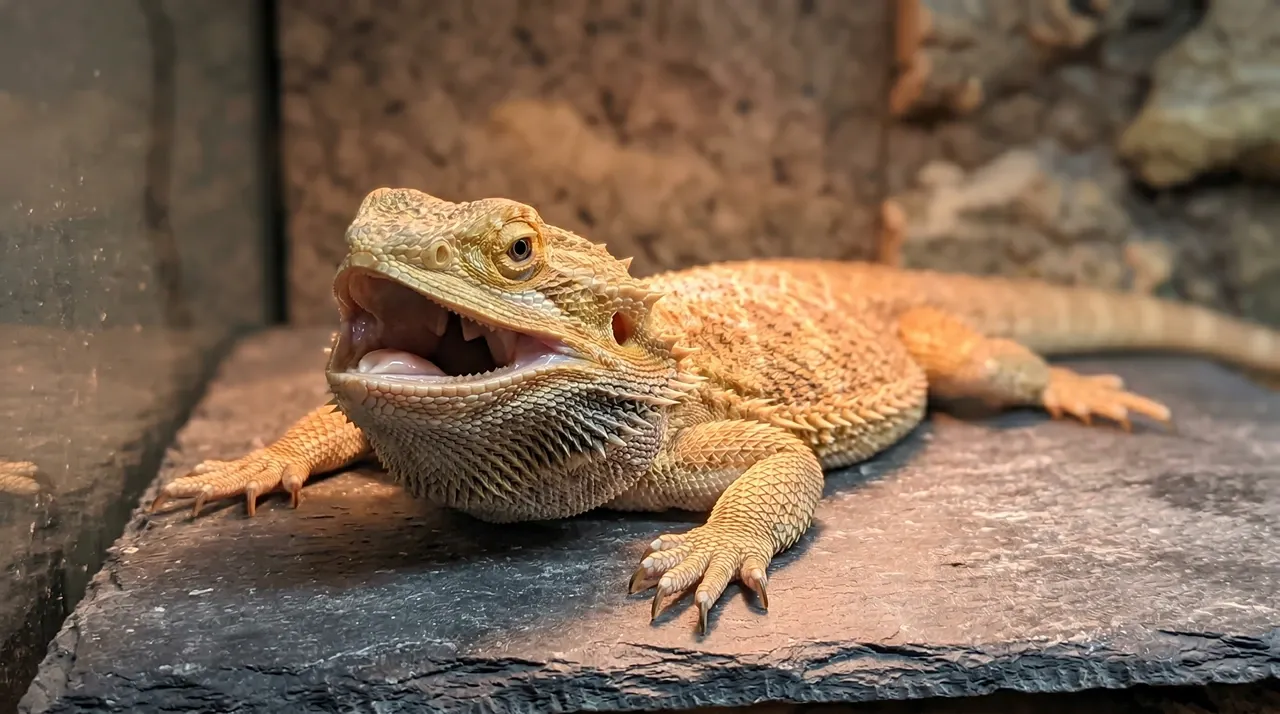
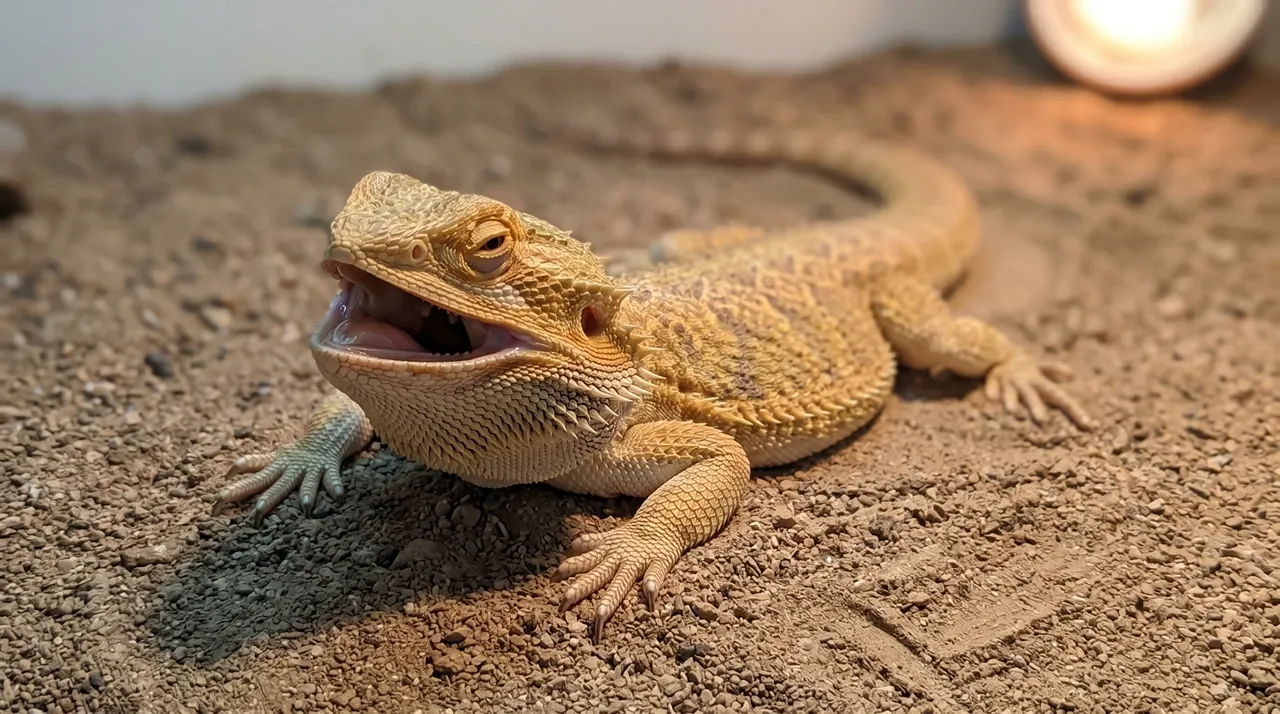
If your beardie has been sitting with its mouth open under the lamp, drop the panic for a second. Gaping is normal thermoregulation, the same way a dog pants. Most healthy dragons gape for a few minutes after they hit peak basking heat, then close up and carry on.
Bearded dragon overheating becomes a real concern when gaping turns constant. If your dragon is gaping for 20 minutes or more, away from the basking spot, or with its eyes half shut, something in the enclosure has crept past comfortable.
Grab a digital probe thermometer and check the basking spot temperature before assuming the worst. A bulb that’s drifted too close to the perch is the single most common cause of nonstop gaping in an otherwise healthy adult.
2. Your Dragon’s Color Is Getting Darker
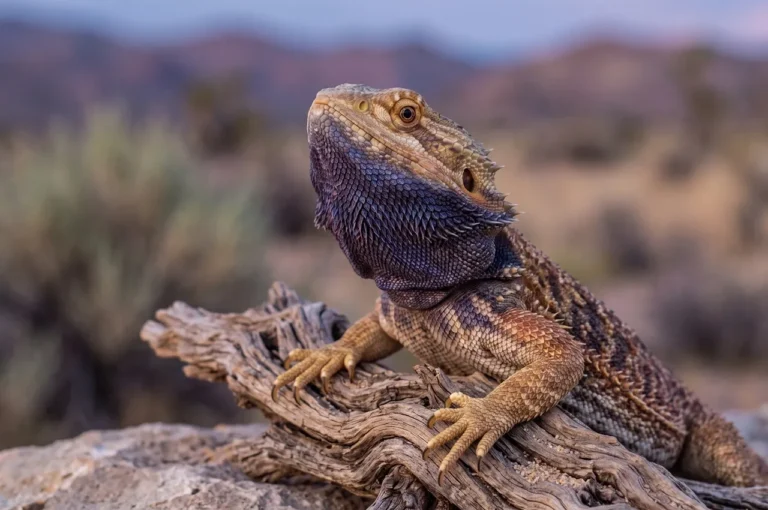
A lot of older care sheets claim a bearded dragon darkens to absorb less heat when it’s too hot. That’s backwards. Dark colours absorb more heat, not less, so a darkening dragon is usually trying to warm up, not cool down.
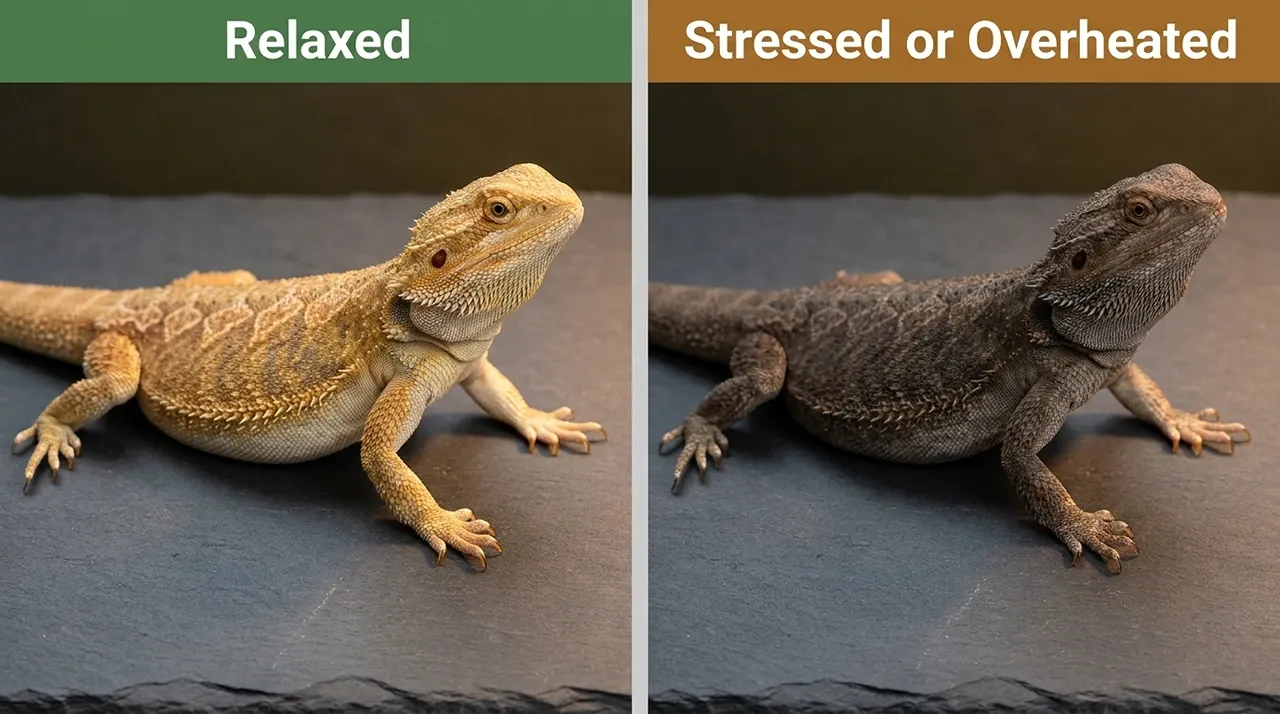
What darkening more reliably tells you is mood. Stress, a recent shed starting underneath, or irritation from cage mates can all turn a dragon’s tone smoky or near-black within minutes.
Pro tip: Use colour change as a supporting clue, never the main one. Pair it with behaviour. A dark dragon that’s also gaping nonstop and refusing to bask is telling you something real. A dark dragon basking happily is probably just due for a shed.
3. Glass Surfing Can Be a Heat Signal
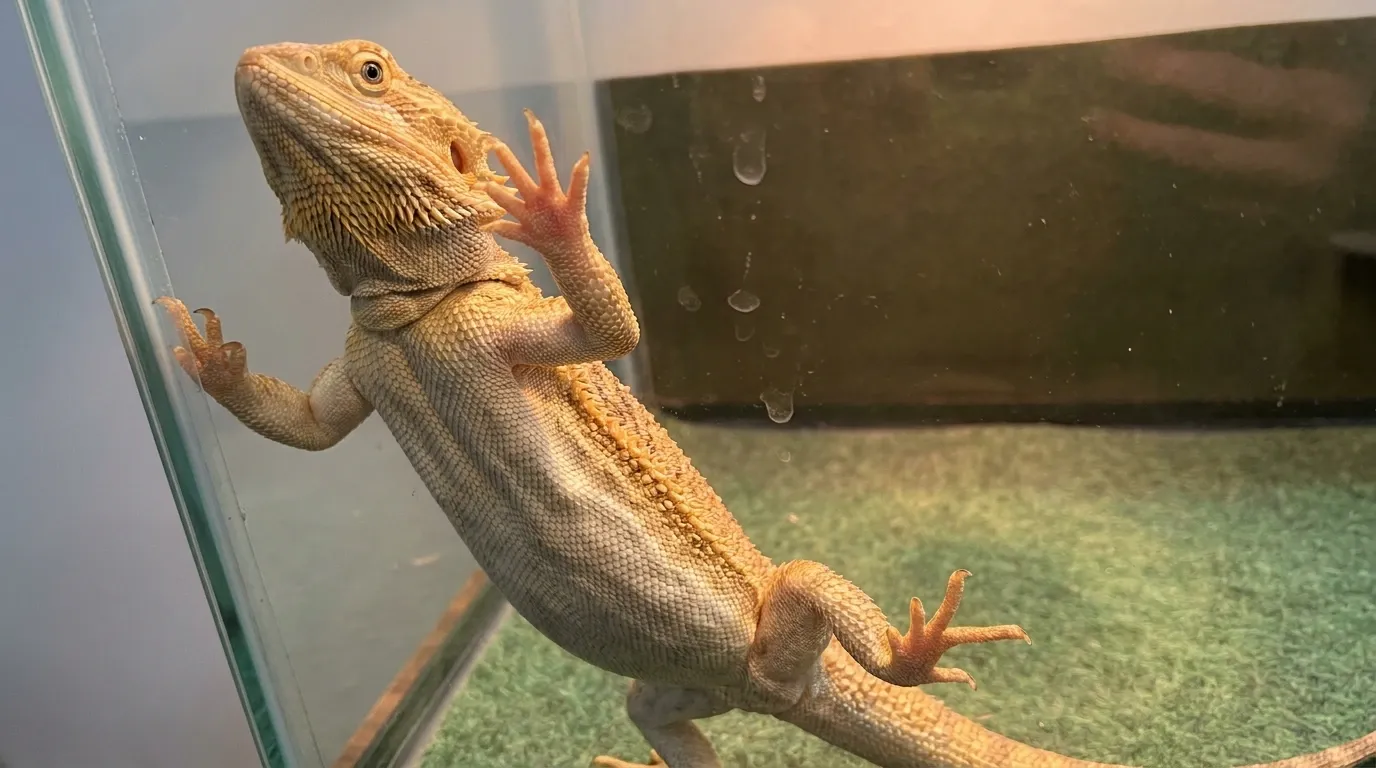
Running along the glass, scratching at the corners, or repeatedly climbing toward the lid are all forms of glass surfing. It’s one of the more frustrating behaviours to diagnose, because it has half a dozen causes.
Heat is one of them. A dragon that’s too warm with nowhere cooler to go will sometimes try to climb out of the situation entirely, scratching toward the highest, often coolest, point of the tank.
Before chasing any other explanation, check whether the cool end of the enclosure is actually cool. If both ends read above 85°F, your dragon has no escape route, and that alone can trigger surfing within a day or two. It’s one of the earliest patterns of bearded dragon overheating that owners miss.
4. Digging at the Glass During the Day
Wild bearded dragons dig down into the sand when the surface gets too hot, sometimes ten degrees cooler than the open ground above. Captive dragons keep that instinct even on substrates that don’t allow real burrows.
Frantic digging at the same corner of the tank, especially against the glass or a hide wall, often means your dragon is hunting for a temperature drop that isn’t there.
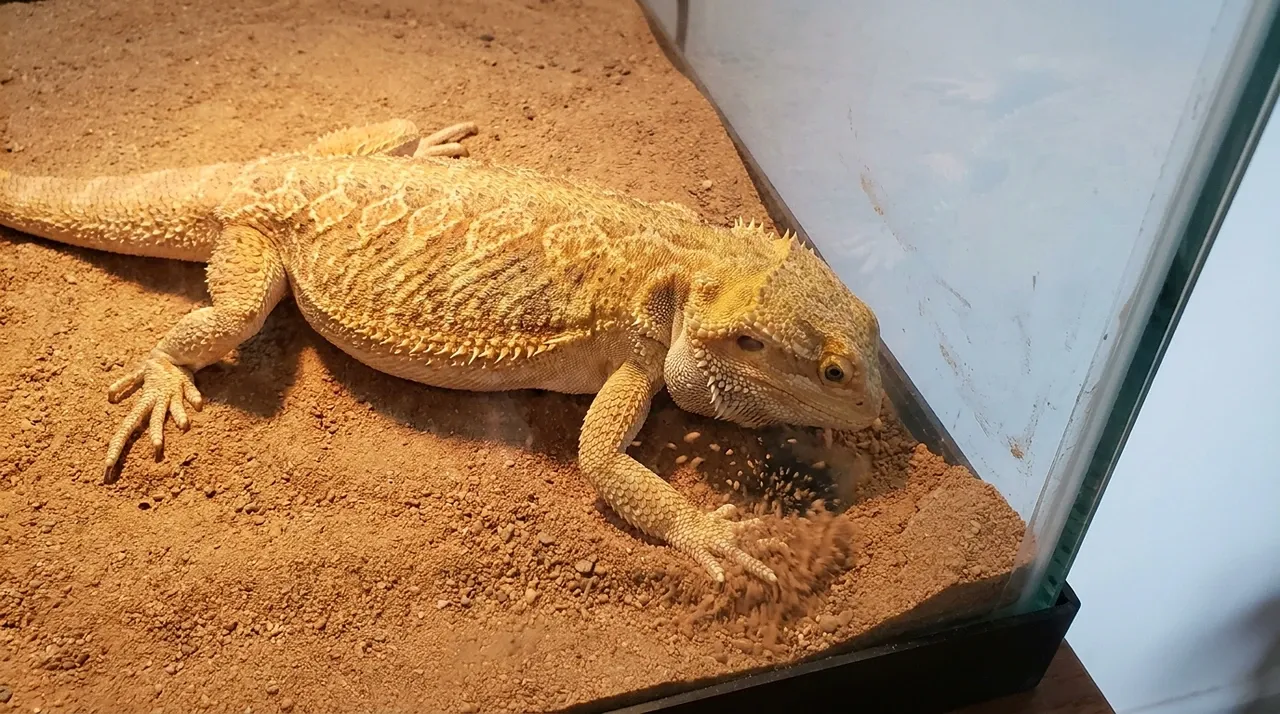
This behaviour should also make you check what’s underneath the tank. Heat mats under the enclosure warm the substrate from below with no way for the dragon to escape it, and digging is often the first sign that setup has gone wrong.
5. Hiding All Day Instead of Basking
A healthy dragon basks hard for an hour or two after lights-on, then alternates between basking and exploring through the rest of the day. If yours disappears into its hide and barely comes out, that’s worth investigating.
Hiding more than usual has plenty of causes, from a new tank placement to feeling unsafe near a window. But if the hide sits in the only spot that isn’t under a heat source, your dragon may simply be retreating from a tank that’s hot everywhere else.
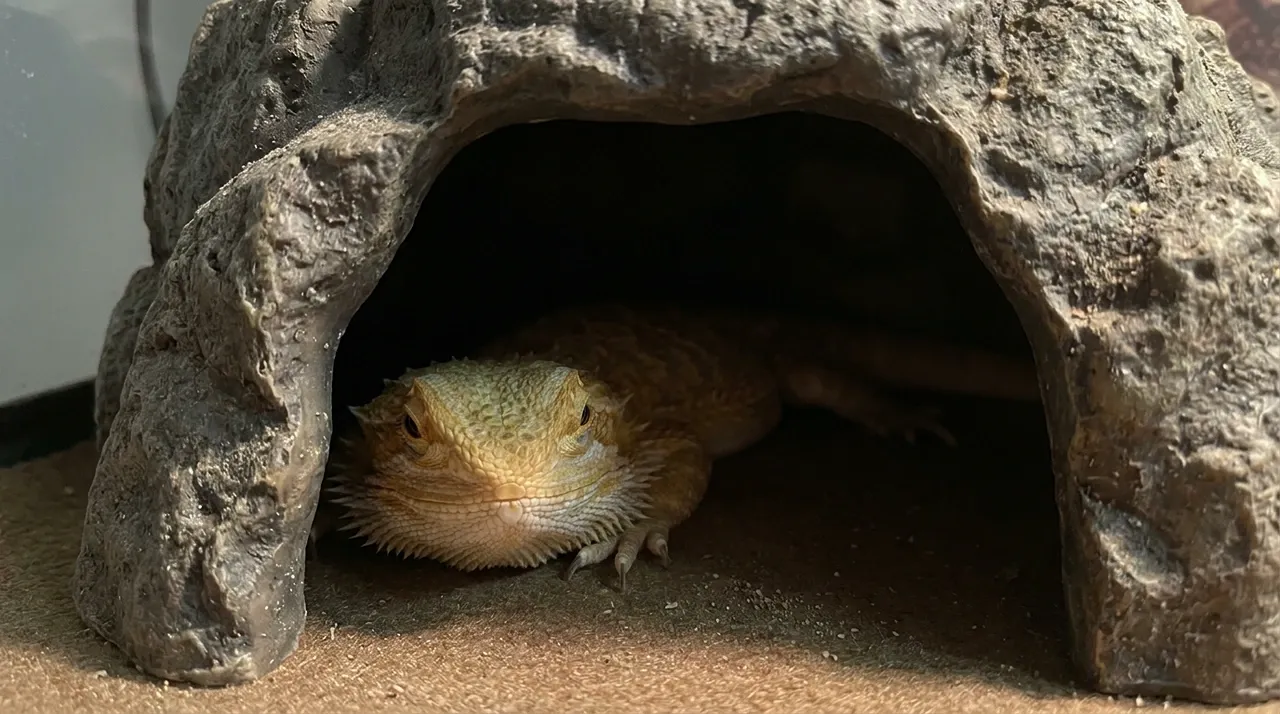
Check the temperature inside the hide itself. If it’s barely cooler than the basking spot, the whole enclosure is running hot. That pattern is one of the clearest early signs of bearded dragon overheating, not just one corner.
6. Obsessing Over the Water Bowl
Bearded dragons aren’t naturally big drinkers. Most get the bulk of their hydration from food and don’t sit by a water bowl out of habit.
A dragon that suddenly camps next to its water dish, dips its whole body in, or drinks repeatedly through the day is losing moisture faster than normal. Heat is one of the fastest ways that happens.
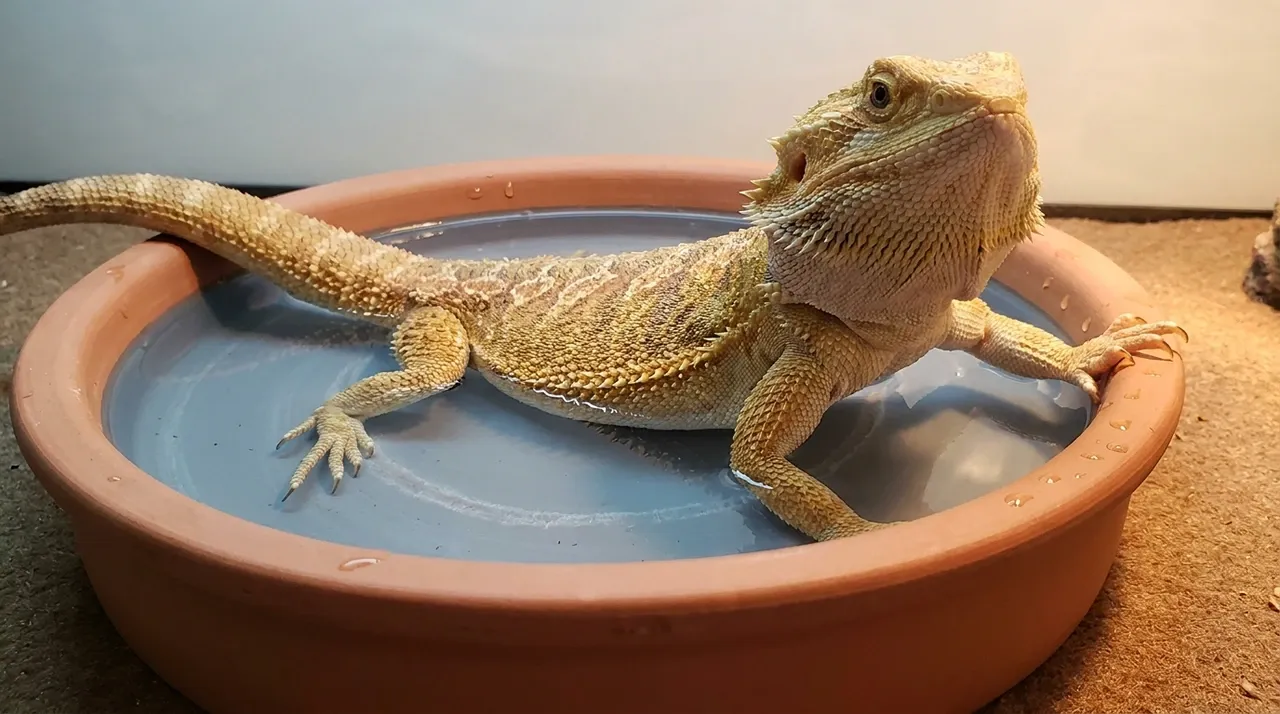
This sign rarely shows up alone. If you’re also seeing dehydration signs like sunken eyes or loose, tented skin on the back of the hands, treat it as a sign the enclosure is genuinely too warm, not just an off day.
7. When Lethargy Signals Heat Stroke
This is the sign that turns a routine check into an emergency. A dragon in true heat distress goes quiet fast, stops moving toward you, and stops responding to sound. It may also lie flat with its limbs splayed.
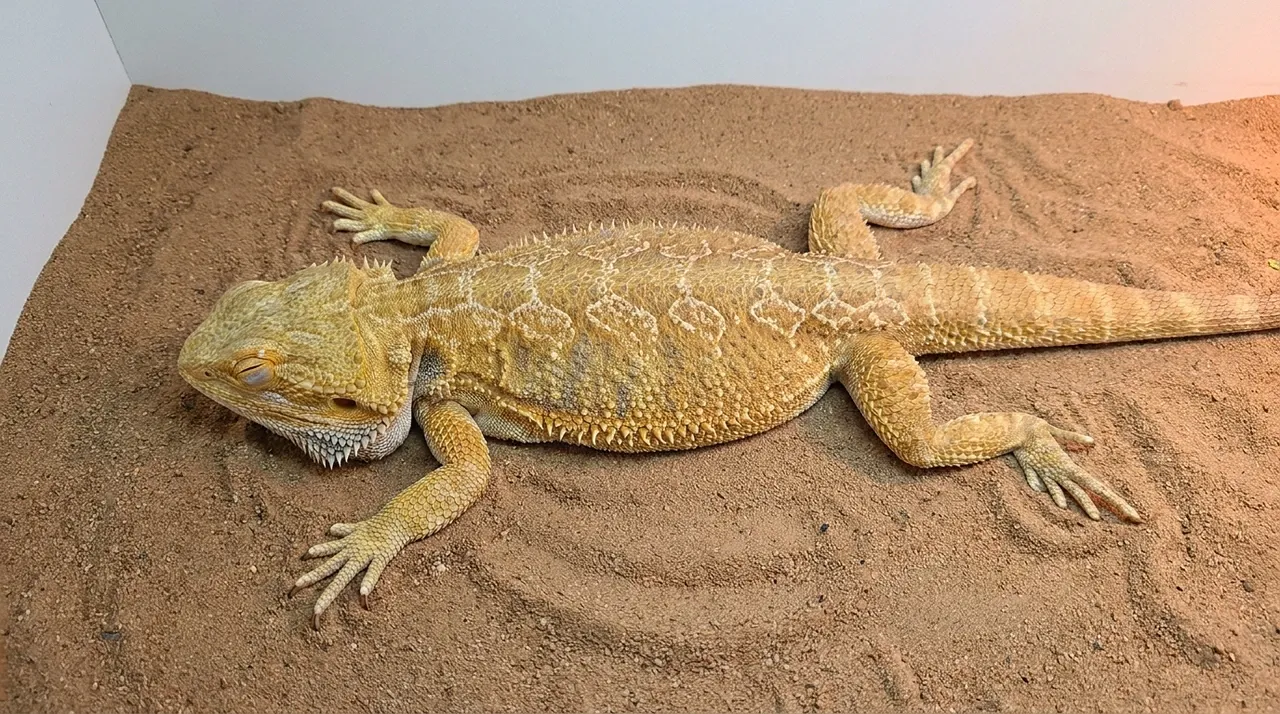
Closed or half-closed eyes during the day, combined with limpness when picked up, is not normal tiredness. It’s a body that has stopped being able to regulate itself.
Emergency sign: A limp, unresponsive dragon with closed eyes and rapid, shallow breathing needs to come out of the enclosure immediately and see a reptile vet the same day. Heat stroke in reptiles can cause organ damage within hours and does not resolve on its own.
If you’re not already set up with one, now is the time to find a reptile vet near you, before an emergency forces the search.
What’s Actually Making the Tank Run Too Hot
Most cases of bearded dragon overheating trace back to one of a handful of setup issues, and they’re usually fixable within the hour.
- A basking bulb that’s too high a wattage for the enclosure size, or mounted too close to the perch
- A thermostat probe sitting in the wrong spot, reading the cool side while the basking side runs unchecked
- No thermostat at all, leaving the bulb running at full output around the clock
- A heatwave pushing room temperature up, which raises the baseline of the entire tank
- A second heat source, such as a heat mat or extra bulb, added without repositioning the original
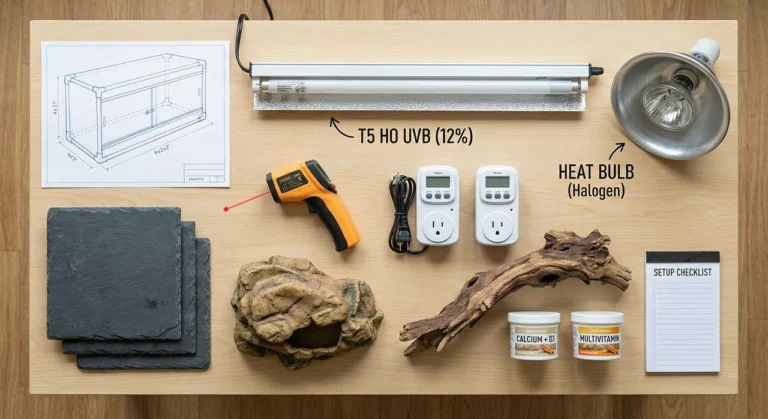
A properly set thermostat solves most of these on its own, since it cuts power to the bulb the moment the basking spot hits your target temperature. Without one, even a correctly chosen bulb can overshoot on a warm day. The RSPCA’s bearded dragon care sheet sets out the temperature gradients worth checking your setup against.
How to Cool Down an Overheated Dragon
If bearded dragon overheating is confirmed and your dragon is showing two or more of the signs above, work through these steps in order.
- Switch off the basking bulb completely. Don’t just dim it, turn it off at the socket.
- Move your dragon to a cooler, quiet room, ideally around 75-80°F, in a secure carrier or box.
- Offer fresh, cool (not cold) water in a shallow dish and mist lightly with room-temperature water from a spray bottle.
- Once your dragon is calmer, recheck the enclosure using a properly placed thermometer at both the basking spot and the cool end.
- Only return your dragon once the basking spot reads correctly for its age, and the cool end is at least 10-15°F lower.
Avoid cold water or ice for cooling. A sudden temperature drop is its own kind of shock, and lukewarm is always the safer direction.
Is Your Bearded Dragon Too Hot Right Now
If you’re still not sure which sign matches what you’re seeing, use this table to match the behaviour to the likely cause and the next step.
| Sign | What it usually means | What to do |
|---|---|---|
| Gaping over 20 minutes, away from basking spot | Ambient or basking temp too high | Check basking spot temp, turn off bulb if over 110°F |
| Constant glass surfing toward the cool end | No usable cool zone | Measure cool end, add shade or move décor |
| Digging at glass or substrate edges | Seeking a cooler spot that doesn’t exist | Check for heat mats or hot floor temps |
| Hiding all day, even during light hours | Whole enclosure running warm | Check hide temperature vs basking spot |
| Camped at water bowl, drinking repeatedly | Heat-driven dehydration | Offer fresh water, mist, check humidity |
| Lethargy with eyes closed, limp body | Possible heat stroke | Remove from tank, cool gradually, call vet now |
Frequently Asked Questions
How hot is too hot for a bearded dragon?
Anything consistently above 110°F at the basking spot, or above 85°F at the cool end, counts as too hot for most adults. Babies and juveniles run slightly warmer basking temps but still need an accessible cool side.
Can a bearded dragon die from overheating?
Yes, severe or prolonged overheating can cause heat stroke, organ damage, and death. It’s rare in tanks with a working thermostat and a real temperature gradient, which is why both matter so much.
Is gaping always a bad sign?
No. Short gaping right after basking is completely normal. It only becomes a concern when it’s constant, prolonged, or happens away from the heat source.
How fast can a bearded dragon overheat?
In an enclosure with no thermostat during a heatwave, temperatures can climb into the danger zone within an hour or two. That’s why a thermostat and a daily check matter even in mild weather.
Should I mist my bearded dragon if it’s overheating?
Light misting with room-temperature water helps, especially alongside fresh drinking water. Avoid cold water, ice packs, or fully submerging the dragon, since a rapid temperature drop adds extra stress.
Stop This From Happening Again
Most cases of bearded dragon overheating come down to the same handful of habits, so work through this list before anything else.
- Buy or test a digital probe thermometer at both the basking spot and the cool end, today if you don’t already own one
- If you don’t have a thermostat, treat getting one as priority one, not a someday upgrade
- Mark the exact distance from bulb to basking perch and recheck it weekly, since décor shifts move it more often than owners notice
- Set a daily two-minute habit: check both ends of the tank at the same time each day, an hour after lights-on
- Save the number of a reptile vet now, so you’re not searching for one mid-emergency
Written by
Sarah ArdleySarah has kept bearded dragons for over ten years. She founded Beardie Husbandry after discovering that most mainstream care advice — including what she followed with her first dragon — was doing more harm than good. Every article on this site is grounded in veterinary research and real keeper experience.