Are Bearded Dragons Good Pets for Beginners?
Most beardie owners I know never planned to buy one. They watched a friend’s dragon flatten out under its basking lamp, decided it was the best thing they had ever seen, and started pricing tanks that night.
So, are bearded dragons good pets for beginners? Yes, and they earn the reputation. The animal itself is calm, tough, and hard to upset. What trips new owners up is everything around it: the equipment bill, the live insects, and a commitment that runs past ten years.
Sort those three out before you buy and a beardie is one of the safest first reptiles you can pick. Skip them and the dragon pays for it within months.
Why Bearded Dragons Are Good Pets for Beginners
Most reptiles make frustrating first pets for one simple reason. They hide all day, resent being touched, or both. Beardies break that pattern, which is why they keep topping every beginner reptile list that matters.
They Are Awake When You Are
Bearded dragons are diurnal, so they bask, eat, and explore in daylight. A leopard gecko or ball python spends your entire evening inside a hide. A beardie watches you cross the room and runs the glass the moment the salad bowl appears.
That daytime activity matters more than people expect. A first pet you never see is a pet you slowly stop caring for properly.
A Lizard That Tolerates Being Handled
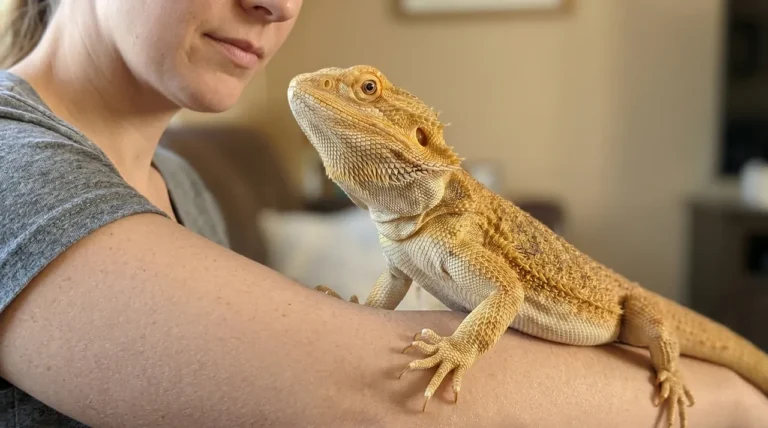
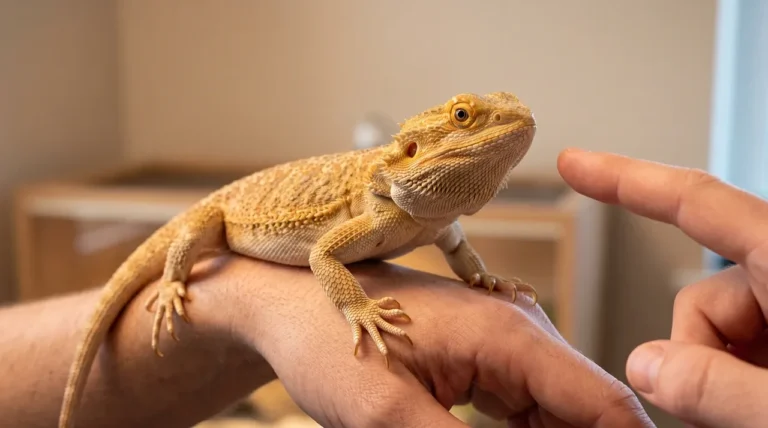
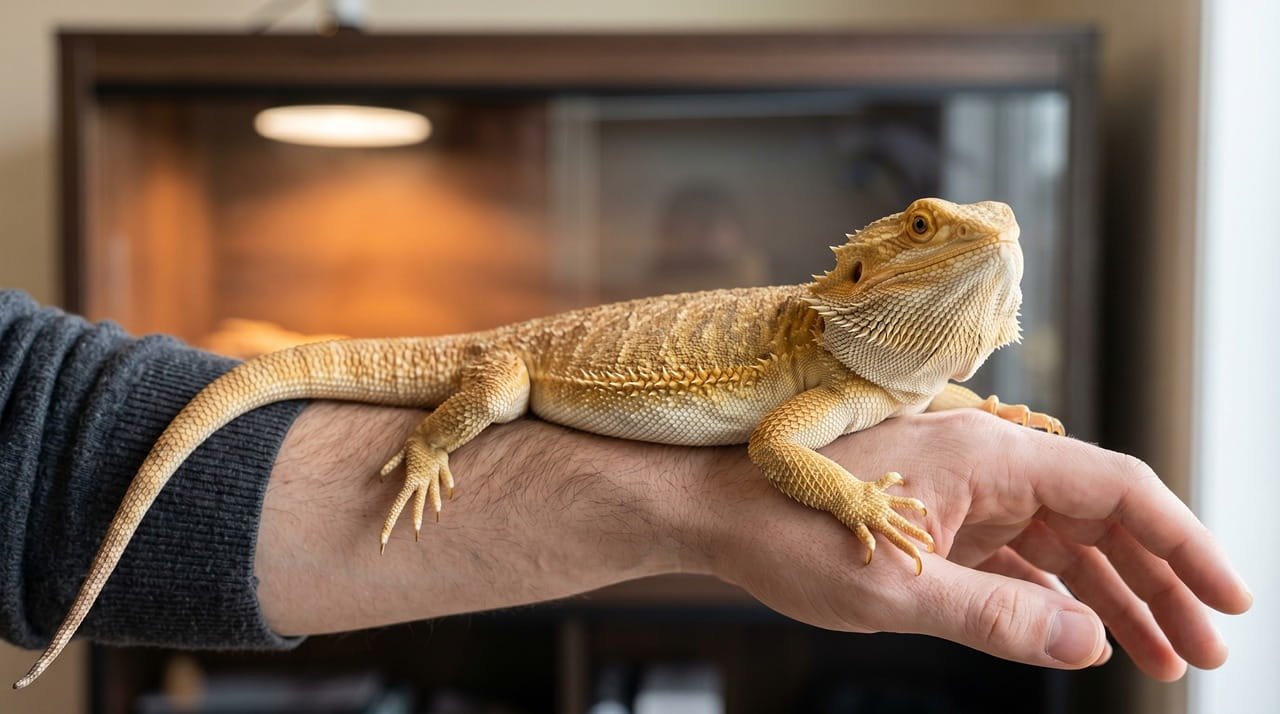
Adult beardies are famously docile. Most will sit on a forearm for twenty minutes without squirming, and bites are rare enough that many lifelong keepers have never taken one. Whether they enjoy it or simply tolerate being held is debatable, but the calmness is real.
Compare that to a crested gecko that leaps without warning or a young corn snake that musks your hands. For a nervous first-time keeper, a relaxed animal changes everything.
They Have More Personality Than Most Reptiles
Head bobs, arm waves, glass surfing before breakfast, a jet-black beard when annoyed. Beardies broadcast their mood in ways most reptiles never do, and plenty of owners will swear theirs recognises footsteps at the door.
What the Pet Store Will Not Tell You
Here is where the beginner-friendly label gets complicated. The animal is forgiving. The husbandry is not, and the gap between what gets sold and what a dragon needs is wide.
The Real Setup Cost Is Not $200
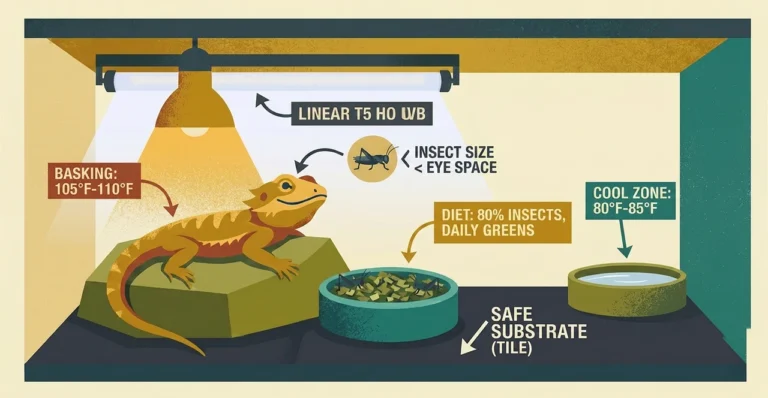
A proper adult enclosure measures 4x2x2 feet, roughly 120 gallons. The 40 gallon tanks still sold as beardie kits get outgrown inside the first year, which is why 40 gallons remains the most regretted purchase in this hobby.
Budget it properly and the numbers look like this:
- 4x2x2 enclosure: $300–450
- T5 HO UVB tube and fixture: $60–90
- Basking lamp, fixtures, and a thermostat: $80–120
- Thermometers, decor, substrate, and supplements: $80–150
That lands between $500 and $800 before the dragon exists, and the hidden running costs of bulbs, insects, and electricity continue for a decade.
You Will Be Keeping Insects Too
Nobody buys a bearded dragon planning to become an insect keeper, but that is the job. A juvenile eats 20–40 appropriately sized insects a day across multiple feedings, which means a tub of livestock living in your home at all times.
Crickets smell, sing at 3 a.m., and die in batches unless you learn to keep crickets alive properly. Plenty of keepers switch to a dubia roach colony within months for exactly that reason.
UVB Is Where Most Beginners Fail
A bearded dragon without strong UVB cannot metabolise calcium, and the result is metabolic bone disease, the most common preventable illness reptile vets see. It develops quietly over months while the dragon looks completely fine.
The fix is specific hardware. A T5 high output tube spanning two thirds of the enclosure, mounted 12–15 inches above the basking surface, with the rest of the lighting setup built around it.
Replace that tube every 12 months even though it still glows. UV output decays long before visible light does.
What a Normal Week of Care Looks Like
The realistic time budget is 15–20 minutes a day, with one longer session at the weekend. More than a goldfish, far less than a puppy.
- Daily: chop fresh greens, feed insects to younger dragons, spot clean poop, glance at basking and cool side temperatures
- Weekly: wash food bowls, restock and gut load feeder insects, wipe down glass and surfaces
- Monthly: a full enclosure clean and a weight check on a kitchen scale
Weekends away are manageable, since a healthy adult can be left alone safely for two days with timers running and food prepared. Longer trips need a reptile-literate sitter, who is harder to find than a dog walker.
Are Bearded Dragons Good Pets for Kids
Yes, with one non-negotiable rule. The adult owns the dragon and the child helps. A ten-year-old can feed, handle, and spot clean under supervision, but temperatures, UVB replacement, and health checks stay adult jobs for the full ten-year run.
Reptiles can carry salmonella on perfectly healthy skin, so handwashing after every handling session is the house rule. The actual salmonella risk is small with basic hygiene in place.
The CDC recommends that homes with children under five skip reptiles entirely. That guidance is worth taking at face value rather than working around.
How Beardies Compare to Other Beginner Reptiles
Most first-time keepers land on a beardie without ever weighing the alternatives. The comparison deserves two minutes of your time.
| Species | Handling | Setup cost | Daily effort | The honest catch |
|---|---|---|---|---|
| Bearded dragon | Excellent, calm and tolerant | $500–800 | 15–20 min | Live insects, big enclosure, strict UVB |
| Leopard gecko | Good, small and quick | $200–350 | 5–10 min | Nocturnal, you rarely see them |
| Corn snake | Good once settled | $200–400 | 5 min | Frozen mice, escape artist |
| Crested gecko | Fair, jumpy | $200–350 | 5 min | No heat lamps needed, but no daytime activity either |
If the insect tub or the price tag is a dealbreaker, a leopard gecko delivers most of the reptile experience at half the cost. Nothing else on that table gives you the daytime personality.
Who Should Not Get a Bearded Dragon
Some plain disqualifiers, written after watching the same mistakes repeat for years:
- You cannot stand housing and handling live insects, ever
- The full setup budget is not there yet, so a starter kit feels tempting
- You have not checked whether a reptile vet exists within driving distance
- You want a pet that seeks affection the way a cat or dog does
- You expected a short commitment rather than an animal whose realistic lifespan runs past a decade
One more surprise worth knowing in advance. Many healthy adults shut down for weeks in winter, and that brumation shutdown sends unprepared owners to the emergency vet every single autumn.
Quick Answers for First-Time Buyers
Are bearded dragons good pets for beginners
Yes. They are calm, active during the day, and forgiving of small husbandry mistakes. The challenge is the setup rather than the animal, so budget $500–800 and research before buying.
How much does a bearded dragon cost monthly
Expect $40–80 per month covering insects, fresh greens, supplements, and electricity. Add an annual UVB tube at $40–60 and an occasional vet visit at $75–150.
Do bearded dragons like being handled
Most tolerate it calmly rather than seek it out. Short, regular sessions on a forearm suit them best, and a relaxed dragon will sit still rather than struggle to leave.
Are bearded dragons safe for kids
Yes for children old enough to follow handwashing rules, with an adult doing the core husbandry. The CDC advises against reptiles in homes with children under five.
How long do bearded dragons live
A well-kept bearded dragon lives 10–15 years in captivity. Poor UVB, bad diet, and undersized enclosures are what cut that number short, not bad luck.
The One Question to Answer Before You Buy
Forget whether the dragon will be easy. A bearded dragon is a good pet for a beginner who finds the husbandry itself interesting, because the equipment and the routine are the actual hobby. The lizard is the reward for running it well.
If reading about UVB gradients and roach colonies made you more curious rather than less, you will do fine. Buy the complete setup first and run it empty for a week to stabilise temperatures.
Only then choose between a breeder, shop, or rescue with your eyes open. A dragon bought after the setup is ready walks into a stable home on day one.
That order, setup first and animal second, is the habit that marks out keepers who never post a rehoming ad.
Written by
Sarah ArdleySarah has kept bearded dragons for over ten years. She founded Beardie Husbandry after discovering that most mainstream care advice — including what she followed with her first dragon — was doing more harm than good. Every article on this site is grounded in veterinary research and real keeper experience.